
Vertical vs Horizontal Dehydrators: Stackable or Shelf-Style?
Published 10/29/2026 · Updated 11/24/2026
Quick answer
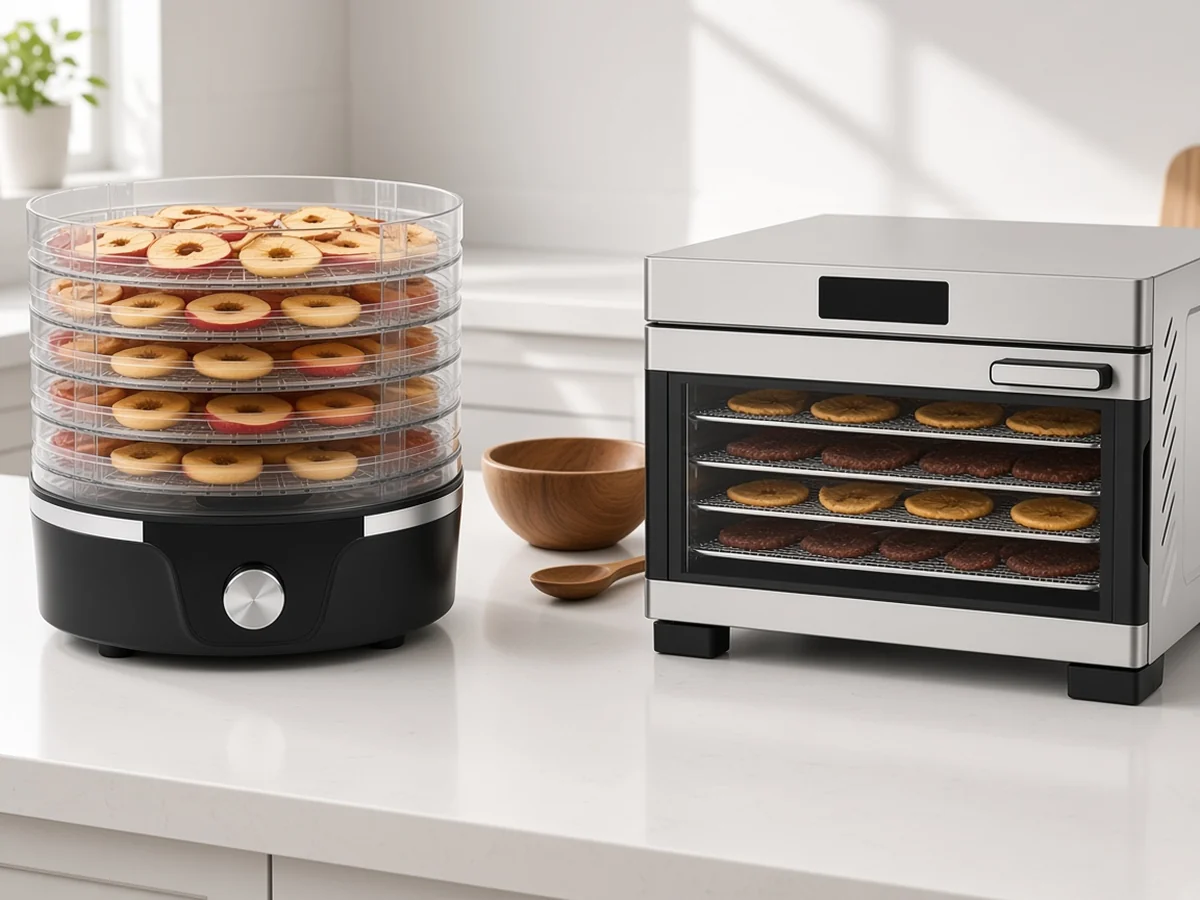
Choose a stackable (vertical airflow) unit if you want a compact, light
Products mentioned in this guide
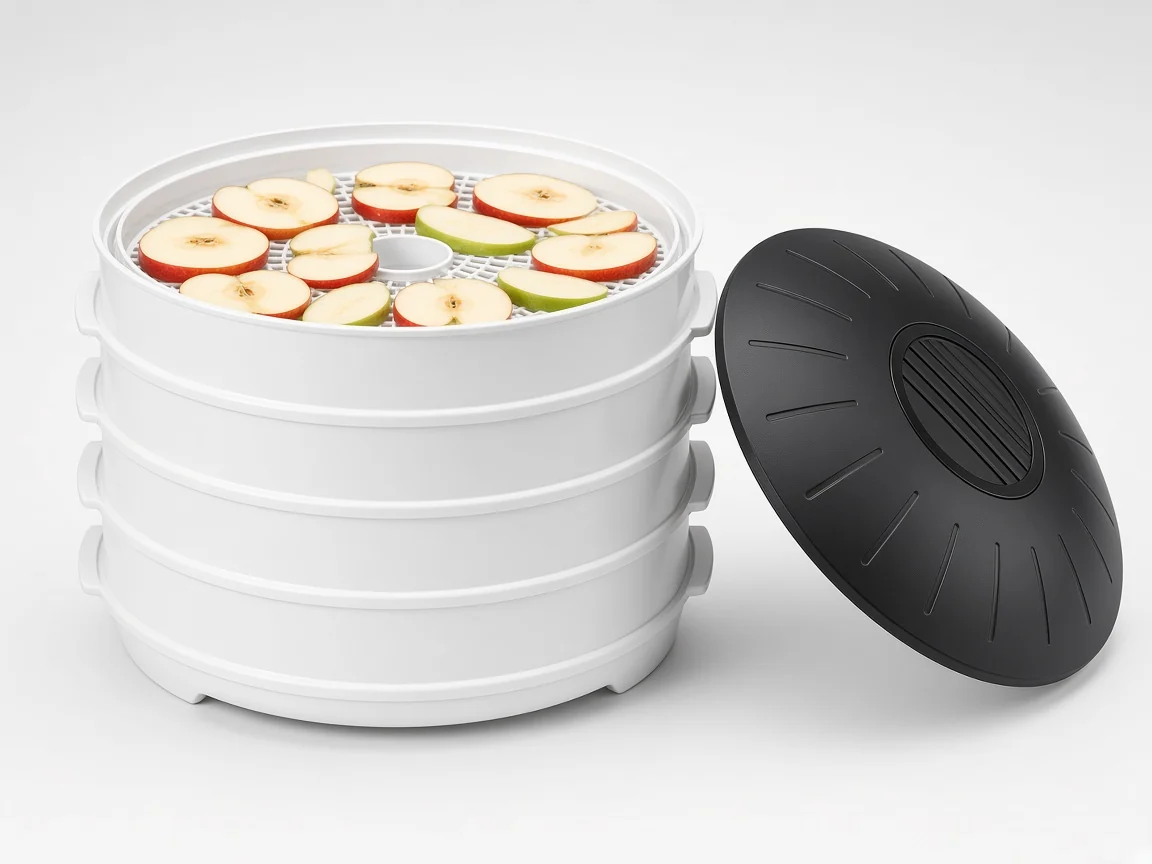
 Magic Mill MFD-5000 Food Dehydrator, 5 Stainless TraysMagic Mill · Dehydrator
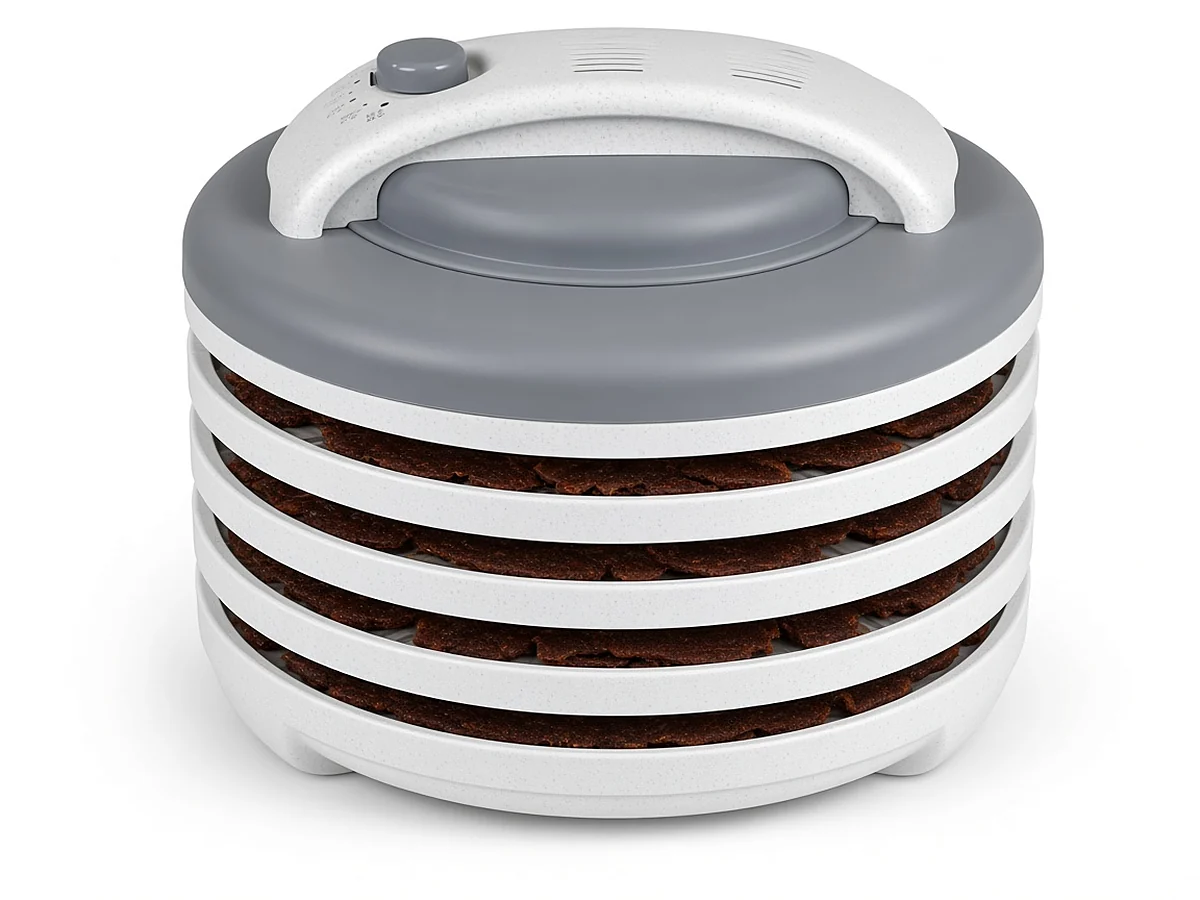
 Hamilton Beach 32100A Digital Food Dehydrator, 5 TraysHamilton Beach · Dehydrator
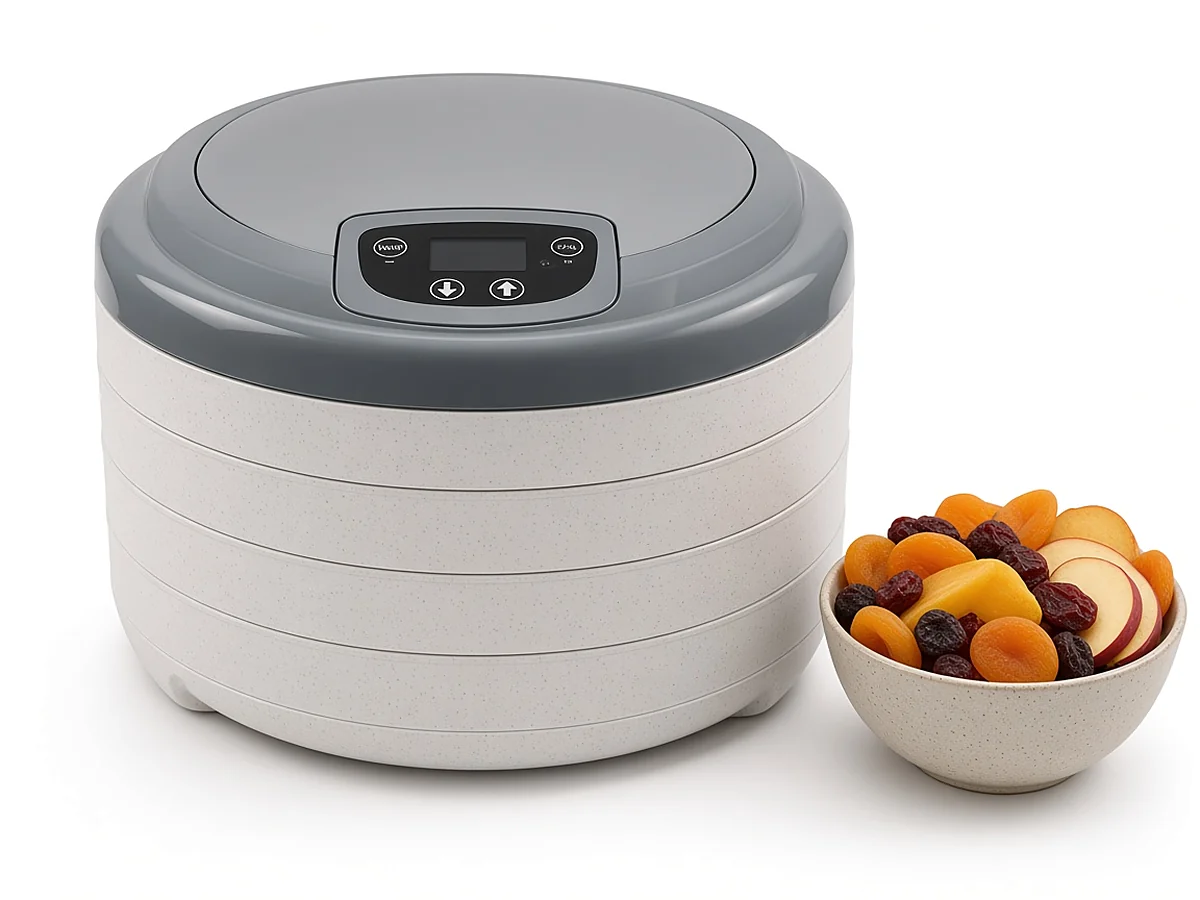
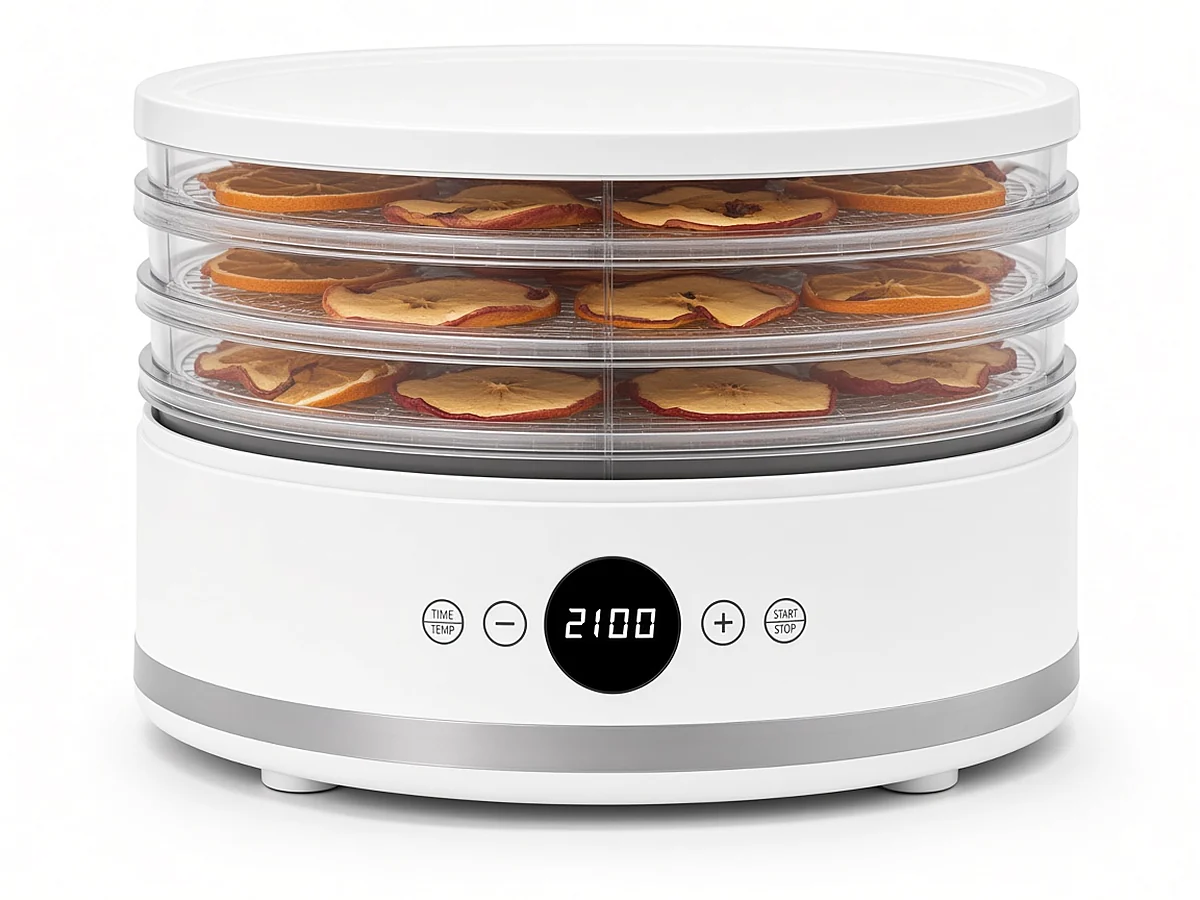 Elite Gourmet EFD329WD Digital Food Dehydrator, 5 SlimStore TraysElite Gourmet · Dehydrator
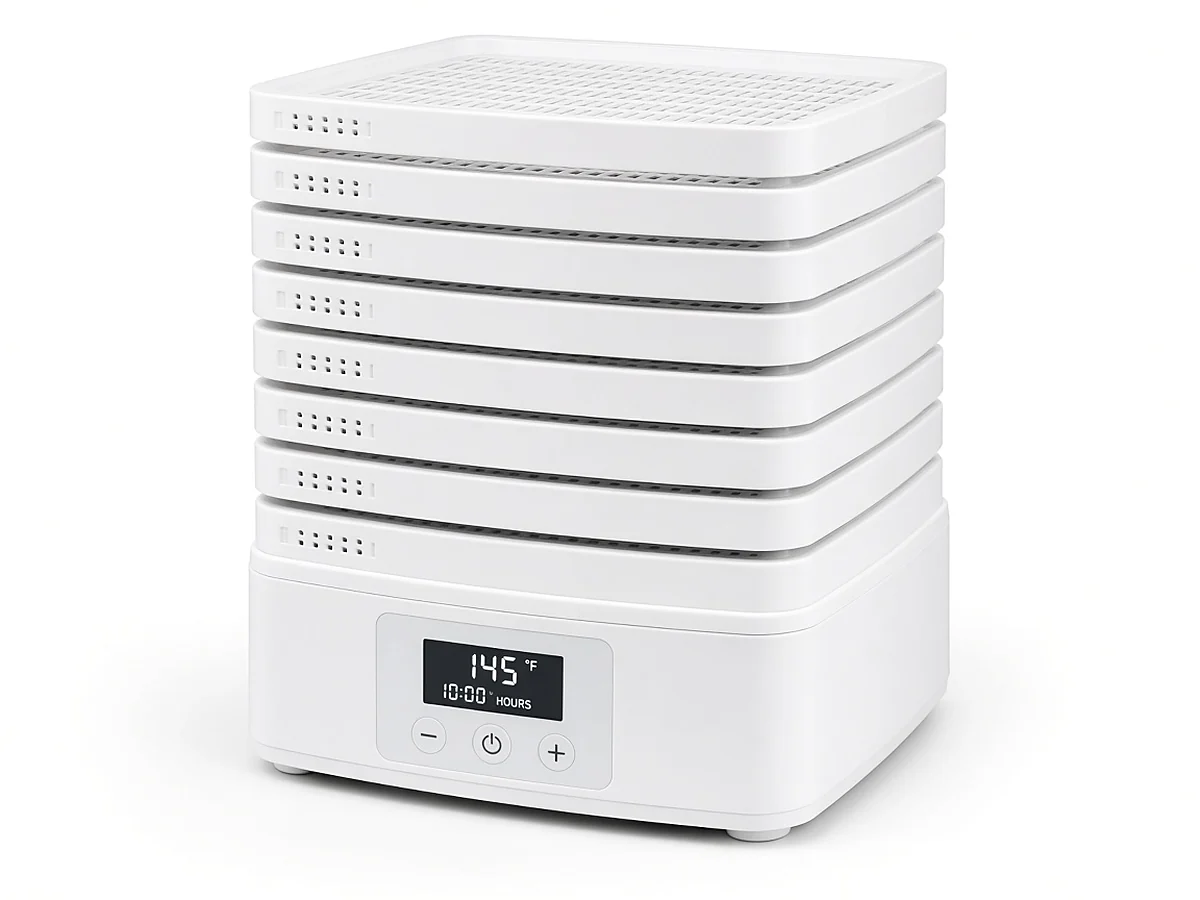
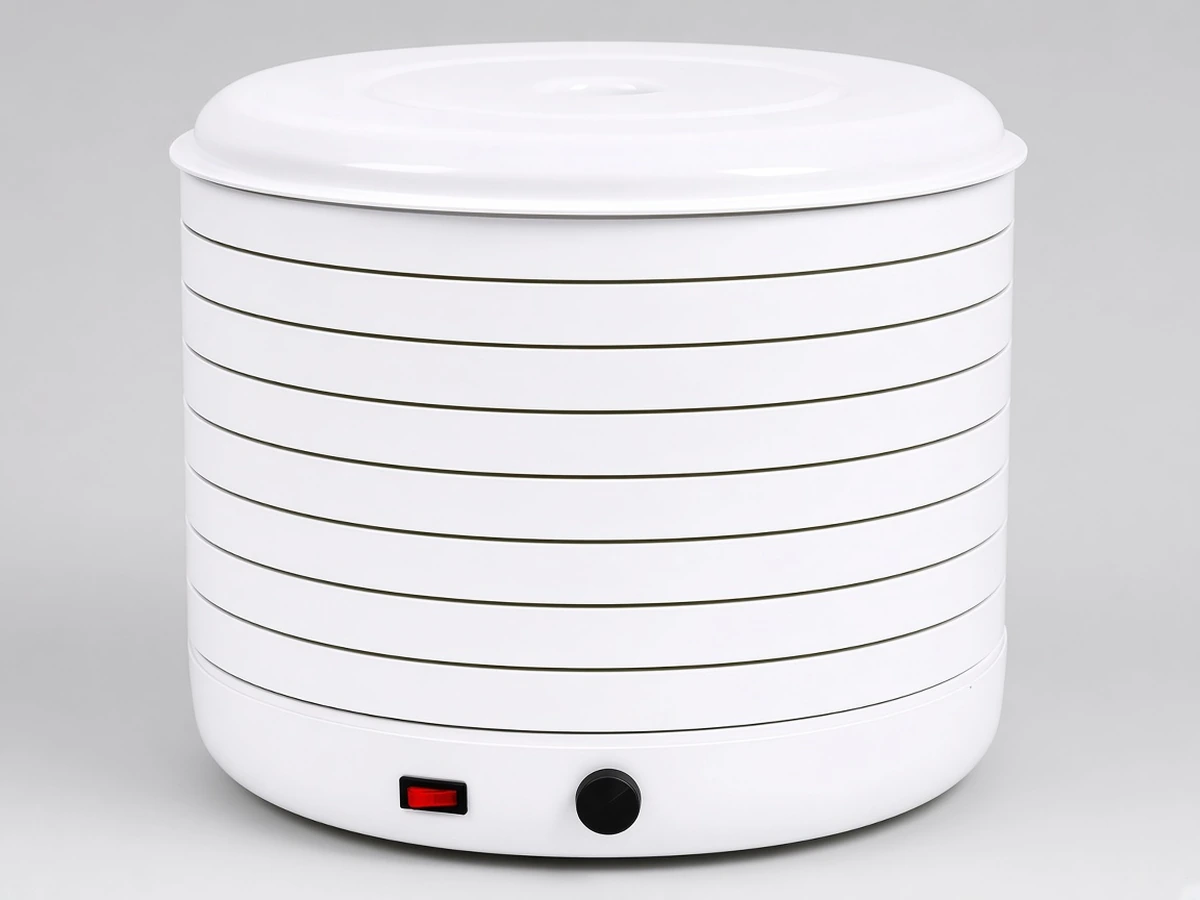
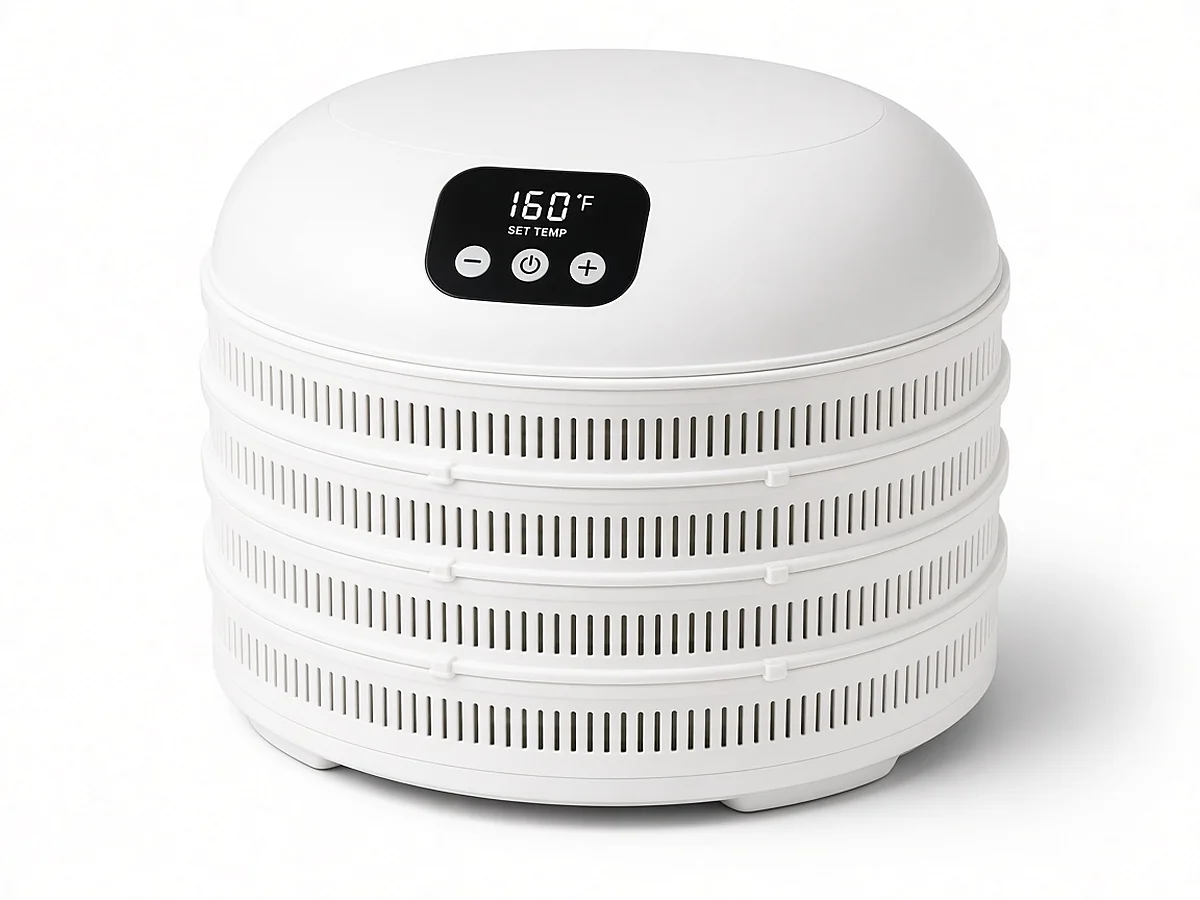
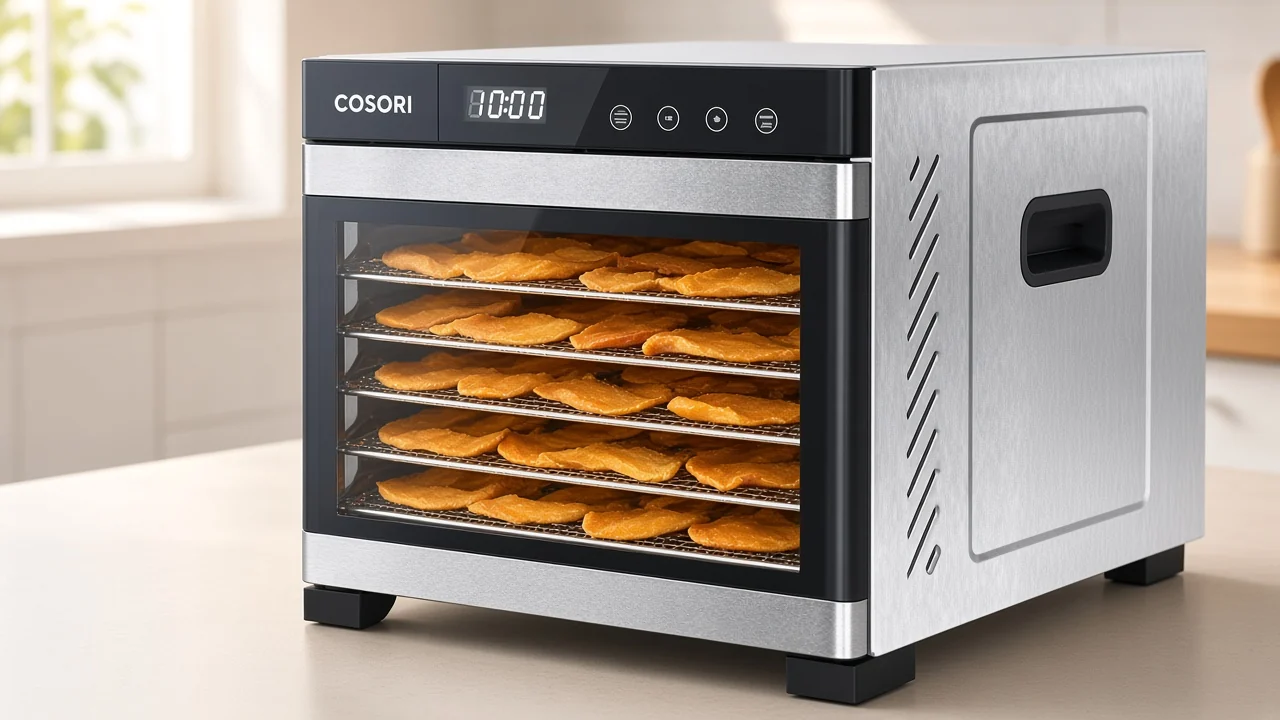
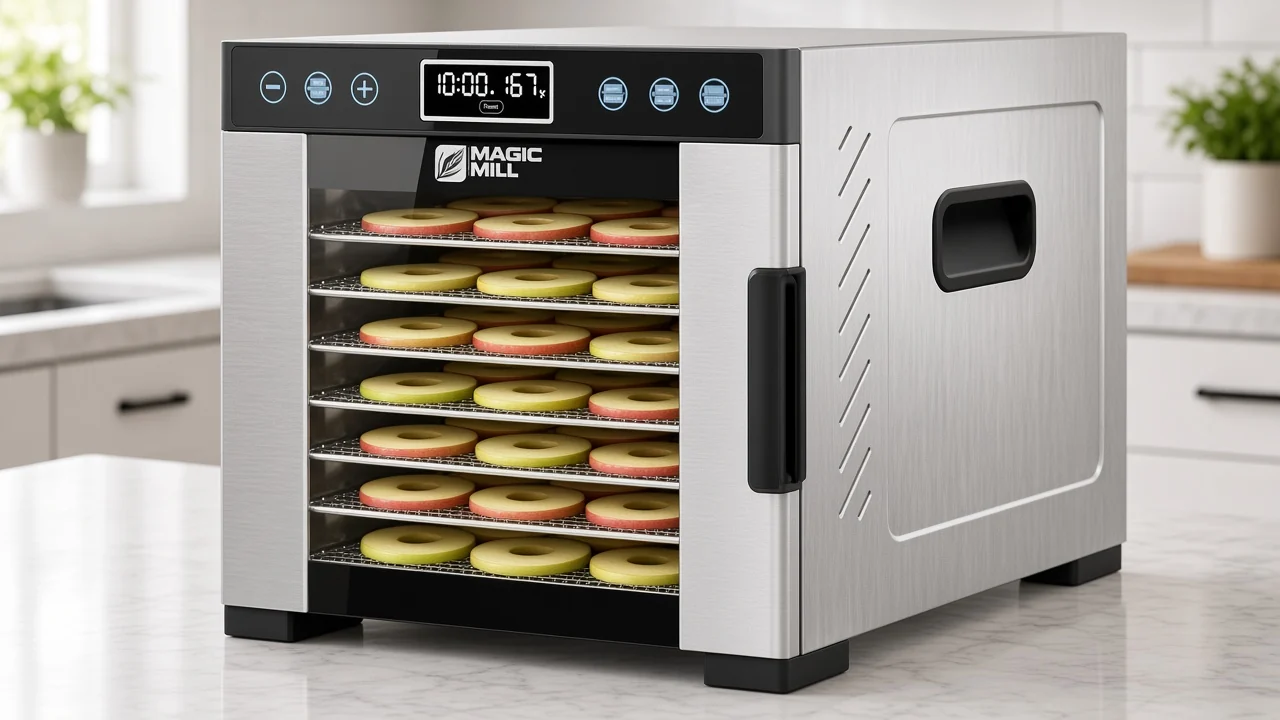 Magic Mill Pro MFD-7700 Food Dehydrator, 7 Stainless TraysMagic Mill · Dehydrator
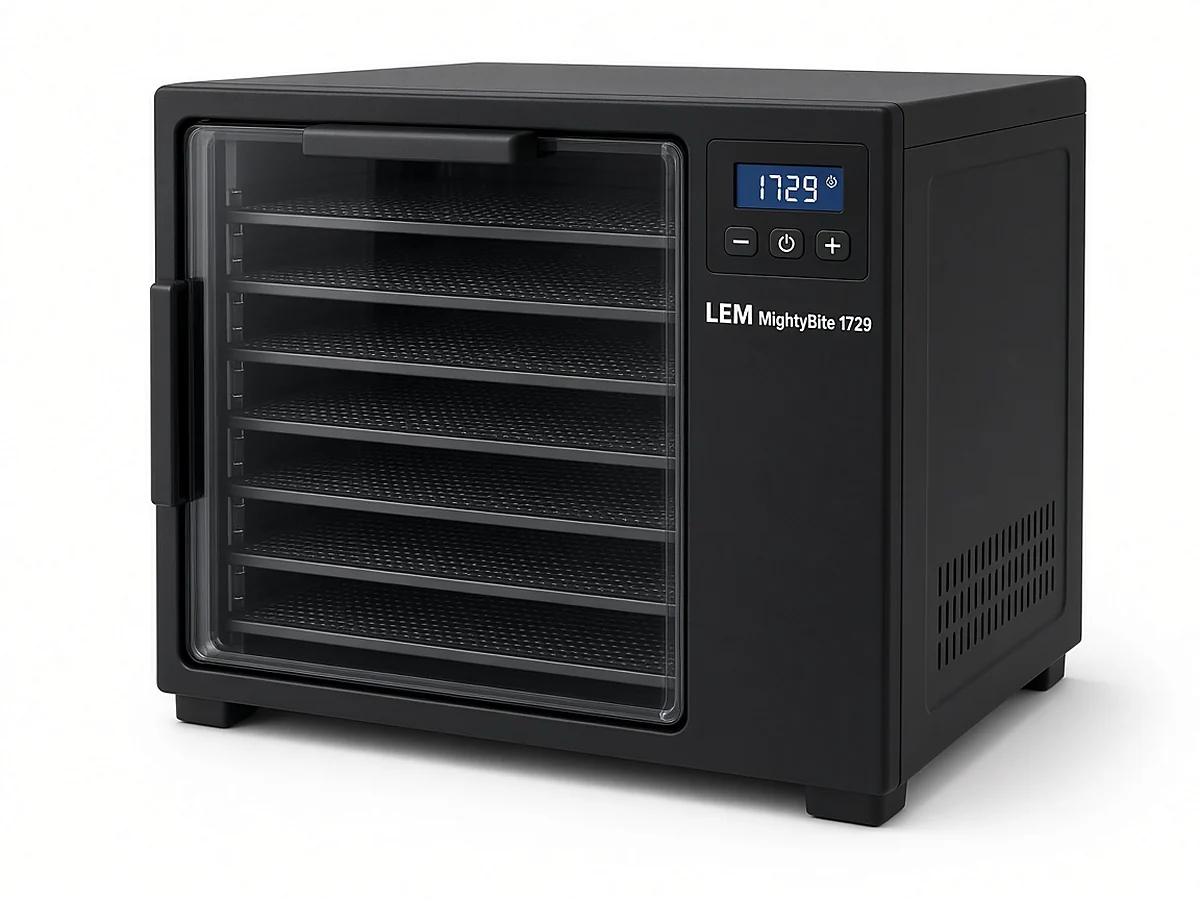
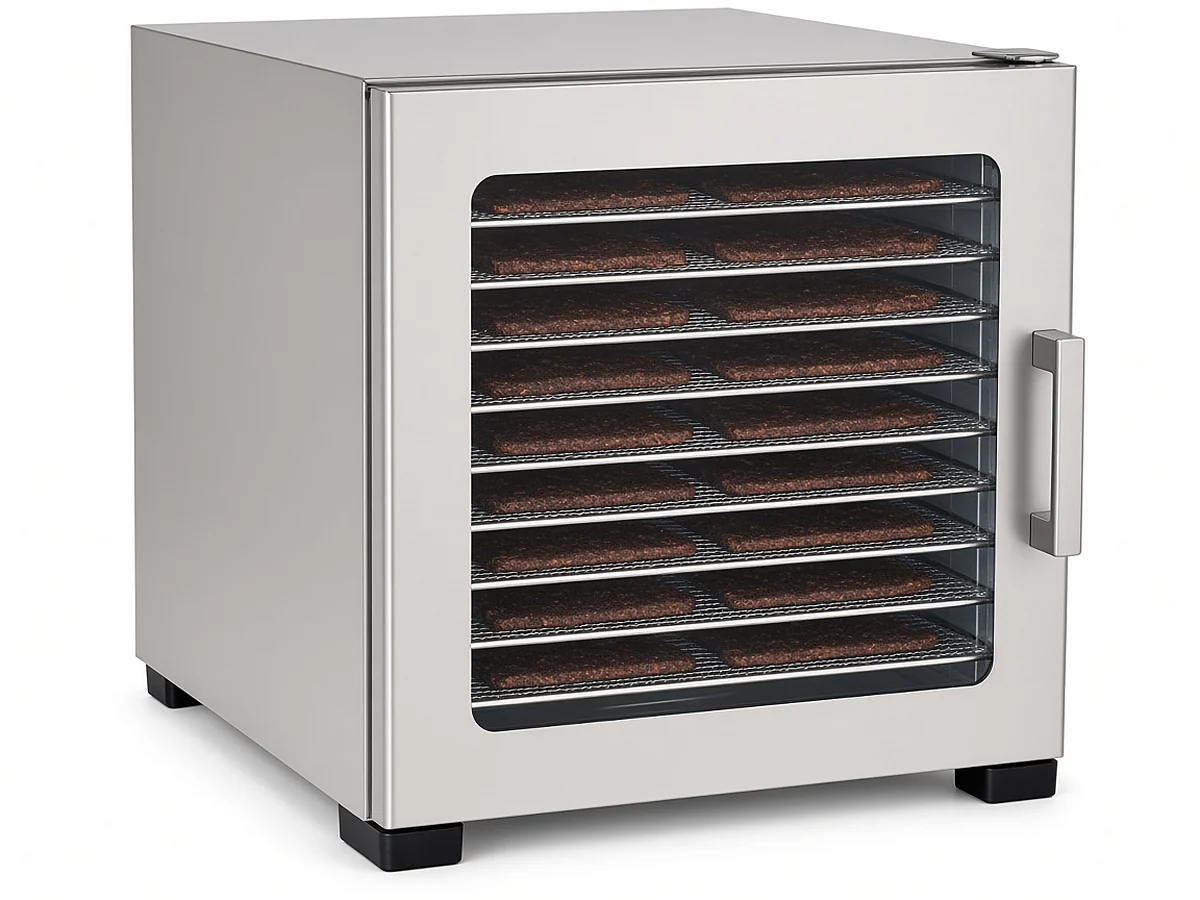
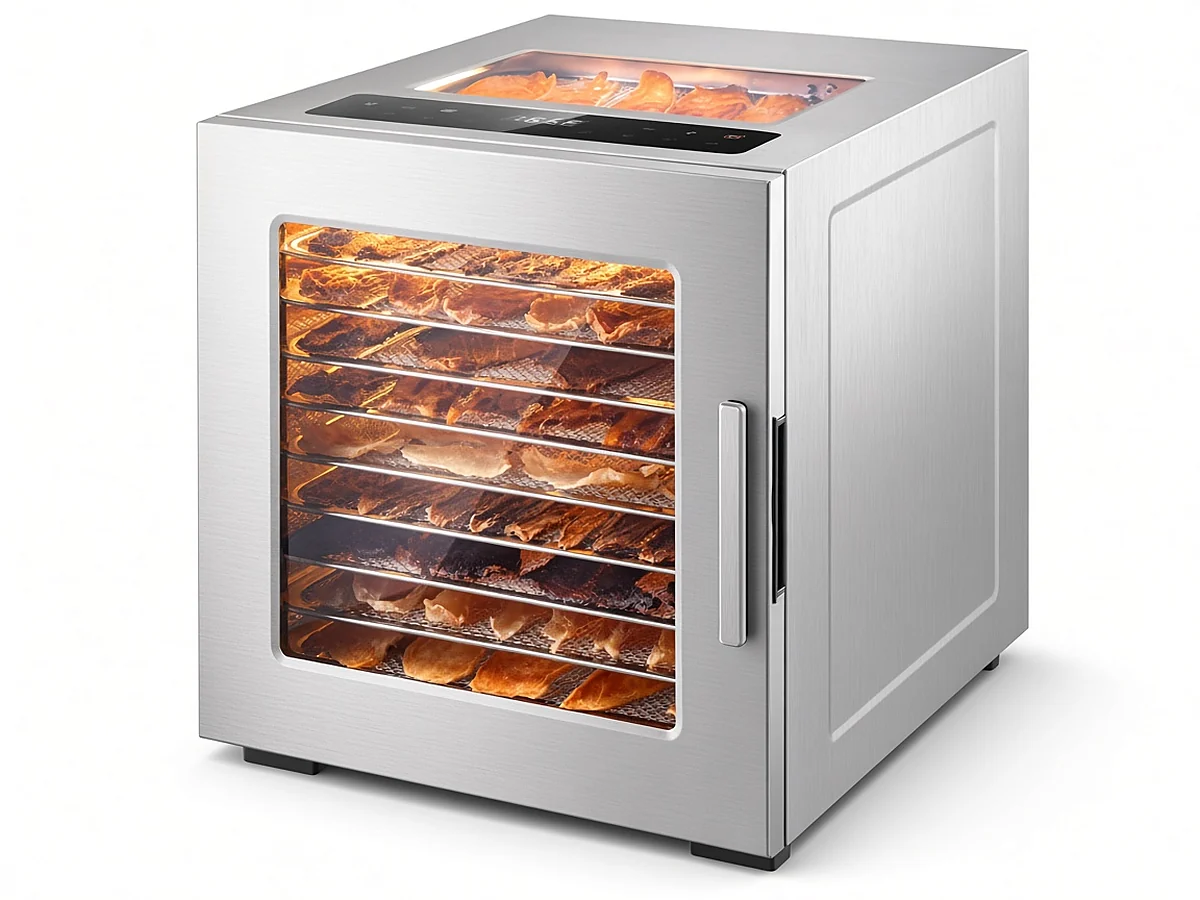
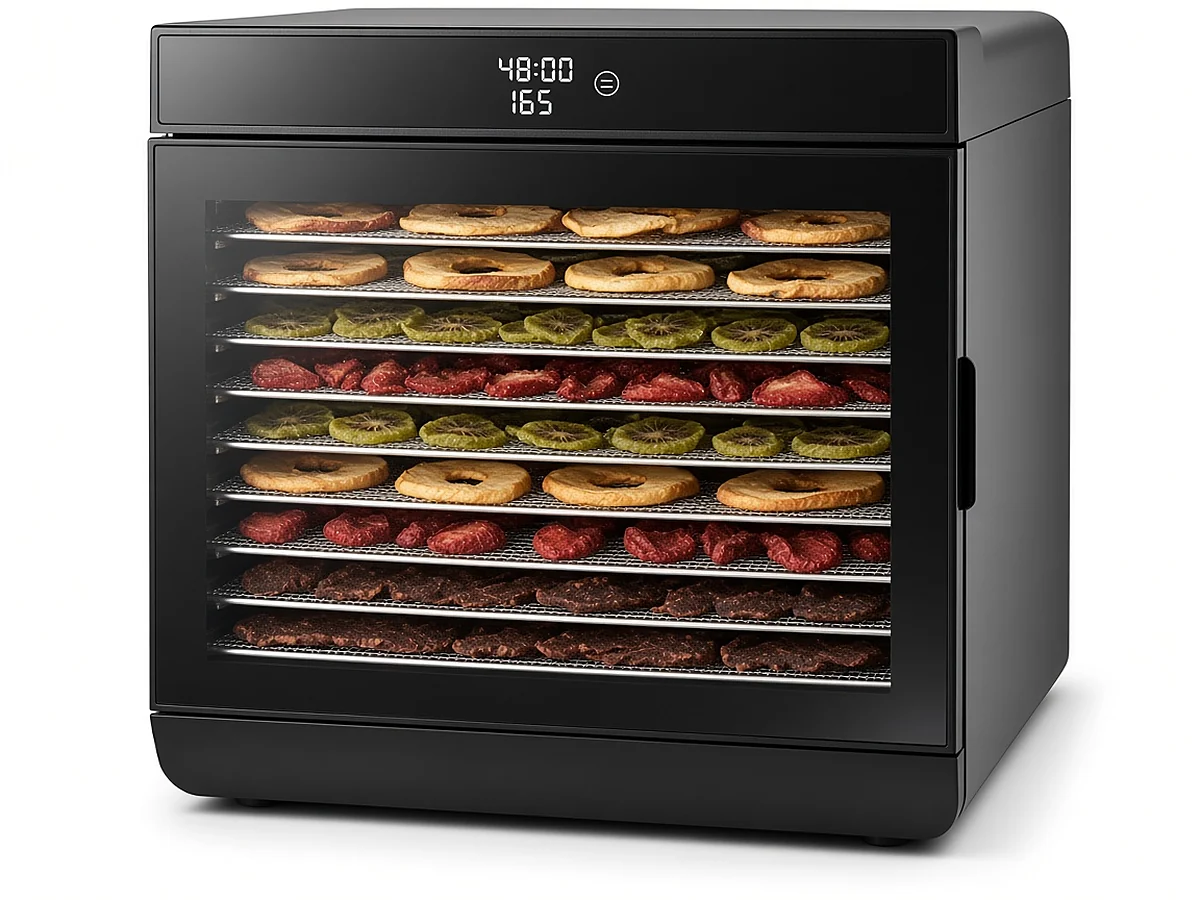 Magic Mill Premium MFD-7100 Food Dehydrator, 10 XL Stainless TraysMagic Mill · Dehydrator
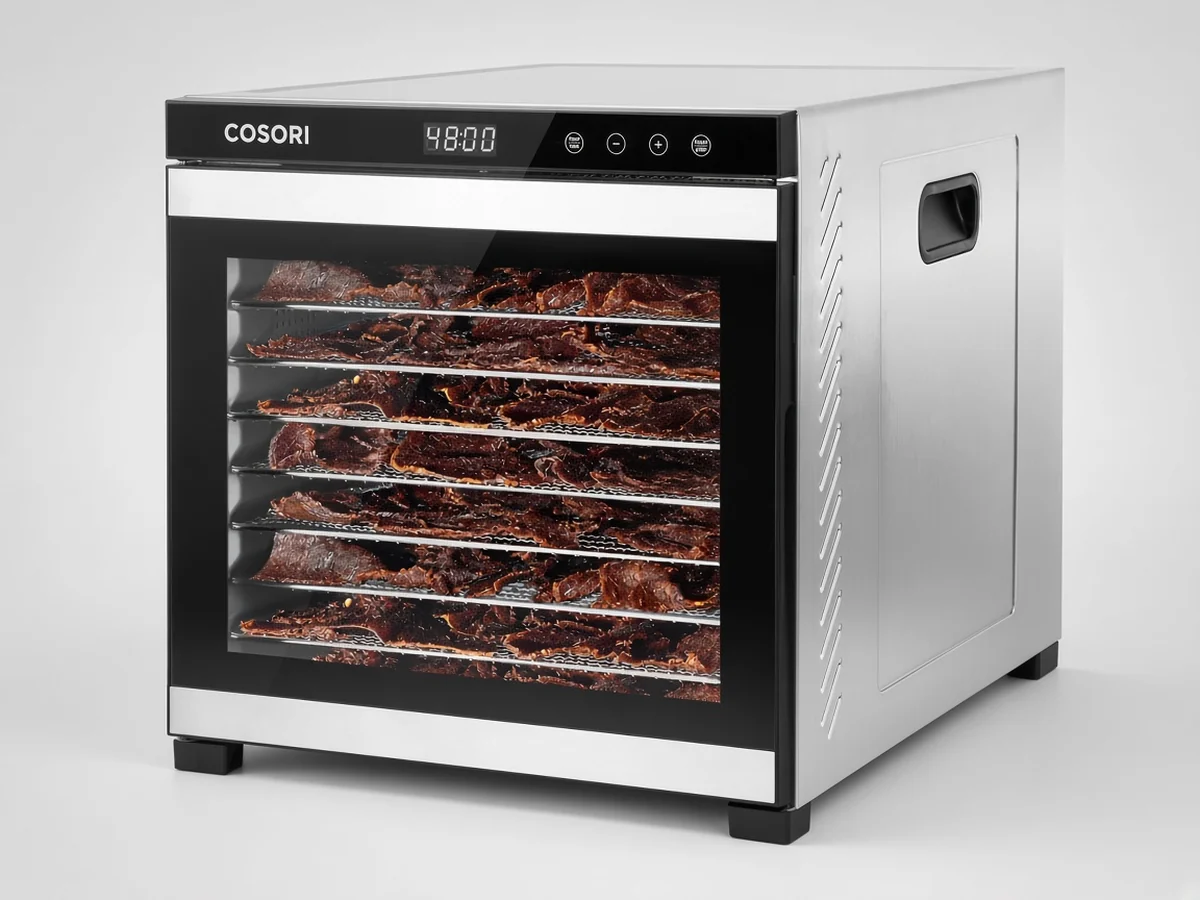
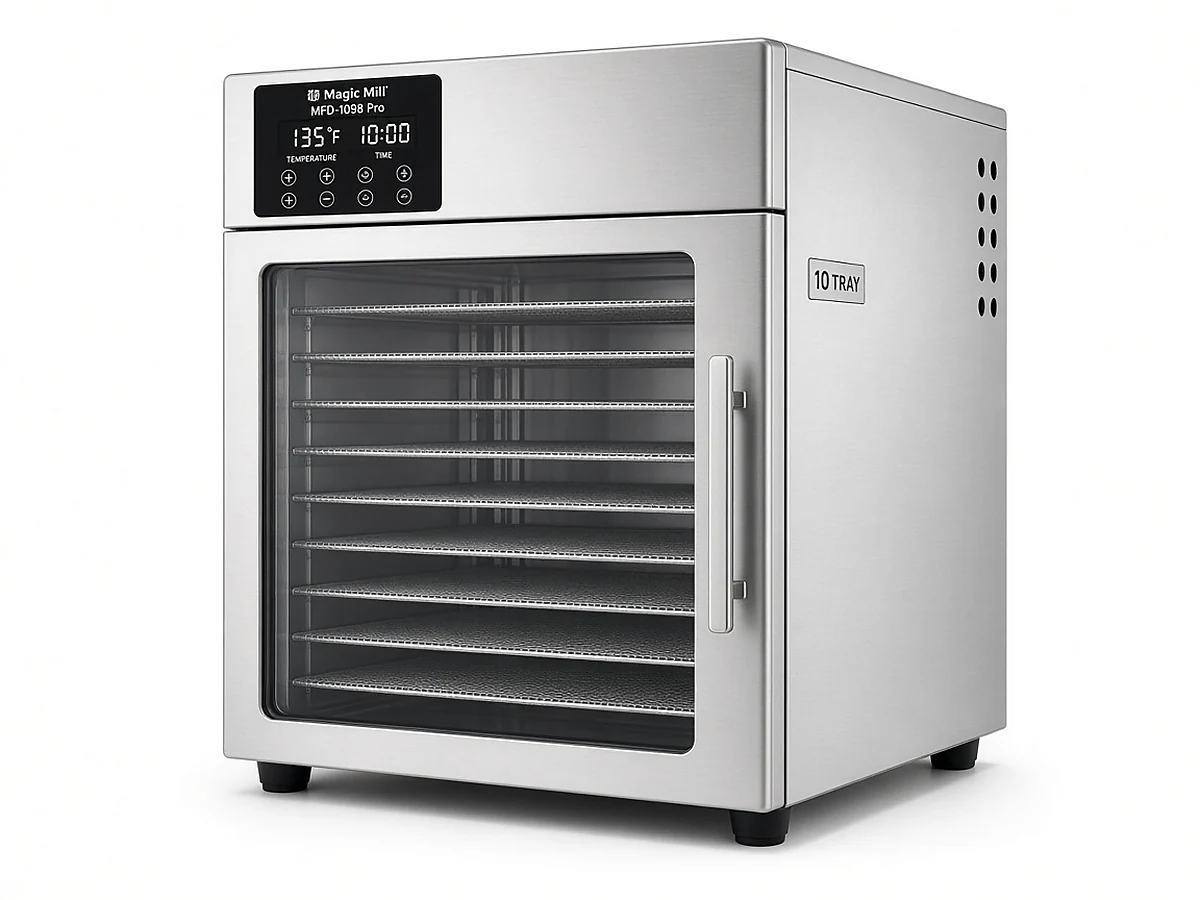
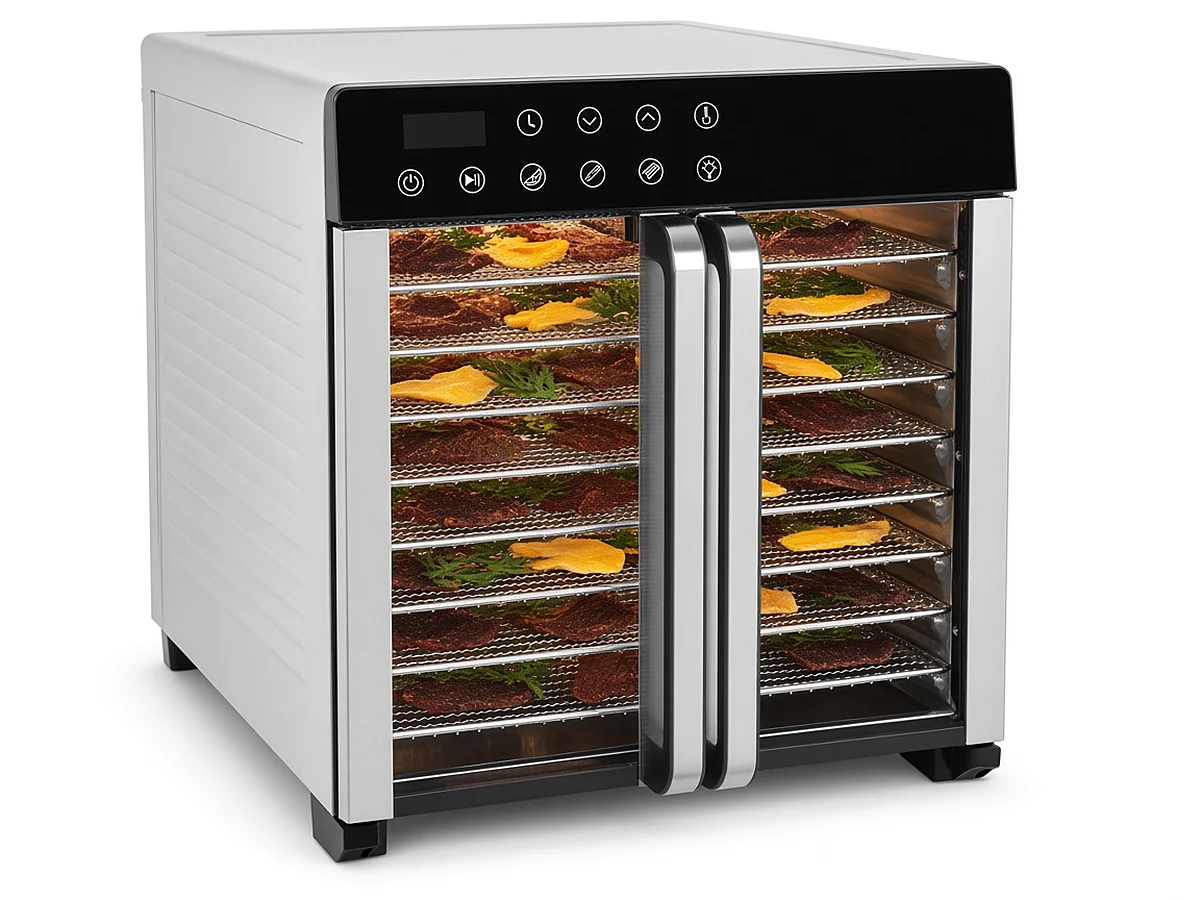 Excalibur Select DH08SCSS13 Food Dehydrator, 8 TraysExcalibur · Dehydrator
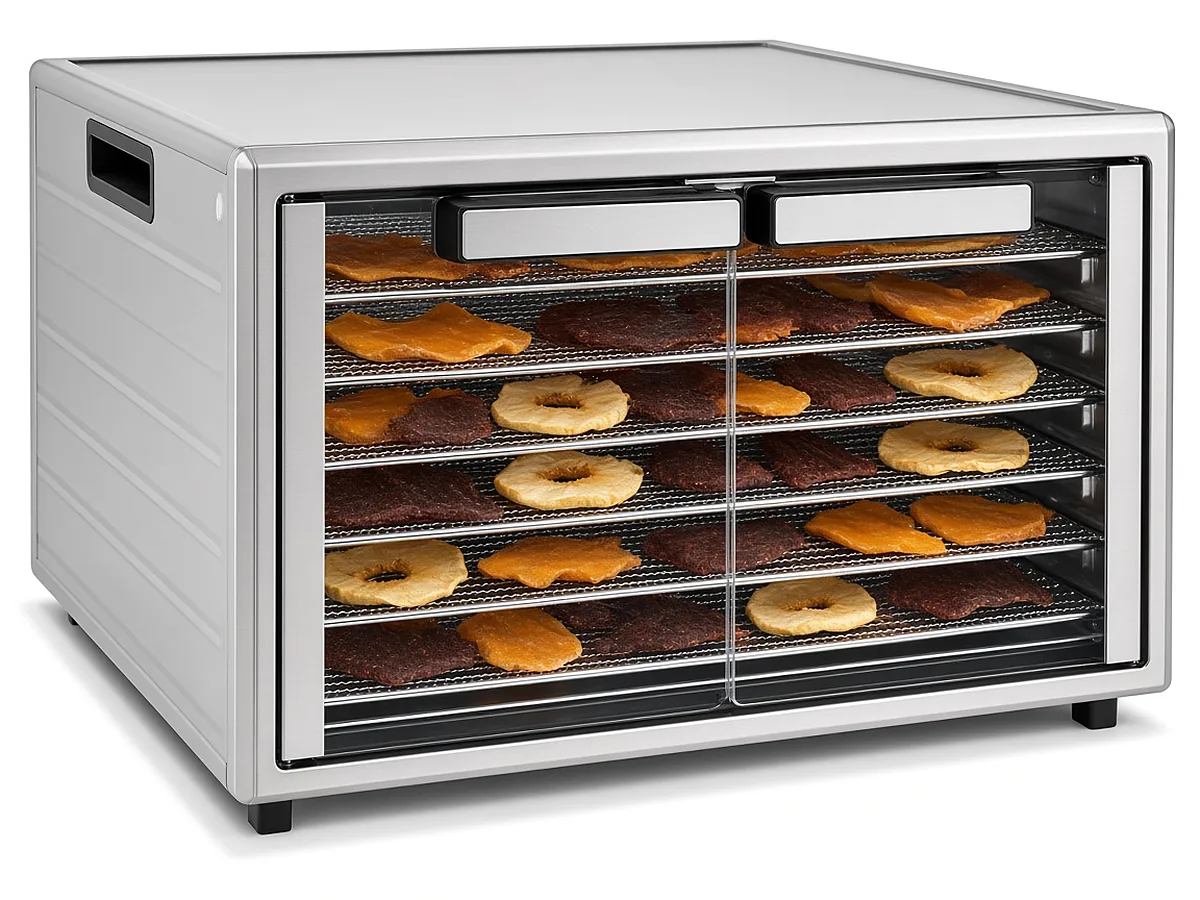 Excalibur Select Series DH06SCSS13 Food Dehydrator, 6 TraysExcalibur · Dehydrator
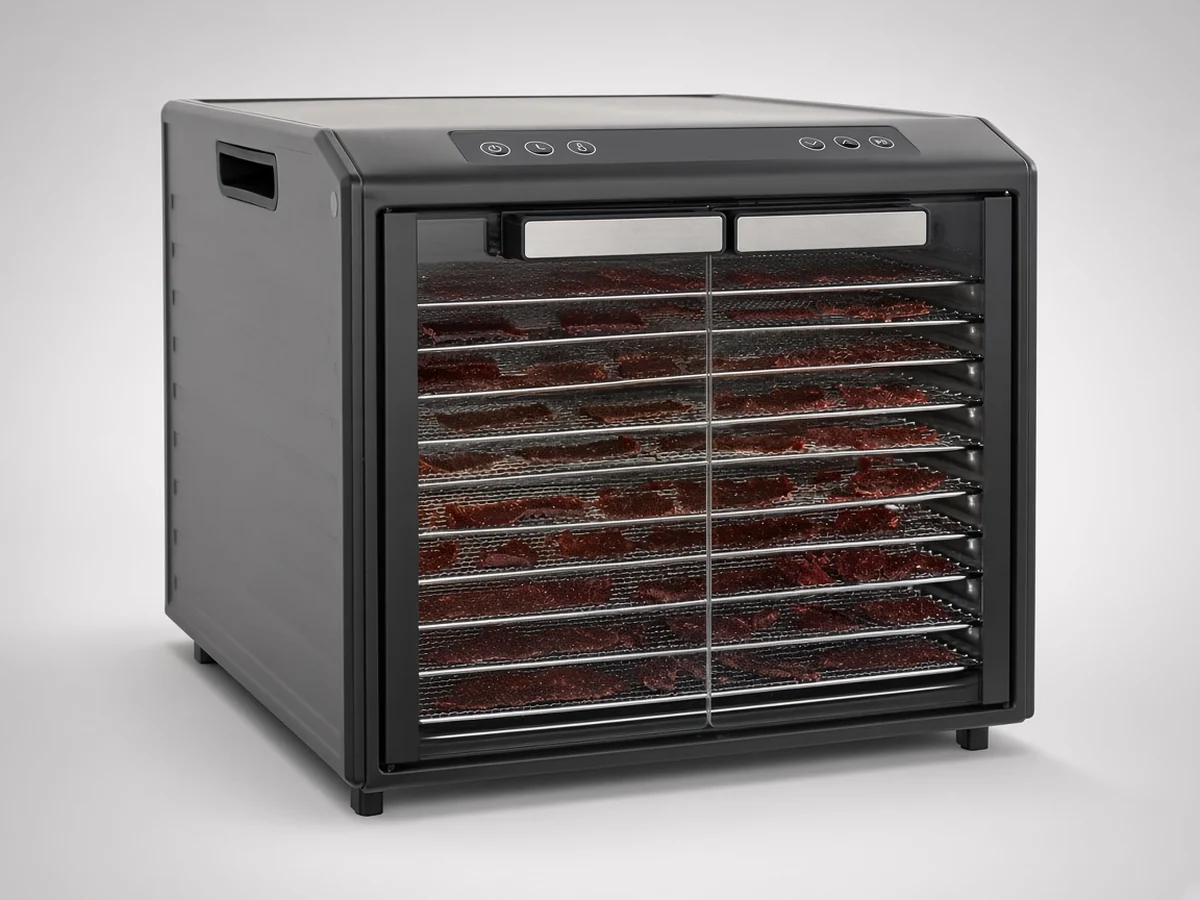
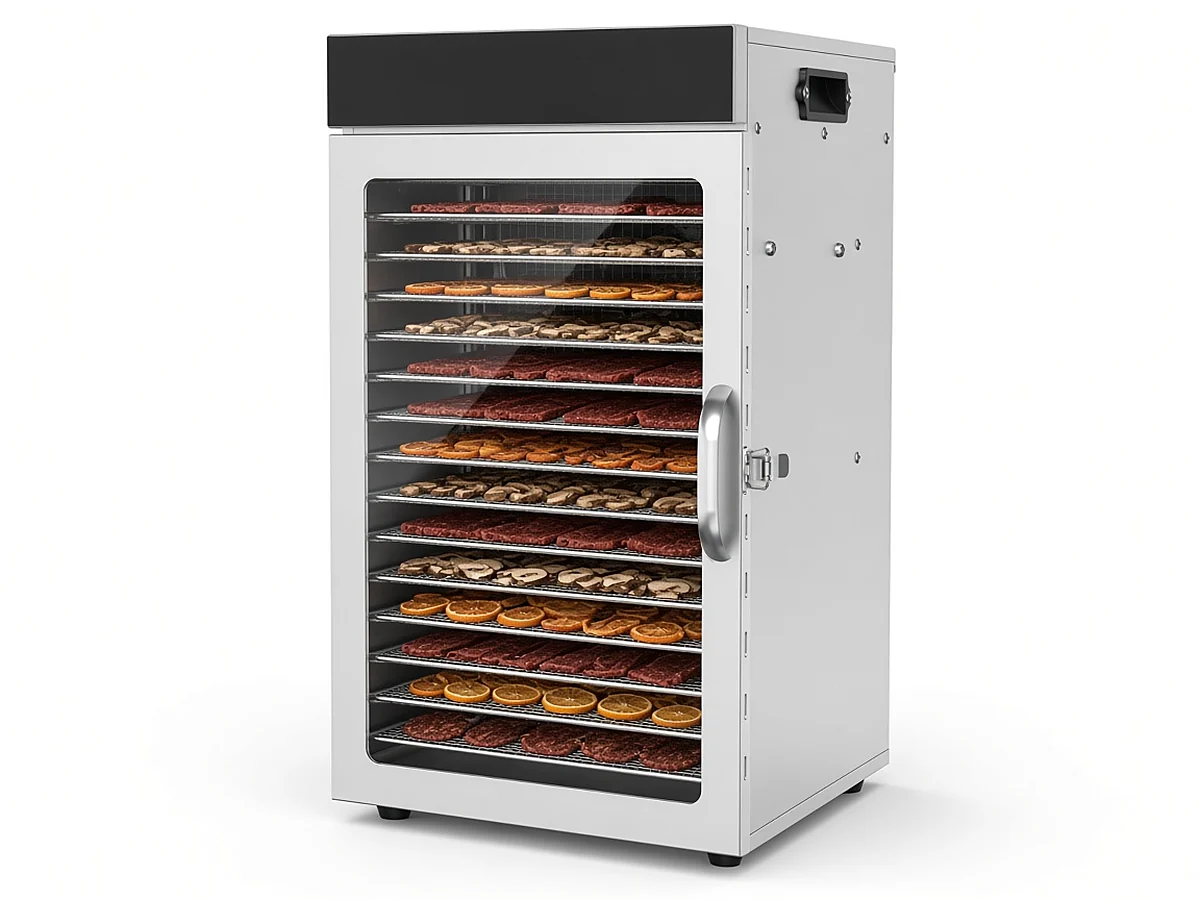
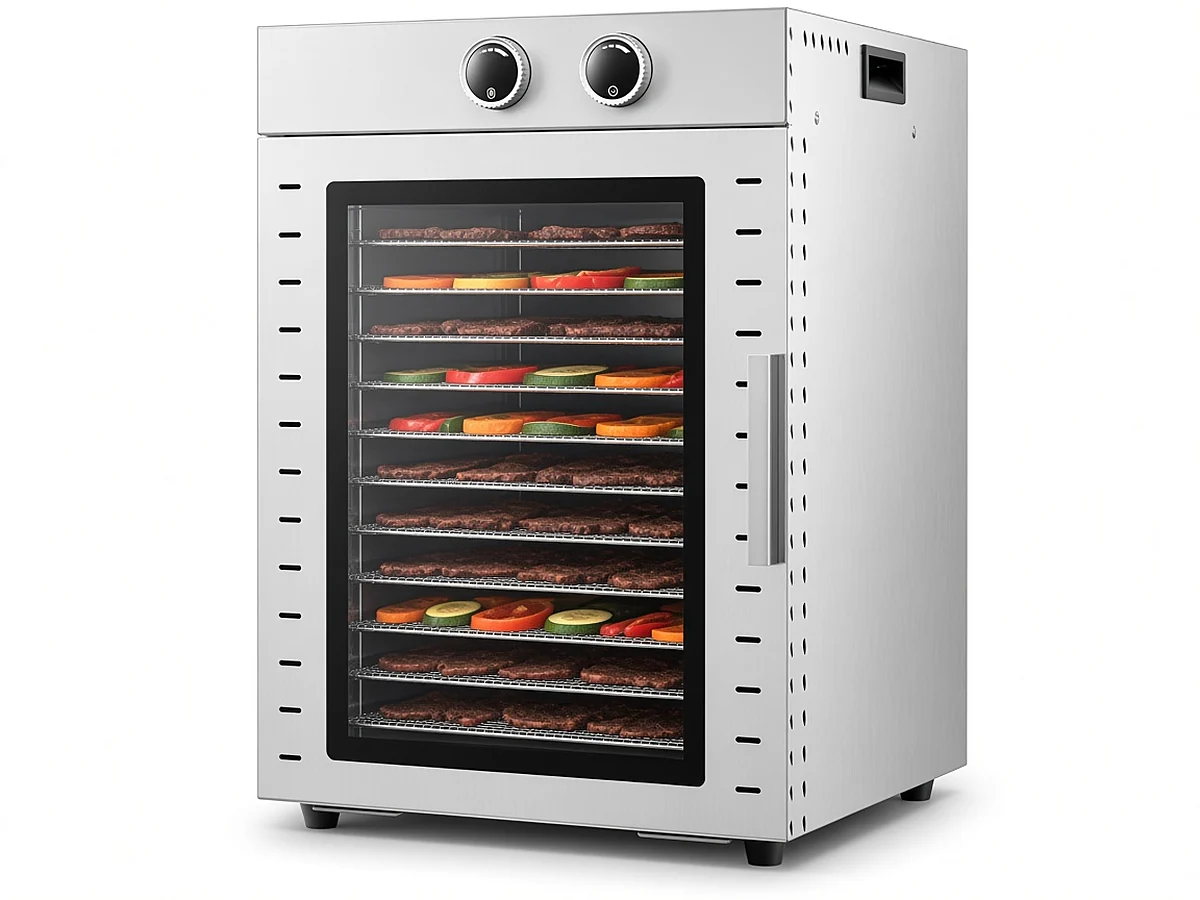
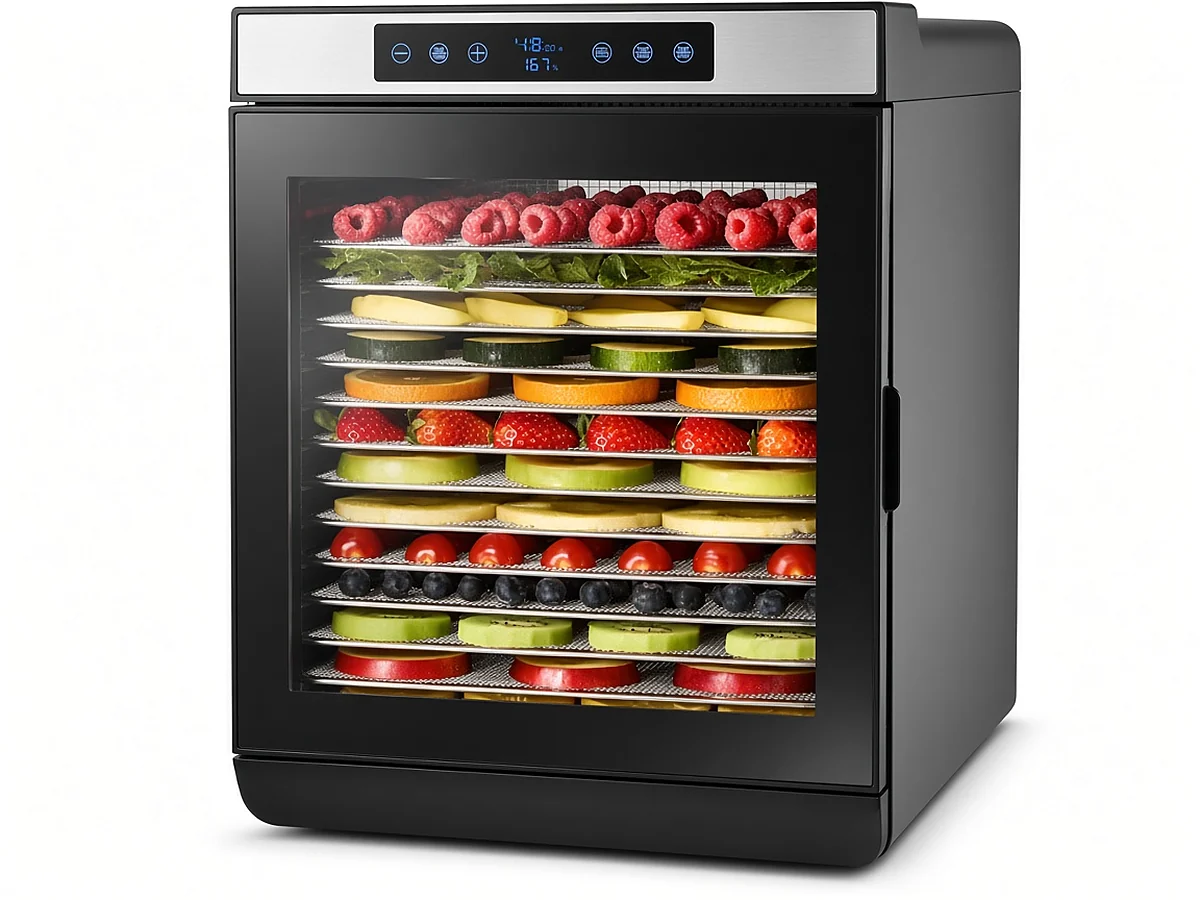 Magic Mill Premium Food Dehydrator, 15 XL Stainless TraysMagic Mill · Dehydrator
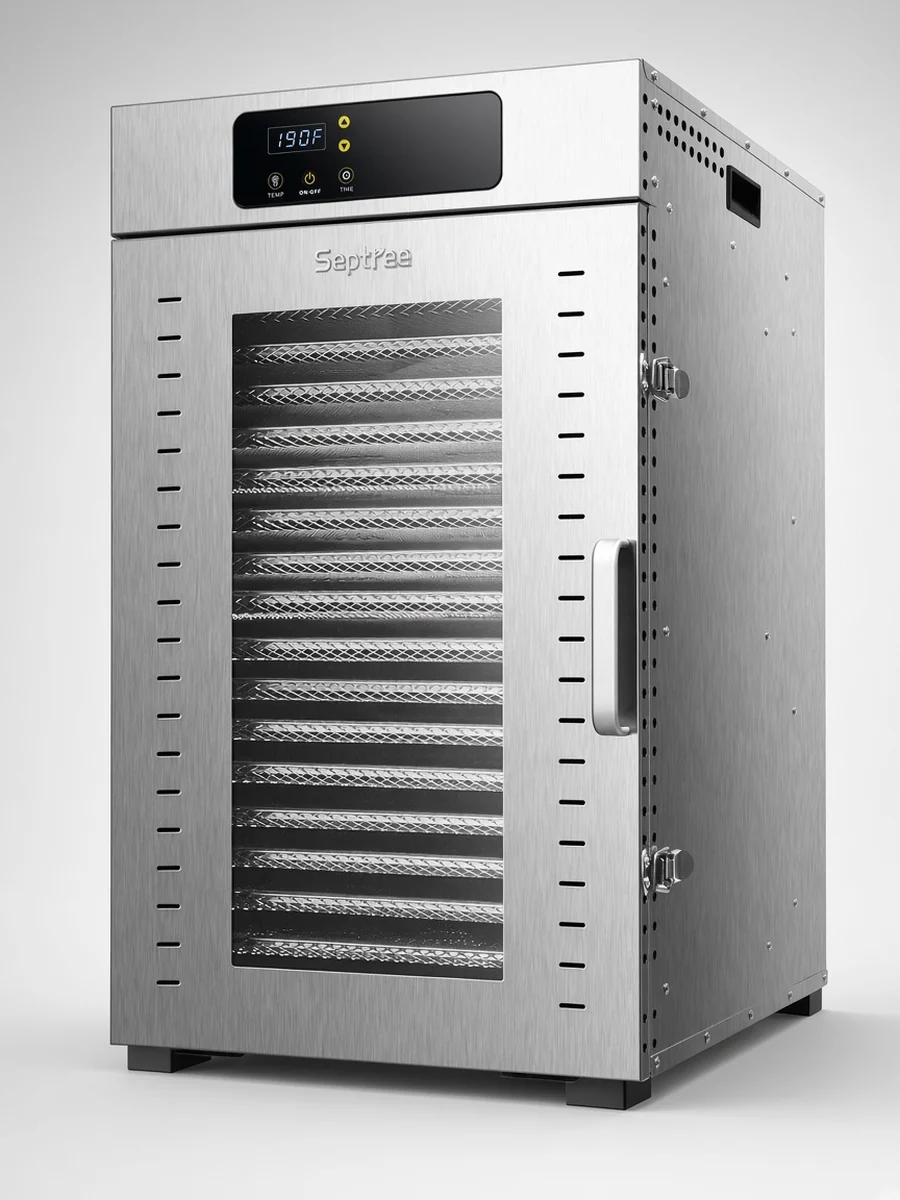 Septree Commercial Food Dehydrator, 18 Trays (DBC-18A)Septree · Dehydrator
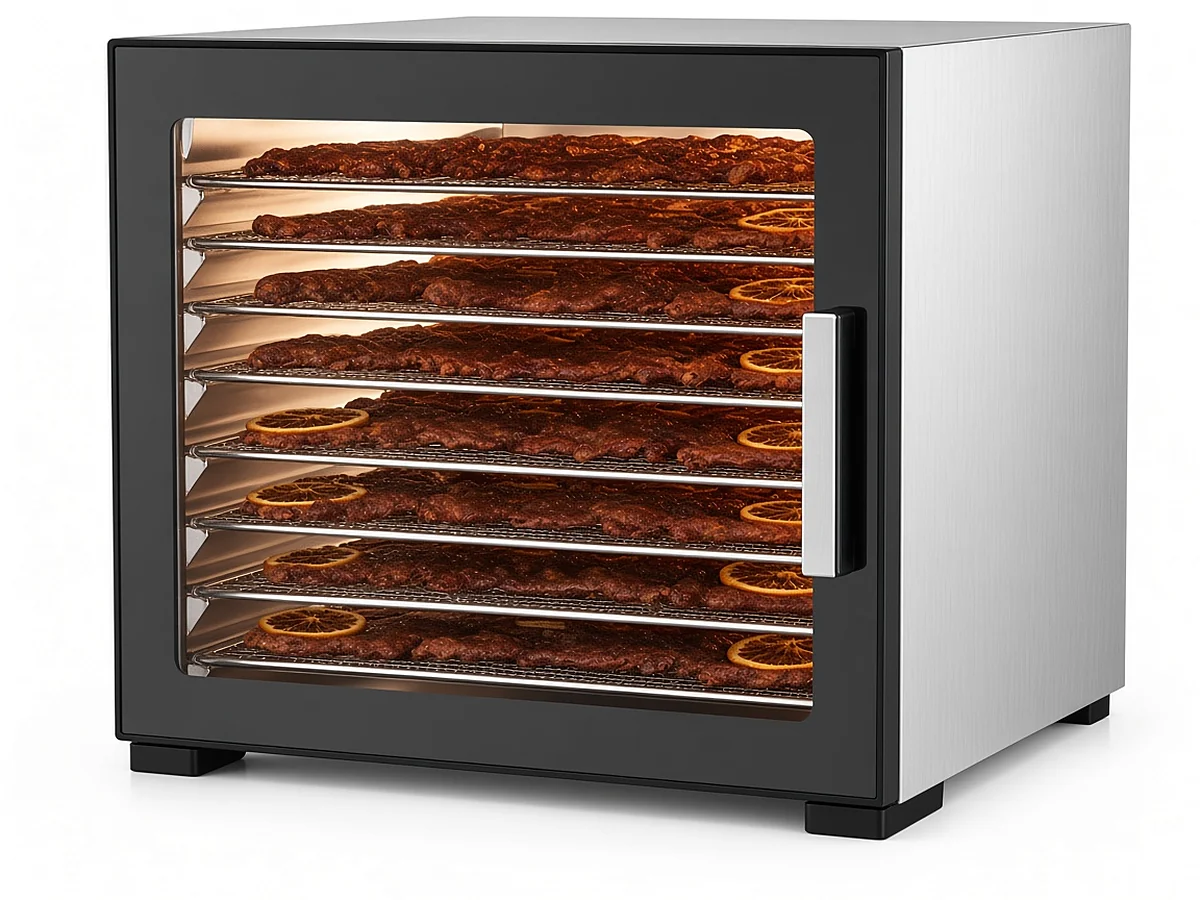
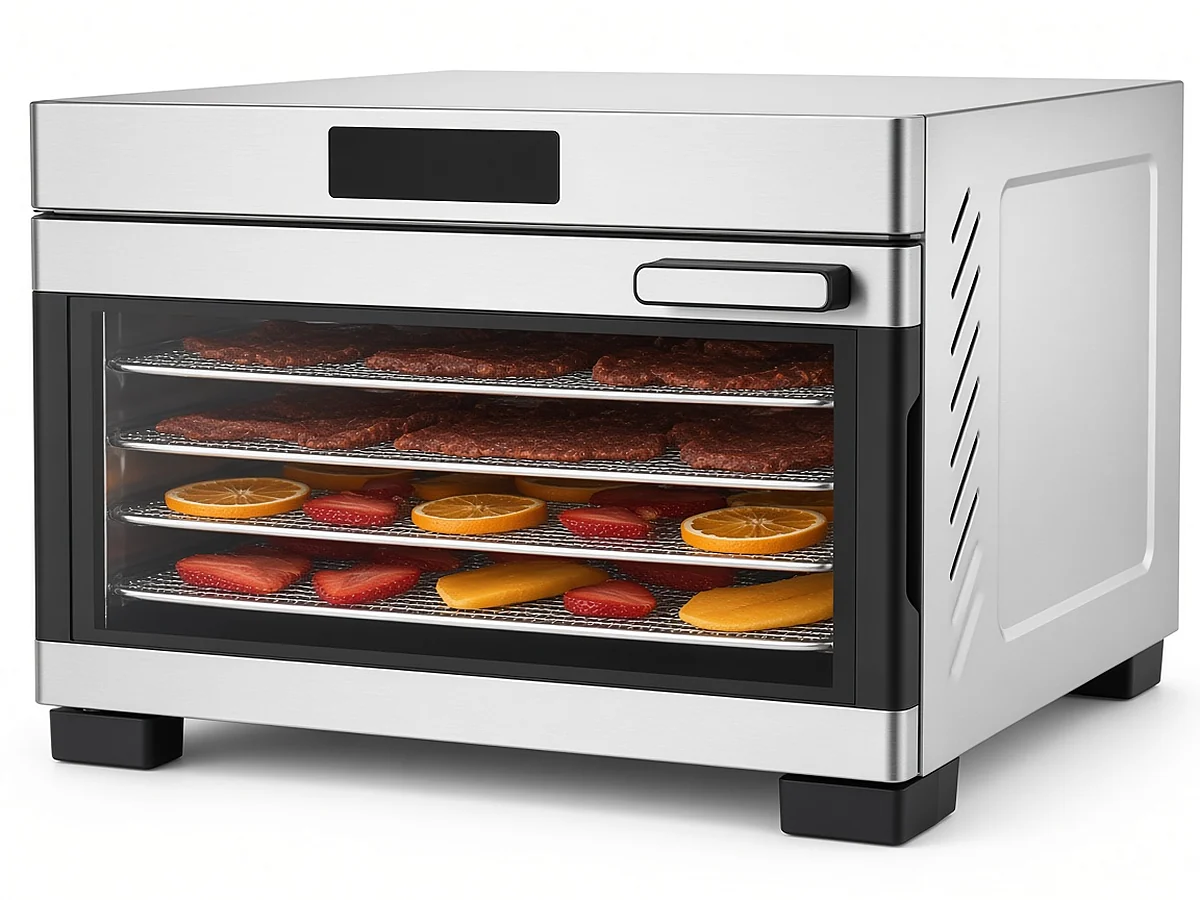
 Elite Gourmet EFD308 Food Dehydrator, 4 Stainless TraysElite Gourmet · Dehydrator
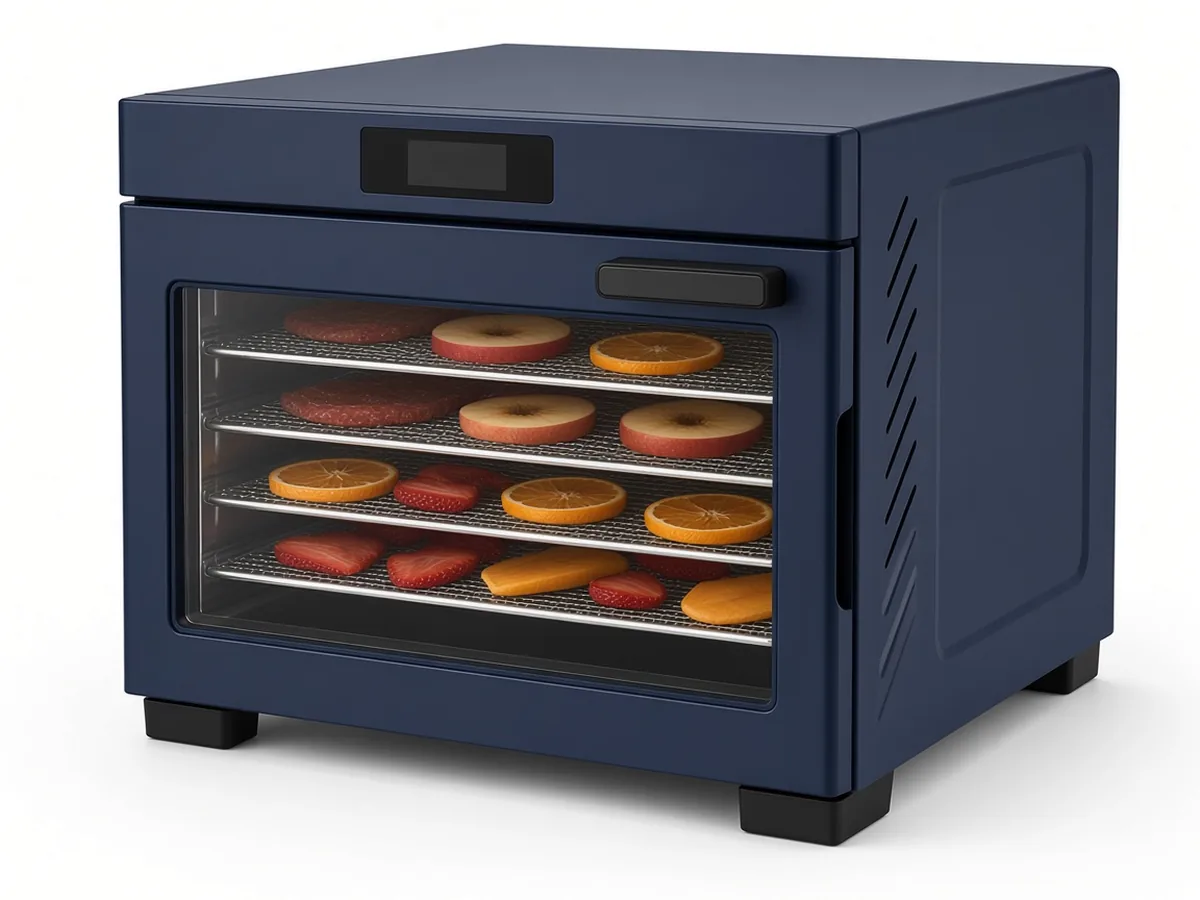
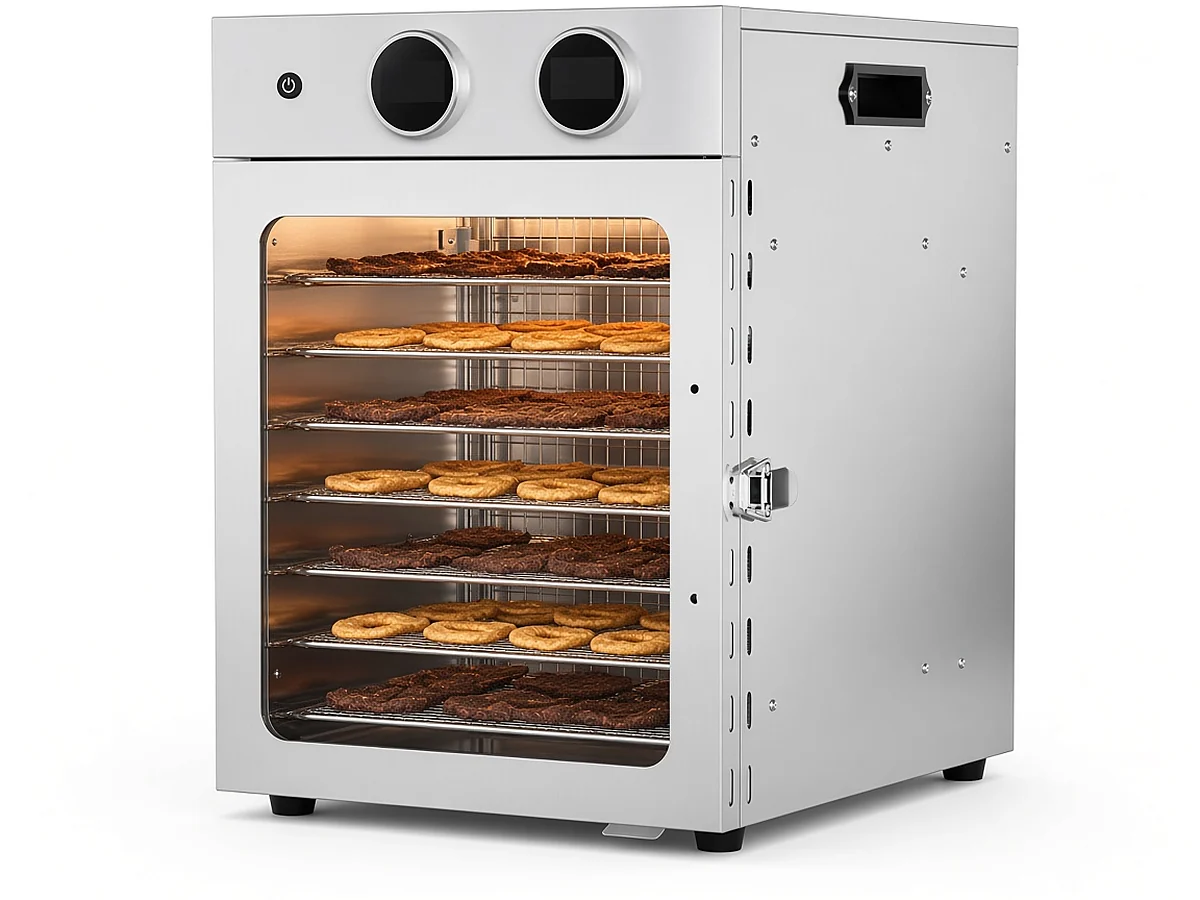
Comparisons · Food Dehydrators, COSORI, Presto, Magic Mill
Last updated: November 2026
Food dehydrators come in two basic shapes: round or square stacks of trays with a fan at the top or bottom, and box-style cabinets with sliding shelves and a fan at the back. The shape is not just a style choice. It decides how air moves, how evenly food dries, whether flavours mix and how much you can fit.
This comparison is based on the National Center for Home Food Preservation (NCHFP), extension guidance and published manufacturer specifications from live Amazon US listings.
The short answer
Choose a stackable (vertical airflow) unit if you want a compact, lighter machine for occasional batches of jerky, fruit or herbs, or one you can expand with extra trays, and you do not mind checking or rotating trays.
Choose a shelf or box (horizontal airflow) unit if you dry often, mix different foods in one batch, or want trays you can slide out without unstacking.
How the airflow differs
The NCHFP describes both designs. In vertical airflow units the heating element and fan sit at the base (or, on some models, the top), and air travels up or down through the stack. In horizontal airflow units the heater and fan sit at the side or back, and air crosses each shelf.
The NCHFP lists three advantages of horizontal flow: less flavour mixing, so several foods can dry together; equal heat across all trays; and no juices dripping into the heating element. With a base-mounted vertical design, it notes, flavours can mix and liquids can drip onto the heater. Top-mounted fans, used by Presto and Nesco, are designed to avoid the dripping problem.
Side-by-side comparison
Factor | Stackable (vertical) | Shelf / box (horizontal) |
|---|---|---|
Evenness | Trays nearest the fan dry first on many designs | Designed for even heat on every tray |
Mixed foods | Flavours can travel through the stack | Less flavour mixing (NCHFP) |
Capacity | Often expandable with extra trays | Fixed number of shelves; often a larger tray area in the bigger boxes |
Checking food | Unstack to see lower trays | Open the door and slide out a shelf |
Storage | Trays often nest when not in use | Bulkier box on the counter |
Examples you can find on Amazon US
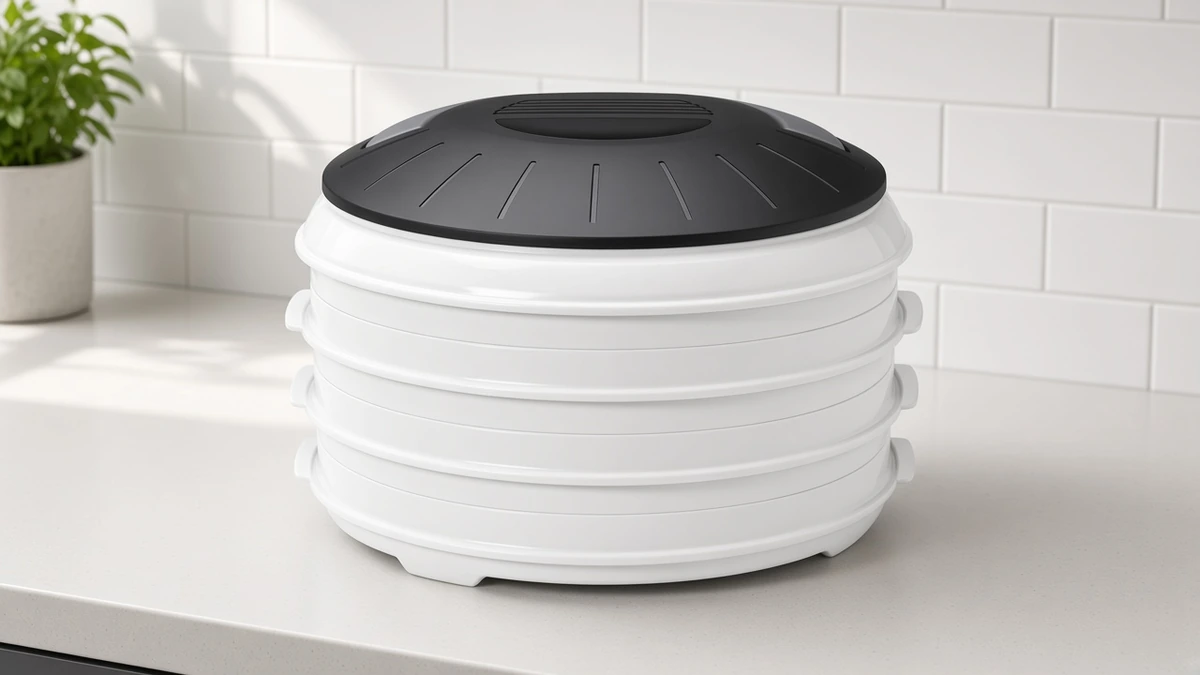
Stackable: Presto 06300 Dehydro
The Presto 06300 lists a 600-watt unit with a top-mounted fan and heater, four trays that expand to eight, and a preset temperature of approximately 165 °F with no thermostat or timer. Presto says no tray rotation is needed. Its manual asks you to use an even number of trays. The fixed temperature suits jerky more than delicate fruit, since extension guidance recommends 140 °F for fruit and vegetables. See the Presto 06300 product page, or check the Amazon listing. Read our Presto 06300 review.
Stackable with a thermostat
Presto is no longer the only stackable on this site you can buy, and it is not the thermostat example. Several live Amazon US stackables now have an adjustable or fixed thermostat, a timer, or both.
The Nesco FD-60 Snackmaster Express is the classic adjustable-heat round: four trays expandable to 12, a 95-155 °F thermostat, 500 W and a top-mounted Converga-Flow fan. There is no timer on the listing. The spec field says 220 V on this US Amazon listing; that is a likely data error, but check the rating plate and do not treat 120 V as confirmed. See the FD-60 product page, or check the Amazon listing.
The Nesco FD-79 Snackmaster Pro Digital adds a digital control and a 90-160 °F range in the bullets (the table says 95-160 °F), with four trays expandable to 12 and 600 W. The Nesco FD-37 is a simpler sibling: four trays expandable to seven and a listed 160 °F setting, with no adjustable range and no timer. The Nesco FD-37A is a near-twin whose spec table lists 230 V on a US Amazon page; treat that as a likely data error and check the plate. We do not recommend NESCO FD-75A; it had no purchasable Amazon US offer at our 11 November 2026 check.
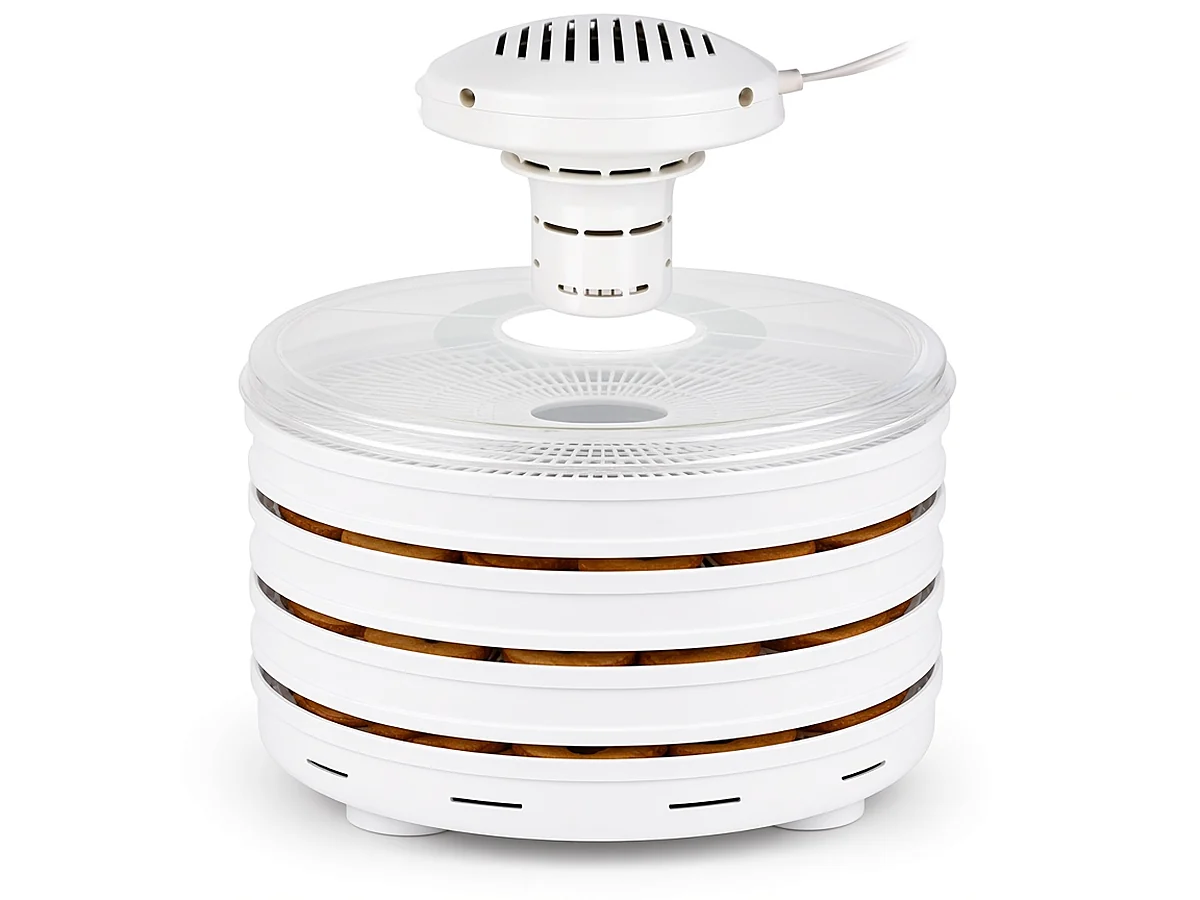
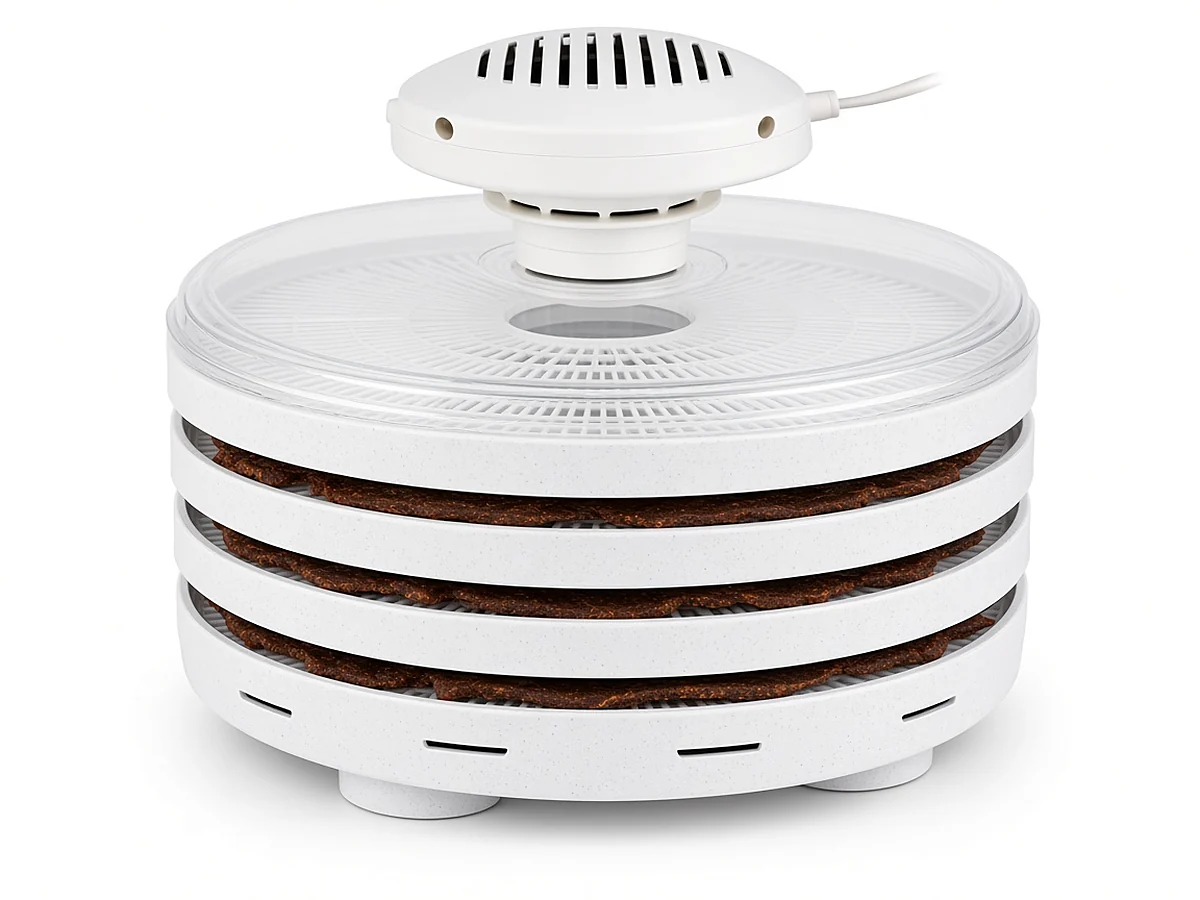
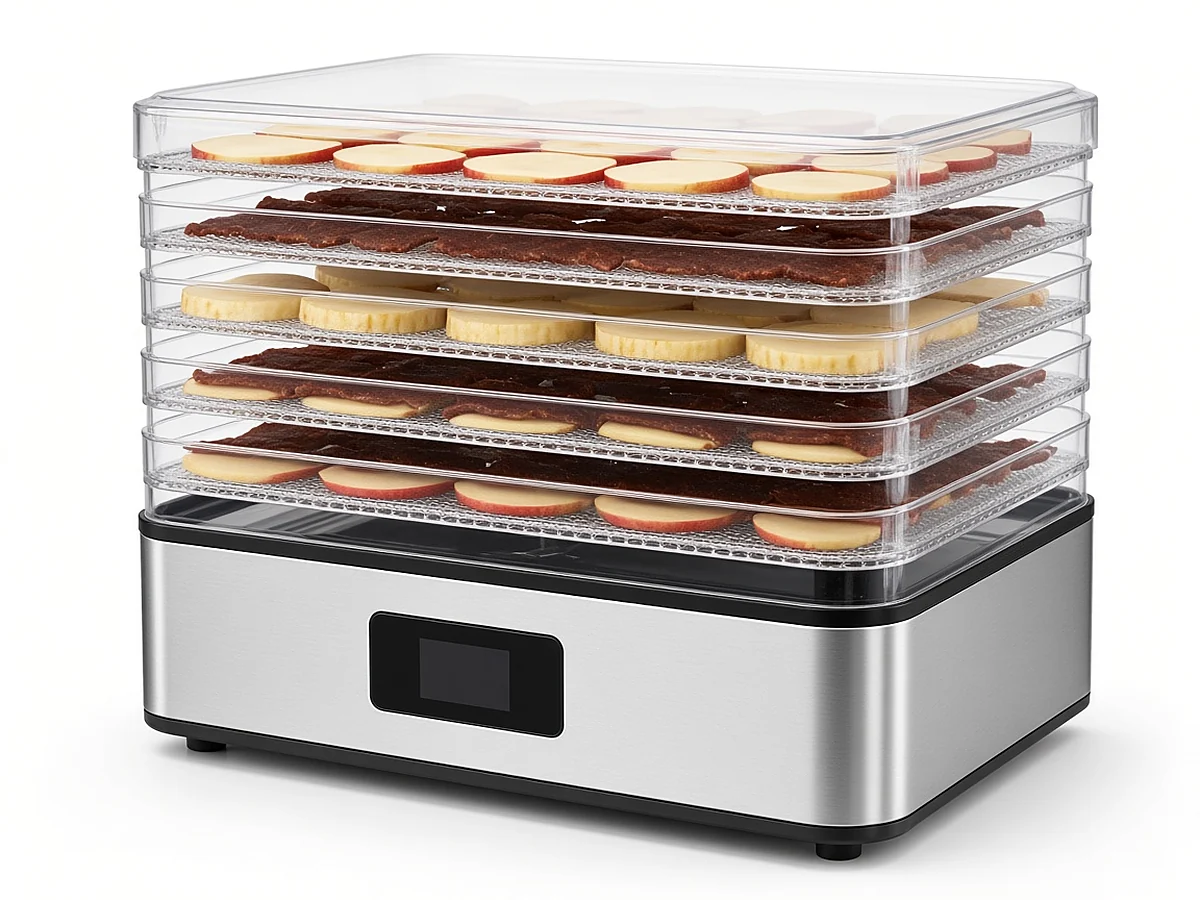
For stainless trays in a small stack, the Magic Mill MFD-5000 has five stainless trays, a digital timer and a bottom-mounted fan. The listing conflicts on the ceiling (bullets 95-167 °F; description and table 158 °F) and on timer length (48 h vs 0.5-99 h). Plan around 158 °F, and expect to rotate trays. See the MFD-5000 product page, or check the Amazon listing.
Live dehydrators that actually specify stainless trays, from this stackable up to 8-, 10- and 12-tray shelf boxes, are ranked in best stainless-steel food dehydrators on Amazon.
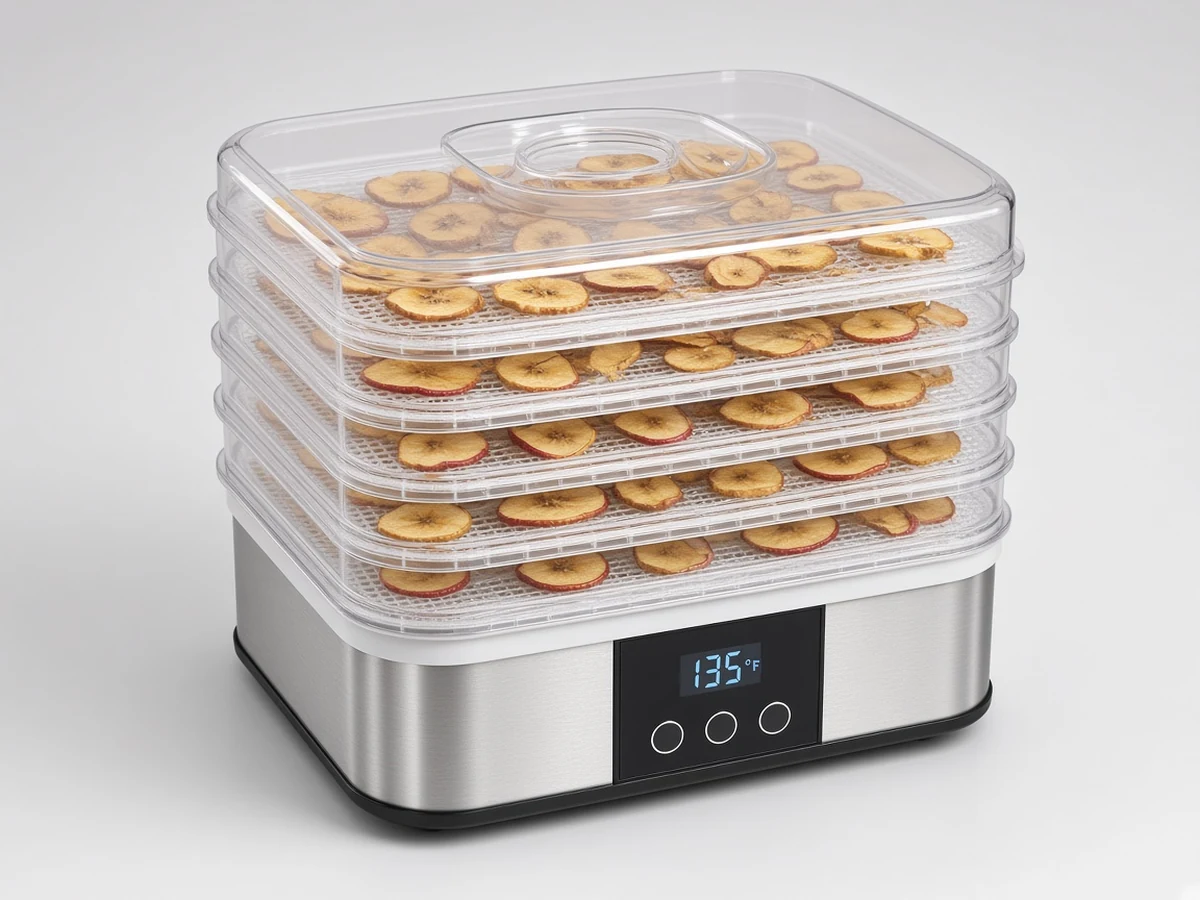
Digital stackable examples include the Hamilton Beach 32100A (five trays, 100-160 °F, 1-48 hour timer, 500 W) and the Elite Gourmet EFD329WD (five collapsible SlimStore trays, 95-158 °F presets, 48-hour timer). The Weston 75-0450-W is a mid-price digital stackable (six trays, 7.4 sq ft, 100-160 °F, 48-hour timer, 800 W). For a high-watt expandable harvest machine, see the Nesco FD-1018A (eight trays, expands to 30, 1,000 W, 95-160 °F) or the digital Nesco FD-1040 (four trays expandable to 20, 48-hour timer, 1,000 W).
Shelf: COSORI CP267-FD
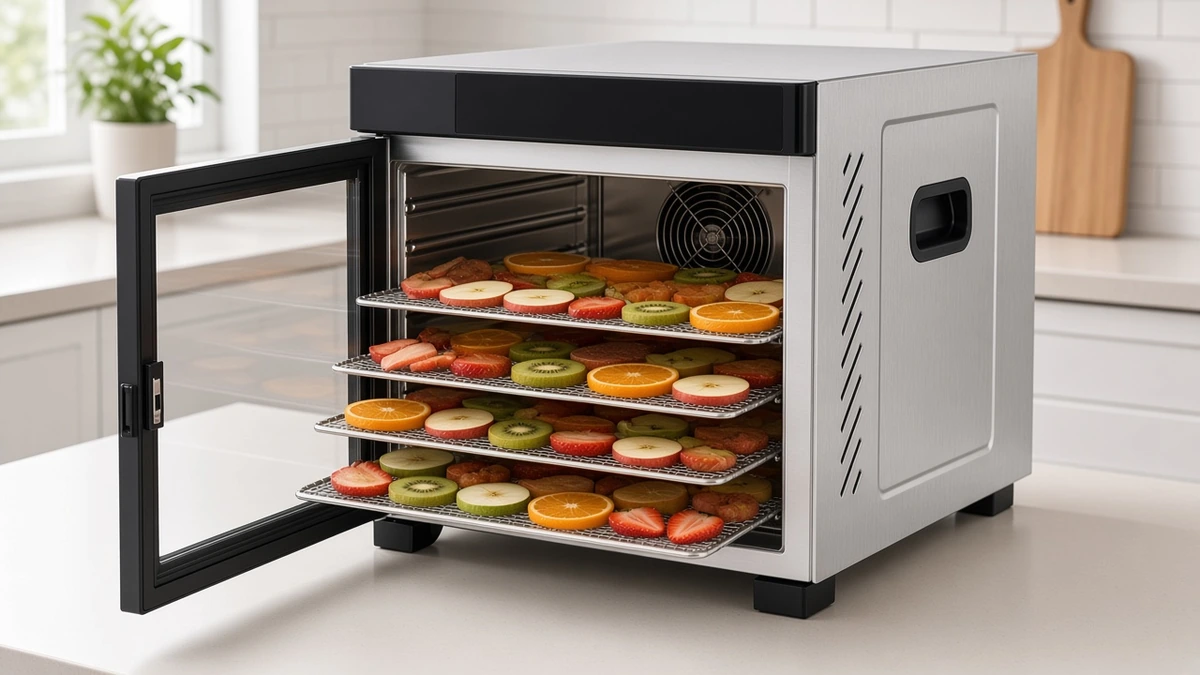
The Amazon US listing describes six stainless steel trays with 6.5 sq ft of drying space, a rear-mounted fan with horizontal airflow, 95-165 °F control and a 48-hour timer. See the COSORI CP267-FD product page, or check the Amazon listing. Read our COSORI CP267-FD spec review.
Shelf: Magic Mill Pro MFD-7700
The Magic Mill MFD-7700 lists seven stainless trays and a rear fan, and says no tray rotation is required. Its own product page and the Amazon listing quote different temperature ranges and timer lengths, which we cover in COSORI vs Magic Mill. Plan around the lower pair (95-167 °F and 24 hours on the maker's page, versus 95-176 °F and 48 hours on the listing). See the MFD-7700 product page, or check the Amazon listing. Read our Magic Mill MFD-7700 review.
A mid-size horizontal that is built for jerky rather than fruit leather is the LEM MightyBite (model 1729): six polypropylene trays, 7 sq ft, 95-167 °F, 800 W and a rear-mounted fan. It is not a stackable, and it is a different machine from the 10-tray LEM BigBite 1731.
Larger shelf units: ten-tray boxes and up
The rear-fan layout scales up if six or seven shelves are not enough. Two live 10-tray stainless units now sit in this role, in place of older draft mentions.
The COSORI CFD-P103 lists ten stainless trays and 7.4 sq ft, 95-167 °F in 1 °F steps, 10 presets, 640 W and a compact 14.8 x 12.3 x 13 in box. See the CFD-P103 product page, or check the Amazon listing. The Magic Mill MFD-7100 lists ten XL stainless trays, 700 W, 95-167 °F, a 48-hour timer plus Keep Warm, and an 18 x 13 x 14 in cabinet (total drying area is not stated). The COSORI Premium Pro P101 is the larger Cosori 10-tray: 15.6 x 15 in trays, 16.2 sq ft, 95-165 °F and 1,000 W. The Magic Mill MFD-1098 Pro is another 10-tray Magic Mill (95-176 °F on the details table, with an 86-196 °F figure on a marketing module; 600 W).
Excalibur's live Select Series covers the same idea with chrome-plated trays and glass doors: the 8-tray DH08SCSS13 (85-165 °F, 80-hour timer, 700 W), the 6-tray DH06SCSS13, and the 10-tray DH10SCSS13 (16 sq ft, 85-165 °F, 800 W, up to 60 hours). The older Excalibur 3926TB is not for sale on Amazon US in our checks, so it is not an example here.
Still larger boxes exist if 10 trays are not enough: the HOPERAN BZ-1520 (12 stainless trays, 86-196 °F, 800 W), the Septree DBC-12C (12 stainless trays, 68-194 °F, 1,000 W), the Magic Mill Premium 15-tray (the title says 15 trays; the spec table says 10; 95-167 °F, 800 W - confirm the tray count in the box) and the Septree DBC-18A (18 trays, 34.42 sq ft, 70-190 °F; the listing says both 2000 W and 1800 W; third-party seller at our check). These are large cabinets that need a permanent spot, so measure before you buy. We rank the live 10- to 18-tray units in best large food dehydrators on Amazon.
What to look for in either design
The NCHFP's checklist applies to both types:
An adjustable thermostat, ideally covering about 85 °F to 160 °F.
A timer, so a batch that finishes overnight does not scorch.
Enclosed heating elements and a recognised safety listing (the NCHFP mentions the UL seal; many current models list ETL).
Sturdy, easy-to-clean trays. The NCHFP advises against wood because it is a fire hazard and hard to clean.
Capacity matters too: the NCHFP estimates that 12 square feet of drying space handles about half a bushel of produce, and it names limited capacity as a dehydrator's main drawback.
Which should you choose?
Pick by how often you dry and how mixed your batches are, then check the thermostat and timer.
Occasional jerky or snacks, small kitchen: a stackable. The Presto 06300 is the simplest fixed-heat option. If you want adjustable heat, use the Nesco FD-60 or FD-79, or the stainless Magic Mill MFD-5000 (remembering its temperature conflict). More cheap stackables are in the budget dehydrator guide.
Regular drying and mixed foods: a rear-fan shelf unit such as the COSORI CP267-FD or, for a smaller counter, the Magic Mill MFD-7700.
Bigger batches, still a shelf box: the COSORI CFD-P103, Magic Mill MFD-7100 or Excalibur Select DH08. For harvests you want to expand over time, a Gardenmaster such as the FD-1018A or FD-1040 stays in the stackable family.
Final verdict
Horizontal (shelf) airflow is the better design for most people who dry regularly: heat is more even across trays and flavours mix less, as the NCHFP notes. Vertical (stackable) units still make sense if you dry occasionally, want something light to store or want to add trays over time. You no longer have to accept a fixed 165 °F stackable to stay in that shape: live Nesco and Magic Mill stackables now offer a thermostat, a timer, or both. Whichever you choose, insist on an adjustable thermostat if you dry more than jerky, and, ideally, a timer.
Frequently asked questions
Do stackable dehydrators need tray rotation?
Some do. Makers of top-fan stackables such as Presto and Nesco say rotation is not needed, but check lower trays on dense loads either way. Base-fan stackables such as the Magic Mill MFD-5000 dry the lower trays first, so rotation is more useful.
Are horizontal dehydrators better for jerky?
They dry more evenly and keep drips away from the heater. Whichever type you use, extension guidance says jerky must reach an internal 160 °F, so follow a tested method that heats the meat before or after drying. A 155 °F or 158 °F listing ceiling is not the same as the meat reaching 160 °F. Live machines that can hold the 130-140 °F drying band are ranked in best dehydrators for jerky.
Which type uses less counter space?
Stackables usually have a smaller footprint and trays that nest for storage. The Elite Gourmet EFD329WD's SlimStore trays are built to collapse flatter still. Shelf units are bulkier boxes but let you check food by sliding out a shelf. The compact CFD-P103 is the unusual 10-tray box with a 14.8 in depth; the MFD-7100 and Premium Pro P101 are deeper.
Related guides
See the shortlists in our food dehydrators on Amazon roundup and the budget dehydrator guide, or learn the basics in how to use a food dehydrator.