
Freeze Dryer vs Dehydrator: Which One Fits the Way You Preserve Food?
Published 10/29/2026 · Updated 11/24/2026
Quick answer
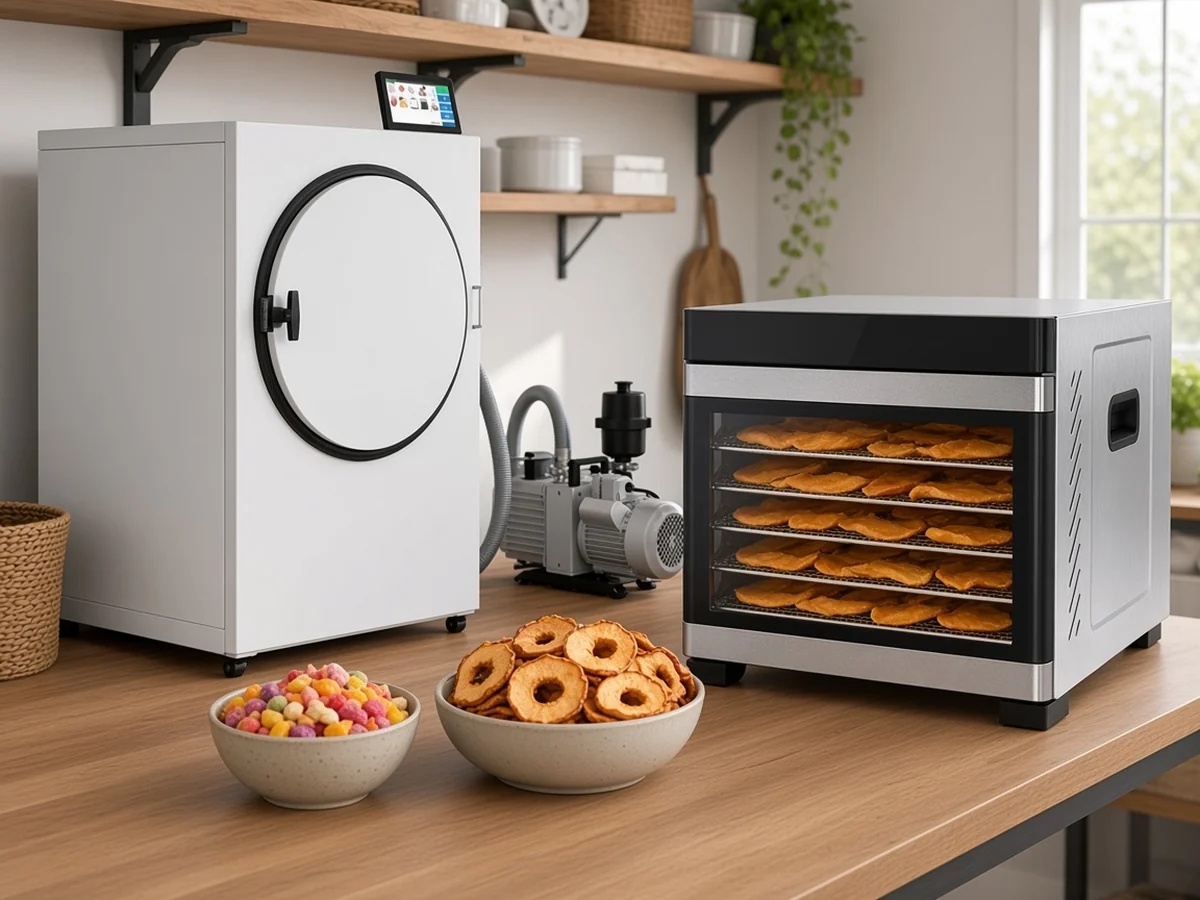
A dehydrator blows warm air to dry food for months-scale storage; a home freeze dryer freezes food and removes ice under vacuum for lighter texture and much longer shelf life. Choose a dehydrator for jerky, herbs and snacks you will eat soon; choose a freeze dryer when multi-year pantry storage is the goal.
Products mentioned in this guide
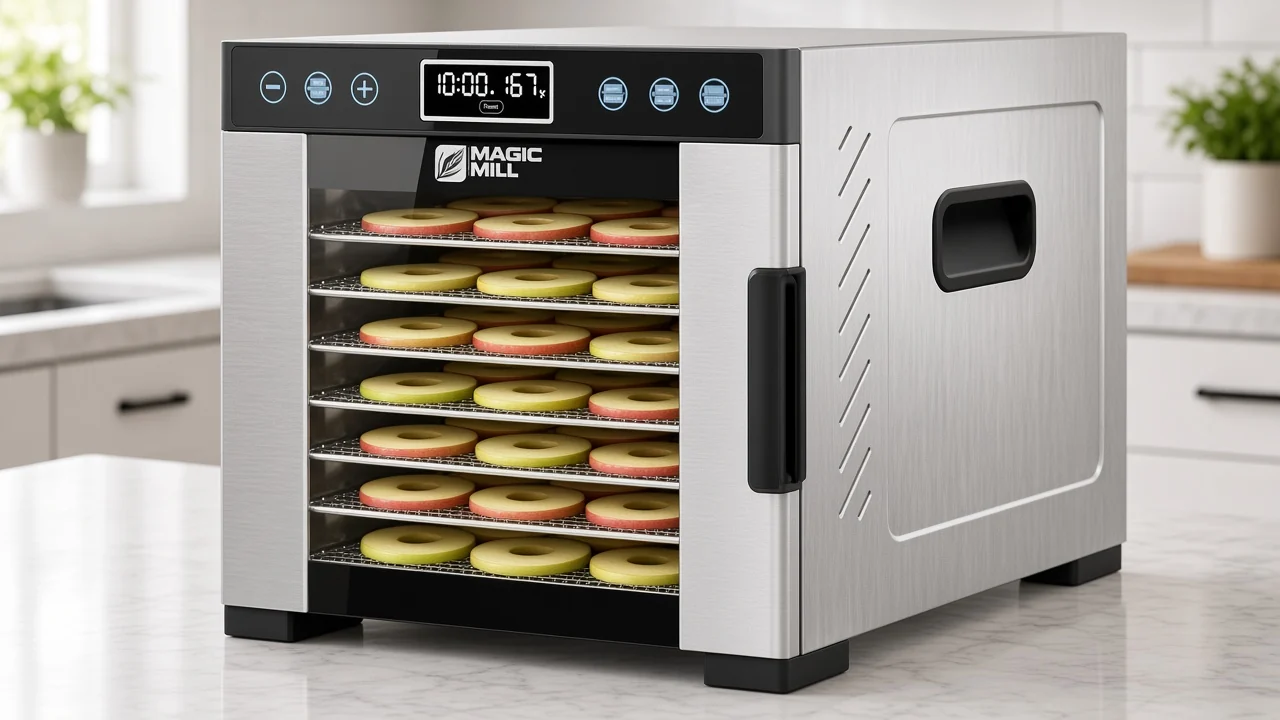 Magic Mill Pro MFD-7700 Food Dehydrator, 7 Stainless TraysMagic Mill · Dehydrator
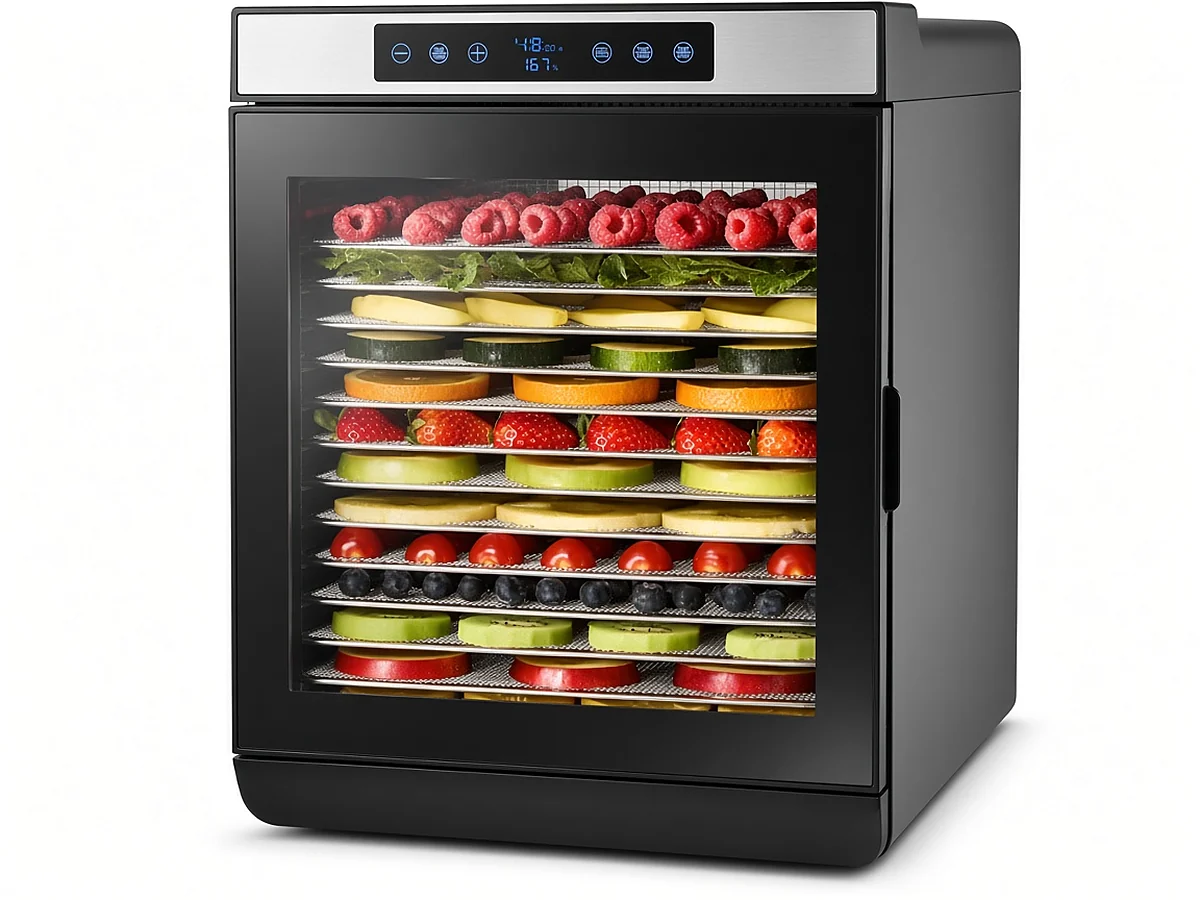 Magic Mill Premium Food Dehydrator, 15 XL Stainless TraysMagic Mill · Dehydrator
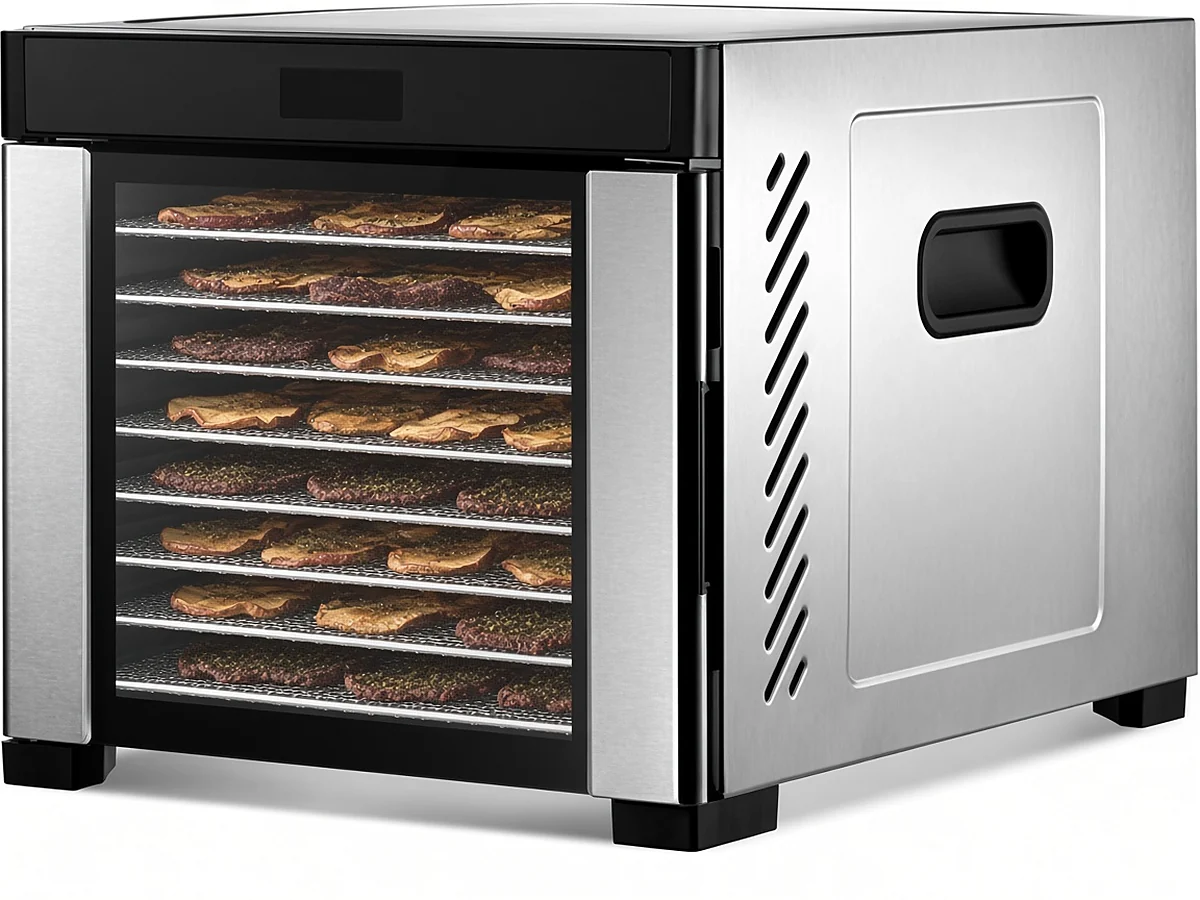 Magic Mill Pro MFD-7070 Food Dehydrator, 7 XL Stainless TraysMagic Mill · Dehydrator
Comparisons · Freeze Dryers, Food Dehydrators, Shelf Life, Running Cost
Updated 30 October 2026
A freeze dryer and a food dehydrator both take water out of food so it keeps without refrigeration. They do it in very different ways, and that difference shows up in what you can make, how long it keeps, how long each batch takes and what the machine asks of your kitchen and your budget.
This guide compares the two using university extension publications, the National Center for Home Food Preservation and published product specifications.
The short answer
Choose a dehydrator if you mainly want jerky, fruit leather, dried fruit chips, herbs or seeds, you have limited space, and you plan to eat what you make within months rather than years.
Choose a freeze dryer if you want to preserve full meals, dairy, eggs or garden surplus for long-term storage, and you care about food keeping its shape, colour and texture when rehydrated.
Consider both if you preserve a lot of food; they suit different foods.
How each one works
Dehydrator: warm air and time
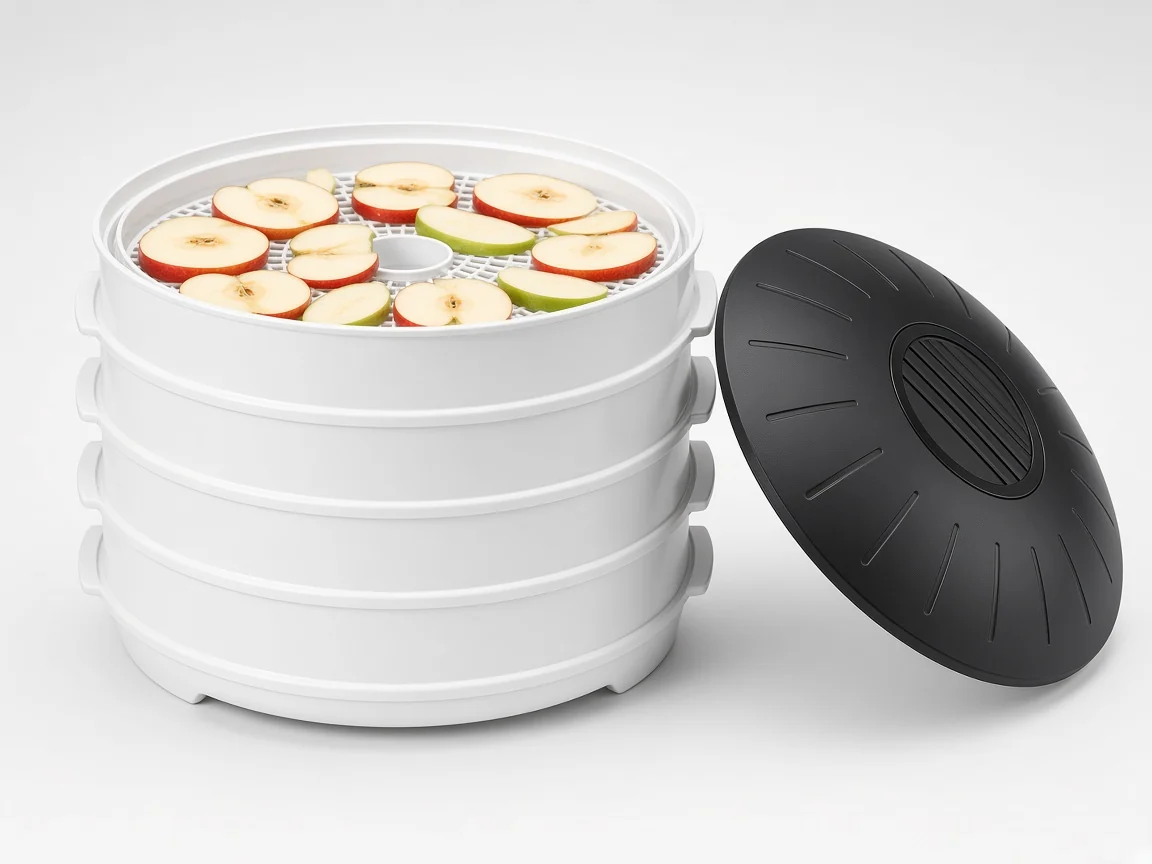
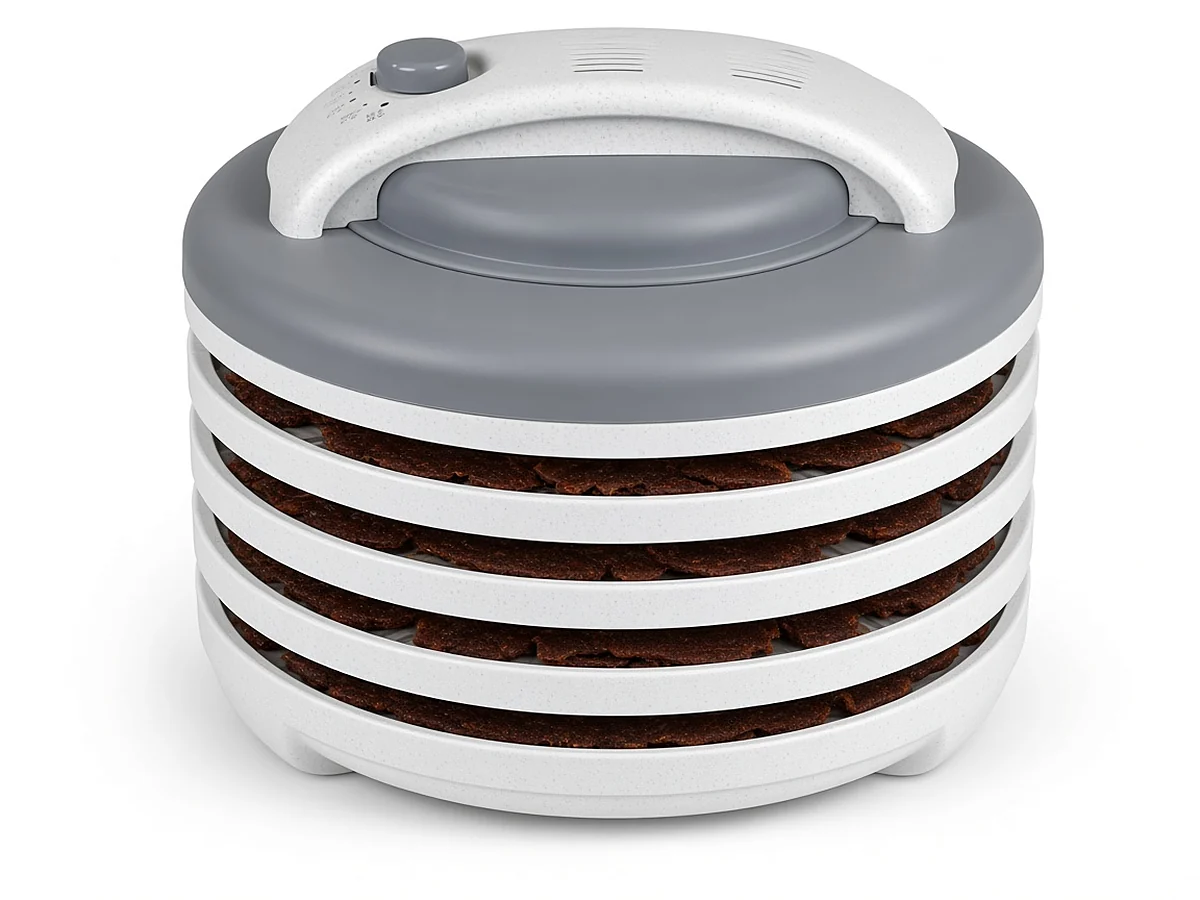
A dehydrator is a small appliance with a heating element, a fan and vents. Warm air moves across mesh trays and carries moisture away. The National Center for Home Food Preservation (NCHFP) describes dehydrators as designed to dry food at about 140°F, and recommends one with an adjustable thermostat and a timer.
Freeze dryer: freezing, vacuum and sublimation
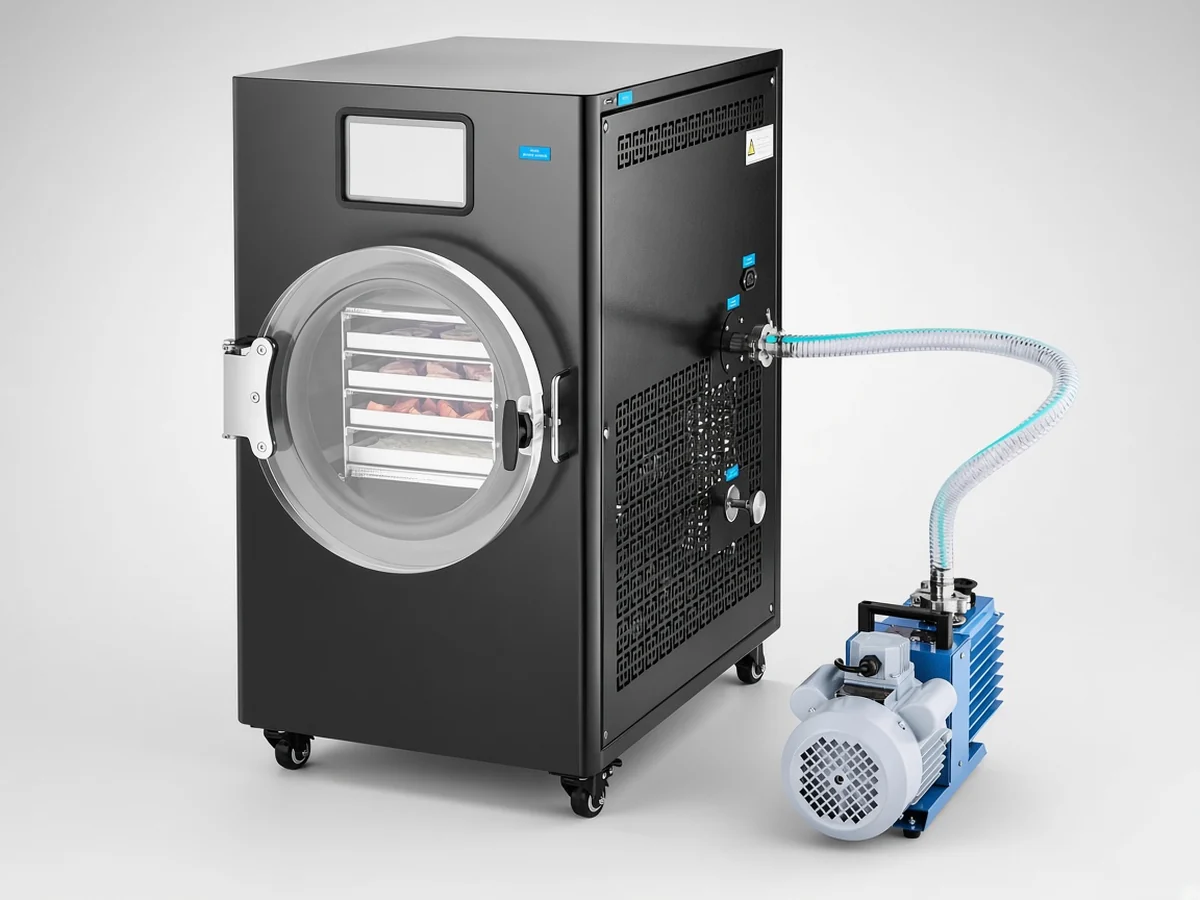
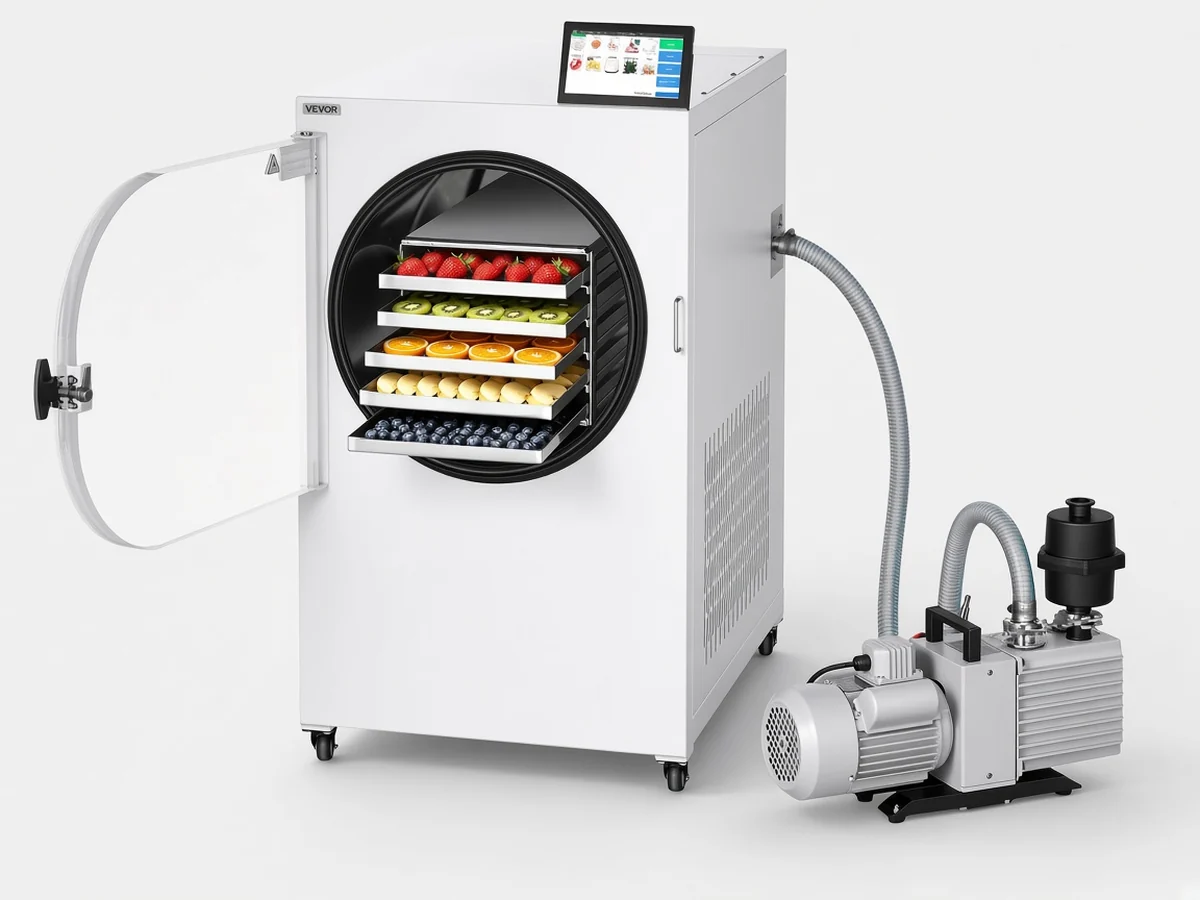
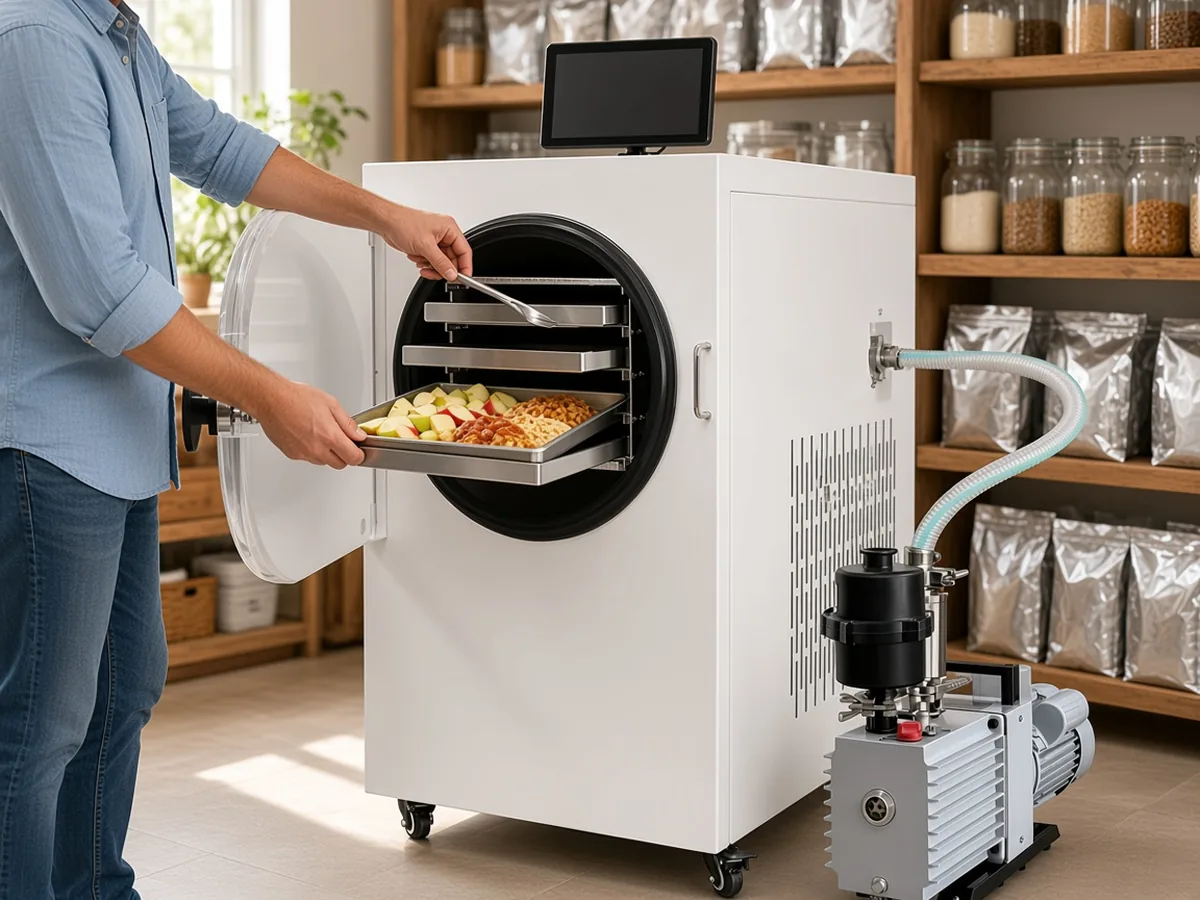
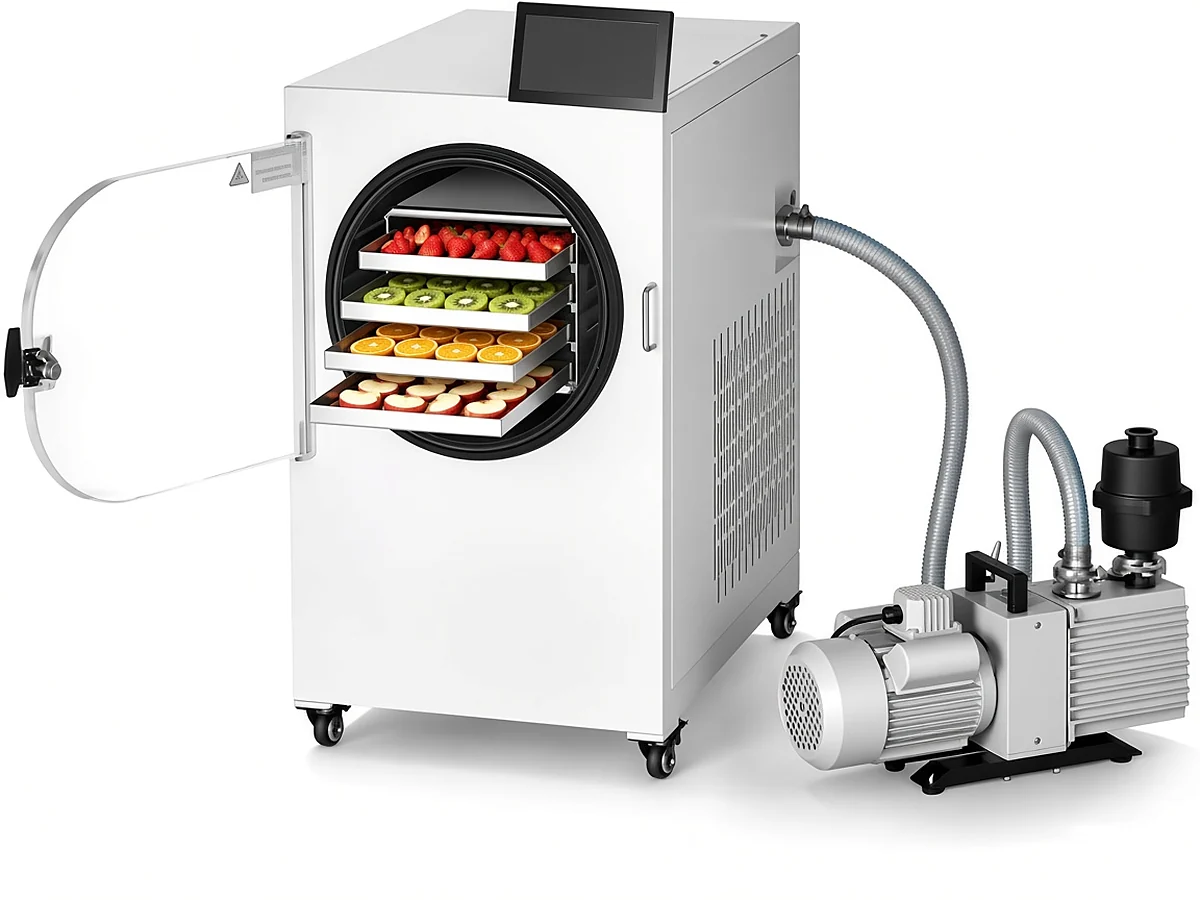
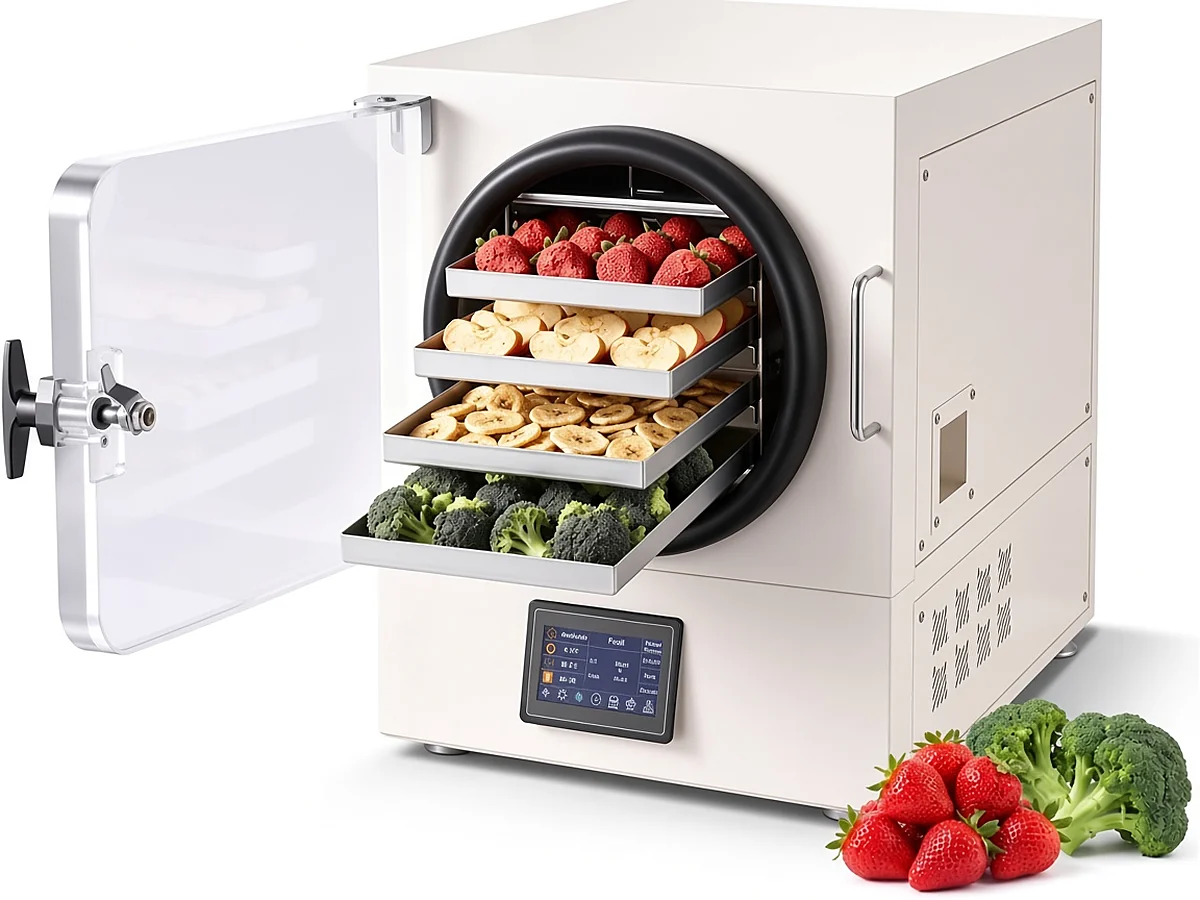
A home freeze dryer first freezes food solid, using a compressor that also chills a cold trap (condenser) well below zero. As one example listed on Amazon US, VEVOR quotes a −35 °C cold trap for its HFD-4. A vacuum pump then removes the air from the chamber and the shelves warm gently, so the ice turns straight into vapour without melting. Penn State Extension says this removes up to 98 percent of the water in the food. The University of Minnesota Extension notes there is no heat treatment step in the process. Our guide to how home freeze drying works walks through each stage.
Dehydrators sold as freeze dryers on Amazon
Check before you buy. When we searched Amazon US on 29 October 2026, many results for "freeze dryer" were hot-air dehydrators. They list a warm temperature range such as 35–90 °C, a 360° fan and 6 to 12 layers, and they have no vacuum pump or compressor. A real freeze dryer names a vacuum pump, a refrigerated cold trap well below zero and a sealed chamber, and it costs about as much as a major appliance, not a small kitchen gadget. If a listing does not mention a vacuum pump, it is not a freeze dryer. Our guide to spotting dehydrators sold as freeze dryers shows what to look for.
Side by side
Factor 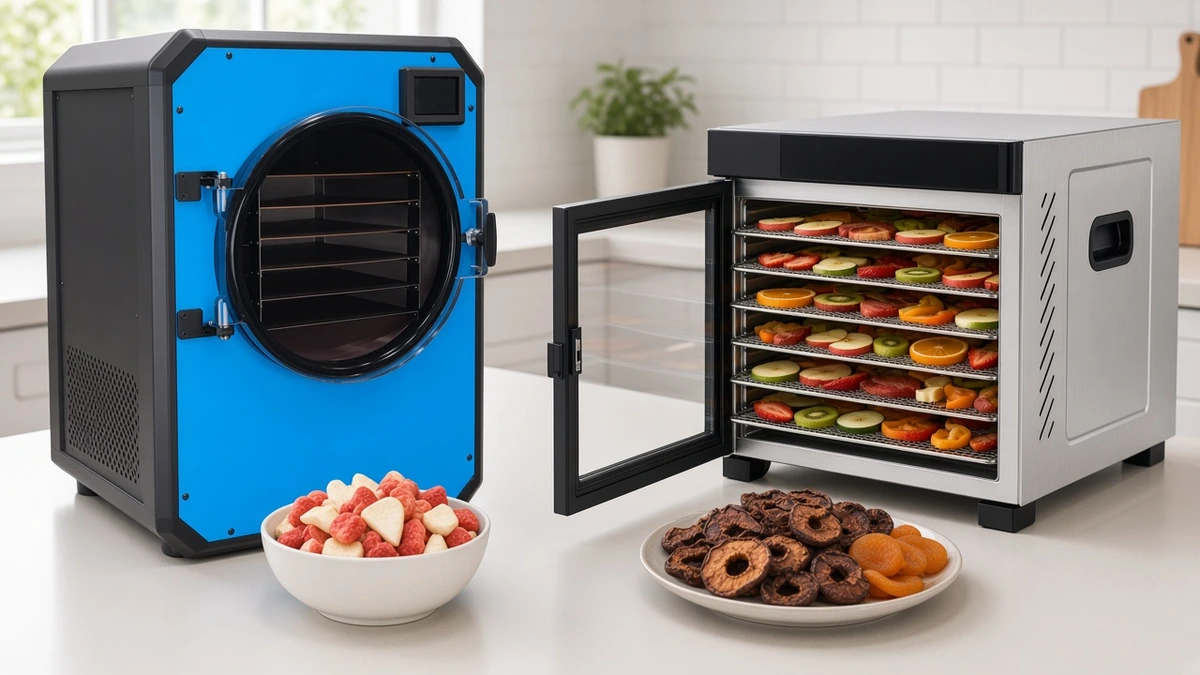 | Freeze dryer | Dehydrator |
|---|---|---|
How it dries | Freezes food, then removes ice under vacuum | Warm, moving air (about 140°F) |
Typical drying time | About 20–40 hours (Arizona Extension) | About 4–16 hours (Arizona Extension) |
Water removed | Up to 98% (Penn State Extension) | Home-dried fruit is about 20% moisture (NCHFP) |
Storage guidance | Home-dried: not recommended beyond 5–10 years (Utah State) | About 4 months to 1 year (NCHFP) |
Size | Large cabinet plus a separate pump on most models | Countertop appliance |
Energy use | Often several times that of dehydrating (Utah State) | Lower |
Drying times vary with the food, thickness and load; treat these as ranges, not promises.
Texture, flavour and nutrition
This is where freeze drying is strongest. Penn State Extension says freeze-dried food keeps its colour and shape better than dehydrated food and weighs less. Utah State University Extension describes freeze drying as the "gold standard" for high-quality food preservation because the low temperatures help protect nutrients and flavour.
The University of Arizona Cooperative Extension reports that freeze drying can retain as much as 97% of heat-sensitive vitamins, compared with losses of up to 40% for dehydrated foods. Those are the extension service's figures, not ours. Nutrients still decline in storage: Utah State notes that sensitive vitamins such as vitamin C can drop significantly within one to three years even in freeze-dried food.
Dehydrated food is denser and chewier: ideal for jerky or fruit leather, less so for rehydrated meals.
Storage and shelf life
Because freeze drying removes more water, freeze-dried food generally lasts longer, provided it is packaged well.
Dehydrated food: the NCHFP gives recommended storage times of 4 months to 1 year. Most dried fruit keeps about 1 year at 60°F and about 6 months at 80°F, and vegetables keep roughly half as long as fruit. Store it airtight in a cool, dry, dark place.
Freeze-dried food: the "25 years" figure you often see applies to commercially prepared products, according to the University of Minnesota Extension, which also notes there is limited shelf-life data for home units. Utah State says home freeze-dried food is not recommended beyond 5 to 10 years after processing. Utah State says thick Mylar bags with oxygen absorbers give the best long-term protection, and Penn State suggests vacuum-sealed plastic bags only for about two to three years.
Our guide to storing freeze-dried food and how long it lasts covers packaging choices in detail.
Food safety: neither method is a kill step on its own
It is easy to assume that drying makes food safe. The sources are clear that it does not, by itself.
Freeze drying: the University of Minnesota and Penn State extensions both state that freeze drying does not kill harmful bacteria. Bacteria can survive dormant and grow again when water is added back. Raw meat and eggs can be freeze dried, but they must be cooked to a safe internal temperature before eating. LSU AgCenter warns against ending a cycle early, because moist pockets left in dense foods could support Clostridium botulinum.
Dehydrating: for jerky, the NCHFP recommends the meat reach an internal temperature of 160°F, either by heating the strips in marinade before drying or by heating the dried strips in an oven afterwards. For pork or wild game, it recommends first freezing pieces 6 inches thick or less at 0°F or below for at least 30 days to address the trichinella parasite, and notes freezing does not eliminate bacteria.
For more, see our guide to freeze drying food safety.
What each one handles well
Freeze dryer: Penn State lists ice cream, milk, eggs and complete meals among the foods that can be freeze dried but would be hard to dehydrate. Arizona Extension adds raw and cooked foods, mixed dishes and some dairy. Foods high in fat are difficult or impossible; Arizona Extension names butter and chocolate as poor candidates. Freeze-dried candy has also become a popular use. Harvest Right documents a dedicated candy mode in its manual, while other machines leave you to set candy runs up yourself.
Dehydrator: the NCHFP highlights fruit leathers, banana chips, pumpkin seeds, herbs and beef jerky, and notes dried foods are ideal for backpacking and camping because they are light and need no refrigeration.
Cost, space and noise
Up-front cost. Penn State Extension describes freeze dryers as an expensive initial investment compared with a dehydrator. We do not quote prices here; check the current price on the listing before you buy.
Running cost. Freeze drying uses far more energy because each batch runs for many hours with a compressor, heater and vacuum pump. As an example, VEVOR lists a rated power of 1,550 watts for its HFD-4. Our own calculation at the US average residential rate of 18.16 cents per kWh (US EIA, August 2026) works out to about $0.28 an hour, or about $6.76 for every 24 hours at that rated power, which is an upper bound. That is a DryFreezeWise calculation from the stated wattage, not a manufacturer figure. A dehydrator's cost depends on its wattage and how long you run it; multiply the watts by the hours and your electricity rate, or use our running cost calculator. Our freeze dryer running cost guide shows the full working.
Consumables and upkeep. Freeze dryers with oil pumps need regular oil changes (see our pump oil guide), and long-term storage adds Mylar bags and oxygen absorbers. A dehydrator mainly needs its trays cleaned.
Space and noise. Penn State notes the freeze dryer and its pump together weigh well over 100 pounds and need a sturdy surface, and that both make a droning noise similar to a vacuum cleaner, with beeps at the end of a cycle. A dehydrator sits on a counter and is far easier to move and store.
Which should you buy?
Jerky, fruit leather and dried fruit snacks: a dehydrator. This is what it is designed for, and the results are the texture people expect.
Backpacking: both work. A dehydrator costs less to buy and run; freeze-dried food is lighter and rehydrates closer to the original, according to Penn State.
Full meals, dairy, eggs and leftovers: a freeze dryer. A dehydrator is not a practical tool for most of these.
Long-term storage and emergency food: a freeze dryer, packaged in Mylar with oxygen absorbers, keeping in mind the 5 to 10 year guidance for home-dried food.
Tight budget or small kitchen: a dehydrator.
Where to start on Amazon
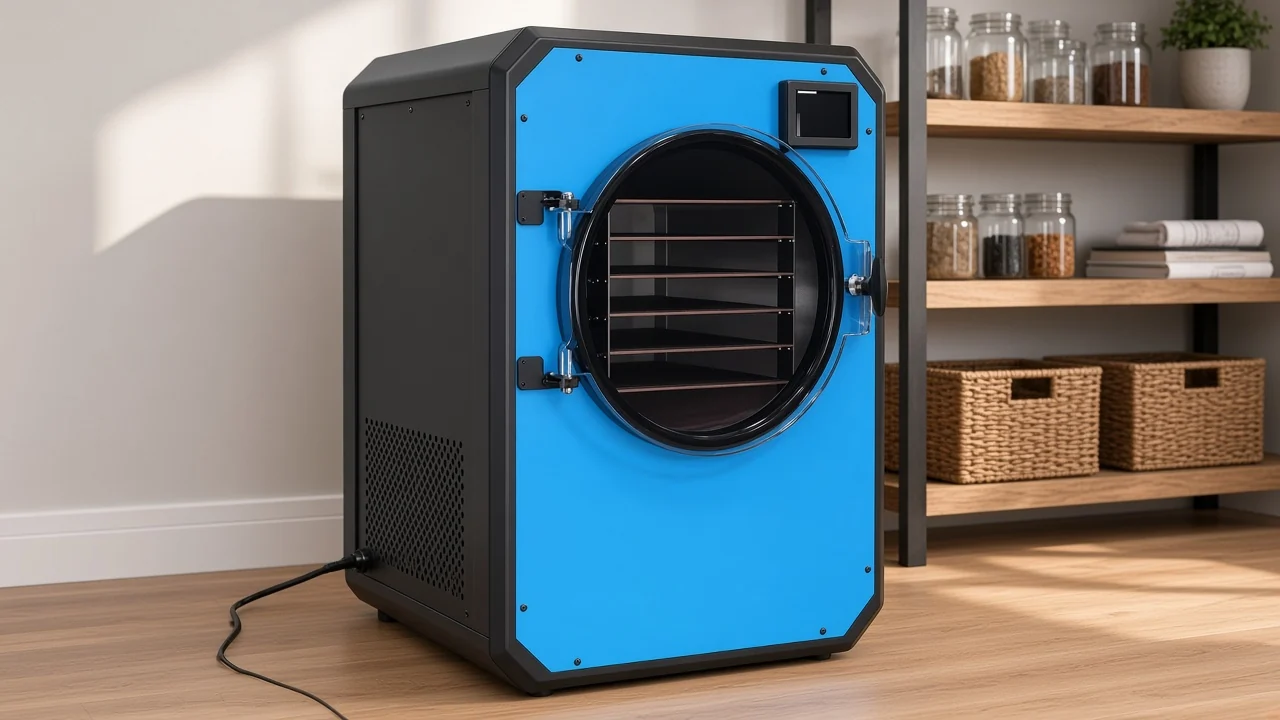
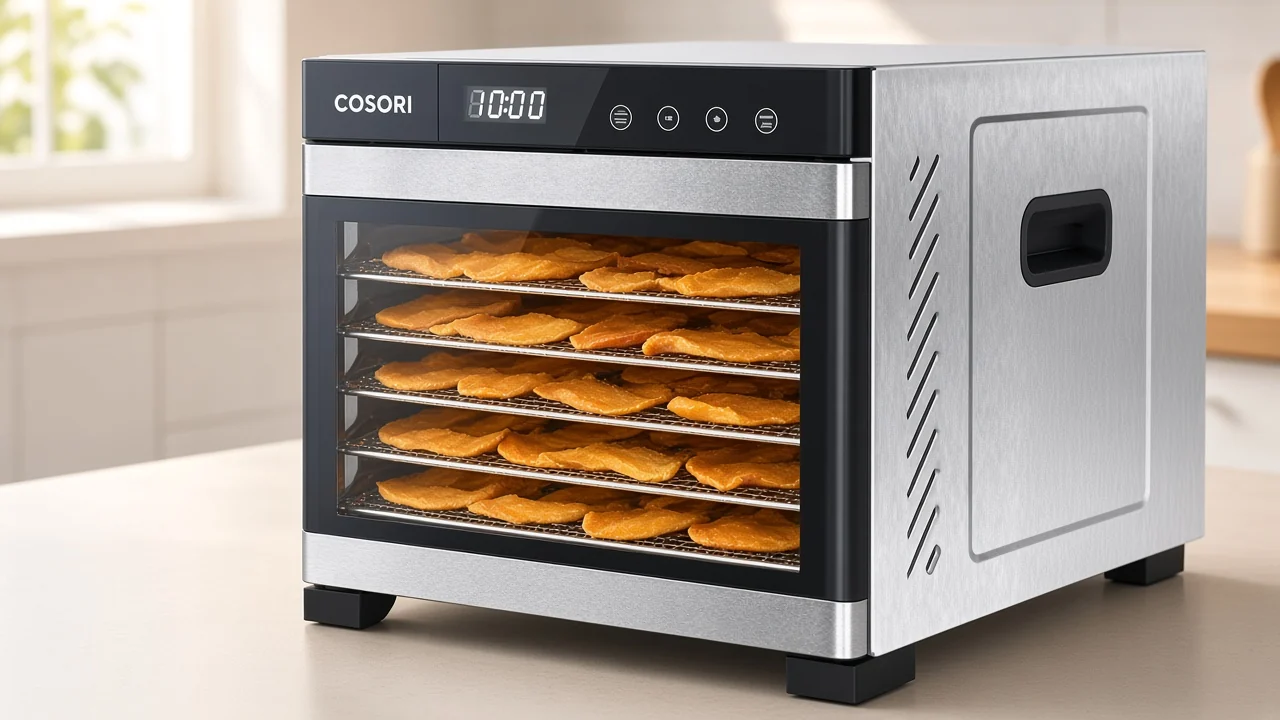
If you choose a freeze dryer, start with a genuine vacuum machine; if you choose a dehydrator, a shelf-style unit is the easiest to use. The Blue Alpine Medium Select Freeze Dryer is the best-documented freeze dryer on Amazon US, and the COSORI CP267-FD Food Dehydrator, 6 Stainless Trays is a strong all-round dehydrator. Compare more in our guides to home freeze dryers on Amazon and the best food dehydrators on Amazon.
Related on Amazon: VEVOR SJ-08H Vacuum Freeze Dryer.
Amazon listings for the products in this guide
Direct links to the Amazon listings for the products named or shown in this guide:
- VEVOR HFD-4 Vacuum Freeze Dryer (4 trays) – View on Amazon
- Blue Alpine Medium Select Freeze Dryer – See the Amazon listing
- COSORI CP267-FD Food Dehydrator, 6 Stainless Trays – Check availability on Amazon
- VEVOR Vacuum Freeze Dryer, 5 Trays, 10 Presets – View on Amazon
- Presto 06300 Dehydro Electric Food Dehydrator – See the Amazon listing
- Magic Mill Pro MFD-7700 Food Dehydrator, 7 Stainless Trays
Frequently asked questions
Is a freeze dryer worth it over a dehydrator?
If you want long-term storage, whole meals, dairy or eggs, yes. For jerky, fruit leather and snacks eaten within months, a dehydrator does the job for far less money, space and energy. The broader trade-offs are in is a freeze dryer worth it.
How long does each take?
The University of Arizona Cooperative Extension gives about 20–40 hours for freeze drying and about 4–16 hours for dehydrating. Food, thickness and load all change this.
Can a cheap "freeze dryer" on Amazon be a dehydrator?
Yes. If a listing shows a warm temperature range and does not mention a vacuum pump and refrigerated cold trap, it is a dehydrator. See our guide to spotting dehydrators sold as freeze dryers.
Which is easier to live with?
A dehydrator. It sits on a counter and is easy to store. Most freeze dryers are large cabinets with a separate pump, need a suitable circuit and run for a day or more per batch.
Related guides
If a freeze dryer fits the way you preserve food, read how the process works first. If neither machine feels right, our guide to freeze dryer alternatives covers canning, freezing and buying freeze-dried food. You can browse all of our guides, or visit Learn for the basics.