
Freeze Dryer & Food Dehydrator Guides
Practical research and evidence-backed explanations, published after editorial review.
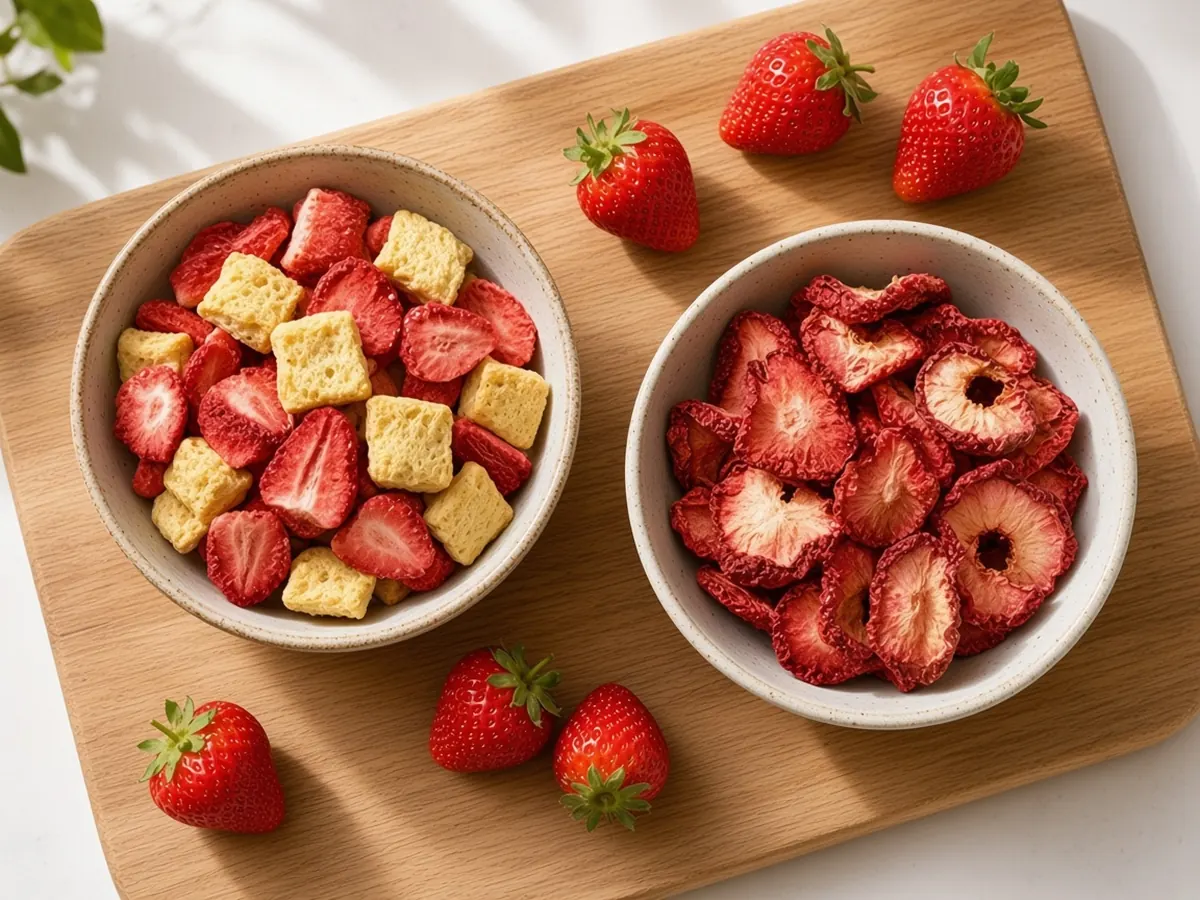
Freeze-Dried vs Dehydrated Food: Shelf Life, Nutrition and Texture
Freeze-dried food keeps far less moisture than dehydrated food, so it is lighter, crisper and usually stores longer in sealed packaging. Dehydrated fruit, vegetables and jerky are softer and chewier and are meant for months-scale storage, not the multi-year pantry role freeze-dried food can fill.
Read guide →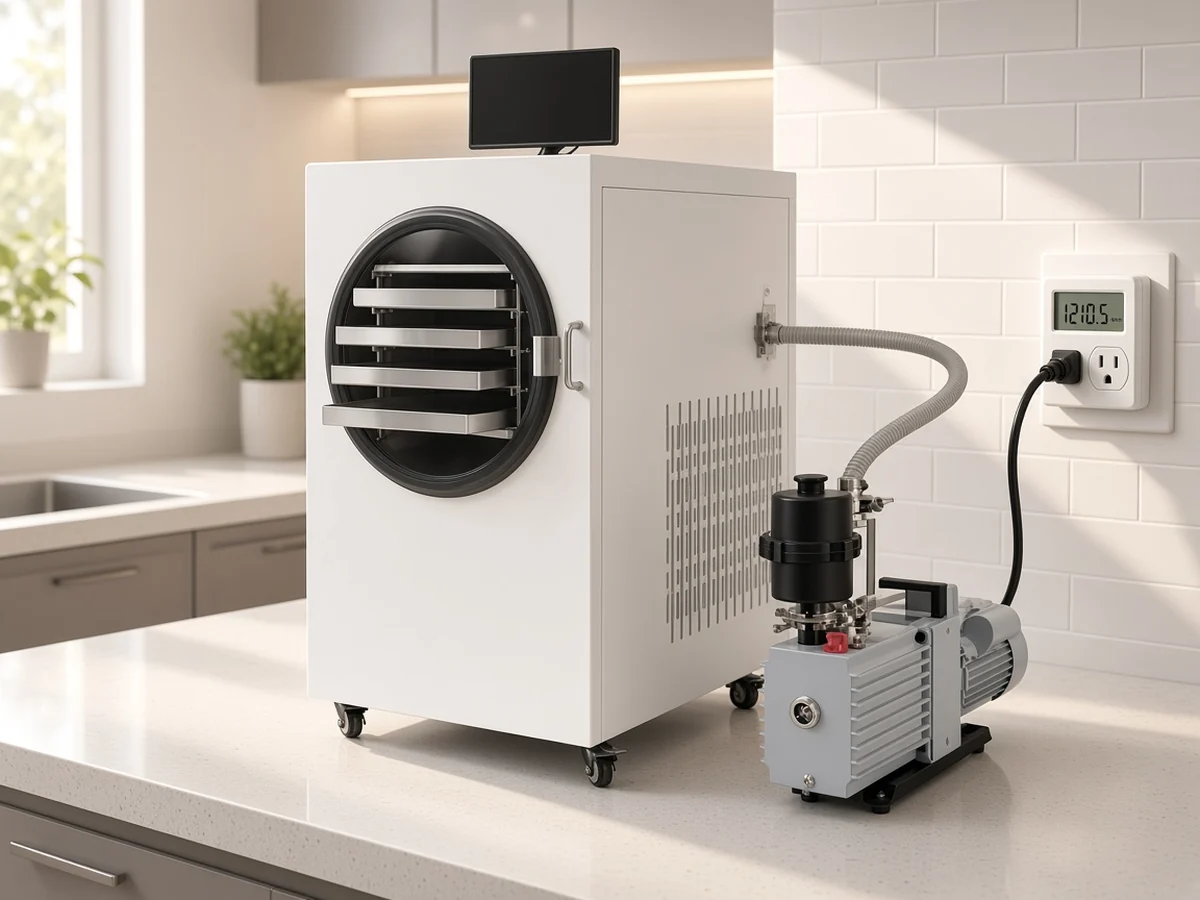
What It Really Costs to Run a Home Freeze Dryer: Electricity Math by Wattage
Freeze dryer running cost depends more on how many hours the compressor and heaters run than on the rated wattage printed on the listing. At a typical U.S. residential rate, even a 1,500–2,200 W cabinet often works out to a few dollars per full batch—not a continuous max-power load for the whole cycle.
Read guide →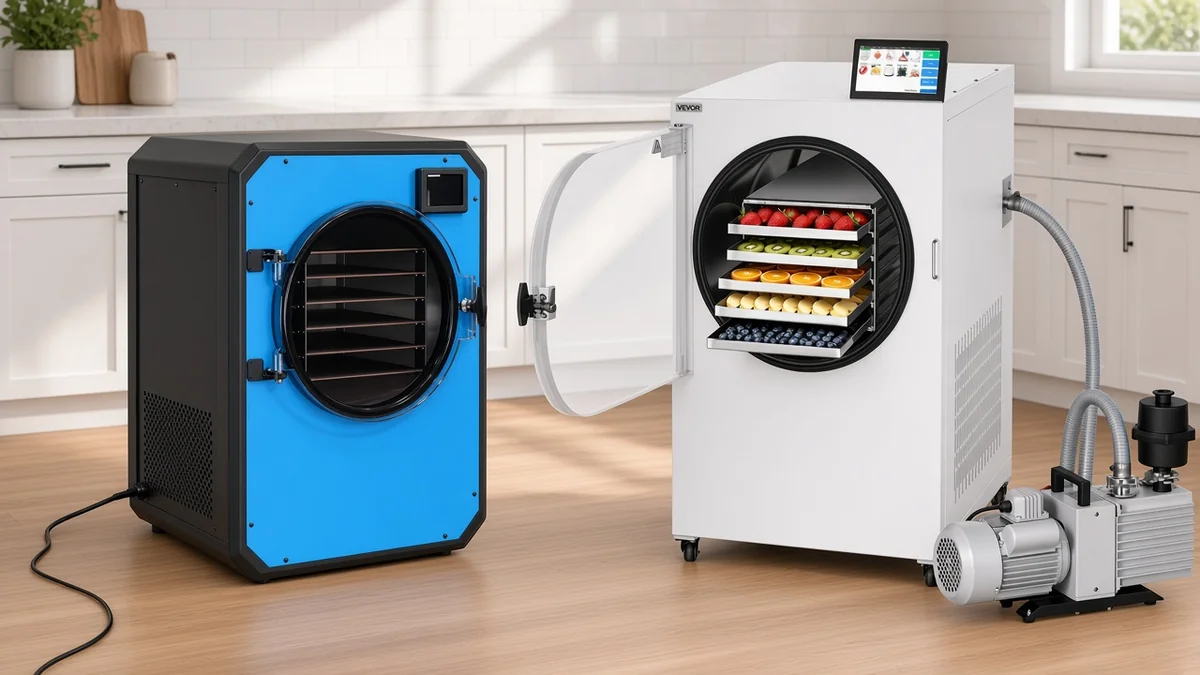
Blue Alpine vs VEVOR SJ-08H Freeze Dryer
Choose the Blue Alpine Medium Select for a documented 120 V household setup and quarter-sheet trays when you are planning your first freeze dryer. Choose the VEVOR SJ-08H if you routinely need 20 lb-plus batches, want ten presets and can supply a dedicated circuit for its 2,200 W rating.
Read guide →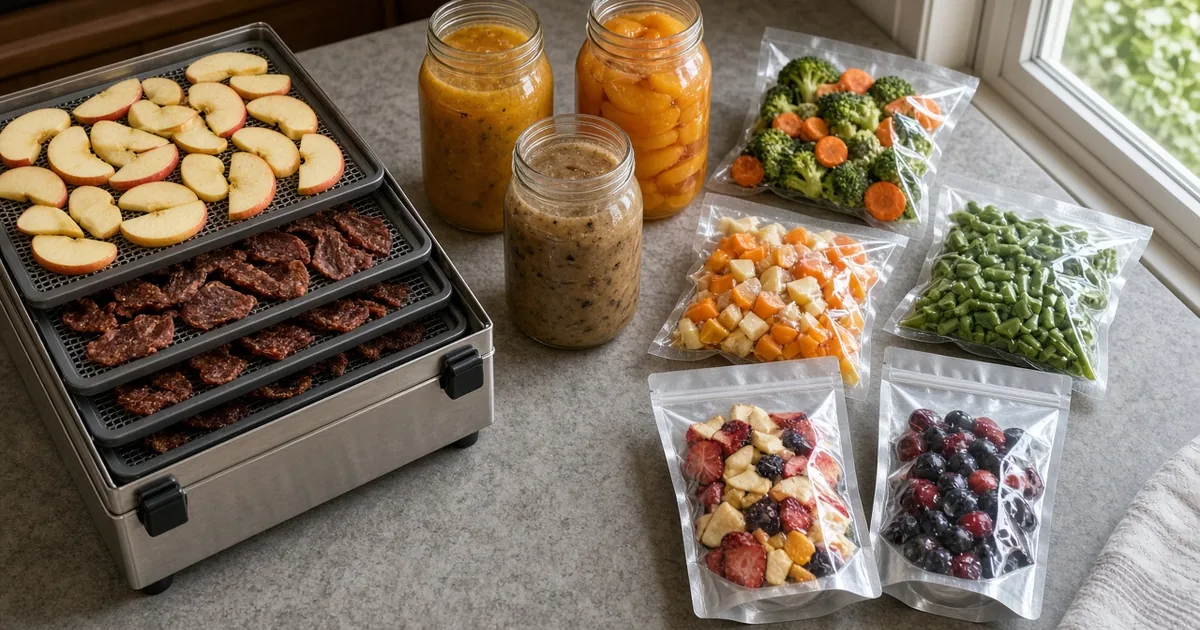
Freeze Dryer Alternatives: Cheaper Ways to Preserve Food Without One
A home freeze dryer is not the only way to preserve food: a dehydrator covers jerky and dried fruit at far lower cost, canning and freezing suit meals and produce you will eat within months, and buying freeze-dried food skips the machine entirely. A vacuum freeze dryer still wins when you want to dry your own food with the longest home shelf life and crunchiest texture.
Read guide →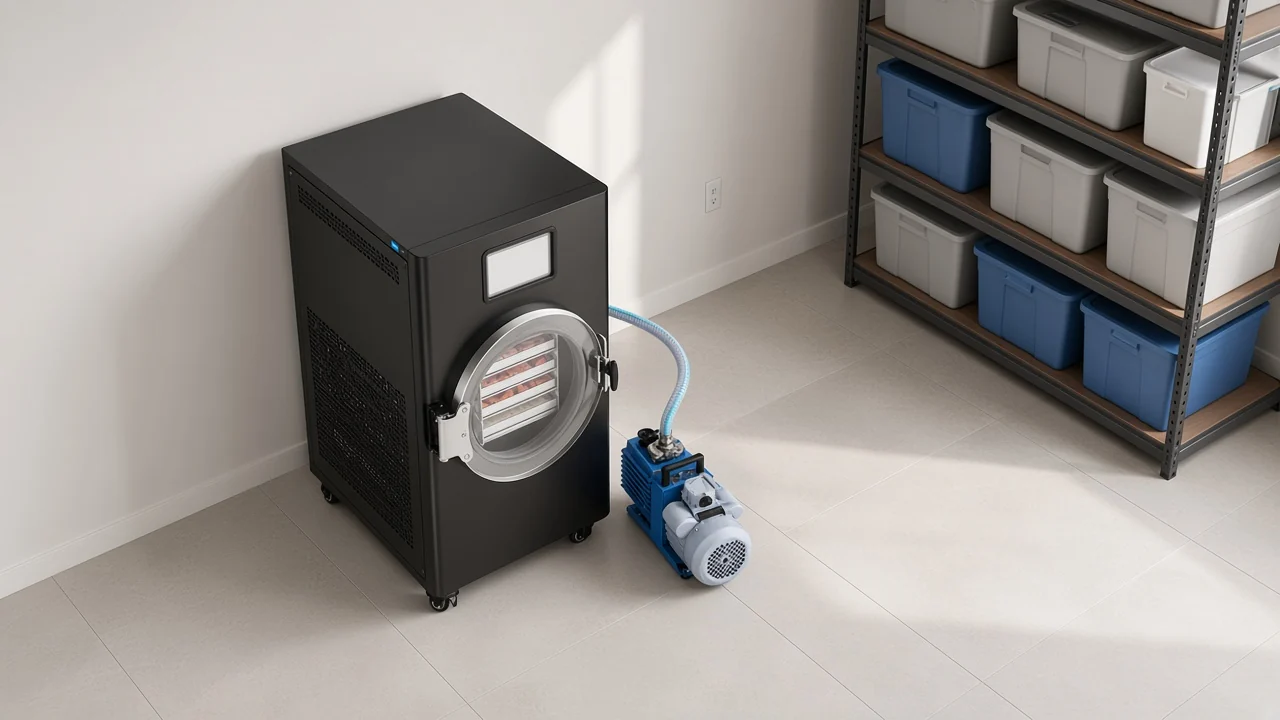
Where to Put a Home Freeze Dryer: Room, Power and Floor Space
Put a home freeze dryer in a cool, dry room with several inches of clearance behind and beside the cabinet, on a floor or bench that can hold its listed weight. Plug it into the grounded outlet and amperage the manual names—avoid extension cords, power strips and hot garages if the maker caps room temperature.
Read guide →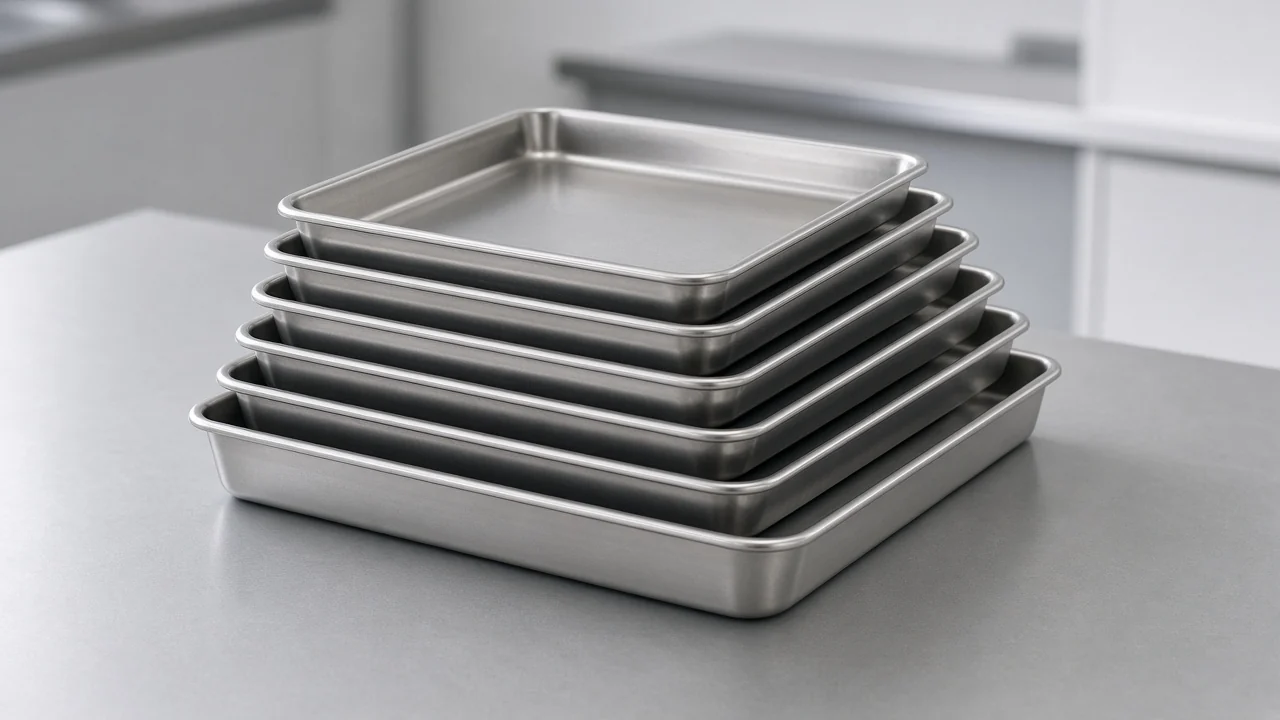
Freeze Dryer Tray Sizes Compared: Which Machines Take Standard Pans
Freeze dryer tray size sets how much food fits per batch and which liners or spare pans you can buy. Blue Alpine uses standard 9 × 13 in quarter-sheet trays; VEVOR HFD-4 and SJ-08H use longer stainless trays with very different total area and shelf spacing.
Read guide →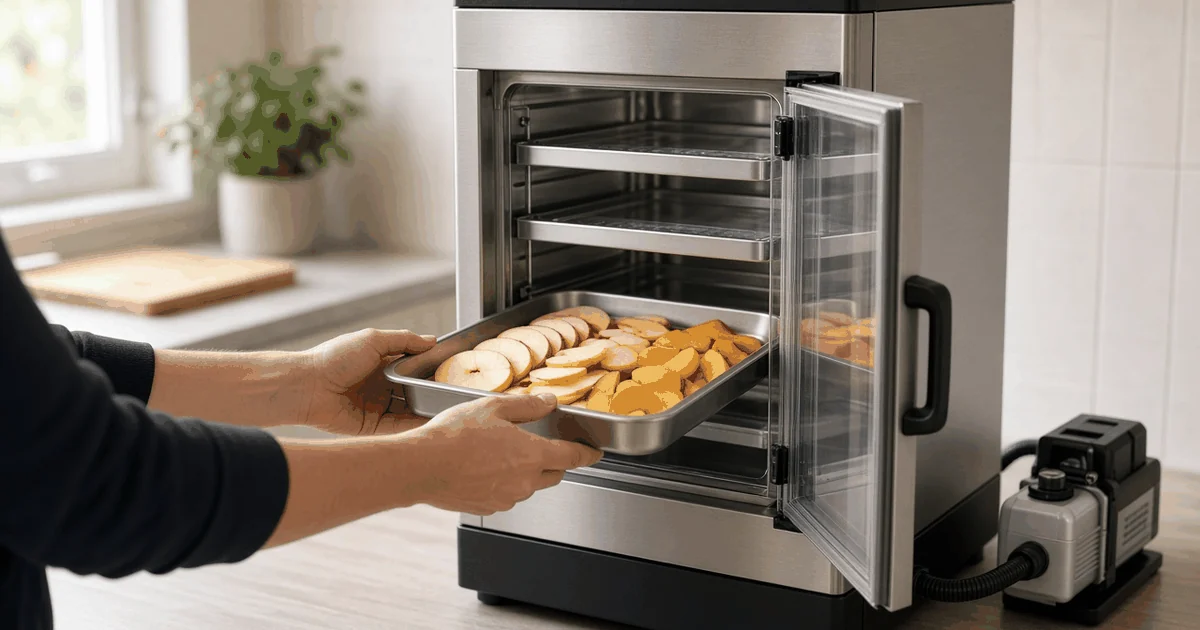
How to Use a Home Freeze Dryer: First-Time Setup and First Batch
Set up a home freeze dryer by placing it in a cool room with vent clearance, adding vacuum-pump oil, running a short empty test, then loading a modest first batch. Finish every cycle with a dryness check on the thickest piece before you seal food for storage.
Read guide →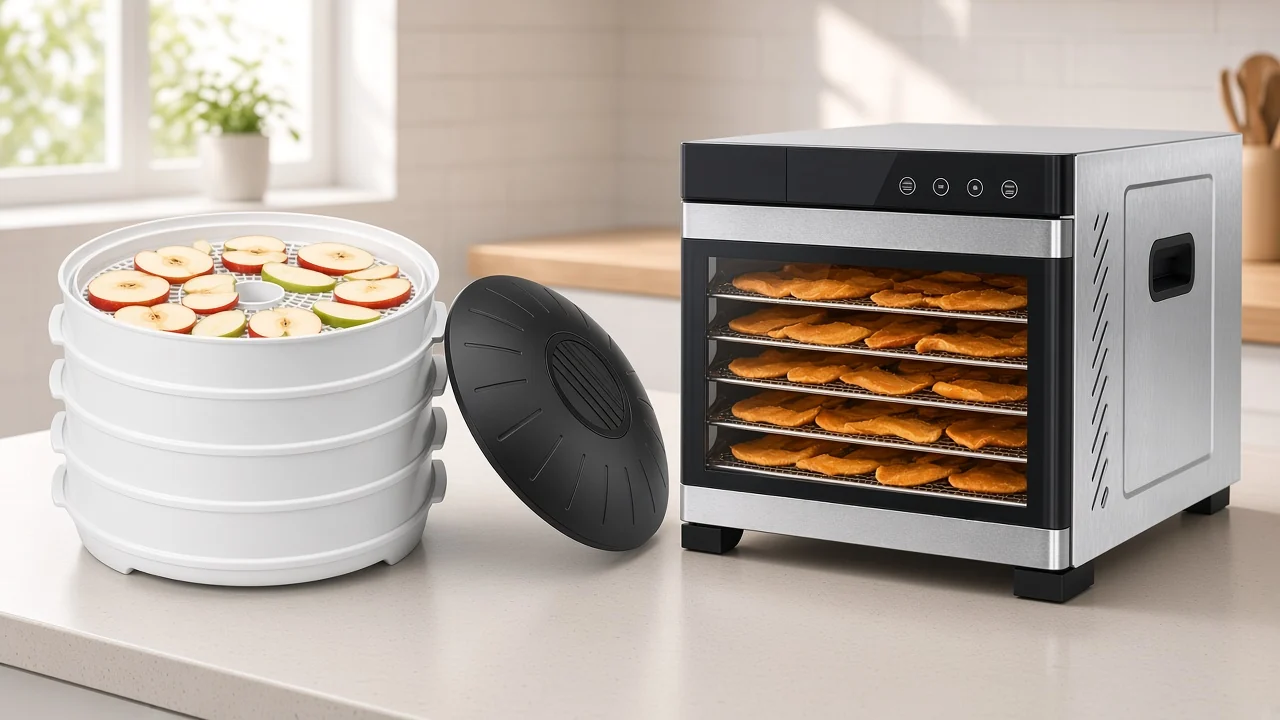
Presto vs COSORI Dehydrator: Stackable or Shelf-Style for Your Kitchen
Choose the COSORI CP267-FD when adjustable 95–165 °F heat and rear-fan shelf airflow matter for herbs, fruit and regular batches. Choose the Presto 06300 when you only dry occasional jerky and snacks and a light stackable at one fixed ~165 °F heat is enough.
Read guide →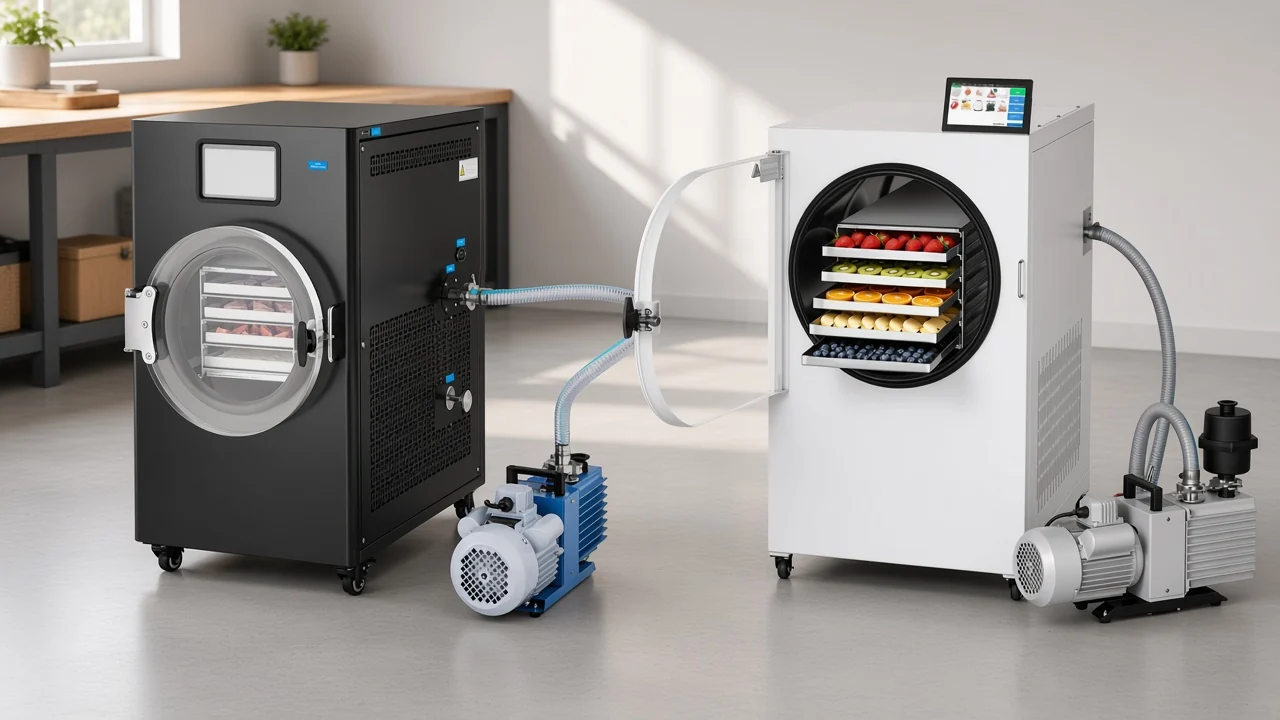
VEVOR HFD-4 vs SJ-08H: Which VEVOR Freeze Dryer Fits Your Home
Choose the VEVOR SJ-08H when you want larger batches, ten preset recipes and can support a 2,200 W load on a dedicated circuit. Choose the VEVOR HFD-4 for a smaller four-tray cabinet and hands-on programmable curves if you are comfortable writing your own drying stages.
Read guide →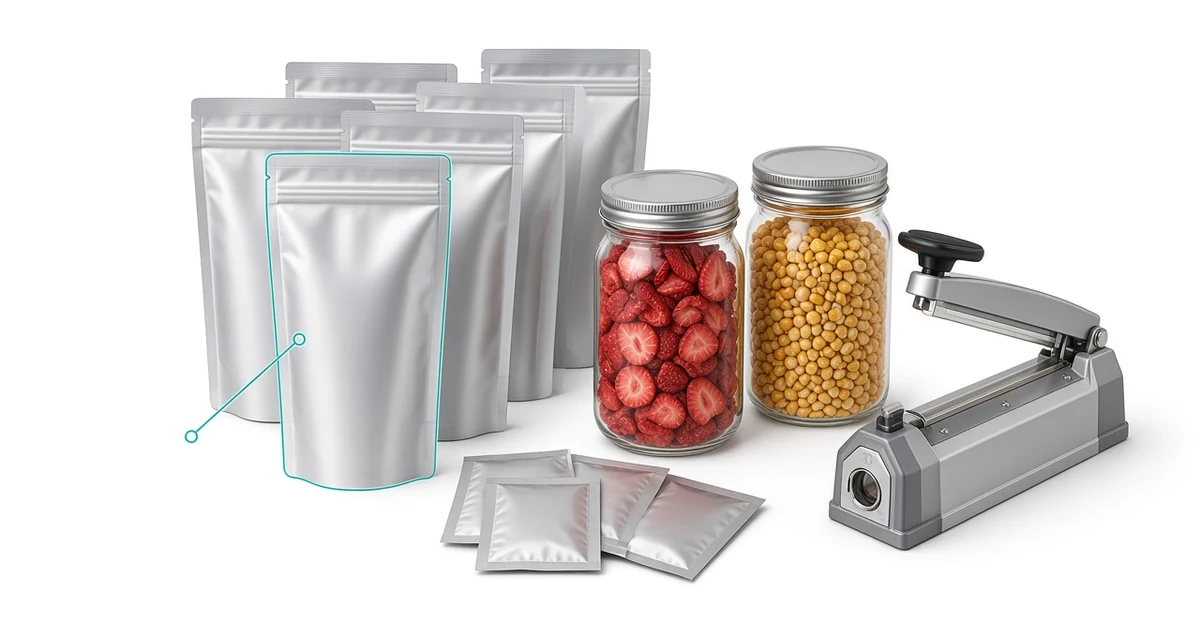
How to Store Freeze-Dried Food: Containers, Oxygen Absorbers and Shelf Life
Pack freeze-dried food only after a dryness check on the thickest piece, then seal it immediately in Mylar with the correct-size oxygen absorber. Exposure to room air softens texture within minutes, so have bags, absorbers and a heat sealer ready before you open the chamber.
Read guide →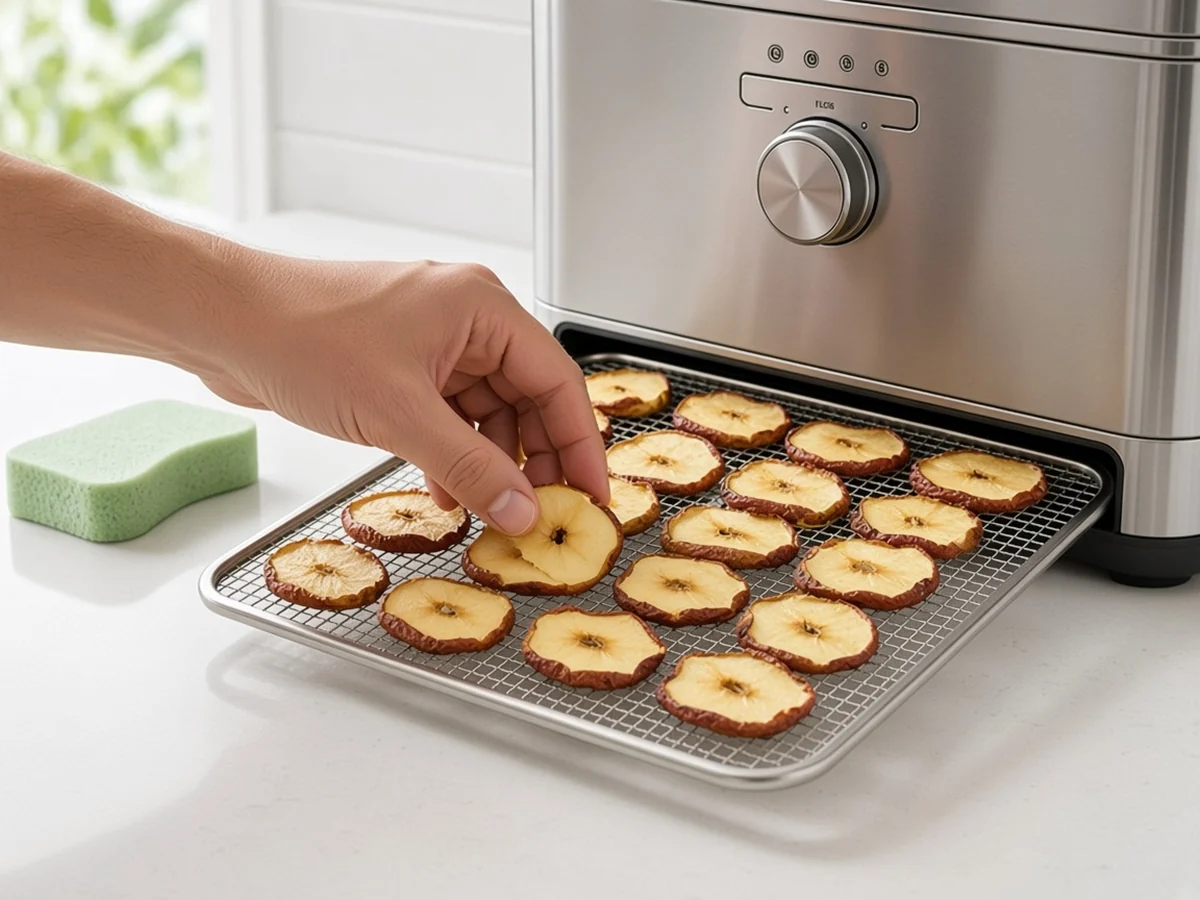
Dehydrator Not Drying Evenly or Taking Too Long? A Fix Checklist
Uneven dehydrator drying usually starts with inconsistent slice thickness or overloaded trays, not a faulty heater. Match pieces, rotate or swap tray positions if your model needs it, and raise temperature only after you have ruled out humidity, thick cuts and blocked airflow.
Read guide →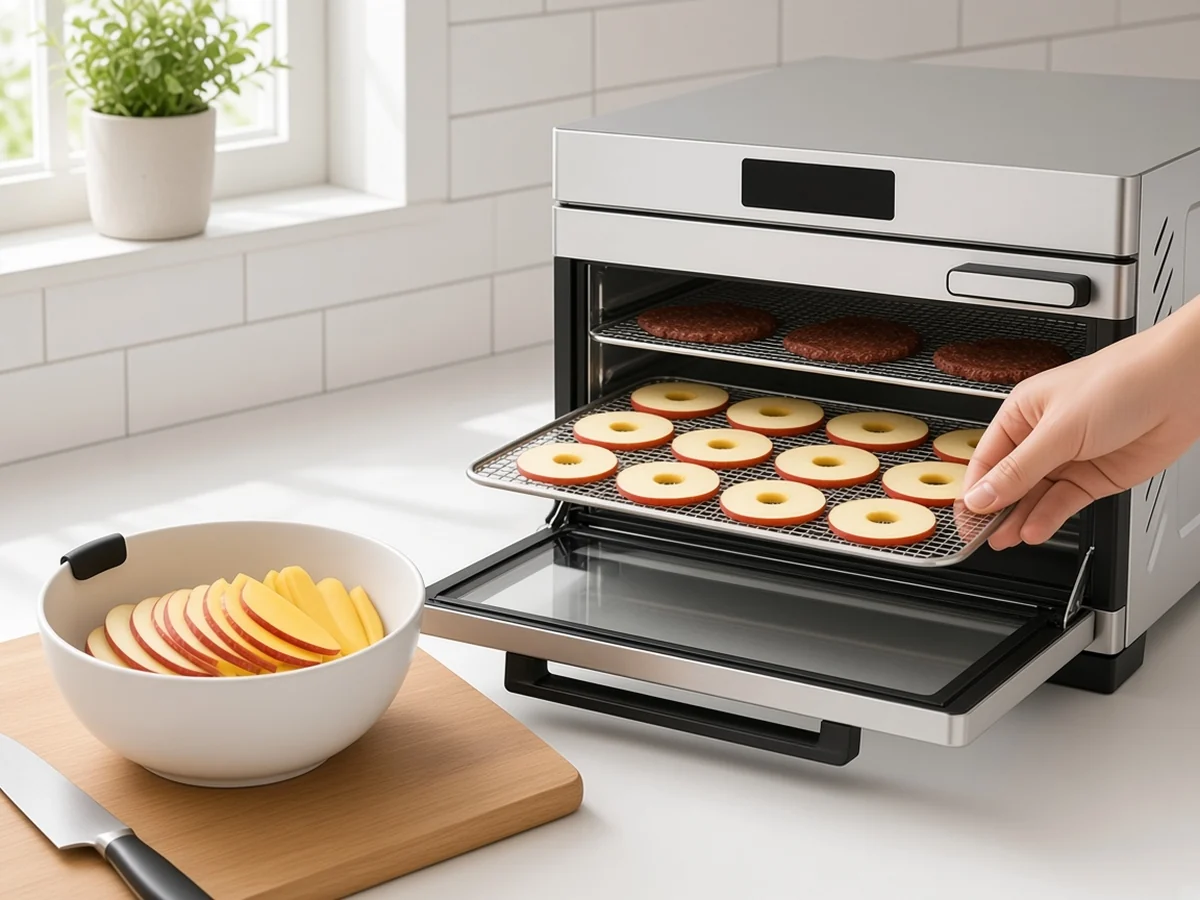
How to Use a Food Dehydrator: Temperatures, Times and Safe Jerky
Run your first dehydrator batch by slicing food evenly, loading a single layer per tray, and setting about 140 °F for most fruits and vegetables per extension guidance. Hold meat jerky at 160 °F once it is nearly dry, then condition fruit in a jar before you store it long term.
Read guide →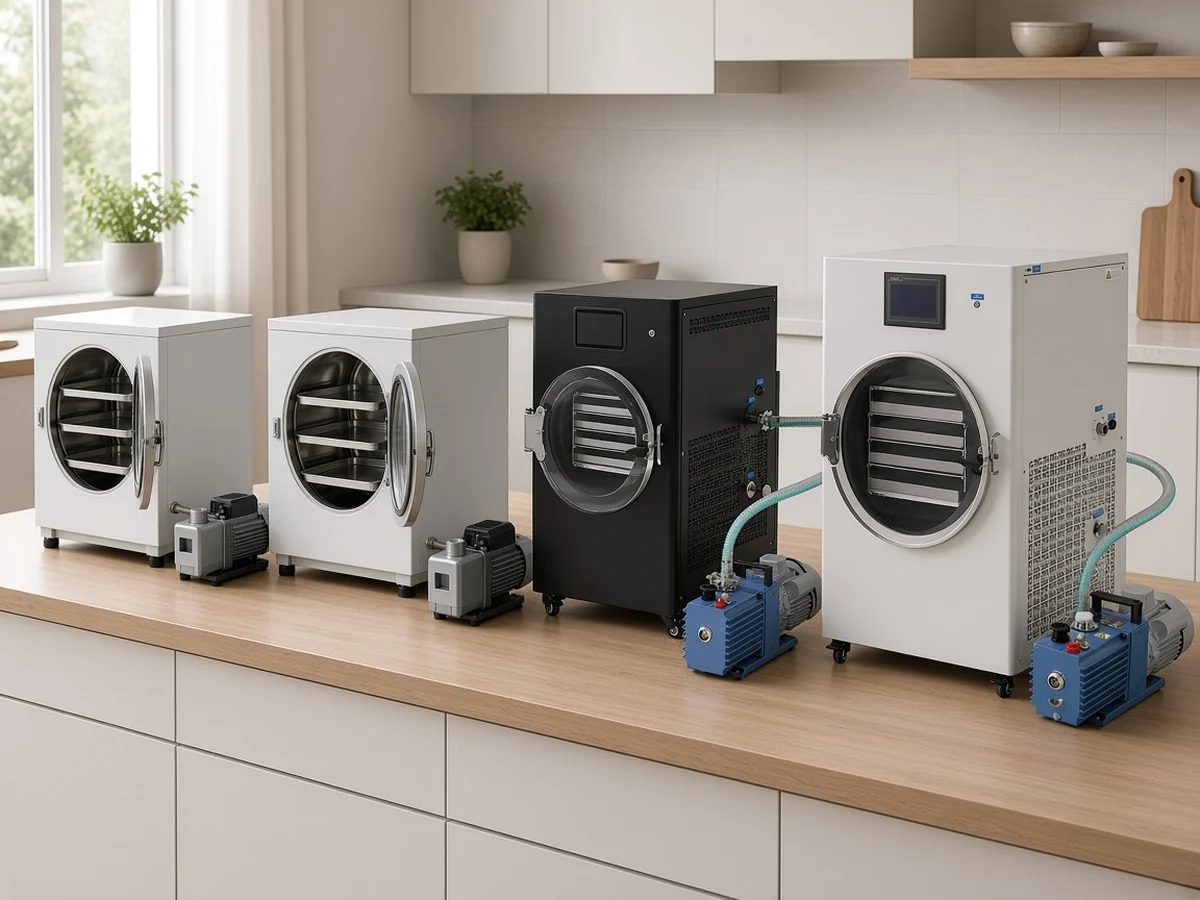
HNZXIB Freeze Dryers on Amazon: Every Model We List, and the Listing Conflicts
HNZXIB's five live Amazon US freeze-dryer listings are a spec map, not a ranked shortlist. Most buyers should return to the Blue Alpine Medium Select or a reviewed VEVOR model instead of treating these cabinets as documented, first-choice machines.
Read guide →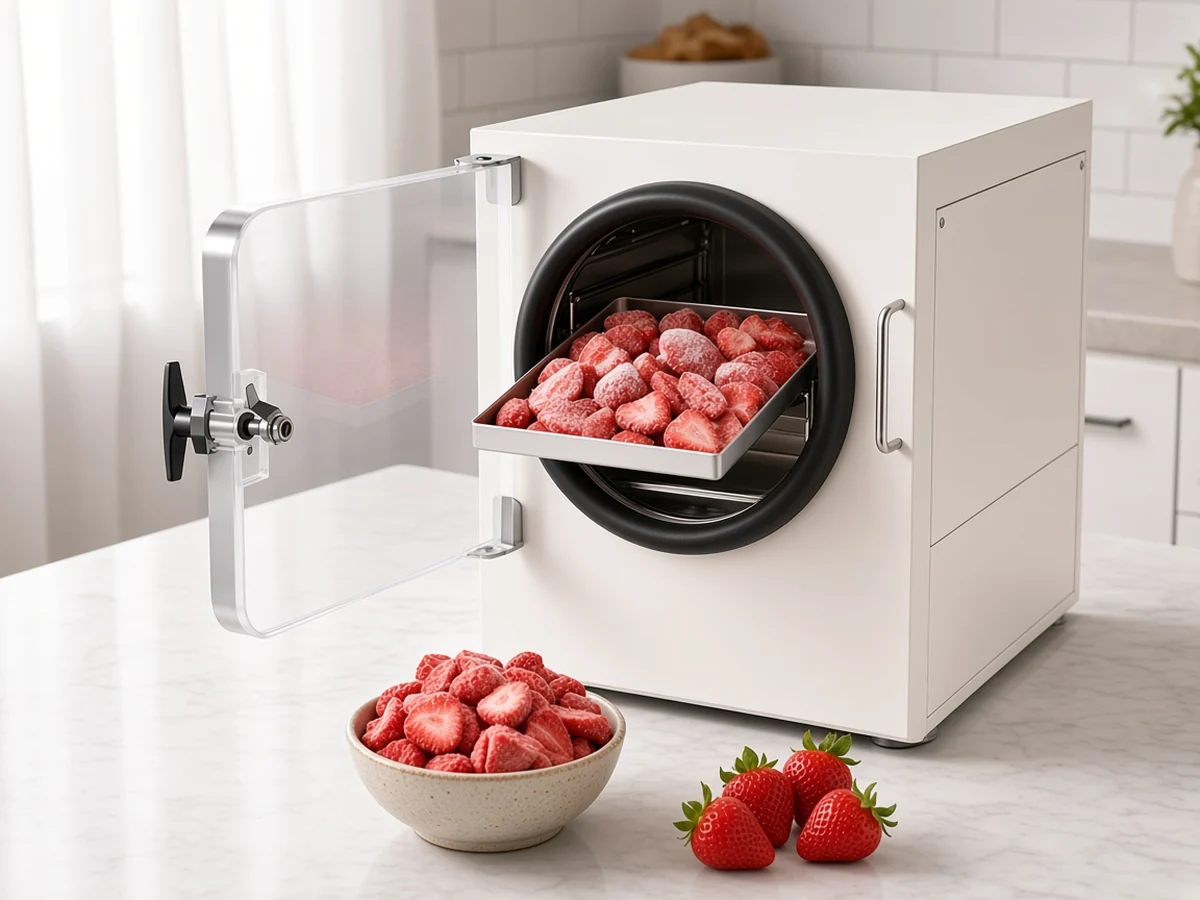
How Does a Freeze Dryer Work? The Three Stages, Explained Simply
A home freeze dryer works in three phases: freeze the food, pull vacuum so ice sublimates off as vapor, then finish with a warmer desorption stage that drives off bound water. That is why cycles take a day or more and why high-fat or sugary foods often need extra drying checks.
Read guide →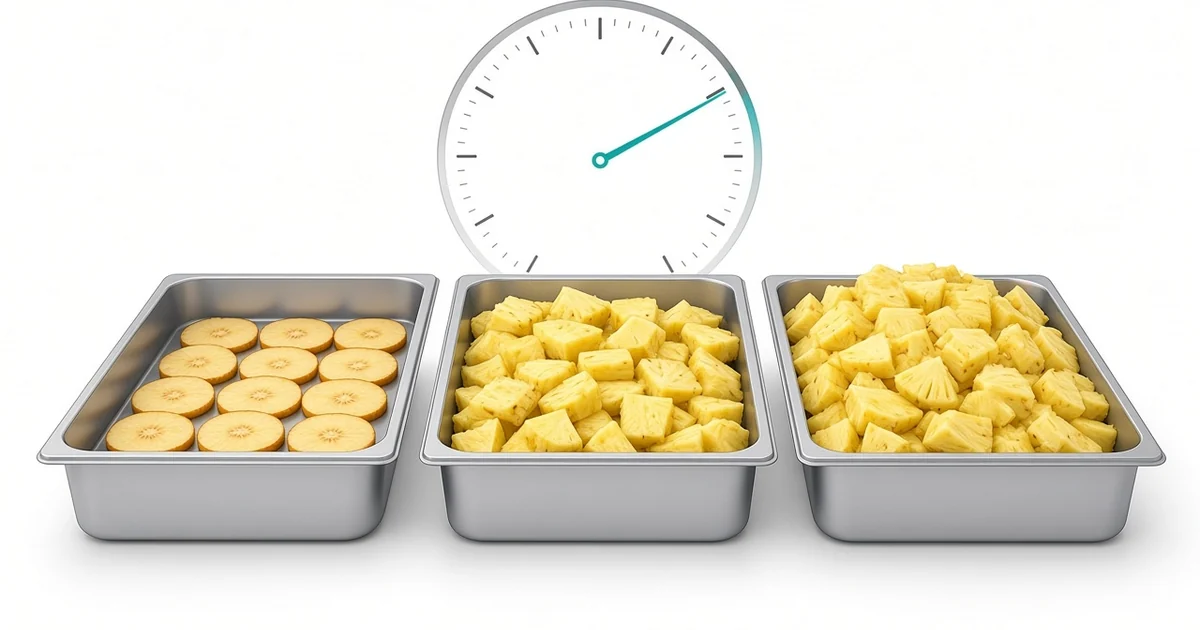
How Long Does Freeze Drying Take? Batch Times and Why They Run Long
Most home freeze-drying batches run roughly 24 to 48 hours or longer, depending on load, food type and machine settings. Blue Alpine defaults to about 8 hours of freezing plus 24 hours of drying in its manual, but recipe time still changes with moisture and slice thickness—never stop a cycle early for food safety.
Read guide →