
How to Clean a Freeze Dryer: Trays, Chamber, Gasket and Pump
Published 10/29/2026 · Updated 11/19/2026
Quick answer
Keep your freeze dryer sealing and running well: defrost, drain, wash trays, wipe the chamber and gasket, and check the pump.
Products mentioned in this guide
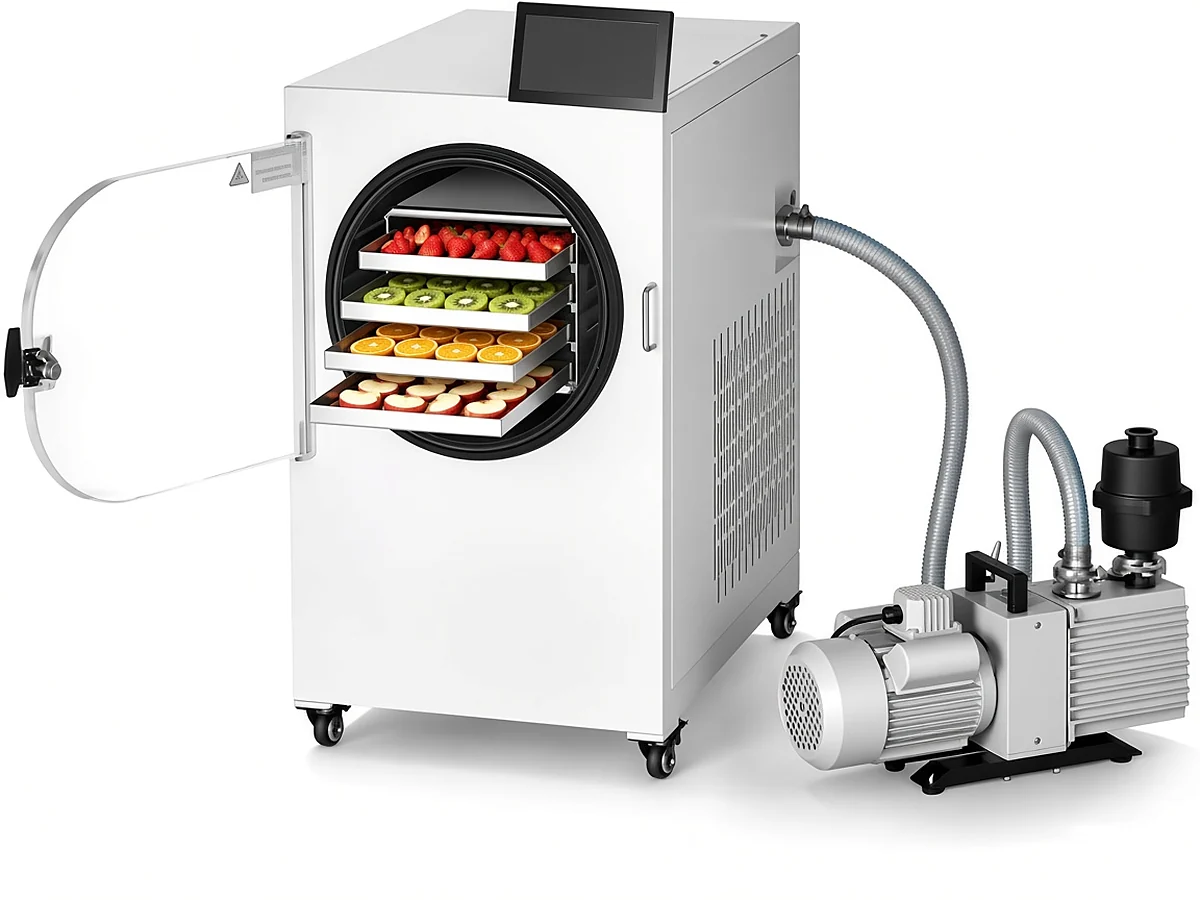
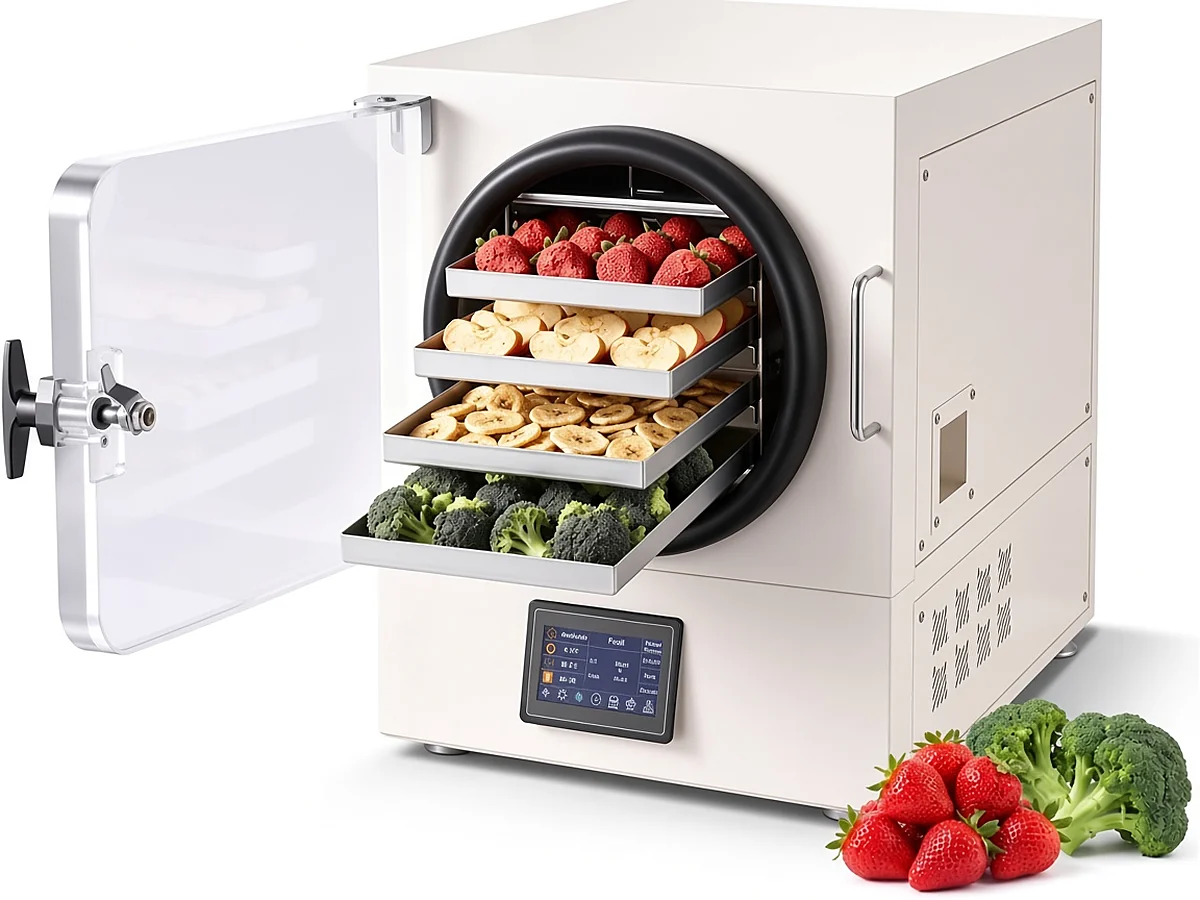
Maintenance & Troubleshooting · Freeze Dryers, Vacuum Pump
Updated 30 October 2026
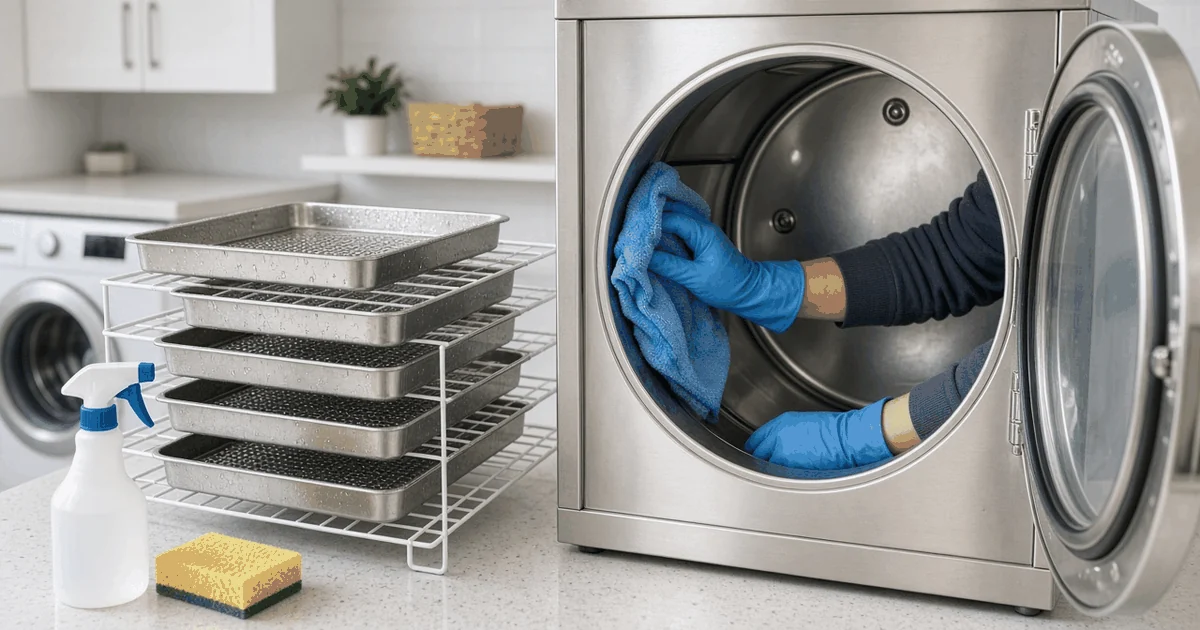
To clean a freeze dryer, let it defrost and drain fully, unplug it, wash the trays in warm soapy water, wipe the chamber, shelves, door and gasket with a soft cloth, dry everything thoroughly, and check the pump oil before the next batch.
A freeze dryer only works when the chamber seals perfectly and the vacuum pump stays healthy. Food crumbs on the gasket, sticky residue on the door or water left in the drain line can all cause vacuum errors and slow batches.
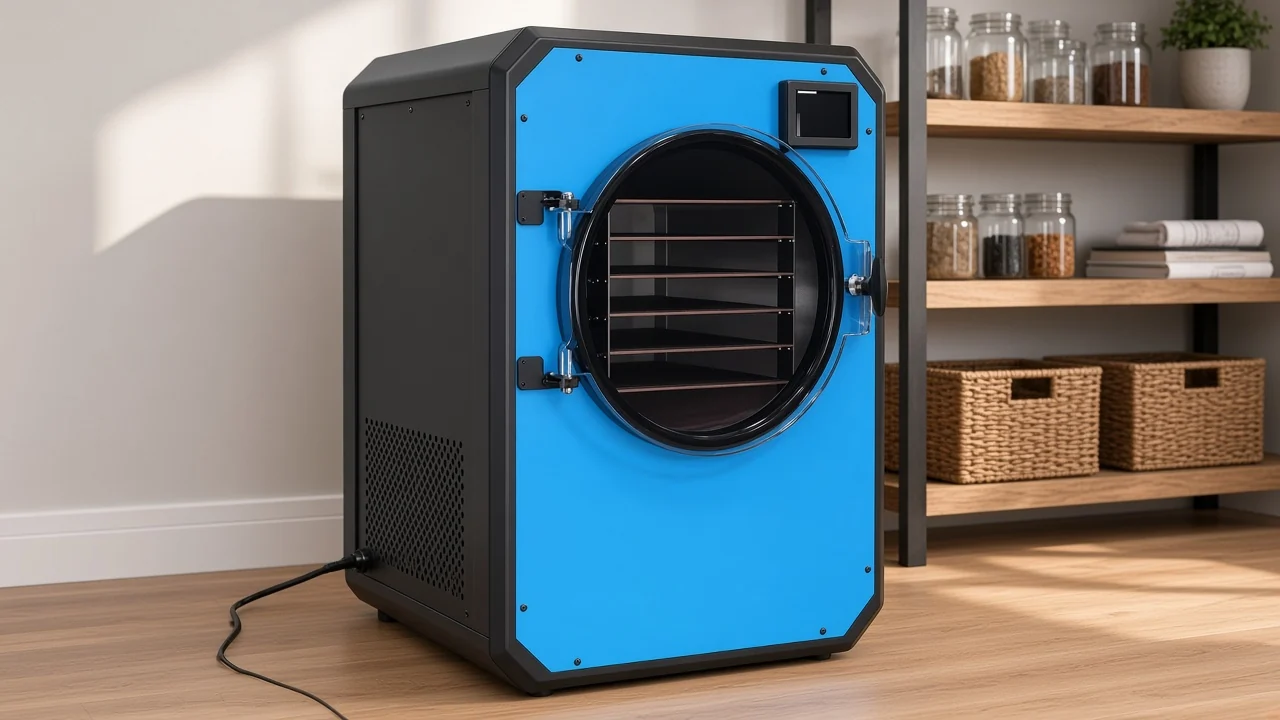
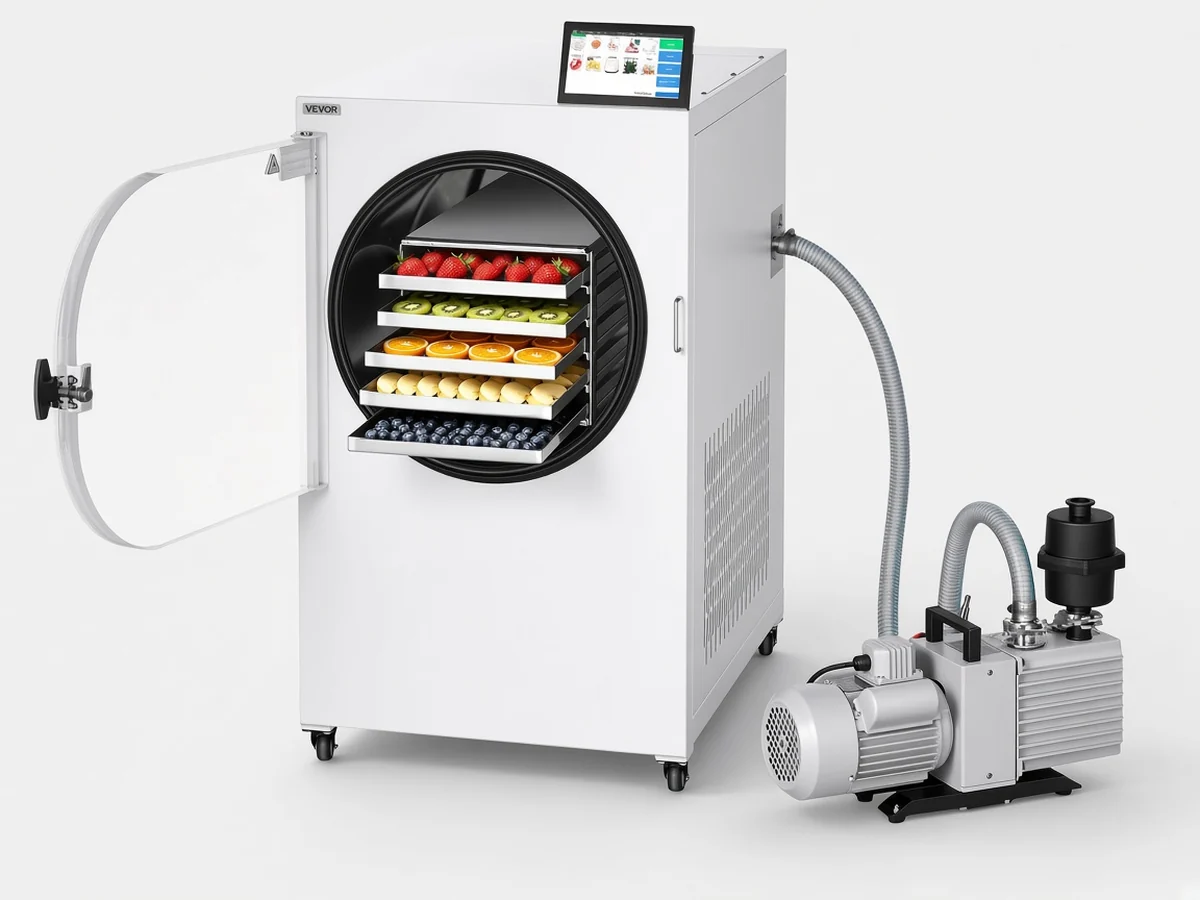
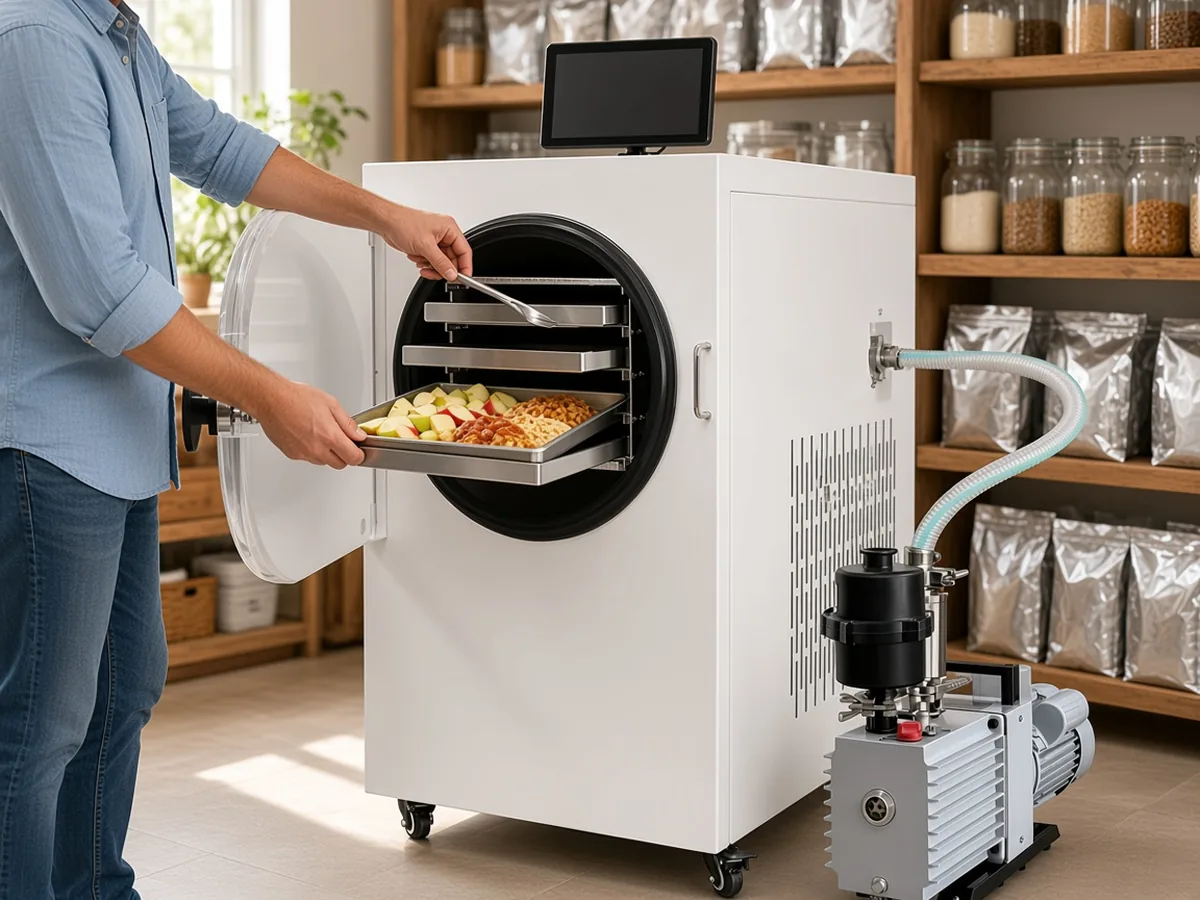
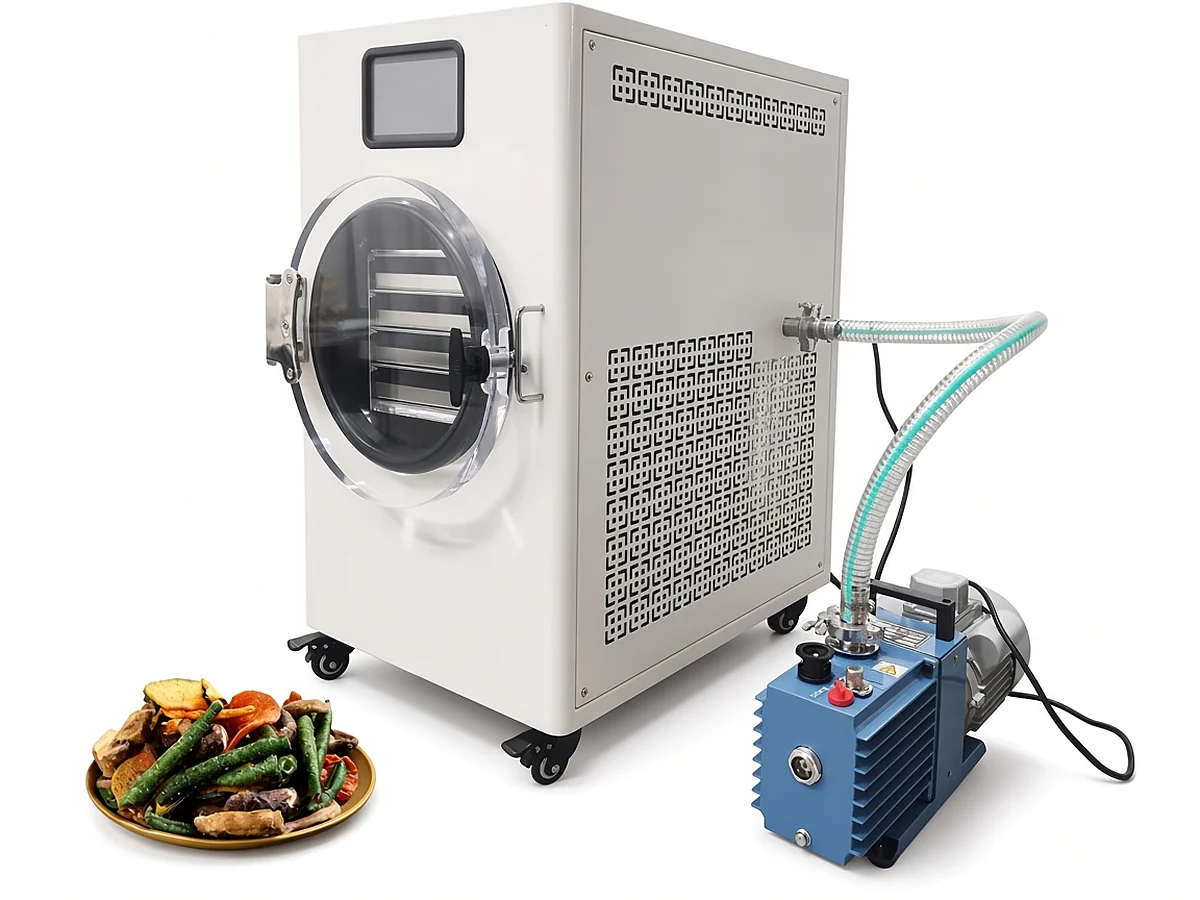
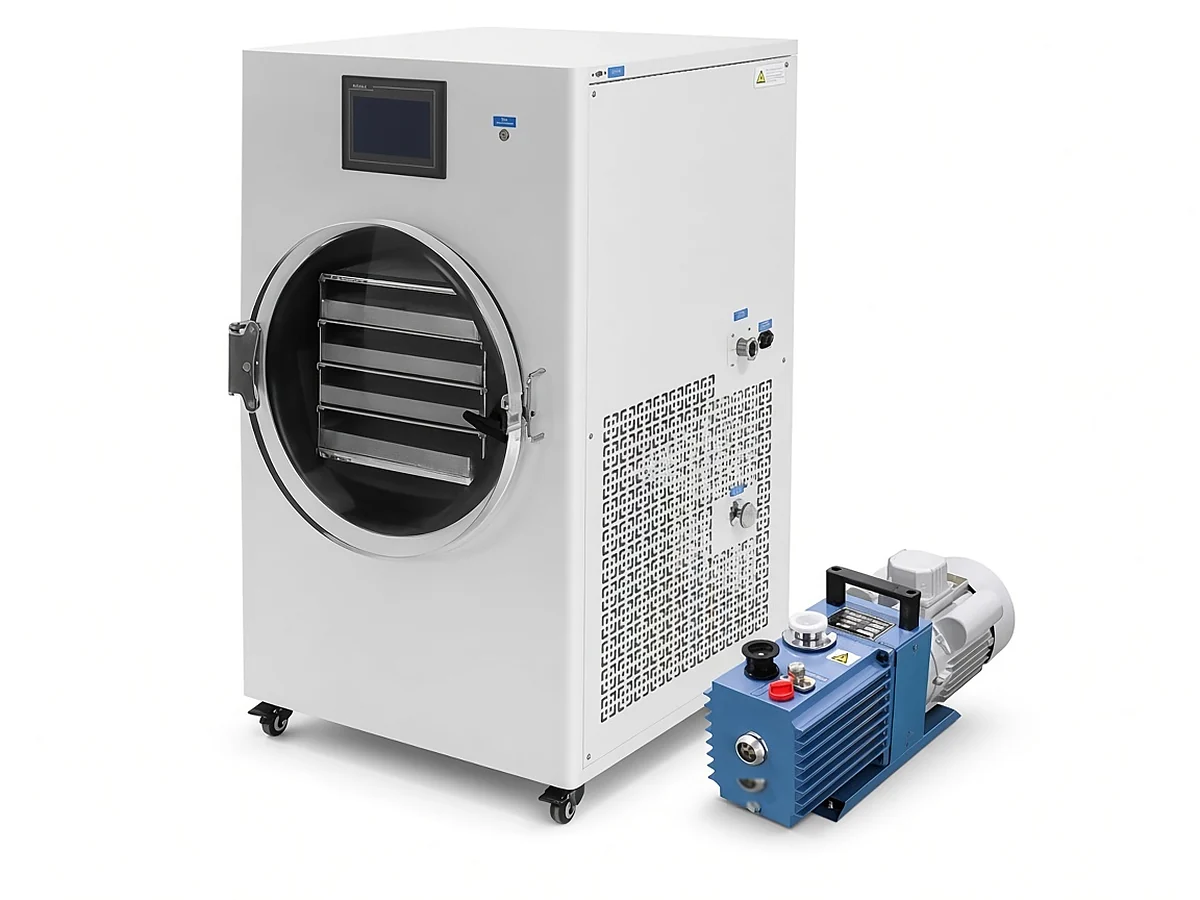
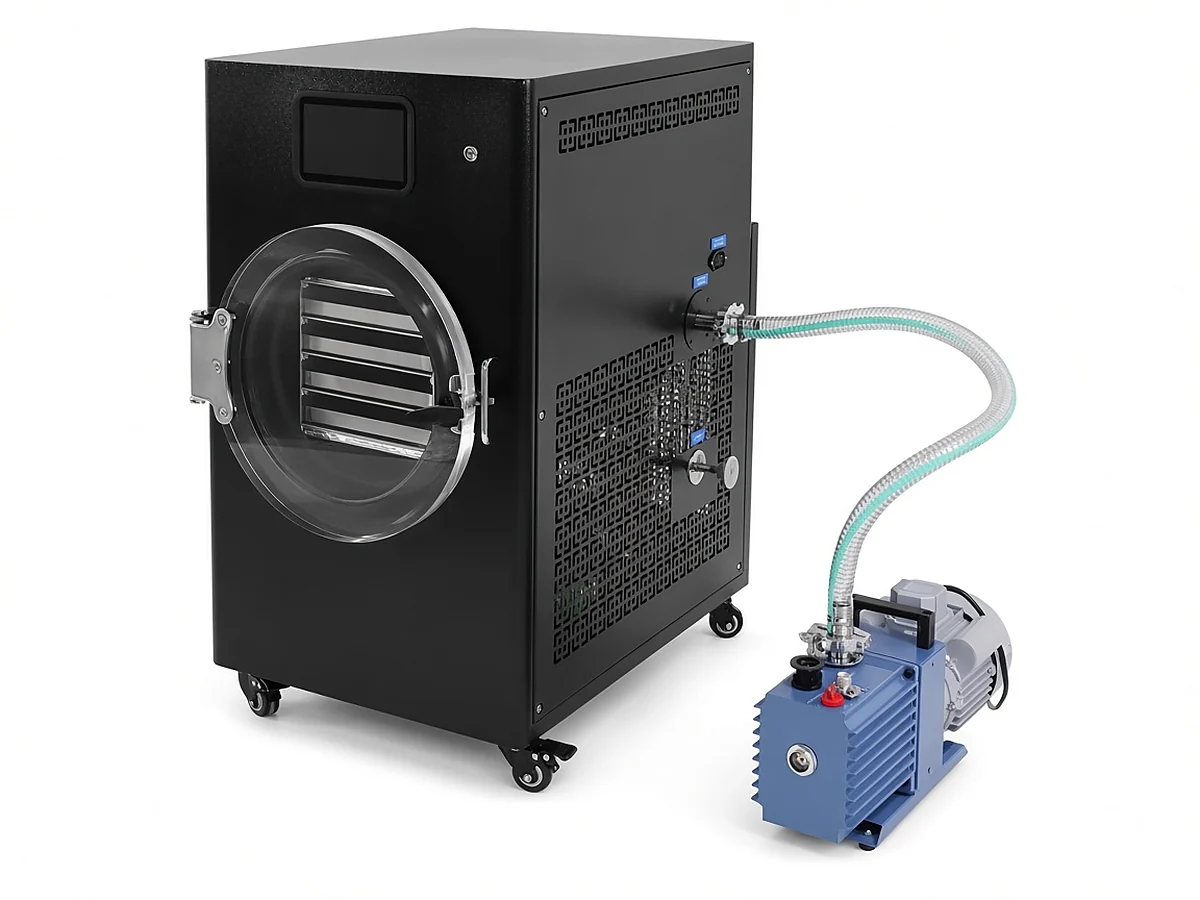
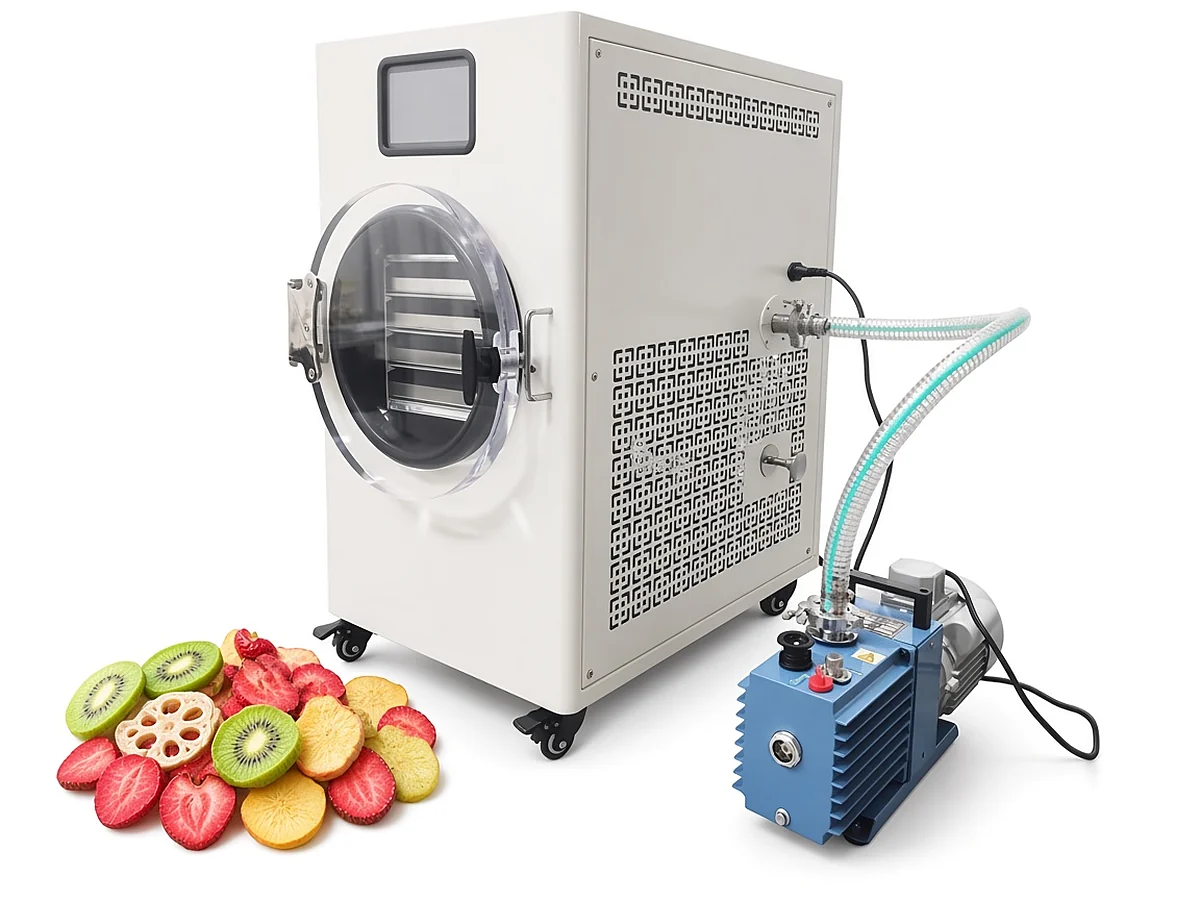
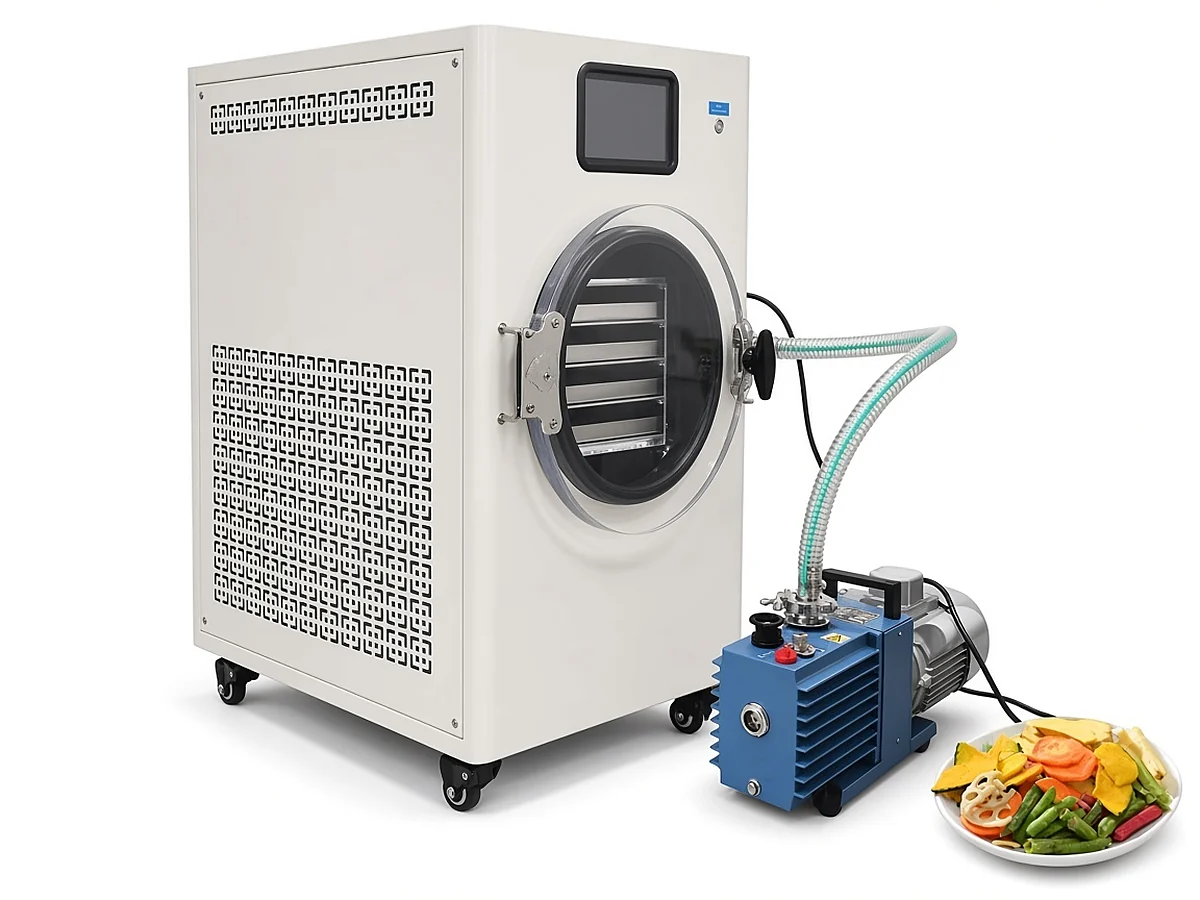
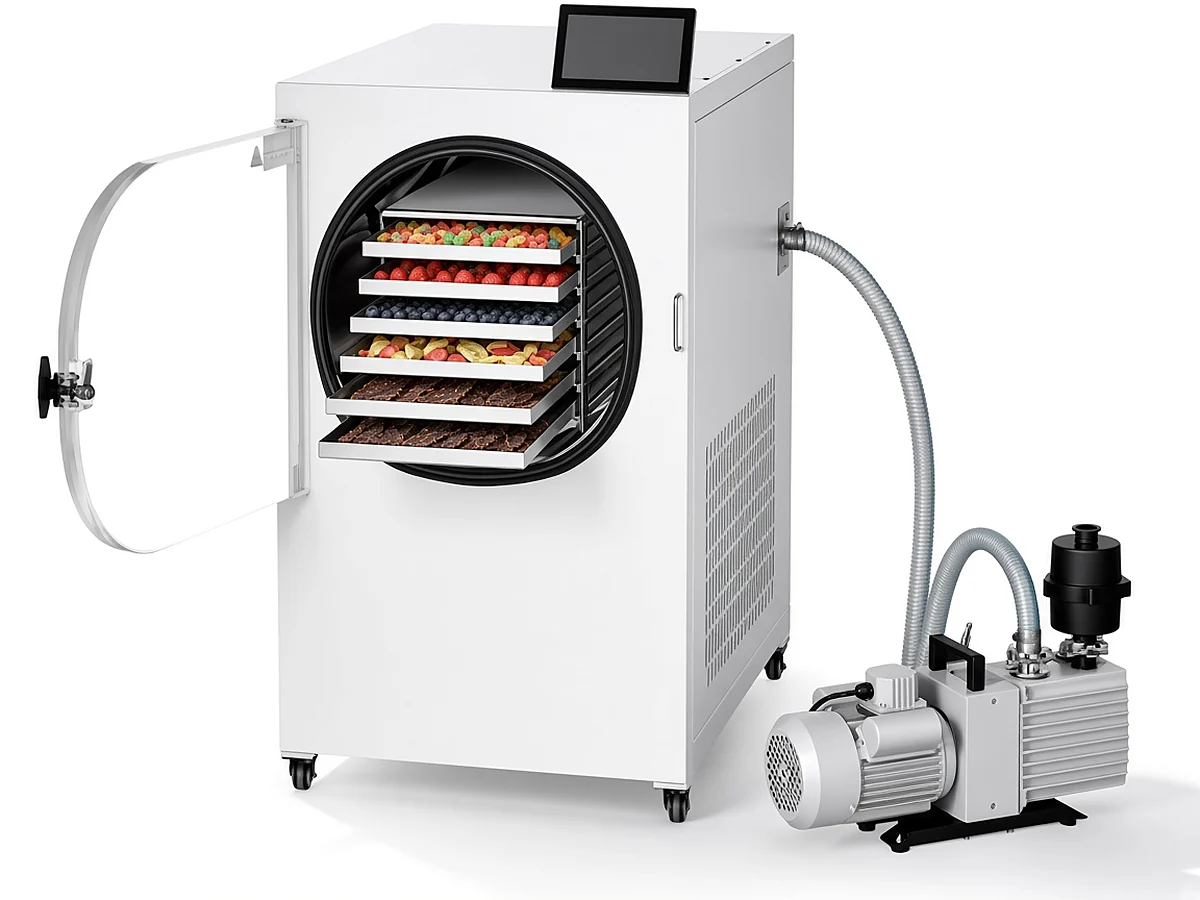
Cleaning takes only a few minutes after each batch, plus an occasional deeper clean. These steps suit the genuine home freeze dryers listed on Amazon US, including the Blue Alpine Medium Select and the VEVOR HFD-4. The key rule: never clean a chamber that is still cold or plugged in.
What you'll need to clean a freeze dryer
Mild soap, soft cloths and fresh pump oil cover almost everything.
Mild dish soap and warm water (Required): Enough for trays, shelves and chamber walls. Any unscented dish soap works.
Microfiber cloths (Required): Soft cloths will not scratch acrylic doors or stainless steel. Use clean, lint-free cloths.
Vacuum pump oil (Highly Recommended): A deep clean is a good time to check and change the oil, so keep the oil your manual recommends on hand. Blue Alpine's manual, for example, names Dairyland vacuum pump oil.
Parchment liners (Recommended): Lining trays next time means far less scrubbing. Cut parchment sheets to fit your trays.
Infrared thermometer (Optional): Confirms the chamber has warmed to room temperature before you clean, with a quick surface reading.
Step 1: Defrost and drain (warm and empty)
Let the ice from the cold trap melt completely and drain away first.
Run defrost or leave the door open. Follow your machine's defrost routine. In the VEVOR HFD-4 manual, for example, the heater melts the ice after a run and the water drains through the valve under the chamber.
Drain into a bucket. Open the drain valve and let the water run out fully.
Close the drain valve afterwards. A forgotten open valve is a classic cause of the next vacuum error.
Step 2: Unplug and remove trays (safety first)
Power off at the wall before you touch the interior.
Unplug the machine and the pump. Never clean with power connected.
Lift out trays and any removable shelves. Set them in the sink to soak.
Shake out crumbs. Loose crumbs end up on the gasket if left in the chamber.
Step 3: Wash trays and shelves (no abrasives)
Warm soapy water and a soft sponge are enough for stainless trays.
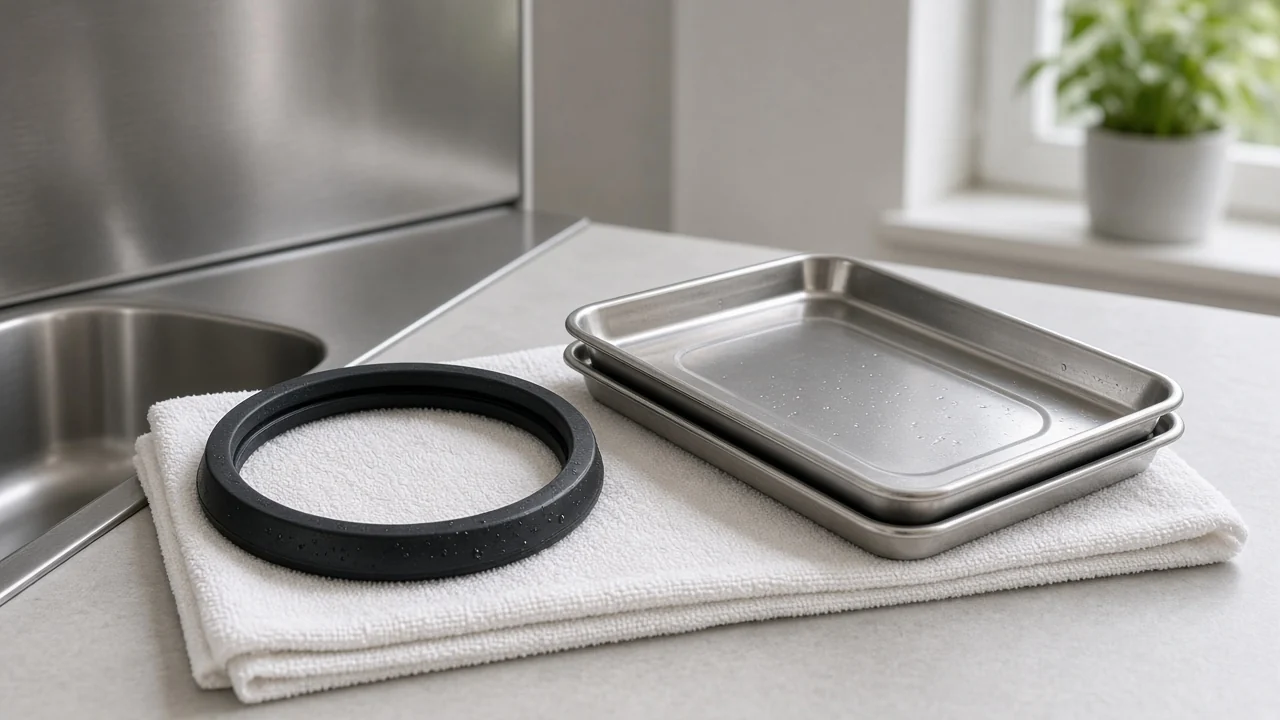
Soak stuck-on food. Sugary residue softens in warm water after a few minutes.
Avoid steel wool. Scratches trap residue and make the next clean harder.
Use the dishwasher only if the manual allows. Check your model's guidance first.
Dry completely. Any water left on trays adds moisture to the next batch.
Step 4: Wipe the chamber, door and gasket (gently)
The gasket and door face decide whether the chamber seals.
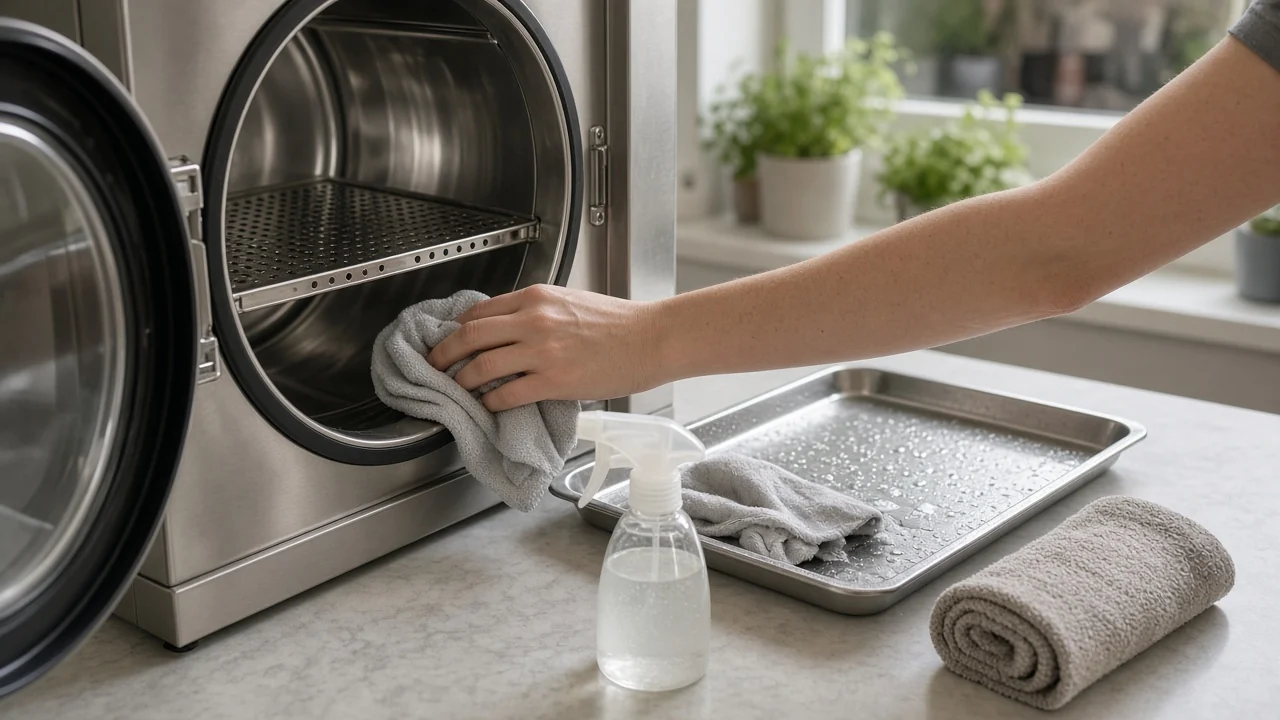
Wipe chamber walls with a damp cloth. Use a little soap for greasy spots, then wipe again with clean water.
Clean the door with a soft cloth. Acrylic scratches easily, so skip harsh cleaners.
Wipe the gasket and check it is seated. A crumb or fold can stop the machine reaching vacuum.
Dry everything. Leave the door open for a while to air out.
Step 5: Check the pump and hose (before the next run)
A quick pump check prevents most slow or failed batches.
Look at the oil colour. Cloudy or dark oil should be changed; see our pump oil guide.
Check the hose and fittings. Make sure nothing cracked or loosened.
Wipe the pump exterior. Keep vents clear of dust.
Reconnect and test. If the next batch reports a vacuum problem, use our vacuum error checklist.
How often should you clean each part?
A short routine after every batch and a deeper clean on a schedule keeps a freeze dryer reliable.
Keeping a short maintenance log next to the machine helps: date, food, oil change and anything unusual. If problems repeat, the log shows whether they follow a certain food, a full load or an overdue oil change. Machine choice affects cleaning too: long trays like the VEVOR's fit fewer sinks than standard 9 × 13 in trays, so check your sink before buying. Our tray size comparison and freeze dryer roundup list the tray sizes for each machine.
After every batch. Defrost, drain, wipe the chamber, door and gasket, and wash the trays.
Every few batches. Check pump oil colour and level, and inspect the hose and fittings.
After sticky or oily loads. Deep-clean trays and shelves and check the gasket for residue.
Before storage. Clean, dry and leave the door ajar so the chamber does not trap moisture.
Whenever it smells. Odours usually mean food residue or water in the drain line.
What causes smells and residue?
Most odours and residue come from sugar, fat or water left behind after a batch.
Sugary drips. Candy and fruit can leave sticky spots on shelves.
Fat. Oily food leaves a film that attracts dust.
Standing water. Water left in the drain line or chamber can smell musty.
What should you never do when cleaning a freeze dryer?
A few habits can damage seals, doors or electronics.
Do not spray water into vents or controls. Wipe with a damp cloth instead.
Do not use solvents on the acrylic door. They can cloud or crack it.
Do not pull or stretch the gasket. Lift it gently if you need to clean behind it, then reseat it evenly.
Do not run the machine with wet trays. Dry trays fully first.
Do not ignore milky pump oil. Change it before the next batch.
Final verdict: how much cleaning does a freeze dryer need?
Who should do this: every owner should do the quick wipe-down after each batch; it is the cheapest way to avoid vacuum errors.
Who should skip it: nobody should skip it, but you can skip the deep clean between batches of dry, low-sugar foods if the chamber and gasket are spotless.
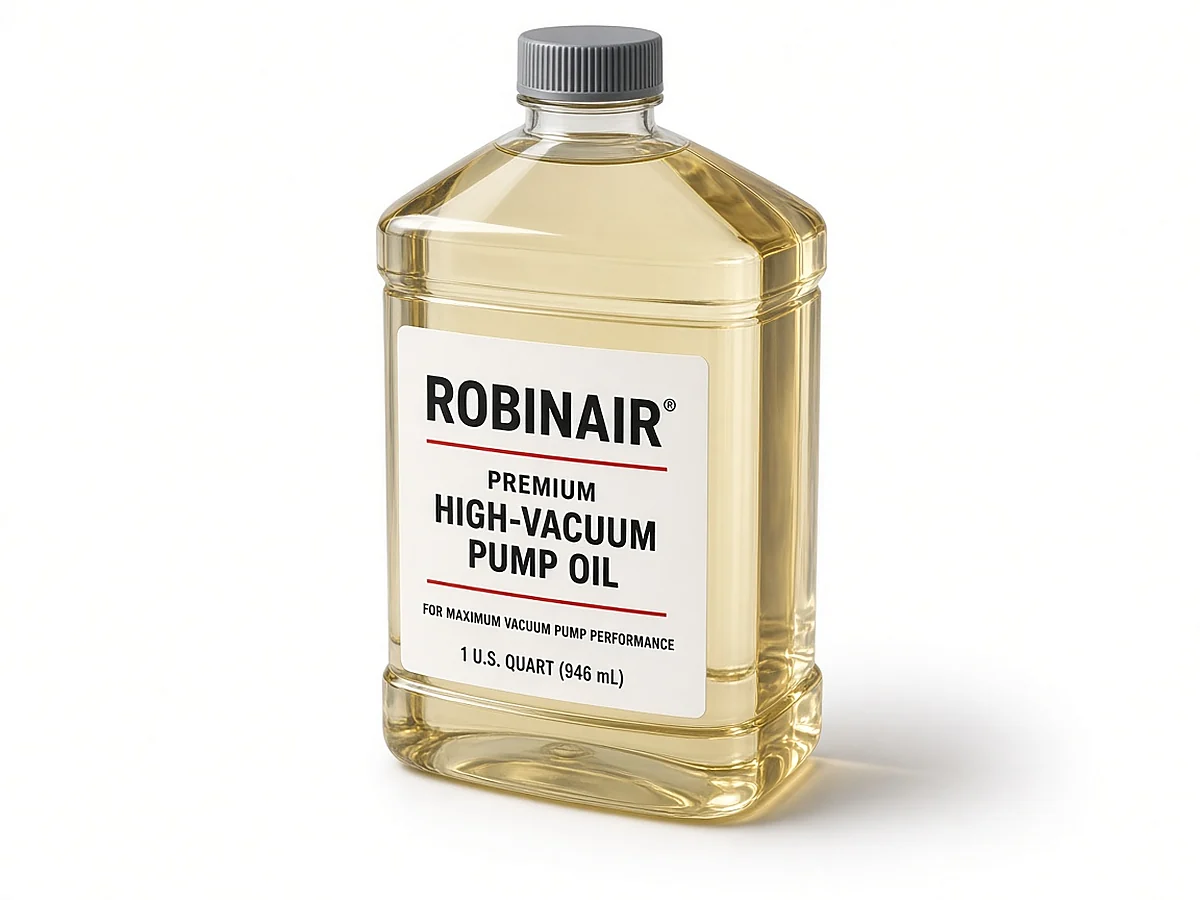
Related on Amazon: Robinair 13203 Premium High Vacuum Pump Oil (1 quart).
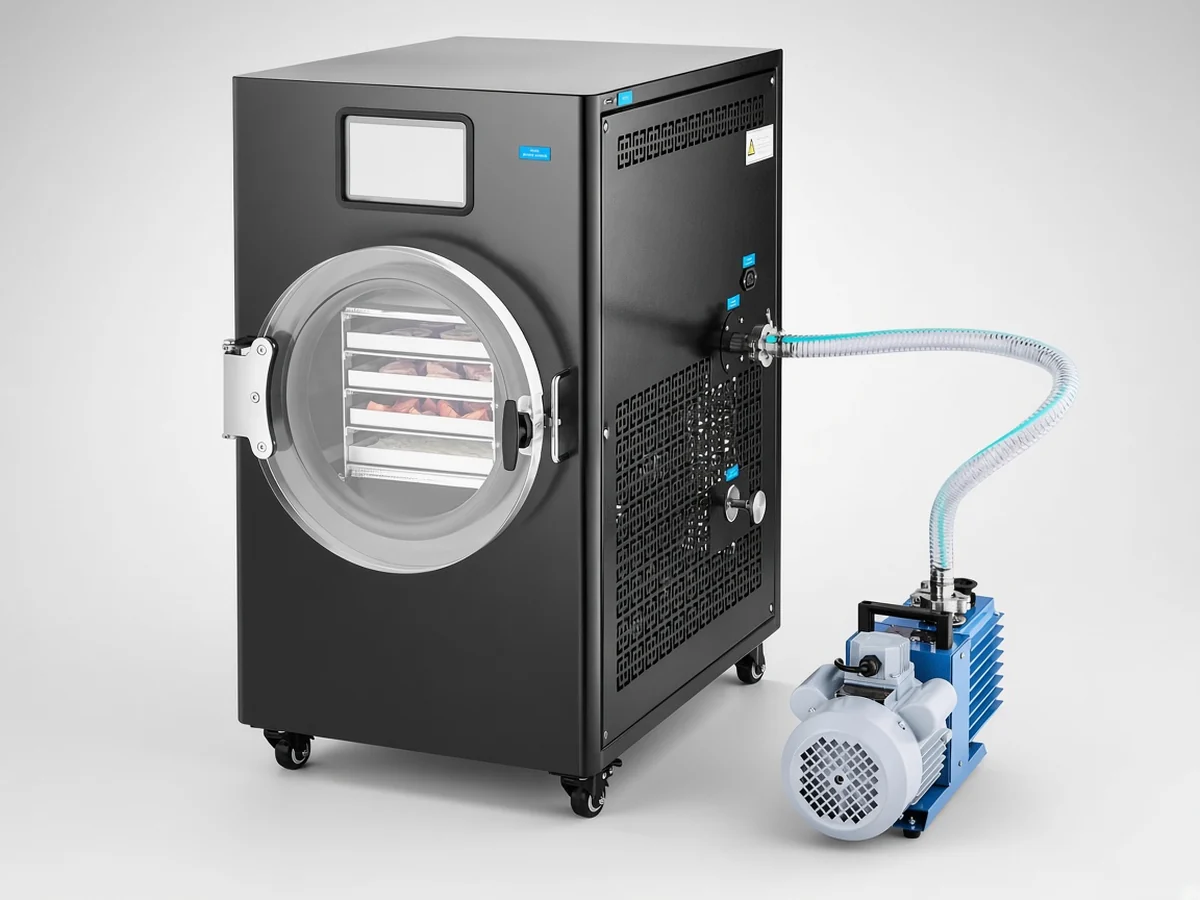
Related on Amazon: VEVOR SJ-08H Vacuum Freeze Dryer.
Amazon listings for the products in this guide
Direct links to the Amazon listings for the products named or shown in this guide:
- Blue Alpine Medium Select Freeze Dryer – View on Amazon
- VEVOR HFD-4 Vacuum Freeze Dryer (4 trays) – See the Amazon listing
- Robinair 13203 Premium High Vacuum Pump Oil, 1 Quart – Check availability on Amazon
- VEVOR Vacuum Freeze Dryer, 5 Trays, 10 Presets – View on Amazon
- HNZXIB FD-05H-40 Vacuum Freeze Dryer, 4 Trays – See the Amazon listing
Frequently asked questions
How often should I clean my freeze dryer?
Wipe the chamber, door and gasket after every batch, and do a deeper clean of trays, shelves and the drain line regularly, plus whenever something spills or smells.
Can I put freeze dryer trays in the dishwasher?
Only if your manual says so. Stainless trays usually tolerate it, but check first.
What should I not use to clean a freeze dryer?
Avoid abrasive pads, harsh solvents and anything that could scratch the acrylic door or damage the gasket. Mild soap and warm water handle most jobs.
How do I clean the vacuum pump?
Clean the outside with a dry cloth and look after the inside through regular oil changes, following our pump oil guide.