
How Often to Change Freeze Dryer Pump Oil (and How to Tell It's Time)
Published 10/29/2026 · Updated 11/24/2026
Quick answer
Change vacuum pump oil on schedule in your freeze dryer manual—many home units use oil-sealed pumps and worn oil hurts vacuum, but interval and oil type vary by brand, so follow the manufacturer’s stated service interval rather than a single universal mileage.
Products mentioned in this guide
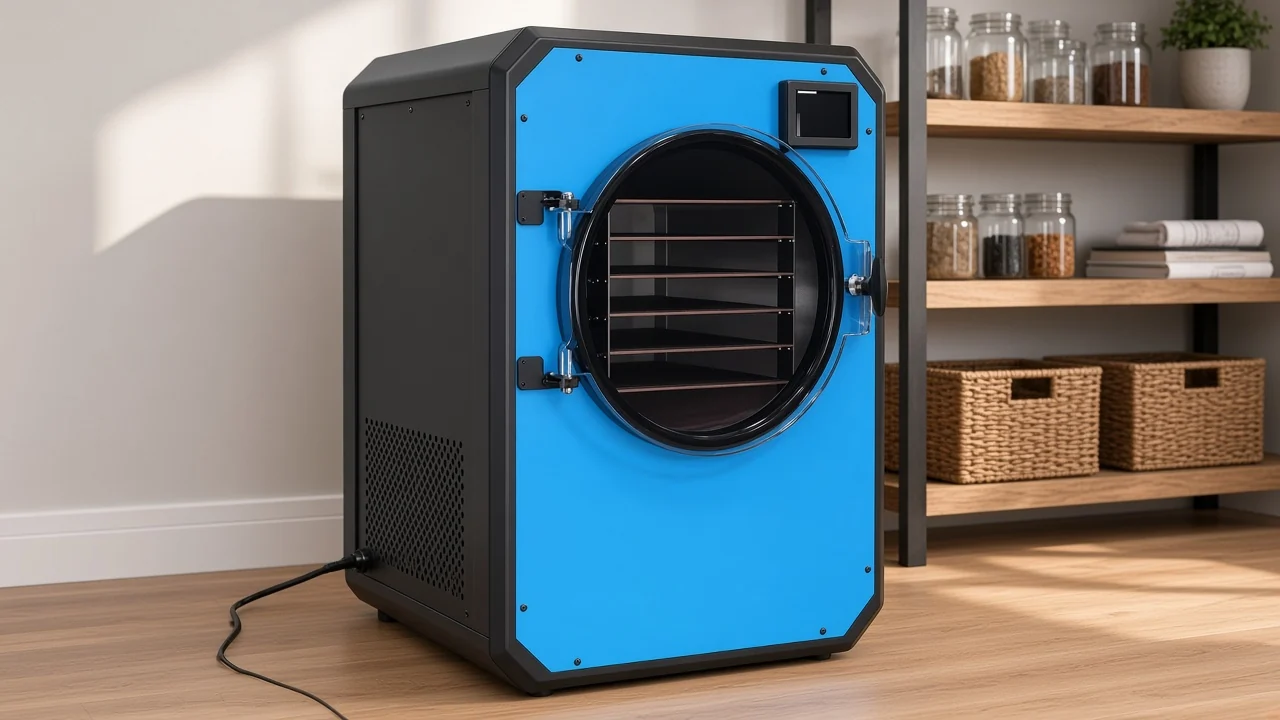
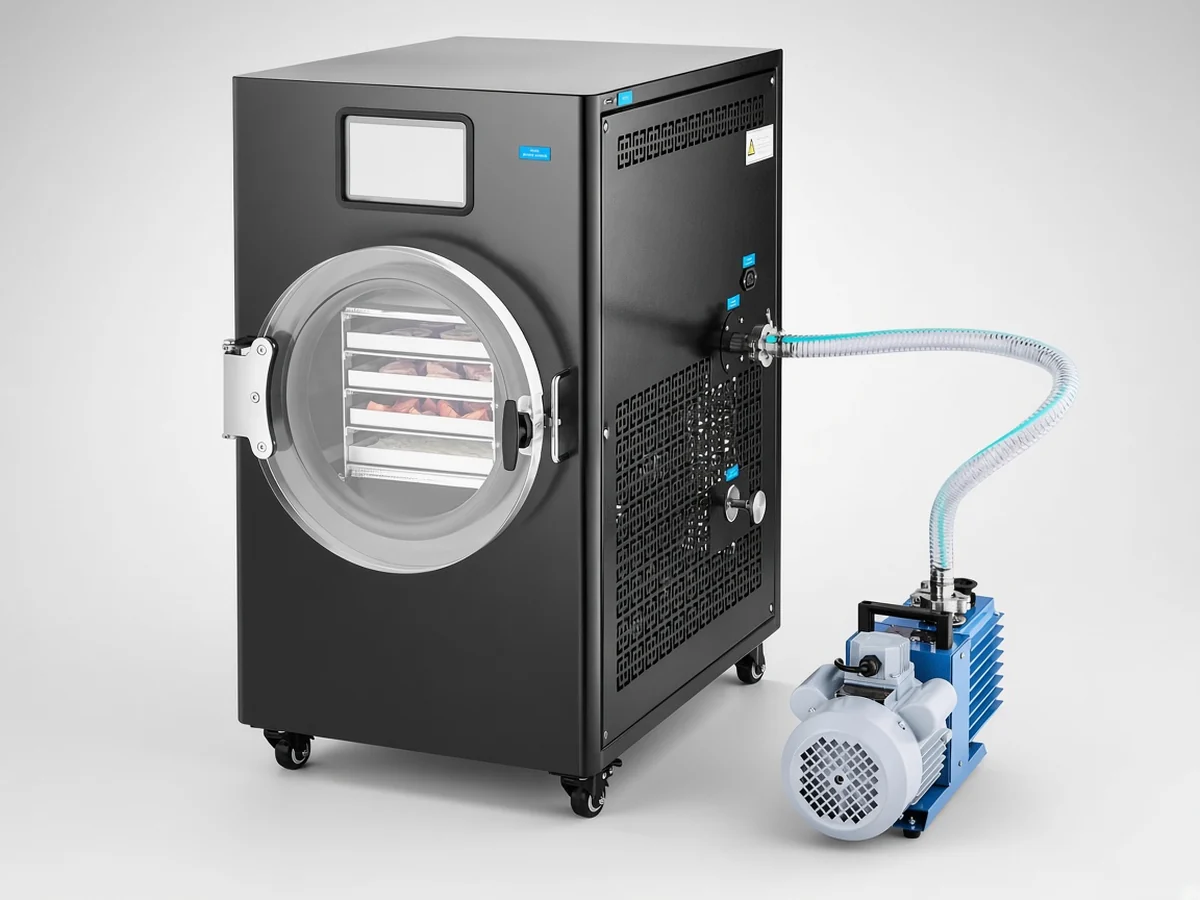
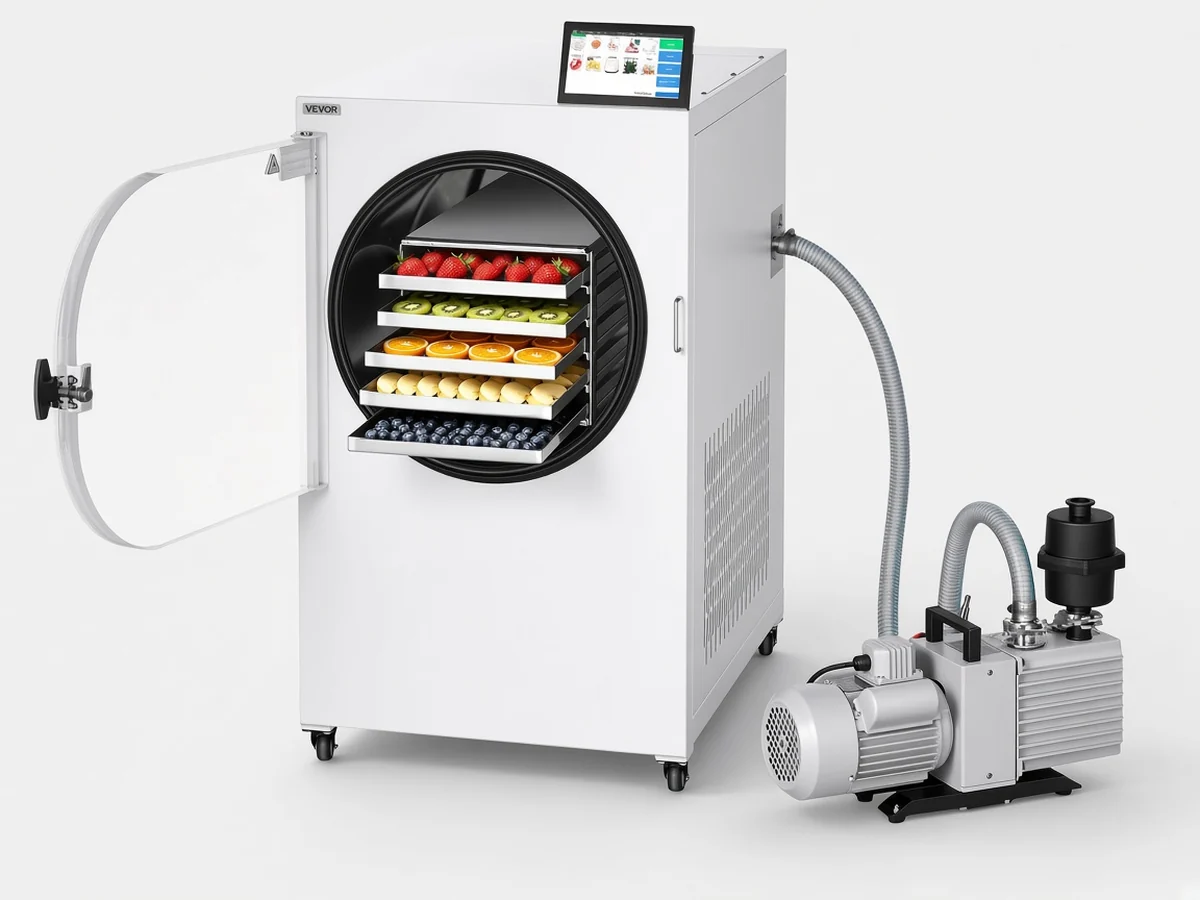
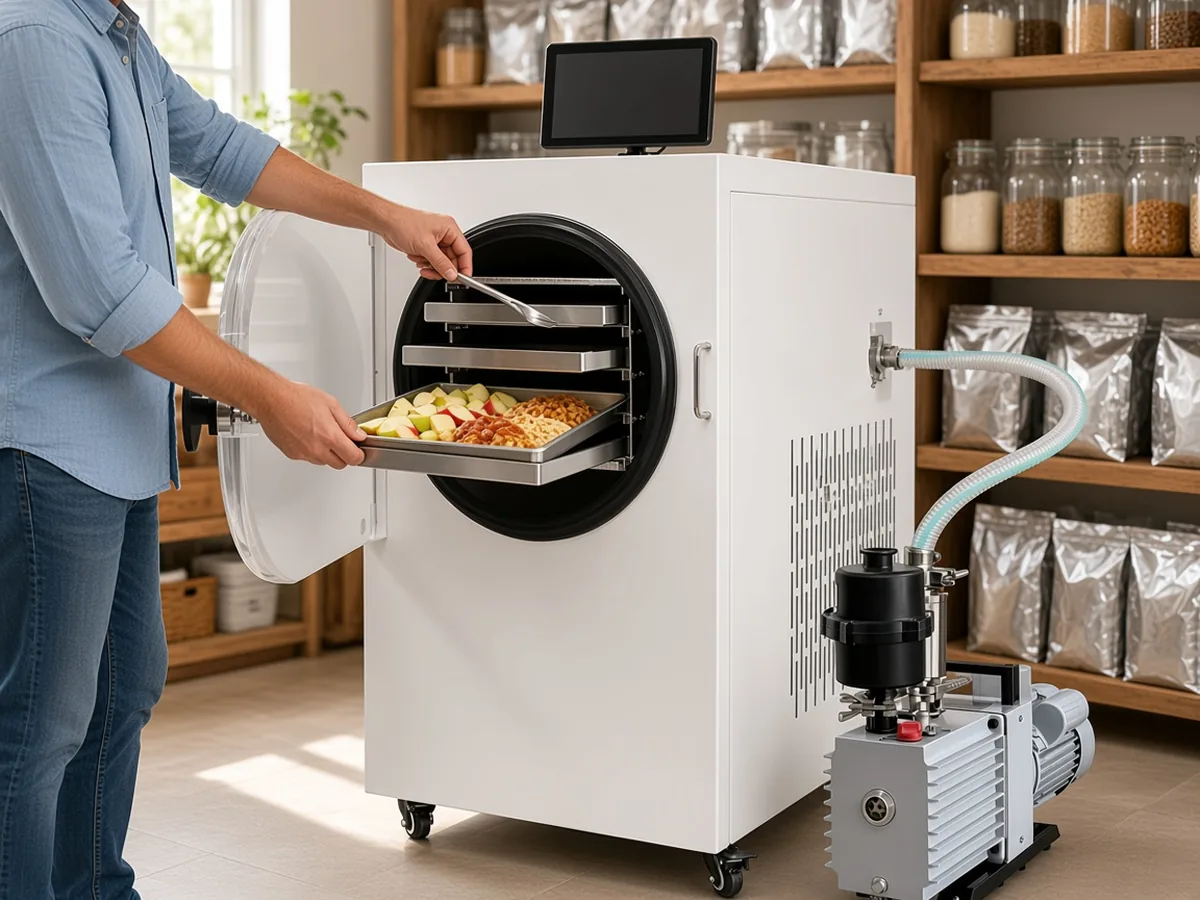
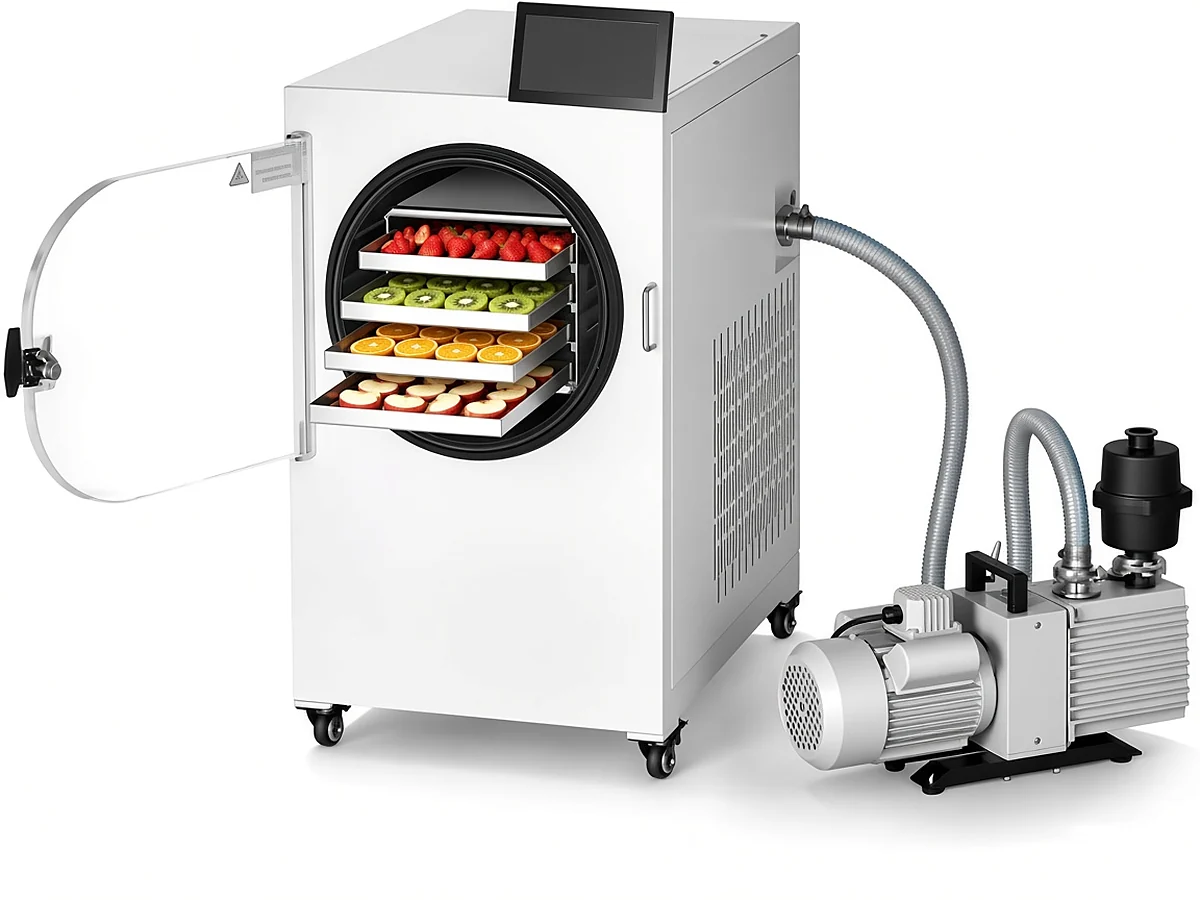
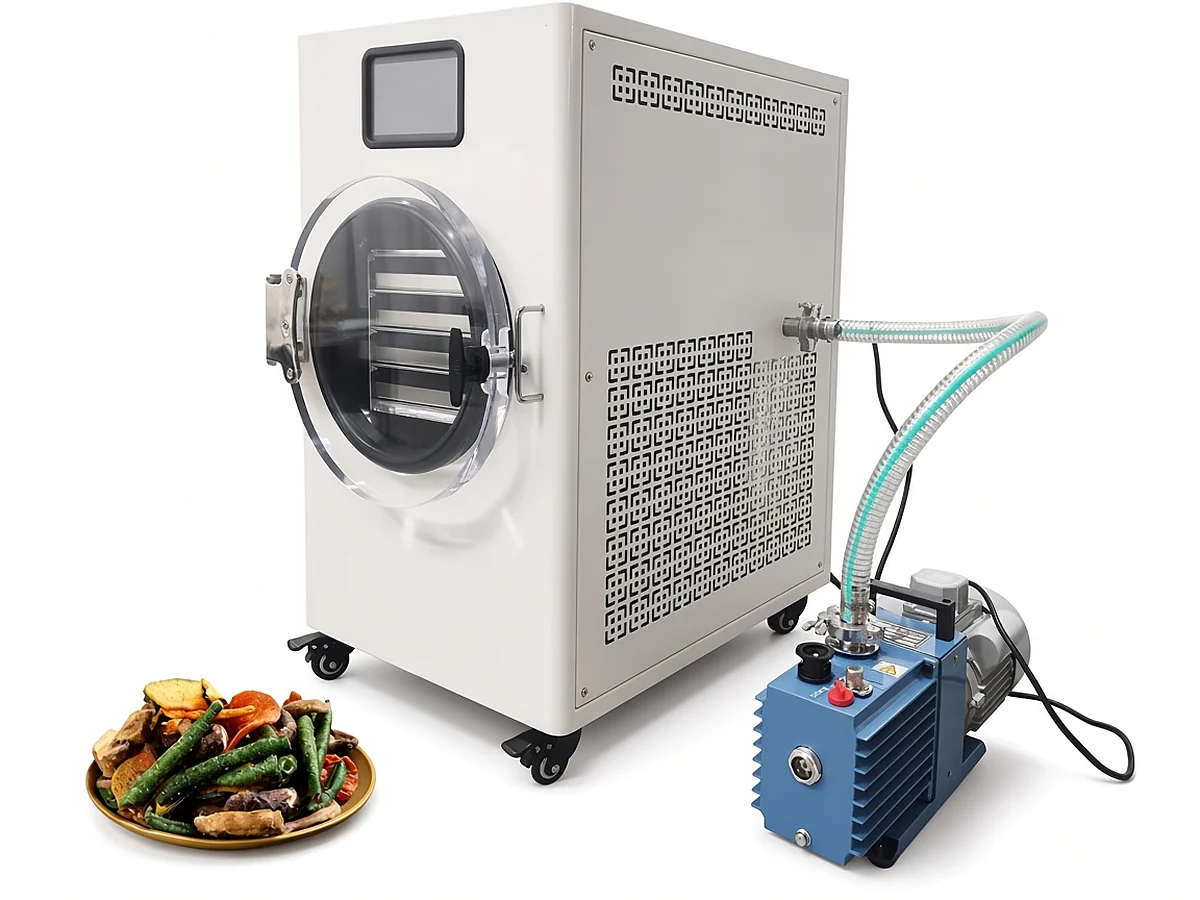
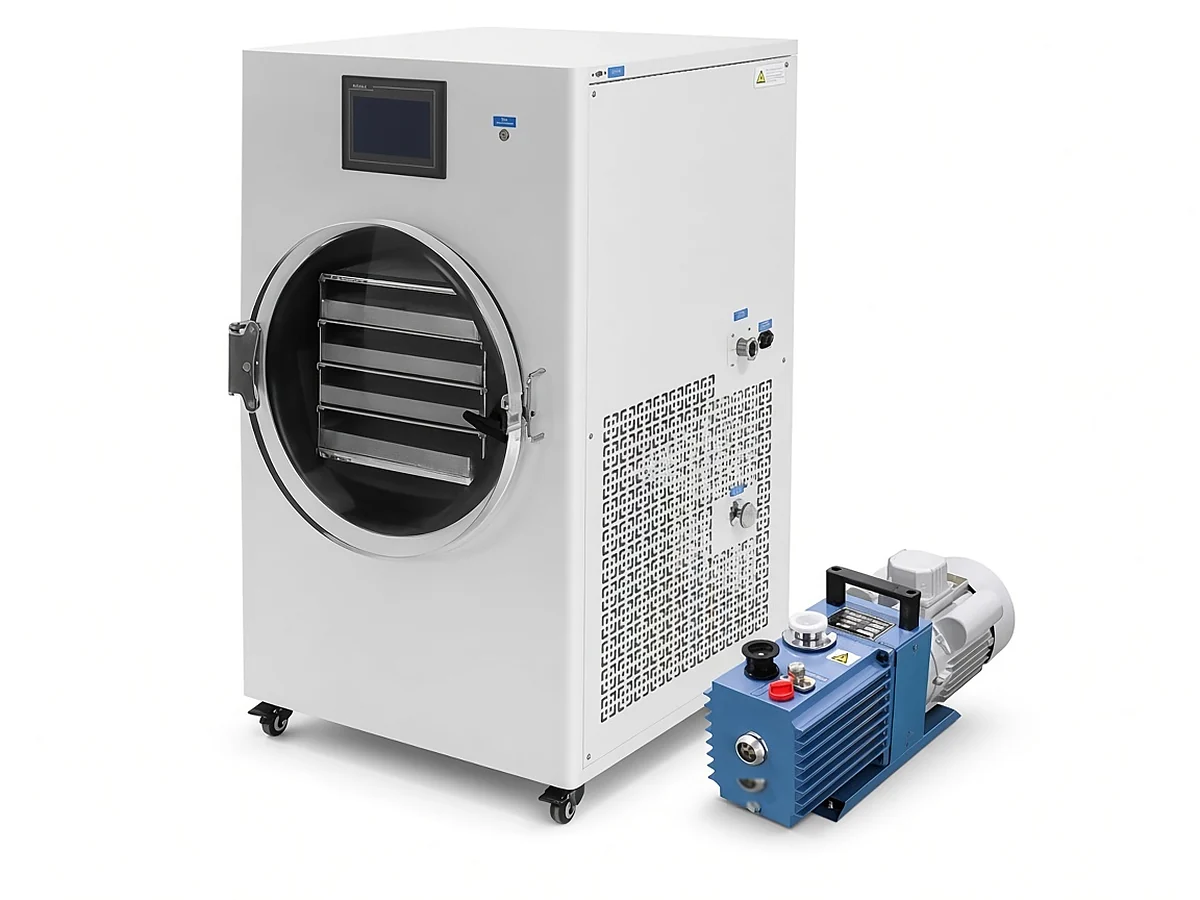
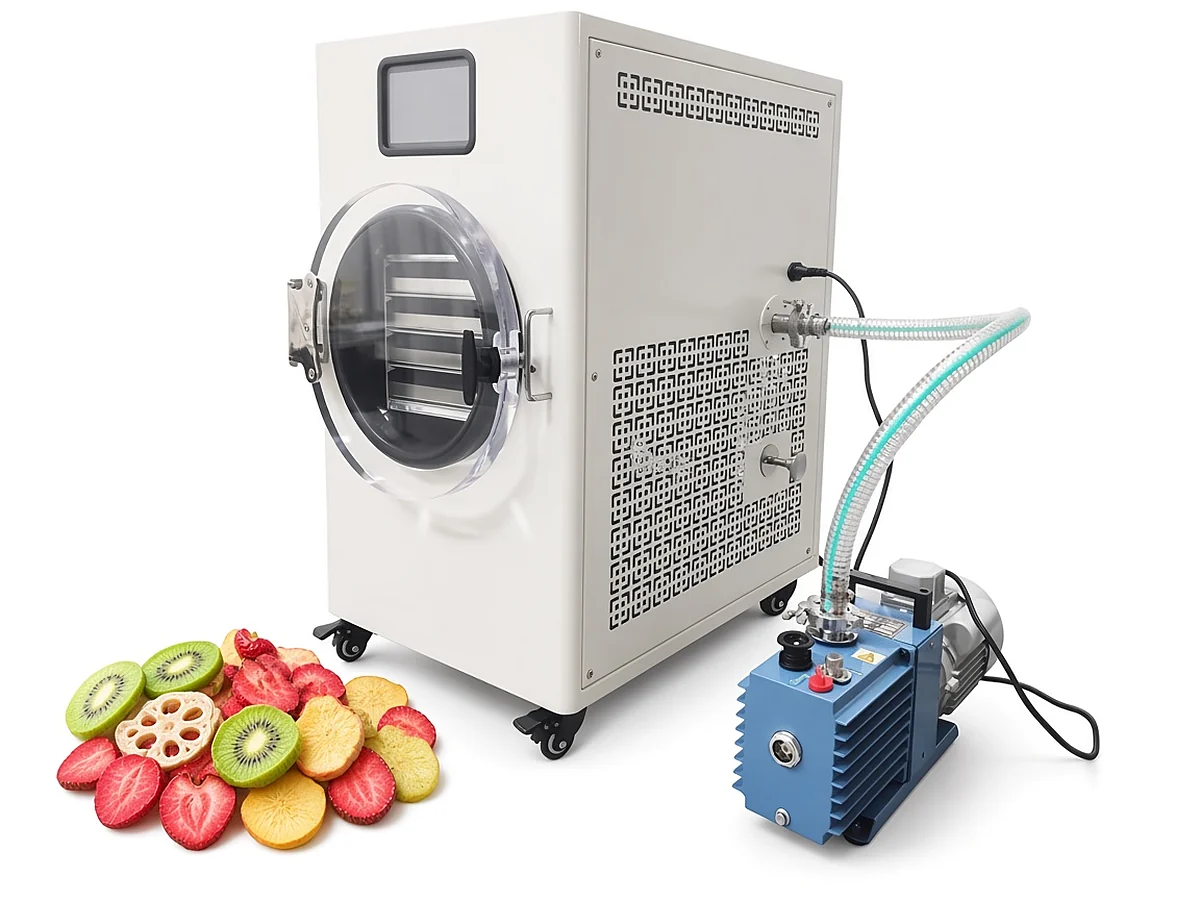
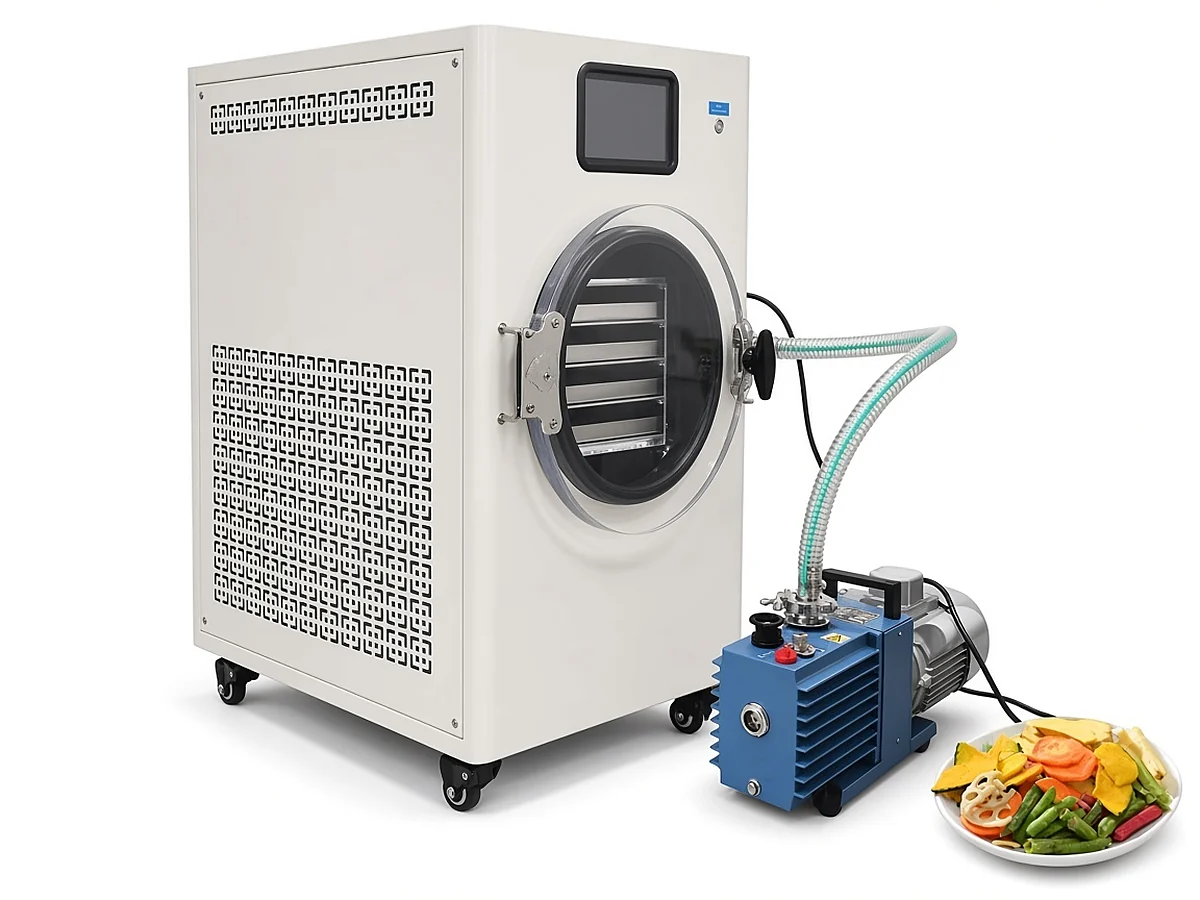
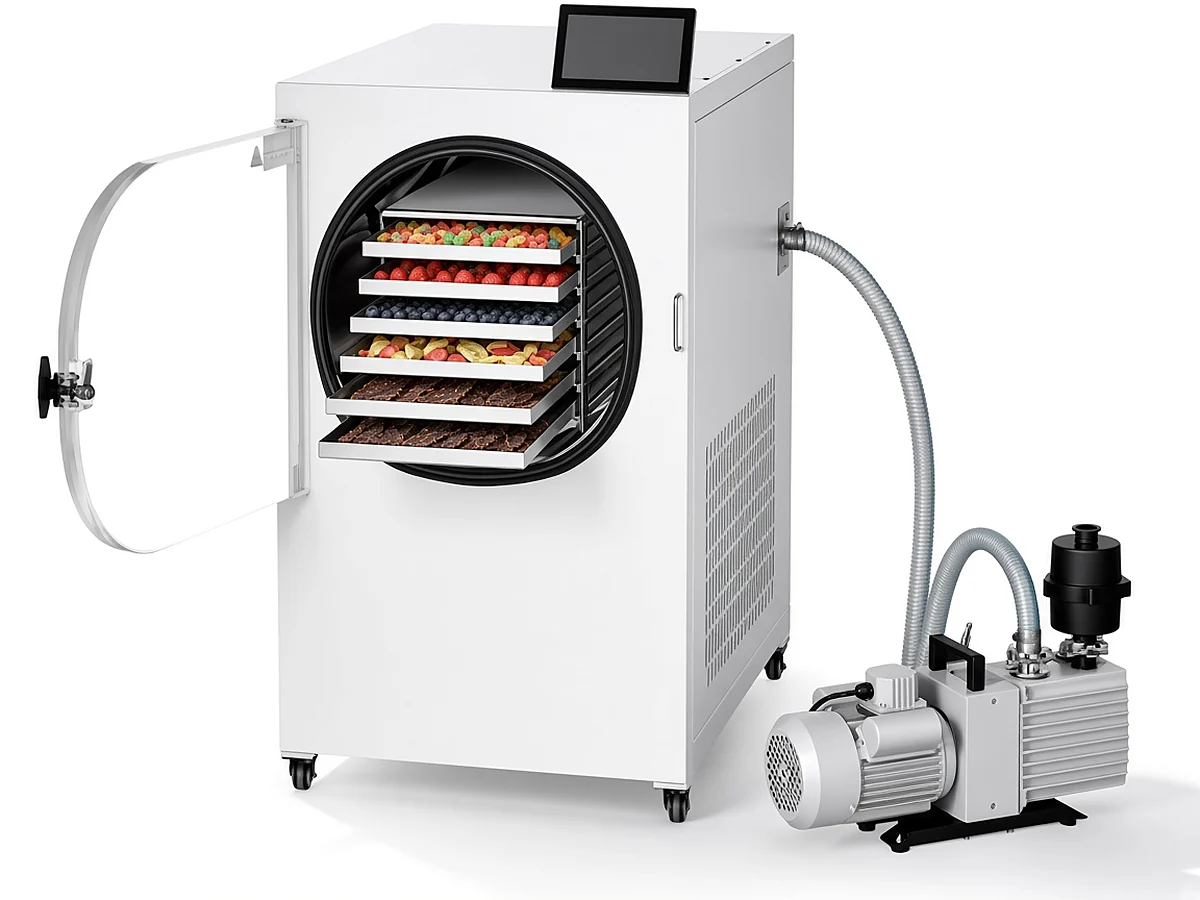
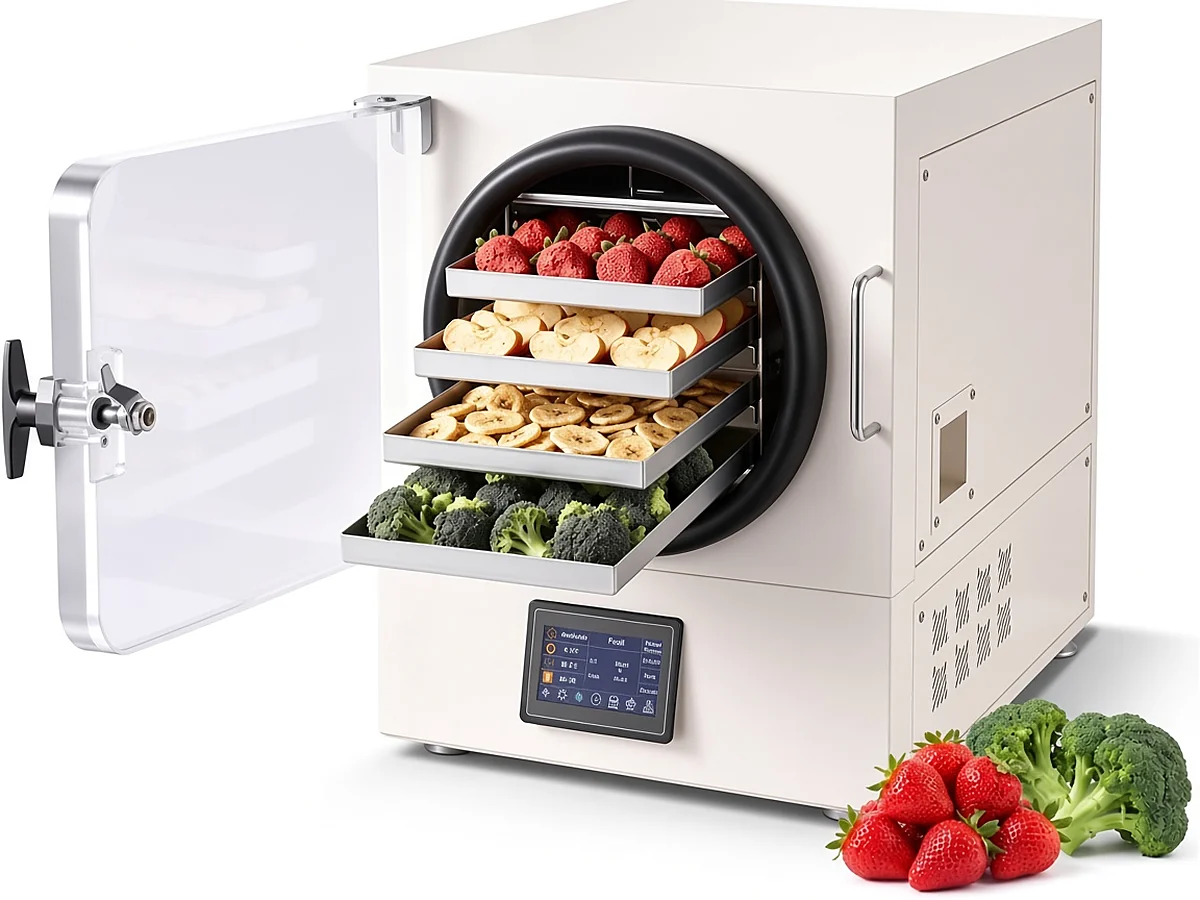
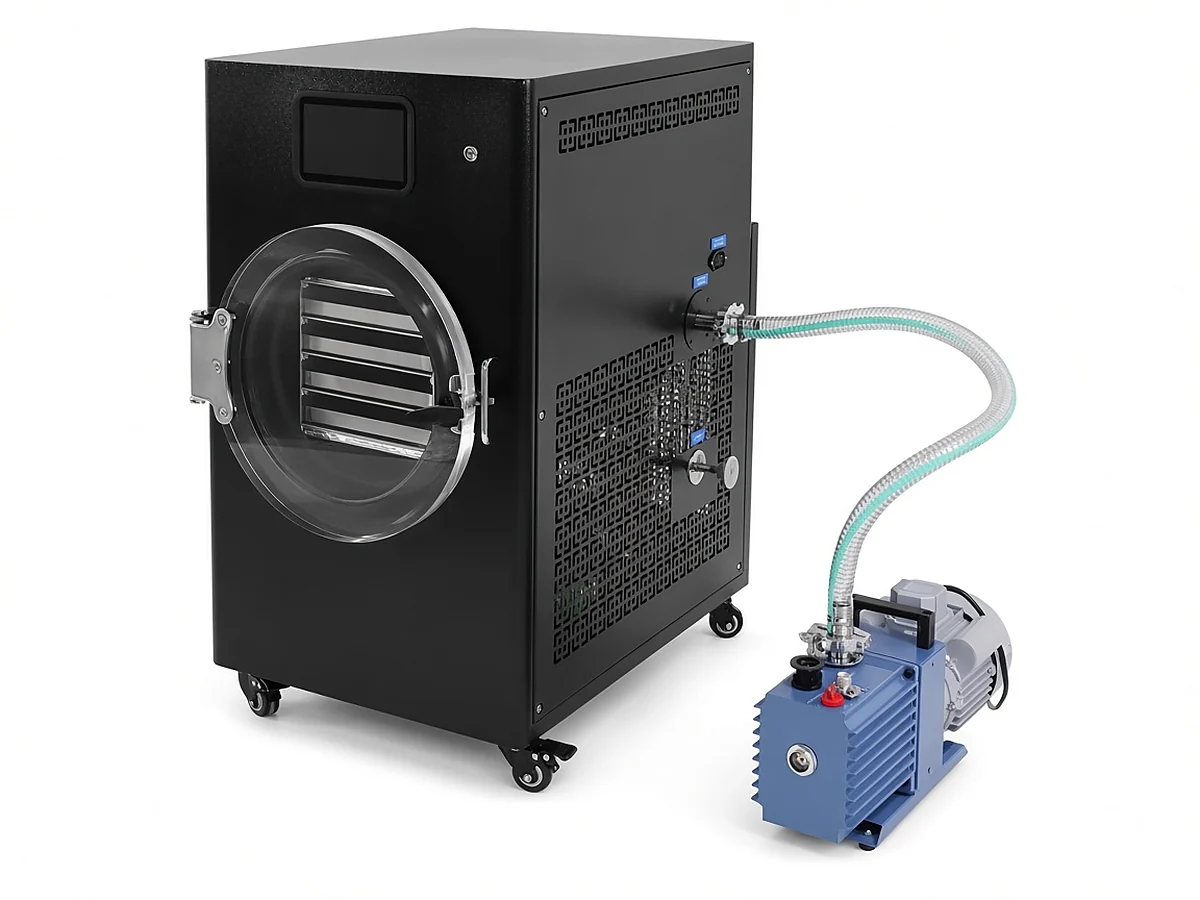
Maintenance & Troubleshooting · Freeze Dryers, Blue Alpine, VEVOR, Vacuum Pump
Updated 30 October 2026
The vacuum pump is the part of a home freeze dryer that needs the most regular attention, and for oil-sealed pumps that mostly means oil. Change it too rarely and batches slow down, vacuum errors creep in and the pump wears faster. The confusing part is that published intervals run from every 4 to 5 batches to every 30, and one manual counts hours instead of batches. Even a single maker's documents do not always agree on details such as the fill level.
This guide explains how oil-sealed rotary-vane pumps, the type supplied with most home freeze dryers, use their oil, how to tell when it needs changing, and how the routine works. We quote manufacturers' manuals as examples of how much intervals differ, not as rules for your machine. Always follow your own pump's manual.
What you'll need for a pump oil change
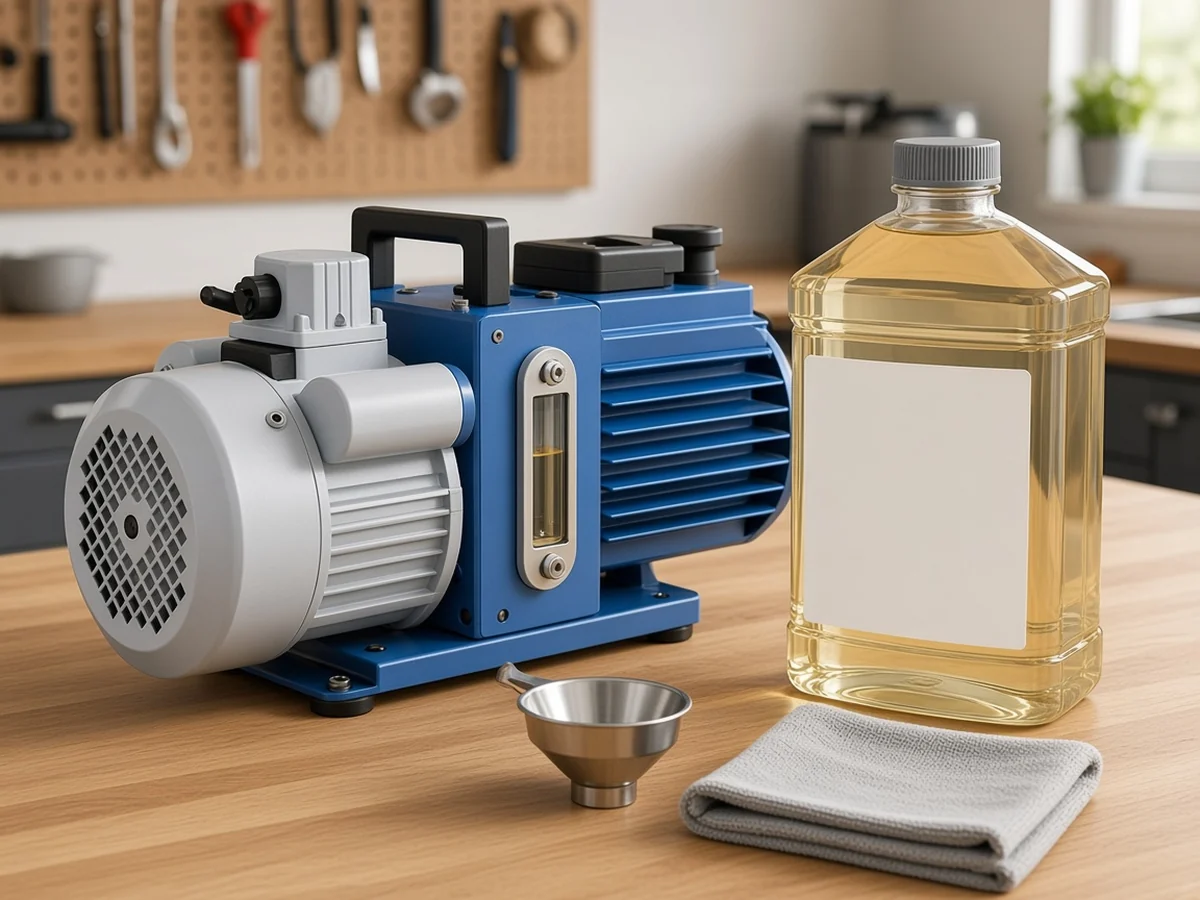
An oil change needs only the right oil, a clear container and a few minutes with the pump cool and switched off.
Vacuum pump oil (Required): Oil-sealed rotary-vane pumps, like the ones supplied with the Blue Alpine and VEVOR machines, need vacuum pump oil, not motor oil. Buy the brand or grade your pump's manual names, because makers disagree on which oils suit their pumps (more on that below).
Clear catch container and funnel (Required): You need to see the colour and clarity of the old oil to judge contamination. Any clean glass jar and small funnel will do.
Paper towels and gloves (Recommended): Pump oil is messy and slippery on floors. Household supplies are fine.
Which pump do you have?
Start here, because the routine depends entirely on the pump. Most home freeze dryers ship with an oil-sealed pump. The VEVOR HFD-4 is typical: its user manual labels an oil inlet, oil outlet, oil-level window and gas ballast valve on the pump, and the Blue Alpine owner's manual describes a premium oil pump with a sight glass and oil mist filter.
Look at the pump itself. An oil pump has a sight glass, a fill cap and a drain plug. If yours has none of those, it may be an oil-free (scroll or diaphragm) pump, which needs a different routine. If you cannot find the pump's own manual in the box, ask the seller for it before the first batch. The pump may be a separately branded unit with its own instructions, and those instructions take priority over general advice like this page.
How oil gets used up
In an oil-sealed pump, the oil seals the gaps between the moving vanes so the pump can pull a deep vacuum. During every batch a little water vapour reaches the pump and mixes into the oil. Harvest Right's oil maintenance sheet says a small amount of water accumulates in the oil during each batch, and its owner's manual says cycle times may increase as the oil ages. Blue Alpine's manual makes the same link between wet loads and more frequent oil changes. Wet oil seals the pump less well, so it cannot pull as deep a vacuum. That is why oil changes matter more on a freeze dryer than on many other vacuum-pump jobs.
How often to change the oil
There is no universal interval. These published figures show how much it varies by pump and by maker:
Example pump | Published interval | Source |
|---|---|---|
Blue Alpine premium pump (supplied with its machines) | Every 4 to 5 batches; check the oil after each batch | Blue Alpine owner's manual |
VEVOR HFD-4 pump | Replace after 100 hours of running | VEVOR HFD-4 user manual |
Harvest Right Standard oil pump | Drain and filter every 4 to 5 batches | Harvest Right manual and maintenance sheet |
Harvest Right Premier pump (gas ballast open) | Every 20 to 30 batches if the oil stays clear | Harvest Right manual |
Stay Fresh Premier pump | Filter every 5 batches, and after the first two | Stay Fresh manual |
Stay Fresh Commercial pump | Every 30 batches or 1,000 hours of drying | Stay Fresh manual |
Two lessons come out of that table. First, pumps with the same marketing name can need different care: Harvest Right's and Stay Fresh's "Premier" pumps are different products. Second, intervals range from a handful of batches to dozens, and VEVOR counts running hours rather than batches. A 100-hour interval could mean several batches or only a few long ones, so keep a log of hours if you own an HFD-4. Your own pump's manual is the one to follow, and when documents disagree, the shorter interval is the cautious choice.
If your machine came with no published interval, check the oil before every batch and change it as soon as it looks cloudy or milky. Keeping a simple log of batches and oil changes helps you find your own rhythm, and some makers require the schedule for warranty claims: Harvest Right's maintenance sheet says so for its pumps.
How to tell the oil needs changing
Look through the sight glass before every batch. Harvest Right's oil maintenance sheet describes clean oil as:
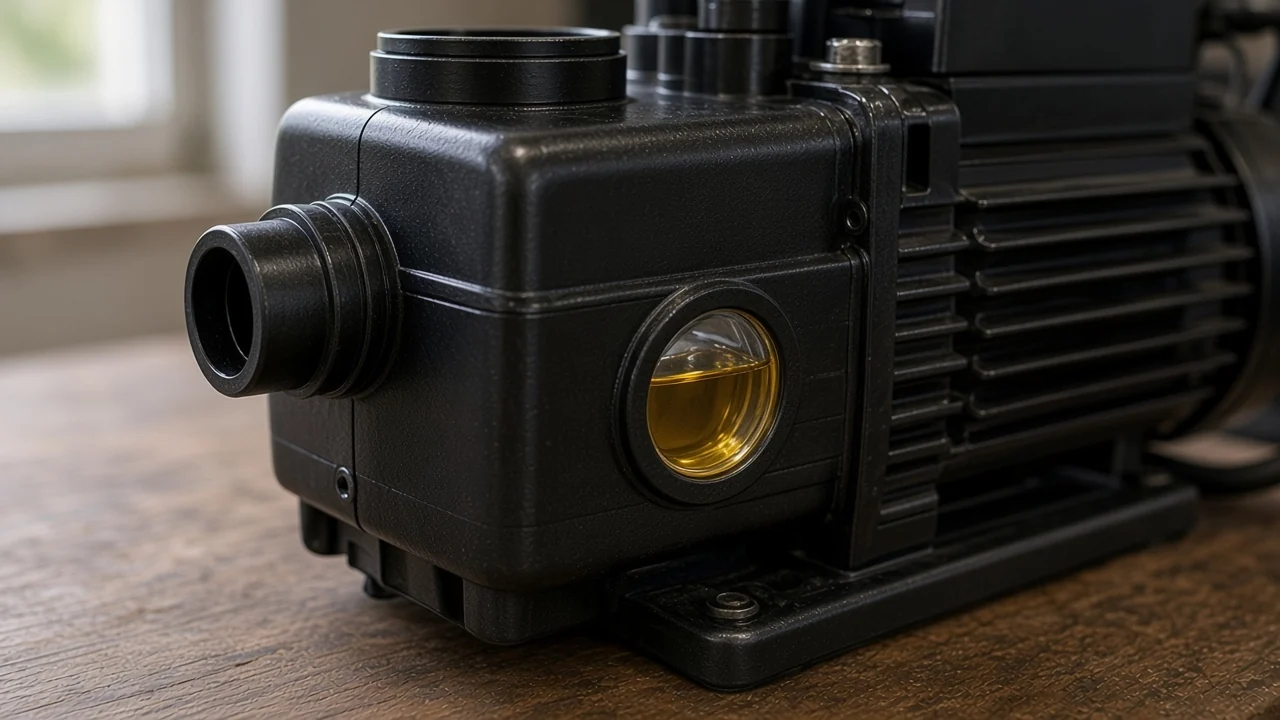
free of debris or particles
not milky or chalky
clear, even if it is yellow or amber
still letting the pump reach a pressure suitable for freeze drying
Blue Alpine's manual says to change the oil whenever it looks milky, murky or discoloured, or has visible contaminants, and explains that oil often looks much darker after the very first batch because of particles left from manufacturing, which is why it asks for the break-in oil to be replaced after that first run. Two other signals apply to any oil pump: batches getting longer, and the pressure taking longer to fall. Harvest Right's manual lists contaminated oil and low oil among its vacuum leak points. If batches are dragging, check the oil before anything else; our batch time guide covers the other causes.
Filtering and reusing oil
Whether filtering is appropriate for your pump, and what filter to use, is a question for your own manual. Harvest Right's maintenance sheet describes draining oil through its filter and pouring off the water that settles underneath. Blue Alpine's manual says filtered oil can be reused about three or four times, either by letting the water settle out in a clear container or by using a jug-style filter. VEVOR's HFD-4 manual only says to replace the oil. If your manual is silent, fresh oil at each change is the safe default.
How to change the oil
Steps differ by pump, so follow your manual. The common points across the manuals we read are:
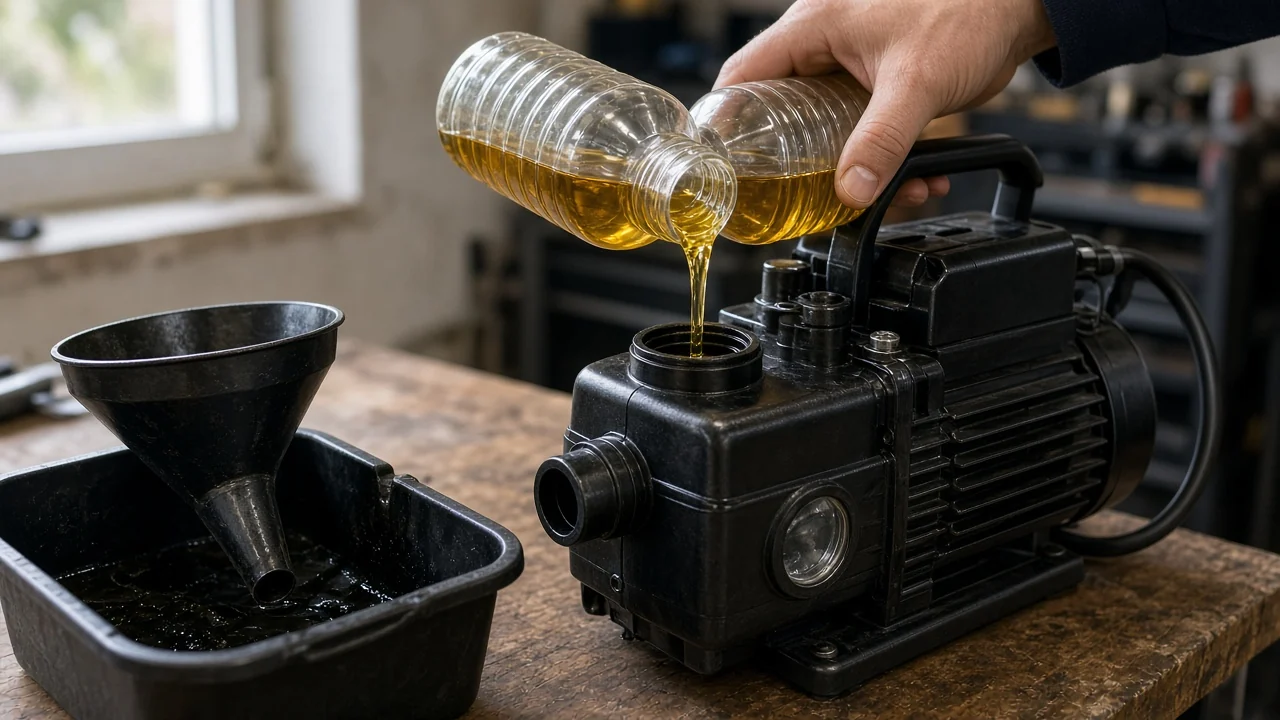
Warm the oil first so it drains easily. Harvest Right's manual says to run the pump for about one minute, and no longer.
Switch the pump off and unplug it, then drain the oil into a container or filter.
Tip the pump gently to get the last of it out, without over-tilting, which can push oil into the exhaust filter (demister).
Close the drain, then refill through the fill opening with a funnel.
Check the level in the sight glass and do not overfill.
How full is full?
Fill marks differ between pumps and even between documents. Harvest Right's owner's manual says slightly above three-quarters on the sight glass, while its Premier pump manual says halfway between the MIN and MAX lines. Blue Alpine says one-third to one-half of the sight glass, VEVOR's HFD-4 manual says the middle of the level window, and Stay Fresh says between MIN and MAX. All of them warn against overfilling. Go by the marks on your own pump, and note that the level drops slightly while the pump runs.
Which oil to use
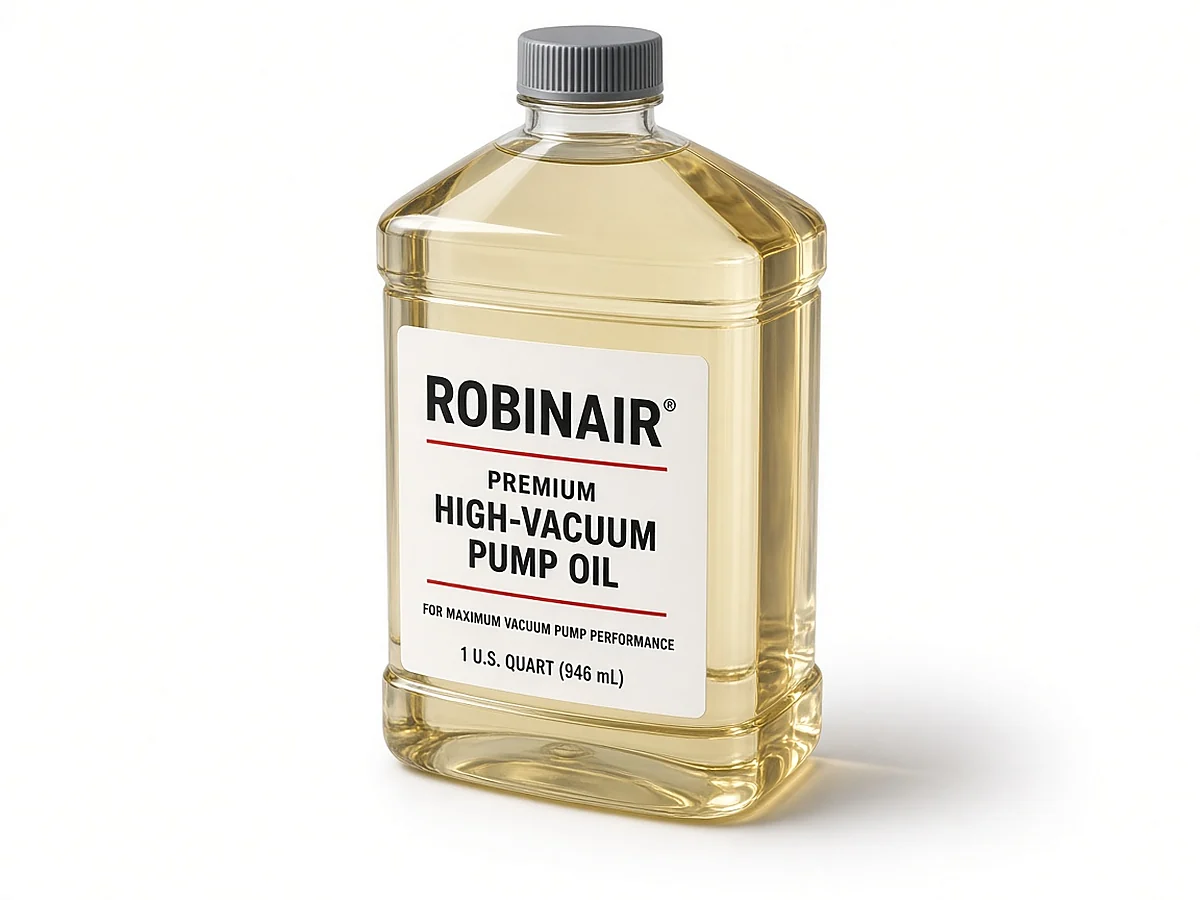
Use the oil your pump's manual specifies, because makers' recommendations conflict. Harvest Right's Premier pump manual recommends Harvest Right oil, Robinair Premium High Vacuum Pump Oil or JB Industries Black Gold, and says not to use Dairyland oil. Blue Alpine's manual takes the opposite view for its own pump and names Dairyland (also sold as Clover Patch) as the best oil for freeze-drying pumps. Stay Fresh recommends Robinair or JB Black Gold. VEVOR's HFD-4 manual only says to use the required oil type, so ask the seller which one that is. If your manual names no oil, ask the seller for the specification rather than guessing; a general vacuum pump oil is not automatically suitable for every pump.
What gas ballast does
Many oil pumps have a gas ballast valve, which lets a small amount of air through the pump to carry water vapour out instead of letting it condense in the oil. How it should be set depends on the pump, and manuals differ. Harvest Right's manual says the ballast on its Premier pump must always be open, that running it closed will ruin the pump, and that closed-ballast oil is only good for 4 to 5 batches. Stay Fresh says to leave its Commercial pump's ballast fully open whenever it runs. Blue Alpine recommends leaving the valve open to extend pump life and requires it for acidic foods, but warns that opening it before the chamber reaches target pressure can push oil out of the valve, and that an open ballast saturates the oil mist filter faster. The HFD-4's pump has a ballast valve too, but its manual does not say how to set it, so ask the seller.
Why is my pump smoking or misting oil?
Heavy oil misting or spraying usually points to a problem. Harvest Right's Premier pump manual lists four causes of a saturated demister, and they apply to most oil pumps:
the pump has been tipped
the oil is overfilled
heavy airflow for a long time, such as a drain valve or door left open
switching a hot pump off and straight back on, when the warm oil is thin
Harvest Right's owner's manual adds that oil spray usually means air is leaking into the chamber, or water has condensed into the oil and raised the level. If you see spray, work through our vacuum error checklist to find the leak.
Oil vs oil-free pumps
Oil-free pumps remove the oil routine but not all maintenance. Harvest Right's oil-free scroll pump manual, for example, says the scroll seals wear with extended use, that the pump may then take longer to reach full vacuum, and that the tip seals can be replaced. Utah State University Extension describes occasional cleaning of oil-less pumps, roughly every 10 batches. Ask your pump's maker before opening an oil-free pump yourself. None of the freeze dryers we cover from Amazon US comes with an oil-free pump as standard.
Storing a pump between uses
Do not leave dirty oil sitting in an idle pump. Harvest Right's manual says dirty oil left in a stored pump will corrode its internal parts. Blue Alpine's goes further and says not to leave a pump for more than a day or two with contaminated oil, because the water in it can cause rust. Drain it and refill with fresh oil before any long break.
Related on Amazon: VEVOR SJ-08H Vacuum Freeze Dryer.
Frequently asked questions
How often should I change freeze dryer pump oil?
It depends on the pump. Blue Alpine and Harvest Right's Standard pump call for a change every 4 to 5 batches, Harvest Right's Premier pump every 20 to 30 if the oil stays clear, and the VEVOR HFD-4 manual every 100 running hours. Check the sight glass before each batch either way.
Can I reuse filtered pump oil?
Some manuals allow it. Blue Alpine says filtered oil can be reused about three or four times, and Harvest Right supplies a filter for the job. If the oil stays cloudy or milky after filtering, replace it.
Can I use motor oil in a vacuum pump?
No. Vacuum pumps need low-vapour-pressure vacuum pump oil.
Related guides
Pump upkeep is part of the real cost of owning a freeze dryer; our running cost guide adds it to the electricity bill. If your pump is spraying oil or the pressure will not drop, go to the vacuum troubleshooting checklist, and if the chamber is not getting cold, see freeze dryer not freezing. Comparing machines? Our home freeze dryers on Amazon roundup looks at how much documentation each brand publishes.
Sources
Blue Alpine owner's manual (oil type, interval, fill level, filtering, gas ballast)
VEVOR HFD-4 user manual (100-hour oil change, fill level, pump parts)
Harvest Right owner's manual, oil maintenance sheet and Premier pump manual
Stay Fresh freeze dryer user manual