
Freeze Dryer Not Pulling a Vacuum? A Step-by-Step Fix Checklist
Published 10/29/2026 · Updated 11/24/2026
Quick answer
When a freeze dryer throws a vacuum error, start with the easy fixes: confirm the door is latched, the silicone gasket is clean, vacuum pump oil is fresh and the drain hose is not kinked. Most failures clear before you replace hardware or call support.
Products mentioned in this guide
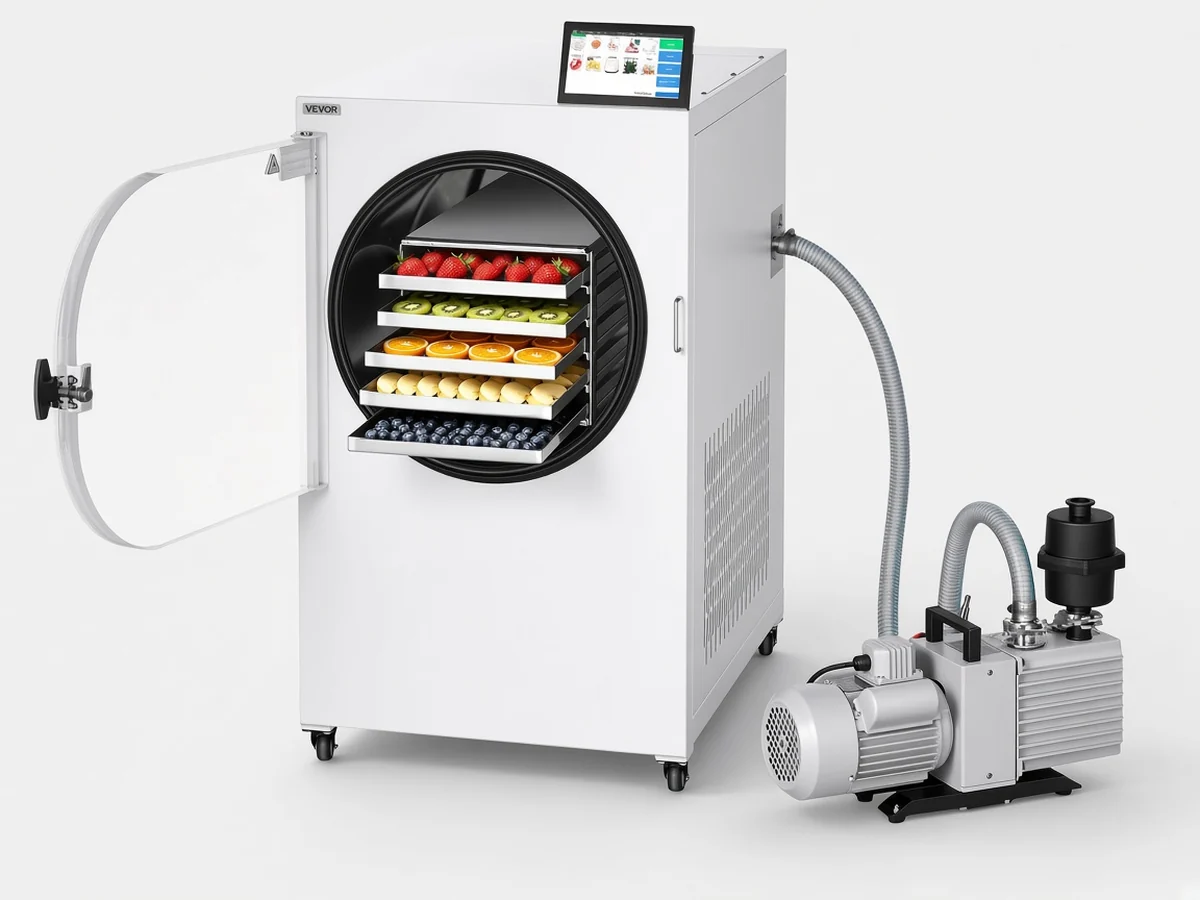
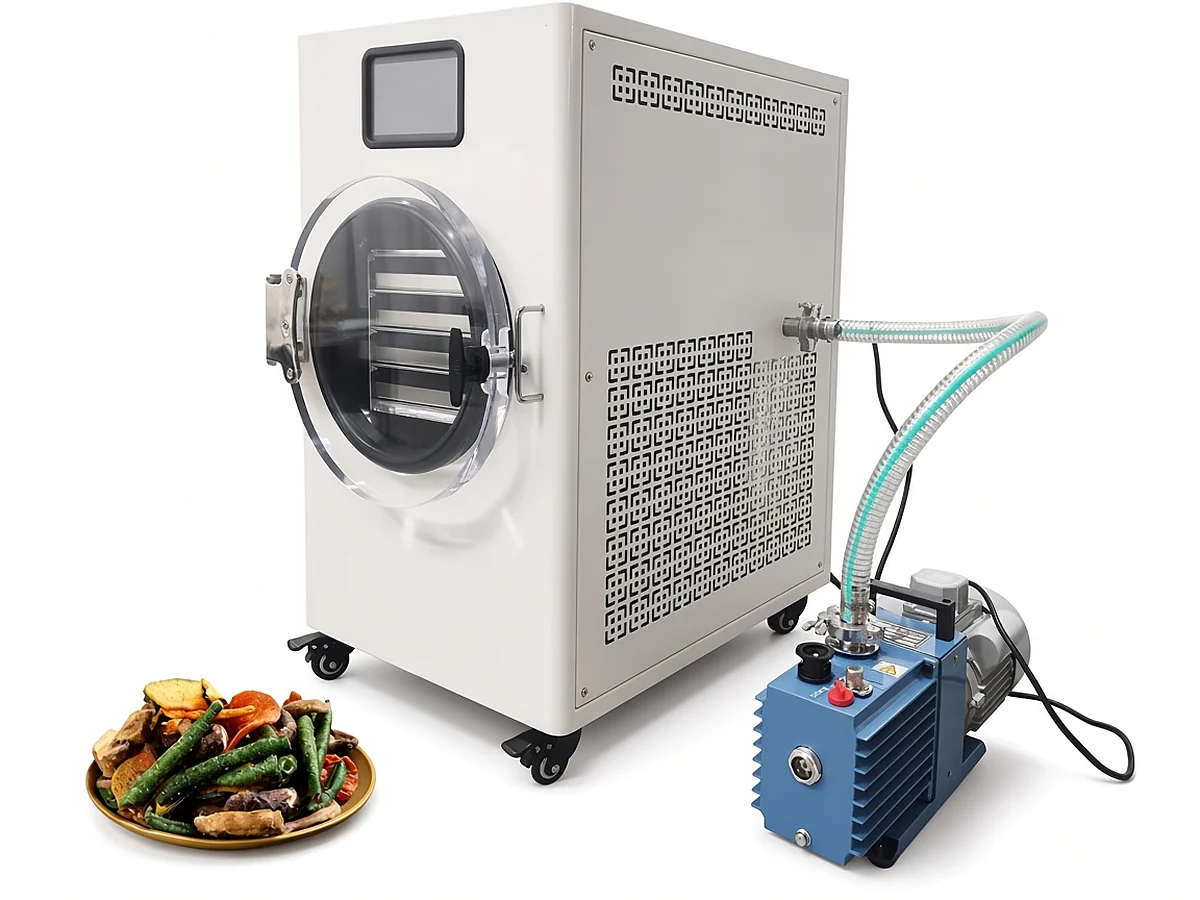
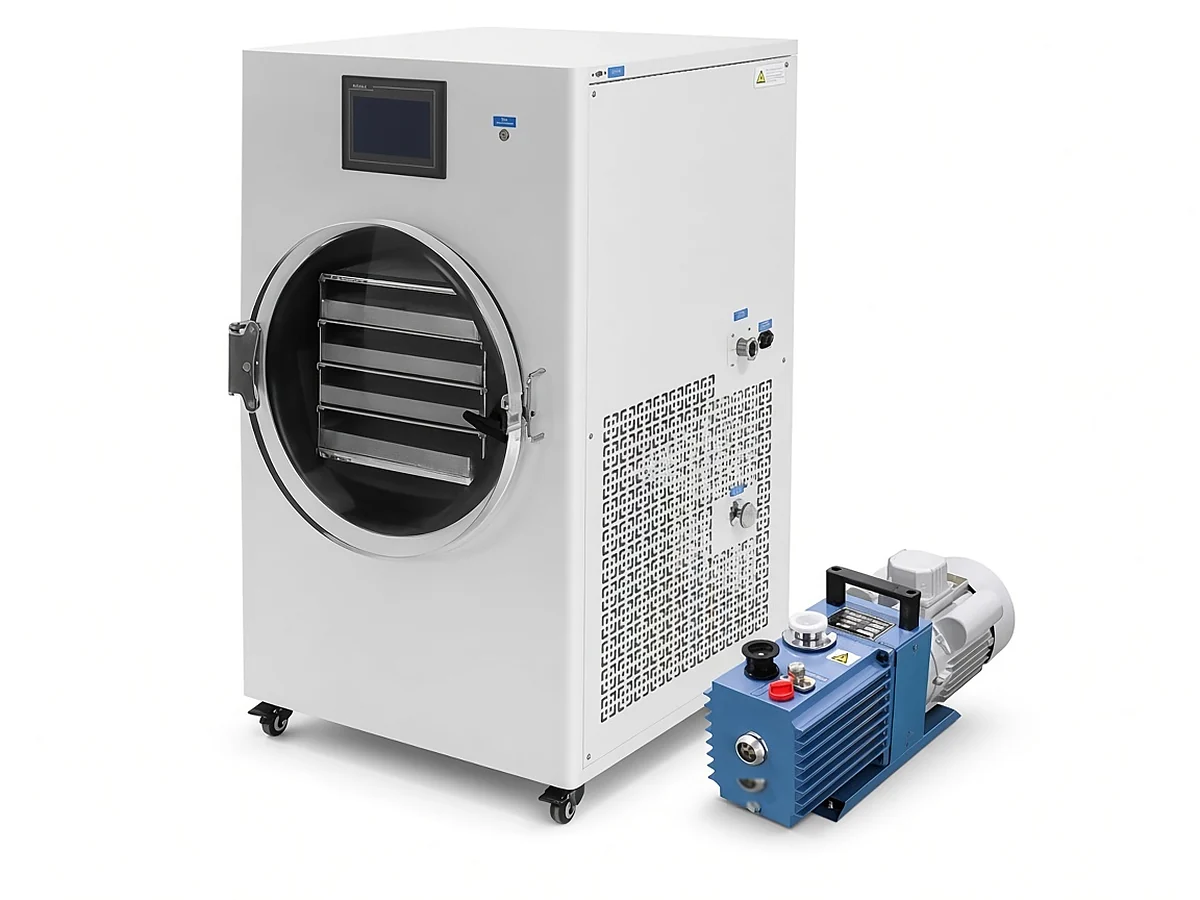
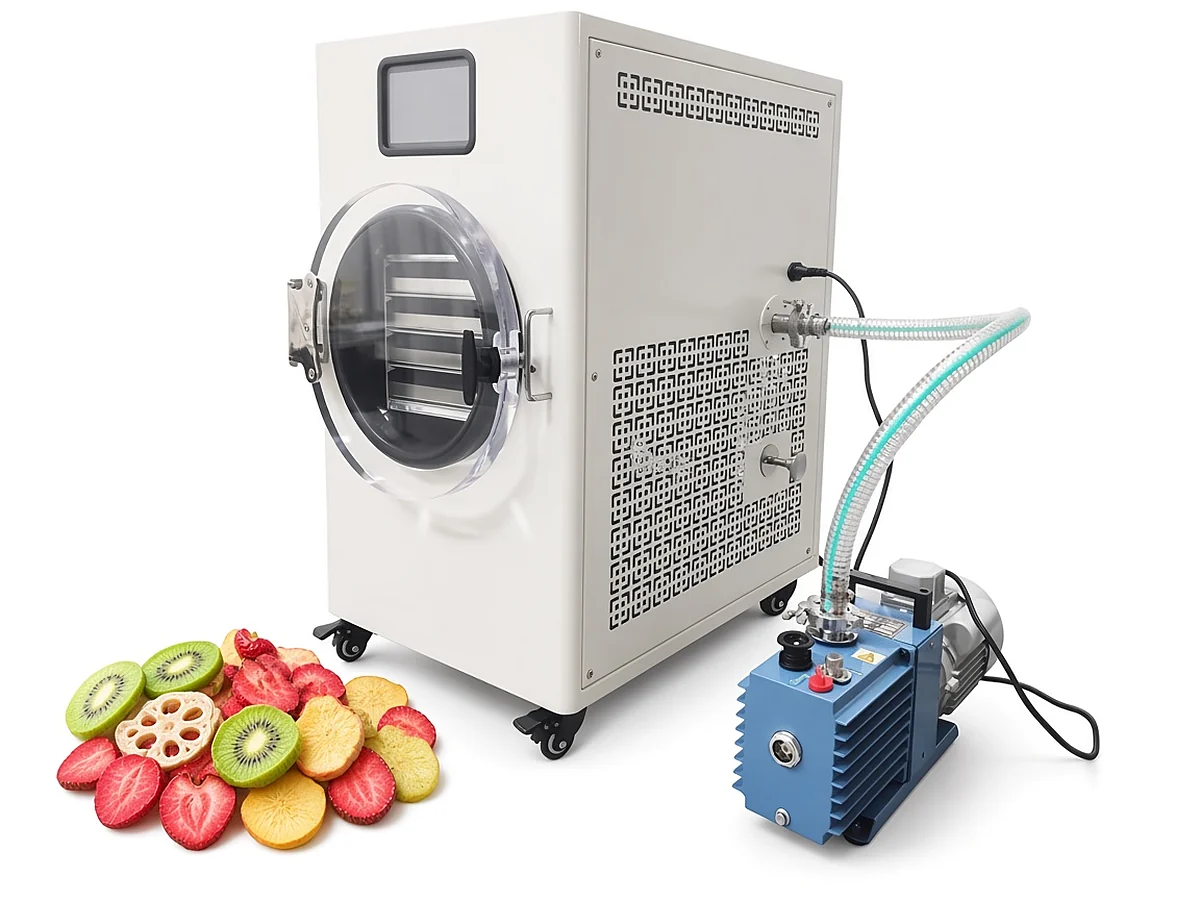
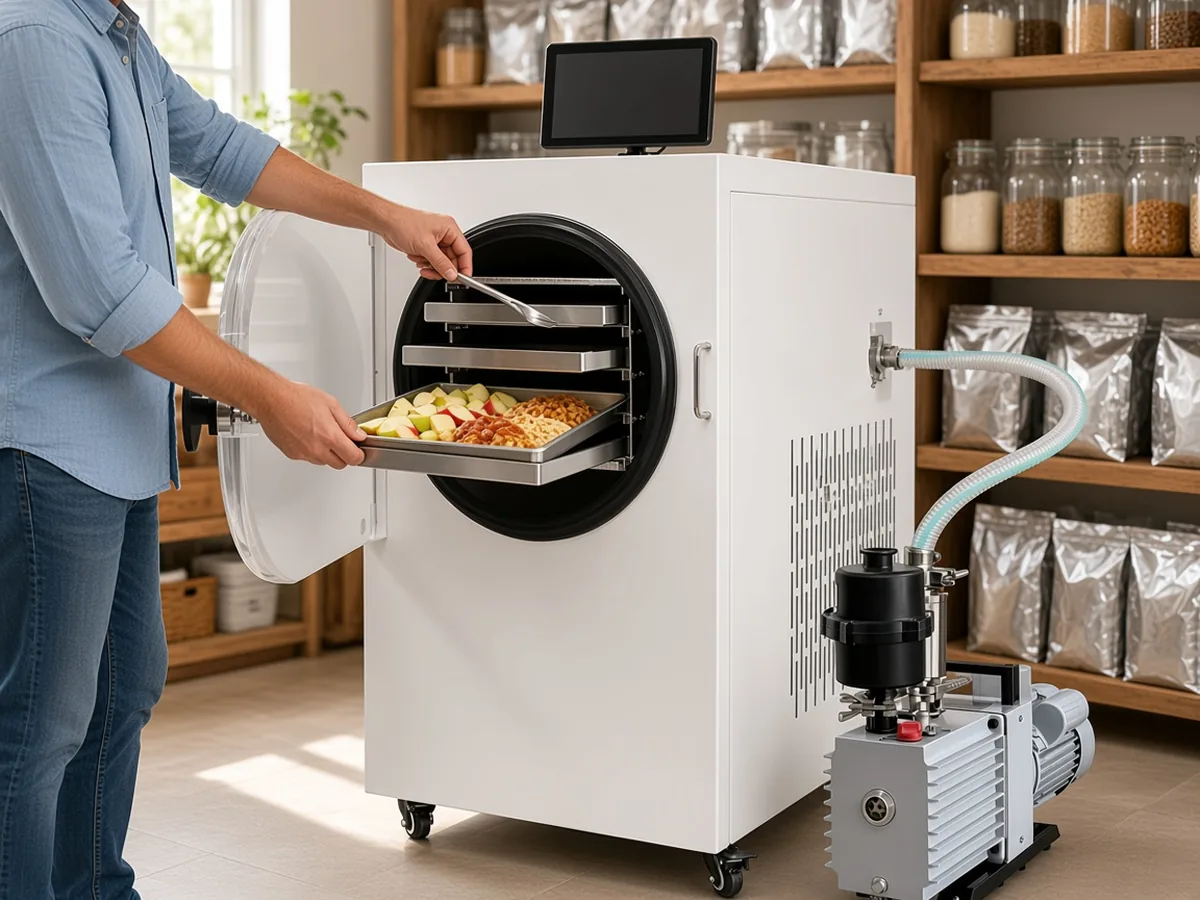
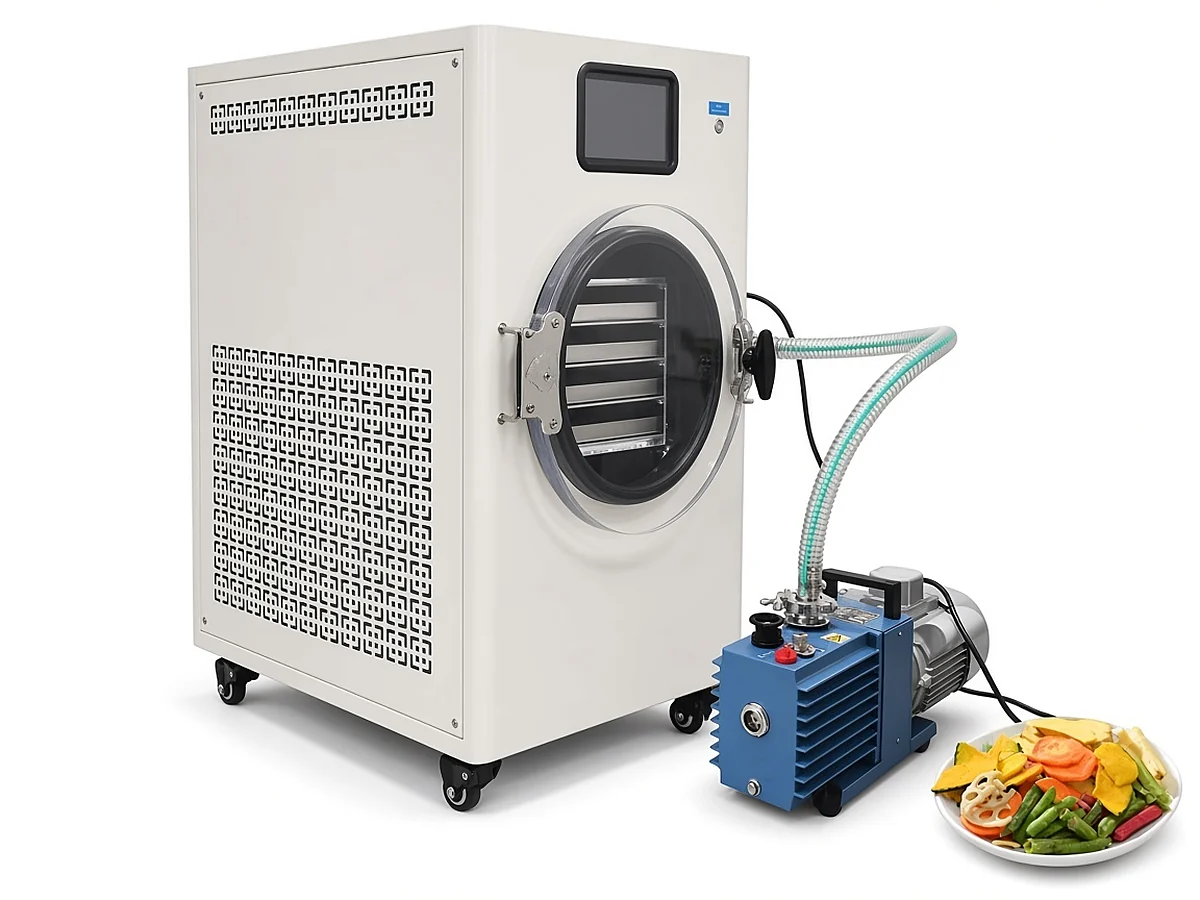
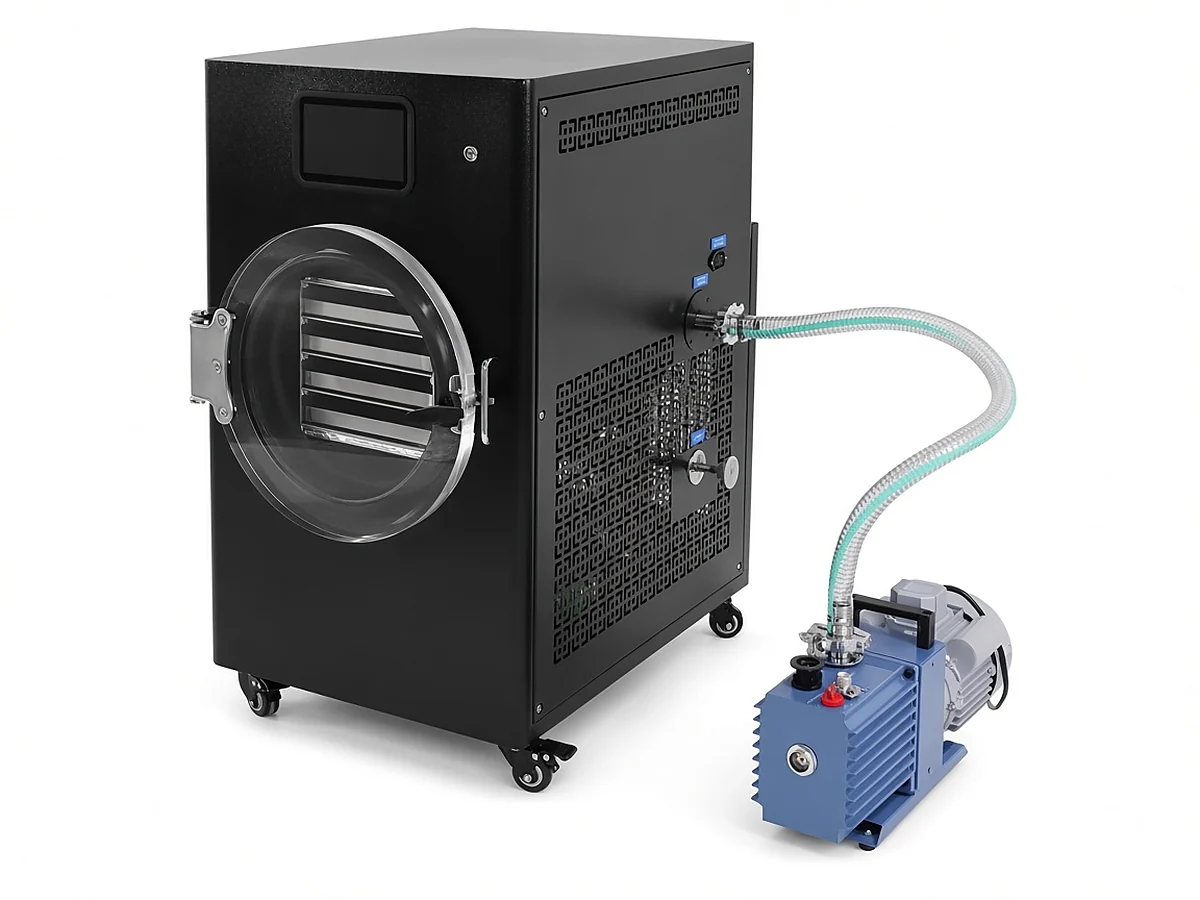
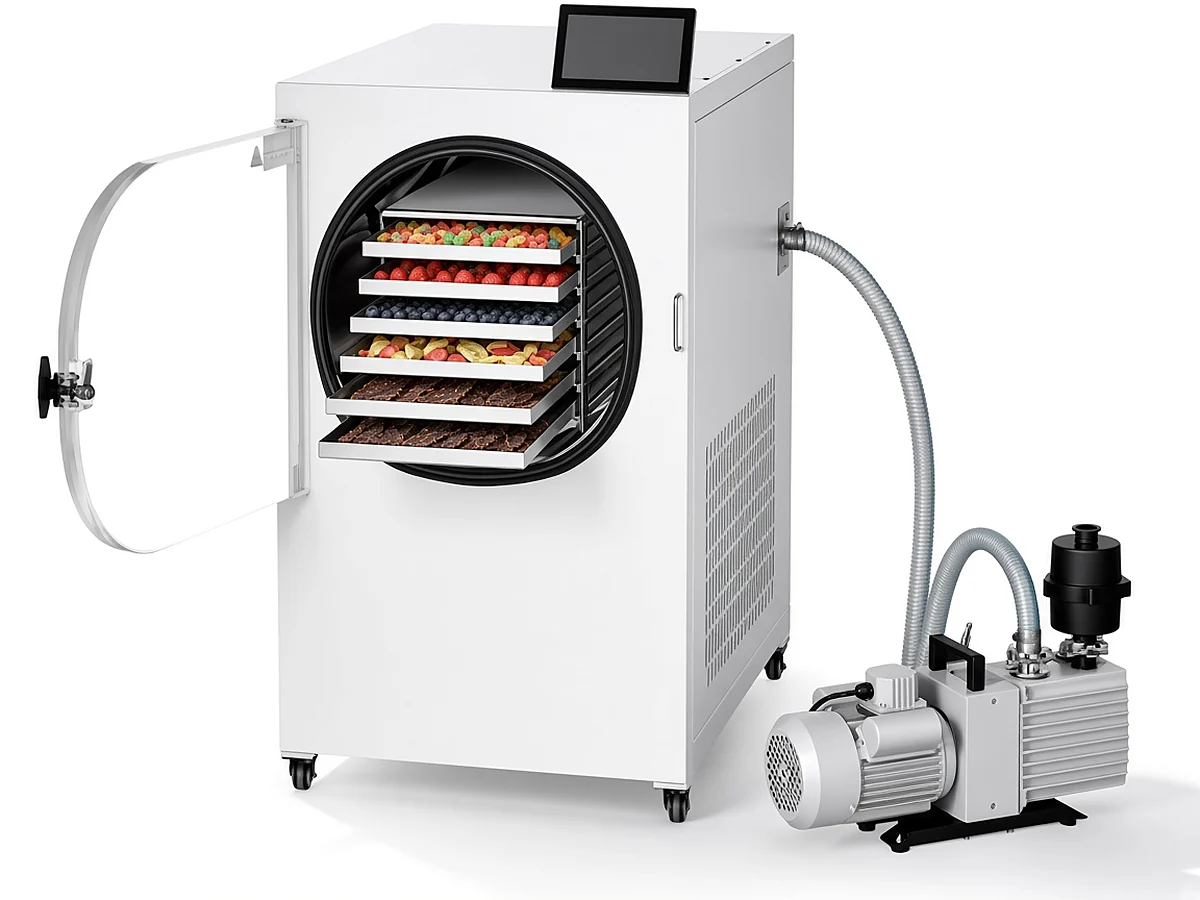
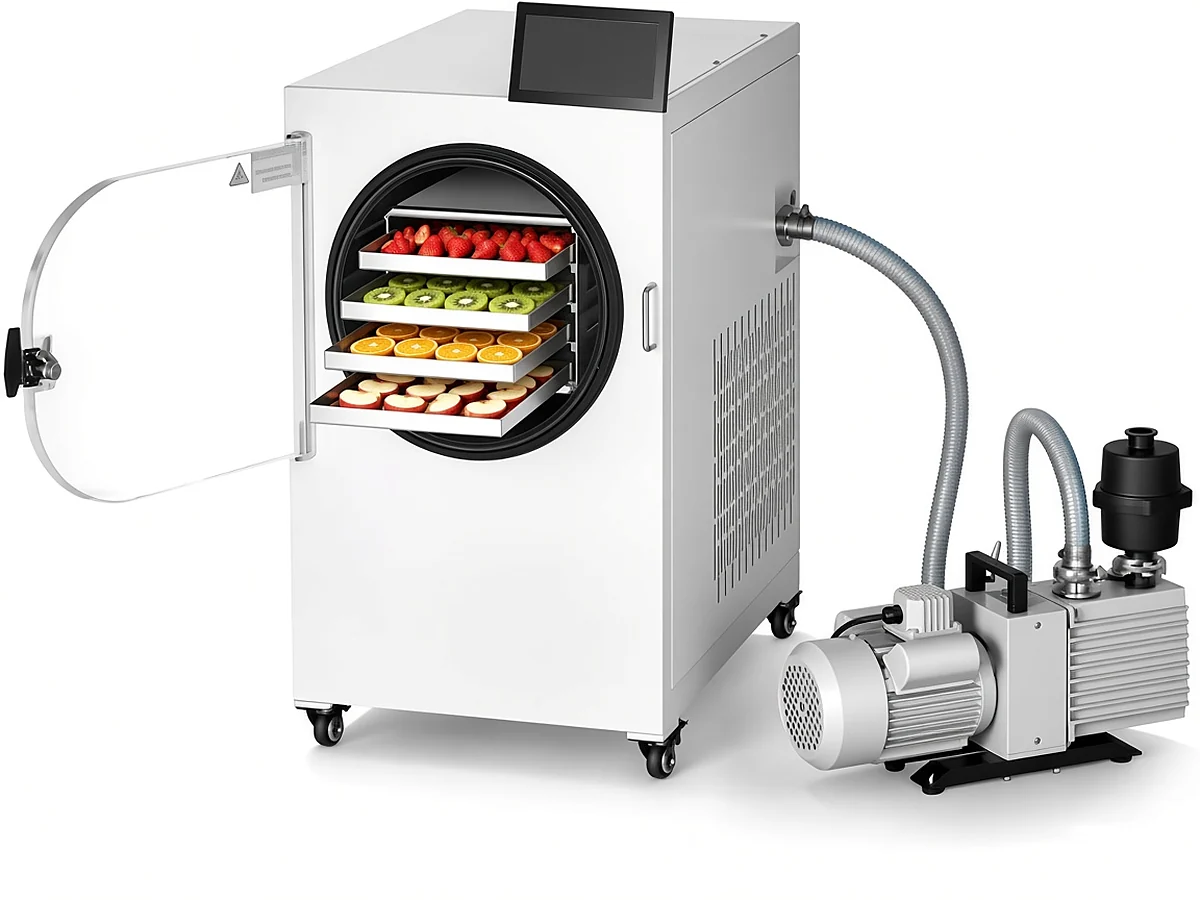
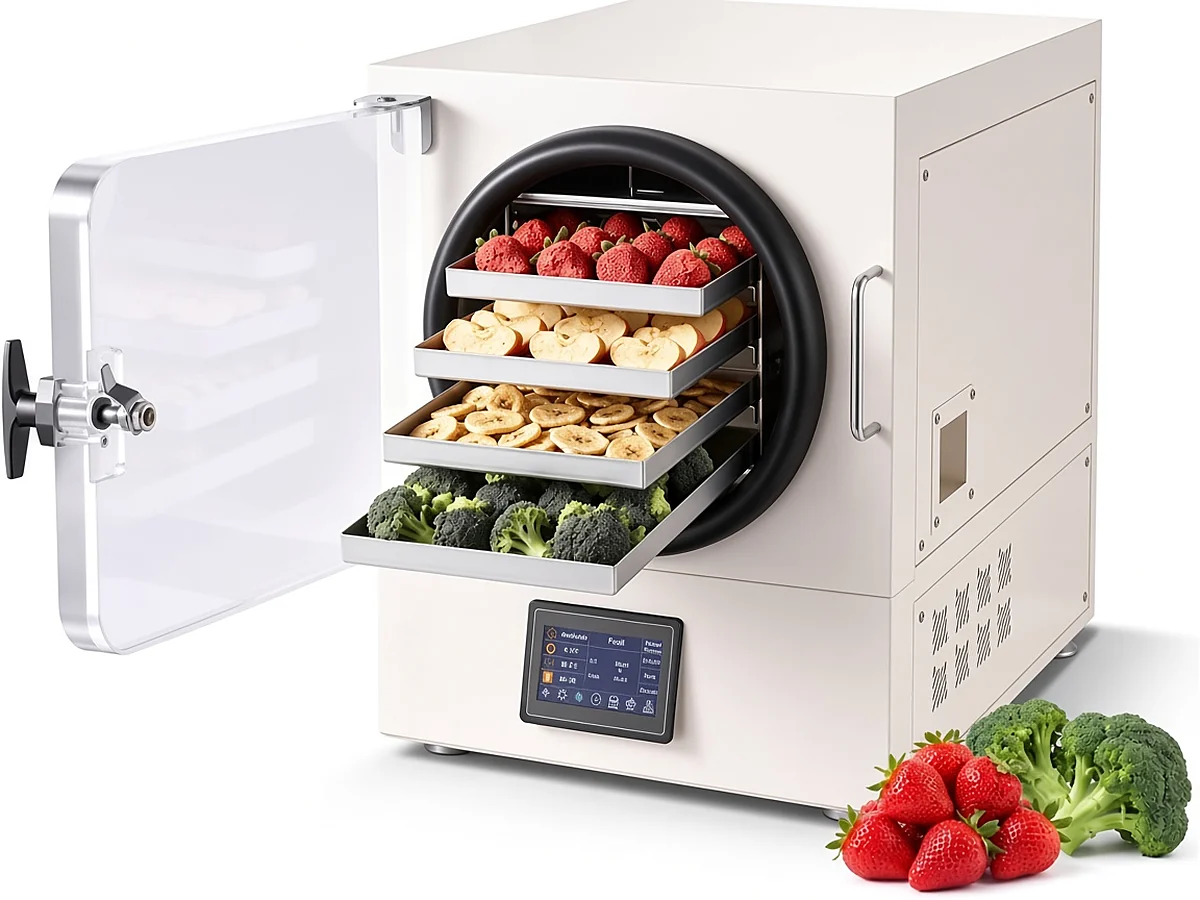
Maintenance & Troubleshooting · Freeze Dryers, Blue Alpine, VEVOR, Vacuum Pump
Updated 30 October 2026
A vacuum error stops a batch at the worst possible moment: the trays are loaded, the food is frozen and the machine will not move on to drying. The good news is that most vacuum problems come down to a short list of things you can check yourself in a few minutes, starting with the simplest. This checklist puts them in that order and explains what each reading on the screen is telling you.
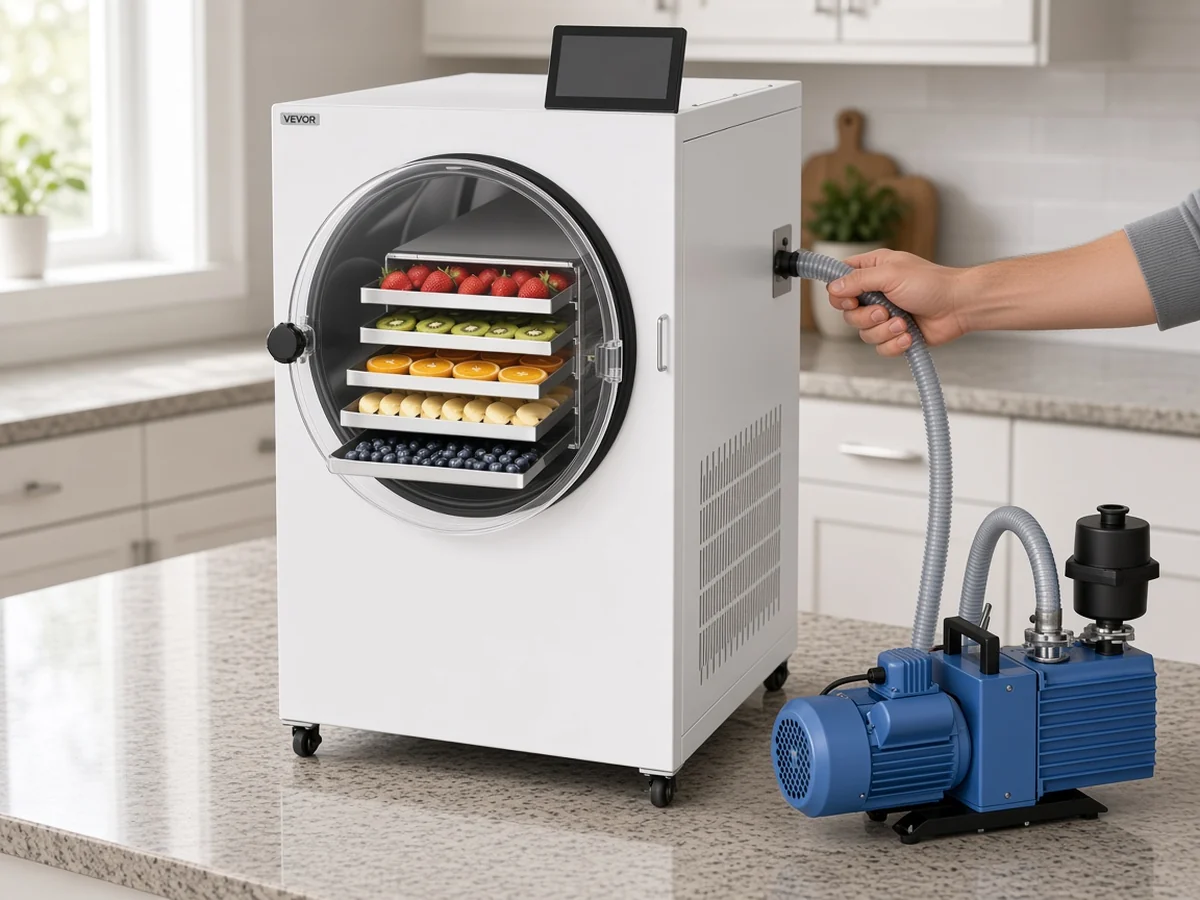
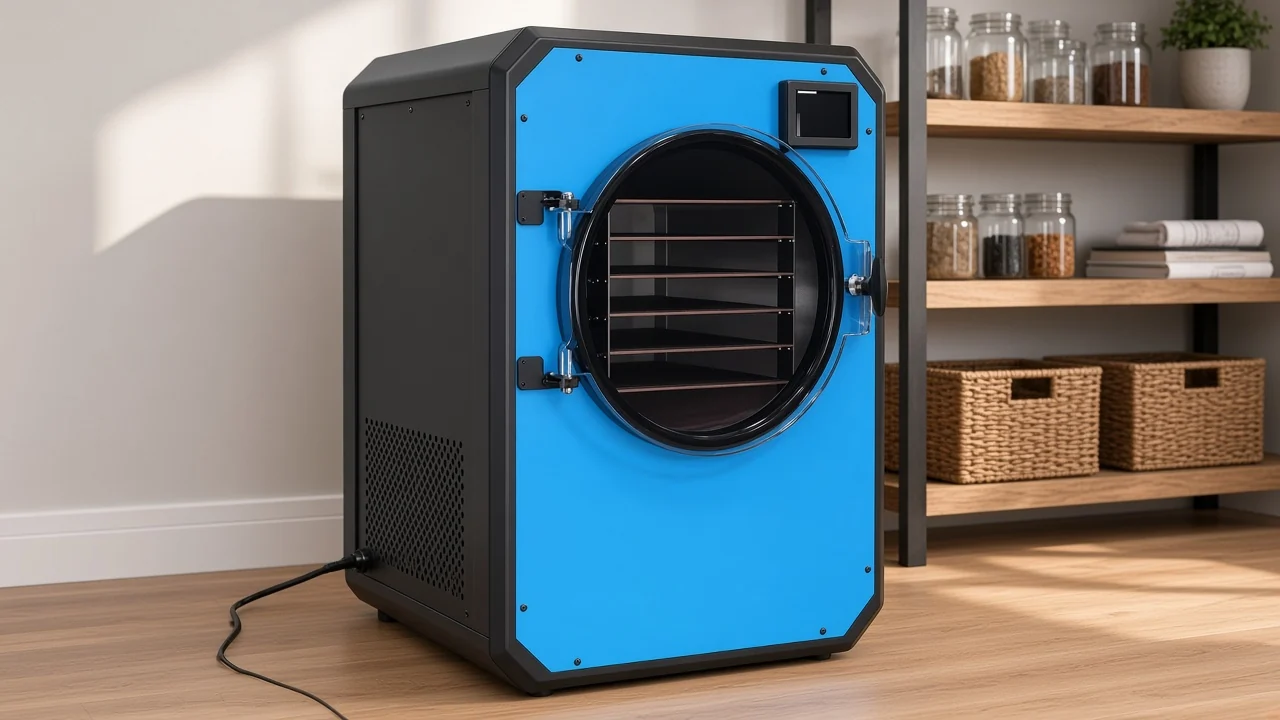
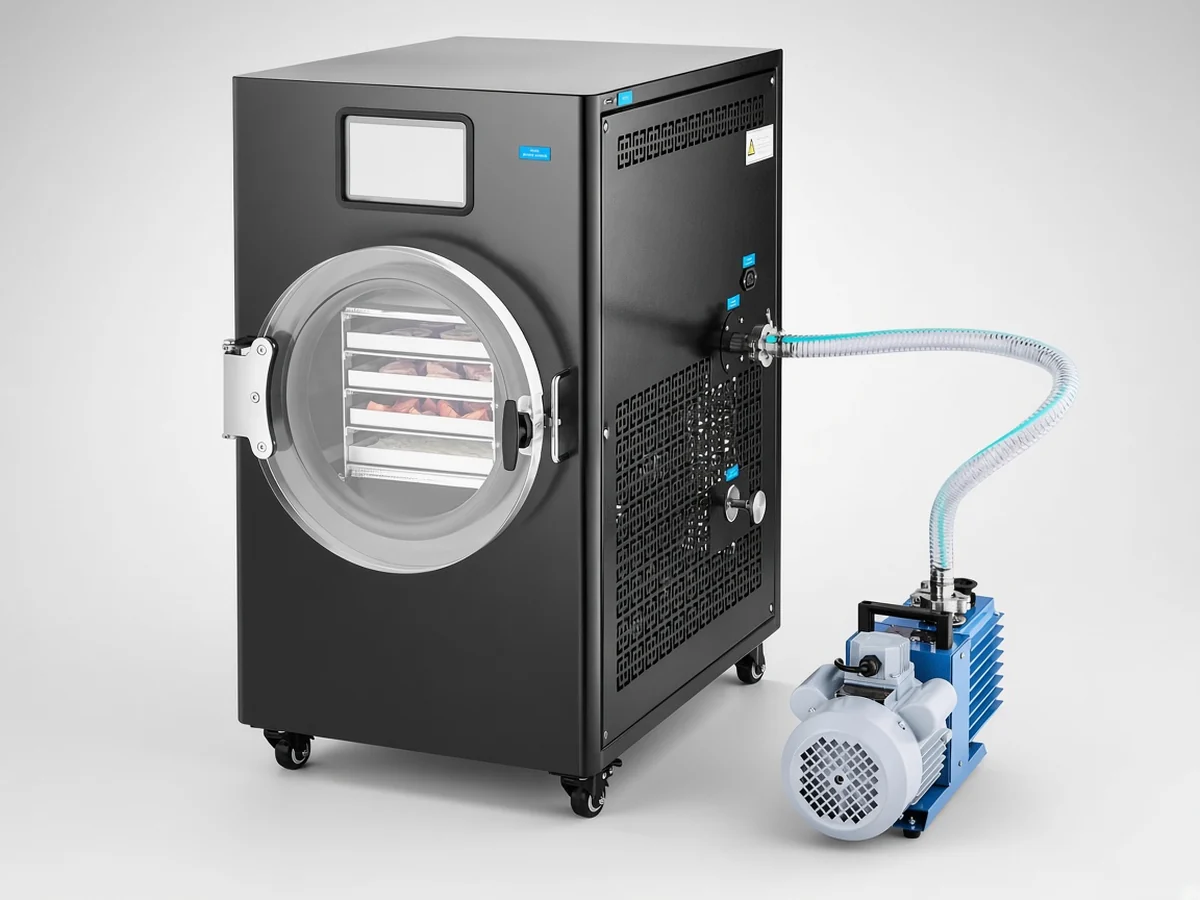
The checks apply to any home freeze dryer that uses a vacuum pump and a refrigerated chamber, whichever brand you own. That includes the Blue Alpine and VEVOR HFD-4 machines sold on Amazon US as well as Harvest Right's. Where we quote exact pressure figures, they come from Harvest Right's owner's manual as a worked example, because it is one of the most detailed troubleshooting documents published for a home unit. The Blue Alpine manual has its own vacuum section, and the VEVOR HFD-4 manual has a short fault table. Use your own manual's targets where it gives them and ask the maker or seller when it does not.
What to have on hand before troubleshooting
Most vacuum errors are fixed with a clean gasket, a closed drain valve and fresh pump oil.
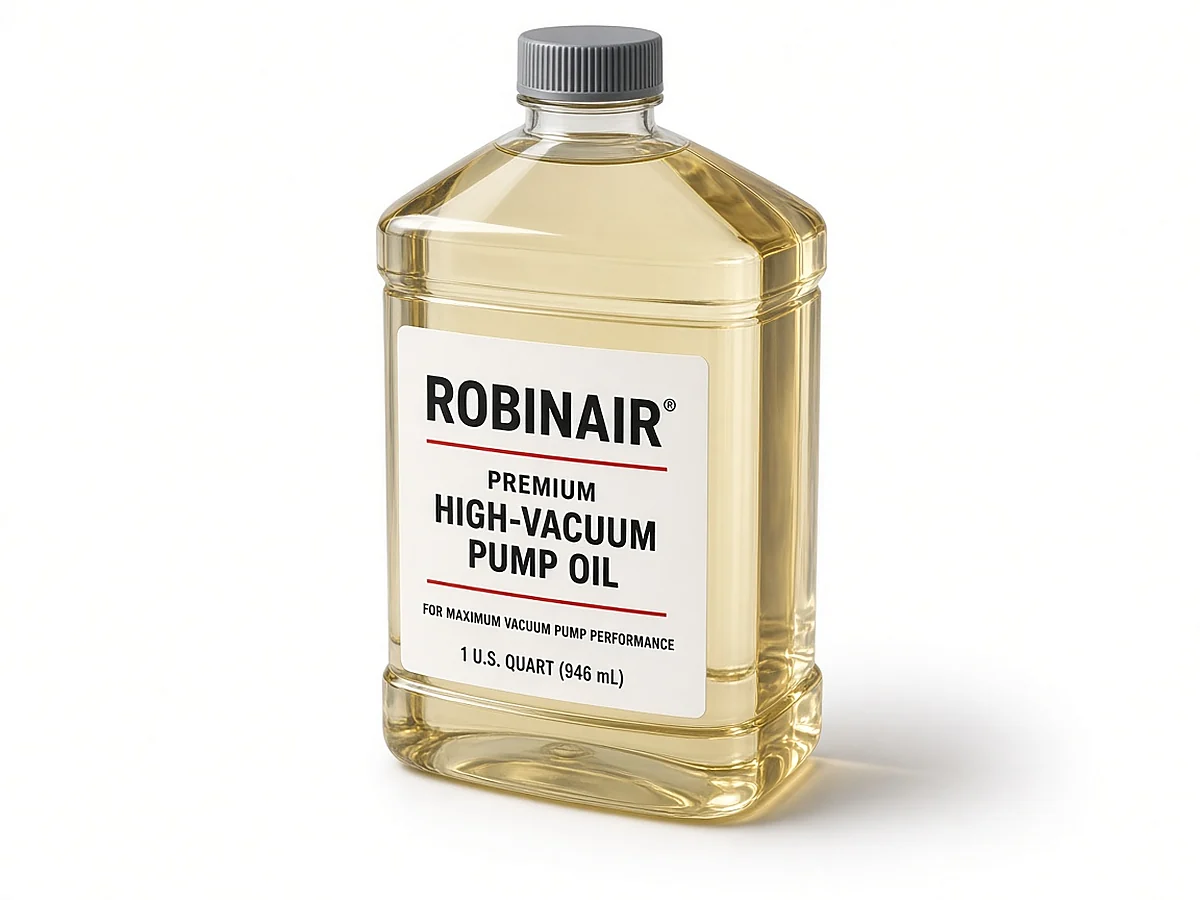
Fresh vacuum pump oil (Highly Recommended): Old or low oil is one of the most common causes of a weak vacuum. Keep a spare bottle of the oil your pump's manual names, since Harvest Right and Blue Alpine recommend different brands.
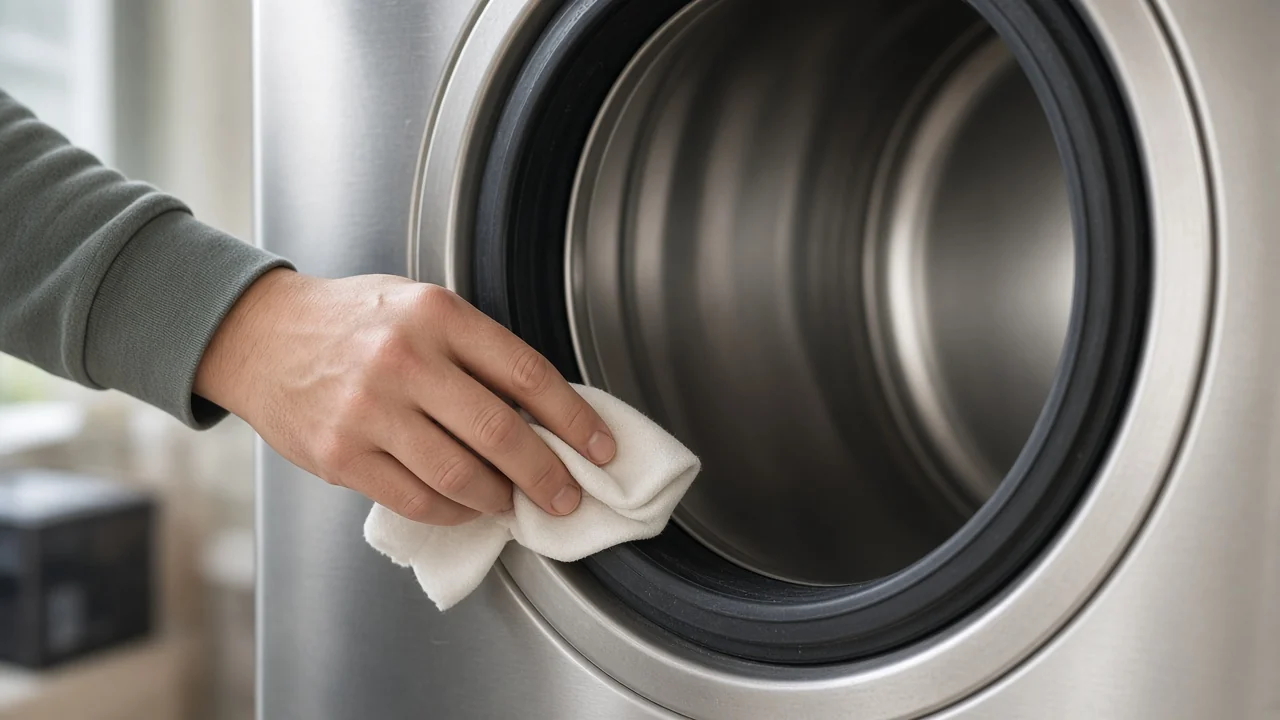
Lint-free cloth (Required): A dust-free gasket and door face are needed for a good seal. Any clean microfiber cloth works.
What a vacuum error actually means
A freeze dryer is a closed system. Once the food is frozen, the vacuum pump pulls the air out of the chamber so the ice can turn straight into vapour. If air is leaking in anywhere, the pump cannot bring the pressure low enough and drying cannot start properly.
As an example of what a manual should tell you, Harvest Right's current owner's manual gives three reference points:
Within about 10 to 15 minutes of the pump starting, the pressure shown on the screen should have dropped noticeably.
Drying can begin once the pressure reaches 500 mTorr. If it has not got there after 30 minutes, the manual says checking for leaks is the next step.
During the drying stage, a reading between 100 and 900 mTorr means the machine is working as intended.
Other makers use different numbers and even different units, so do not treat these as universal. Blue Alpine's ultimate vacuum test expects an empty, dry machine to get below 500 mTorr within an hour. VEVOR's HFD-4 manual works in pascals: an unloaded machine should reach under 5 Pa, and its fault table starts from a vacuum that will not drop below 15 Pa (about 110 mTorr). If your manual gives no pressure targets, note the readings from a batch that worked and use those as your baseline.
One trap catches a lot of owners: a door that will not open is not proof of a good vacuum. Harvest Right's manual warns that the chamber can hold enough vacuum to keep the door shut while still being too leaky to freeze dry. Trust the pressure number, not the door.
It is also worth knowing that some machines keep trying while the error is on screen. According to Harvest Right's manual, if the system manages to resolve the problem itself, the message clears and the batch carries on. So read the pressure before you press anything, and avoid ending the batch unless you mean to start over.
The checklist: easiest and most common causes first
Before you start: two Blue Alpine checks worth borrowing
Blue Alpine's manual lists two causes that catch new owners on any brand. Water left in the chamber or drain hose from the last defrost keeps evaporating and stops the pressure falling, so dry the chamber first. And frozen food loaded into a warm chamber starts to melt, the water boils under vacuum and the pressure jumps, which can trigger an error. Its fix is to run the freeze stage for about 30 minutes before loading. It also says a firmware update can clear some vacuum errors, and to check that shipping ties under the door seal were removed on a new machine.
1. Is the drain valve fully closed?
How to check: most home units have a drain valve on a clear drain line so meltwater can run out after defrosting. Your manual will show where it is; on Harvest Right machines it sits low on the side. On a typical lever valve, closed means the handle sits perpendicular to the tube.
What you should see: a handle at a right angle to the hose. An open or half-open valve is a direct path for air into the chamber, and Harvest Right notes that running with it open can damage the pump and affect the pump warranty. While you are there, make sure the end of the hose is not sitting in water, because opening the valve later would pull that water back into the chamber.
2. Is the door latched through both stages?
How to check: door latches vary by brand. Harvest Right's handle, for example, works in two stages: the first latches the door and the second presses it against the rubber gasket. Whatever the design, close the door fully as your manual describes, without forcing it.
What you should see: with the door fully closed, a thin, even line pressed into the gasket where the door meets it. Harvest Right's manual describes this line as the sign of a good seal. If it is missing in places, the door is not sealing evenly.
3. Is the gasket clean, dry and seated properly?
How to check: pull the gasket off, wash it in warm water and let it air dry before refitting it. Harvest Right's manual advises against wiping it dry, because lint left behind can stop it sealing.
What you should see: a gasket that sits evenly all the way round, with no crumbs, residue or lint on the sealing face. Also make sure nothing inside the chamber, such as the shelf unit or a tray, is pressing on the gasket. Clean the inside of the door as your manual directs; Harvest Right's recommends warm water and a dry cotton cloth, with no cleaners.
4. Are the vacuum hose and fittings tight?
How to check: follow the hose from the side of the freeze dryer to the pump and hand-tighten both ends. Check that the caps and fittings on the pump itself are snug.
What you should see: firm connections with no cracks in the hose. Do not add plumber's tape or any adhesive to the threads unless your manual says otherwise. Harvest Right's manual says this usually creates a leak because it interferes with the O-ring inside the hose fitting. Damaged gaskets inside the hose are listed as a leak point in their own right.
5. Is the pump oil clean and at the right level?
How to check: most home freeze dryers, including the Blue Alpine and the VEVOR HFD-4, ship with an oil-sealed vacuum pump. Look at the pump's sight glass. Clear oil can be yellow or amber; cloudy or milky oil needs changing.
What you should see: clean oil at the fill level your pump specifies. Manuals word this differently: Harvest Right's owner's manual says slightly above the three-quarter mark, Blue Alpine's one-third to one-half of the sight glass, and VEVOR's HFD-4 manual the middle of the gauge. Follow the markings on your own pump and avoid overfilling, which can saturate the demister and cause oil mist. Harvest Right's manual also notes the level drops slightly while the pump is running.
If your pump has a gas ballast valve, check what your manual says about it. On Harvest Right's Premier pump it must be open; Harvest Right says running it closed lets moisture build up in the oil and, per the manual, cuts the useful life of the oil to only 4 to 5 batches. Contaminated oil and low oil are both on that manual's list of leak points. Our pump oil guide explains how to read the sight glass and when to change oil.
6. Is the pump actually getting power?
How to check: on many machines the pump plugs into a socket on the freeze dryer rather than the wall, and the pump's own switch must be on. Harvest Right's units work this way. Blue Alpine's and VEVOR's HFD-4 manuals describe the same arrangement, with the pump plugged into an outlet on the machine. The freeze dryer only powers the pump at the right point in the cycle, so a silent pump during freezing is normal. Blue Alpine also says to make sure the vacuum hose, not the drain hose, connects the pump to the vacuum port.
What you should see: the pump running once the vacuum stage begins. Oil-free pumps usually have their own setup steps, and some compact machines build the pump into the cabinet, so the manual is the place to check.
7. Could the door be out of alignment?
How to check: think back to whether the machine was recently moved. Harvest Right's manual warns never to lift the freeze dryer by the bottom of the door, because it can knock the door out of alignment and stop it from reaching a proper vacuum.
What you should see: an even gasket line all the way round. "Door needs adjustment" is on Harvest Right's list of leak points. On any brand, it is a job to raise with support rather than force yourself.
Reading the result
What you see | Likely meaning | Next move |
|---|---|---|
Pressure barely falls in the first 10–15 minutes | A large leak | Recheck the drain valve, door latch and hose (steps 1, 2 and 4) |
Pressure falls but is still above your manual's target at 30 minutes | A smaller leak or tired oil | Gasket, pump fittings and oil (steps 3 to 5) |
Pressure in the normal drying range, but the batch is slow | Vacuum is probably not the problem | Look at load size, room temperature and oil age instead |
Oil spraying or misting from the pump | Air leaking in, or the pump is overfilled | Steps 1 to 5, then check the oil level |
The pressure rows use Harvest Right's figures as the example. The oil-spray row comes from the same manual's FAQ, which lists an open drain valve, a dirty or misaligned door, a dirty seal and a loose hose as the most common causes, along with overfilling or water condensing into the oil. VEVOR's HFD-4 table gives a similar list for pump spray: a valve left open, oil above the middle of the gauge, emulsified (milky) oil, or the pump starting before the condenser has cooled.
If the error keeps coming back
When the obvious checks all pass, work methodically. Change one thing at a time, such as reseating the gasket or retightening the hose, and note the pressure reading at 15 and 30 minutes on the next run. If you change several things at once, you will not know which one fixed it, and you will not know what to tell support if nothing does.
Slow batches are a related but separate problem. If your pressure sits in the normal drying range and batches still drag, hot rooms, heavily loaded trays and ageing oil are more likely causes than a leak. Harvest Right's manual gives the example of a batch that takes about 24 hours at 75 °F taking over 40 hours in hot conditions. Blue Alpine's manual adds that a small leak or a worn pump can also show up only as a long batch, because its machine will not heat the trays until the pressure is low enough. Our guides to why batches take so long and to a freeze dryer that is not getting cold enough cover those causes.
What about the food on the trays?
Do not package anything you are unsure about. The LSU AgCenter freeze-drying FAQ advises checking for moisture before packaging, notes that dark spots in the middle of a piece indicate moisture, and suggests rerunning a drying cycle when in doubt. Harvest Right's manual also advises against skipping or manually advancing stages, because short-cutting the process risks both the food and the equipment. If perishable food has sat thawed for a long time while you sorted out the fault, err on the side of throwing it away. The USDA rule is to throw away perishable food left at room temperature for more than 2 hours, or 1 hour above 90 °F.
When to contact support
If the pressure still will not come down after every check, contact the manufacturer. If you bought the machine through Amazon, the seller shown on your order is usually the first contact, so keep the order details. Whoever you contact, have this ready:
The model name and the serial number from the machine's label.
The pressure readings at about 15 and 30 minutes into the vacuum stage, and any error message exactly as shown.
A list of the checks you have already made, and photos of the gasket, hose fittings and pump sight glass.
Any log files the machine can export, if your manual describes how.
Check your warranty terms before you open anything up, because they vary a lot by brand. As an example, Harvest Right's owner's manual describes a one-year warranty with limited coverage of the sealed refrigeration system in years two and three, and VEVOR's HFD-4 manual gives a one-year warranty from the date of sale. Save a copy of the listing and your order confirmation when you buy. Never open the cabinet or refrigeration system yourself; leave electrical and sealed-system repairs to the maker's technicians.
Habits that prevent most vacuum errors
Close the drain valve and empty the bucket before every batch.
Wash the gasket regularly and let it air dry.
Check oil level and clarity each time you start a batch, and change it on your pump's schedule.
Keep the side vents clear and the room clean, cool and dry.
Before storing an oil pump, drain it and refill with fresh oil. The manual warns that dirty oil left in an idle pump corrodes internal parts.
Related on Amazon: Robinair 13203 Premium High Vacuum Pump Oil (1 quart).
Related on Amazon: VEVOR SJ-08H Vacuum Freeze Dryer.
Frequently asked questions
Why does my freeze dryer keep losing vacuum?
The usual causes are an open drain valve, a dirty or misaligned door gasket, a loose hose fitting or tired pump oil.
Is the food safe after a vacuum error?
If the food stayed frozen, you can usually restart once the leak is fixed. If it thawed and sat warm for more than about 2 hours, treat it as you would any perishable food left out and throw it away. Our freeze drying food safety guide explains why drying does not make it safe again.
Related guides
Pump care is the part of ownership most tied to vacuum problems, so read our pump oil guide next. If the chamber is not getting cold, see freeze dryer not freezing, and if batches just run long, see how long freeze drying takes. For the basics of the process, start with how a freeze dryer works, or browse all DryFreezeWise guides.