
Is That Amazon "Freeze Dryer" Really a Dehydrator? How to Tell
Published 10/29/2026 · Updated 11/24/2026
Quick answer
A plain-English checklist for telling a genuine vacuum freeze dryer from a hot-air dehydrator listed under the same search, before you spend your money.
Products mentioned in this guide
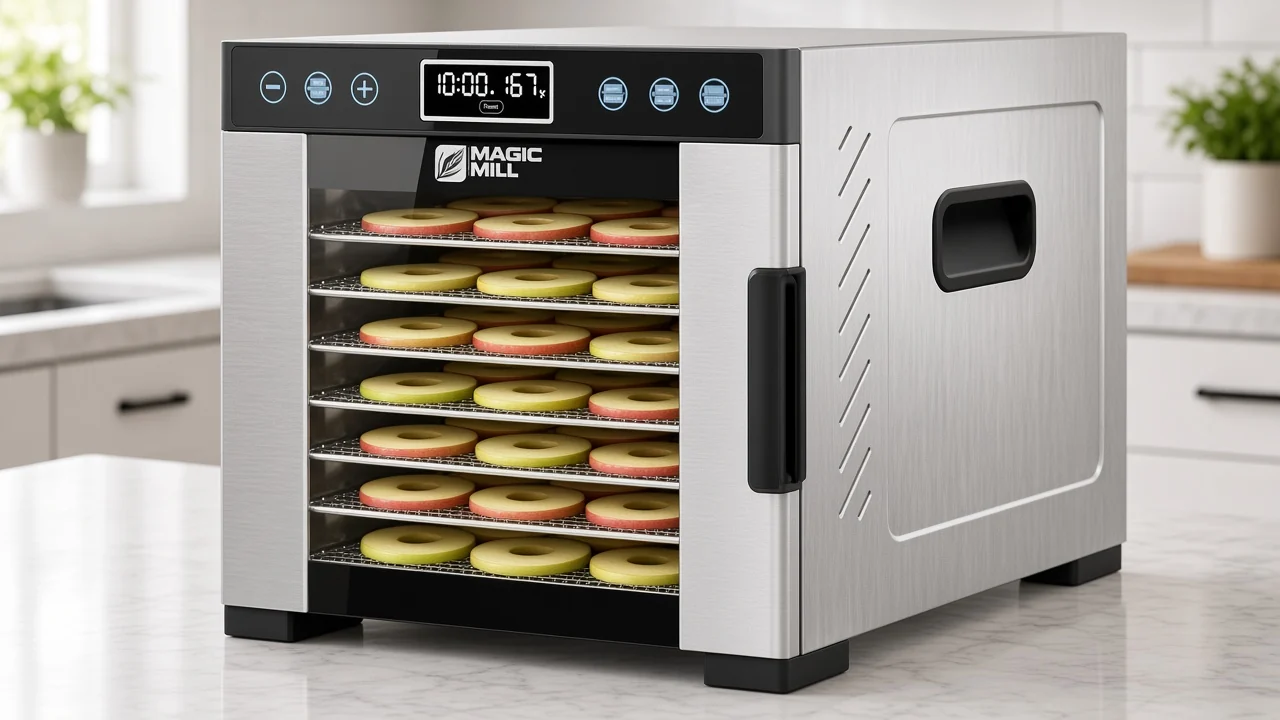 Magic Mill Pro MFD-7700 Food Dehydrator, 7 Stainless TraysMagic Mill · Dehydrator
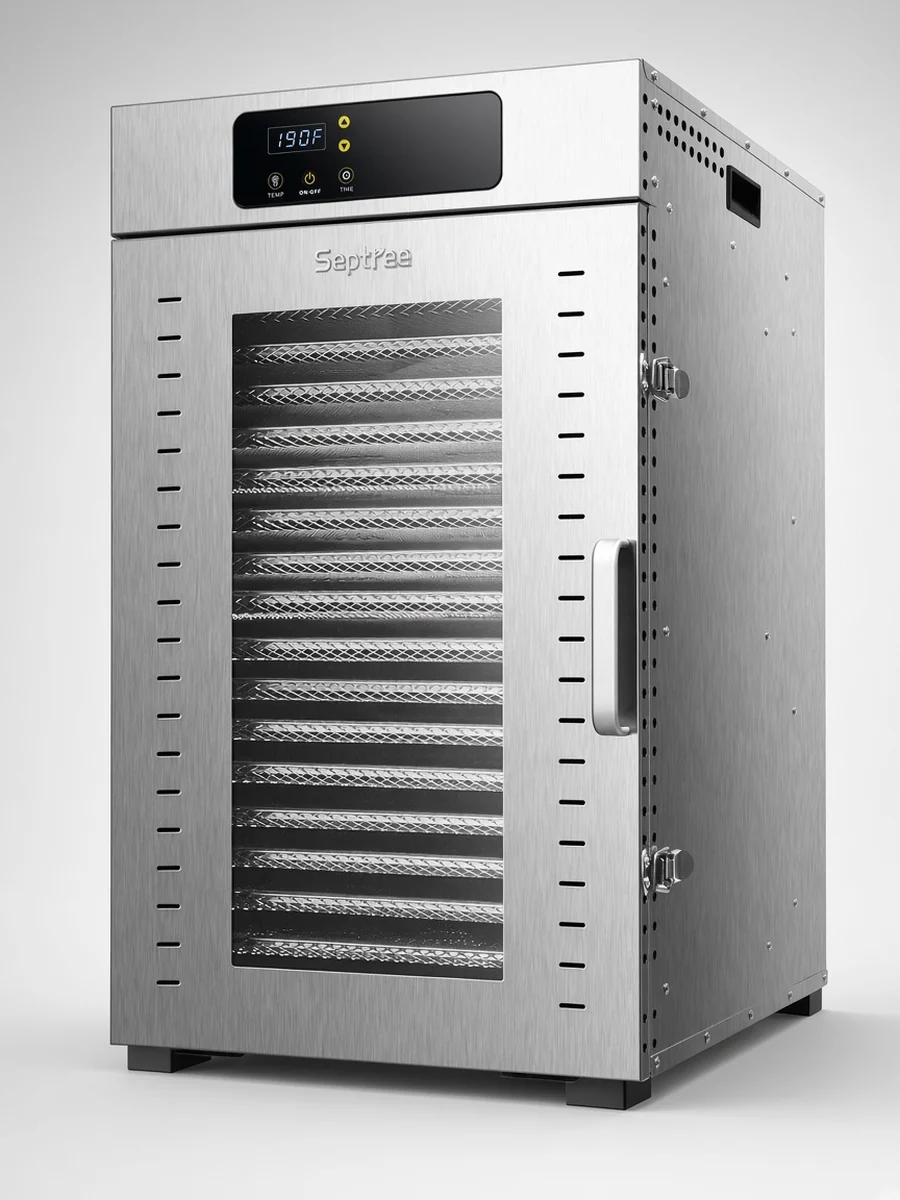 Septree Commercial Food Dehydrator, 18 Trays (DBC-18A)Septree · Dehydrator
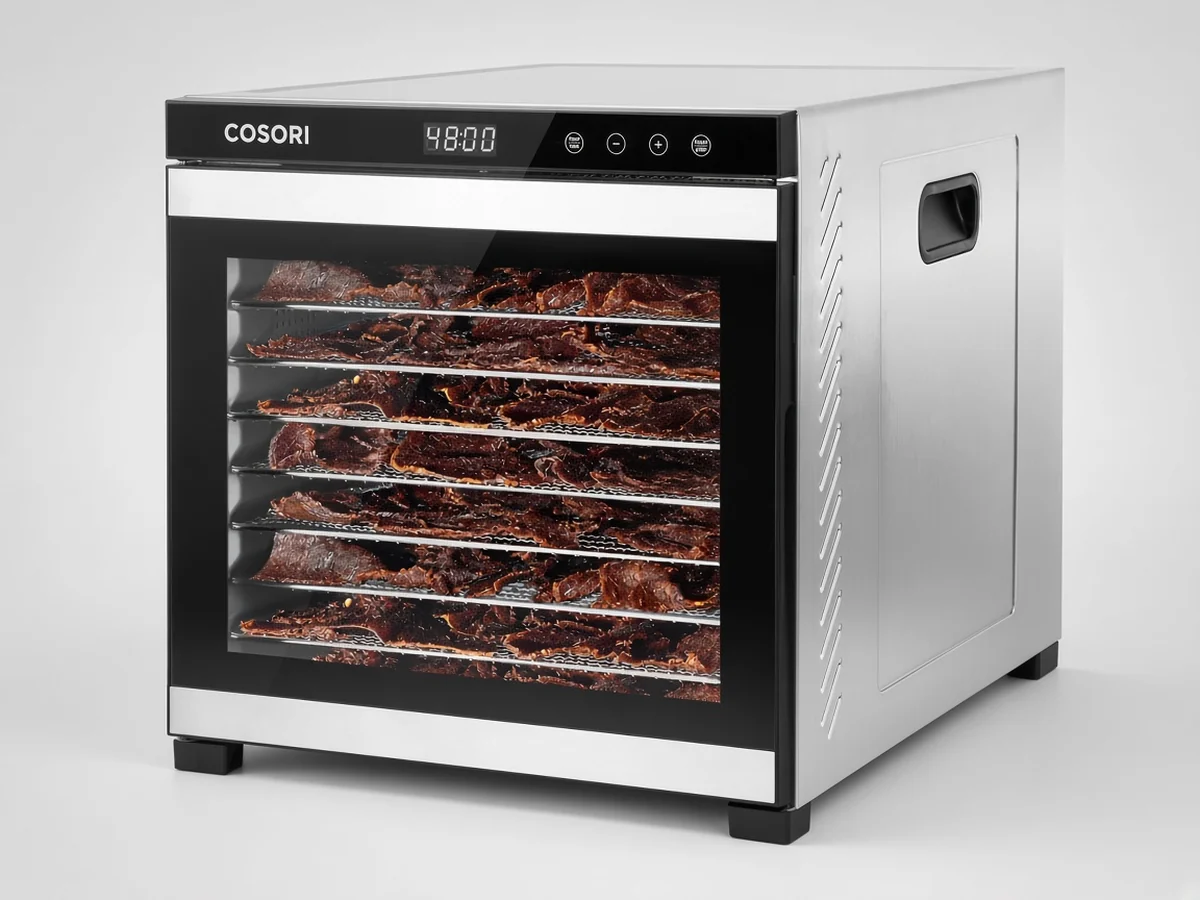
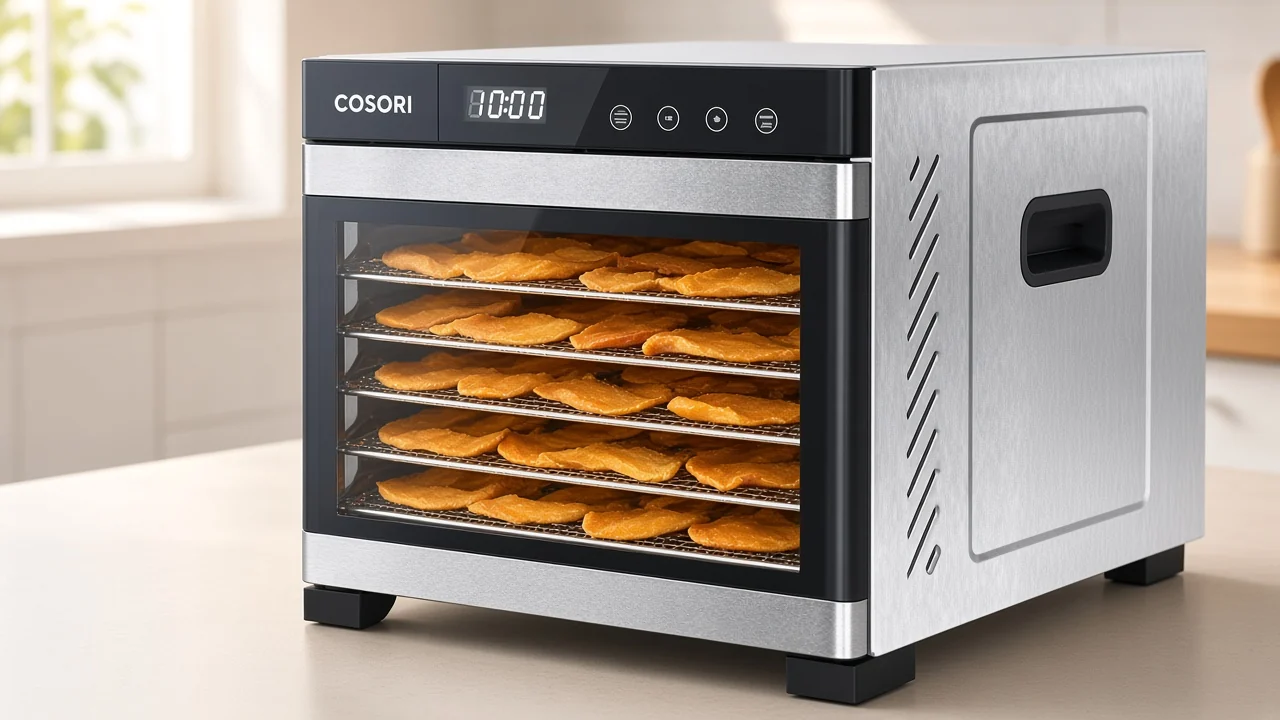
Buying Guides · Freeze Dryers, Food Dehydrators, Vacuum Pump
Updated 30 October 2026
Type "freeze dryer" into Amazon and a large share of the results are not freeze dryers. They are hot-air food dehydrators, sometimes with "freeze dryer" in the title, sometimes simply showing up in the results. When we searched Amazon US on 29 October 2026, these listings outnumbered real vacuum freeze dryers by a wide margin.
A dehydrator is a useful appliance, but it does a different job. If you buy one expecting freeze-dried food, you will be disappointed. This guide shows how to tell the two apart from a listing alone.
The quick test
A real home freeze dryer has all three of these. A dehydrator has none of them.
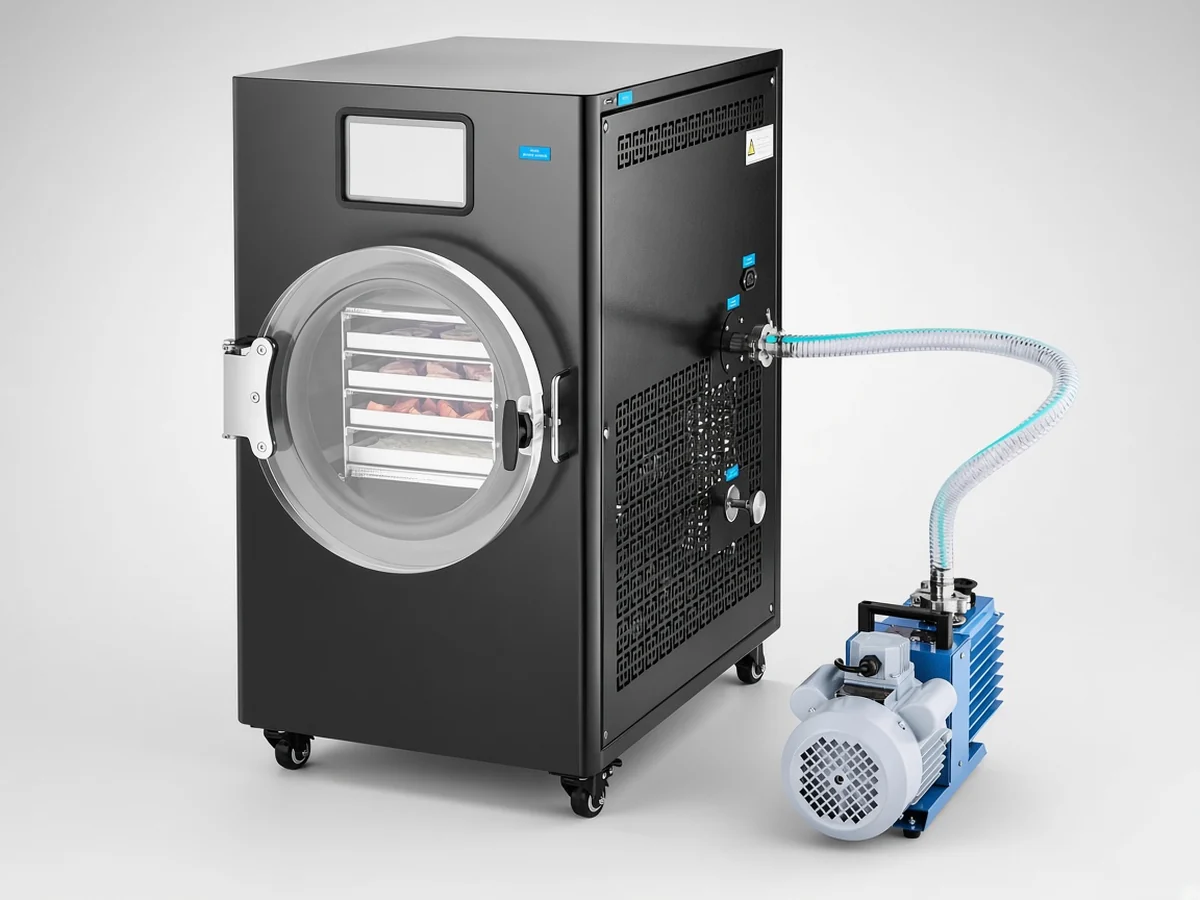
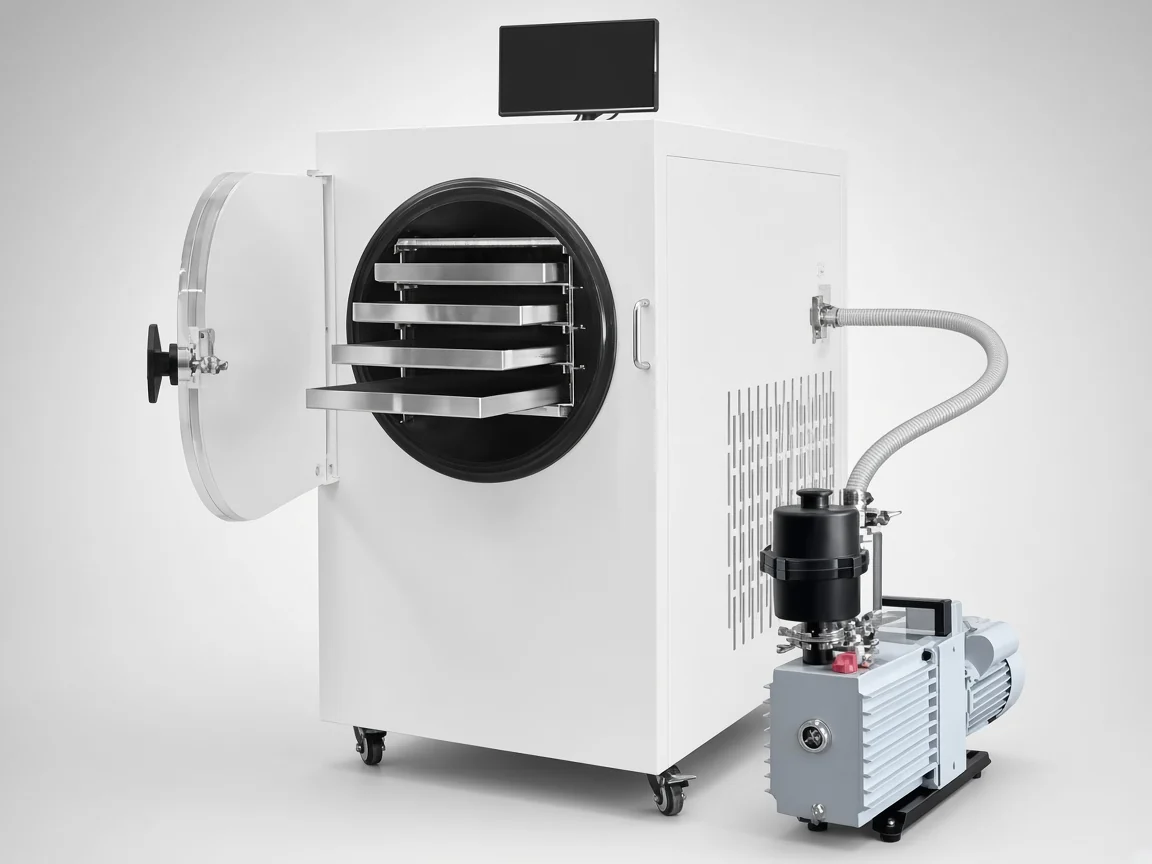
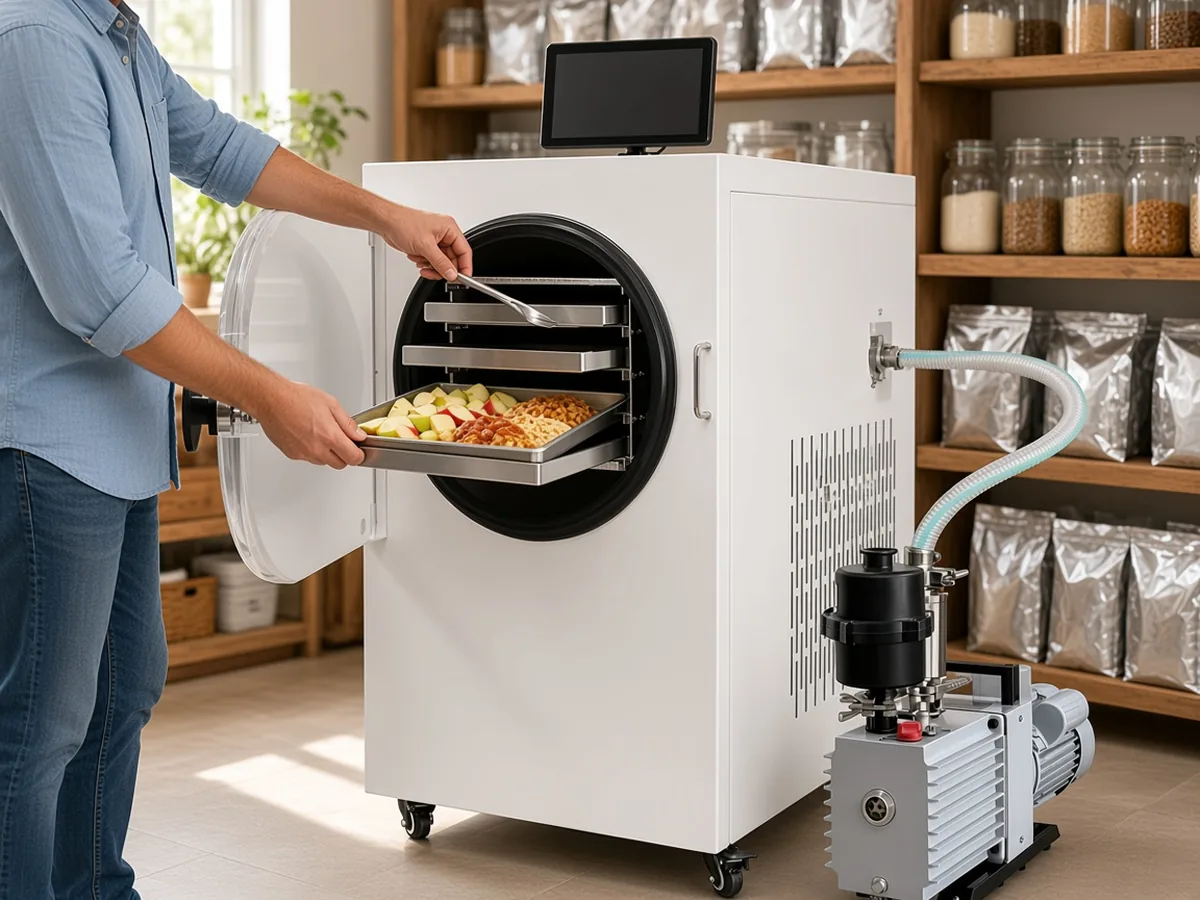
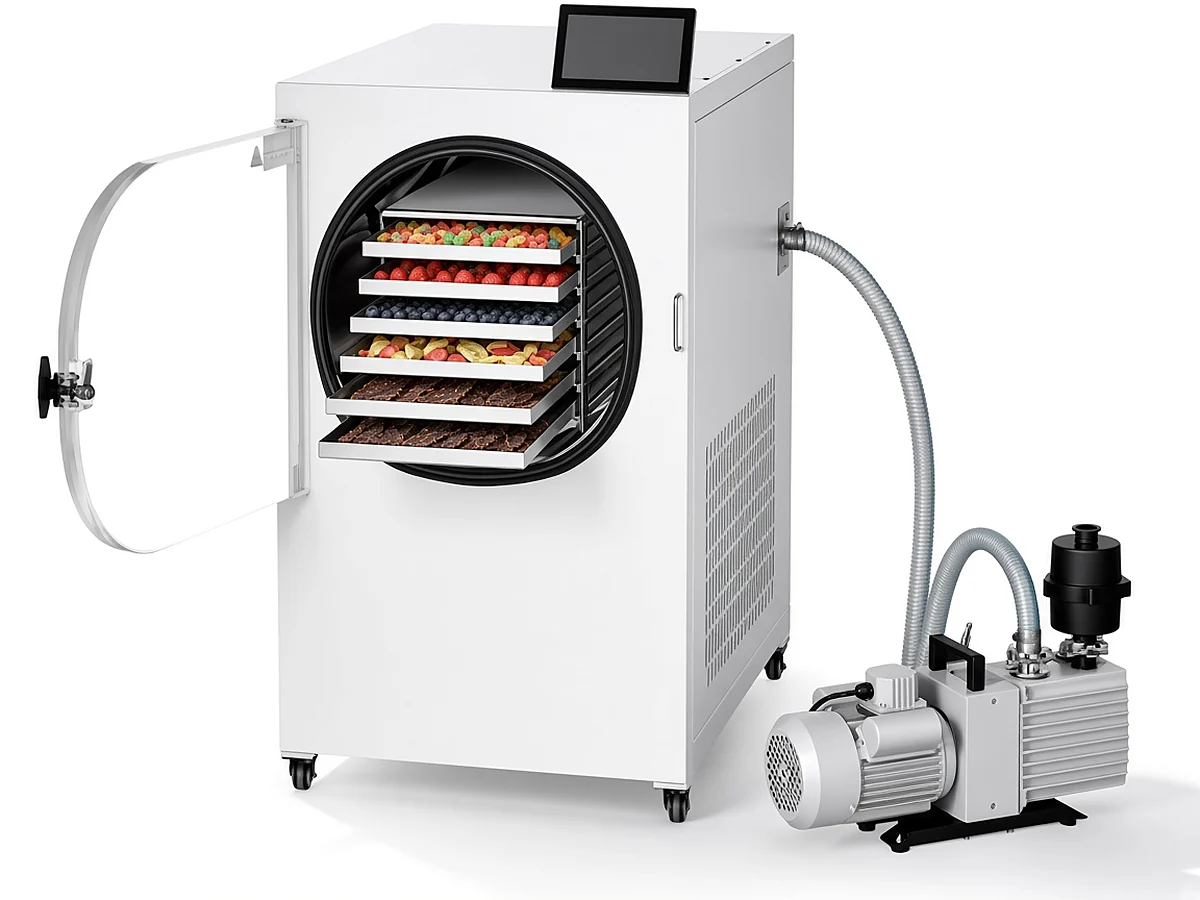
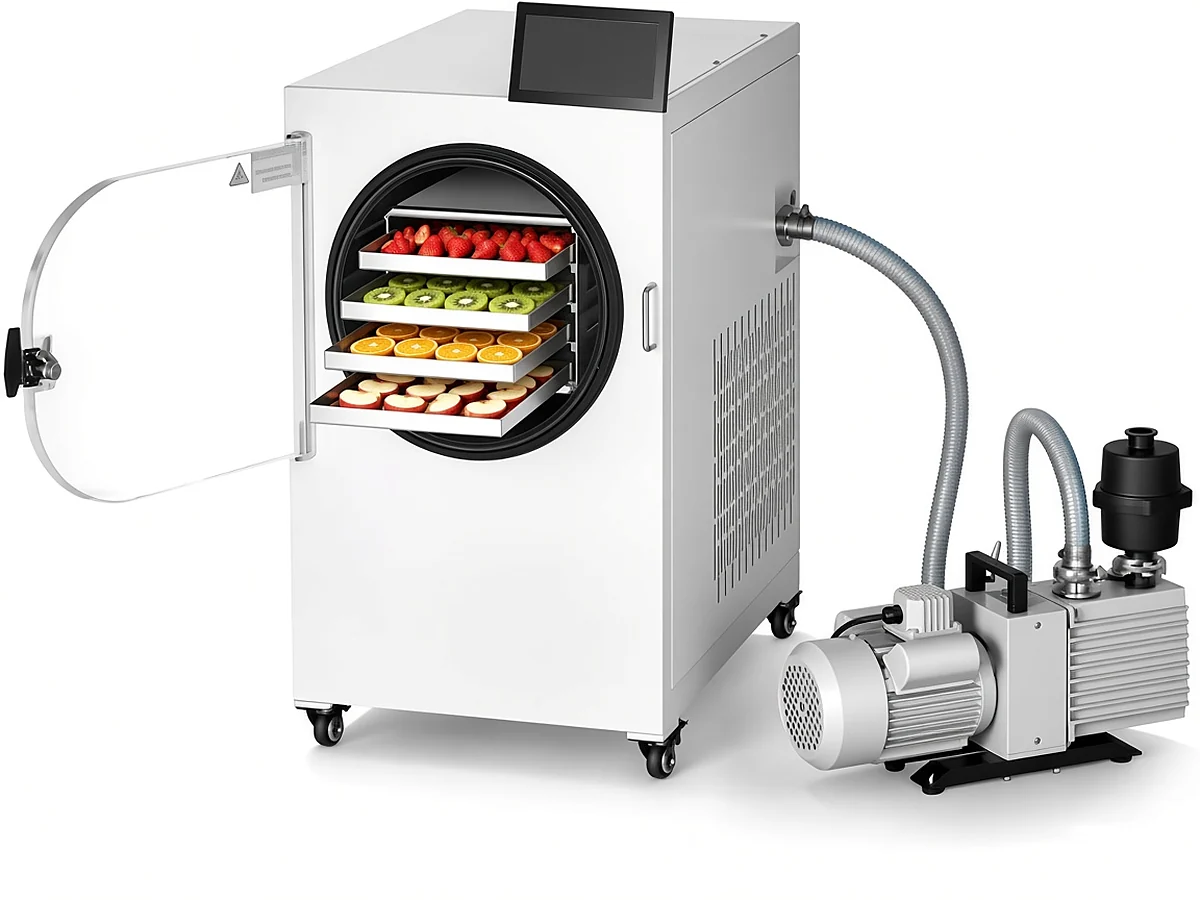
A vacuum pump. Either a separate pump connected by a hose, or one built into the cabinet and named in the specs.
Refrigeration. A compressor that chills a cold trap (condenser) well below freezing, typically quoted as −35 °C or colder.
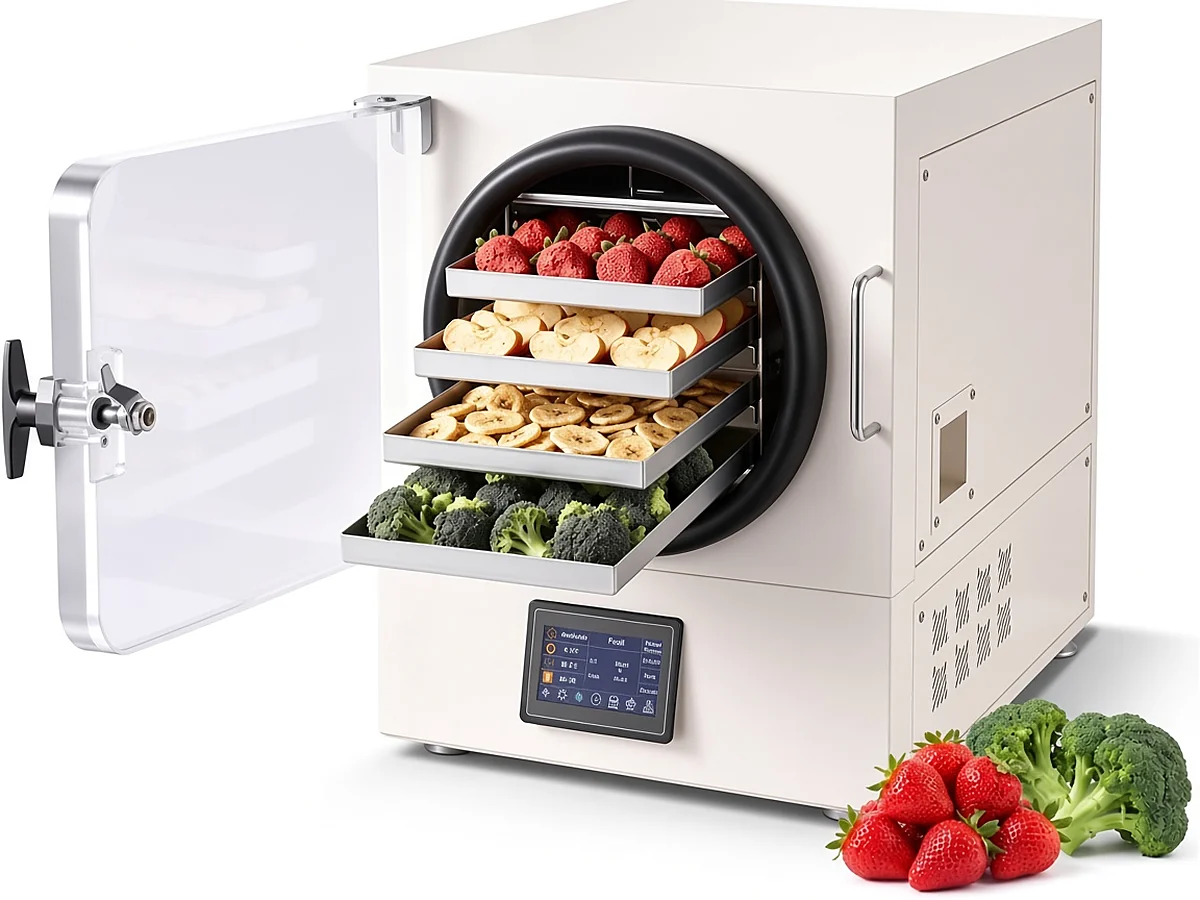
A sealed chamber. A thick, gasketed door, usually acrylic, that holds a vacuum.
If a listing mentions a fan, a heating element and a temperature range that starts above room temperature, it is a dehydrator, whatever the title says.
Why the two get mixed up
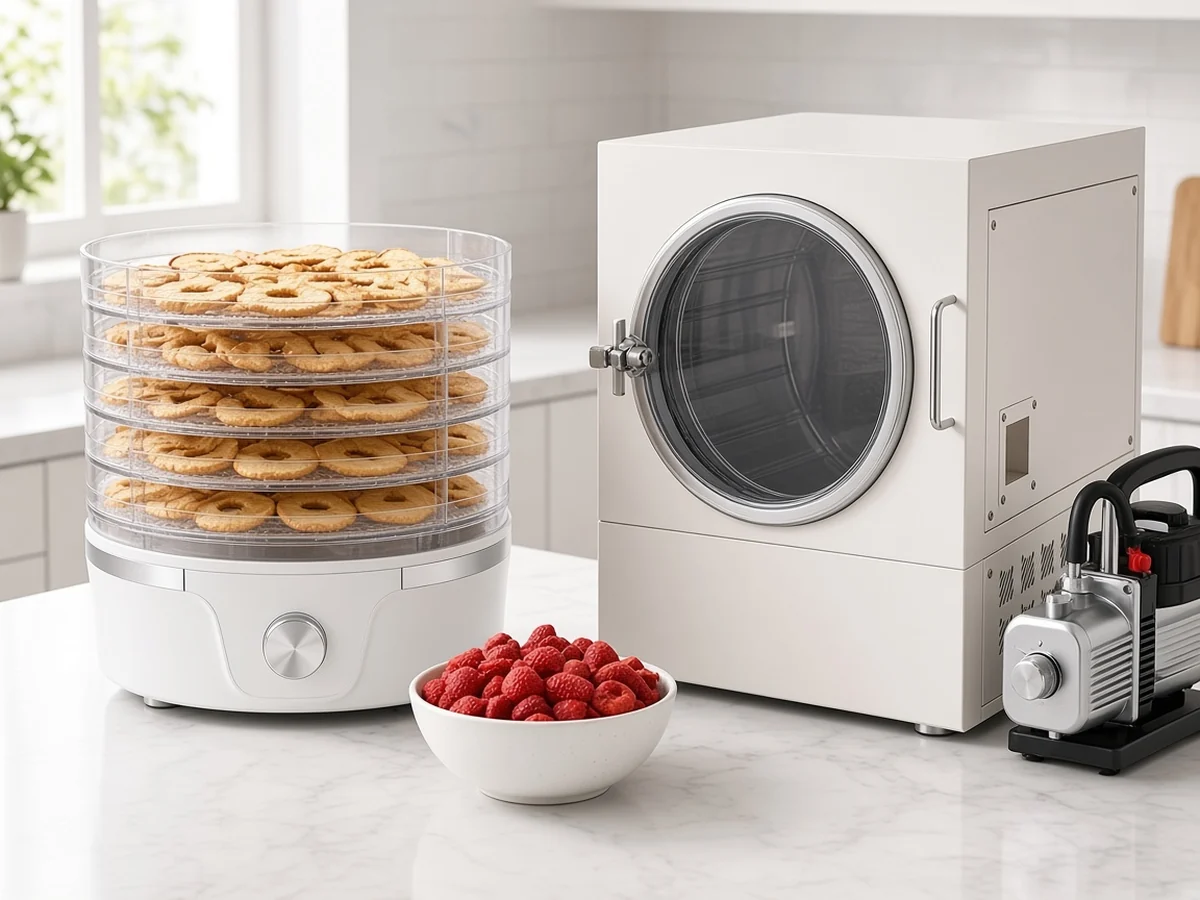
Both appliances remove water from food so it keeps without refrigeration, and both use stacked trays. That is where the similarity ends.
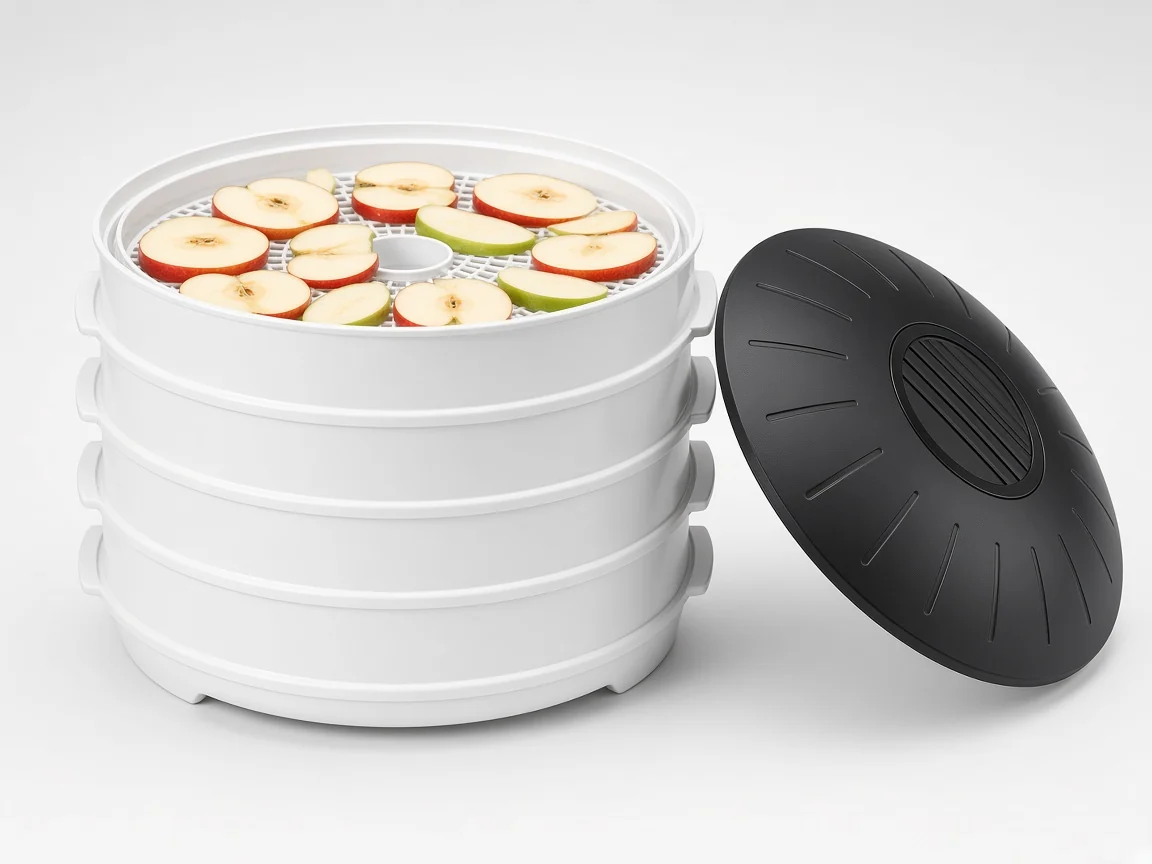
A dehydrator blows warm air across mesh trays. The National Center for Home Food Preservation describes dehydrators as having a heating element, a fan and vents, and designed to dry food at about 140 °F. A freeze dryer freezes food solid, pulls a vacuum, and then warms the shelves gently so the ice turns straight to vapour without melting. Penn State Extension says freeze drying removes up to 98 percent of the water in food, and that freeze-dried food keeps its colour and shape better than dehydrated food. Our guide to how freeze drying works explains each stage.
Search engines and marketplaces match words, so a dehydrator listing that includes "freeze", "freeze dried" or "freeze dryer" in its title or keywords can appear right next to the real thing.
Spec-by-spec: what each listing should say
What to look for | Real freeze dryer | Hot-air dehydrator |
|---|---|---|
Temperature | Cold trap well below zero, e.g. −35 °C or −60 °C | A heat range such as 35–90 °C |
Key parts | Vacuum pump, compressor, sealed chamber | Fan, heater, vents |
Trays | Usually 4 to 7 solid stainless trays | Often 6 to 12 mesh layers |
Weight and size | Heavy floor or counter cabinet, often 100 lb or more | Light countertop box |
Price class | Major-appliance money | Small-kitchen-appliance money |
Red flags in Amazon listings
On 29 October 2026, the mislabelled listings we saw on Amazon US shared a recognisable pattern. The first four points below are what we saw repeatedly; the last two are further warning signs worth checking.
A warm temperature range. Settings such as 35–90 °C. A freeze dryer's selling point is how cold it gets, not how warm.
A "360° fan" or "hot air circulation". That is how a dehydrator works. A freeze dryer's chamber is under vacuum, so moving air is not the drying method.
Lots of layers. Six to twelve stacked mesh layers is typical of a dehydrator. The real freeze dryers we checked have three to five solid trays.
No vacuum pump or compressor anywhere in the specs, the included items or the photos.
A price far below any real freeze dryer. Genuine home freeze dryers sit in the major-appliance price class. A "freeze dryer" priced like a toaster oven or air fryer is almost certainly a dehydrator.
A focus on jerky, fruit chips and pet treats rather than freeze-dried meals, dairy or candy. Those foods suit a dehydrator, which can be a hint about what the product really is.
None of these is proof on its own, but two or three together are a strong signal.
What genuine listings look like
For comparison, here is what a real vacuum freeze dryer listed on Amazon US publishes, as of our check on 30 October 2026:
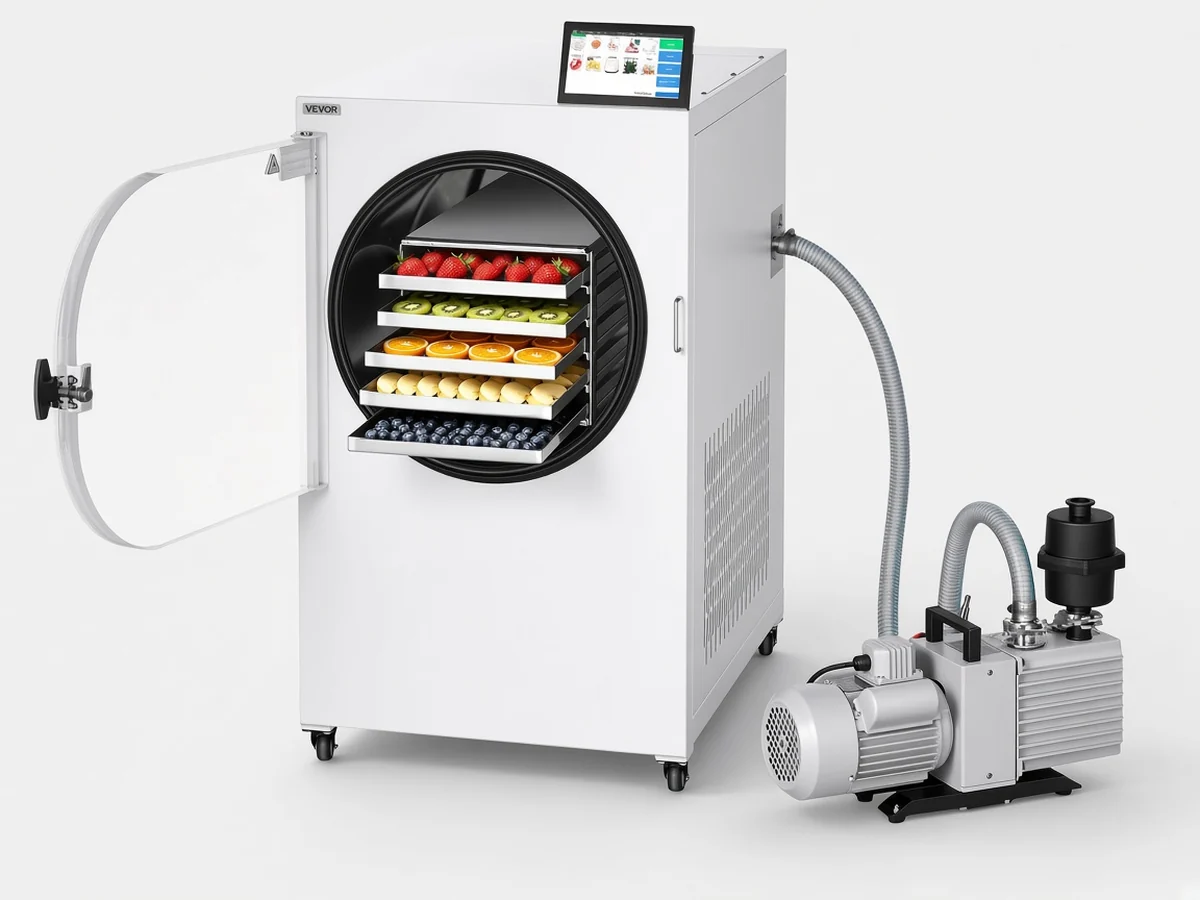
VEVOR HFD-4 (ASIN B0DWS43XNL): four stainless trays, a −35 °C cold trap and an included oil vacuum pump.
A genuine listing names a vacuum pump, a compressor-chilled cold trap well below zero, and a heavy cabinet. Five genuine machines were listed on Amazon US when we checked. Our home freeze dryers on Amazon roundup ranks three of them and covers the other two as secondary options. Even among genuine machines, documentation varies a lot, so see our VEVOR HFD-4 review for the questions to ask before ordering.
One caution: built-in pumps exist
Not seeing a separate pump in the photos is not enough to rule a machine out. Some genuine countertop freeze dryers enclose the pump inside the cabinet. In that case, the specs should still name the vacuum pump, give a sub-zero cold-trap or freezing temperature, and describe a sealed door. If those details are missing, assume it is a dehydrator until the seller confirms otherwise in writing.
If you bought a dehydrator by mistake
Check the return window on your order straight away. If you decide to keep it, a dehydrator is a good tool for jerky, fruit leather, dried fruit and herbs. Just do not treat its output as freeze-dried food for long-term storage. The National Center for Home Food Preservation gives storage times of about four months to a year for home-dried foods. For jerky, it recommends the meat reach 160 °F, either before or after drying. Our freeze dryer vs dehydrator guide explains which foods suit each method, and freeze drying food safety covers the safety side.
Checklist before you click buy
Does the listing name a vacuum pump?
Does it give a cold-trap or freezing temperature below zero?
Does it mention a compressor or refrigeration system?
Is the chamber sealed, with a gasketed door?
Is it priced and sized like a major appliance?
Is there a manual and warranty you can read before buying?
If the answer to the first three is no, it is not a freeze dryer.
Genuine freeze dryers listed on Amazon US
A genuine listing names a vacuum pump, a refrigerated cold trap and a heavy cabinet. Examples on Amazon US include the Blue Alpine Medium Select Freeze Dryer and VEVOR's HFD-4 and five-tray SJ-08H, all of which list a vacuum pump and a refrigerated cold trap.
Related guides
Still deciding which kind of machine you need? Read our freeze dryer vs dehydrator guide. If a dehydrator might do the job, our guide to freeze dryer alternatives compares it with canning, freezing and buying freeze-dried food. You can also browse all our guides.
Related on Amazon: HNZXIB FD-05H Home Freeze Dryer.
Amazon listings for the products in this guide
Direct links to the Amazon listings for the products named or shown in this guide:
- VEVOR HFD-4 Vacuum Freeze Dryer (4 trays) – View on Amazon
- Blue Alpine Medium Select Freeze Dryer – See the Amazon listing
- VEVOR Vacuum Freeze Dryer, 5 Trays, 10 Presets – Check availability on Amazon
- HNZXIB FD-05H Home Freeze Dryer, 4 Trays – View on Amazon
- Presto 06300 Dehydro Electric Food Dehydrator – See the Amazon listing
- Magic Mill Pro MFD-7700 Food Dehydrator, 7 Stainless Trays
FAQ
What is dehydrator sold as freeze dryer? A real home freeze dryer has all three of these. A dehydrator has none of them. A vacuum pump. Either a separate pump connected by a hose, or one built into the cabinet and named in the specs. Refrigeration. A compressor that chills a cold trap (condenser) well below freezing, typically quoted as −35 °C or colder. A sealed chamber. A thick, gasketed door, usually acrylic, that holds a vacuum.
The quick test? A real home freeze dryer has all three of these. A dehydrator has none of them. A vacuum pump. Either a separate pump connected by a hose, or one built into the cabinet and named in the specs. Refrigeration. A compressor that chills a cold trap (condenser) well below freezing, typically quoted as −35 °C or colder. A sealed chamber. A thick, gasketed door, usually acrylic, that holds a vacuum.
Why the two get mixed up? Both appliances remove water from food so it keeps without refrigeration, and both use stacked trays. That is where the similarity ends. A dehydrator blows warm air across mesh trays. The National Center for Home Food Preservation describes dehydrators as having a heating element, a fan and vents, and designed to dry food at about 140 °F.