
Does Freeze Drying Kill Bacteria? Home Freeze-Drying Food Safety
Published 10/29/2026 · Updated 11/24/2026
Quick answer
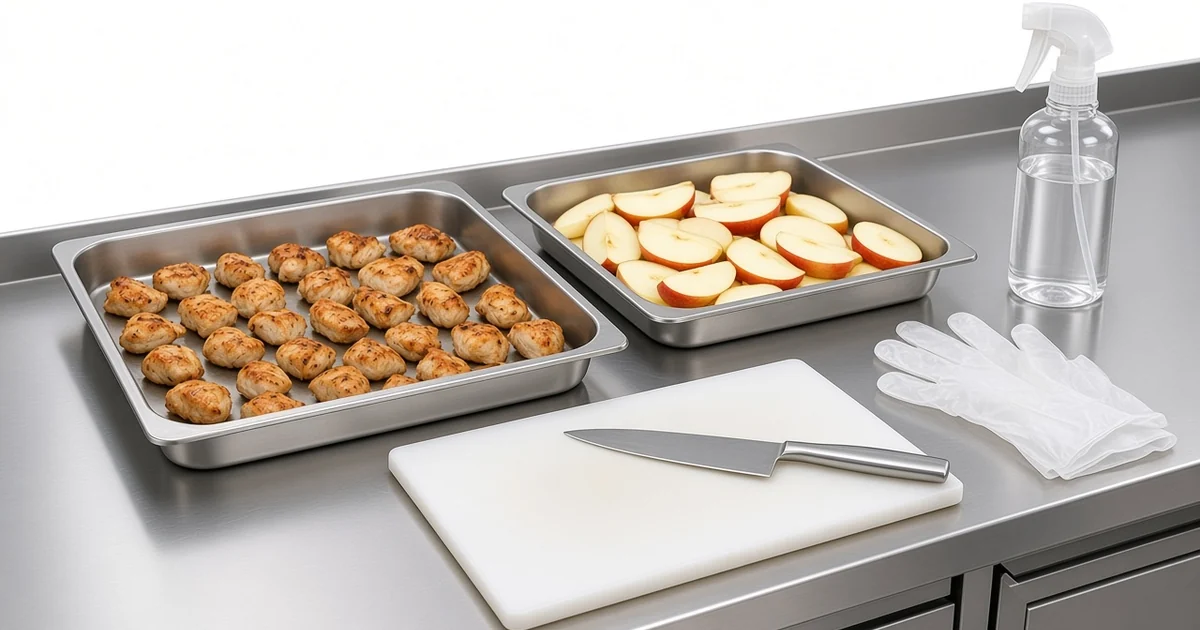
A freeze dryer does not make unsafe food safe—handle, dry, package, and cook following tested food-safety guidance. Keep raw and ready-to-eat foods separate, dry until crisp/dry throughout, and store sealed with oxygen absorbers where the method calls for it.
Products mentioned in this guide
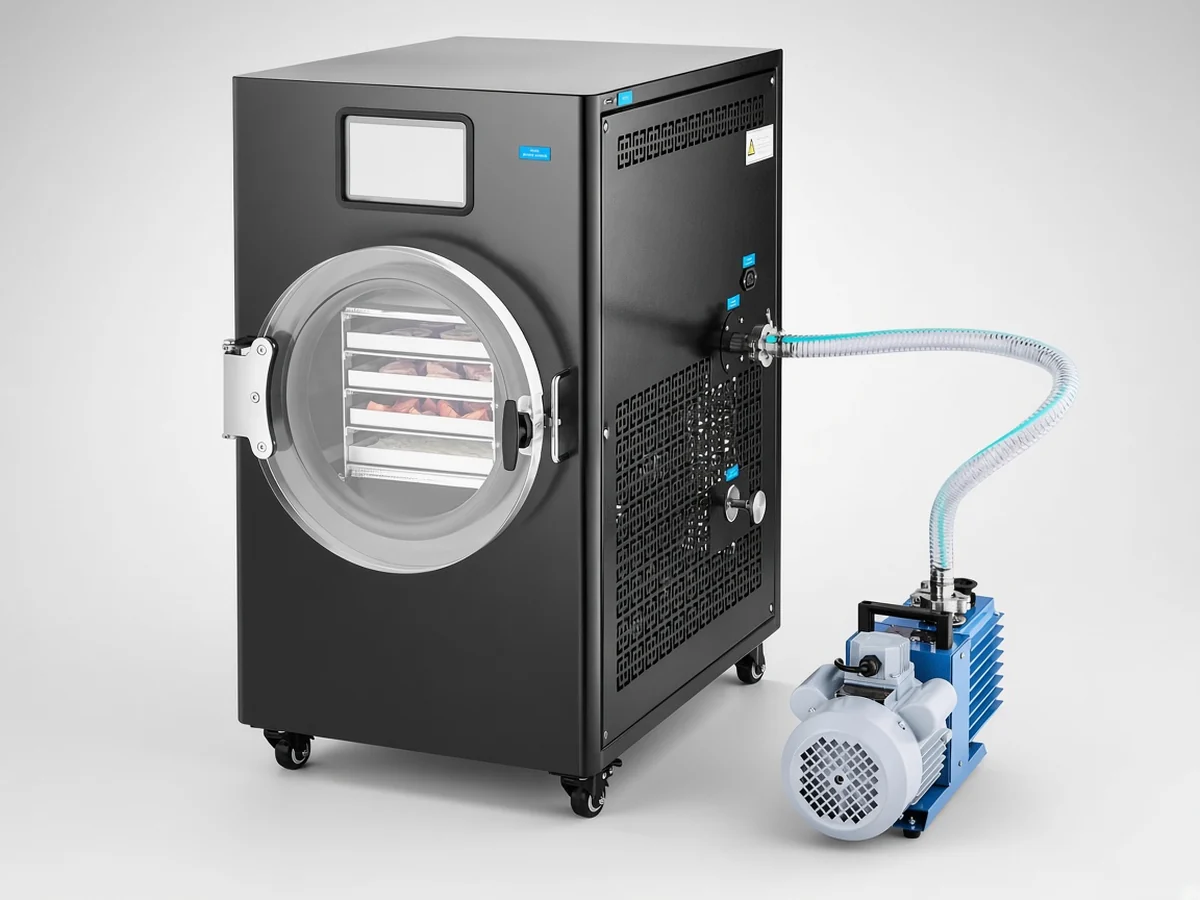
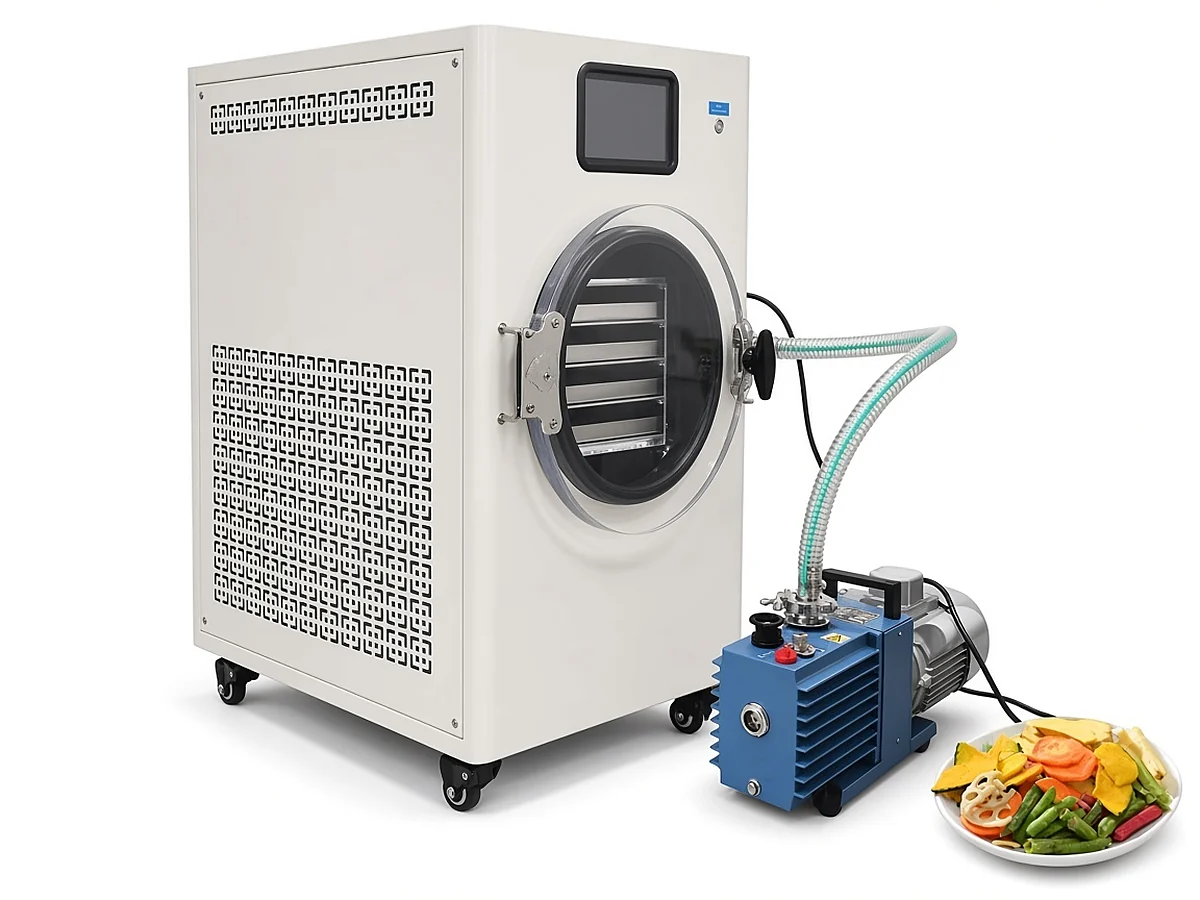
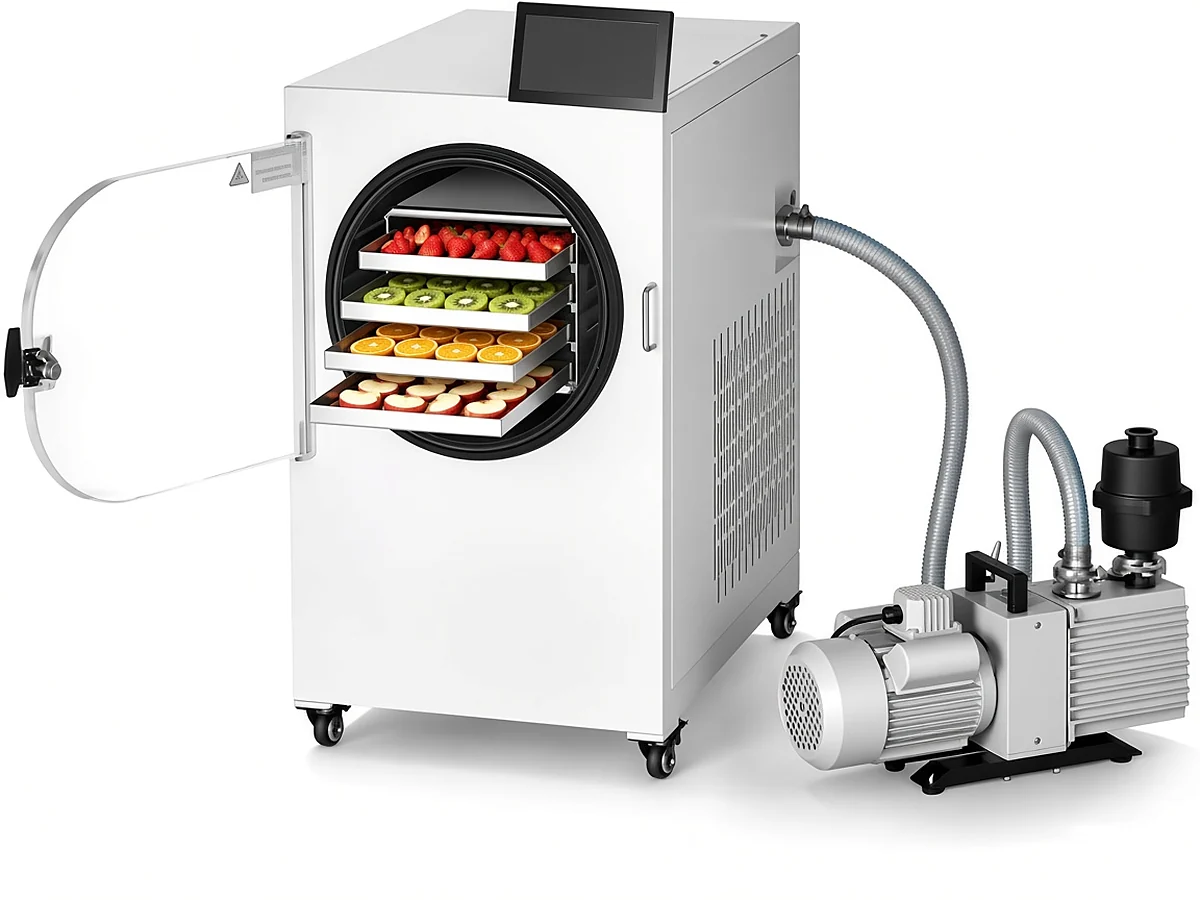
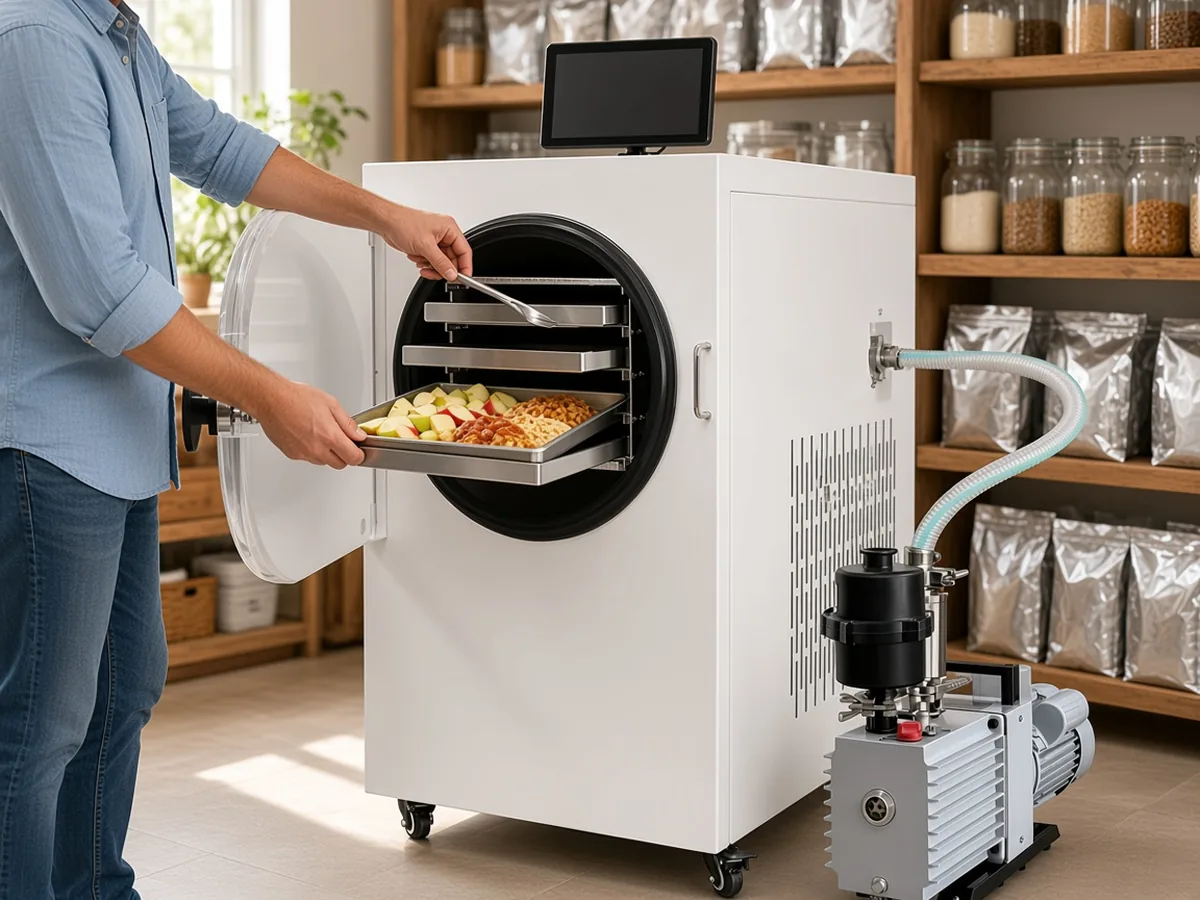
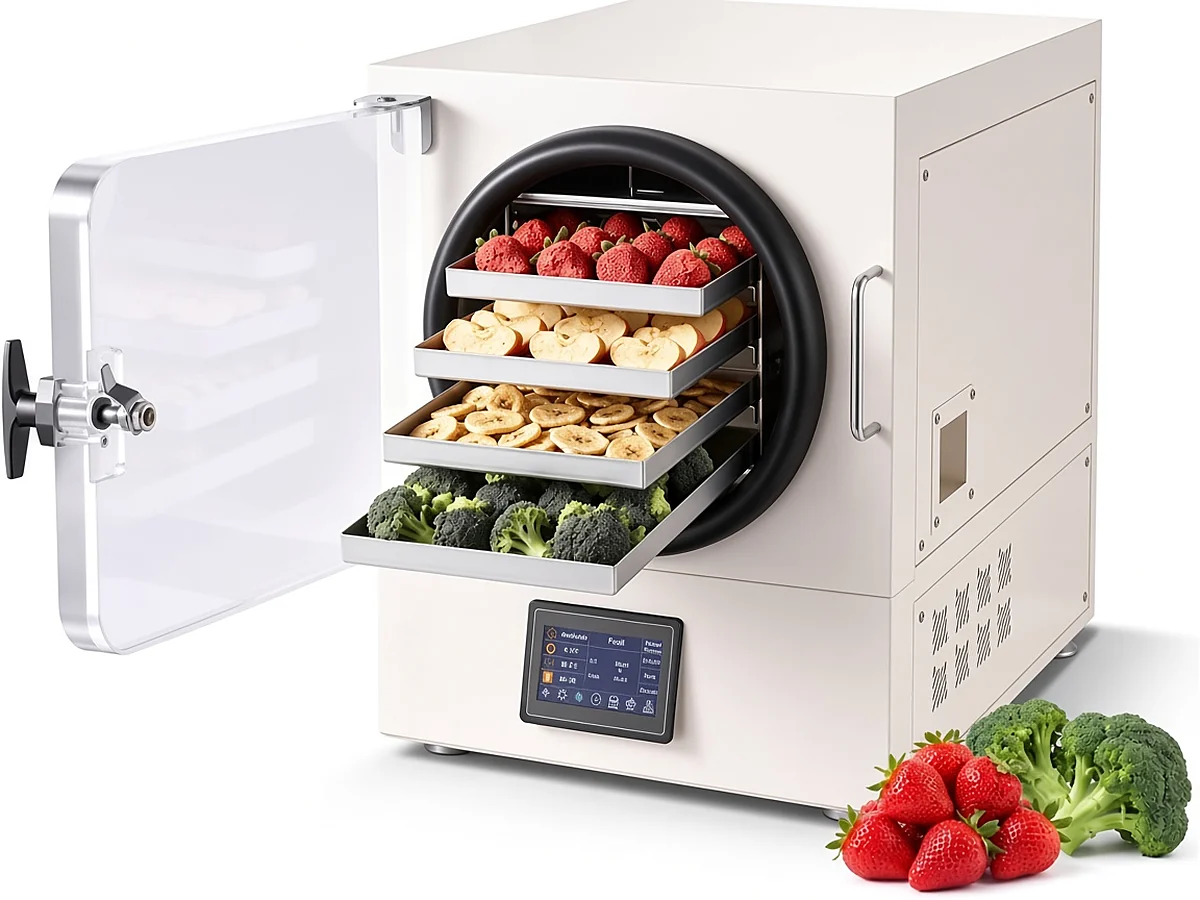
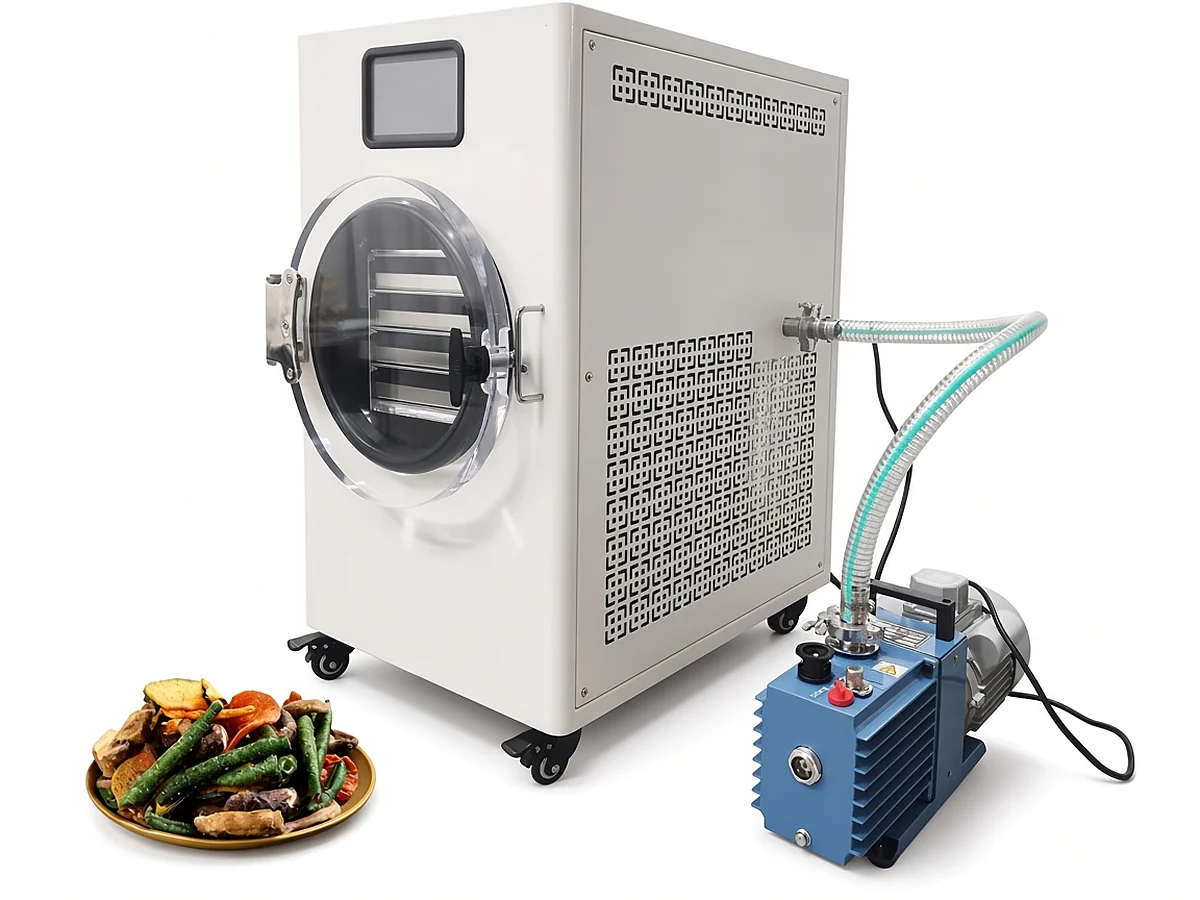
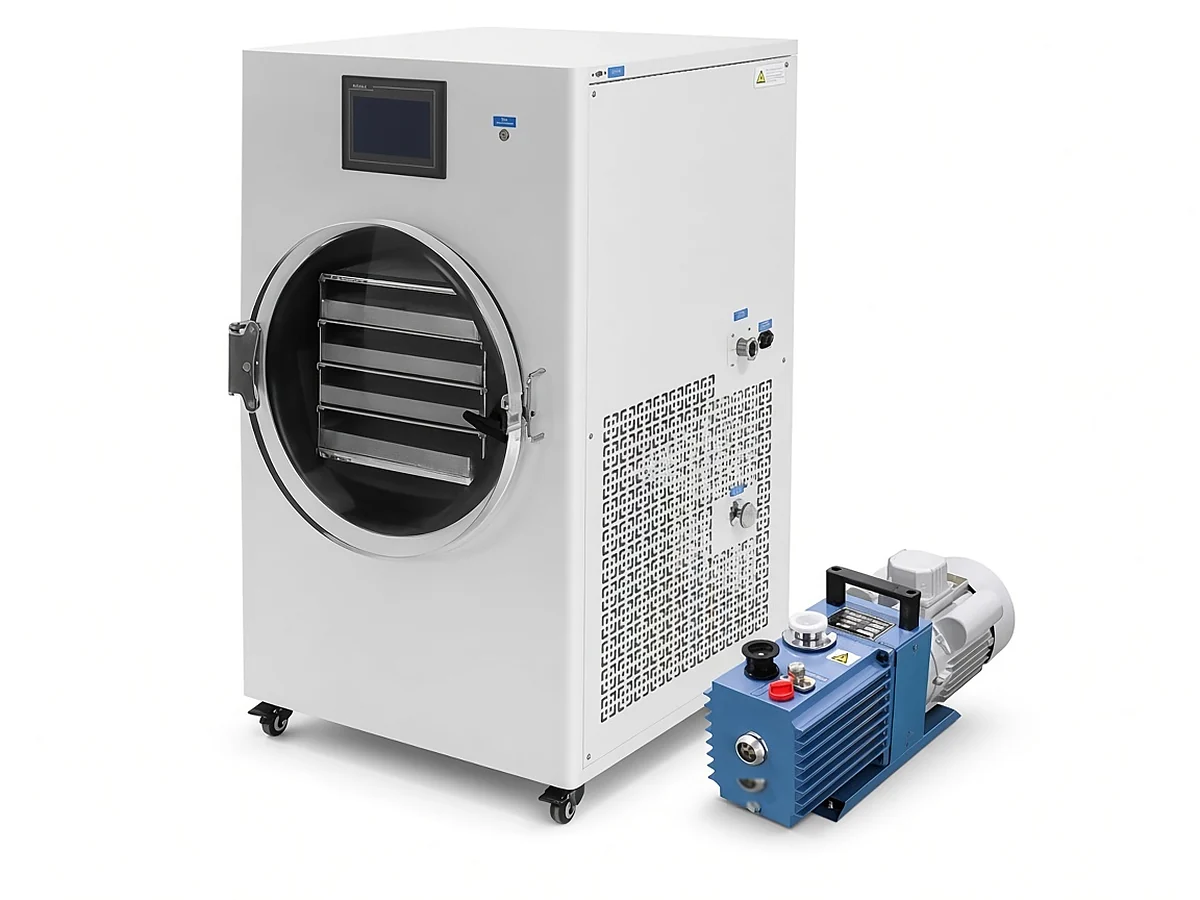
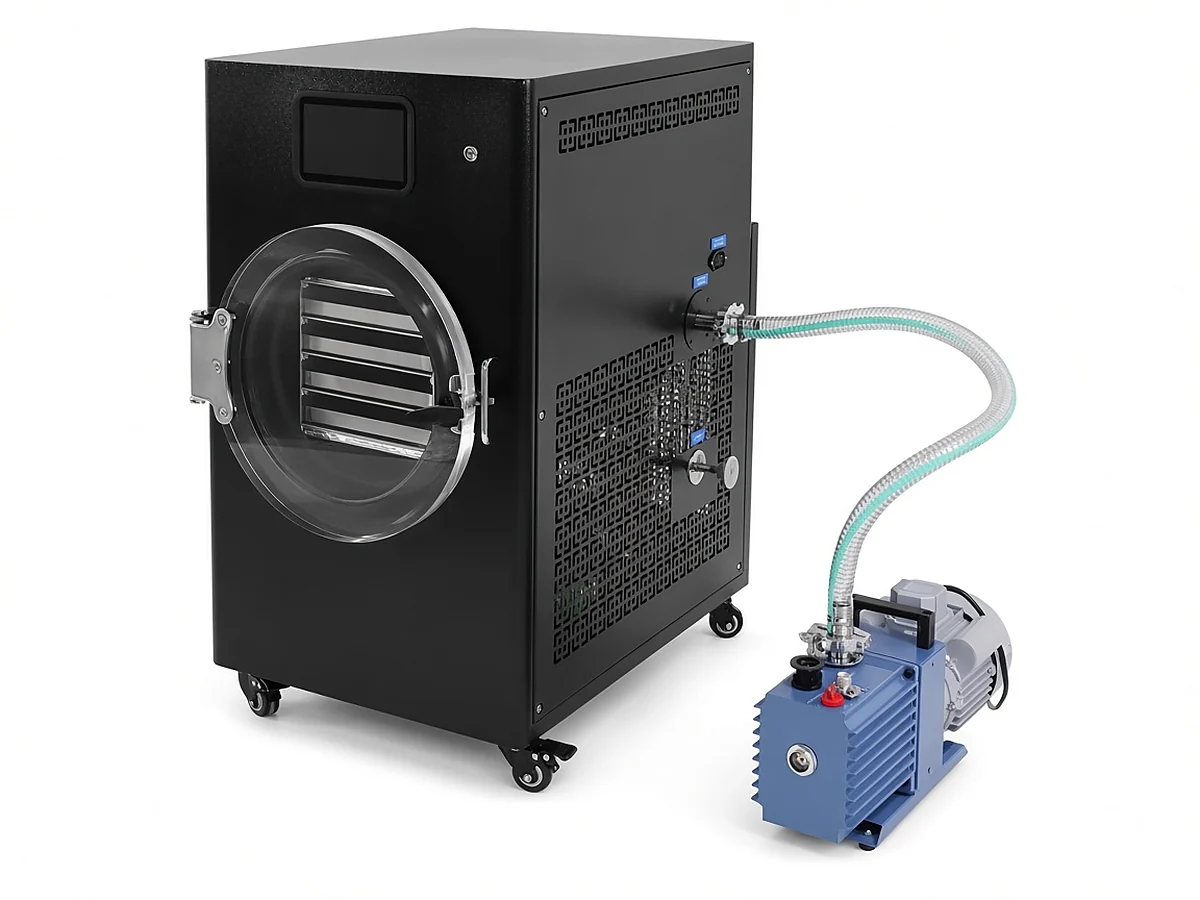
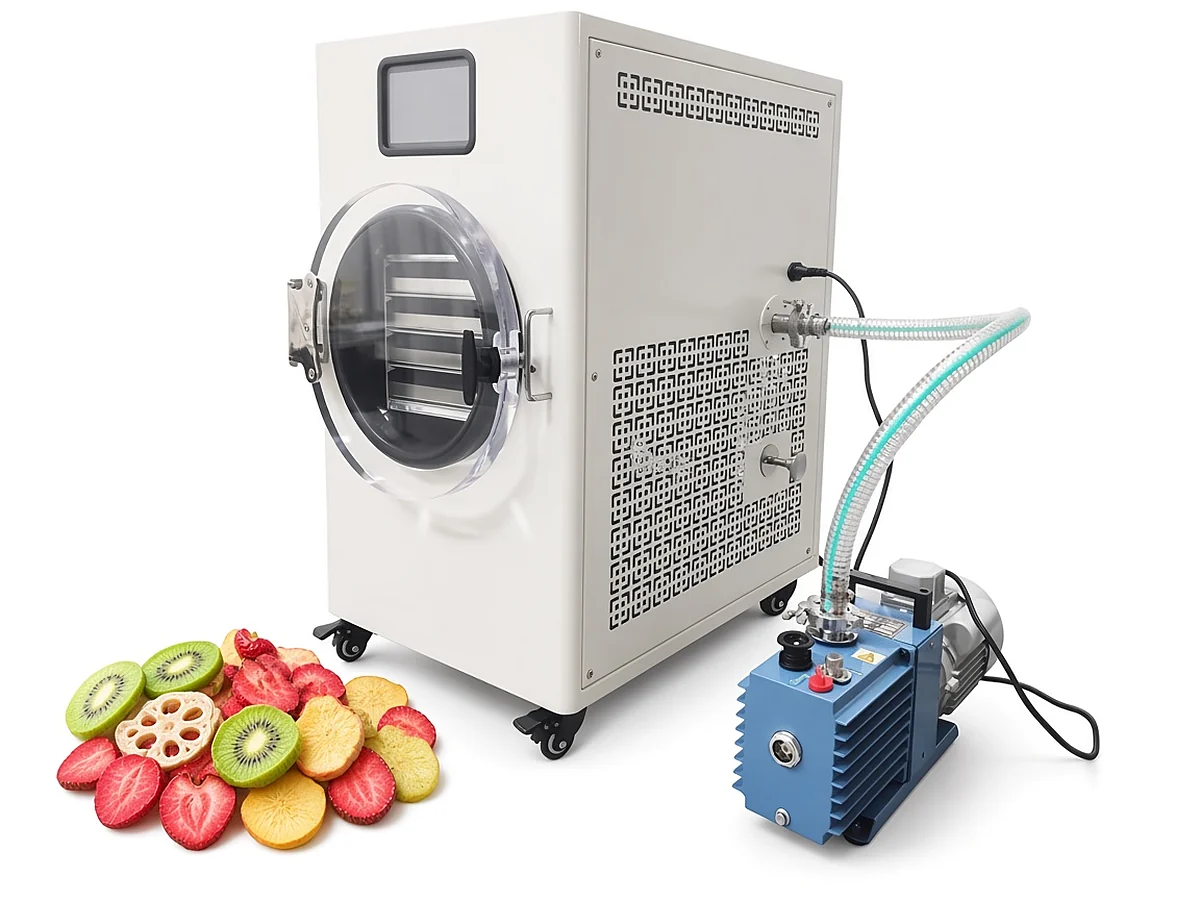
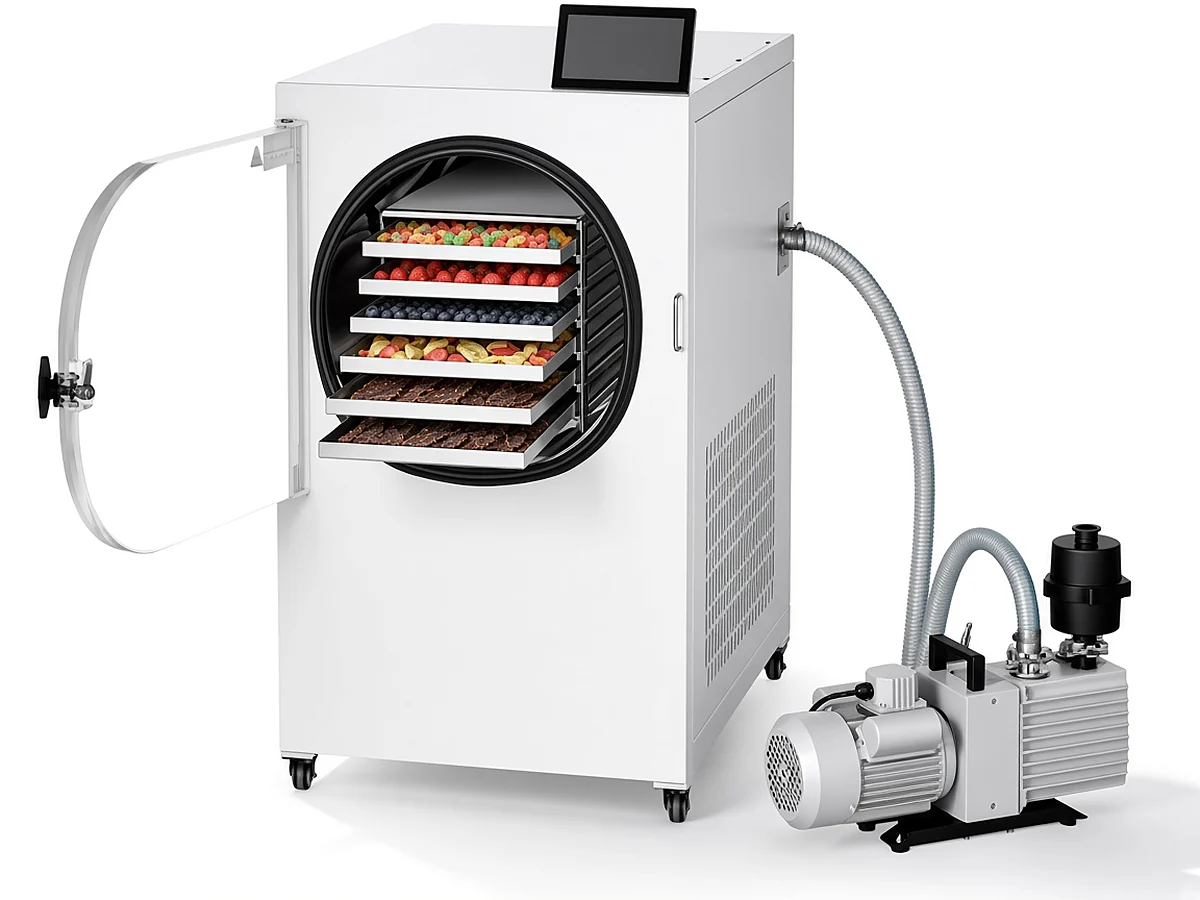
Food Storage & Safety · Freeze Dryers, Fruit, Eggs
Updated 30 October 2026
Freeze drying does not kill bacteria. It preserves food by removing water, and it preserves most of the microbes in that food too. Bacteria that survive stay dormant while the food is dry and can become active again once water returns. So the food is only as safe as what went in, how completely it was dried, how well it was packed, and whether it is cooked before eating when it needs to be.
That surprises a lot of new owners. A machine that freezes food far below zero and then pulls a hard vacuum sounds as though it ought to sterilise things. The extension services that have published guidance on home freeze-drying say otherwise.
On that core point the guidance is consistent. On some of the practical questions, such as raw meat, vacuum packaging and selling what you make, reputable sources give different advice, and this guide shows where. It summarises published guidance from extension services and federal food-safety agencies. It is not a substitute for advice about a specific recipe or a specific person's health, and the rules that apply to you may be local. Your county or state Cooperative Extension office can help with those questions.
What freeze drying does to bacteria (and what it doesn't)
A home freeze dryer works in three stages. It freezes the food, then pulls a vacuum and adds gentle heat so the ice turns straight into vapour, then runs a final drying stage to remove the last moisture. Our explainer on how freeze drying works goes through each stage.
None of those stages is a "kill step". University of Minnesota Extension says there is no heat treatment in the process, so it does not kill illness-causing bacteria or viruses, and the mild heat used during drying is not enough to inactivate them. Any that are present are preserved and can start growing again when moisture is added back. LSU AgCenter adds that the very low temperatures don't inactivate pathogens or spoilage organisms either. They stay viable but dormant.
Utah State University Extension puts it most bluntly. Freeze drying keeps food from spoiling, but it does not make it safer, because it doesn't kill bacteria, not even heat-sensitive ones. The laboratory studies it cites show bacteria surviving the process and becoming active again after rehydration. There is a reason scientists use freeze drying to keep microbial cultures alive for later study.
Parasites
None of the extension guidance we reviewed treats a freeze-drying cycle as a way to control parasites. For wild game, Minnesota lists a separate step before any preparation. Cut the meat into pieces 6 inches thick or less, then freeze it at 0 °F or below for 30 days.
Why properly stored freeze-dried food doesn't spoil
If the microbes survive, why can a sealed bag of freeze-dried food last for years? The answer is water activity, a 0-to-1 scale of how much water in a food is available to microbes. Minnesota and Utah State both put properly freeze-dried food at roughly 0.08 to 0.33. At that level, Utah State says, most bacteria and spoilage organisms can't grow, though they may survive in a dormant state.
That protection depends entirely on the food staying dry. Utah State warns that if packaging is damaged or storage is poor, water activity can rise and bacteria can become active again. Complete drying and moisture-proof packaging are food-safety steps, not just quality steps.
Which foods carry the most risk
The table summarises Utah State's 2026 guidelines, which are stricter on raw animal foods than some other extension guidance, as the next section explains. The biggest risks are raw animal foods, unpasteurised dairy and raw flour, because they can carry pathogens that freeze drying won't remove. Very fatty foods are a problem for a different reason, because the fat keeps them from drying properly.
Food | Utah State's guidance | Why it matters |
|---|---|---|
Raw meat, poultry, seafood | Cook first | Pathogens survive. Other extension services allow raw, with conditions (see below). |
Raw eggs | High-risk. Use pasteurised liquid egg or cooked scrambled egg. | Salmonella can survive freeze drying. |
Raw (unpasteurised) milk and cheese | High-risk | Can carry Listeria, Salmonella or E. coli. Pasteurised dairy is listed as suitable. |
Raw flour and dough | Not recommended | Can carry E. coli and Salmonella, and rehydrates poorly. |
Oils, mayonnaise, very fatty foods | Not safe or practical | High fat prevents adequate drying, which raises the risk of rancidity and pathogen survival. |
Fruits and vegetables | Suitable | Wash first. Blanch vegetables, and pretreat fruit that browns. |
Fat deserves a note of its own. Fat doesn't freeze like water, Utah State explains, so fatty foods dry slowly and are more prone to spoiling. University of Arizona Extension says high-fat meats such as bacon should be cooked and blotted of as much grease as possible first, and Minnesota suggests draining and rinsing cooked ground beef for the same reason.
Fresh produce
Fruit and vegetables are among the easiest foods to freeze dry, but they aren't risk-free. Utah State's advice is to wash produce, and peel fruit where it makes sense, to reduce the microbial load, because the dryer won't do anything about what's left. The FDA's produce-cleaning advice applies in full. Rinse under plain running water before you peel or cut, skip soap and produce washes, and dry the produce with a clean cloth or paper towel. Our strawberry how-to shows those steps in a real batch.
Can you freeze dry raw meat and eggs?
This is where the extension services differ most, and the difference is real rather than a matter of wording.
Several say yes, with conditions. Minnesota says meat, poultry and seafood can be freeze-dried raw or cooked. LSU AgCenter, citing Penn State Extension, says raw meat and eggs can be freeze-dried, but they must be clearly labelled, handled as raw before and after drying, and cooked to a safe internal temperature before eating. Arizona's preparation guide says most meats can go in raw or cooked, and gives instructions for drying raw beaten egg.
Utah State's newest guidance leans the other way. The food table in its 2026 fact sheet says raw meat, poultry and seafood should be fully cooked before freeze drying, and classes raw eggs as high-risk. It also warns that raw animal foods can contaminate the equipment, the trays and later batches. The same fact sheet's summary allows meats and eggs to be cooked either before freeze drying or after rehydration, and an older Utah State buying guide says meats can be freeze-dried cooked or raw. So Utah State's own publications aren't uniform, and the newer fact sheet is the more cautious of the two.
Every source agrees on what matters most. Raw meat, poultry, seafood and eggs stay raw after freeze drying, so you must never eat them as dry snacks. They have to reach a safe internal temperature at some point, either before freeze drying or after rehydration. For exact figures, use the USDA's safe minimum internal temperature chart. It lists 165 °F for all poultry, 160 °F for ground meats and eggs, and 145 °F for fish and shellfish.
If you want the route that satisfies every source, cook first. It also keeps raw juices off your trays and out of the next batch. If you do dry raw egg, our guide on how to freeze dry eggs covers the handling in detail. The cook-first method is in how to freeze dry meat.
The cautious route matters more for some households. FoodSafety.gov lists adults 65 and older, children under 5, pregnant women and people with weakened immune systems as more likely to get food poisoning or to become seriously ill. If you're preparing food for any of them, cooked-first is the sensible default.
Stopping a cycle early is a safety problem
An under-dried batch is easy to miss. Food can feel crisp on the outside while the centre is still wet. LSU warns that ending a cycle early, especially with dense foods such as meats, can leave pockets of moisture. Sealed in a low-oxygen bag, those moist areas can create conditions for Clostridium botulinum growth and toxin production.
Check before you pack:
Take pieces from every tray, including the largest, and cut or break them open. Minnesota says a dark spot in the middle means moisture, and all the trays go back in.
Arizona suggests cracking one of the larger pieces. It should snap and feel dry inside. If it feels cold or moist, the whole batch goes back in for a few more hours.
If you're unsure, add more time. Blue Alpine's owner's manual notes that you can't over-freeze-dry food.
Timing matters on either side of the cycle too. LSU says food left in a sealed, still-running machine after the cycle stays shelf-stable, a point it draws from Harvest Right's guidance. Food that has sat in a warm or humid room for more than 24 hours should get a short drying cycle again before packaging. Food that has been out in humid air for days shouldn't be re-dried at all, because it may already be unsafe. Discard anything that shows the spoilage signs LSU lists: discolouration, mould, unusual odours, a changed texture or an off taste.
Packaging and storage are part of food safety
Minnesota notes that the USDA considers properly freeze-dried foods shelf-stable when they're packed in moisture-proof, hermetically sealed containers. It also warns that some vacuum-sealer bags sold for general storage or sous vide aren't true moisture barriers.
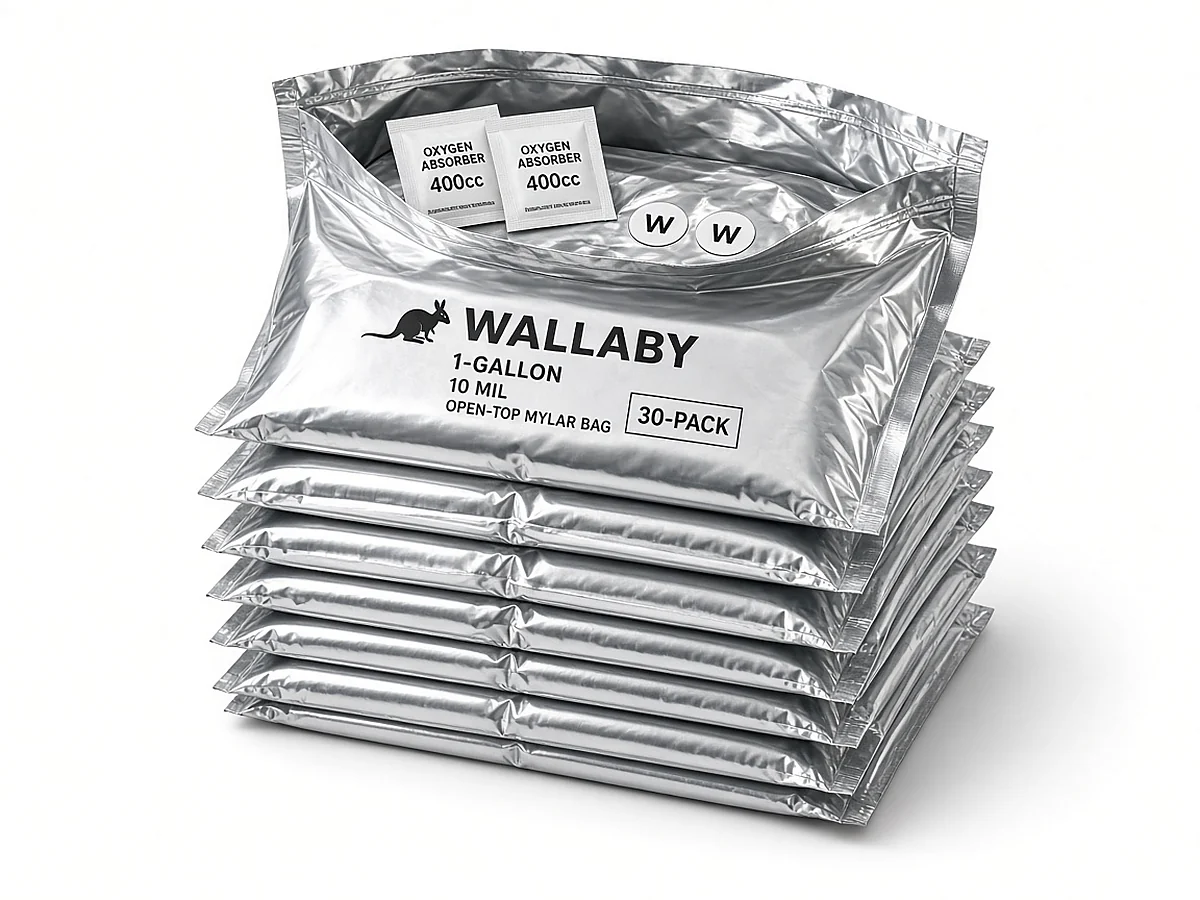
Long-term: heat-sealed Mylar with an oxygen absorber. Utah State recommends thick 5 to 7 mil bags without clear windows, because windowed bags let more air and moisture through. LSU also lists vacuum-sealed jars with oxygen absorbers for long-term storage.
Medium-term: LSU lists zip-top bags and ordinary canning jars without vacuum sealing.
Everywhere: keep it cool, dark and dry, and label each package with the food, whether it's raw or cooked, and the date. That labelling advice comes from Minnesota.
Vacuum sealing, oxygen absorbers and botulism
Removing oxygen protects quality, but it isn't a safety step in itself, and the sources frame the risk differently depending on who is packing the food.
For home storage, the common extension view is that low-oxygen packaging is fine as long as the food is properly dry. Utah State's buying guide spells out the reasoning. Taking oxygen out of a package could favour botulism bacteria if the food were moist, but without water neither those bacteria nor any others can grow, so properly freeze-dried food can go into vacuum packaging or a container with an oxygen absorber. Utah State, LSU and Arizona all recommend oxygen absorbers for long-term storage on that basis, and Minnesota's home-preservation page lists vacuum-sealed jars and oxygen absorbers among its packaging options.
Minnesota's guidance for people who sell freeze-dried food takes a stricter line. Its cottage-food guidance tells Minnesota producers not to use reduced-oxygen packaging such as vacuum sealing, because a reduced-oxygen environment can support C. botulinum. It suggests food-grade moisture absorbers instead.
The two positions fit together once you see what they share. Low-oxygen packaging is only as safe as the drying behind it. If a batch might not be fully dry, don't seal it with an oxygen absorber. Put it back in the machine. Our guide on how to store freeze-dried food compares containers and absorber sizes, and how to seal Mylar bags with oxygen absorbers covers the technique.
Once you add water, it's perishable again
Rehydrated food is no longer protected by low water activity. Minnesota notes that any microorganisms present before drying may begin growing again once water is added. Treat rehydrated food like fresh food. FoodSafety.gov's rule for perishable food applies: don't leave it at room temperature for more than 2 hours, or 1 hour when it's above 90 °F.
Foods that need cooking, such as meat, poultry, seafood, eggs, pasta and grains, should be cooked to their safe minimum temperature after rehydration, according to Minnesota. Ready-to-eat foods such as fruit can be eaten dry. Utah State's view is that they don't usually need a kill step. Our rehydration guide covers the practical side.
Keep the machine and work area clean
Because the process won't kill anything you introduce, sanitation does a lot of the work.
Wash your hands with soap and warm water for at least 20 seconds after handling raw meat or eggs, and wash any utensils, bowls and counters they touched. LSU lists these steps for anyone drying raw foods.
Keep raw meat and poultry separate from ready-to-eat food. Minnesota also recommends single-use gloves for food that won't be cooked before eating.
Wash and sanitise the trays after every batch, even if the next batch is the same food, and unplug the machine before cleaning (Minnesota).
Follow your manual for the chamber and drain line. Harvest Right's manual, for example, says to wash the shelves by hand, not in a dishwasher, and to pour a safe cleaning agent down the drain line regularly to keep mould and bacteria from growing inside it. Our guide on how to clean a freeze dryer walks through a routine.
Selling freeze-dried food depends on where you live
Selling home-made food is regulated by each state, usually through cottage-food rules, and those rules differ in ways that matter for freeze dryers.
Minnesota's cottage-food guidance allows producers to freeze dry only foods that are non-potentially hazardous before they go in the machine. Whole fruits, vegetables and berries, gelatin-based desserts and candies are allowed. Cut or sliced produce, dairy, meat, poultry, eggs, seafood and cooked entrées are not. Michigan's cottage-food list draws the line elsewhere. It allows freeze-dried fruit and vegetables except melon, tomato and leafy greens, along with freeze-dried candy, but excludes freeze-dried dairy and anything that needs refrigeration before drying.
Those are two states among fifty. If you plan to sell, check with your own state agriculture or health department before you start, not after.
How much official guidance is there?
Less than for canning or dehydrating. Minnesota notes that the National Center for Home Food Preservation has not yet published research-based freeze-drying recipes, partly because home machines differ so much, and that several universities are working on research-based guidelines. Home freeze-drying is also relatively new, so there is limited information on how long home-dried food keeps. The publications cited here are the best current guidance, not the final word, and as the raw-meat question shows, they are still evolving. If you have a question they don't answer, your local Cooperative Extension office is the right next step.
Sources
University of Minnesota Extension: Preserving food at home: Freeze-drying
Utah State University Extension: Can I Freeze-Dry That? (January 2026)
Utah State University Extension: Buying a Home Freeze-Dryer: What to Know Before You Go
LSU AgCenter: Freeze-Drying at Home FAQ
University of Arizona Cooperative Extension: Preparing and Storing Your Freeze-Dried Products (AZ2097b)
Related on Amazon: Wallaby 1-Gallon 10 Mil Mylar Bags with Oxygen Absorbers (30-pack).
Amazon listings for the products in this guide
Direct links to the Amazon listings for the products named or shown in this guide:
- Wallaby 1-Gallon 10 Mil Mylar Bags with Oxygen Absorbers, 30-Pack – View on Amazon
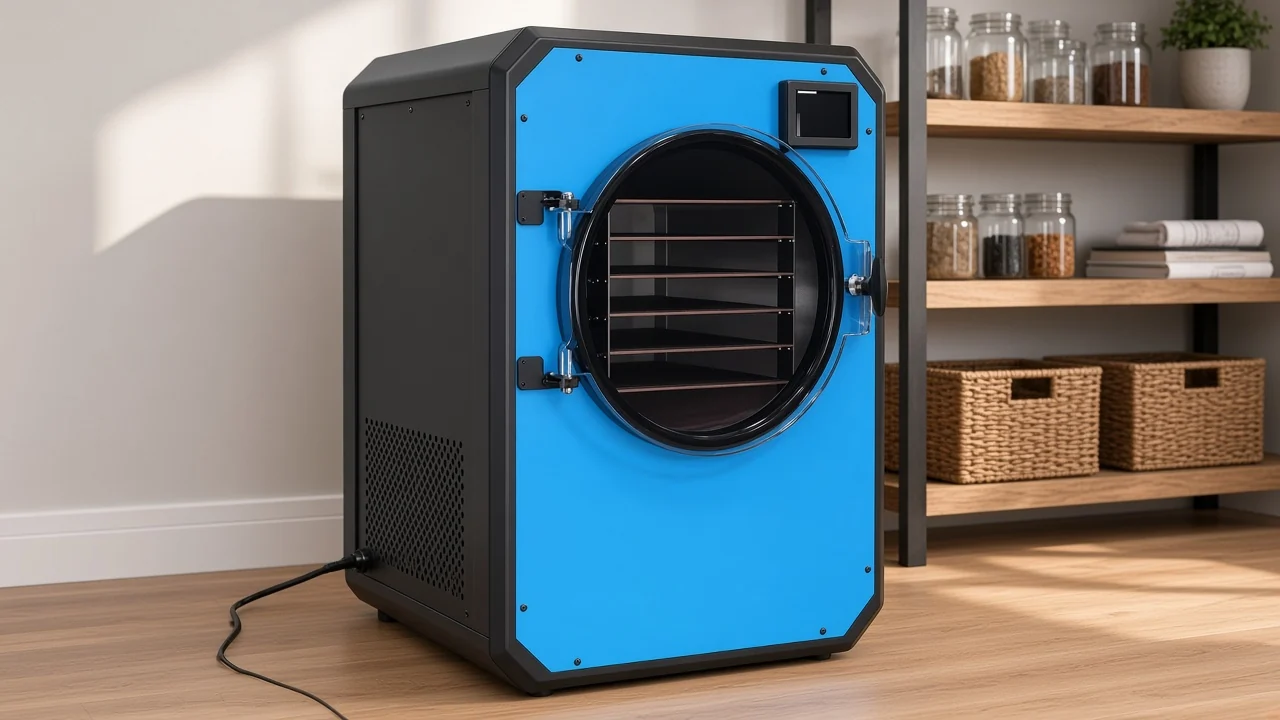
- Blue Alpine Medium Select Freeze Dryer – See the Amazon listing
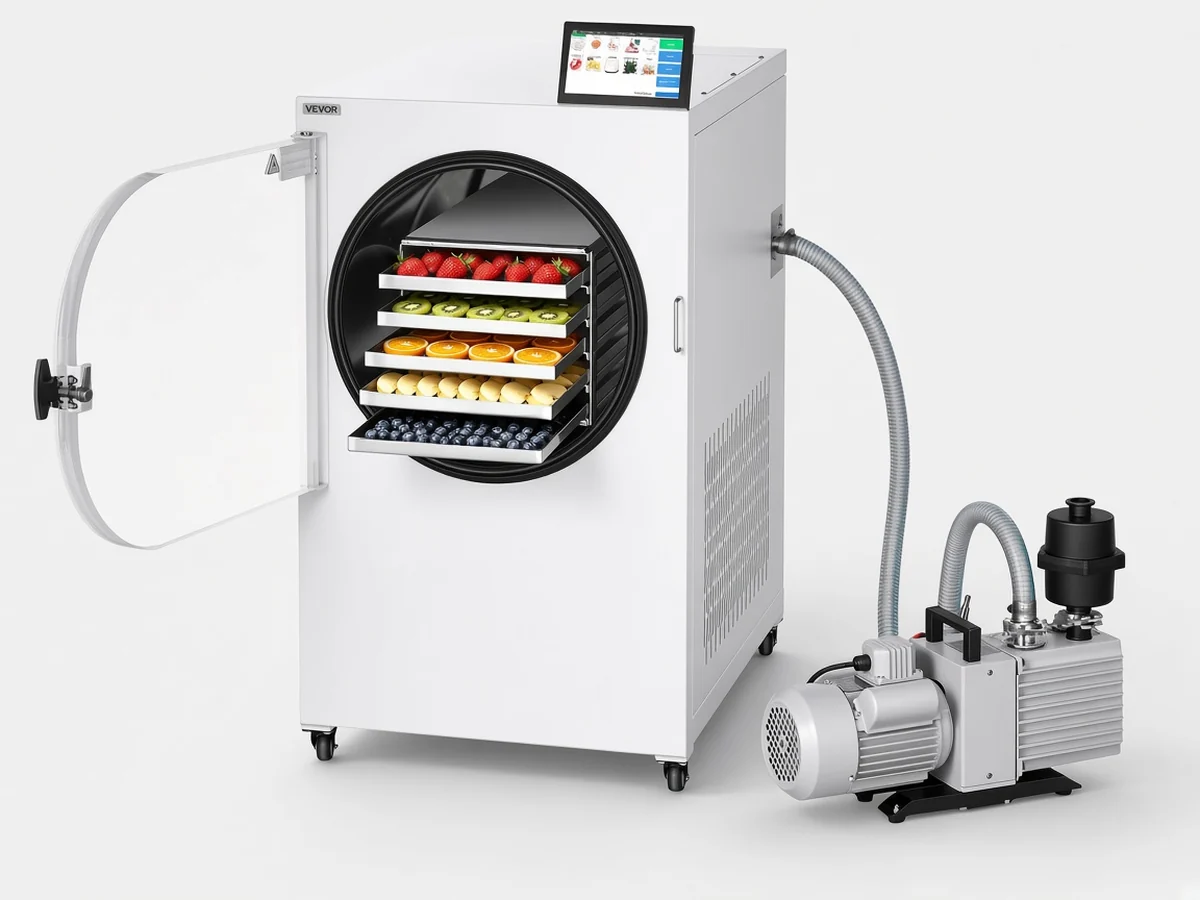
- VEVOR Vacuum Freeze Dryer, 5 Trays, 10 Presets – Check availability on Amazon
- VEVOR HFD-4 Vacuum Freeze Dryer (4 trays) – View on Amazon
- WYDDDARY Vacuum Freeze Dryer, 4 Trays – See the Amazon listing
- VEVOR SJ-05H Vacuum Freeze Dryer, 4 Trays, 10 Presets – Check availability on Amazon
- HNZXIB FD-05H-40 Vacuum Freeze Dryer, 4 Trays – View on Amazon
FAQ
Does freeze drying kill bacteria? No. Freeze drying preserves food by removing water under vacuum; it is not a kill step. Start with wholesome food and follow safe handling.
Can I freeze dry raw meat safely? Only with careful handling and cooking before eating; treat freeze-dried raw meat like other preserved raw products and follow extension-style guidance in the article.
How dry is dry enough? Food should be uniformly dry/crisp for its type; moist centers are a spoilage risk—extend the dry stage rather than packaging early.
How should freeze-dried food be stored? Cool, dark, dry storage in appropriate barriers (often Mylar with oxygen absorbers for long storage)—see the storage guidance in this guide and our storage articles.