
How Does a Freeze Dryer Work? The Three Stages, Explained Simply
Published 10/29/2026 · Updated 11/24/2026
Quick answer
A home freeze dryer works in three phases: freeze the food, pull vacuum so ice sublimates off as vapor, then finish with a warmer desorption stage that drives off bound water. That is why cycles take a day or more and why high-fat or sugary foods often need extra drying checks.
Products mentioned in this guide
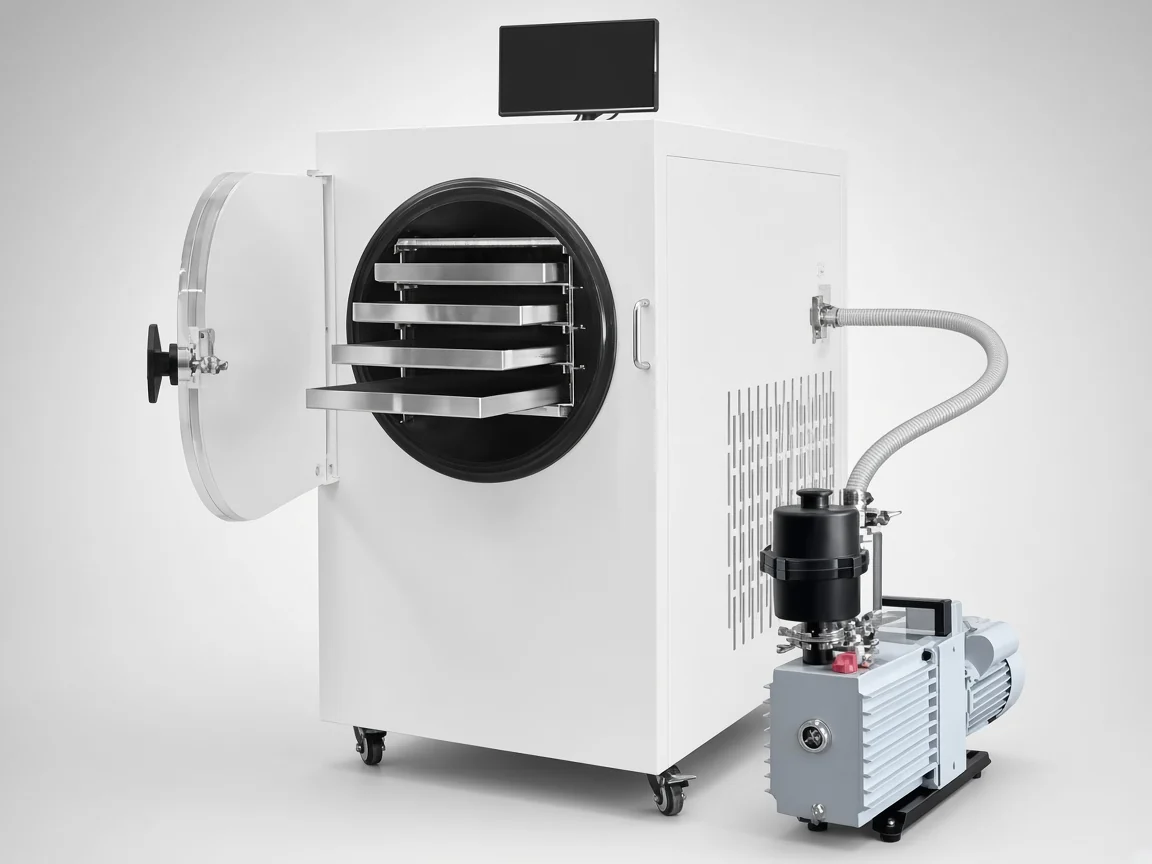
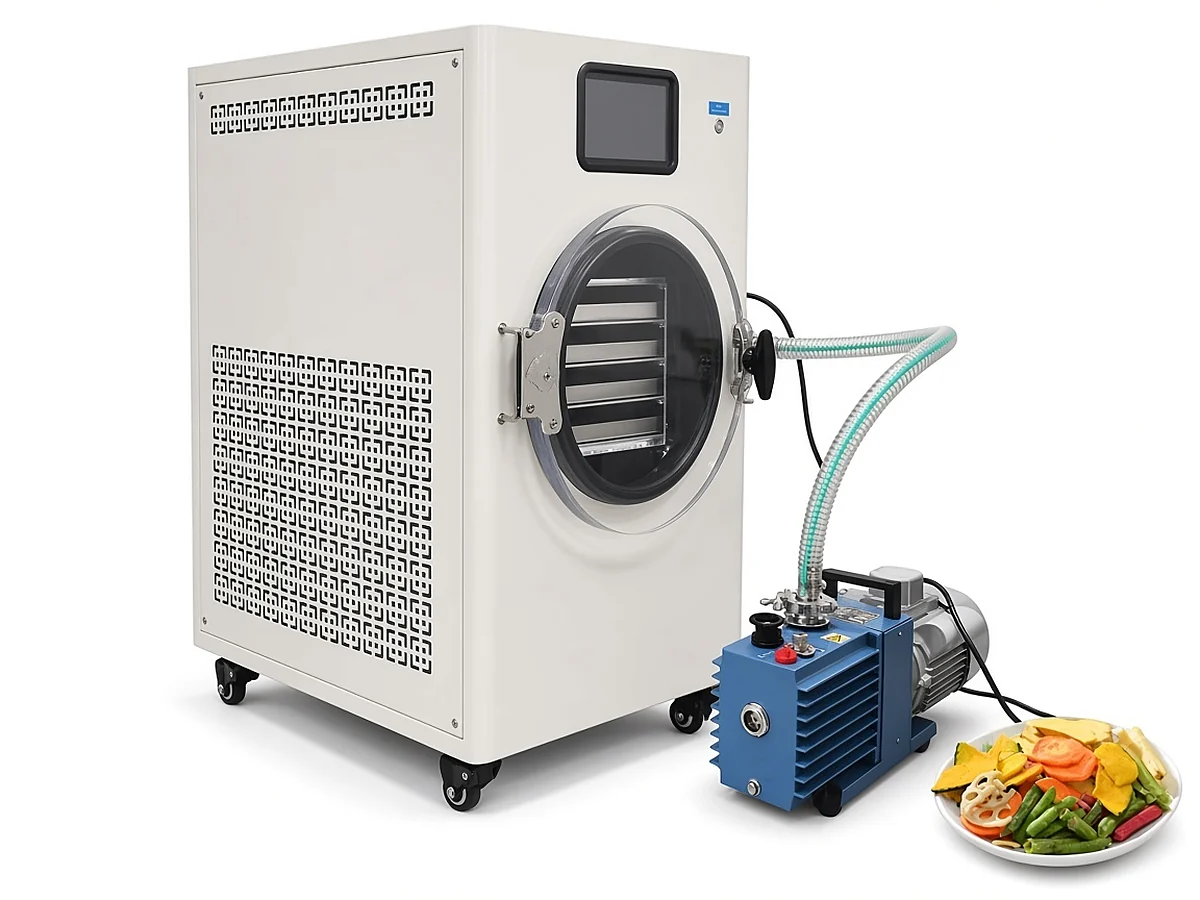
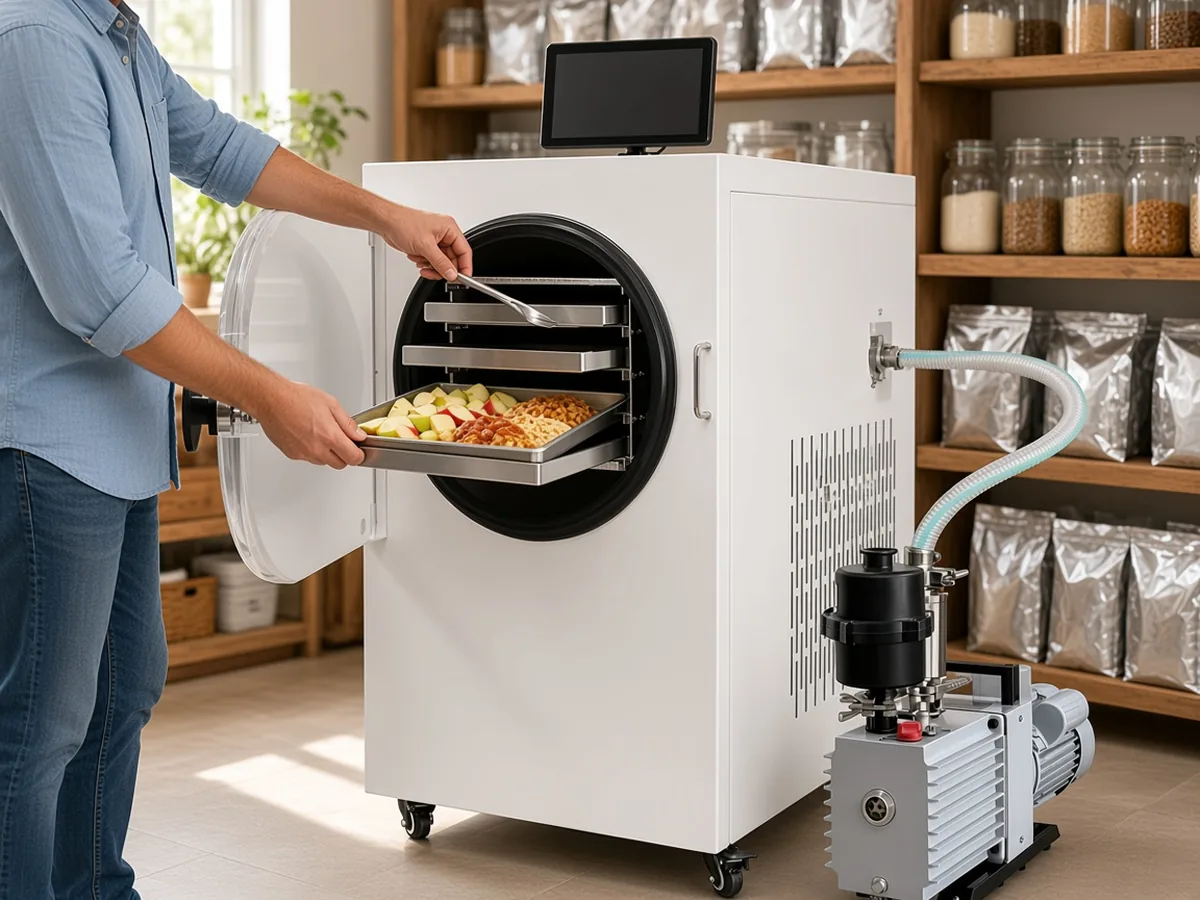
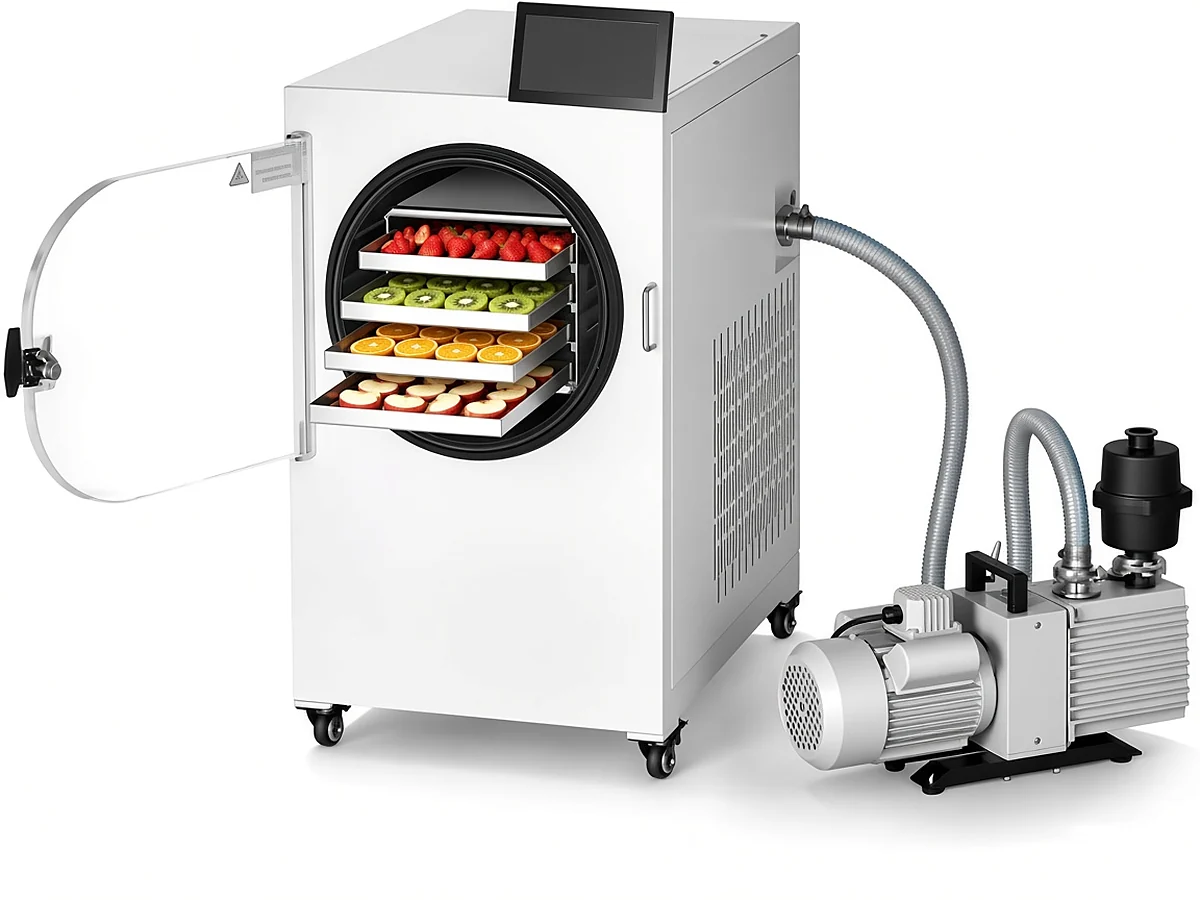
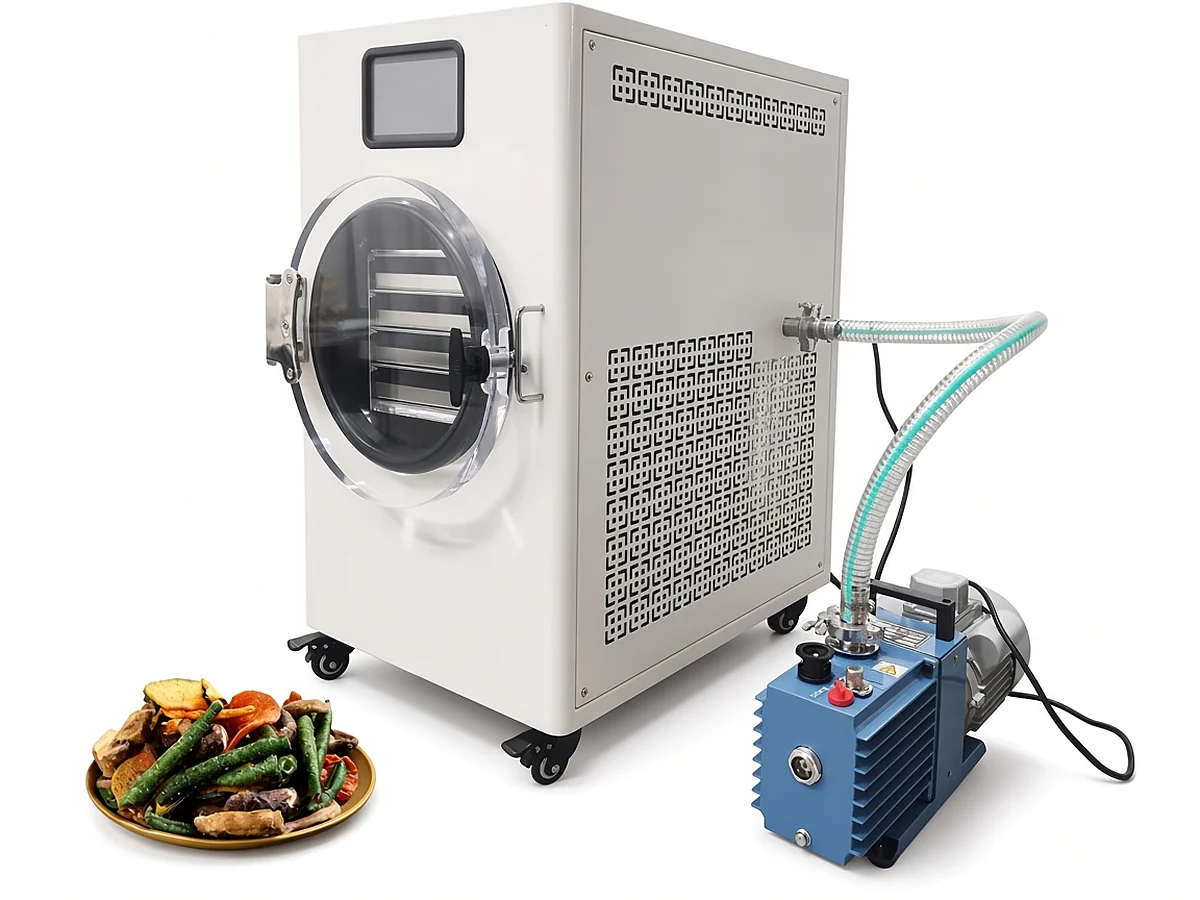
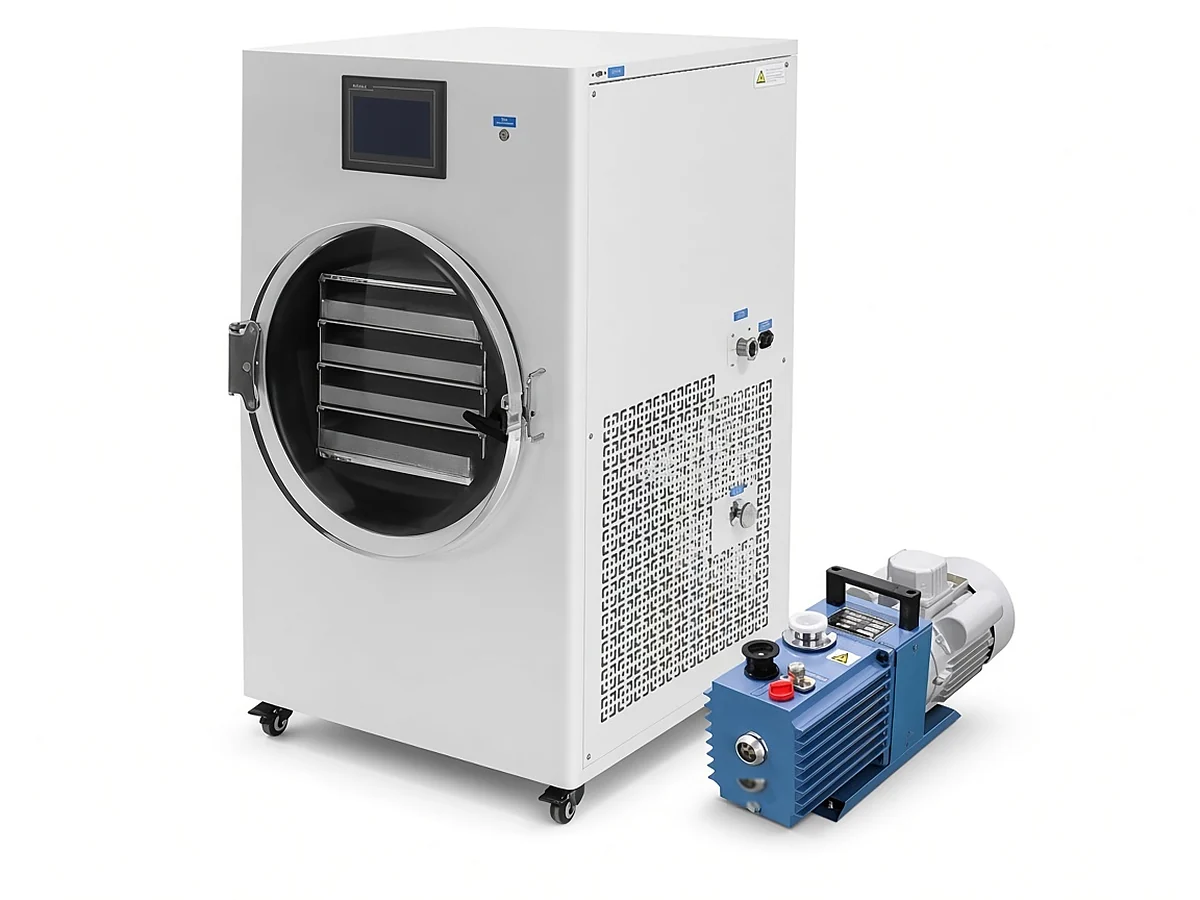
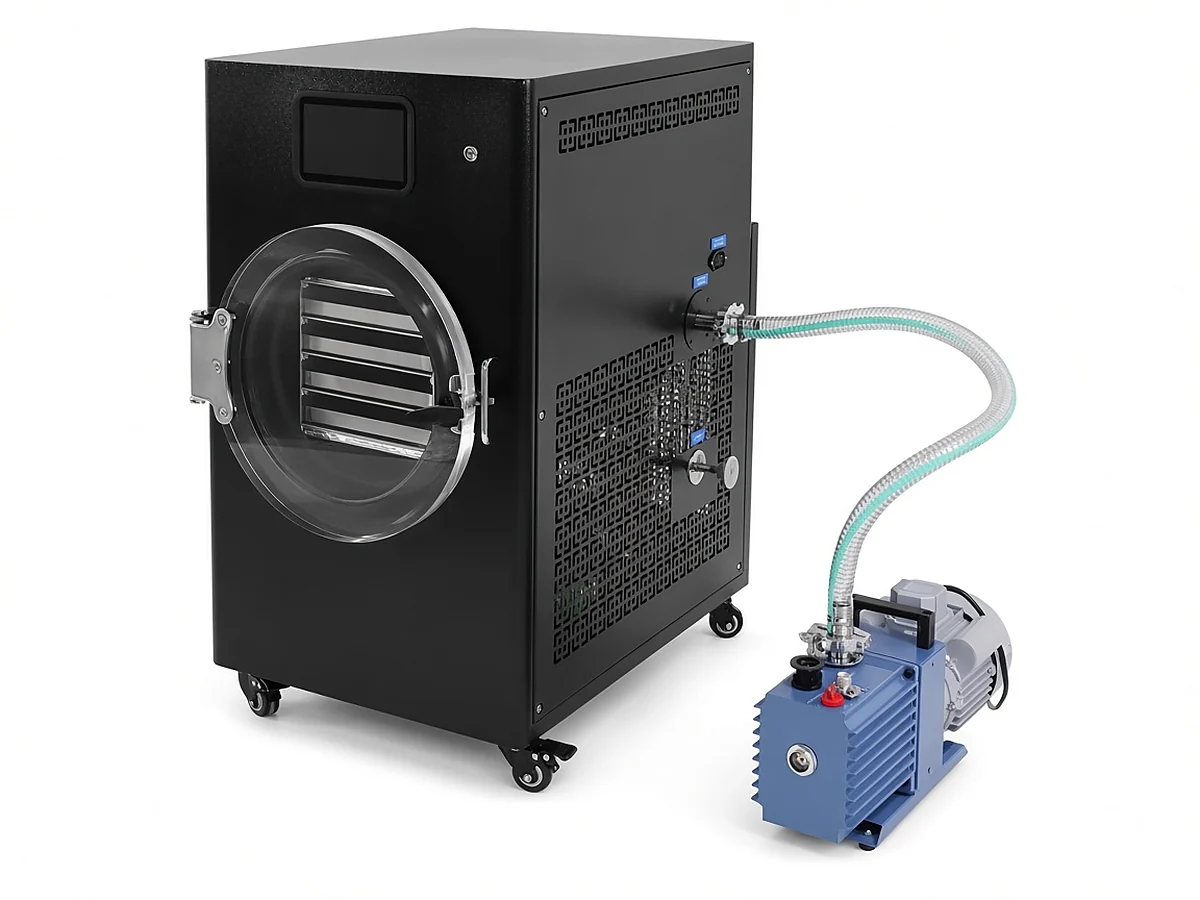
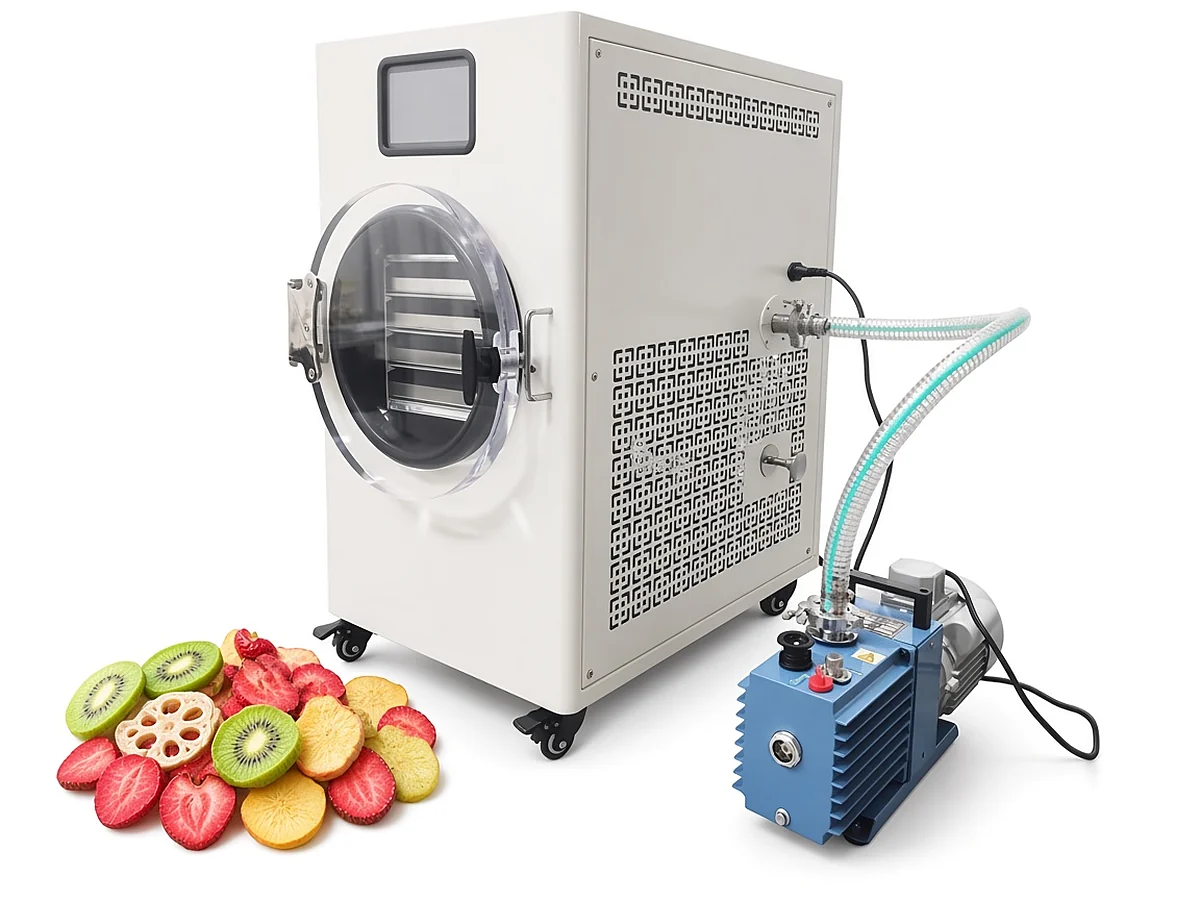
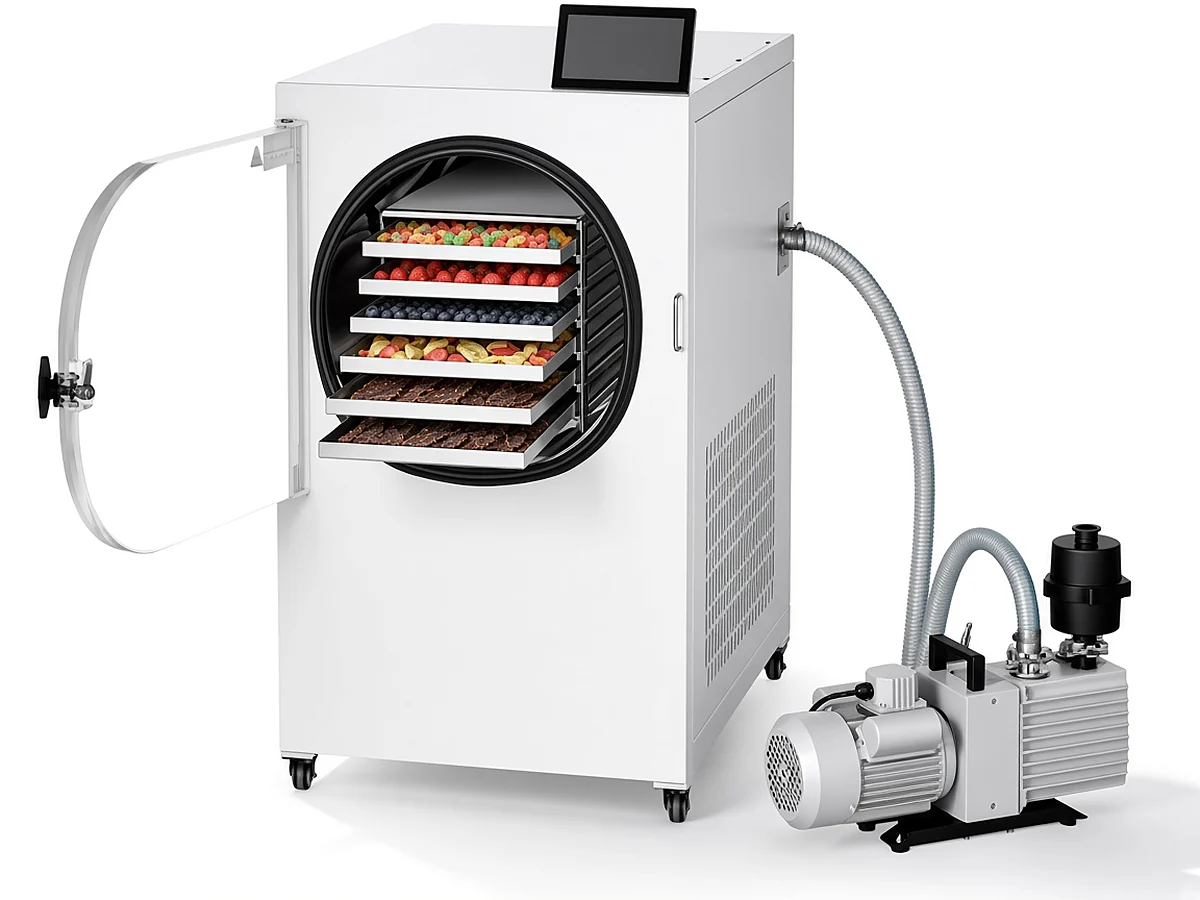
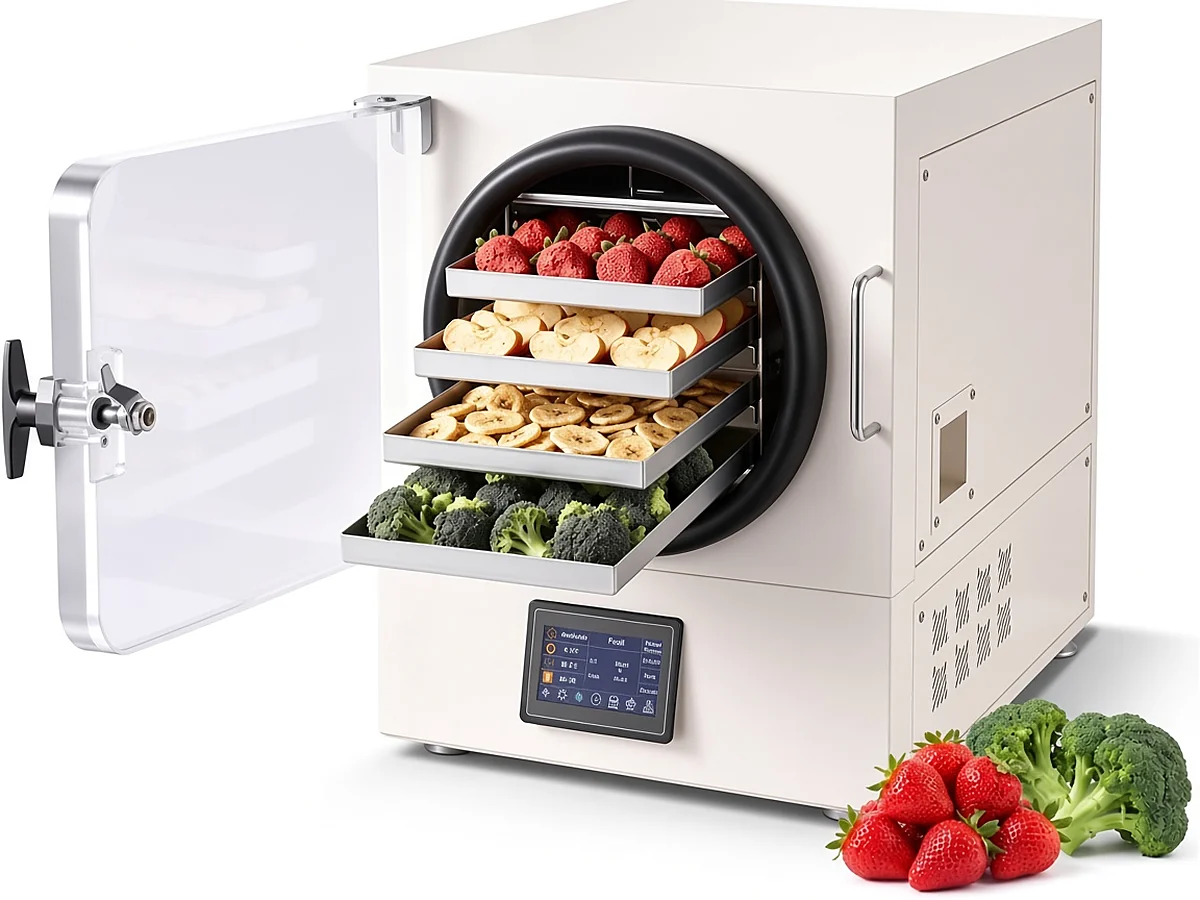
Freeze Drying Basics · Freeze Dryers, Mylar Bags, Vacuum Pump
Updated 30 October 2026
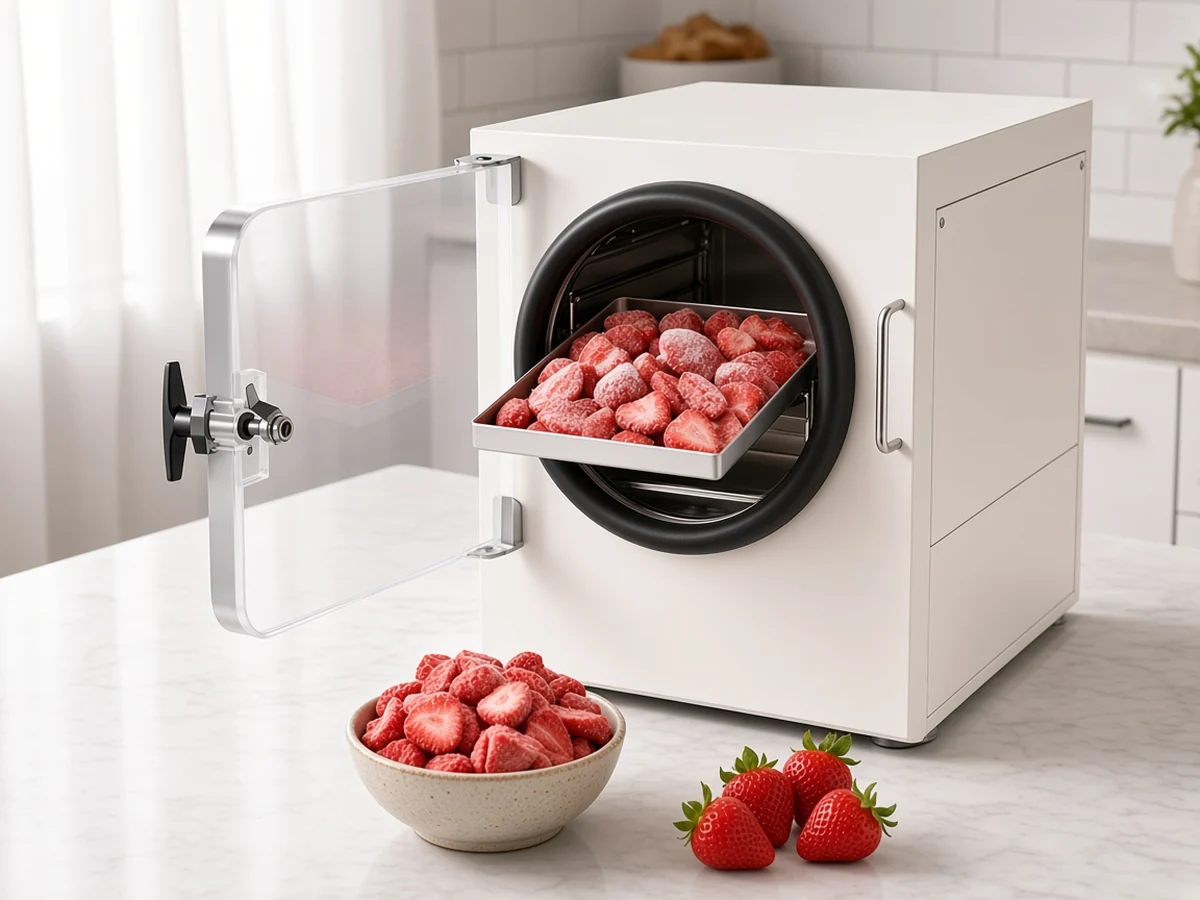
A home freeze dryer looks like a small fridge with a round window, but what happens inside is closer to a lab process than to cooking. Food is frozen hard, the air is pumped out of the chamber, and the ice in the food turns straight into vapour without ever melting. What is left keeps its shape and most of its flavour, and it weighs a fraction of what it did.
This guide explains the three stages of freeze drying in plain terms, then maps them onto what you will actually see on the screen of a home machine. It finishes with a checklist of what a household needs before buying one. The process is the same whichever brand you choose.
What a home freeze-drying setup includes
Beyond the machine, you need airtight packaging and a sealer to keep freeze-dried food dry.
A genuine home freeze dryer (Required): You need a vacuum pump, sealed chamber and refrigerated cold trap; dehydrators cannot do this. Our guide to home freeze dryers on Amazon compares the machines listed there.
Mylar bags and oxygen absorbers (Required): Finished food must be packed quickly in airtight, light-proof packaging. Utah State University Extension suggests Mylar of 5 to 7 mil without windows; our Mylar sealing guide covers bag thickness and absorber sizes.
Impulse heat sealer (Highly Recommended): A reliable seal on Mylar is what makes long-term storage work. Check that the sealer's maximum thickness covers the bags you buy.
The short version
Freeze drying removes water from frozen food by sublimation, which is ice changing directly into water vapour. That only happens at very low pressure, so the machine needs three things working together: a refrigeration system to freeze the food and trap the vapour, a vacuum pump to lower the pressure, and gentle shelf heaters to keep the process moving. The University of Minnesota Extension and Utah State University Extension both describe it as three steps: freezing, primary drying and secondary drying.
Stage 1: Freezing
First, all of the water in the food has to become ice. Minnesota and Penn State Extension give −30 °F to −50 °F for this stage, and manufacturers publish their own figures. The point everyone agrees on is that the food must be frozen solid, well below the temperature of a household freezer, before the vacuum starts.
This matters more than it sounds. Harvest Right's owner's manual, for example, says not to skip the machine's freezing stage even with pre-frozen food, and warns that drying food with even a little unfrozen moisture in it reduces the performance and life of the vacuum pump. Liquid water in the chamber can boil off faster than the refrigeration can capture it, sending moisture toward the pump.
Stage 2: Primary drying (sublimation)
Once the food is frozen, the vacuum pump pulls the air out of the chamber. The physics is simple: ice can only turn straight into vapour below water's triple point, a pressure of about 611 pascals, or roughly 4,580 mTorr. Home machines work far below that. As one example of the working range, Harvest Right's owner's manual says drying can begin at 500 mTorr and that a reading between 100 and 900 mTorr during drying means the machine is working normally.
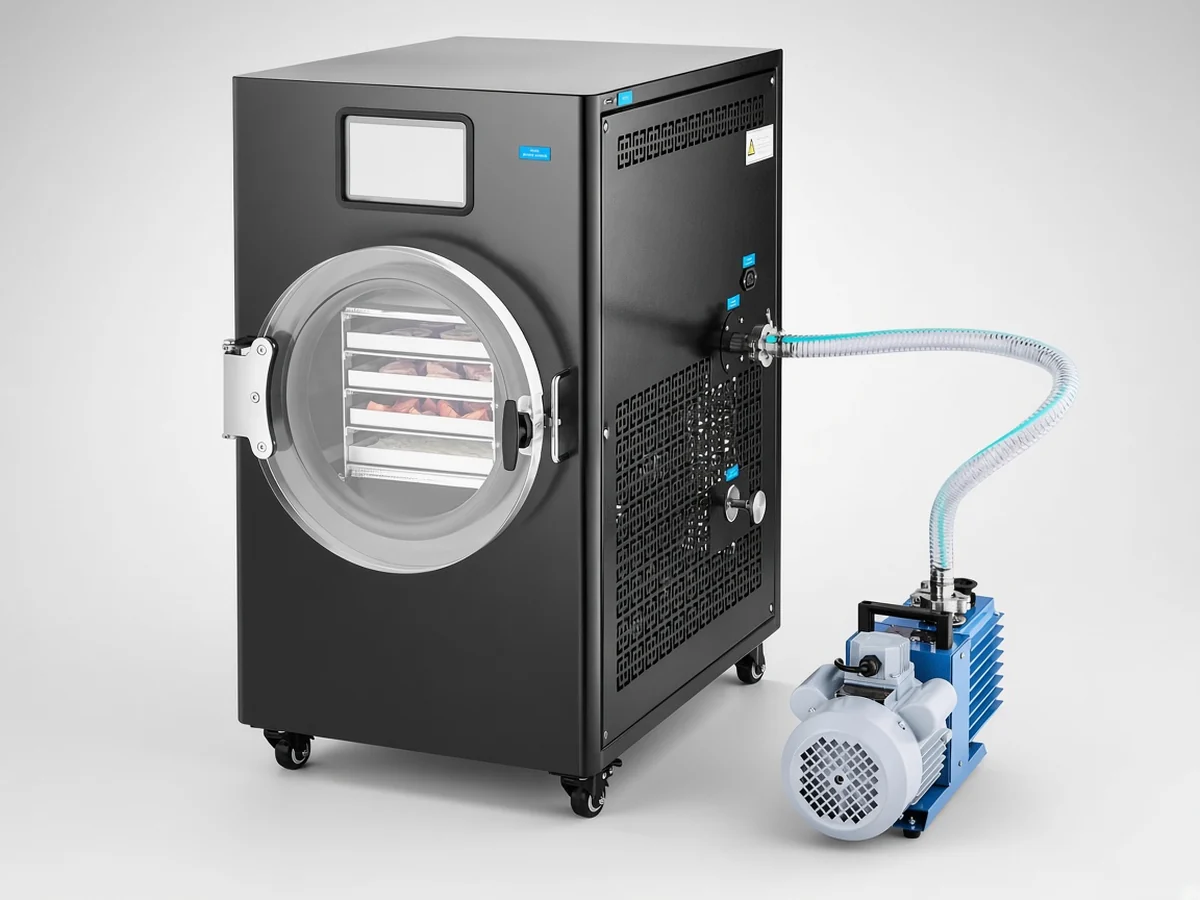
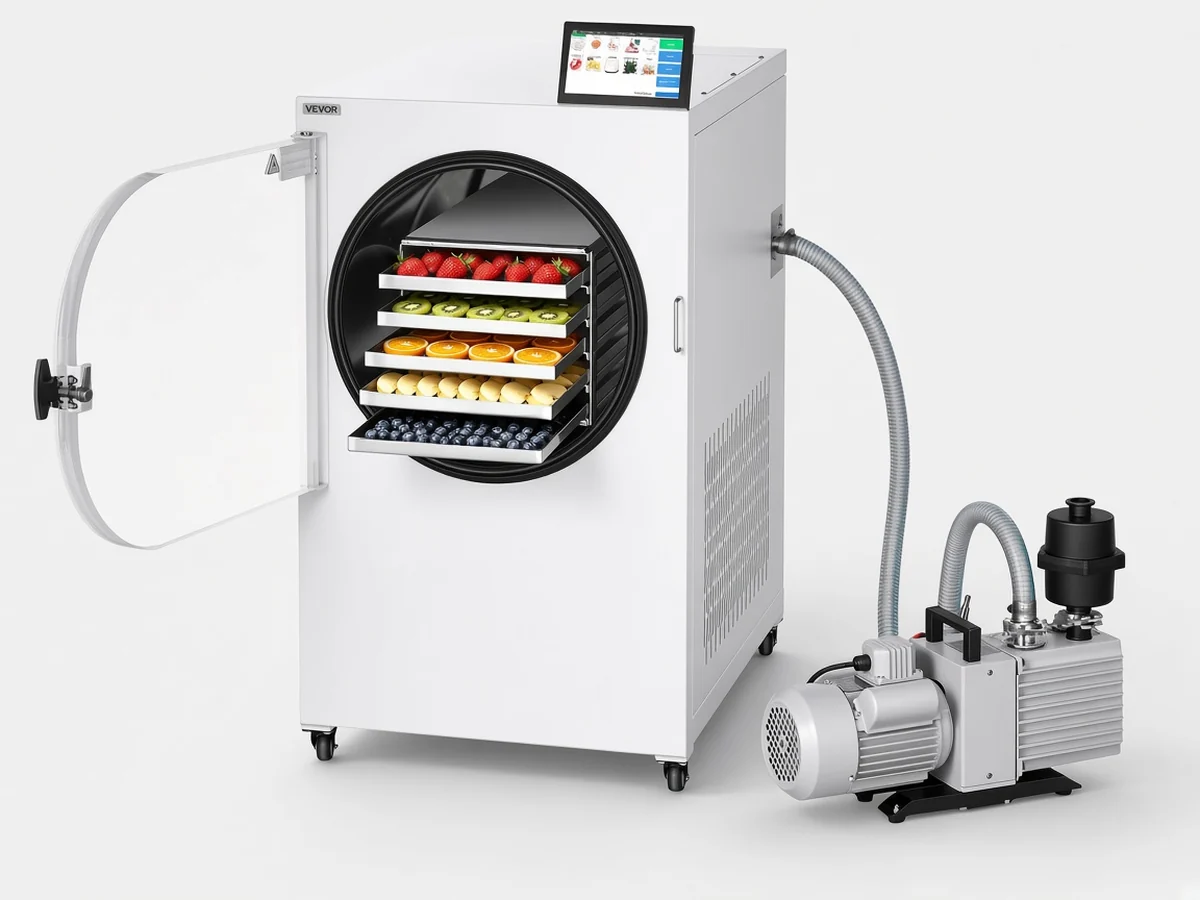
Under that vacuum, the shelves warm slightly to give the ice the energy it needs to sublimate. The vapour does not go into the pump. It travels to the coldest surface in the chamber, the refrigerated walls, and freezes there as frost. That is why the inside of a freeze dryer is coated in ice at the end of a batch, and why the machine needs a defrost before the next one. Makers publish different cold-trap ratings and designs. The VEVOR HFD-4 manual, for example, rates its separate condenser at −35 °C (−31 °F) or colder with no load.
The heat is deliberately gentle, because heating frozen food too fast can make it collapse and spoil its texture. According to Minnesota Extension, this stage removes up to about 90 percent of the water.
Stage 3: Secondary drying (desorption)
The last stage removes water that is bound to the surfaces of the food rather than frozen as ice. Shelf temperatures rise further, and Minnesota Extension says this step removes another 1 to 2 percent of the water content. Penn State puts the total removed by the whole process at up to 98 percent.
The result is food with very low water activity, a measure of how much water is available for microbes and chemical reactions. Utah State says properly freeze-dried foods typically fall between about 0.08 and 0.33 on a scale of 0 to 1. At that level most bacteria and moulds cannot grow, but they are not killed either, which is why freeze drying is a preservation method rather than a safety step. Our guide to freeze drying and food safety covers what that means for meat, eggs and other higher-risk foods.
What you see on a home freeze dryer
Most home units hide the physics behind a start button. Here is how the three stages show up in practice, using the published manuals.
Stage | What the machine is doing | What you see |
|---|---|---|
Pre-cool | Chilling the empty chamber | A preparing or cooling screen with a countdown before you load trays |
Freezing | Refrigeration only; no vacuum yet | Frost forming inside the chamber; the pump stays off |
Primary drying | Pump running, shelves gently heated | Pressure reading falls into the hundreds of mTorr; frost builds on the chamber walls |
Final or extra dry | Higher shelf temperature to remove bound water | A final dry countdown, then a beep when the batch is finished |
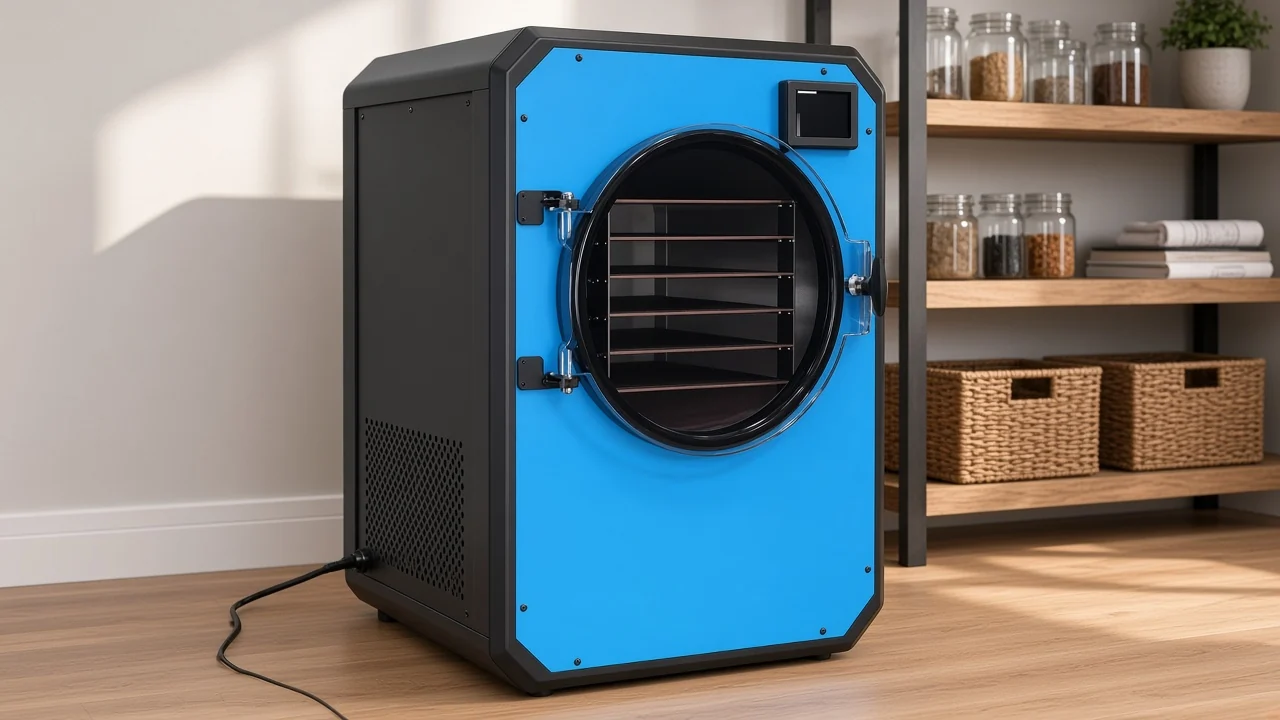
Stage names, defaults and pressure targets vary by brand, so read the table as a general pattern. Manuals differ: Harvest Right's describes a preparing step, then freezing, vacuum freeze, drying and final dry stages, while Stay Fresh's says main drying starts once the chamber reaches 550 mTorr or lower. The Blue Alpine manual gives defaults of 8 hours freezing and 24 hours drying, and VEVOR's HFD-4 manual has owners set the number of stages, each stage's temperature and its time, with a pre-freeze stage first and vacuum stages after.
Whatever the brand, the machine's signal is only a starting point. The manuals and extension sources we read all advise breaking open the thickest pieces and checking for cold or damp spots before packaging.
How long does a batch take?
Longer than most people expect. University of Arizona Extension's Basics of Home Freeze Drying puts freeze drying at 20 to 40 hours, compared with 4 to 16 hours for most foods in a dehydrator. Manufacturer figures vary too: Blue Alpine's manual says 18 to 36 hours for the whole process, and VEVOR's HFD-4 manual gives no time at all. Thickness, sugar, water content, load size and room temperature all change the time. Our guide to why freeze drying batches take so long goes through each factor.
What freeze drying does not handle well
Freeze drying only removes water. Fat and oil stay behind, which is why high-fat foods dry poorly and can go rancid in storage. The sources agree on a short list of poor candidates:
High-fat foods: butter, oils, mayonnaise and similar foods, because fat does not freeze and dry the way water does.
Very sugary foods: honey, jam and syrup on their own, according to Arizona Extension. Sugar holds on to water and slows drying.
Foods with skins or casings: whole blueberries, grapes and sausages need cutting or piercing so the vapour can escape.
Baked goods: the LSU AgCenter FAQ lists breads, cakes and muffins among foods that do not freeze dry well.
Many of these work as an ingredient in a mixed dish even when they fail on their own, which Arizona Extension notes for things like butter and chocolate.
Freeze drying compared with dehydrating
A dehydrator uses warm moving air to evaporate water. A freeze dryer removes water from frozen food under vacuum. Penn State says freeze-dried food lasts longer, weighs less and keeps its colour and shape better, and that more kinds of food, such as milk, eggs and whole meals, can be freeze dried. It also notes the downsides: a high purchase price, a lot of space and more electricity than a dehydrator. Utah State goes further and says home freeze dryers often use several times as much energy. We compare the two in detail in freeze dryer vs dehydrator. If you shop on Amazon, be aware that many products listed as "freeze dryers" are hot-air dehydrators with no vacuum pump; our guide to dehydrators sold as freeze dryers shows how to tell them apart.
What you need before buying one
The right outlet. Requirements differ by model; larger machines can need a dedicated 20 A circuit. VEVOR's HFD-4 manual says the machine is built for either 120 V or 220–230 V, so check the nameplate matches your supply. Manuals generally warn against extension cords and power strips.
A sturdy, ventilated spot. Penn State notes the machine weighs over 100 lb and the pump around 35 lb. You need a level surface with clear space around the vents, and room for the drain hose to run down to a bucket.
A reasonable room temperature. Recommended ranges vary by source, but most sit somewhere between the mid-40s and about 80 °F. Very hot garages slow batches and strain the refrigeration.
Tolerance for noise and time. Penn State compares the drone of the machine and pump to a vacuum cleaner, and the end-of-batch beep can go off in the middle of the night.
A plan for packaging. Mylar bags, oxygen absorbers and a heat sealer are the usual long-term setup. See how to store freeze-dried food.
A budget for running costs. Electricity, pump oil and packaging add up over a year. Our freeze dryer running cost breakdown works out the cost per hour from published wattage.
Is a home freeze dryer worth it?
That depends on how often you will use it. Utah State calls freeze drying the gold standard for food quality but notes that it takes longer, costs more up front and uses more energy than other drying methods. A household that preserves a garden harvest, buys in bulk or wants lightweight meals for travel will use a machine far more than one buying it for occasional snacks. If you are comparing machines, our freeze dryer vs dehydrator guide helps you decide whether you need one, and our guide to the best home freeze dryers on Amazon covers the vacuum freeze dryers listed there.
Related on Amazon: VEVOR SJ-08H Vacuum Freeze Dryer.
Related on Amazon: HNZXIB FD-05H Home Freeze Dryer.
Amazon listings for the products in this guide
Direct links to the Amazon listings for the products named or shown in this guide:
- VEVOR HFD-4 Vacuum Freeze Dryer (4 trays) – View on Amazon
- VEVOR Vacuum Freeze Dryer, 5 Trays, 10 Presets – See the Amazon listing
- HNZXIB FD-05H Home Freeze Dryer, 4 Trays – Check availability on Amazon
- Blue Alpine Medium Select Freeze Dryer – View on Amazon
Frequently asked questions
Does freeze drying cook food?
No. Food is frozen and then dried under vacuum with gentle shelf heat, so it does not cook.
What is the difference between freeze drying and dehydrating?
Freeze drying removes water as vapour from frozen food under vacuum; dehydrating evaporates it with warm air. Freeze-dried food is lighter, crisper and usually keeps longer. For a cited list of foods that do and do not belong in a home freeze dryer, see what can you freeze dry.
Related guides
If you are still deciding whether freeze drying suits your kitchen, read freeze dryer vs dehydrator next, then see our guide to the best home freeze dryers on Amazon. Already own one? Keep the vacuum error checklist and pump oil guide to hand. You can also browse all DryFreezeWise guides or start from the freeze drying learning hub.