
Dehydrator Temperature Chart
Published 11/14/2026 · Updated 11/19/2026
Quick answer
Official home-drying temperatures from the NCHFP and USDA FSIS: 140 °F for fruit and vegetables, 95-115 °F for herbs, and 130-140 °F for jerky after a 160 °F heat step.
Products mentioned in this guide
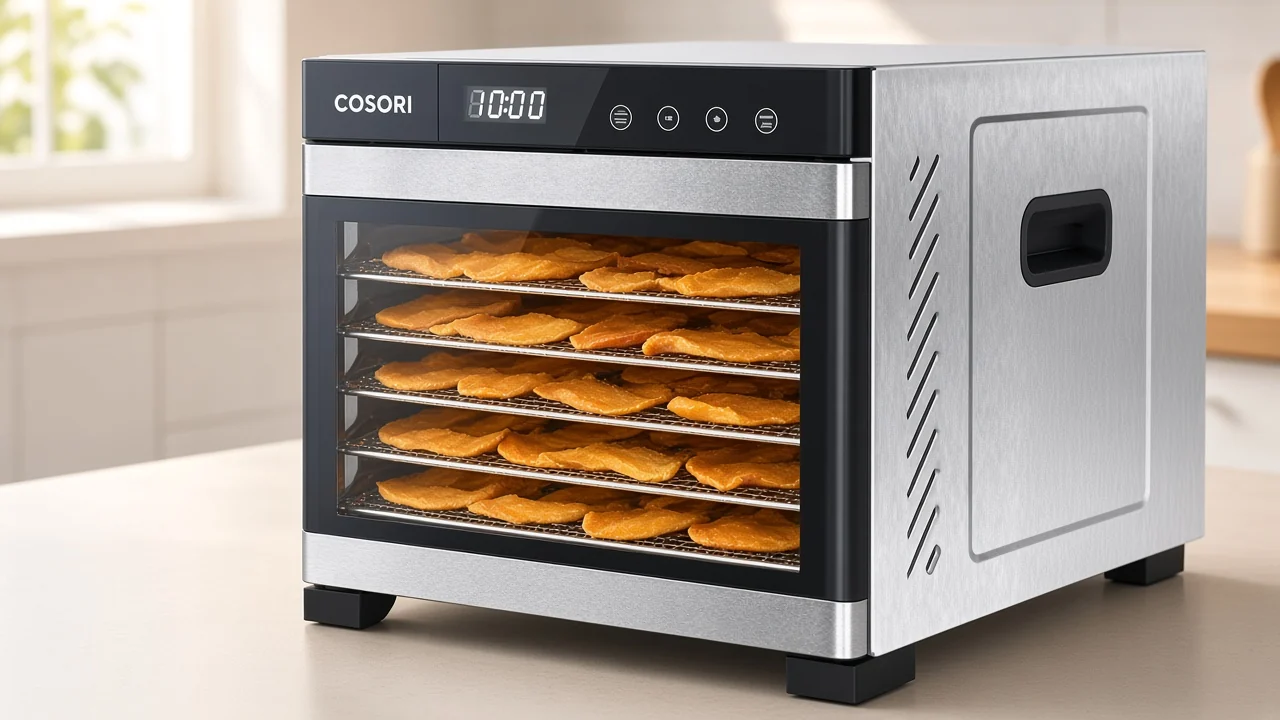
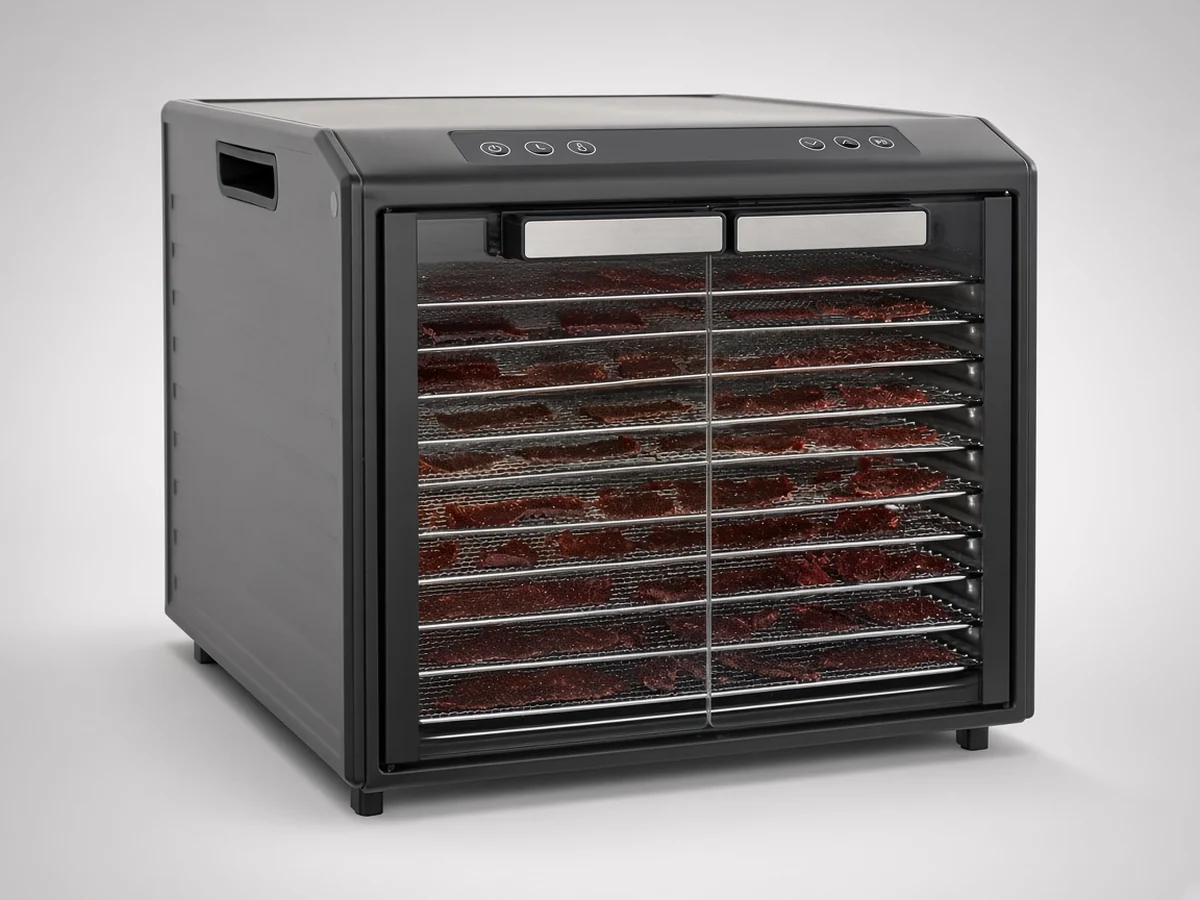
 Excalibur Select DH08SCSS13 Food Dehydrator, 8 TraysExcalibur · Dehydrator
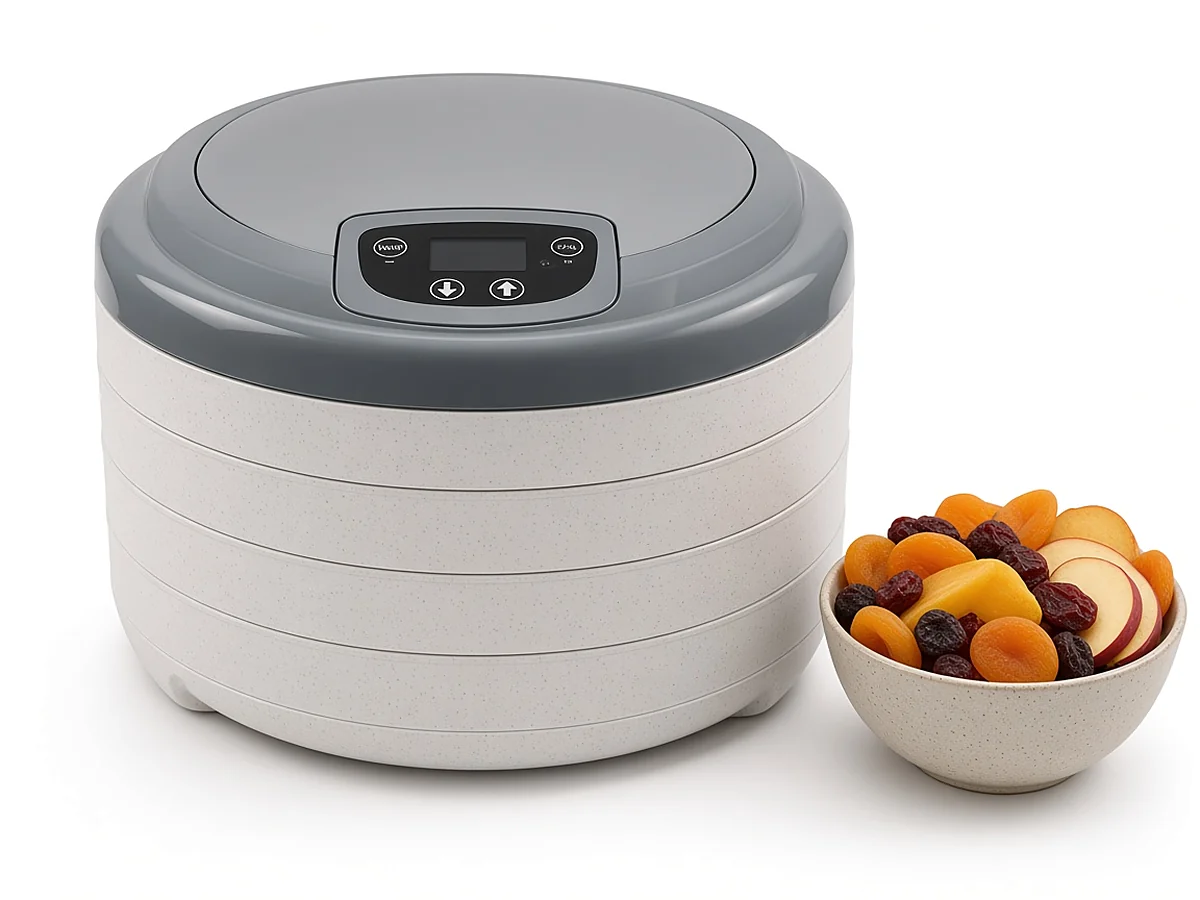
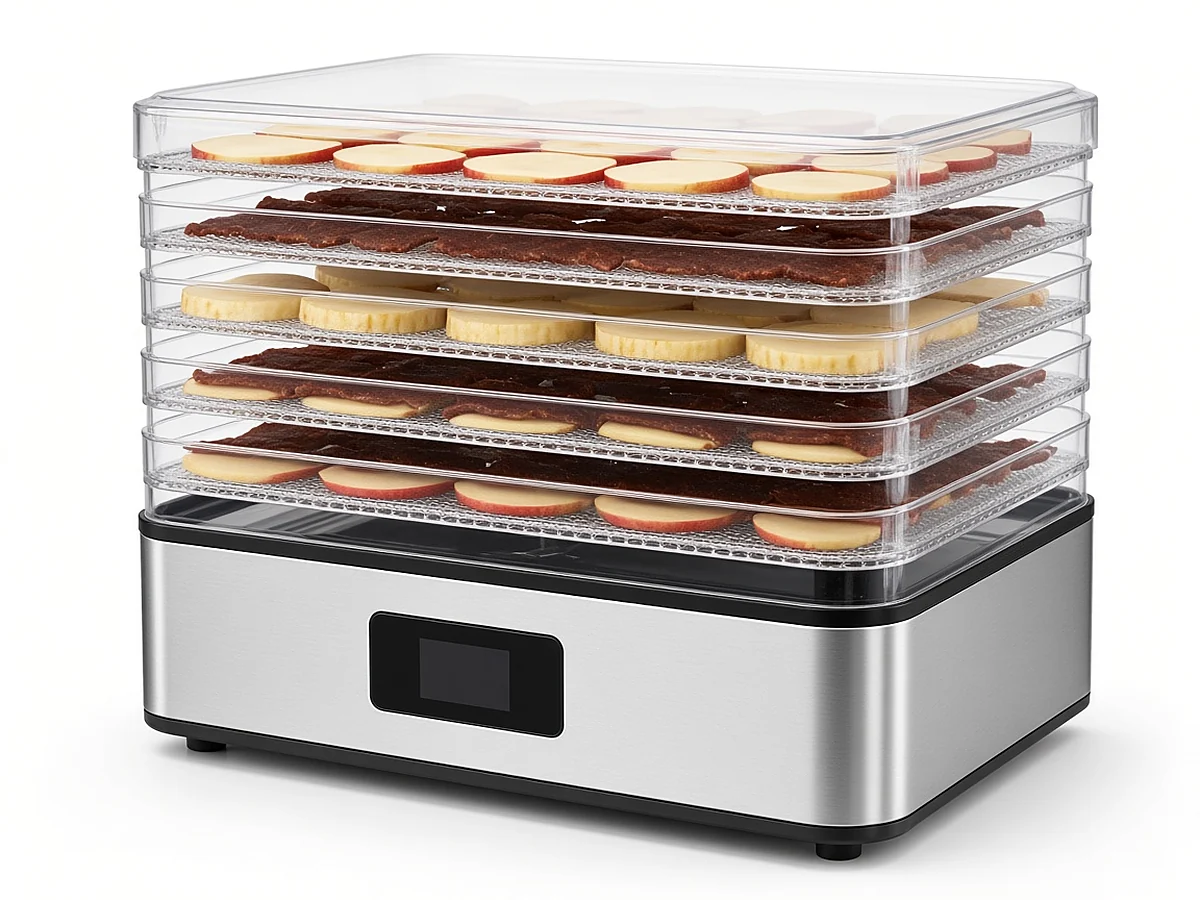
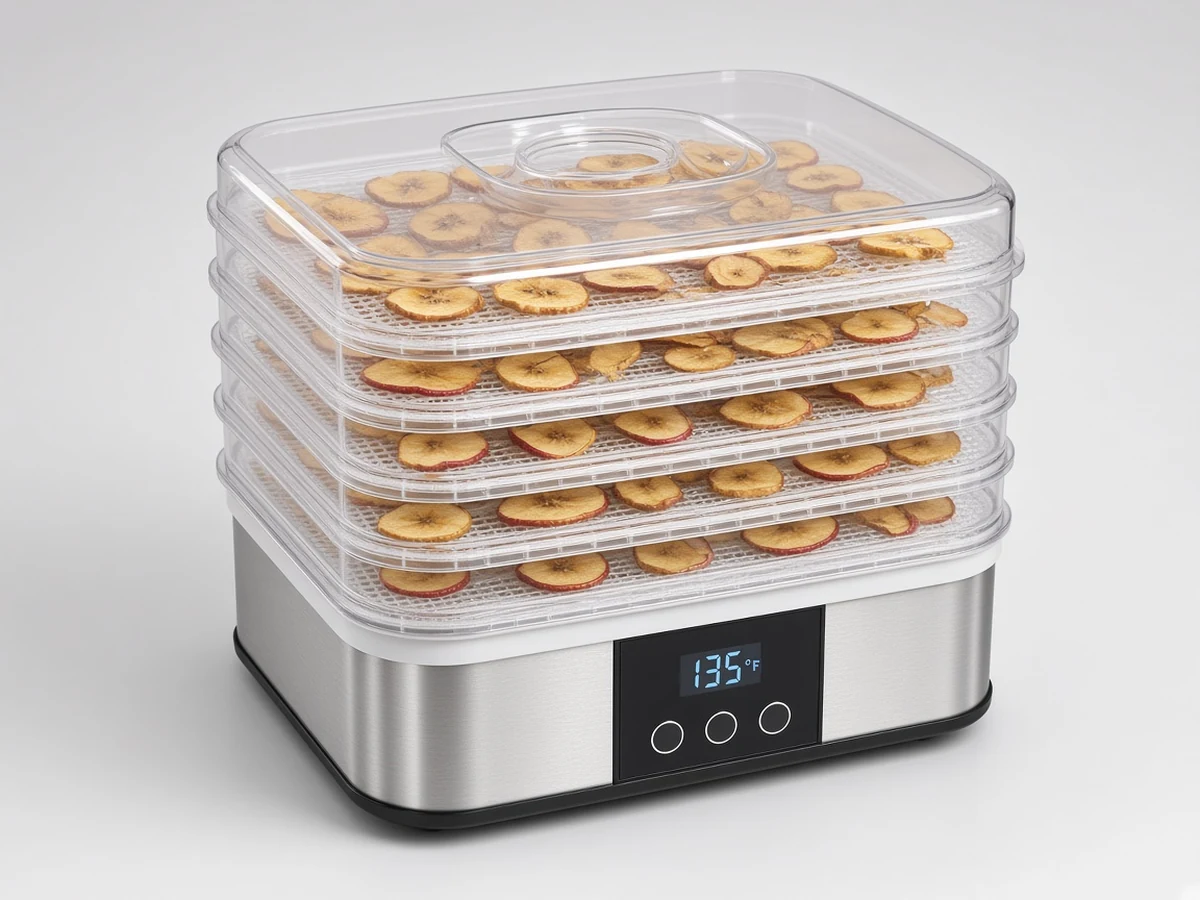 Hamilton Beach 32100A Digital Food Dehydrator, 5 TraysHamilton Beach · Dehydrator
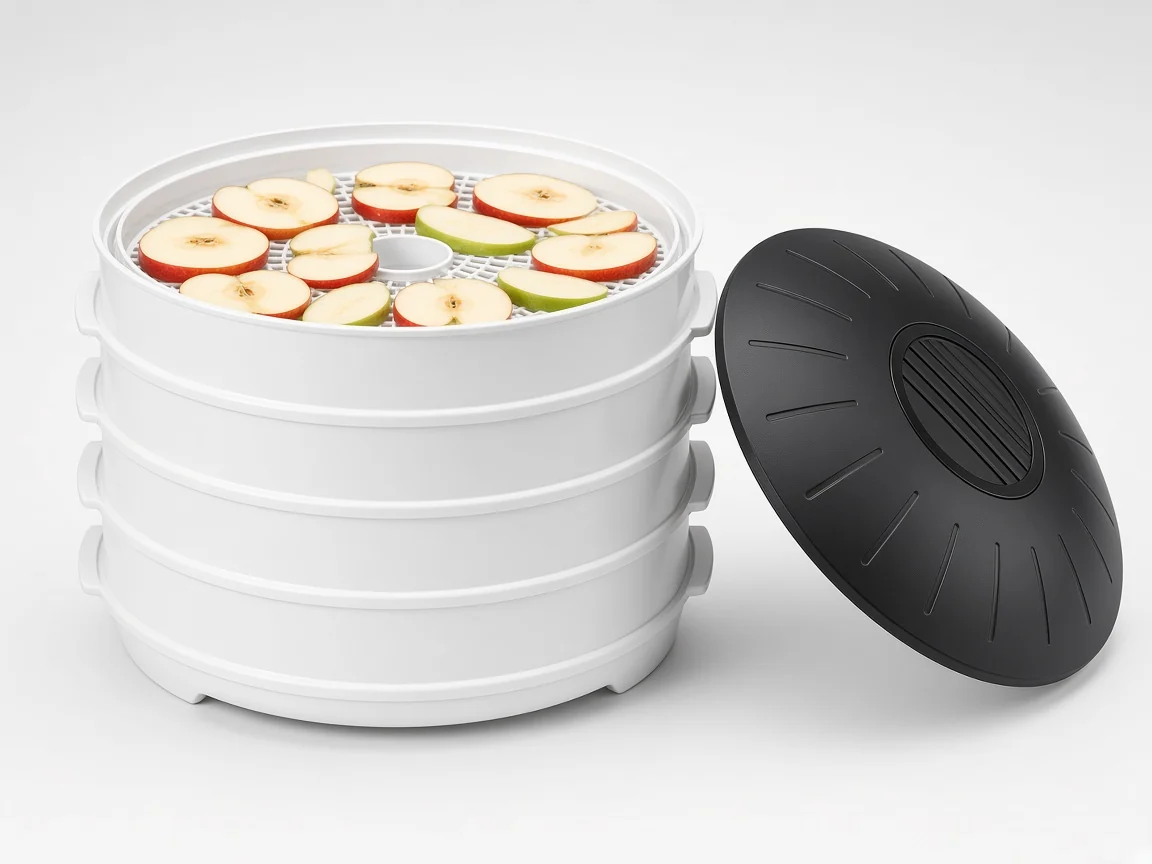
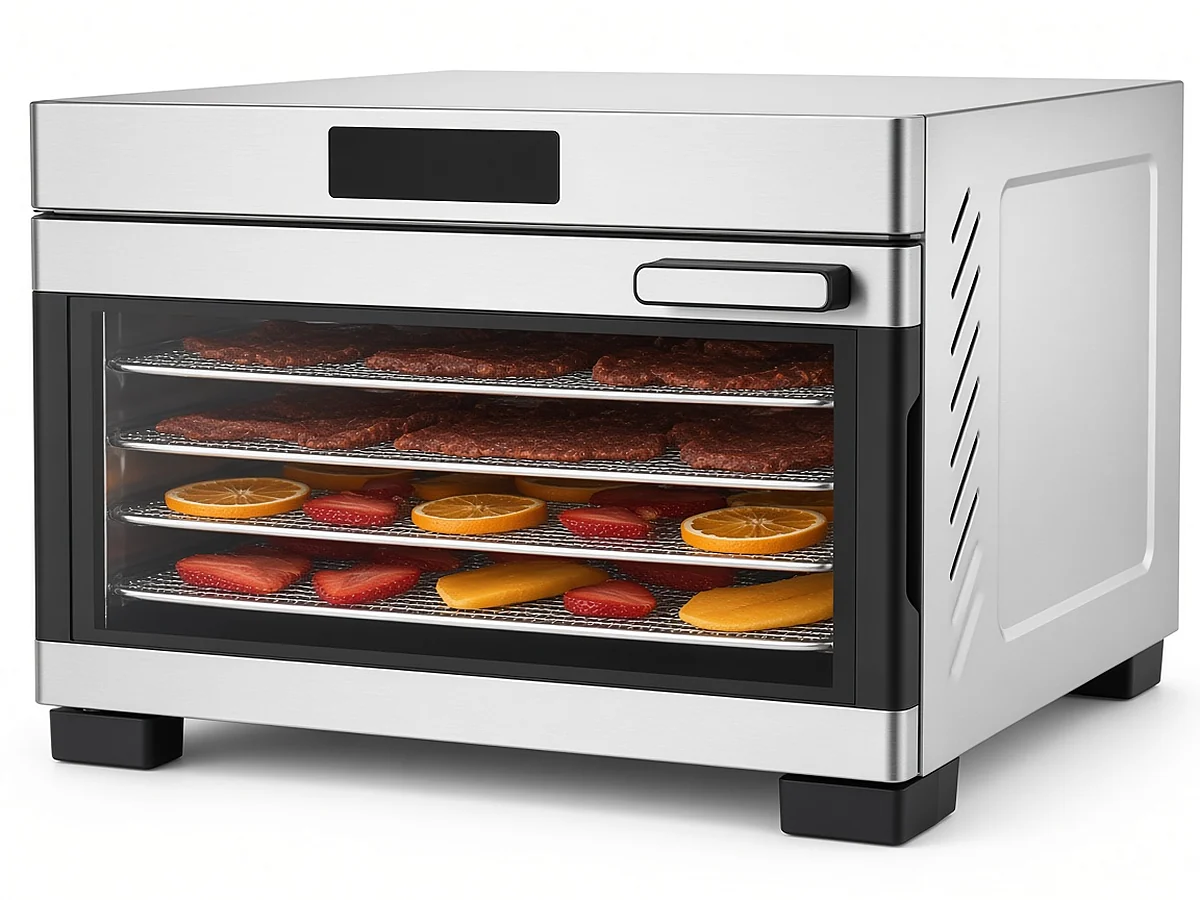
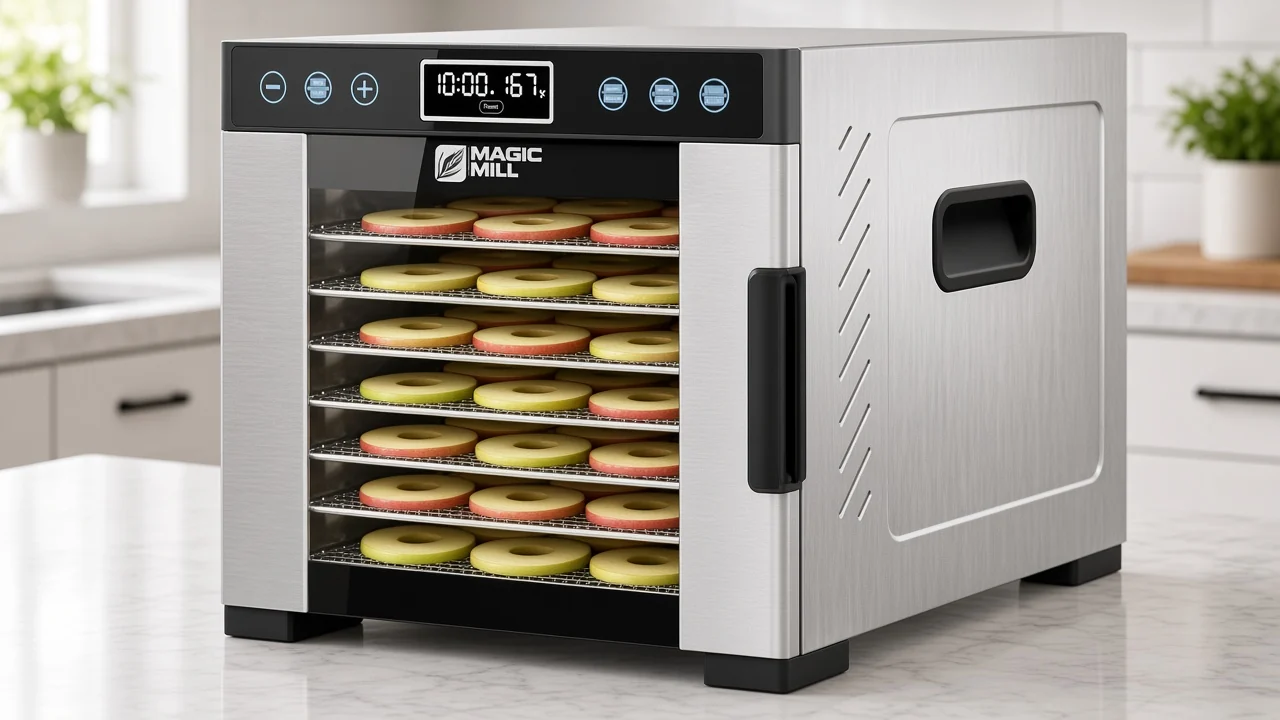
 Magic Mill MFD-5000 Food Dehydrator, 5 Stainless TraysMagic Mill · Dehydrator
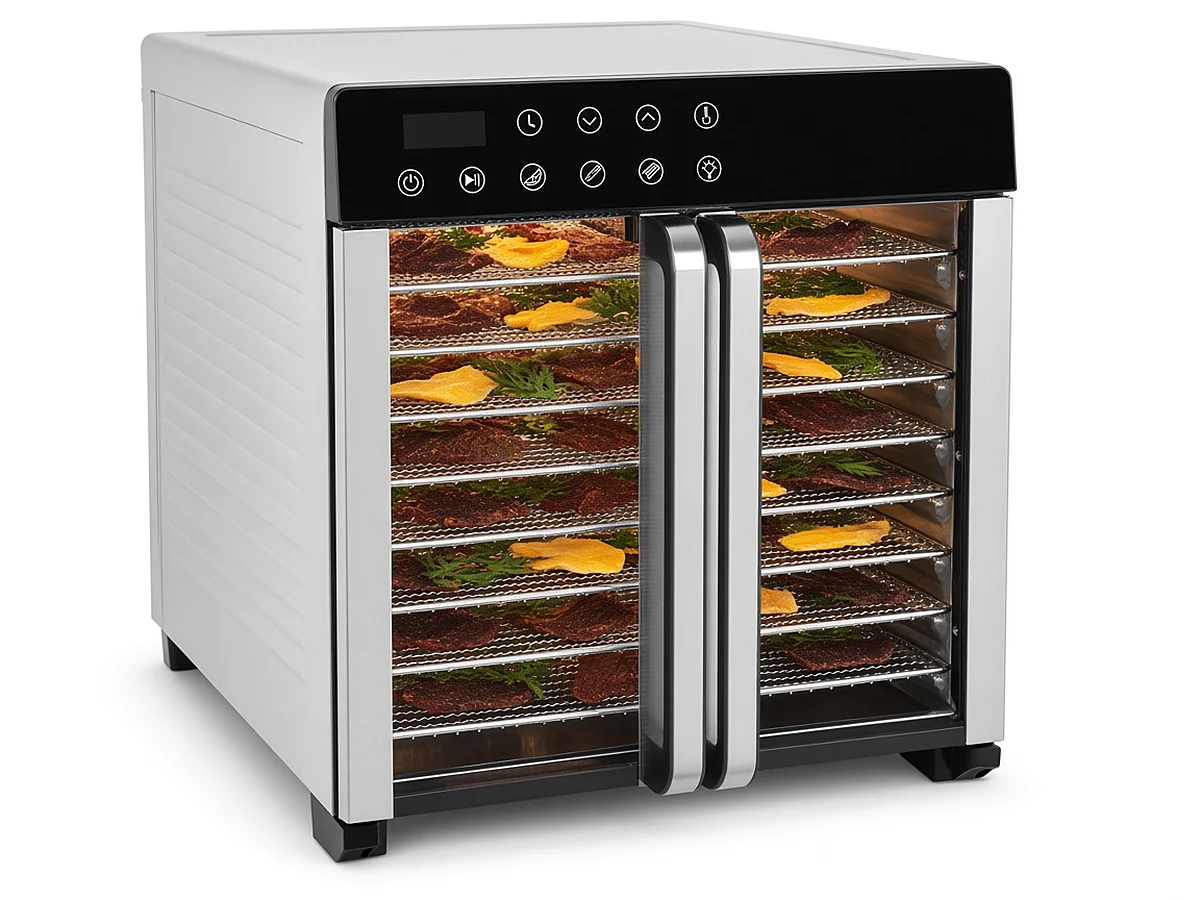
 Magic Mill Pro MFD-7700 Food Dehydrator, 7 Stainless TraysMagic Mill · Dehydrator
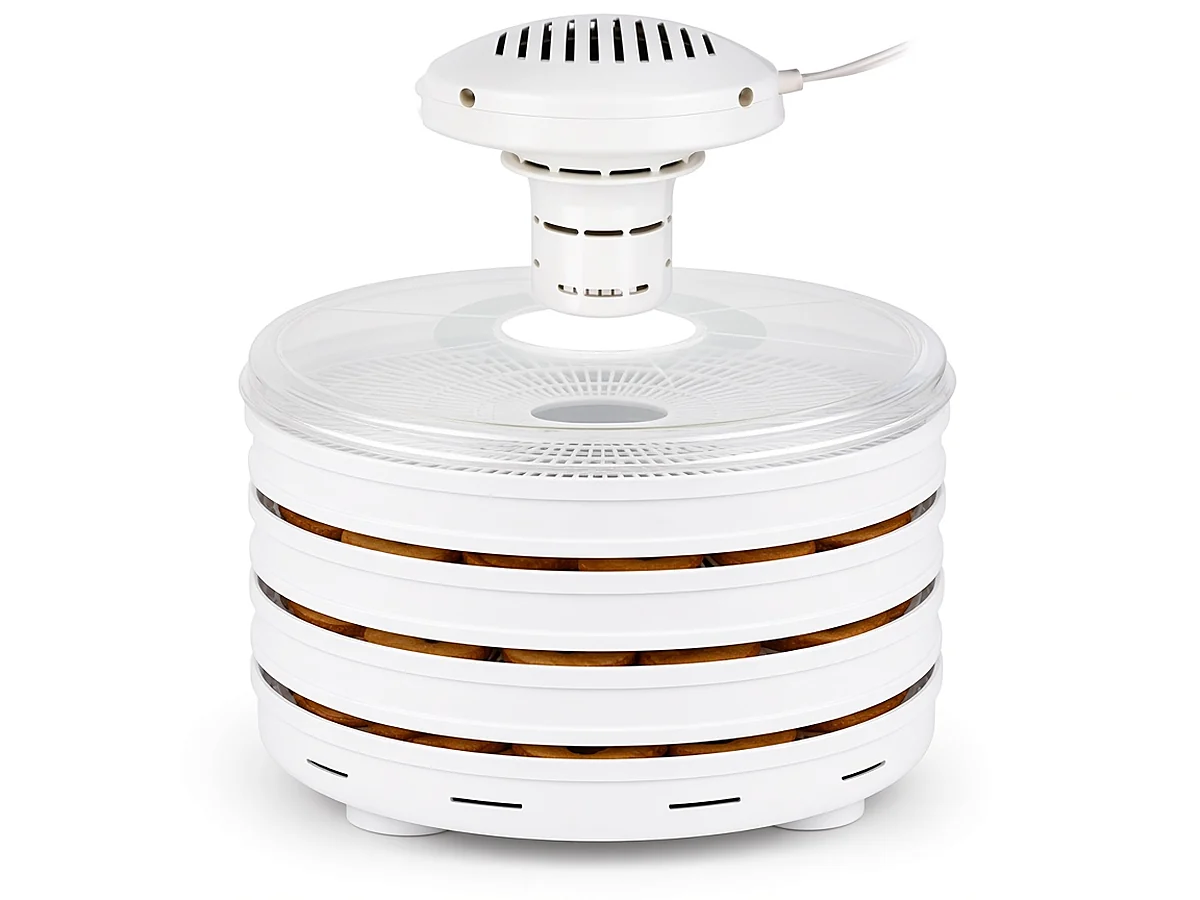
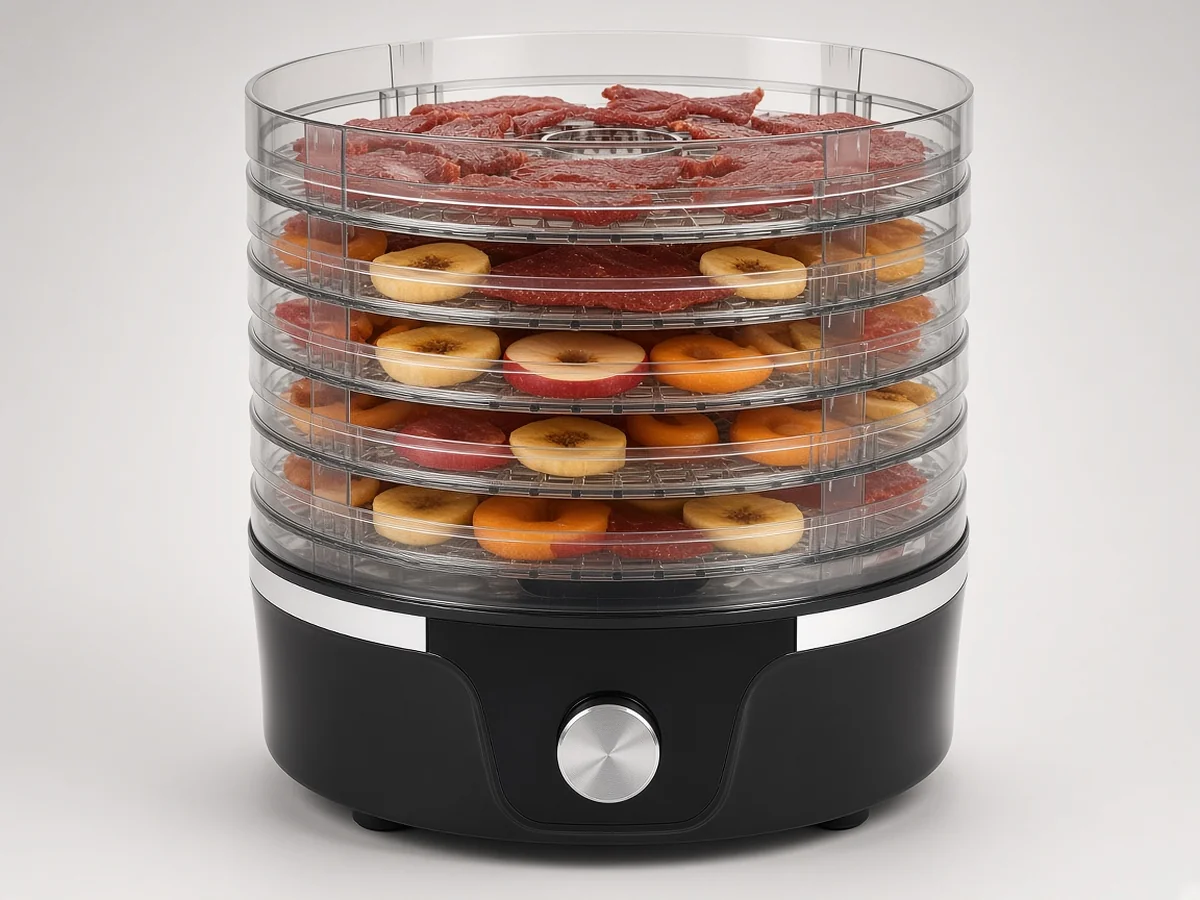
How-To · Food Dehydrators, Fruit, Jerky
Last updated: November 2026
Quick verdict: A food dehydrator temperature chart is short, because most foods share one setting. The National Center for Home Food Preservation (NCHFP) says home dehydrators are designed to dry food at about 140 °F, and that is the temperature it uses for fruits and vegetables. Herbs are the low-heat exception, at 95-115 °F (up to 125 °F in humid areas). Jerky is the safety exception: USDA FSIS says to heat meat to 160 °F, or poultry to 165 °F, then dry at a constant 130-140 °F. Times vary; always cool a test piece before you decide a batch is done.
This chart follows those official sources, not unverified blog tables. For the method behind each row, see how to dehydrate fruit, how to dehydrate herbs and how to make jerky in a dehydrator. A first-batch walkthrough is in how to use a food dehydrator.
The dehydrator temperature chart
Food | Dehydrator setting | Done when | Source |
|---|---|---|---|
Fruits | 140 °F | Leathery and pliable, no moist spots | NCHFP |
Fruit leather | 140 °F | No sticky spots; peels cleanly | NCHFP / Illinois Extension |
Vegetables | 140 °F | Brittle or crisp (about 10 percent moisture) | NCHFP |
Herbs | 95-115 °F; up to 125 °F in humid areas | Leaves crumble; stems break when bent, usually in 1-4 hours | NCHFP |
Beef or game jerky | Heat meat to 160 °F, then dry at 130-140 °F (NCHFP dries at 140 °F) | Cracks but does not break when bent | USDA FSIS / NCHFP |
Poultry jerky | Heat poultry to 165 °F, then dry at 130-140 °F | Cracks but does not break when bent | USDA FSIS |
Raising the temperature to finish faster can case-harden the outside and trap moisture inside. Clemson Cooperative Extension flags that risk, and it is why the 140 °F fruit and vegetable setting matters more than any shortcut.
How long does each food take?
Times are starting ranges, not timer settings. Slice thickness, humidity, load size and the machine all change the clock. The NCHFP and university extension figures we already use on the site are:
Fruit: Colorado State gives about 6 hours for thin apple slices up to 36 hours for peach halves, at 140 °F, until the fruit is leathery and pliable with no moisture when squeezed.
Vegetables: dry at 140 °F until brittle or crisp. The NCHFP puts properly dried vegetables at about 10 percent moisture, and says they do not need conditioning.
Herbs: the NCHFP gives 1 to 4 hours at 95-115 °F (up to 125 °F in humid areas), until leaves crumble and stems break when bent.
Jerky: the NCHFP says to begin checking after 3 hours. Strips heated in marinade dry faster. Strips that were not preheated may take 10 to 24 hours.
The NCHFP also says home-dried fruit should hold about 20 percent moisture, and recommends conditioning it: pack cooled fruit loosely in sealed jars for 7 to 10 days, shake daily, and if condensation appears, return it to the dehydrator. See how to store dehydrated food.
What temperature range do live machines actually have?
The chart is only useful if your dehydrator can hold the setting. A few documented examples from our Amazon US catalog:
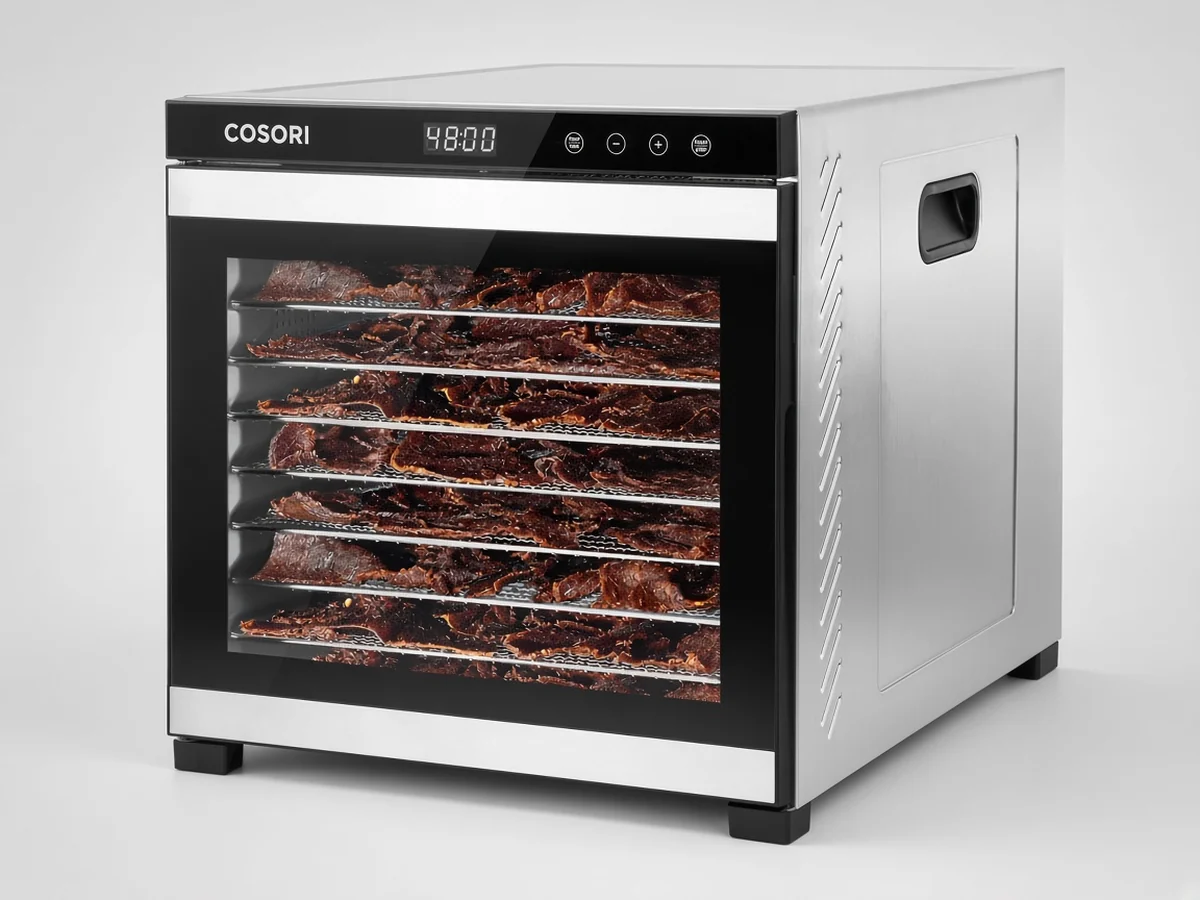
The COSORI CP267-FD lists 95-165 °F, which covers herbs, fruit, vegetables and the jerky drying band.
The COSORI P501 lists 95-176 °F.
The Excalibur Select 8-tray and the 10-tray Select list 85-165 °F, so they can go as low as the herb range and as high as the jerky drying band.
The Nesco FD-79 lists a 160 °F ceiling (bullets 90-160 °F; table 95-160 °F).
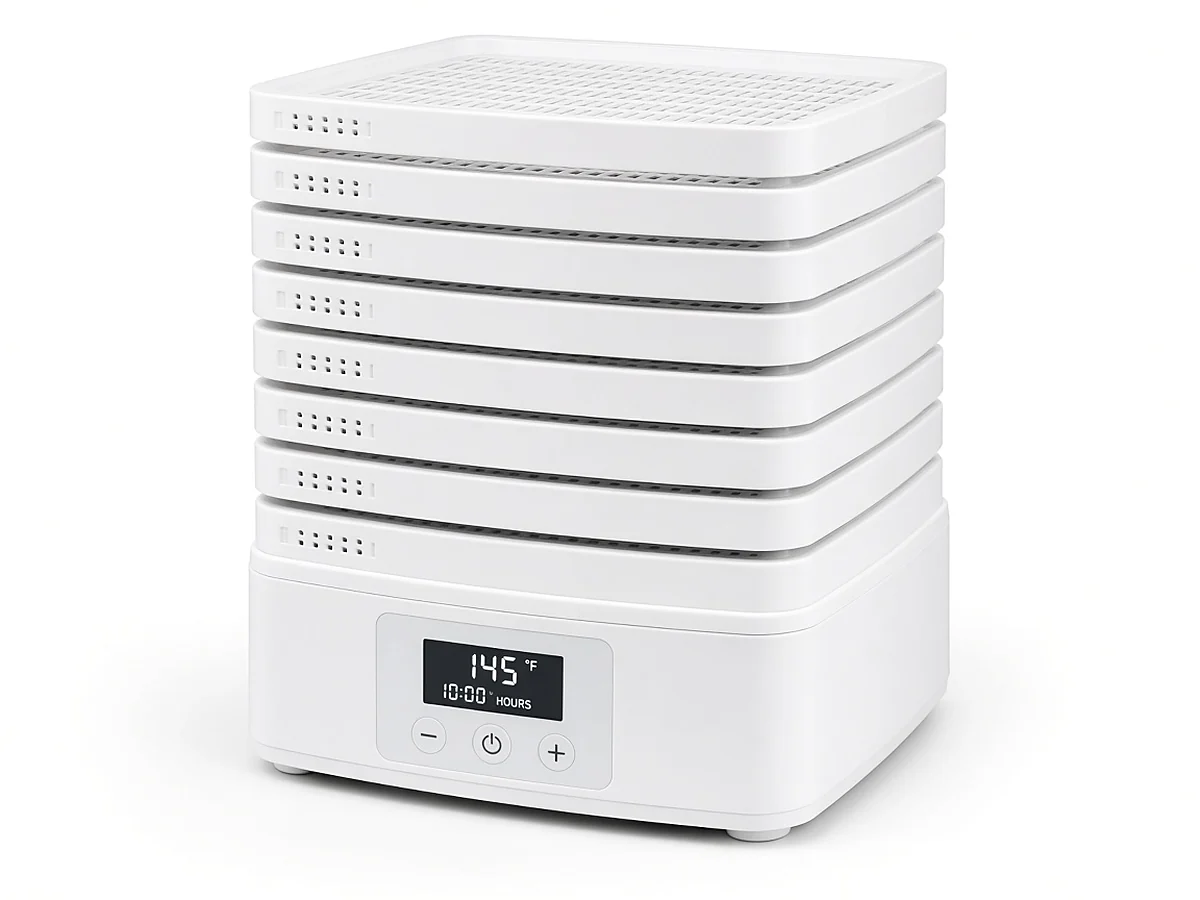
The Hamilton Beach 32100A lists 100-160 °F, so its floor is a little above the 95 °F herb starting point.
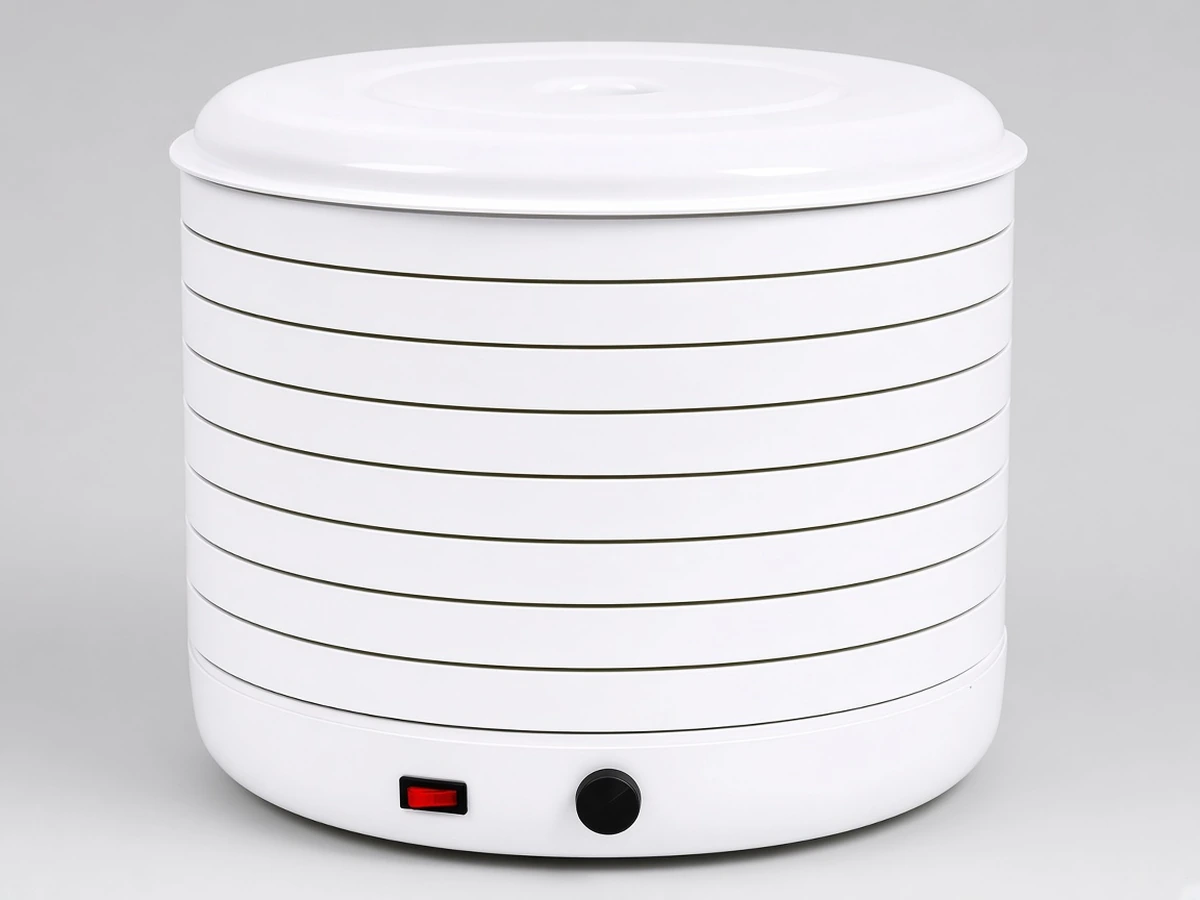
The Presto 06300 is a fixed-heat machine listed at about 165 °F, with no thermostat. It is too hot for herbs, and you cannot hold 140 °F exactly. See the Presto 06300 review.
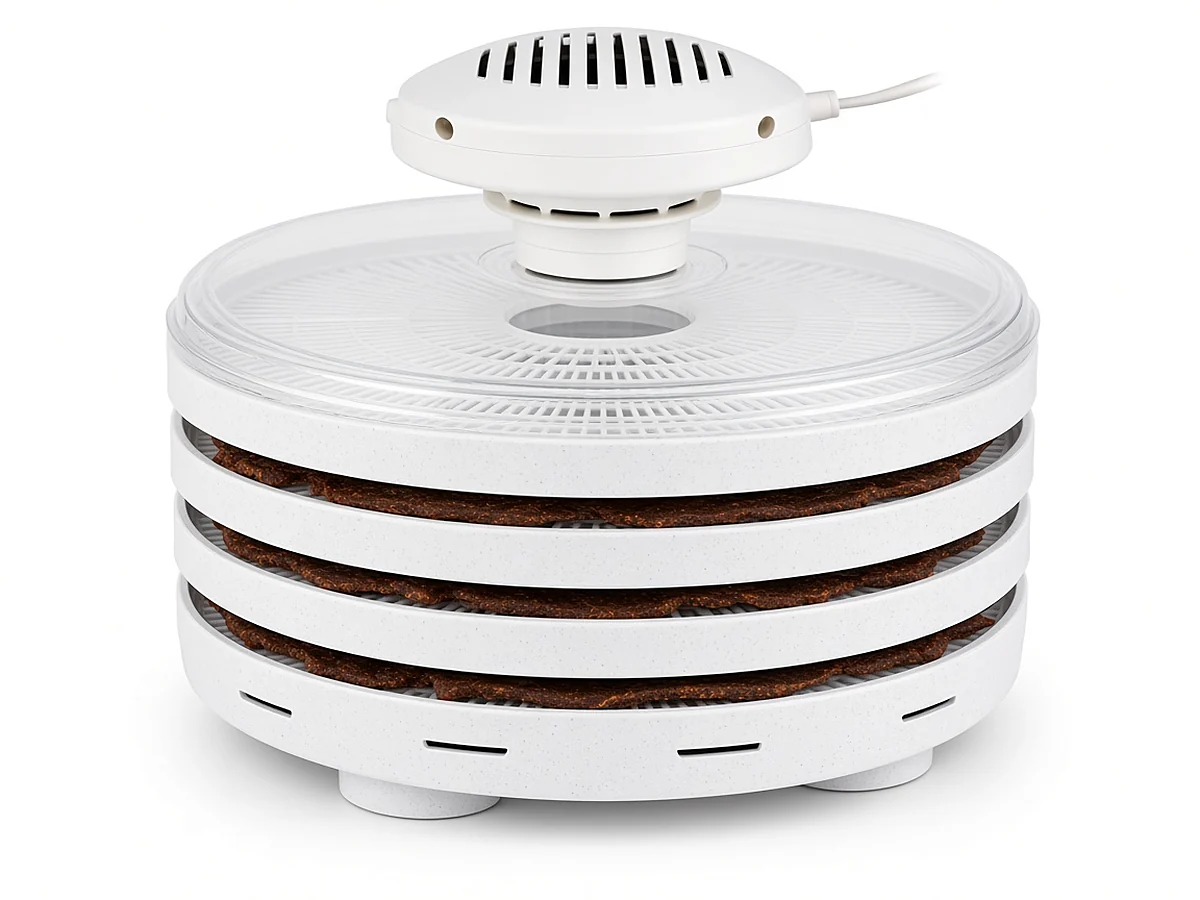
The Magic Mill MFD-5000 listing conflicts on the ceiling (167 °F vs 158 °F). Plan around the lower figure, and do not treat 167 °F as confirmed.
See the COSORI CP267-FD product page, or check the Amazon listing. For jerky machine choice, see best dehydrators for jerky.
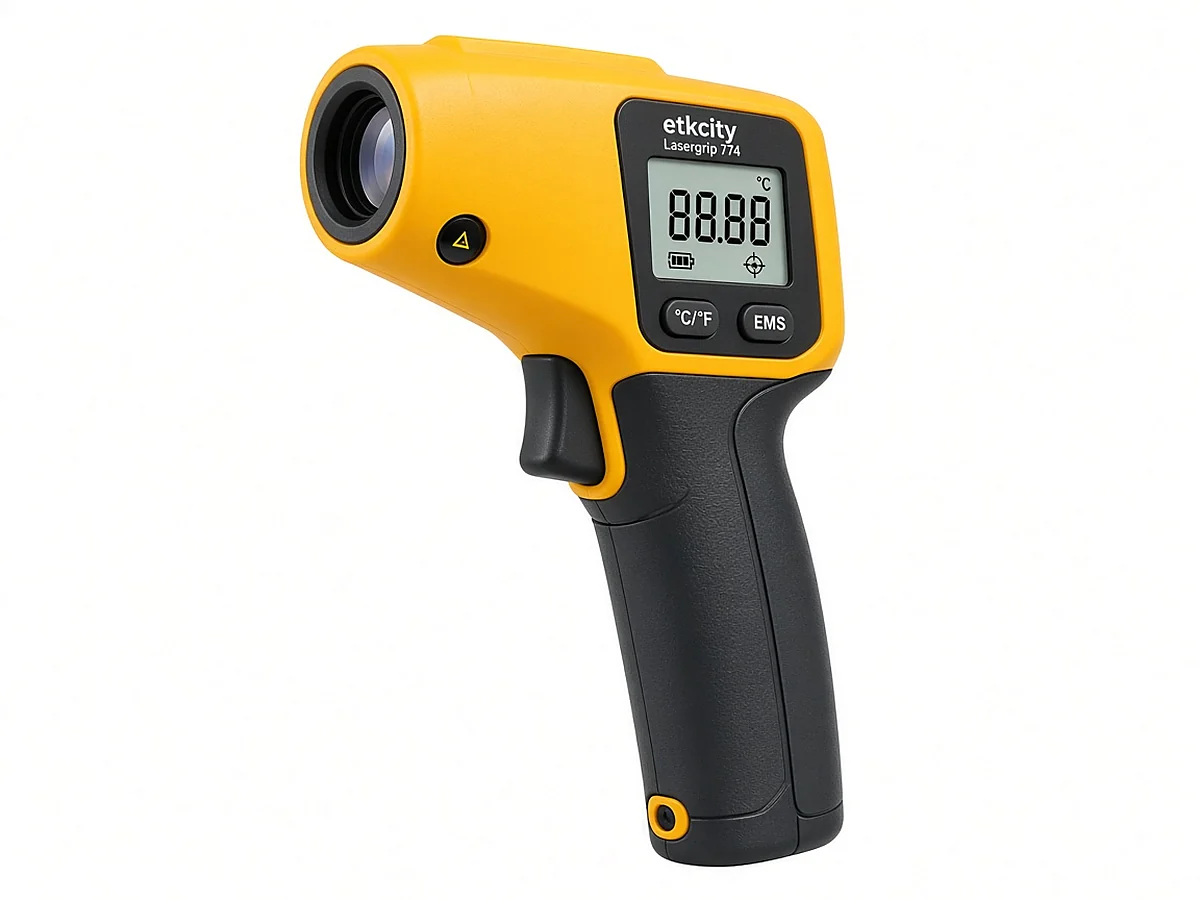
Related on Amazon: Etekcity Lasergrip 774 Infrared Thermometer.
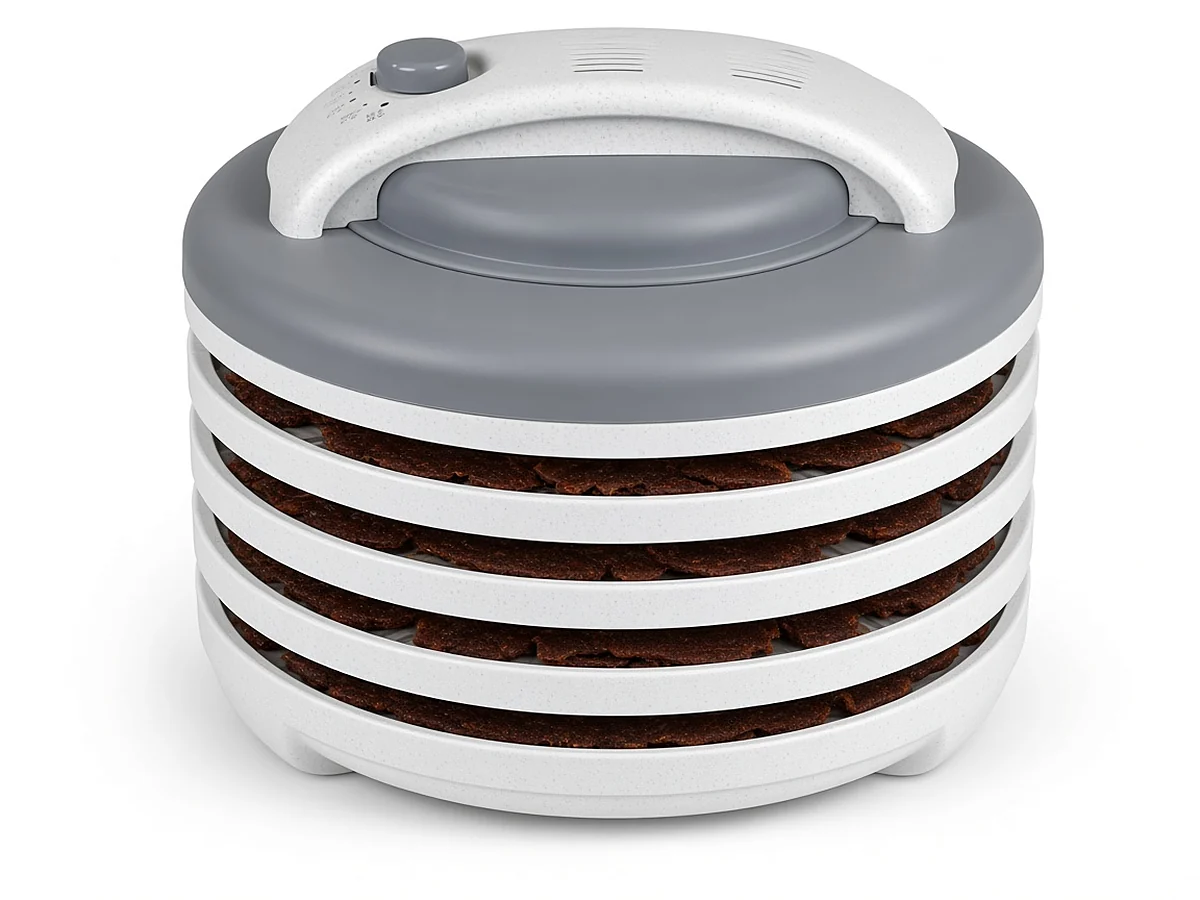
Related on Amazon: Presto 06300 Dehydro Electric Food Dehydrator.
Related on Amazon: Nesco FD-60 Snackmaster Express Food Dehydrator.
Amazon listings for the products in this guide
Direct links to the Amazon listings for the products named or shown in this guide:
- COSORI CP267-FD Food Dehydrator, 6 Stainless Trays – View on Amazon
- COSORI P501 Food Dehydrator, 5 Stainless Trays – See the Amazon listing
- Excalibur Select DH08SCSS13 Food Dehydrator, 8 Trays – Check availability on Amazon
- Nesco FD-79 Snackmaster Pro Digital Food Dehydrator, 4 Trays – View on Amazon
- Hamilton Beach 32100A Digital Food Dehydrator, 5 Trays – See the Amazon listing
- Presto 06300 Dehydro Electric Food Dehydrator – Check availability on Amazon
Frequently asked questions
What temperature should I dehydrate fruit at?
The NCHFP uses 140 °F. Fruit is done when it is leathery and pliable, with no moist spots, after a test piece has cooled.
What temperature should I dehydrate herbs at?
The NCHFP recommends 95-115 °F, or up to 125 °F in humid areas. Herbs are done when the leaves crumble and the stems break when bent, usually in 1-4 hours. A fixed 165 °F machine is the wrong tool.
What temperature should I use for jerky?
USDA FSIS says to heat meat to 160 °F, or poultry to 165 °F, then keep the dehydrator at 130-140 °F. The NCHFP dries at 140 °F after the same heat step. A dial setting is not the same as the meat reaching 160 °F. See how to make jerky in a dehydrator.
What is the best wattage for a food dehydrator?
There is no official wattage target in the NCHFP or USDA FSIS charts. Wattage is a listing fact that varies by machine; it does not replace a thermostat that can hold 140 °F, or 95-115 °F for herbs. Compare published wattage on the product pages, not as a substitute for temperature control.
Sources
National Center for Home Food Preservation, food dehydrators, herbs, jerky and drying of fruits and vegetables
USDA Food Safety and Inspection Service, "Jerky and Food Safety"
Colorado State University Extension, fruit drying times as cited on our how-to-use guide
Clemson Cooperative Extension, on case hardening from excessive heat
Illinois Extension, fruit leather doneness (no sticky spots)