
How to Make Jerky in a Dehydrator
Published 11/14/2026 · Updated 11/24/2026
Quick answer
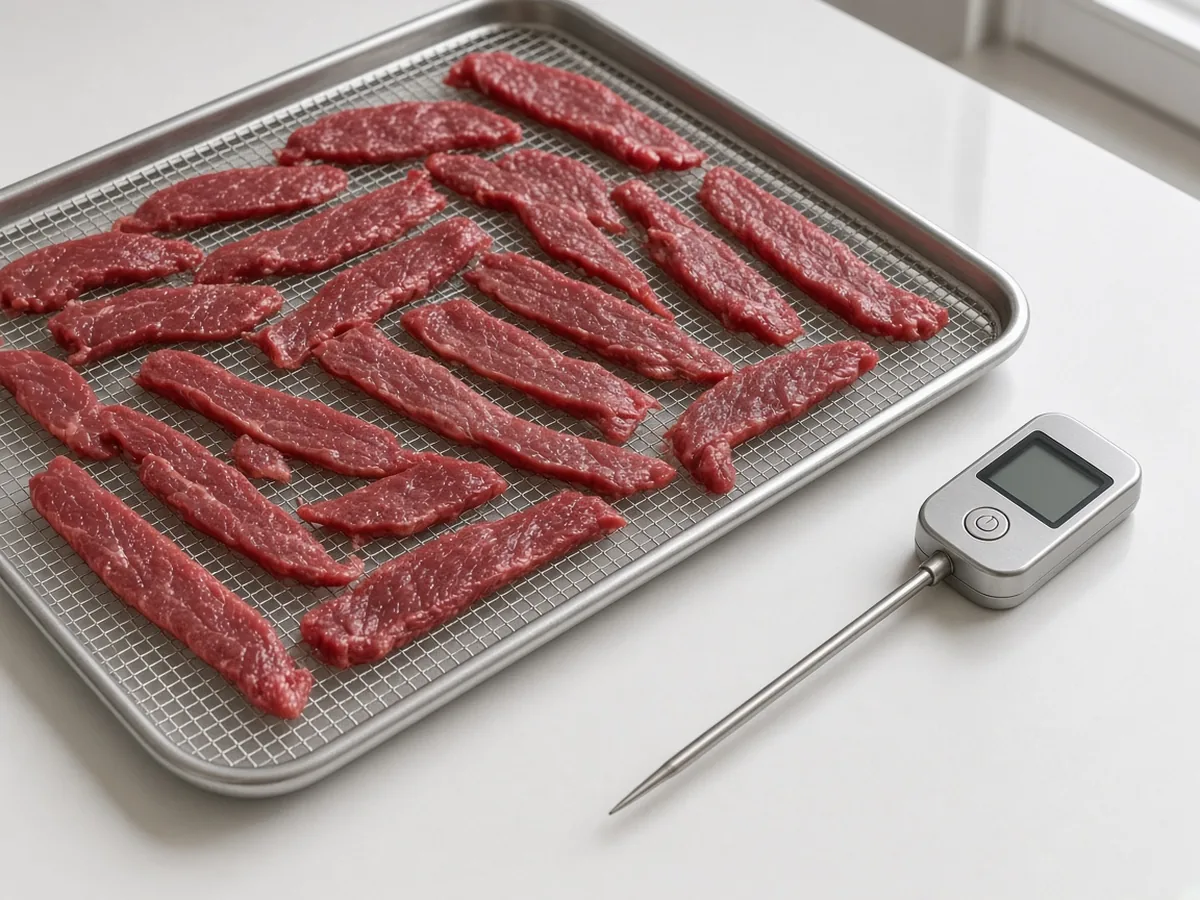
To make jerky in a dehydrator safely, heat the meat itself to 160 °F (poultry to 165 °F) before or after drying, then dry the strips at a steady 130-140 °F until a cooled piece cracks but does not break when bent. That is the method from USDA FSIS and the National Center for Home Food Preservation (NCHFP). A dial that reads 160 °F is not the same as the meat reaching 160 °F.
Products mentioned in this guide
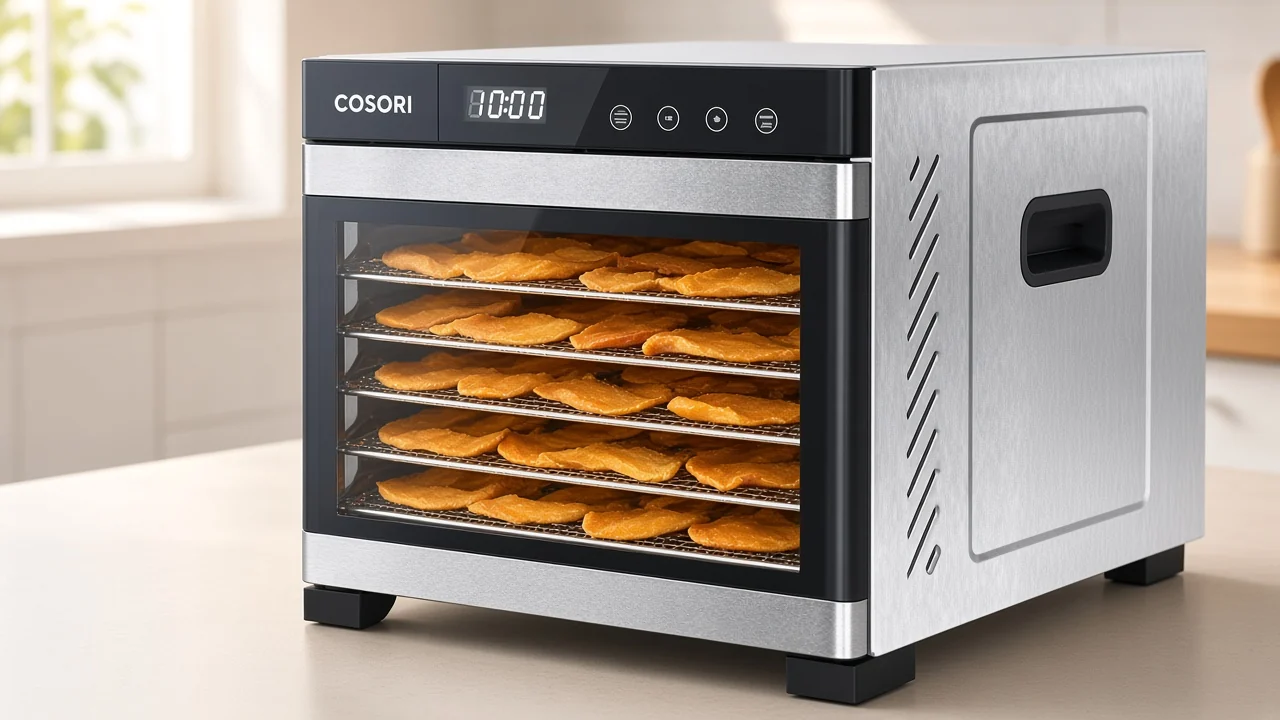
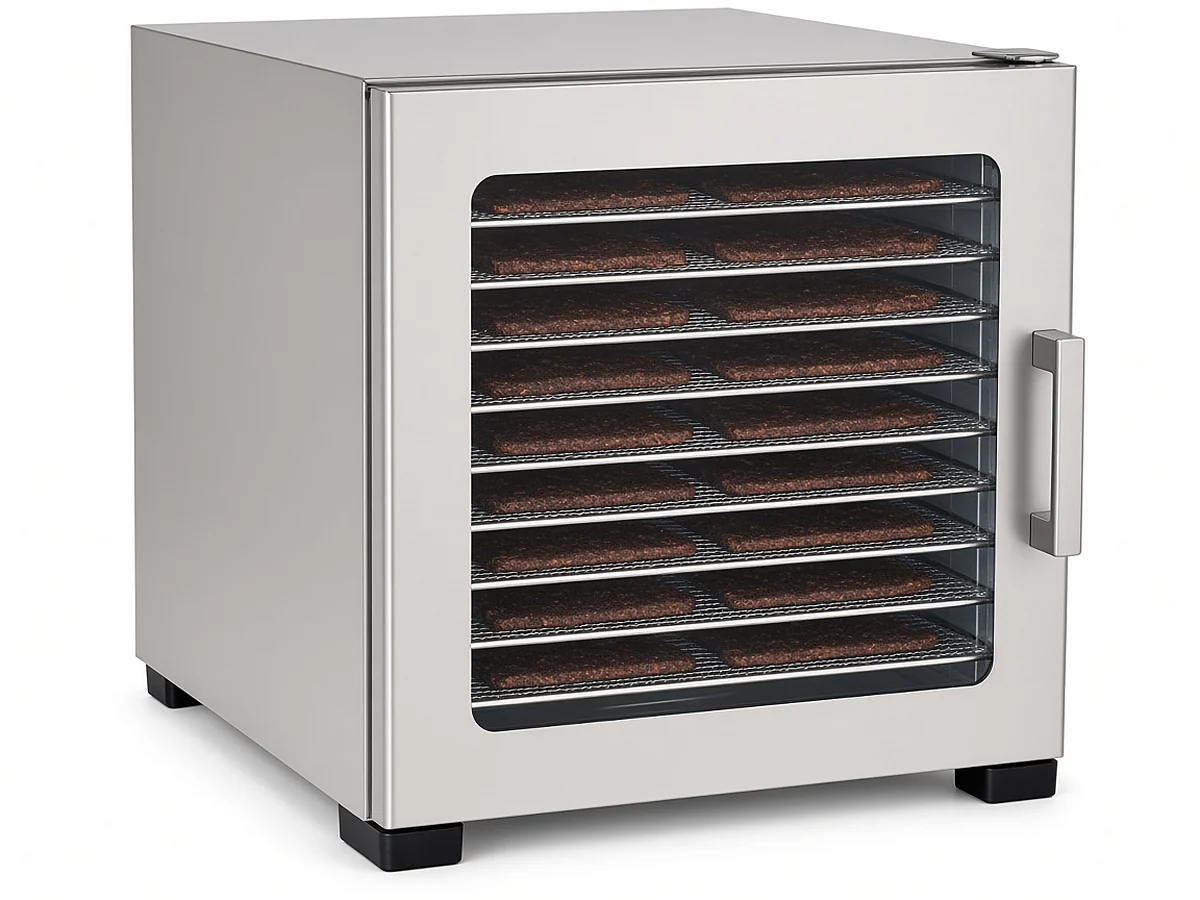
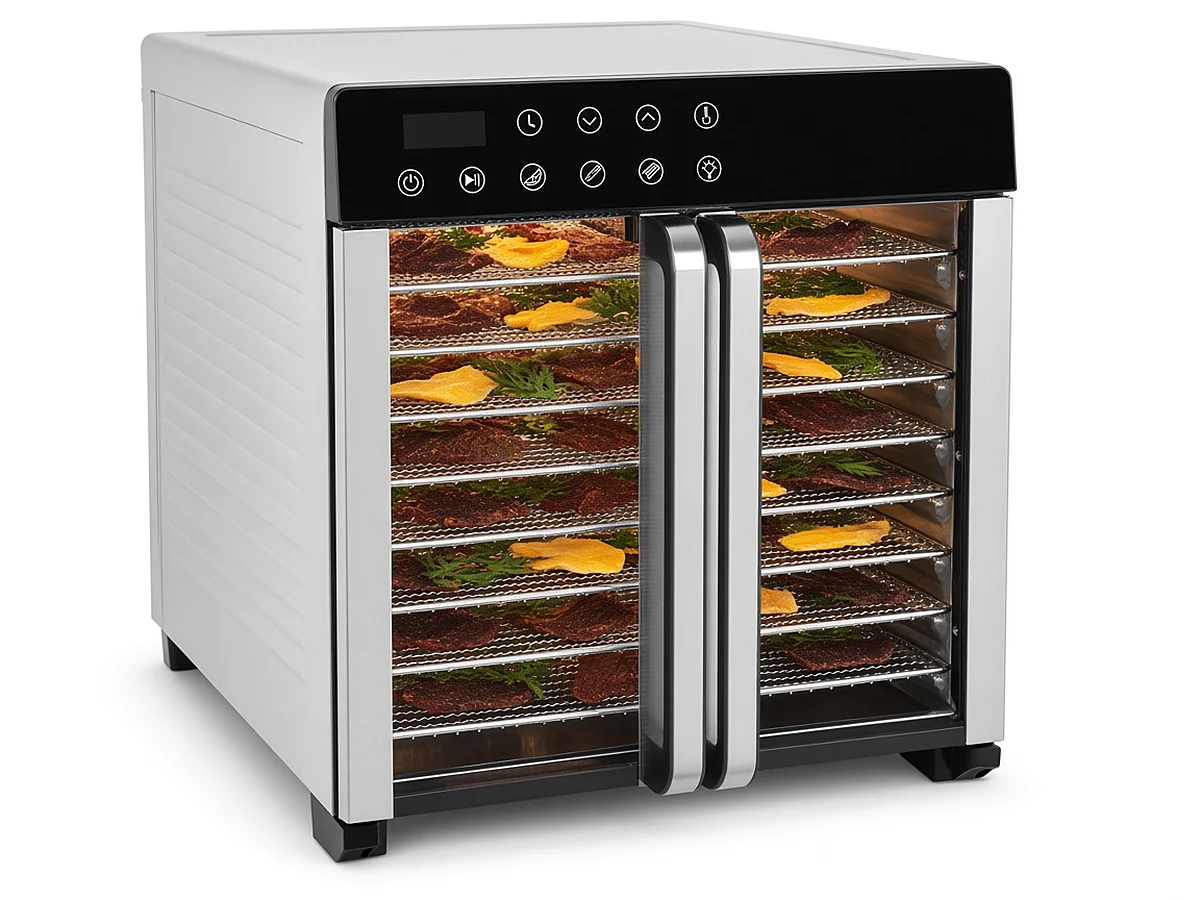 Excalibur Select DH08SCSS13 Food Dehydrator, 8 TraysExcalibur · Dehydrator
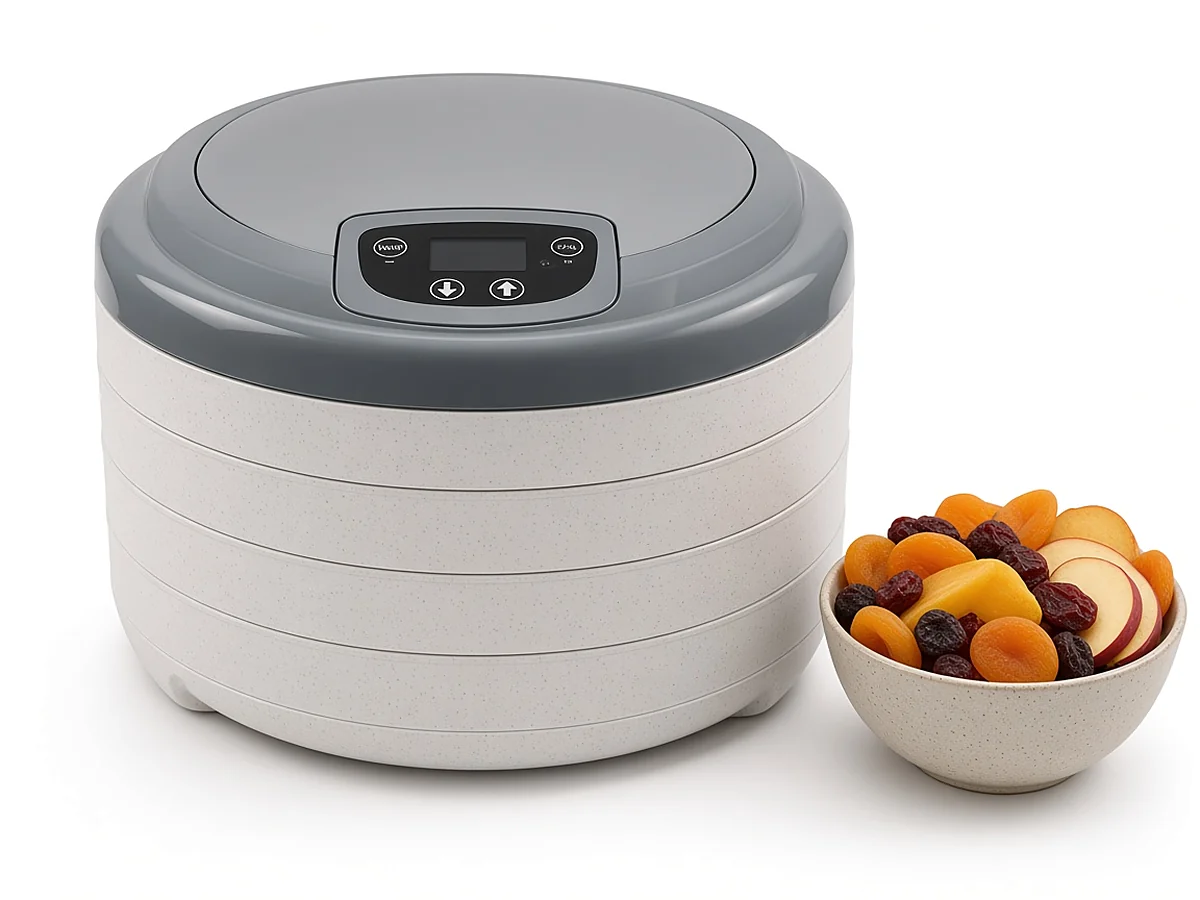
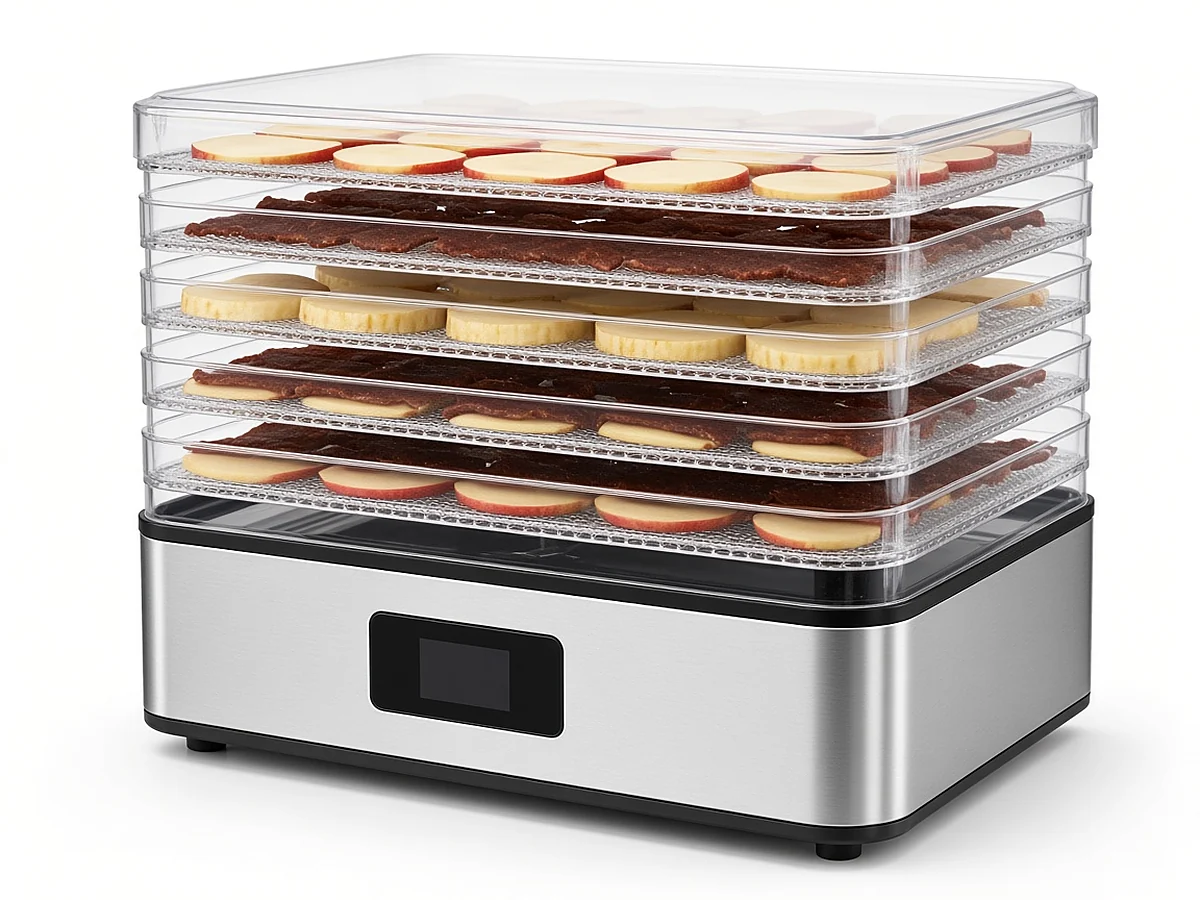
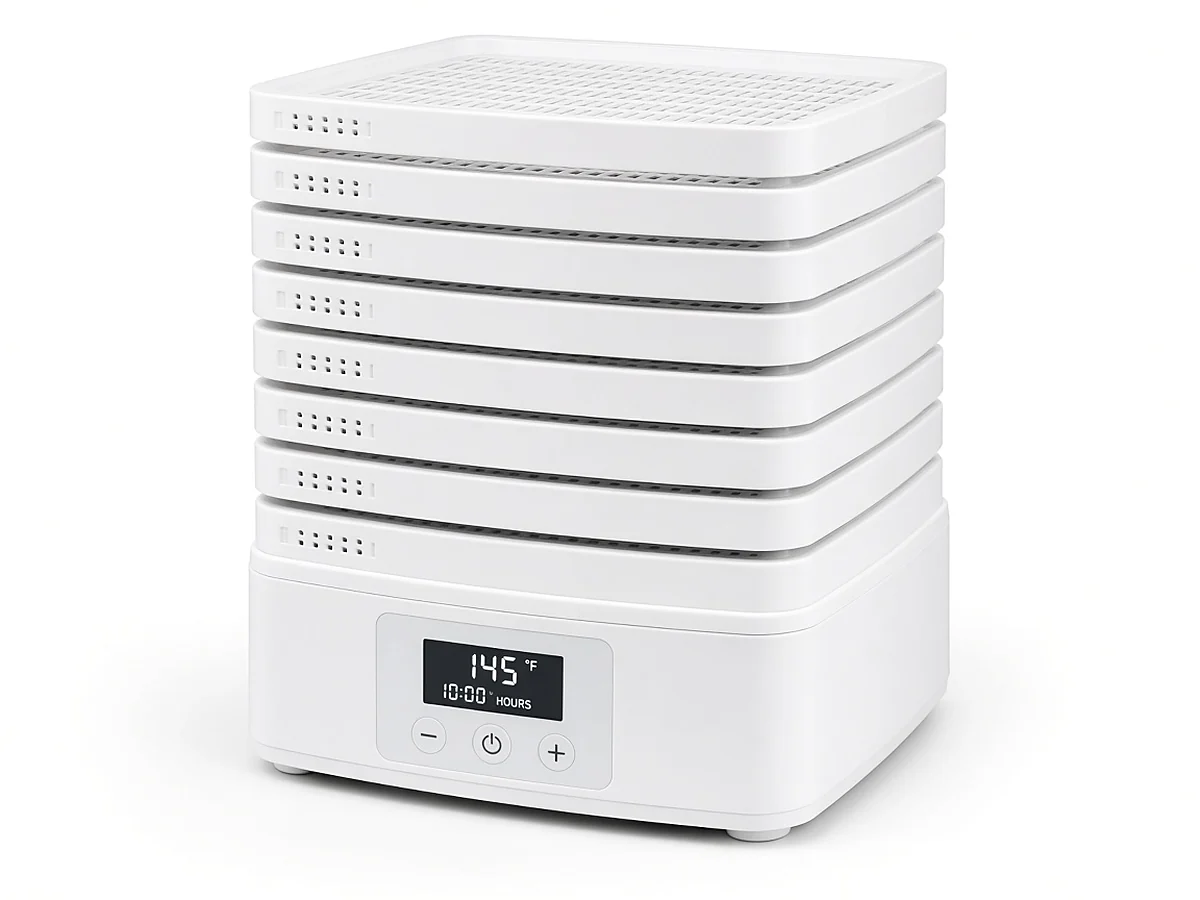
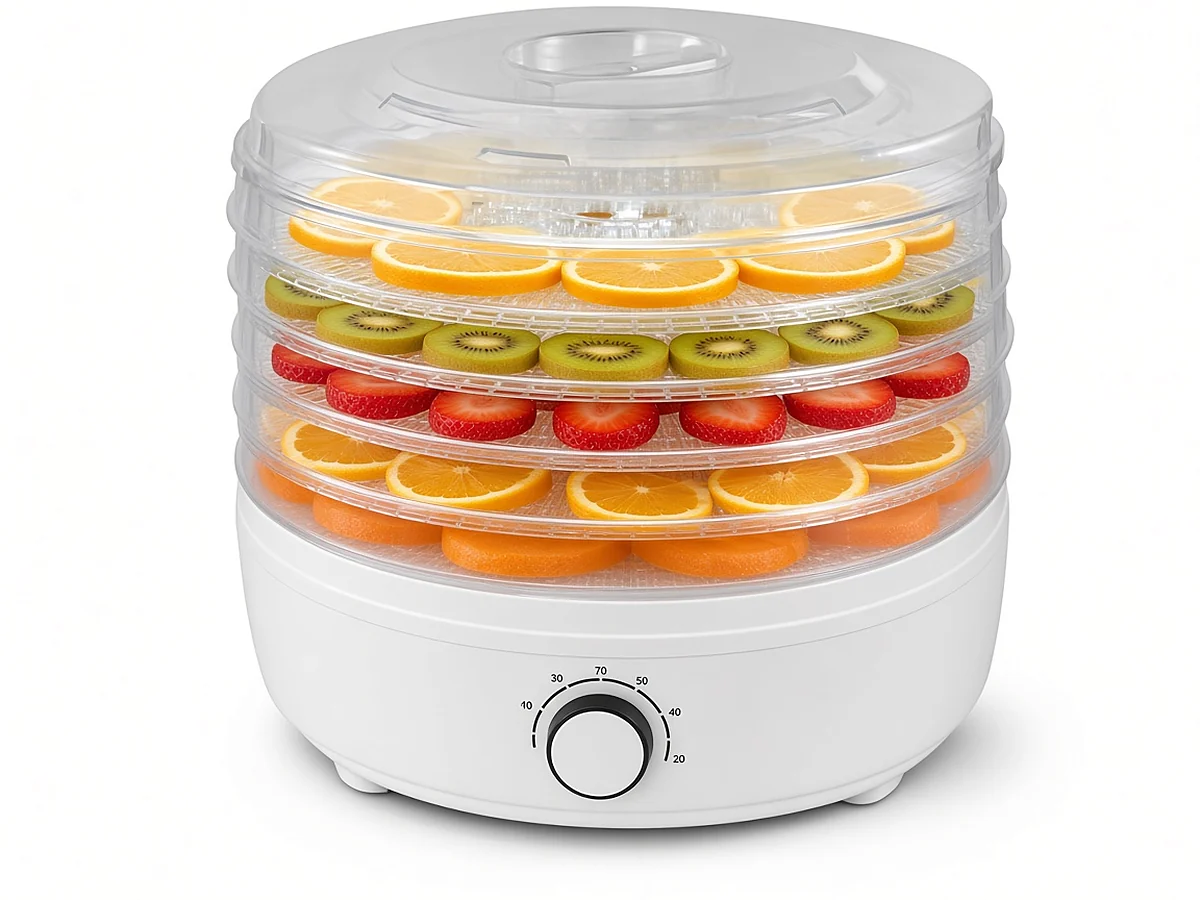
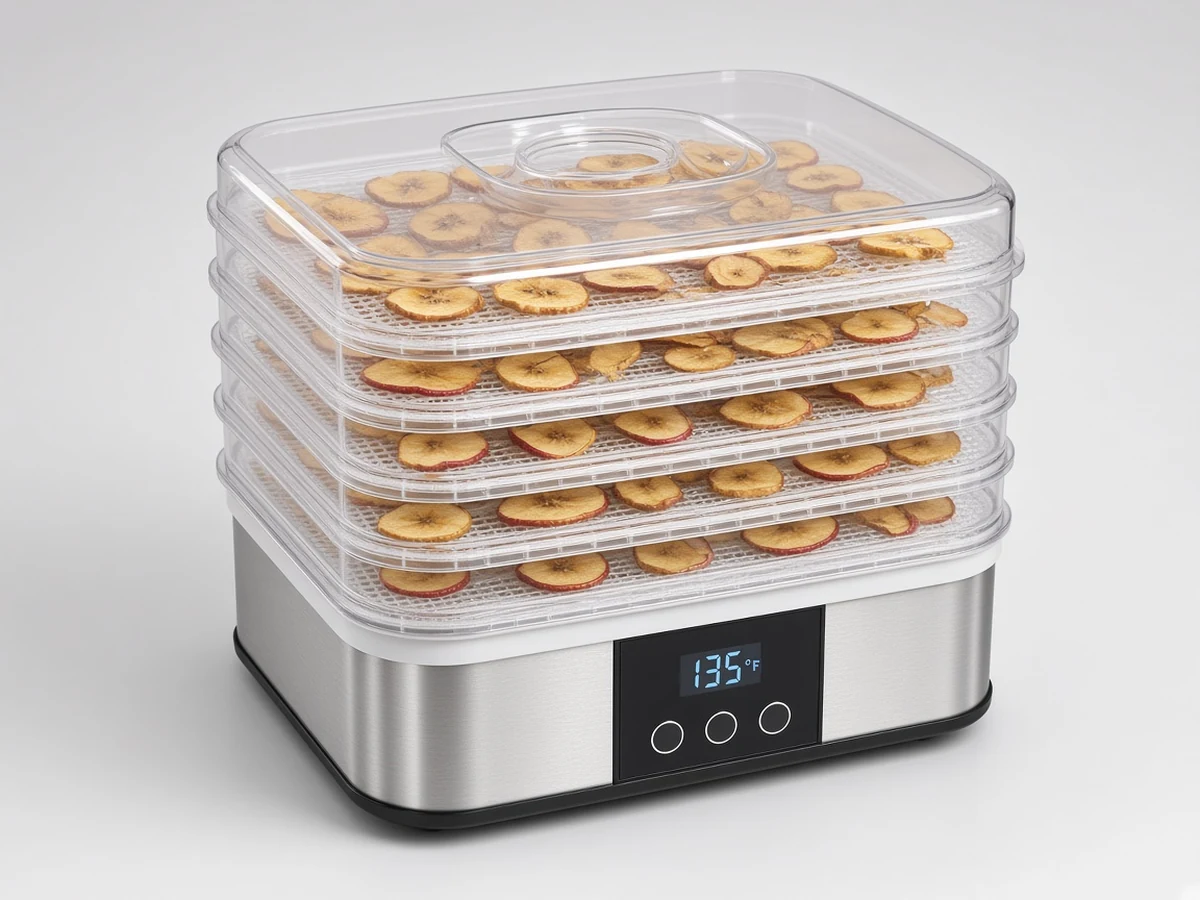 Hamilton Beach 32100A Digital Food Dehydrator, 5 TraysHamilton Beach · Dehydrator
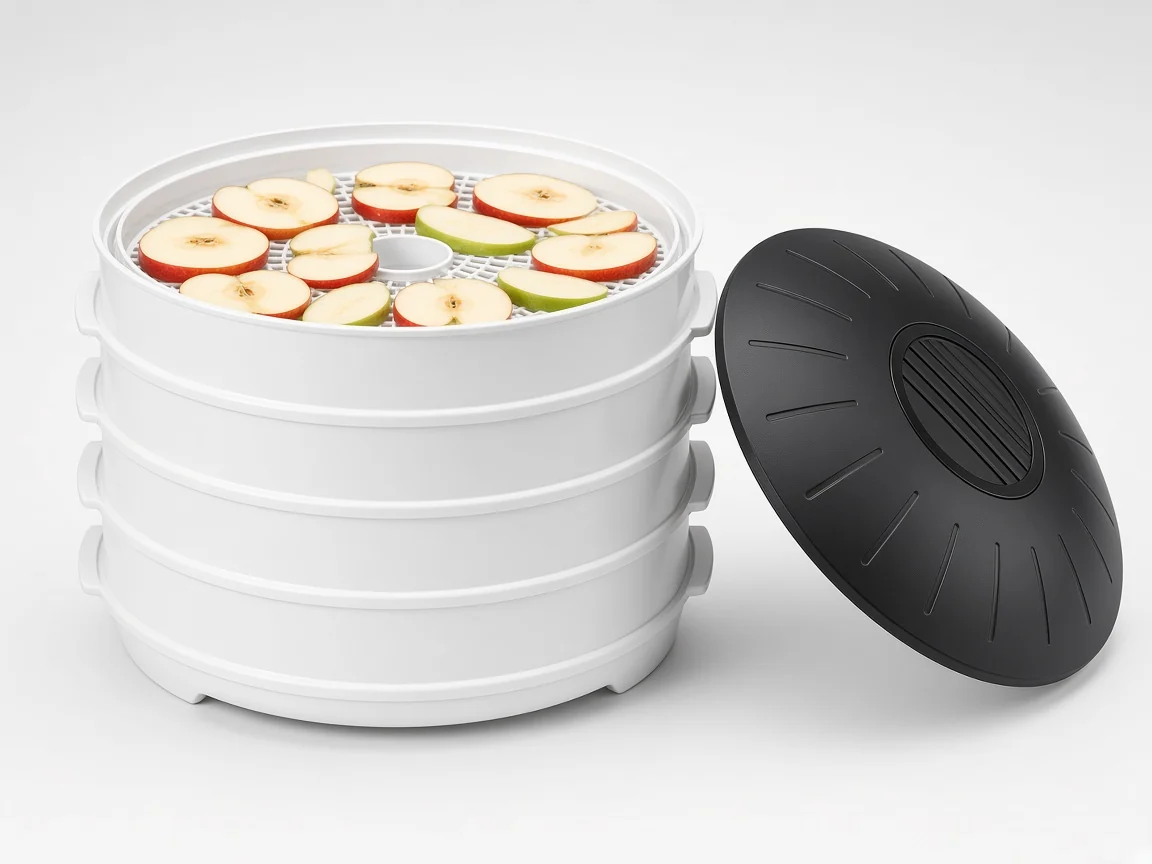
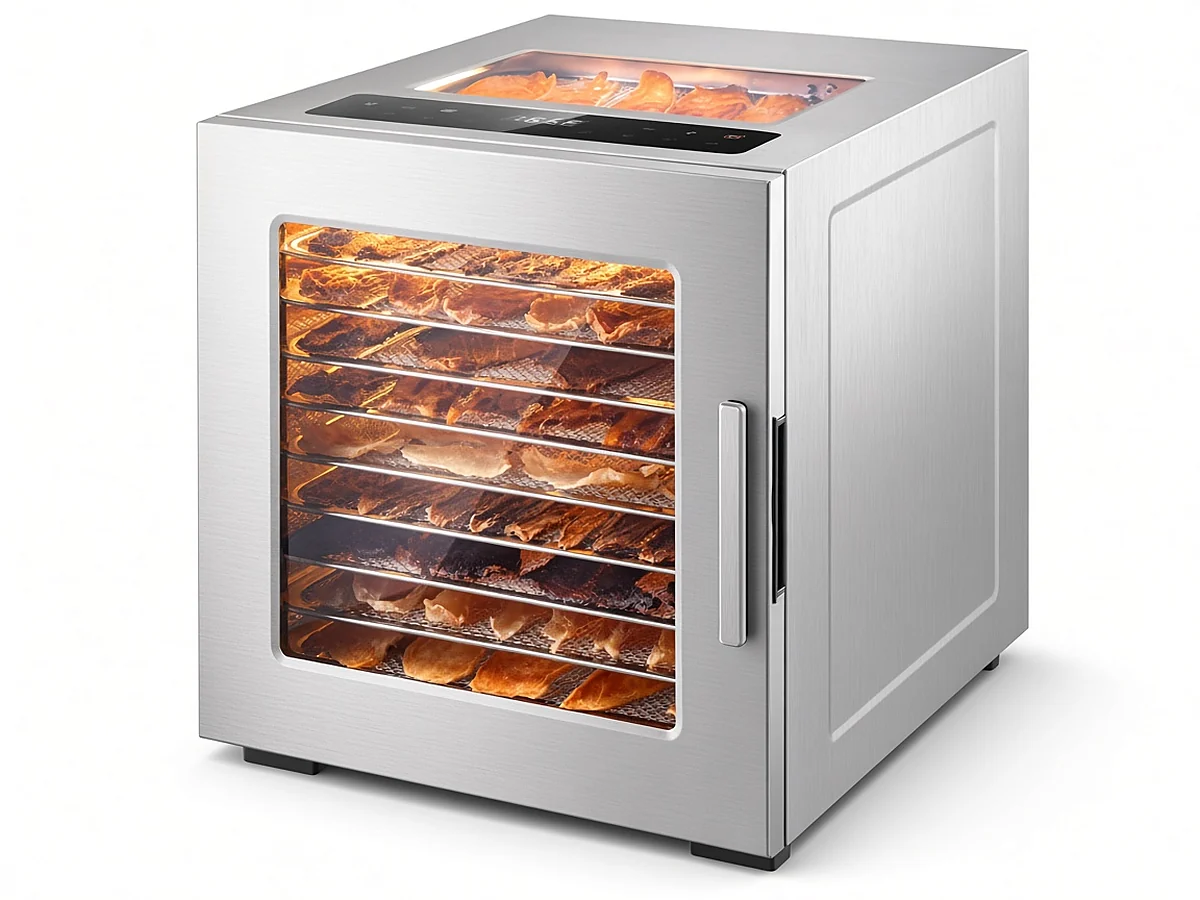
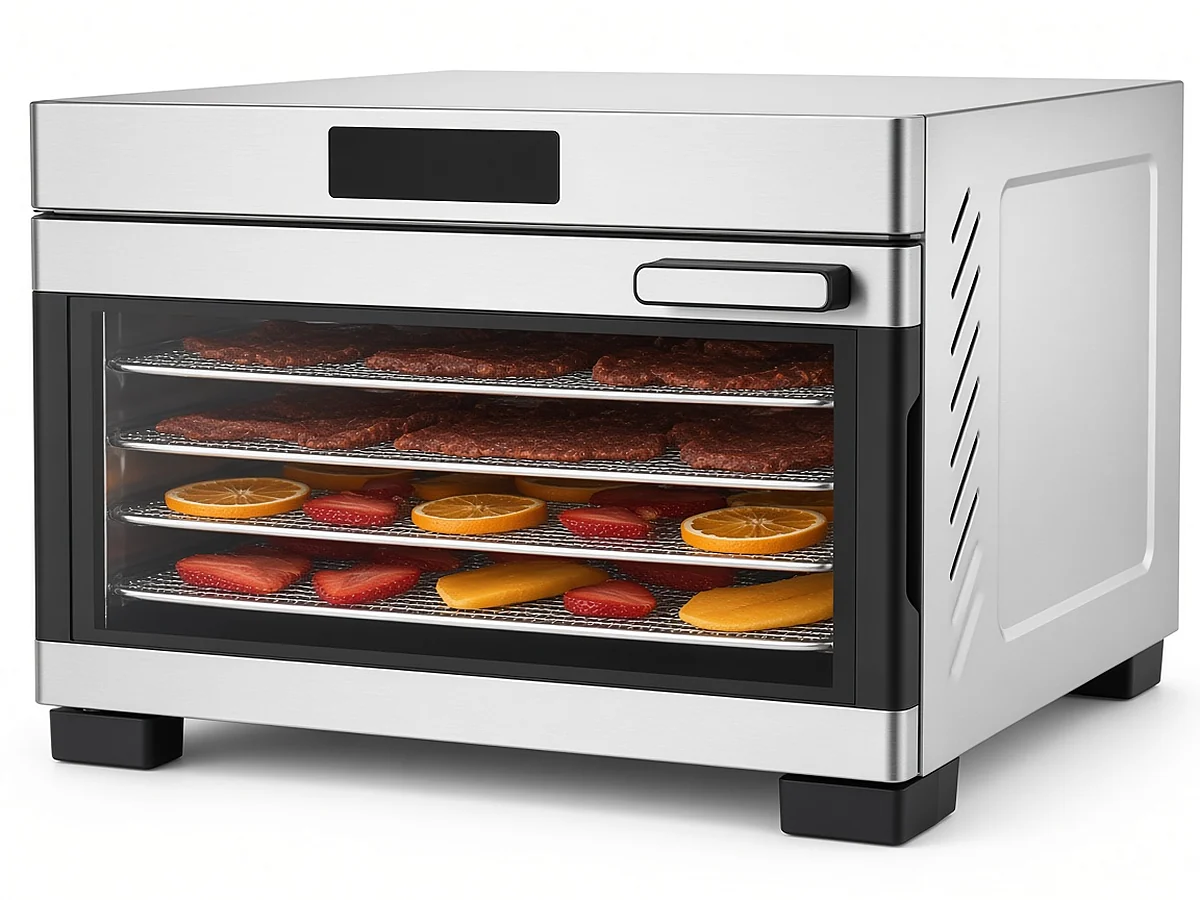
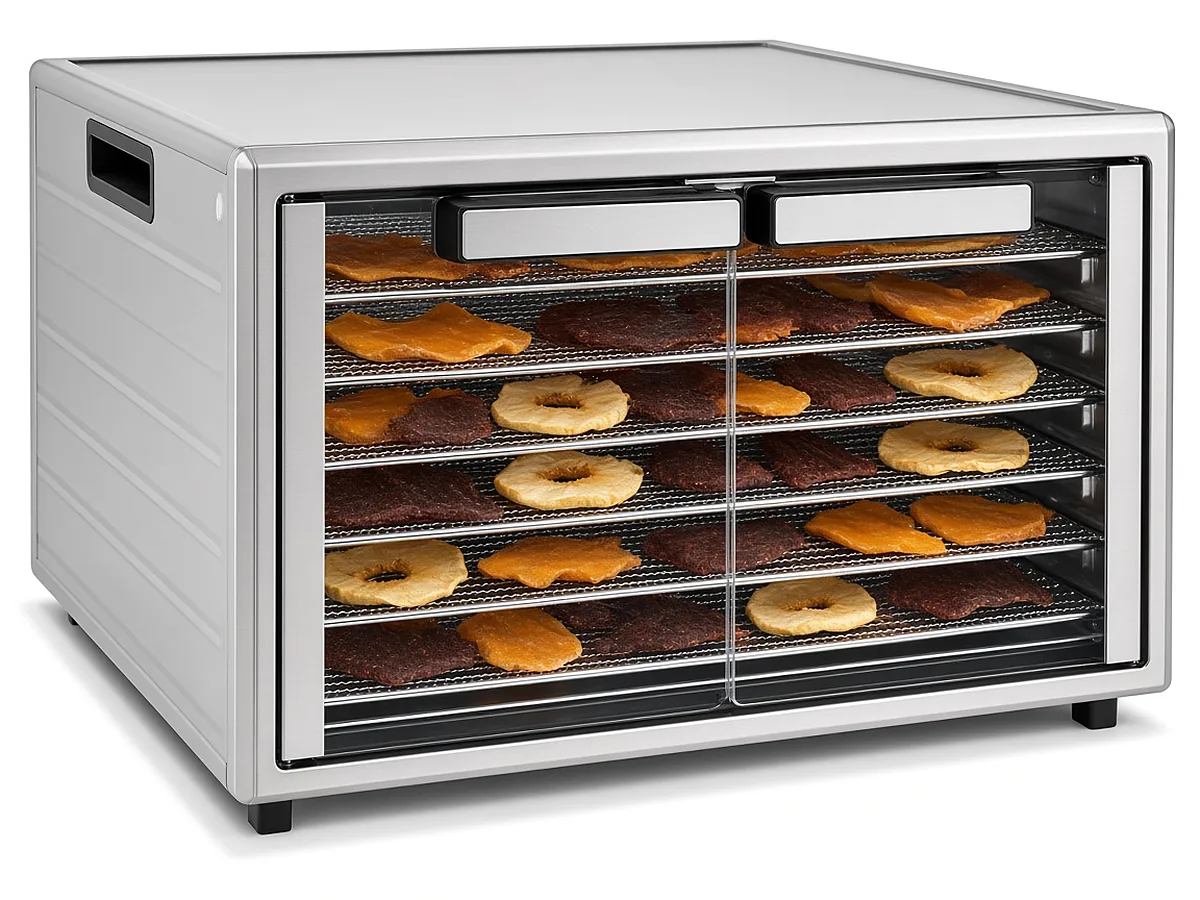 Excalibur Select Series DH06SCSS13 Food Dehydrator, 6 TraysExcalibur · Dehydrator
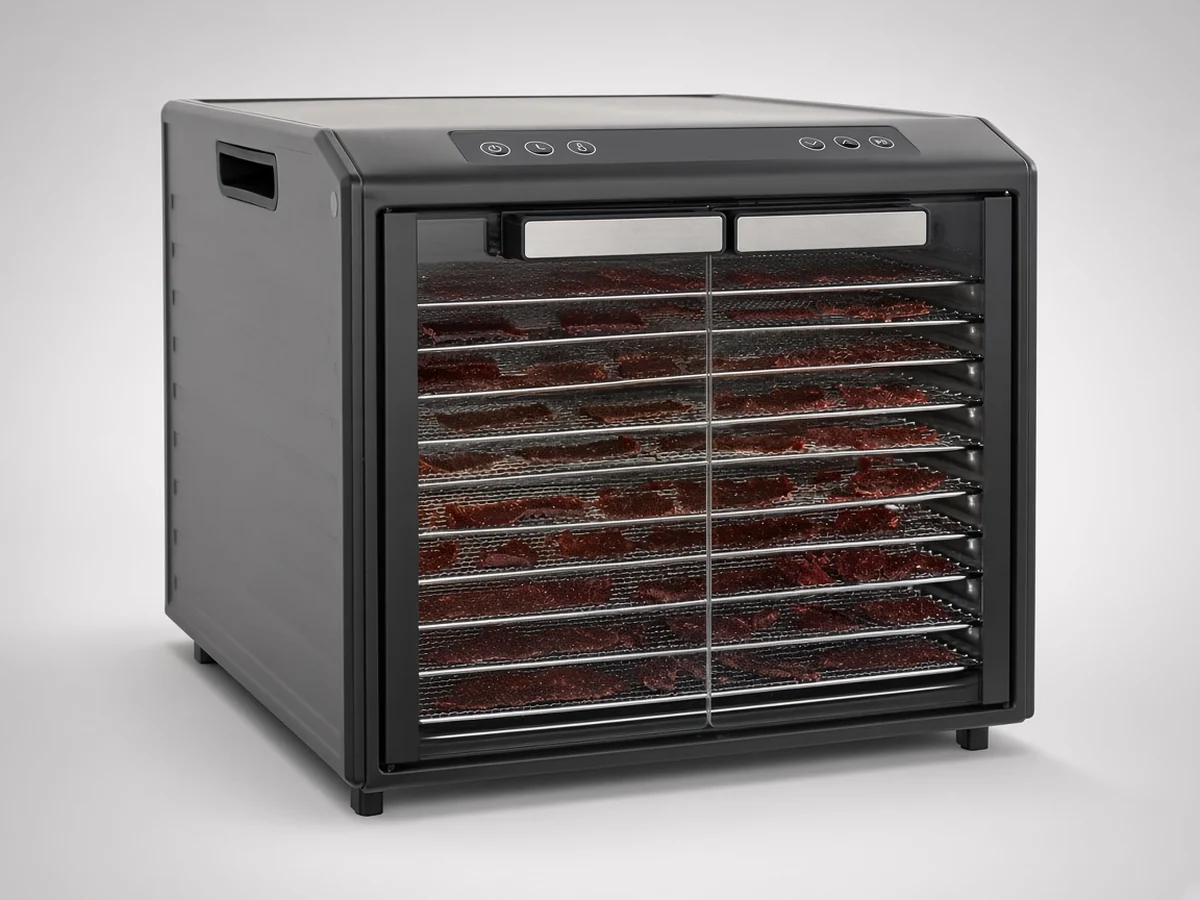
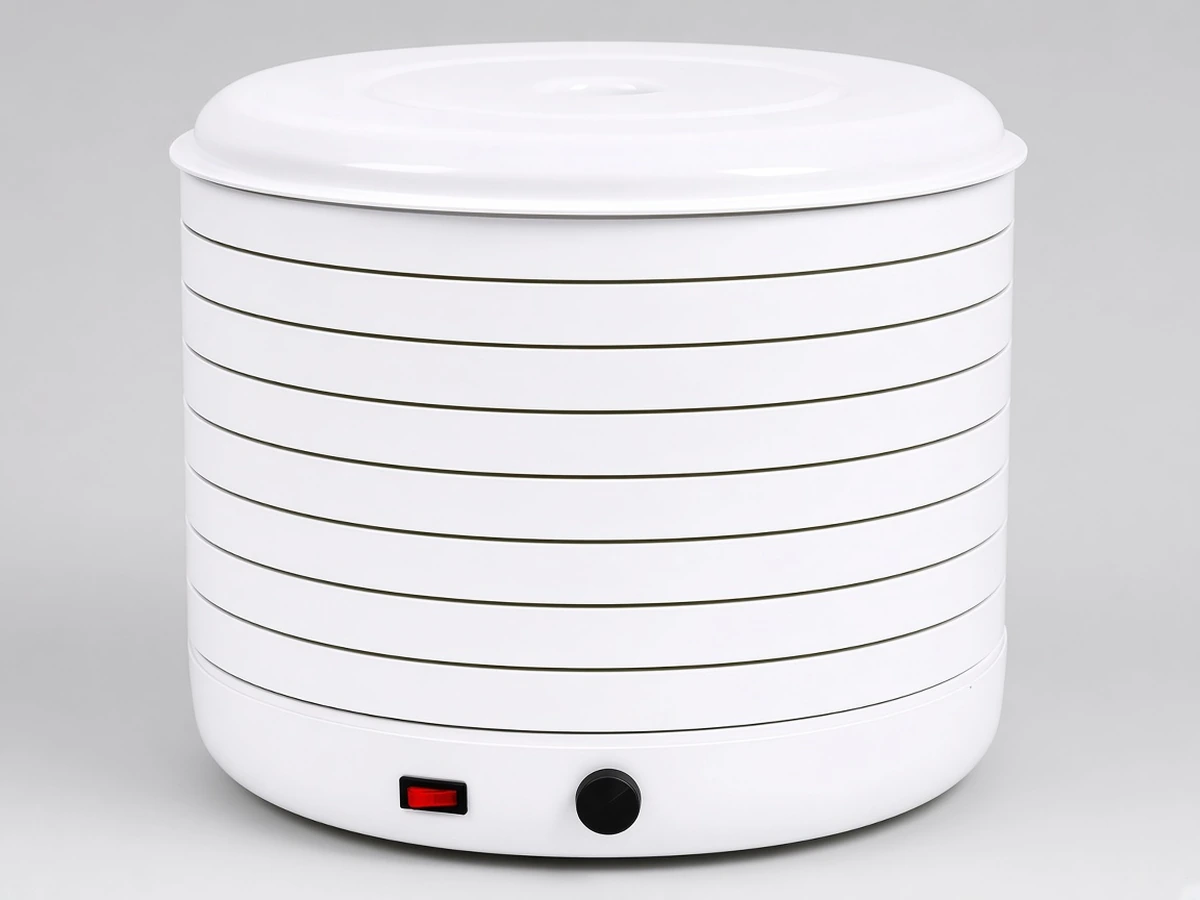
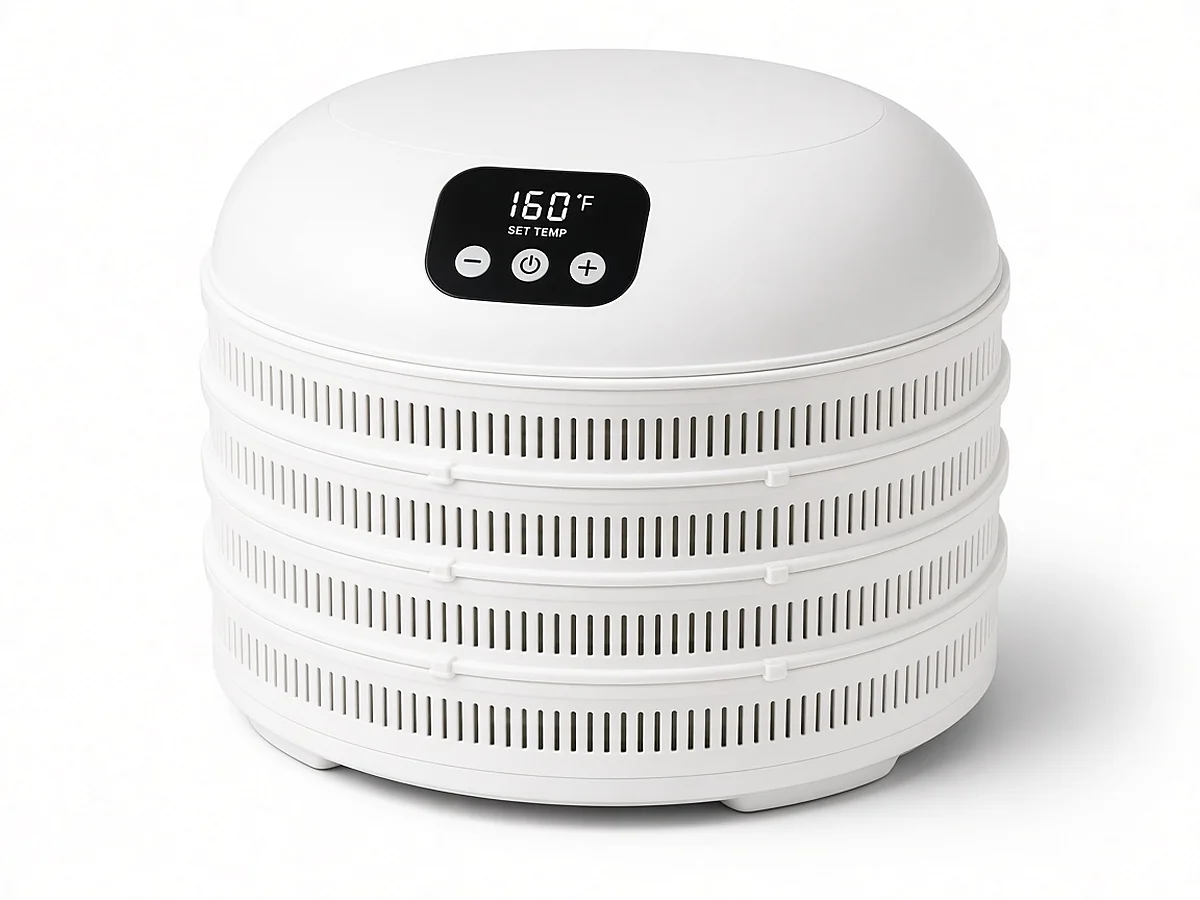
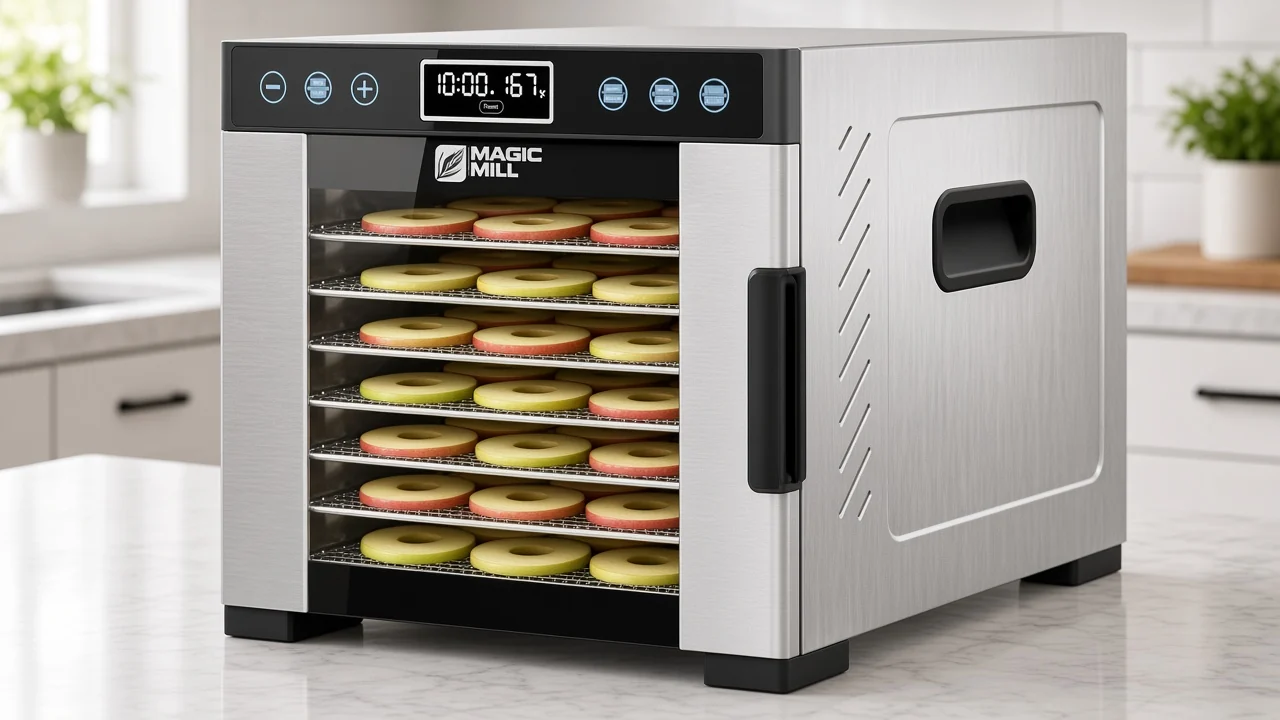
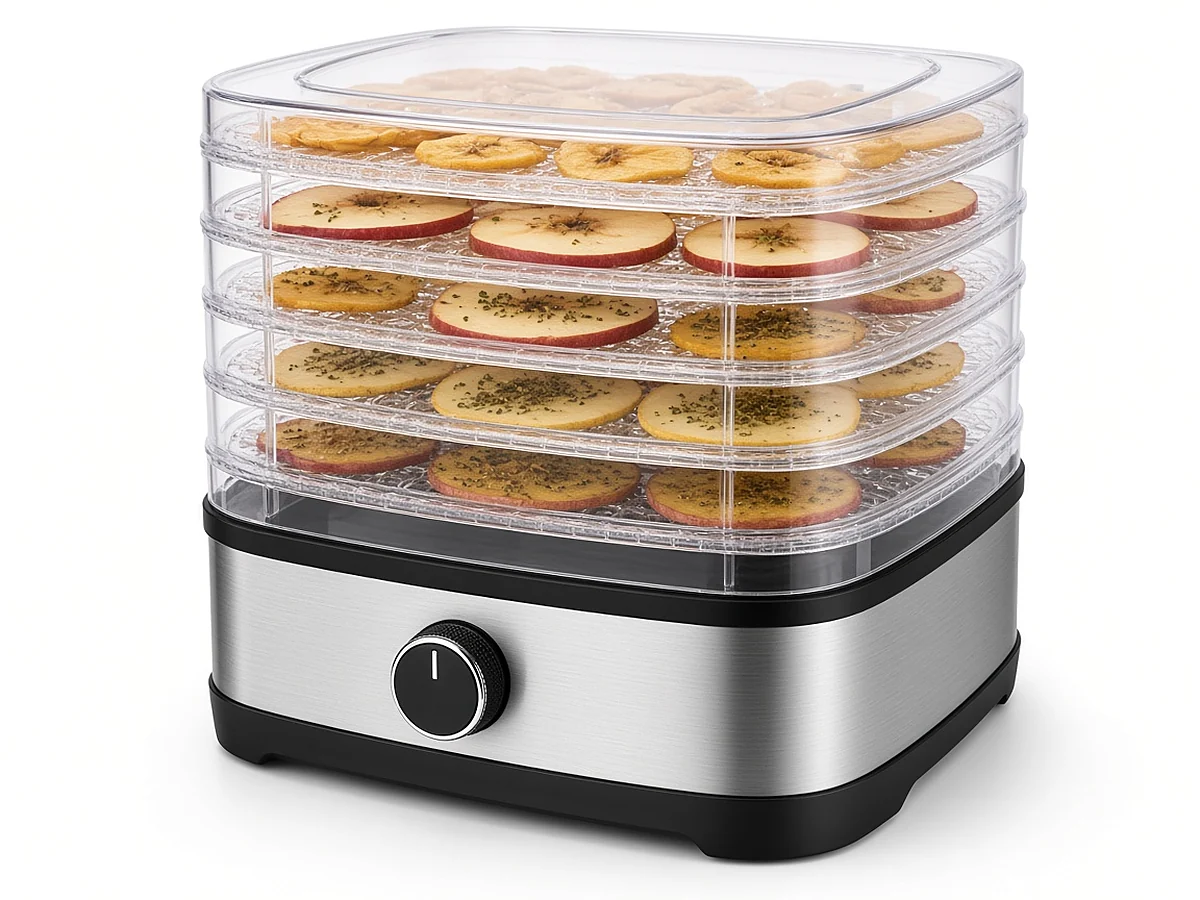
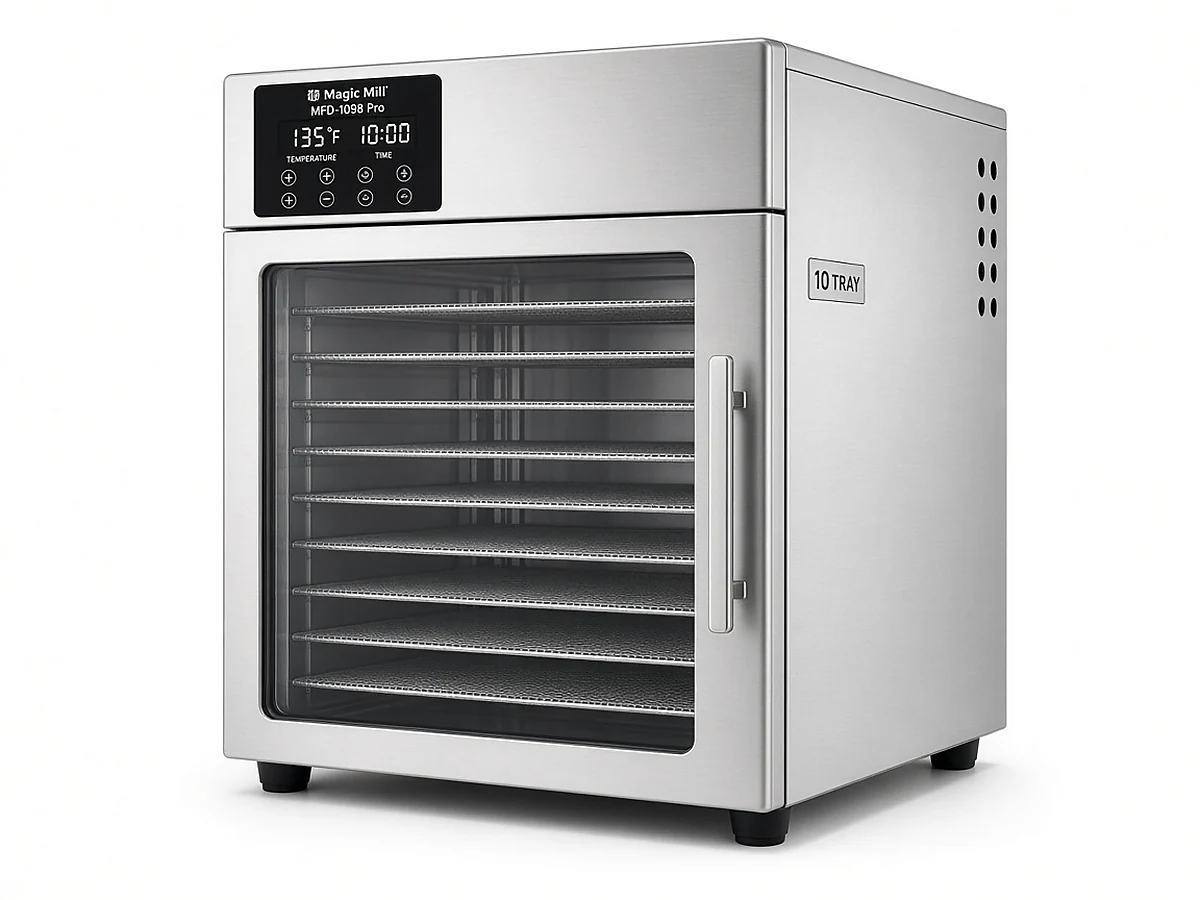
 Magic Mill MFD-5000 Food Dehydrator, 5 Stainless TraysMagic Mill · Dehydrator
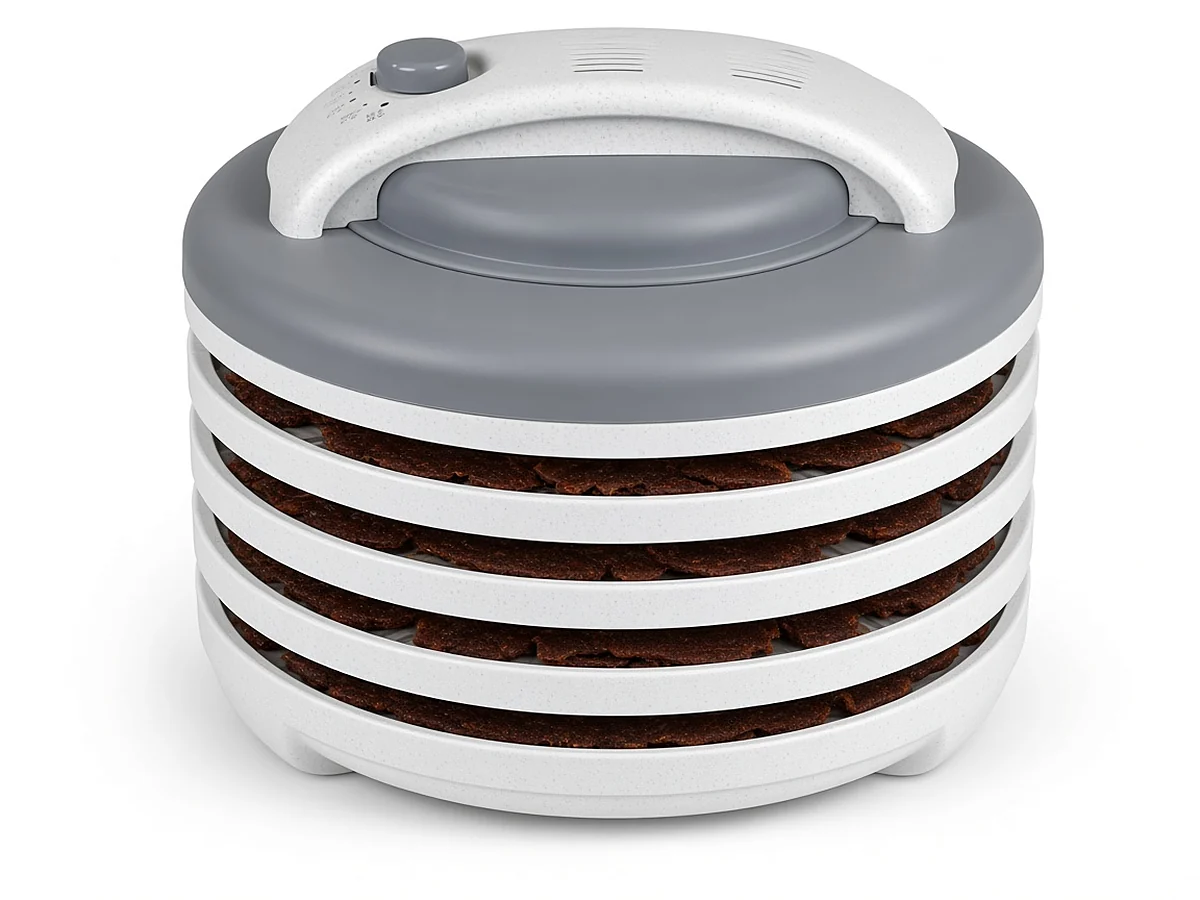
 Magic Mill Pro MFD-7700 Food Dehydrator, 7 Stainless TraysMagic Mill · Dehydrator
How-To · Food Dehydrators, Jerky
Last updated: November 2026
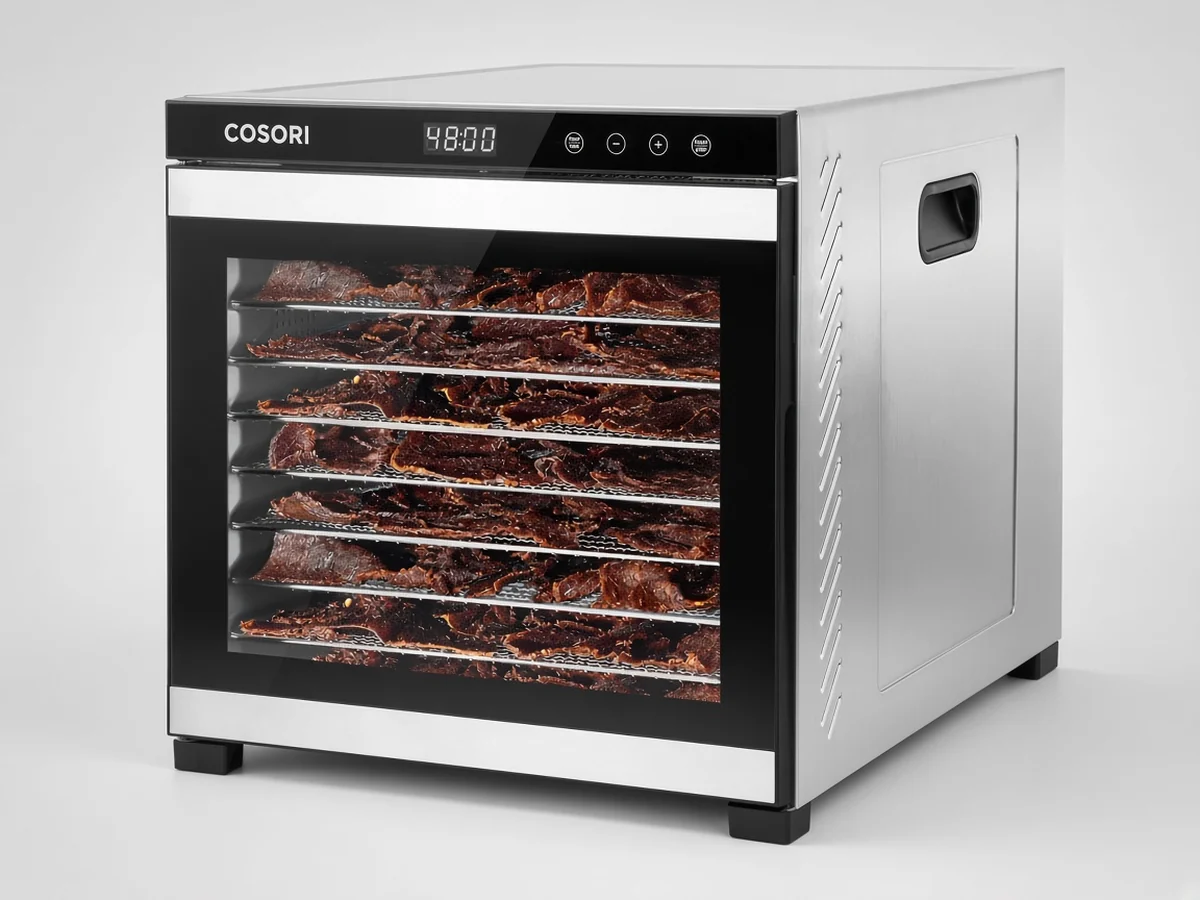
Quick verdict: To make jerky in a dehydrator safely, heat the meat itself to 160 °F (poultry to 165 °F) before or after drying, then dry the strips at a steady 130-140 °F until a cooled piece cracks but does not break when bent. That is the method from USDA FSIS and the National Center for Home Food Preservation (NCHFP). A dial that reads 160 °F is not the same as the meat reaching 160 °F. Use a food thermometer, and pick a dehydrator with an adjustable thermostat that can hold that drying range. Shelf units such as the COSORI CP267-FD (95-165 °F) and expandable Nescos that list a 160 °F ceiling, such as the FD-79, meet that range on paper.
This page is the full, cited method. Our general guide to how to use a food dehydrator only sketches the safety step. For a shortlist of live Amazon US machines, see best dehydrators for jerky. Official temperatures for fruit, herbs and vegetables sit in our dehydrator temperature chart.
Why you cannot skip the heat step when you make jerky in a dehydrator
Illnesses from Salmonella and E. coli O157:H7 in homemade jerky are why the USDA Meat and Poultry Hotline changed the old "just dry it" advice. USDA FSIS currently recommends heating meat to 160 °F and poultry to 165 °F before the dehydrating process, so wet heat can destroy bacteria. Most dehydrator manuals omit this step, and a dehydrator may not bring the meat itself to those temperatures.
After that heat step, USDA FSIS says to keep the dehydrator at a constant 130 °F to 140 °F so the meat dries fast enough to stay safe and dry enough that microorganisms cannot grow. The NCHFP describes the same 160 °F target and two practical ways to hit it: boil the marinated strips for 5 minutes before drying, or heat finished strips (cut 1/4 inch thick or less when raw) in a 275 °F oven for about 10 minutes after drying. Then dry at 140 °F. Both sources agree that a dehydrator setting is not a kill step on its own.
What you need to make jerky in a dehydrator
A dehydrator with an adjustable thermostat that can hold 130-140 °F after the preheat. Documented 160 °F or higher ceilings are useful, but they still do not replace the heat step. Examples on DryFreezeWise include the COSORI CP267-FD, COSORI P501 (95-176 °F), Excalibur Select 8-tray (85-165 °F), Nesco FD-79 (listed 160 °F ceiling), LEM MightyBite (95-167 °F) and the Hamilton Beach 32100A (100-160 °F).
A food thermometer to confirm the preheat or the post-dry oven step. Do not trust the dehydrator dial alone.
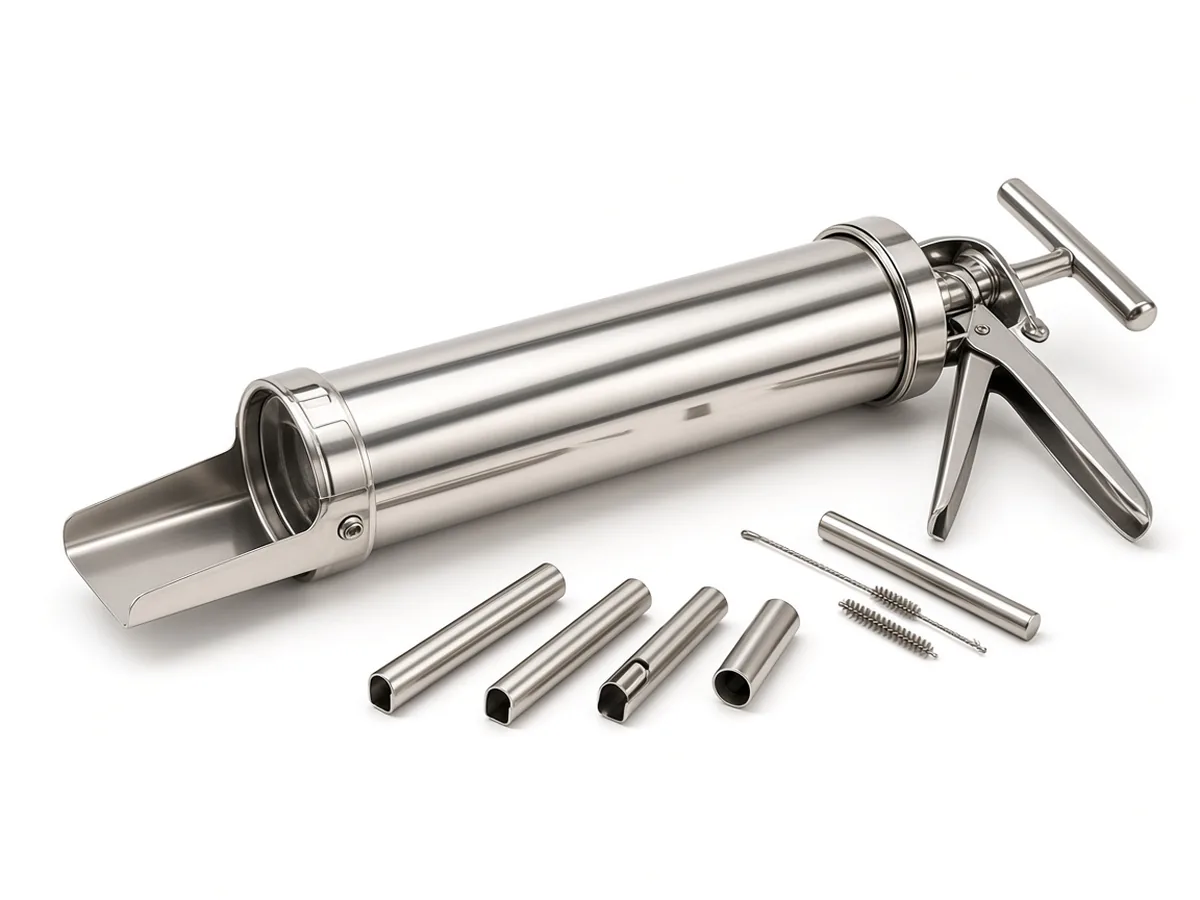
Lean meat or poultry, sliced about 1/4 inch thick. The NCHFP arranges strips close together but not touching or overlapping. For minced-meat strips instead of sliced whole muscle, see how to use a jerky gun.
A marinade kept in the refrigerator. USDA FSIS says to marinate in the fridge, and not to save marinade to reuse.
Fixed-heat machines such as the Presto 06300 (listed at about 165 °F, with no thermostat) can dry strips after a proper preheat, but you cannot turn them down to 130-140 °F. They are a special case, not a first pick. We do not include NESCO FD-75A; it had no purchasable Amazon US offer at our November 2026 checks.
Step 1: Slice lean meat 1/4 inch thick
Start with lean cuts and trim visible fat, which does not dry well and can go rancid. Slice strips about 1/4 inch thick. Keep raw meat cold, wash hands and tools, and use a clean cutting board. USDA FSIS also reminds you to thaw meat in the refrigerator, not on the counter, and to use or freeze ground beef and poultry within 2 days (whole red meats within 3 to 5 days).
The NCHFP notes that disease-causing microorganisms are harder to eliminate in ground meat than in whole strips, so if you make ground-meat jerky, follow the same heating step and the same safe-handling rules. For pork or wild game, the NCHFP says to freeze the meat first to kill the trichinella parasite: pieces 6 inches thick or less, at 0 °F or below, for at least 30 days, before you make jerky.
Step 2: Marinate in the refrigerator
The NCHFP covers the meat with marinade in a shallow pan, then refrigerates it for 1 to 2 hours or overnight. Longer marinades can taste saltier. USDA FSIS is clear on two points: marinate only in the refrigerator, and do not reuse the marinade.
Step 3: Heat the meat to 160 °F (poultry to 165 °F)
This is the safety step. USDA FSIS wants the meat itself at 160 °F, or poultry at 165 °F, before drying. The NCHFP's convenient pre-dry method is to bring the strips and marinade to a boil and boil for 5 minutes, then drain. If strips are thicker than 1/4 inch, that boil may need to last longer; if you can, check several strips with a metal-stem thermometer to confirm 160 °F.
If you prefer not to boil first, you can dry the strips and then use the NCHFP's post-dry oven step (step 6). The USDA-preferred order is still to heat first, then dry at 130-140 °F.
Step 4: Dry at a steady 130-140 °F
The NCHFP has you drain the strips on clean, absorbent towels, then arrange them on the trays close together but not touching or overlapping. Preheat the dehydrator or oven to 140 °F. USDA FSIS gives a slightly wider drying band of 130-140 °F after the wet-heat step. Do not raise the heat to finish faster. Kansas State University Extension, summarizing the same safe-drying advice, warns that a higher drying temperature can case-harden the outside and trap moisture inside.
Horizontal, rear-fan boxes such as the COSORI CP267-FD or the Excalibur Select 8-tray move air across each shelf. Stackable Nescos can work if you follow the heat step and check lower trays on a dense load. See vertical vs horizontal dehydrators and dehydrator not drying evenly if a batch dries unevenly.
See the COSORI CP267-FD product page, or check the Amazon listing.
Step 5: Test a cooled piece
The NCHFP doneness test is simple: a test piece should crack but not break when it is bent. Begin checking after about 3 hours. Strips that were heated in marinade dry faster. Samples that were not preheated may take 10 to 24 hours. When the jerky is done, pat off any beads of oil with clean, absorbent towels and let it cool before you pack it.
Always cool the test piece first. Warm jerky feels softer than it is.
Step 6: If you skipped the preheat, use the oven
If the strips were not heated in marinade before drying, the NCHFP and K-State both describe a post-dry oven step so the meat still reaches 160 °F. Place the dried strips on a baking sheet, close together but not overlapping, and heat them in a 275 °F oven for 10 minutes if they were originally cut 1/4 inch thick or less. Thicker strips may need longer. Then cool and pack.
Step 7: Cool, pack and store
The NCHFP packs cooled jerky in glass jars or heavy plastic food-storage bags, and lists vacuum packaging as a good option. It gives a short room-temperature life: about 2 weeks in a sealed container, or refrigerate or freeze it for longer. University of Wisconsin / UC guidance, in a tested dehydrator bulletin, has given 1 to 2 months at room temperature and up to 6 months in the freezer, with vacuum packing to extend shelf life. Treat those as cited ranges, not a guarantee, and use your nose and eyes. Our guide to how long dehydrated food lasts covers jars, conditioning of fruit, and signs of spoilage.
Which dehydrators can hold the drying temperature
Look for an adjustable thermostat that can hold 130-140 °F, then still do the 160 °F (or 165 °F poultry) heat step. On our live Amazon US catalog, that includes the COSORI CP267-FD, P501 and CFD-P103; the Excalibur Select 8-tray, 6-tray and 10-tray; the Nesco FD-79, FD-1018A and FD-1040; the LEM MightyBite and LEM BigBite; and the Hamilton Beach 32100A.
We do not treat the Magic Mill MFD-5000 as a confirmed jerky machine: its listing disagrees with itself on the ceiling (167 °F vs 158 °F). The Nesco FD-60 tops out at 155 °F, so it is the weaker Snackmaster unless you add a tested pre- or post-heat step, and that listing also has a 220 V field to verify. We rank the live options in best dehydrators for jerky.
Related on Amazon: TENICPS Stainless Steel Jerky Gun Kit.
Related on Amazon: Nesco FD-79 Snackmaster Pro Digital Food Dehydrator.
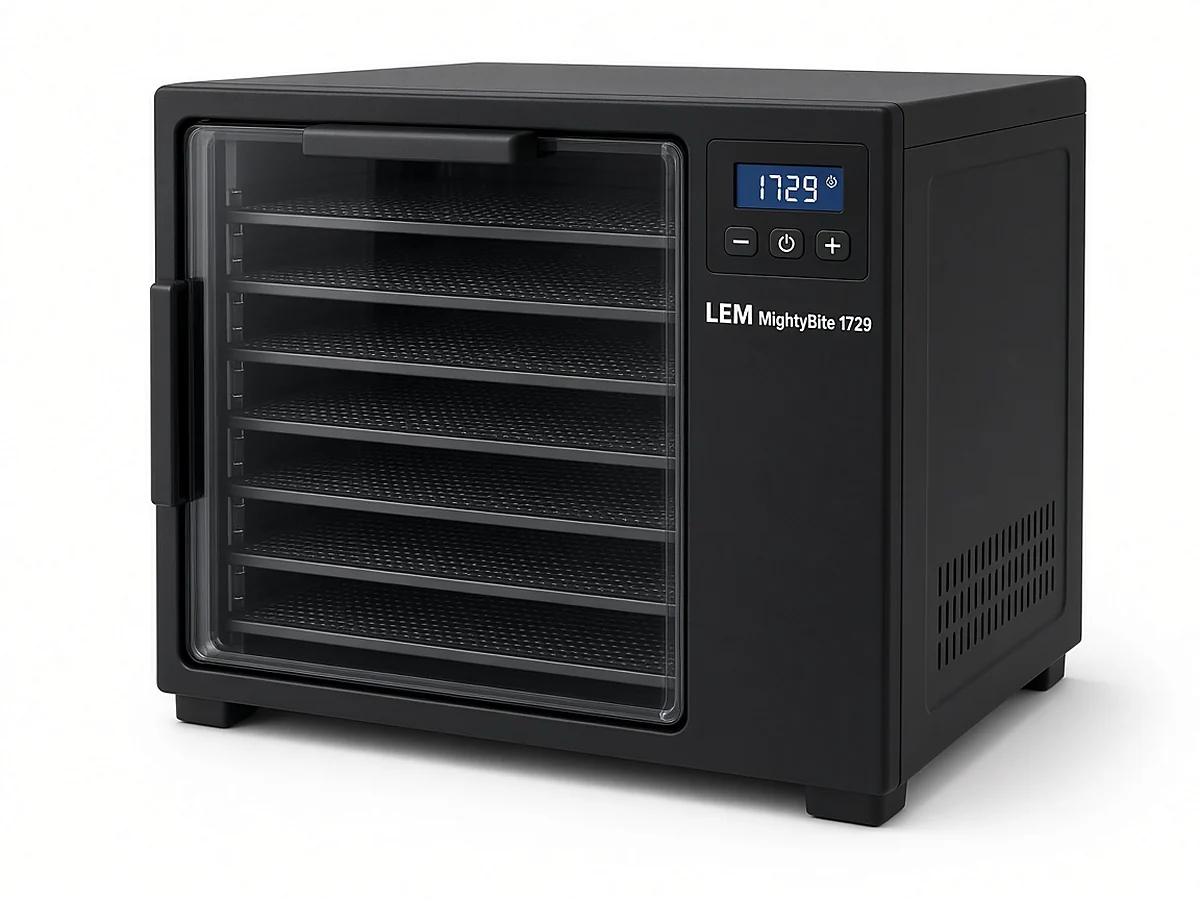
Related on Amazon: LEM MightyBite 6-Tray Food & Jerky Dehydrator.
Amazon listings for the products in this guide
Direct links to the Amazon listings for the products named or shown in this guide:
- COSORI CP267-FD Food Dehydrator, 6 Stainless Trays – View on Amazon
- Nesco FD-79 Snackmaster Pro Digital Food Dehydrator, 4 Trays – See the Amazon listing
- COSORI P501 Food Dehydrator, 5 Stainless Trays – Check availability on Amazon
- Excalibur Select DH08SCSS13 Food Dehydrator, 8 Trays – View on Amazon
- LEM MightyBite 6-Tray Food & Jerky Dehydrator (1729) – See the Amazon listing
- Hamilton Beach 32100A Digital Food Dehydrator, 5 Trays – Check availability on Amazon
Frequently asked questions
What temperature should I use to make jerky in a dehydrator?
USDA FSIS says to heat meat to 160 °F, or poultry to 165 °F, first, then keep the dehydrator at a constant 130-140 °F. The NCHFP dries at 140 °F after the same 160 °F heat step (a 5-minute boil in marinade, or a 275 °F oven for about 10 minutes after drying).
How long does jerky take in a dehydrator?
The NCHFP says to begin checking after 3 hours. Strips heated in marinade dry faster. Strips that were not preheated may take 10 to 24 hours. Thickness, humidity and how full the trays are all change the clock, so use the bend test, not a timer alone.
Can I make jerky in a dehydrator that only reaches 155 °F or 158 °F?
A listing ceiling below 160 °F is not the same as the meat reaching 160 °F, and even a 165 °F dial is not a kill step on its own. You can still use a tested pre- or post-heat step (the NCHFP boil or the 275 °F oven method), then dry in the 130-140 °F band if the machine can hold it. If the listing conflicts or tops out at 155-158 °F, do not assume the meat is safe because the dial is near 160 °F.
Do I need a horizontal dehydrator for jerky?
Horizontal, rear-fan units dry more evenly and keep drips off the heater, which is why many jerky makers prefer them. A stackable with a thermostat can still work if you heat the meat properly and check the trays. See vertical vs horizontal dehydrators.
Sources
USDA Food Safety and Inspection Service, "Jerky and Food Safety"
National Center for Home Food Preservation, "Jerky"
Penn State Extension, "Drying Jerky"
Kansas State University Extension, "Drying Meat"