
How to Dehydrate Fruit at Home
Published 11/14/2026 · Updated 11/24/2026
Quick answer
To dehydrate fruit at home, slice it evenly, pretreat varieties that brown, and dry at 140 °F until a cooled piece is leathery and pliable with no moist spots. That is the National Center for Home Food Preservation (NCHFP) temperature and doneness test. Times run from about 6 hours for thin apple slices to as long as 36 hours for peach halves, according to Colorado State University Extension.
Products mentioned in this guide
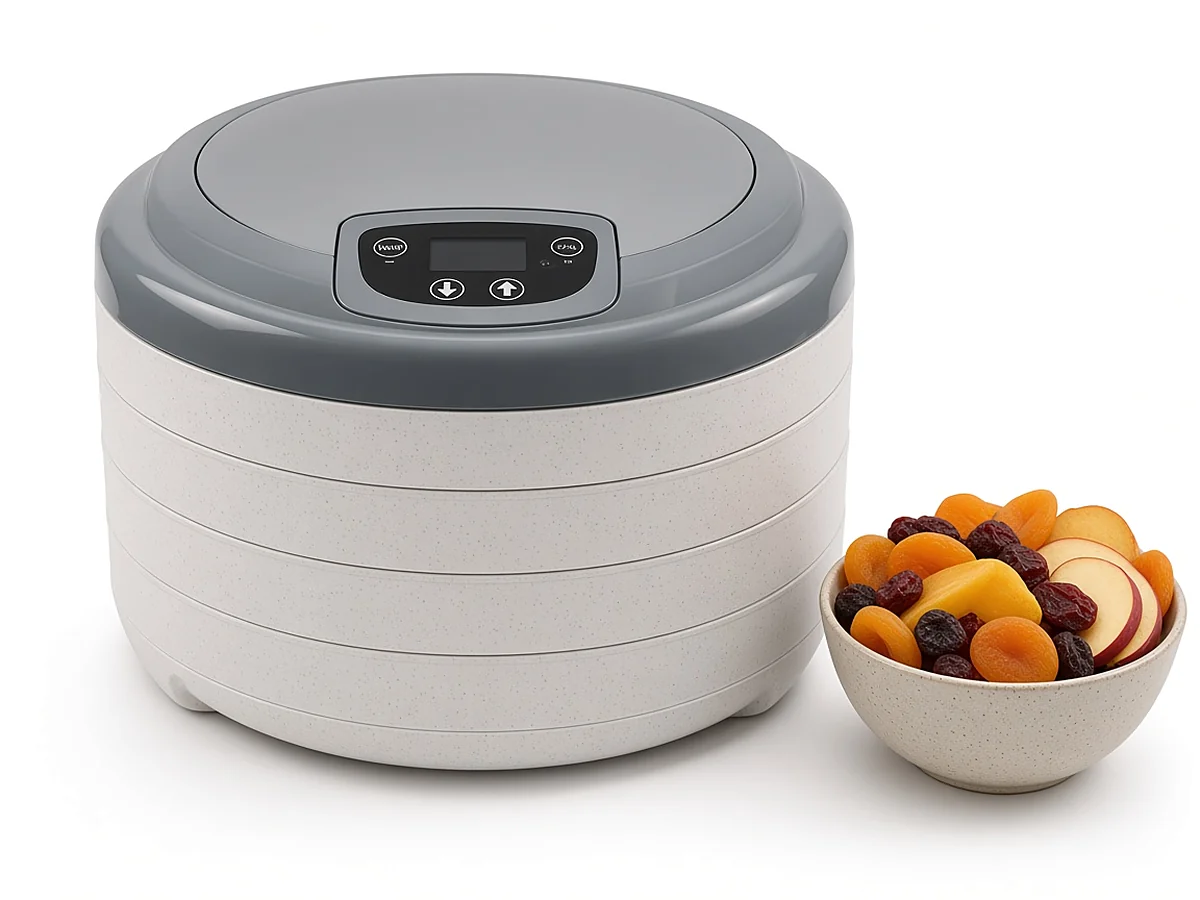
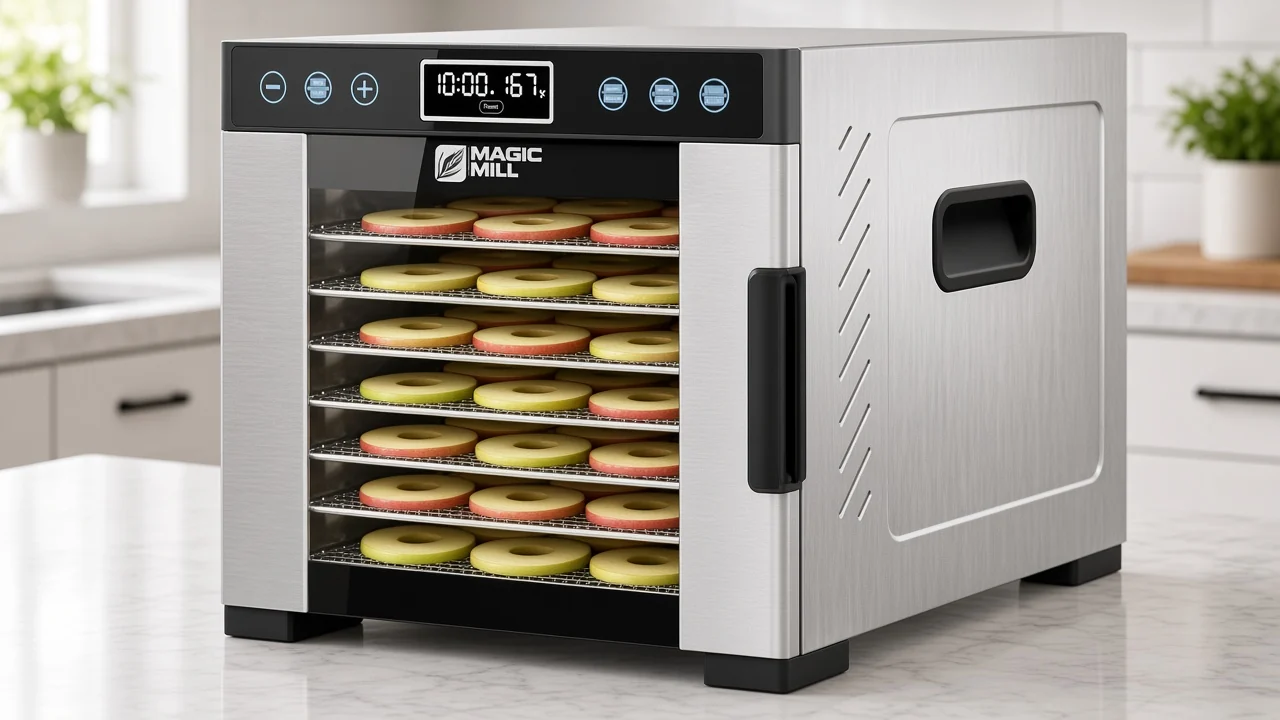 Magic Mill Pro MFD-7700 Food Dehydrator, 7 Stainless TraysMagic Mill · Dehydrator
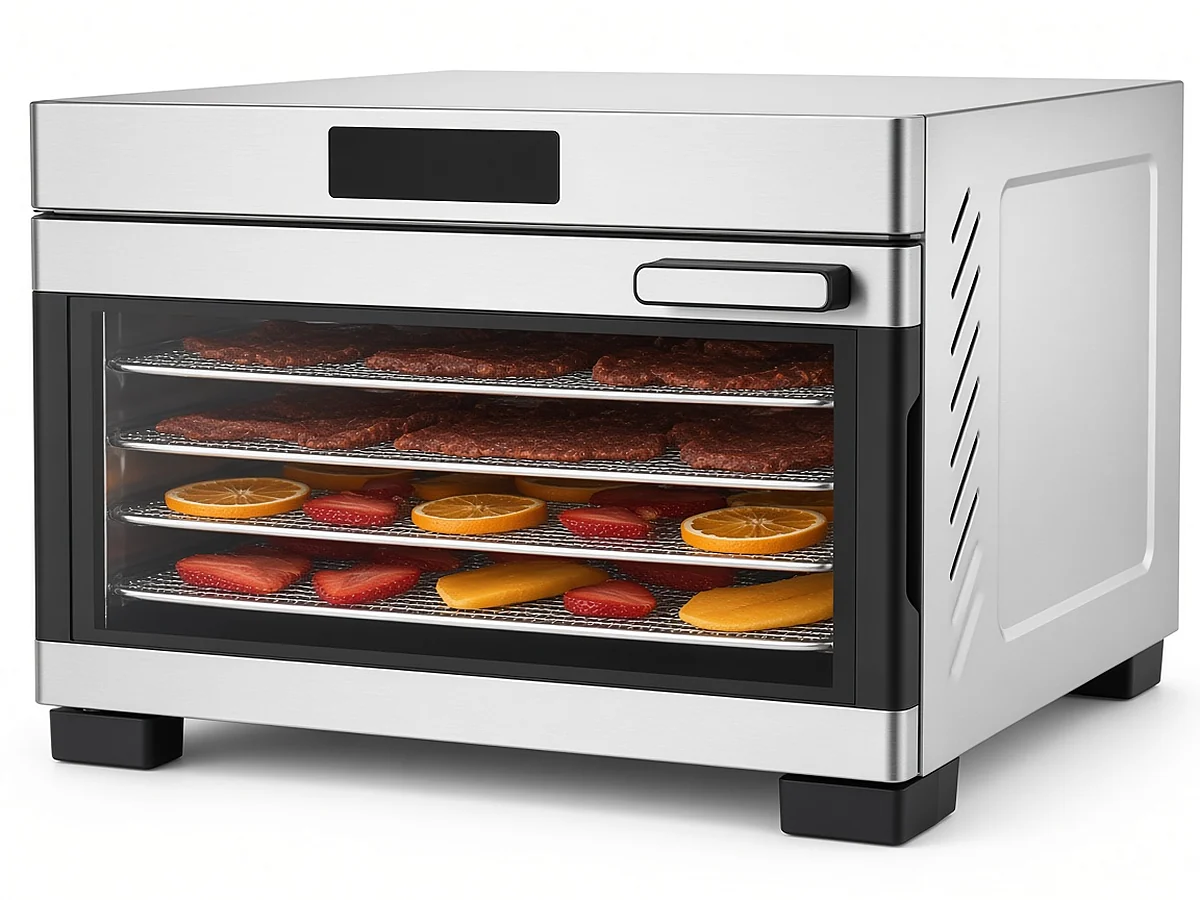
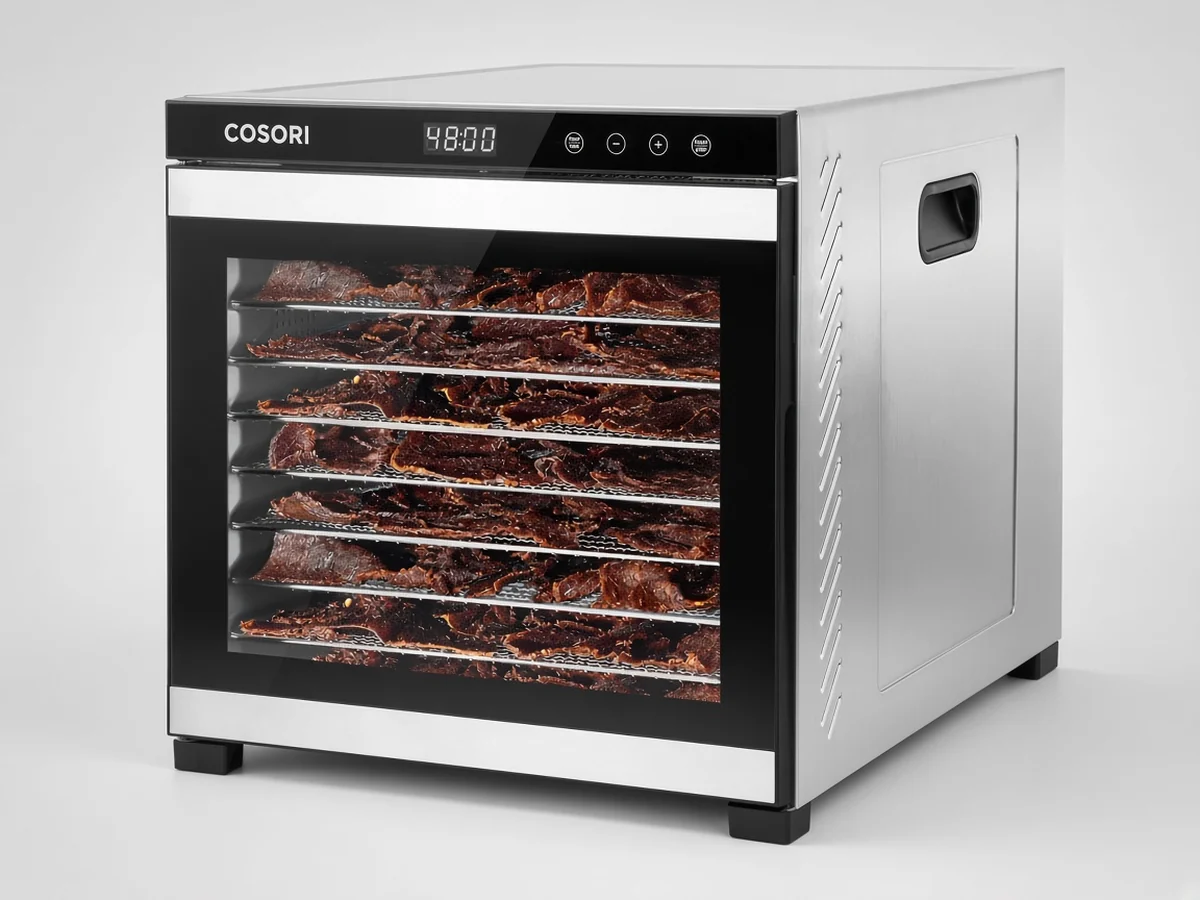
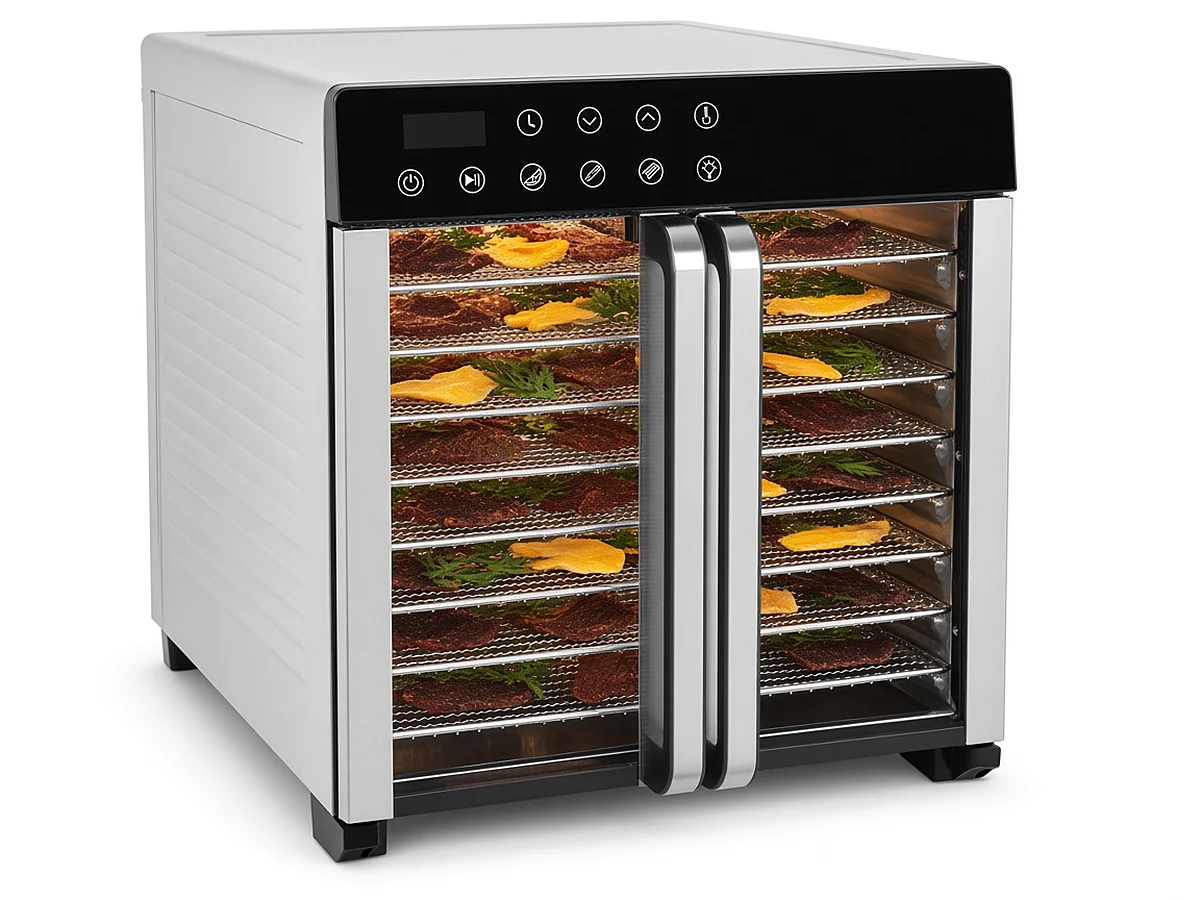 Excalibur Select DH08SCSS13 Food Dehydrator, 8 TraysExcalibur · Dehydrator
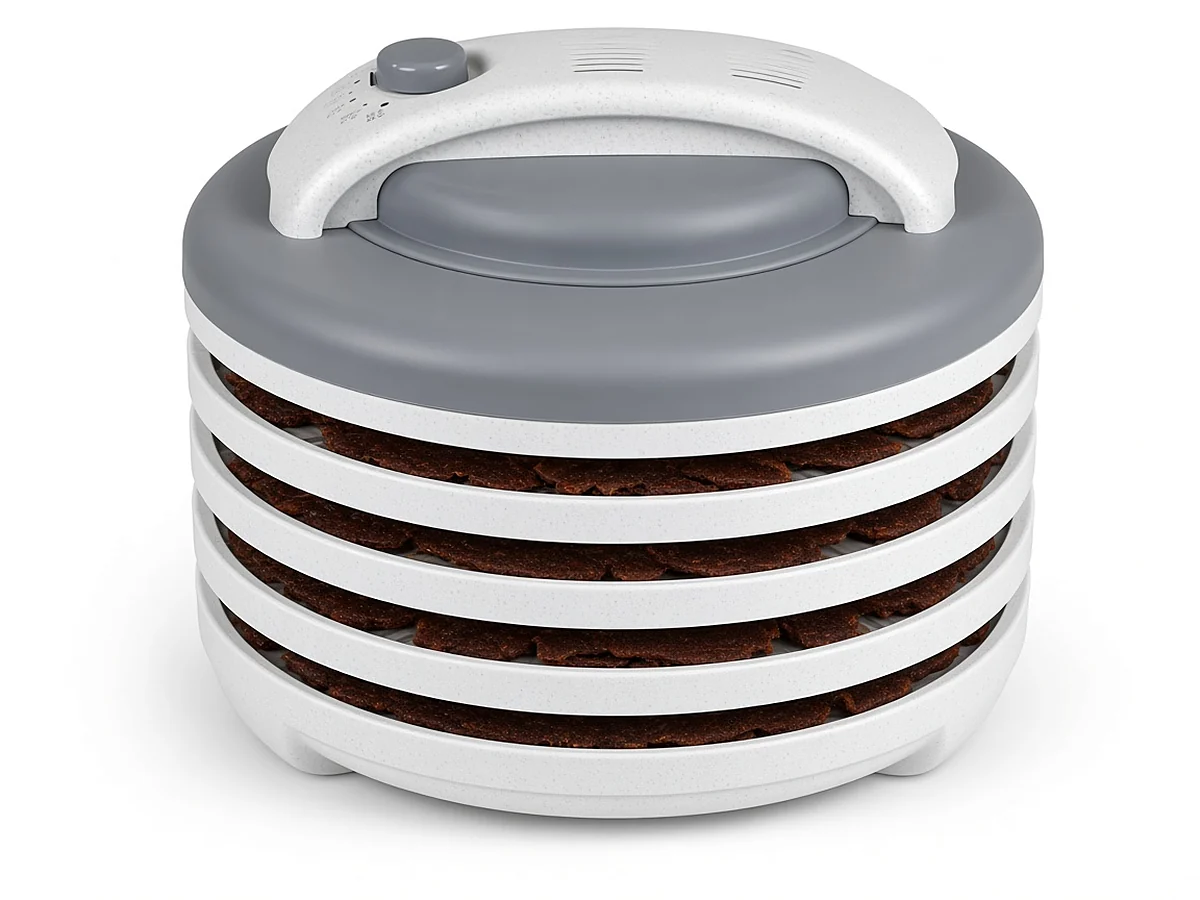
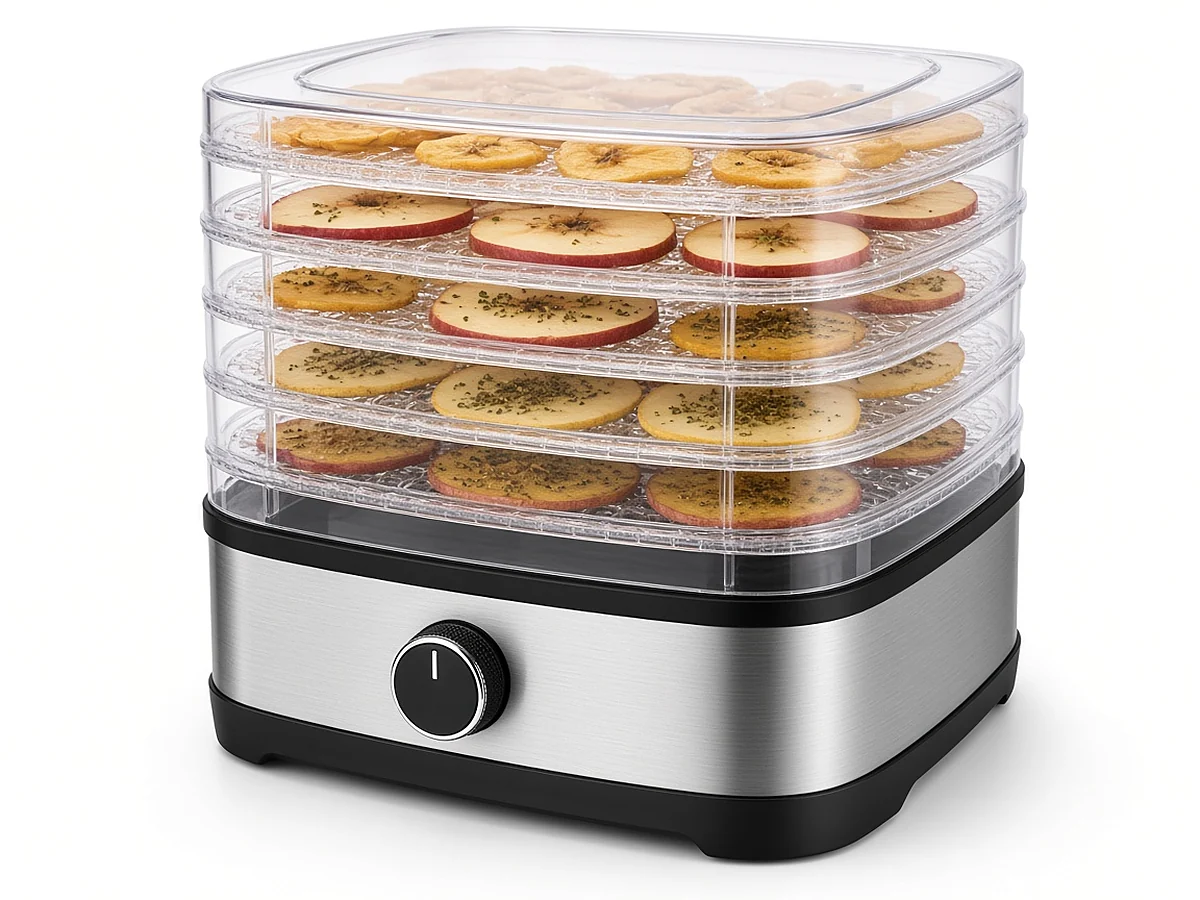
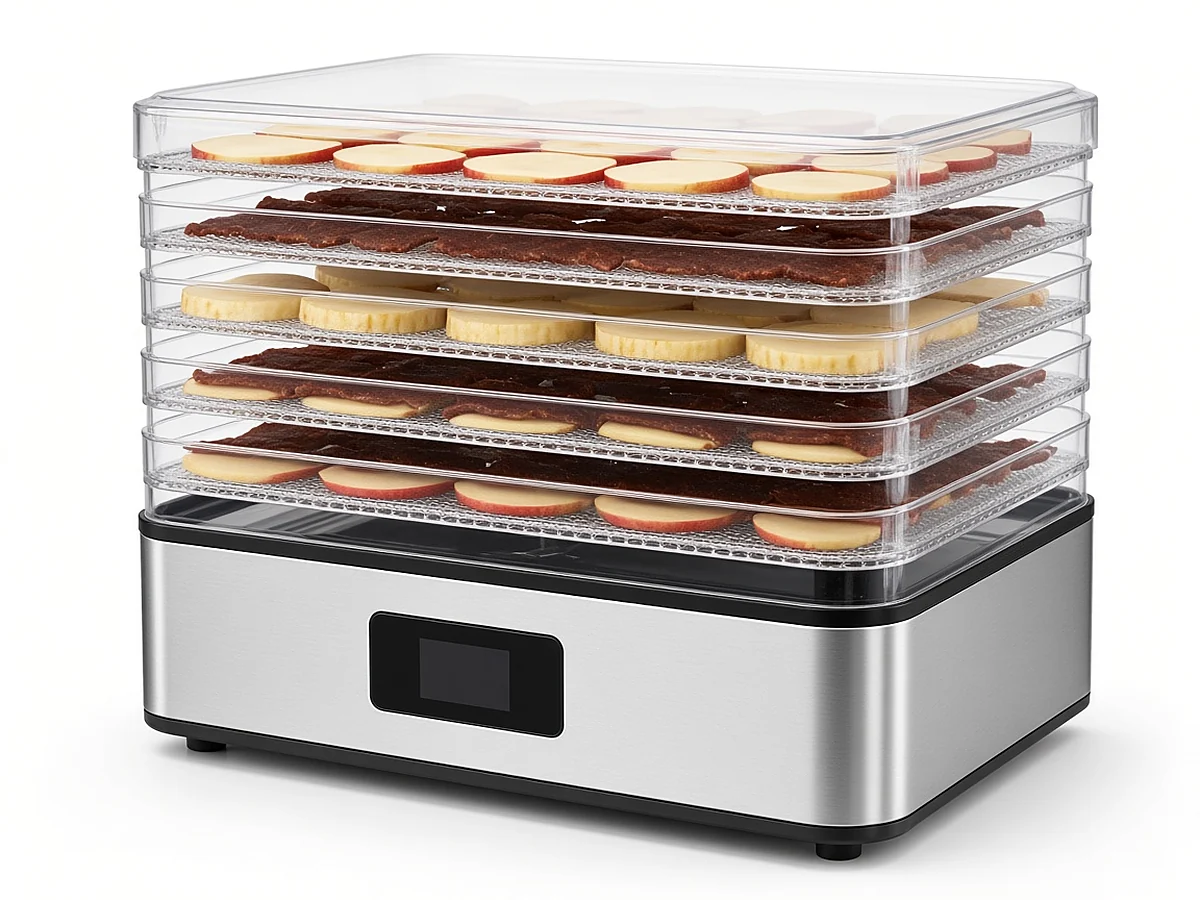 Magic Mill MFD-5000 Food Dehydrator, 5 Stainless TraysMagic Mill · Dehydrator
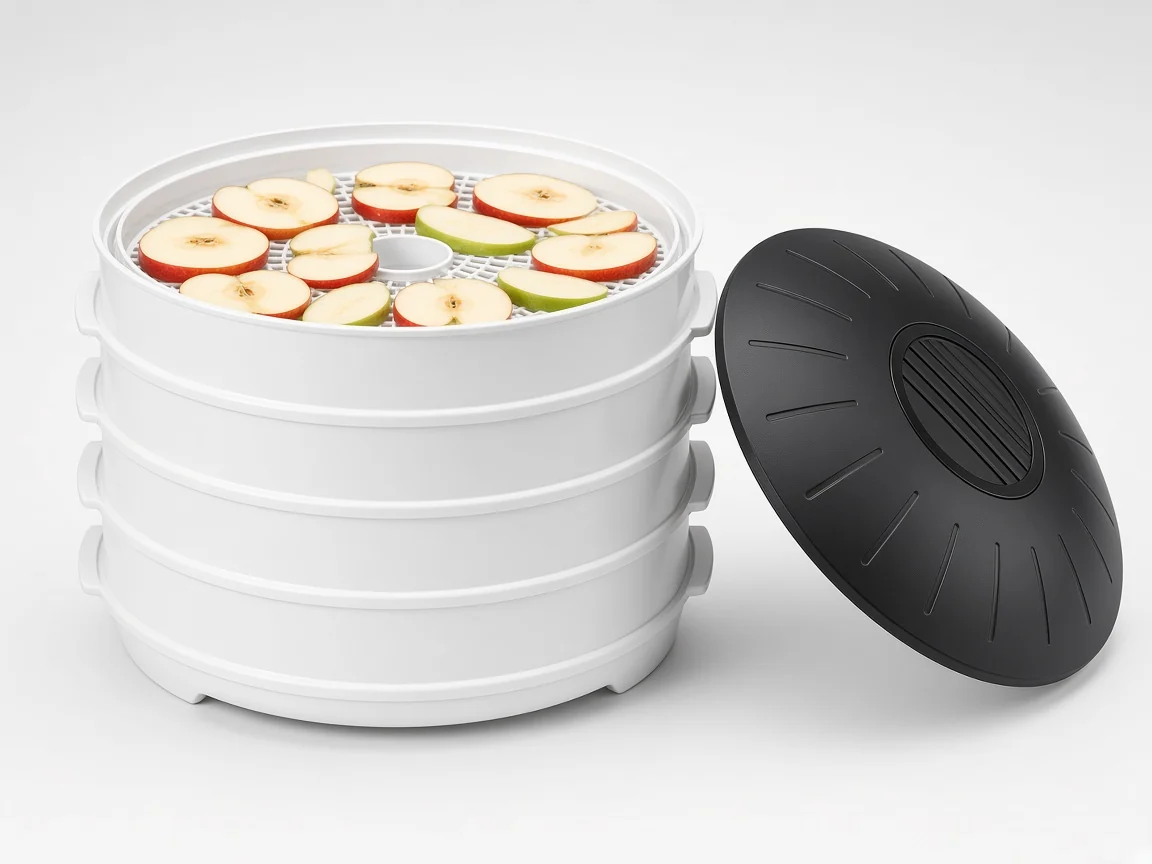
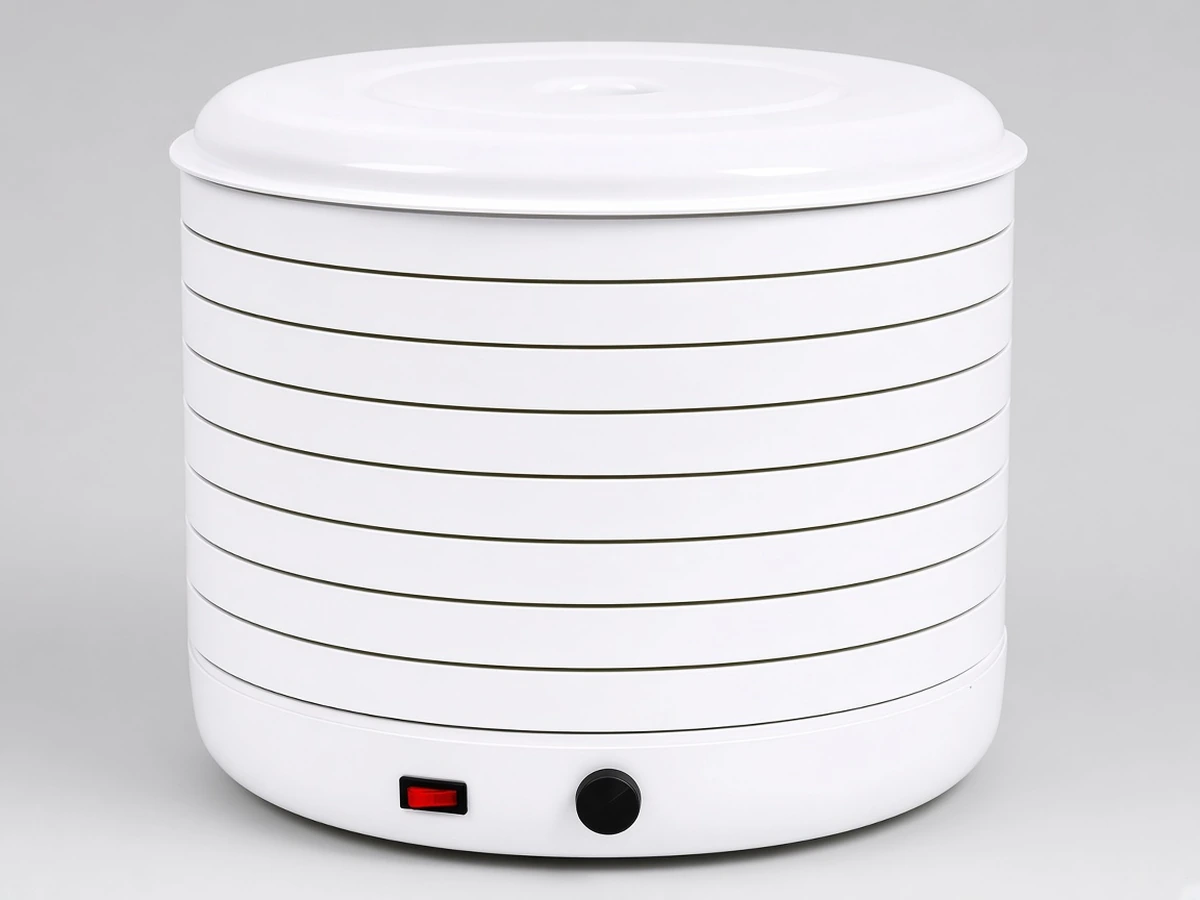
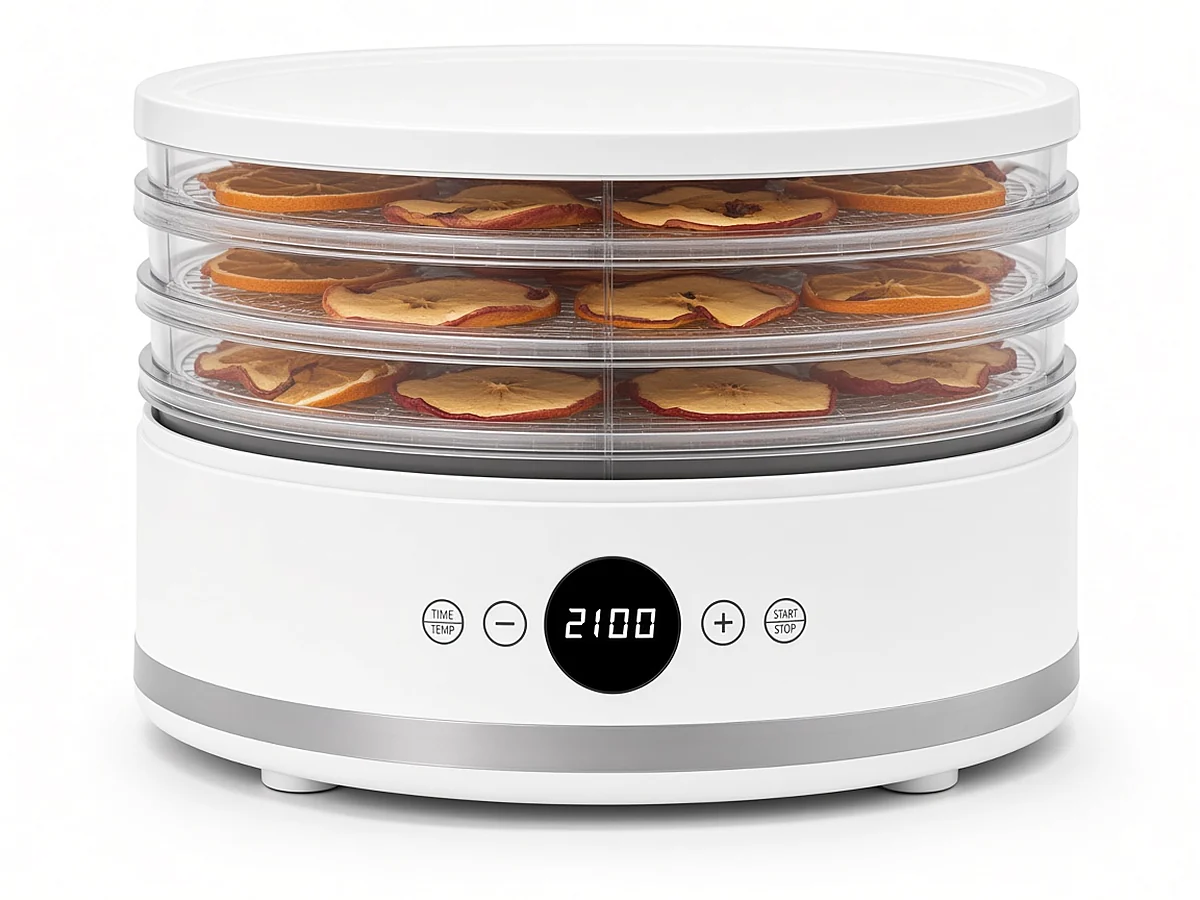 Elite Gourmet EFD329WD Digital Food Dehydrator, 5 SlimStore TraysElite Gourmet · Dehydrator
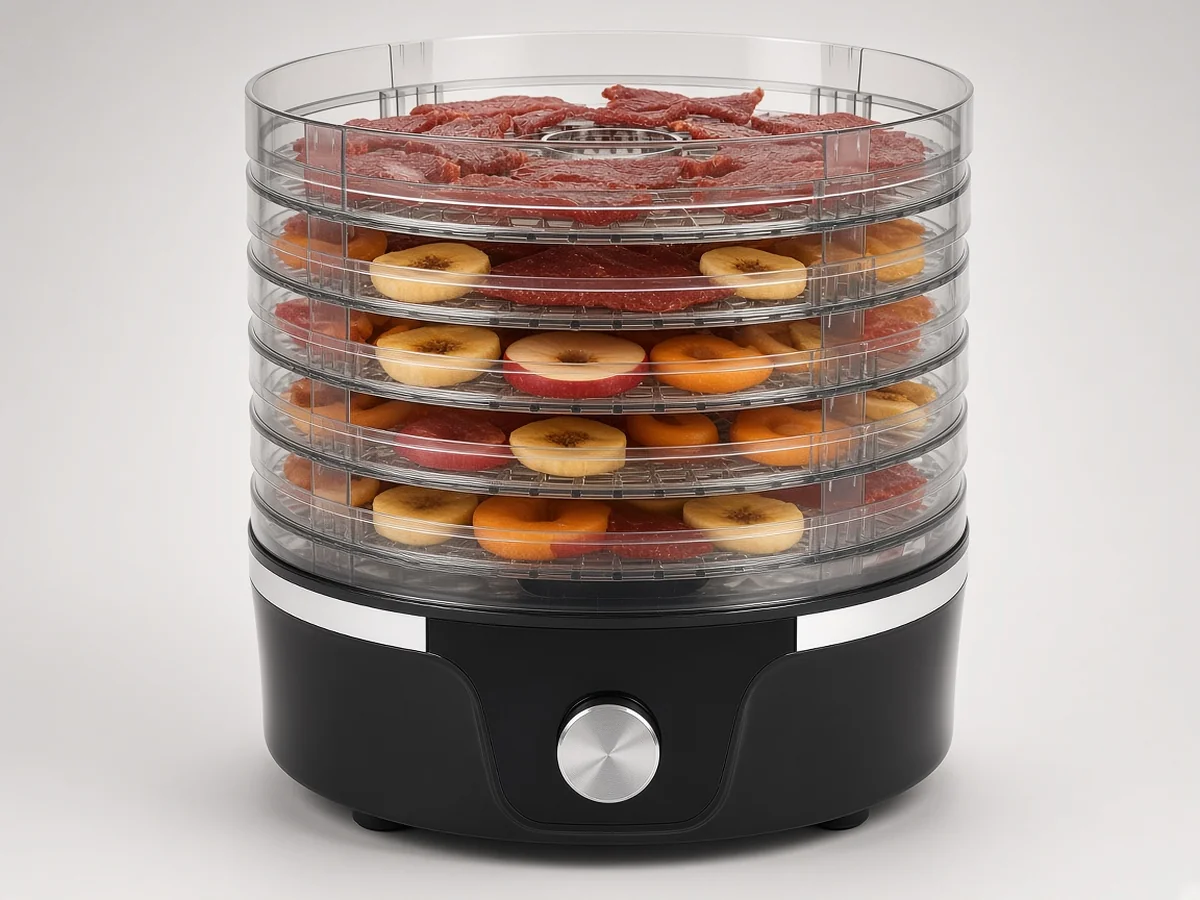
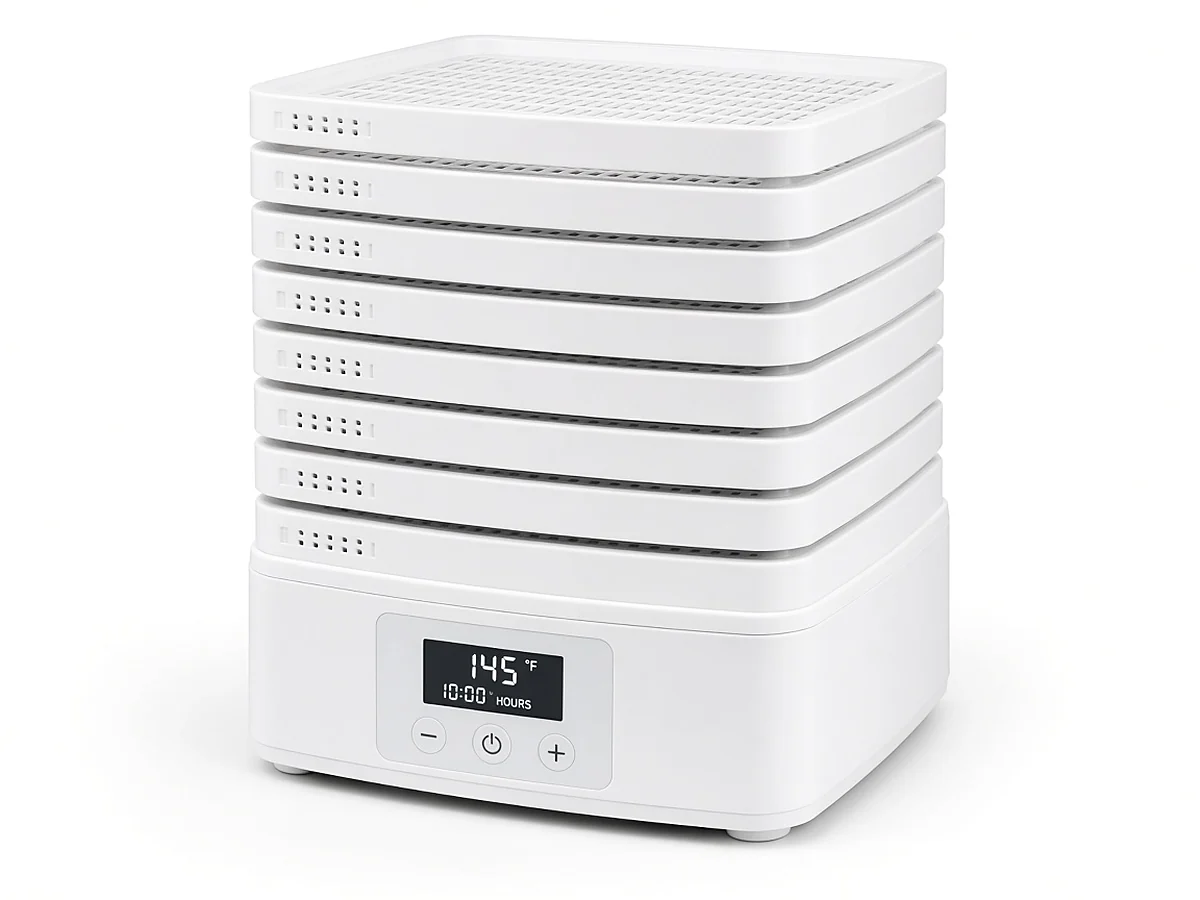
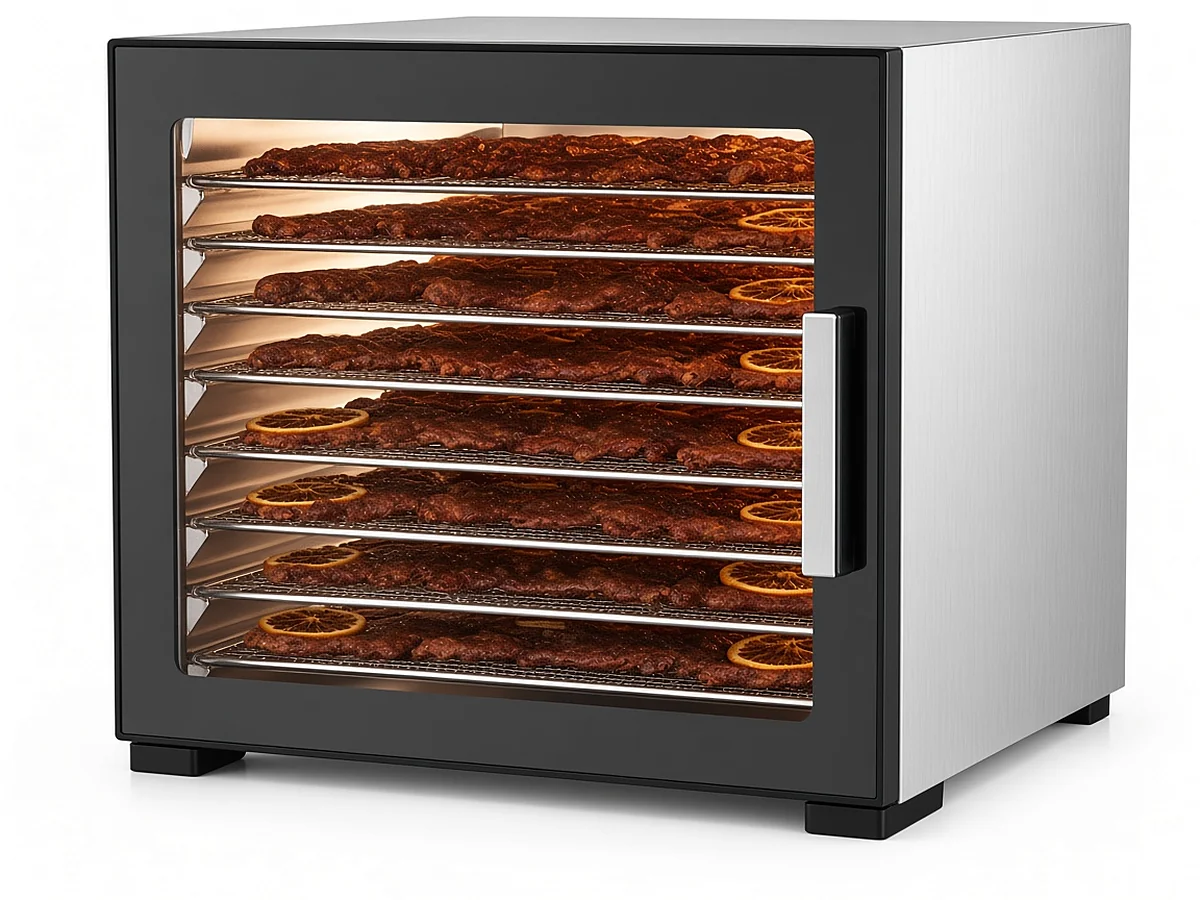
How-To · Food Dehydrators, Fruit
Last updated: November 2026
Quick verdict: To dehydrate fruit at home, slice it evenly, pretreat varieties that brown, and dry at 140 °F until a cooled piece is leathery and pliable with no moist spots. That is the National Center for Home Food Preservation (NCHFP) temperature and doneness test. Times run from about 6 hours for thin apple slices to as long as 36 hours for peach halves, according to Colorado State University Extension. Then condition the fruit in jars for 7 to 10 days before long storage.
This is the general fruit method. Official temperatures for herbs, vegetables and jerky are in our dehydrator temperature chart. A first-batch walkthrough is in how to use a food dehydrator.
What you need to dehydrate fruit
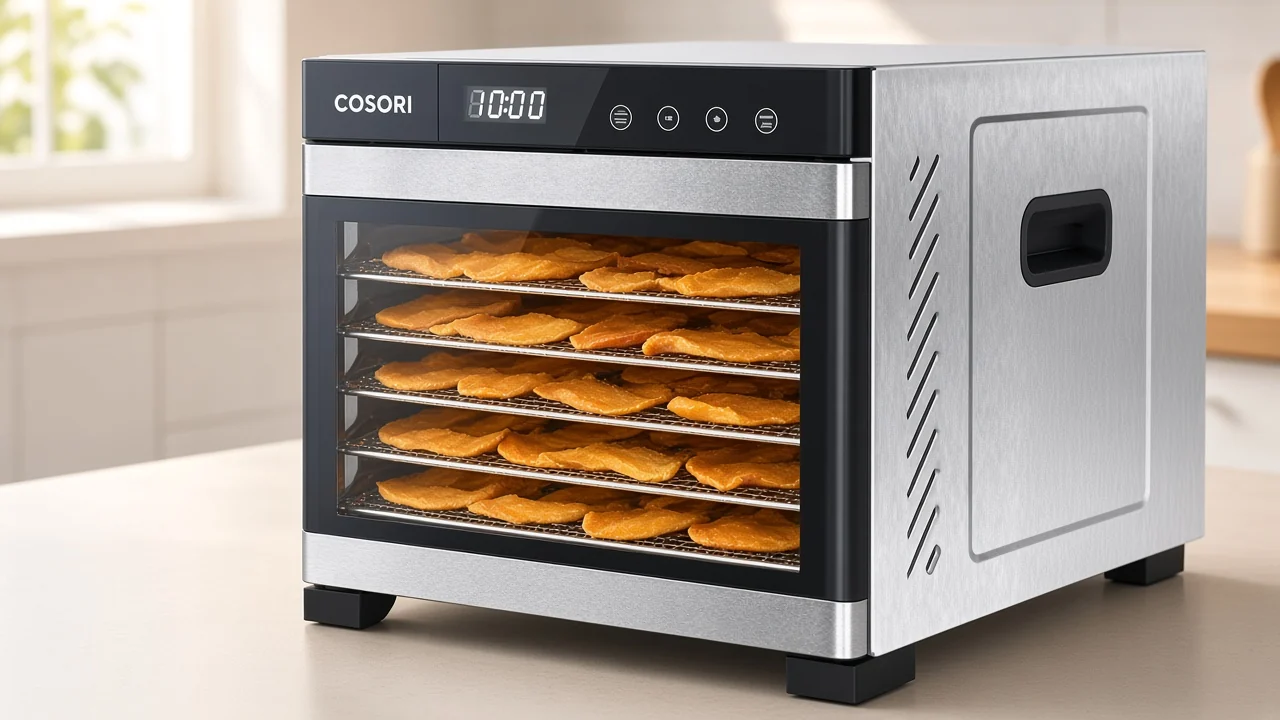
A dehydrator that can hold 140 °F. Adjustable examples on our Amazon US catalog include the COSORI CP267-FD (95-165 °F), COSORI P501 (95-176 °F), Magic Mill MFD-7700 (plan around the maker's 167 °F figure if the listing disagrees), Nesco FD-79, Excalibur Select 8-tray (85-165 °F) and the budget Magic Mill MFD-5000 (plan around the lower 158 °F listing figure). The Presto 06300 is fixed at about 165 °F, so it cannot hold 140 °F exactly and is a poorer match for fruit you want to keep pliable.
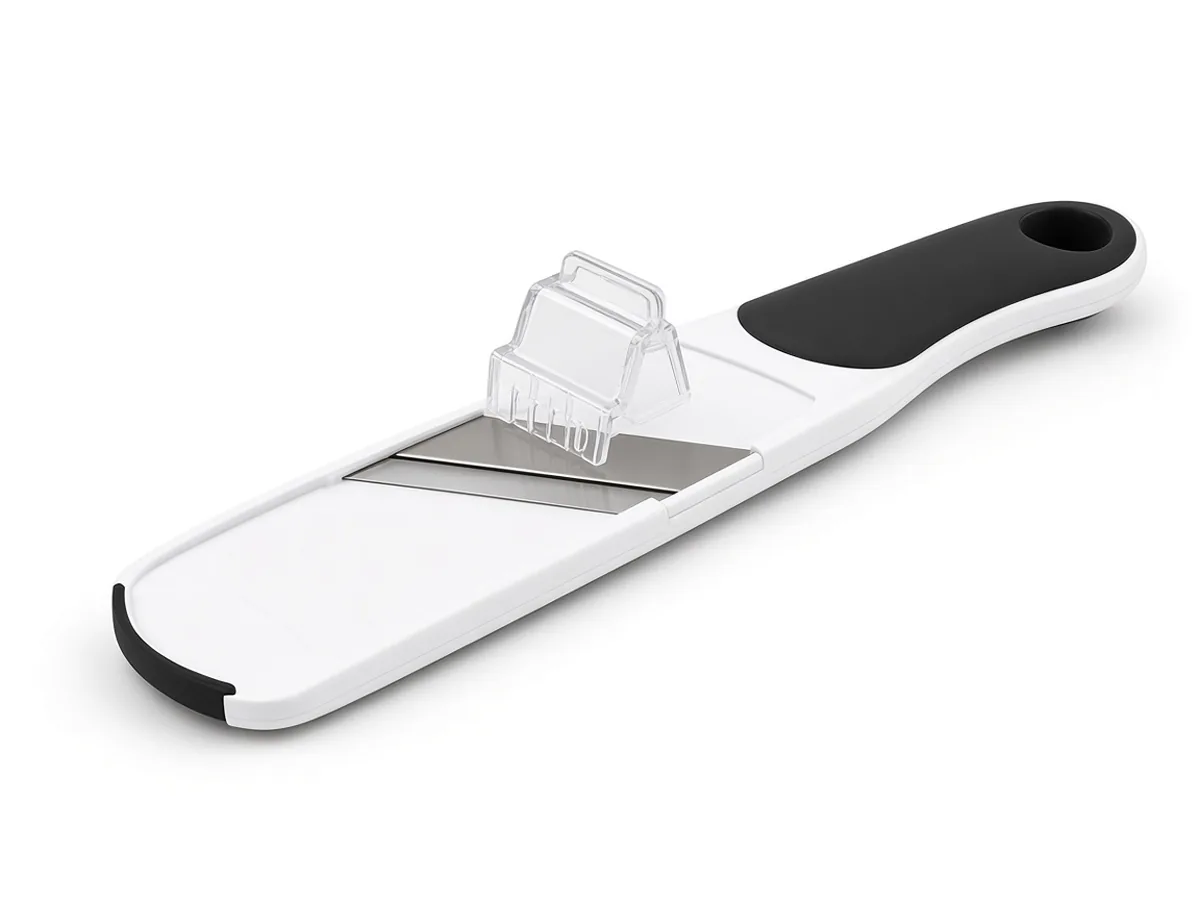
A sharp knife so slices are even. Uneven slices finish at different times. A handheld mandoline walkthrough is in how to slice fruit and vegetables evenly for a dehydrator.
An ascorbic-acid or lemon-juice dip for light-colored fruit such as apples, pears, peaches and bananas, which the NCHFP recommends to limit browning.
Clean glass jars for conditioning and storage. See how to store dehydrated food.
See the COSORI CP267-FD product page, or check the Amazon listing.
Step 1: Wash, peel if needed, and slice evenly
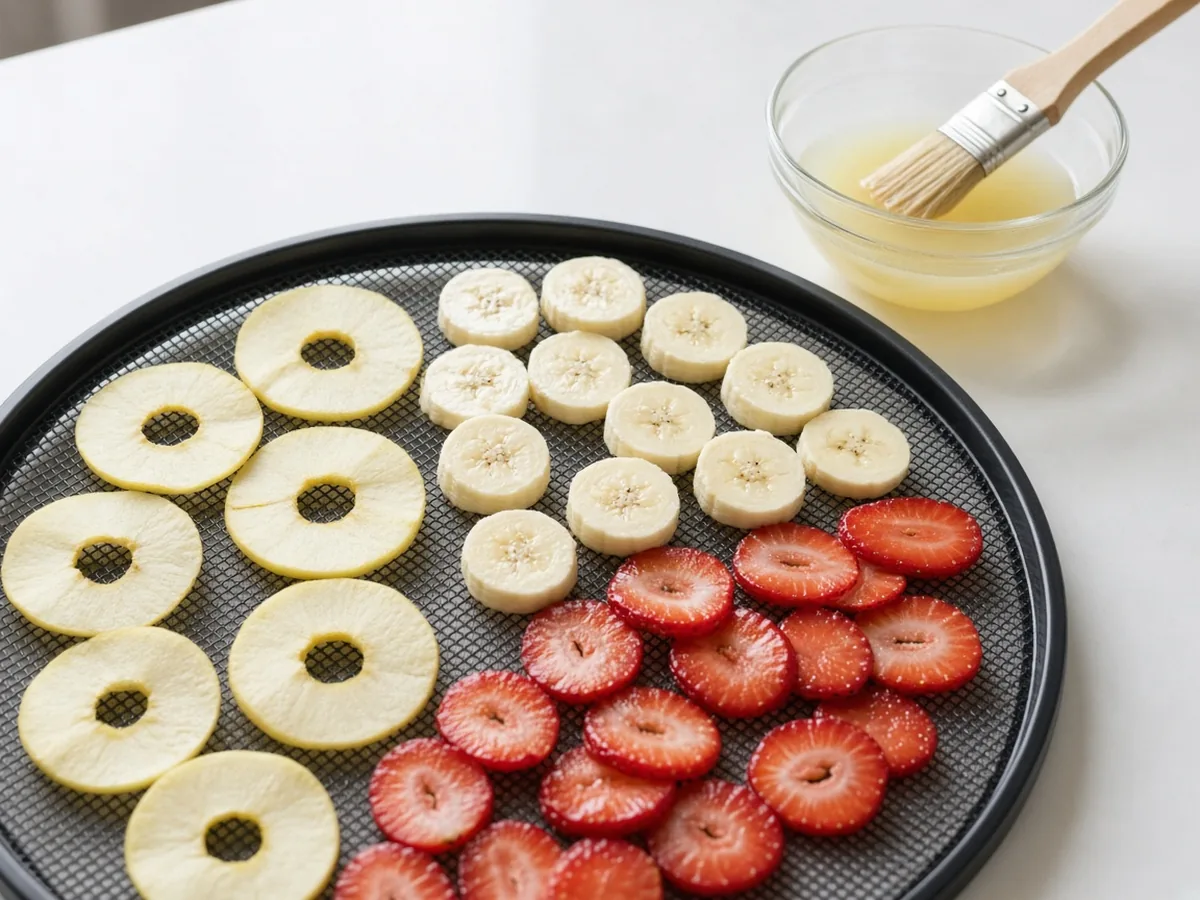
Wash the fruit. Peel if the skin is tough or waxed; many apple and pear slices keep the peel on if you prefer. Cut pieces to a consistent thickness so the tray finishes together. Discard bruised or spoiled parts. Work in batches you can load promptly, so cut surfaces do not sit out.
Step 2: Pretreat fruit that browns
The NCHFP recommends pretreating light-colored fruit such as apples, pears, peaches and bananas with an ascorbic-acid or similar dip to limit browning. A lemon-juice dip is a common kitchen stand-in for that acid pretreatment. Drain well so the trays are not wetter than they need to be. Berries and already-dark fruit are often dried without that dip; follow the NCHFP directions for the fruit you have.
Step 3: Load the trays in a single layer
Spread the slices in a single layer, with a little space for air. Do not overlap. Horizontal, rear-fan boxes such as the COSORI CP267-FD or Excalibur Select move air across each shelf. Stackable Nescos and the MFD-5000 can work if you check lower or upper trays mid-cycle; see dehydrator not drying evenly and vertical vs horizontal dehydrators.
Step 4: Dry at 140 °F
Set the dehydrator to 140 °F, the NCHFP temperature for fruit. Do not turn the heat up to finish faster. Clemson Cooperative Extension warns that too much heat can case-harden the outside and trap moisture inside, which later lets the fruit mold. Leave the unit to run, and start checking the thinnest pieces first.
Colorado State University Extension gives a wide but useful window: about 6 hours for thin apple slices, and up to 36 hours for peach halves. Your batch will land somewhere in that kind of range, depending on thickness, humidity and how full the trays are.
Step 5: Test a cooled piece
The NCHFP doneness test for fruit is that it should be leathery and pliable, with no moist spots when you tear or squeeze a piece. The NCHFP also says home-dried fruit should hold about 20 percent moisture. Always cool a test piece first; warm fruit feels softer than it really is.
Step 6: Condition, then store
Pieces dry at slightly different rates. The NCHFP recommends conditioning home-dried fruit: pack the cooled fruit loosely in sealed jars for 7 to 10 days, shake daily, and if condensation appears, return it to the dehydrator. After conditioning, store the fruit airtight, cool, dry and dark. The NCHFP gives about 1 year at 60 °F, or about 6 months at 80 °F, for dried fruit, and a general home-dried storage range of 4 months to 1 year. Details and spoilage signs are in how to store dehydrated food and how long it lasts.
Apples, bananas, strawberries and other usual trays
The method above is the same for the fruits people search for most. Apples and bananas brown, so they are the ones to pretreat. Strawberries and other berries are usually just washed, hulled or sliced, and dried at the same 140 °F until leathery, not sticky. We do not invent a separate timer for each fruit; use the Colorado State range as a starting window and the cooled-piece test as the stop rule.
If you want fruit leather instead of slices, Illinois Extension (following the NCHFP recipe) also uses 140 °F, and the leather is done when it has no sticky spots and peels cleanly. That is a different project from sliced fruit, with its own tray liners or fruit-roll sheets.
Related on Amazon: OXO Good Grips Handheld Mandoline Slicer.
Related on Amazon: Presto 06300 Dehydro Electric Food Dehydrator.
Related on Amazon: Nesco FD-60 Snackmaster Express Food Dehydrator.
Amazon listings for the products in this guide
Direct links to the Amazon listings for the products named or shown in this guide:
- COSORI CP267-FD Food Dehydrator, 6 Stainless Trays – View on Amazon
- COSORI P501 Food Dehydrator, 5 Stainless Trays – See the Amazon listing
- Magic Mill Pro MFD-7700 Food Dehydrator, 7 Stainless Trays – Check availability on Amazon
- Nesco FD-79 Snackmaster Pro Digital Food Dehydrator, 4 Trays – View on Amazon
- Excalibur Select DH08SCSS13 Food Dehydrator, 8 Trays – See the Amazon listing
- Magic Mill MFD-5000 Food Dehydrator, 5 Stainless Trays – Check availability on Amazon
Frequently asked questions
What temperature should I dehydrate fruit at?
140 °F, per the NCHFP. That is also the vegetable setting. Herbs go much lower; jerky needs a separate heat step. See the dehydrator temperature chart.
How long does it take to dehydrate fruit?
It depends on the fruit and the slice. Colorado State University Extension gives about 6 hours for thin apple slices and up to 36 hours for peach halves. Check a cooled piece rather than watching the clock alone.
How do I know when dehydrated fruit is done?
Let a piece cool, then check it. It should be leathery and pliable, with no moisture when torn or squeezed. Then condition it in jars for 7 to 10 days before long storage, as the NCHFP describes.
Can I dehydrate fruit in an oven or air fryer?
You can dry small amounts that way, but a dehydrator holds a steady 140 °F for hours more easily. See dehydrator vs oven vs air fryer.
Sources
National Center for Home Food Preservation, drying fruits and fruit conditioning
Colorado State University Extension, fruit drying times
Clemson Cooperative Extension, case hardening from excessive heat
Illinois Extension, fruit leather doneness