
How to Store Dehydrated Food and How Long It Lasts
Published 10/29/2026 · Updated 11/24/2026
Quick answer
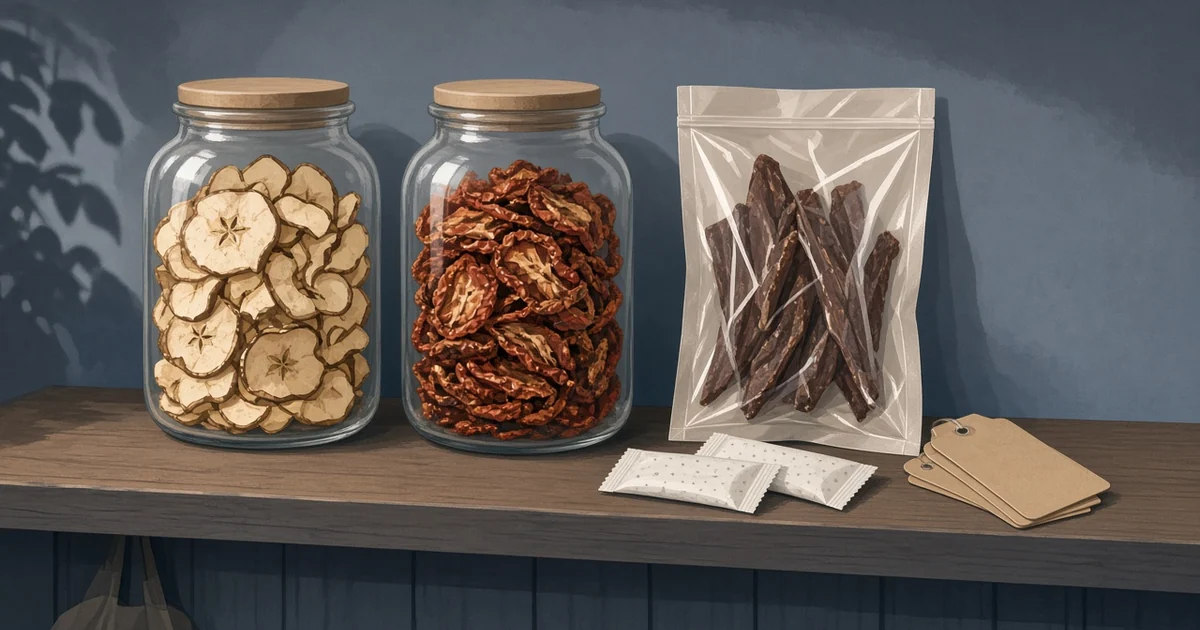
Store dehydrated food only after it has cooled completely, then pack it airtight with as little headspace as practical. Condition fruit for several days in a jar before long storage, and treat jerky as a short room-temperature food unless you refrigerate or freeze it.
Products mentioned in this guide
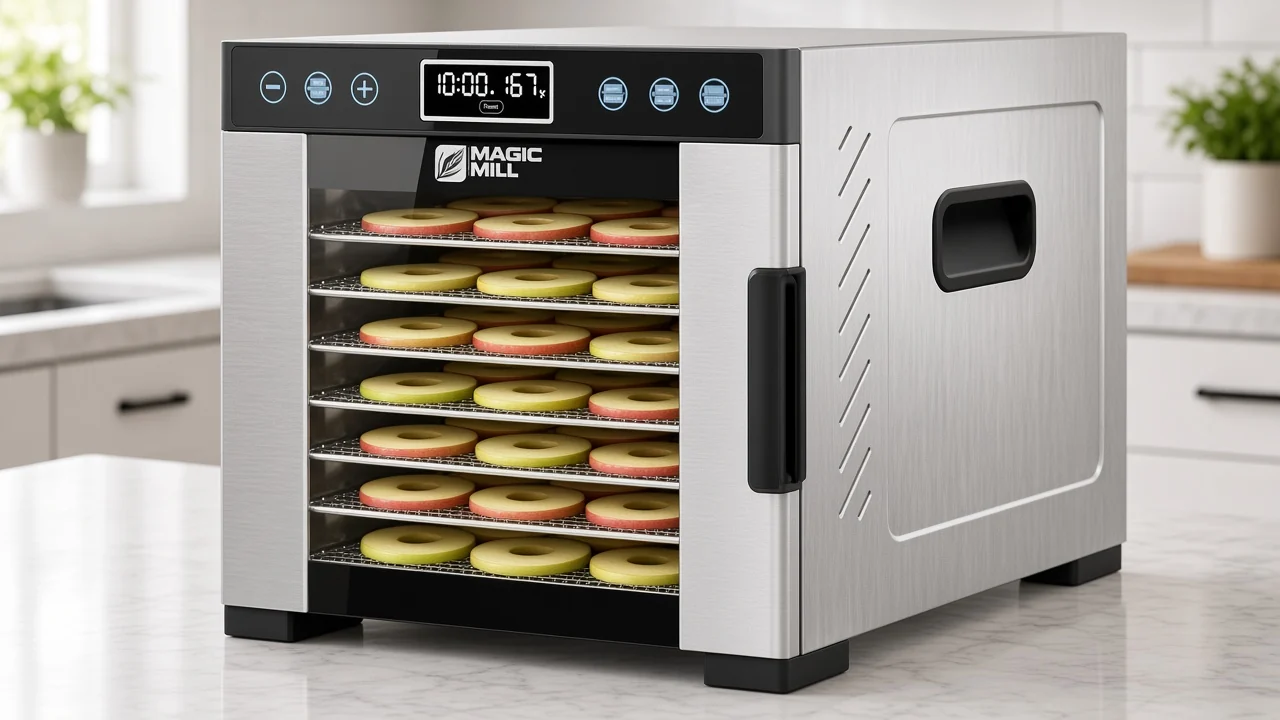 Magic Mill Pro MFD-7700 Food Dehydrator, 7 Stainless TraysMagic Mill · Dehydrator
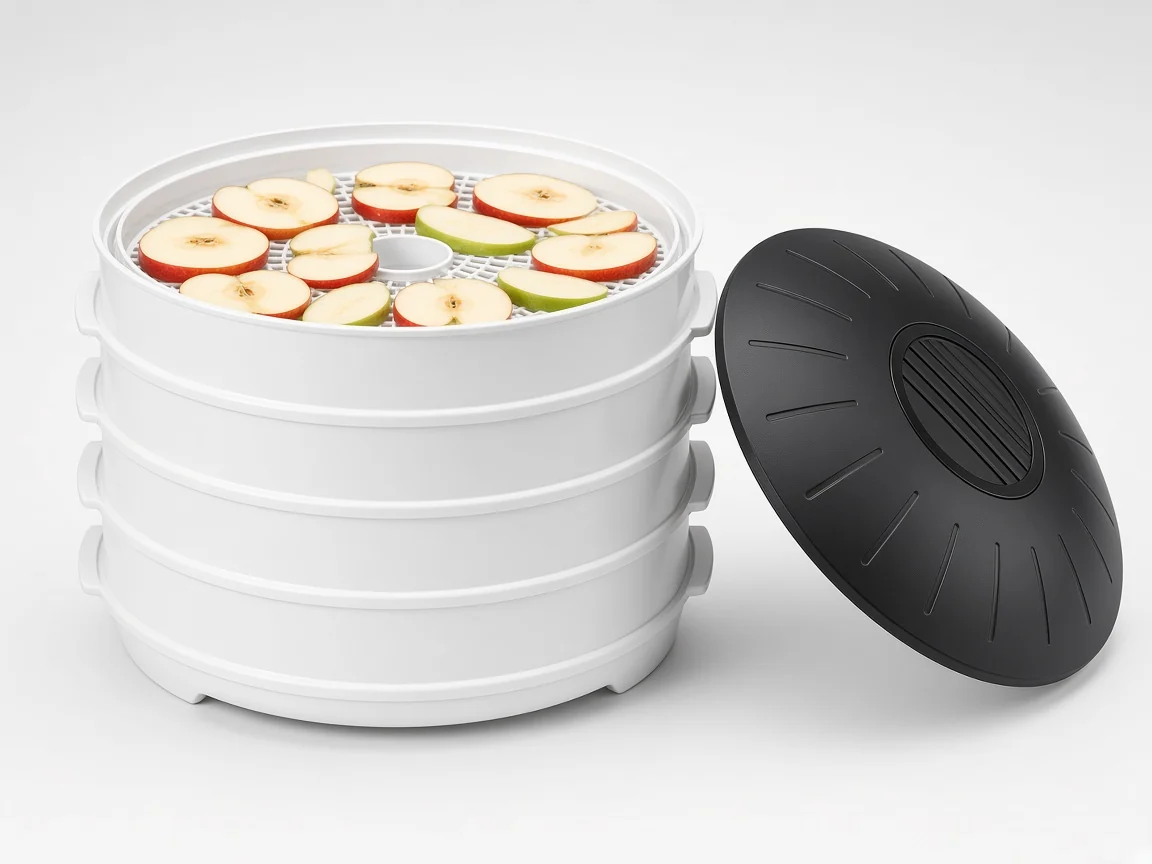
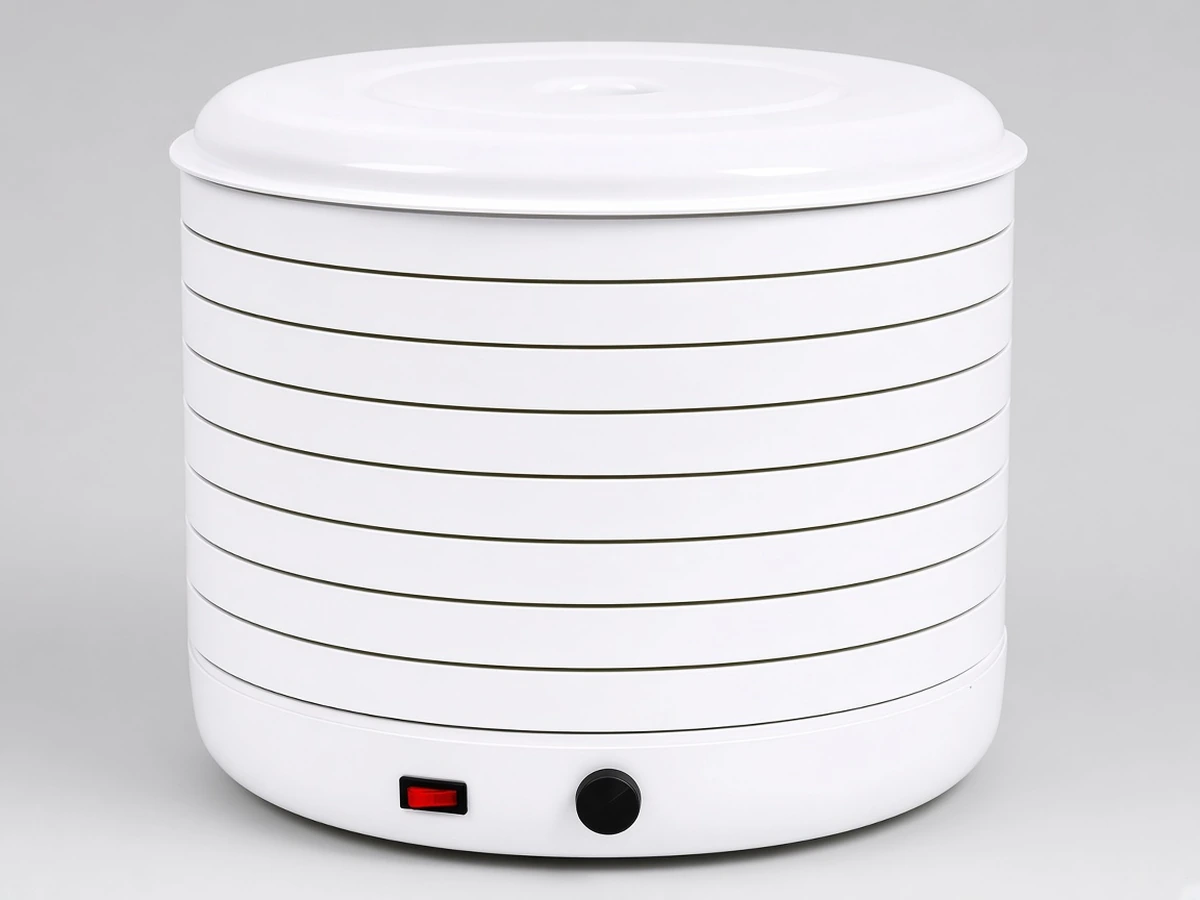
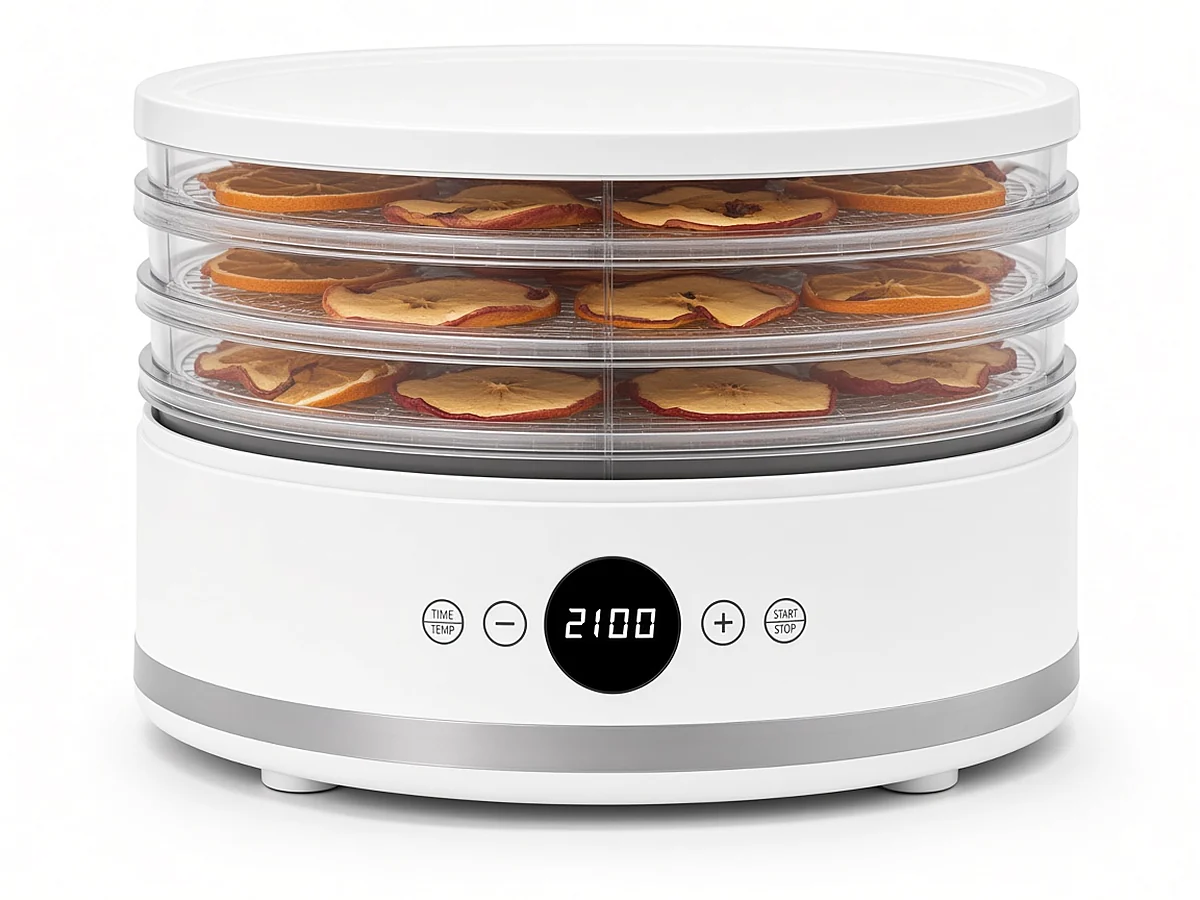 Elite Gourmet EFD329WD Digital Food Dehydrator, 5 SlimStore TraysElite Gourmet · Dehydrator
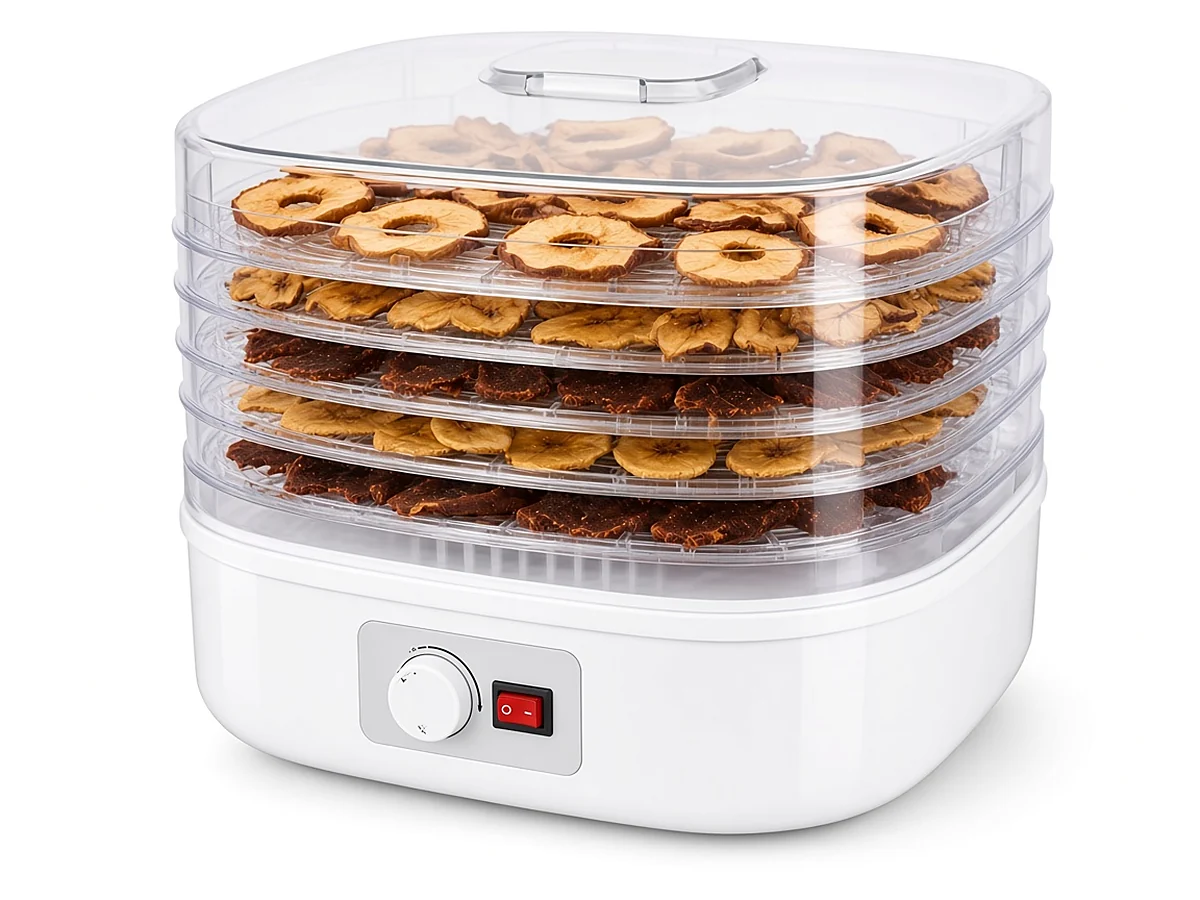
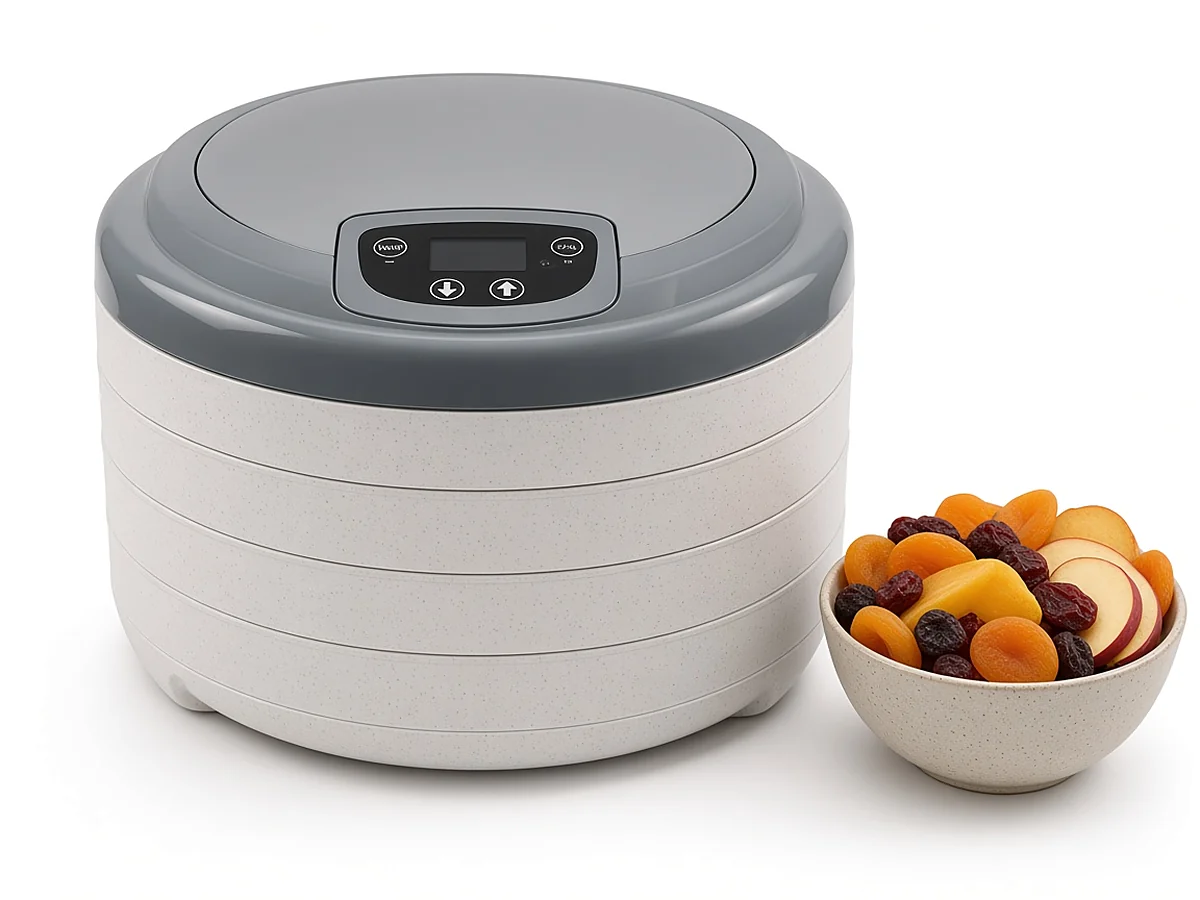
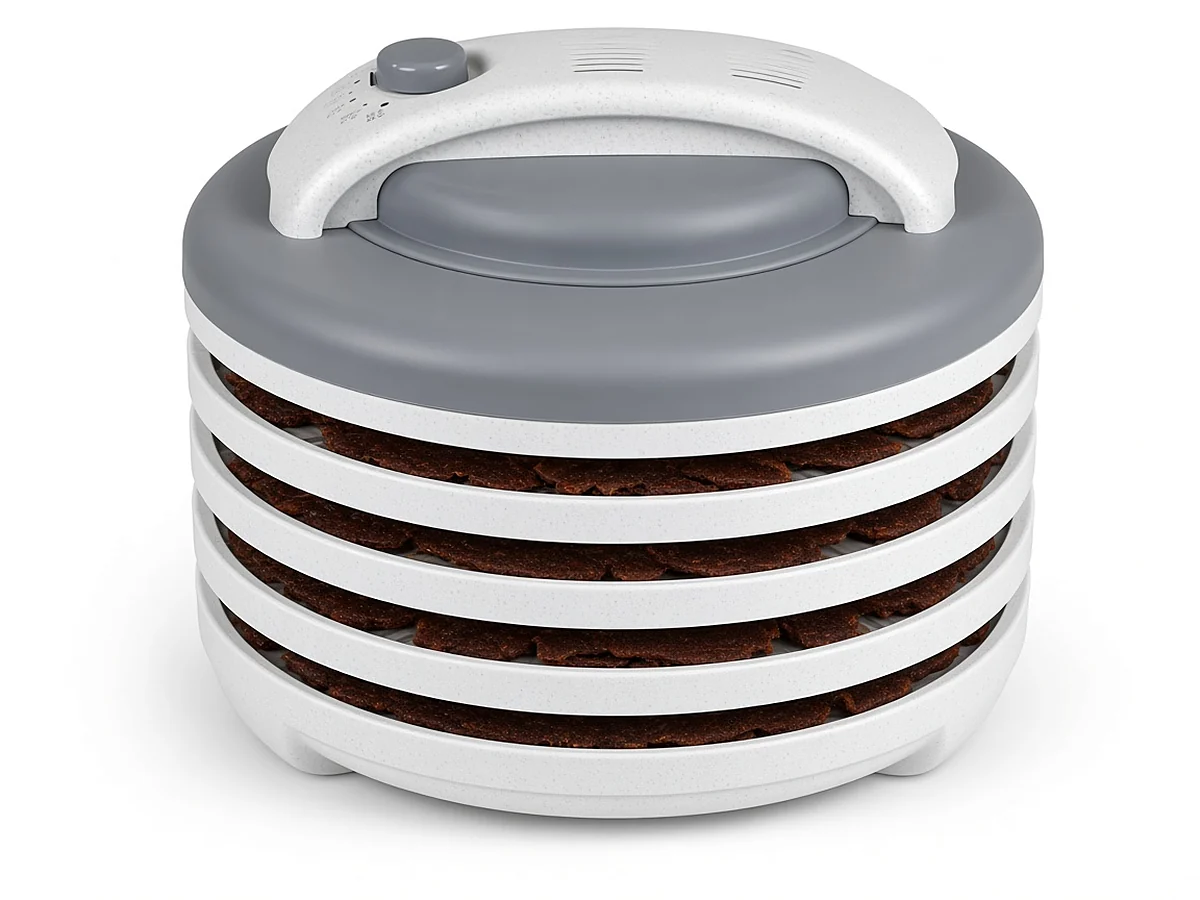
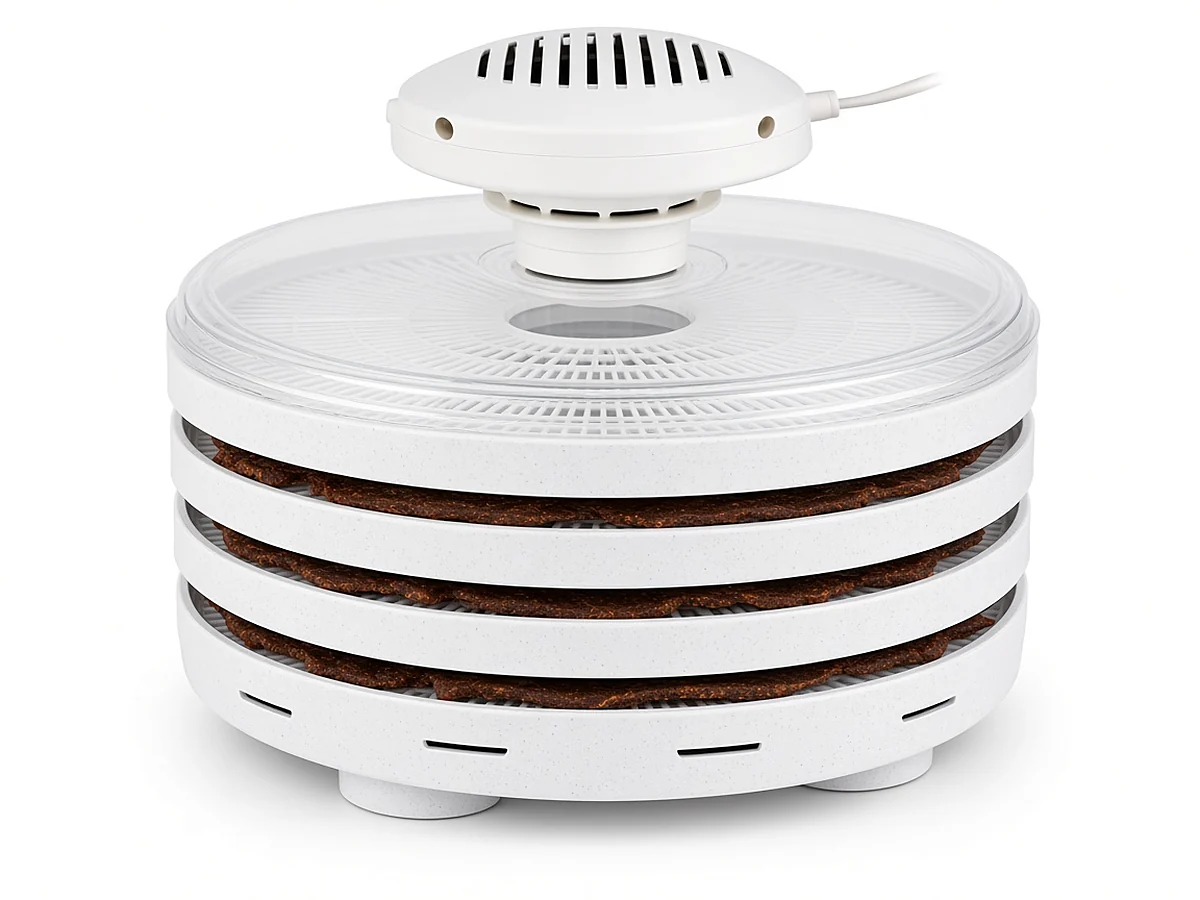
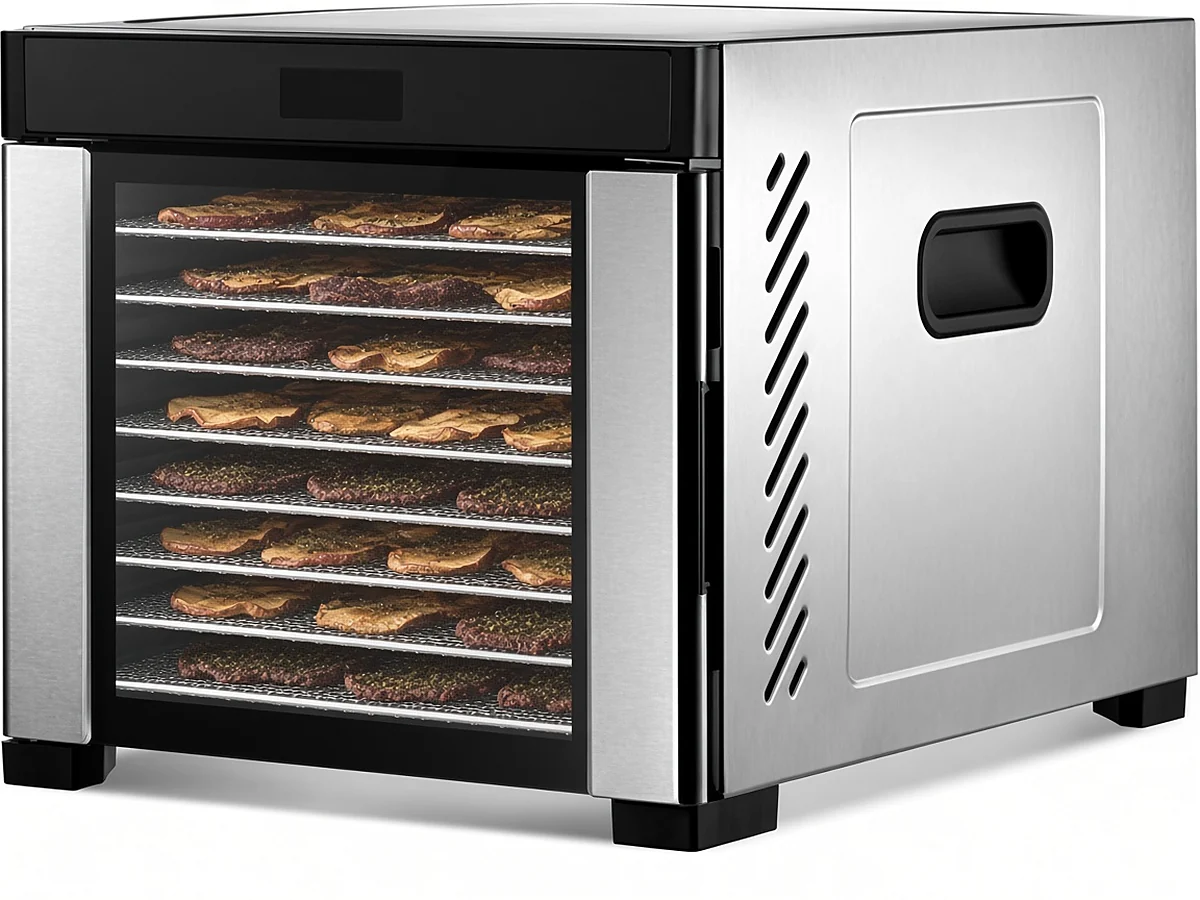 Magic Mill Pro MFD-7070 Food Dehydrator, 7 XL Stainless TraysMagic Mill · Dehydrator
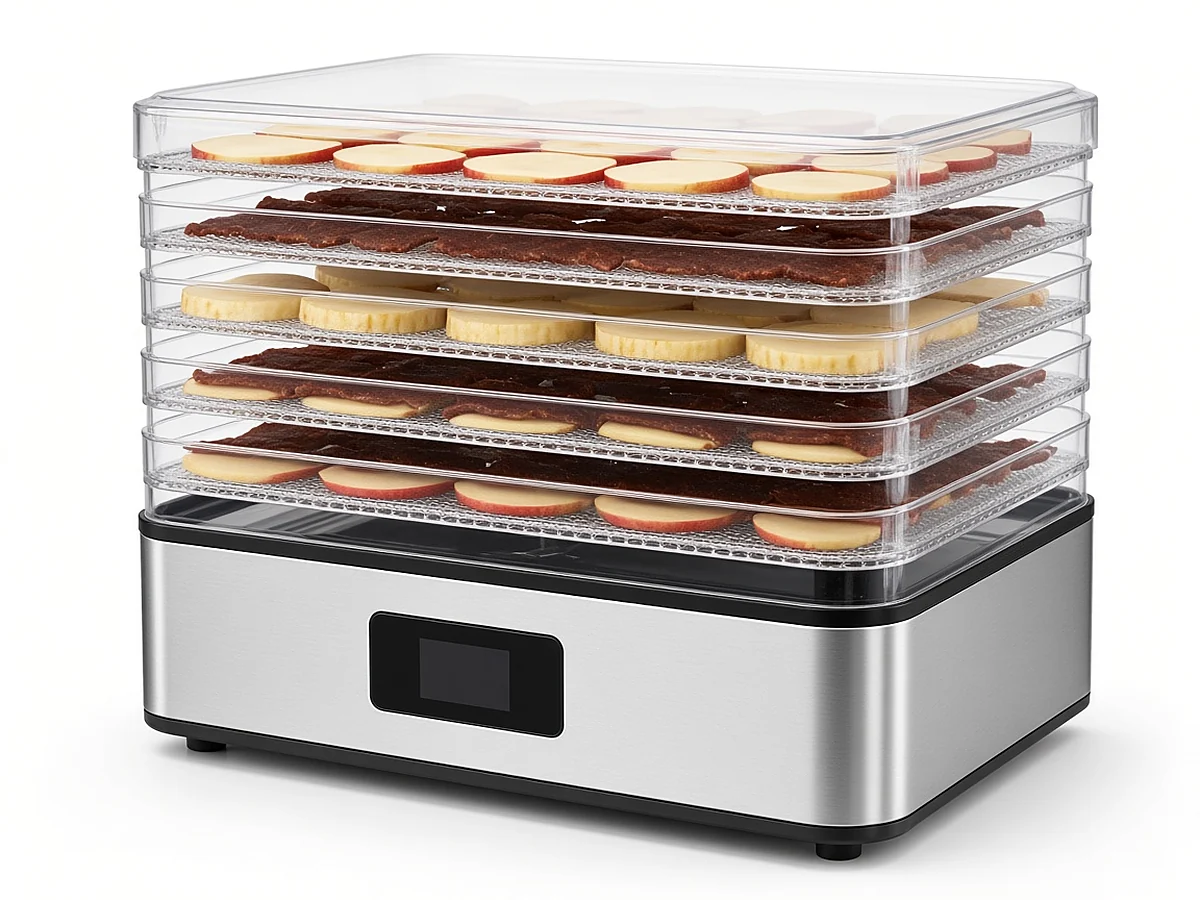 Magic Mill MFD-5000 Food Dehydrator, 5 Stainless TraysMagic Mill · Dehydrator

Food Storage & Safety · Food Dehydrators, Fruit, Jerky, Shelf Life
Updated 30 October 2026
Drying removes most of the water from food, but how long it keeps afterwards depends on what you do next. Moisture, heat, light, air and insects all shorten shelf life, and food that seemed bone dry on the tray can go mouldy in a jar a few weeks later. Whether you dry on the stainless trays of a COSORI CP267-FD or Magic Mill MFD-7700 or the stackable trays of a Presto 06300 Dehydro, the storage steps below are the same.
This guide covers how to package and store home-dehydrated food and how long each type typically lasts, based on the National Center for Home Food Preservation (NCHFP) and university extension guidance from Clemson and Colorado State.
What you'll need to store dehydrated food
Airtight, dark, cool storage is the simplest way to keep dried food in good condition.
Glass jars with new lids (Recommended): Glass shows any moisture collecting inside, and new lids seal fully against insects. A walkthrough for a cordless mason-jar vacuum pump is in how to vacuum seal mason jars.
Freezer bags or containers (Optional): Fine for food kept in the fridge or freezer.
Vacuum packaging (Optional): The NCHFP lists it as a good option for dried foods and jerky. Tools for that job, including a compact countertop sealer, a handheld kit, a mason-jar pump and quart bags, are in best vacuum sealers for dehydrated food.
Mylar bags, oxygen absorbers and an impulse sealer (Optional): Only for very dry foods you want to keep longer. Our Mylar sealing guide covers bag thickness and absorber sizes.
How long does dehydrated food last?
The NCHFP gives a recommended storage range of 4 months to 1 year for home-dried foods, and storage temperature makes a large difference.
Food | Typical storage life | Source |
|---|---|---|
Dried fruit, cool storage | About 1 year at 60°F; 6 months at 80°F | NCHFP |
Dried vegetables | About half the shelf life of fruit | NCHFP |
Dried fruit, properly packaged | 6 to 12 months | Colorado State Extension |
Jerky at room temperature | 2 weeks in a sealed container; refrigerate or freeze for longer | NCHFP |
The jerky figure surprises people. The NCHFP's jerky guidance says home jerky keeps about 2 weeks at room temperature in a sealed container, so refrigerate or freeze it if you will not eat it within that time.
Step 1: cool completely
Pack food only once it has cooled. The NCHFP explains that warm food sweats in the container and that moisture can be enough for mould to grow.
Step 2: condition fruit
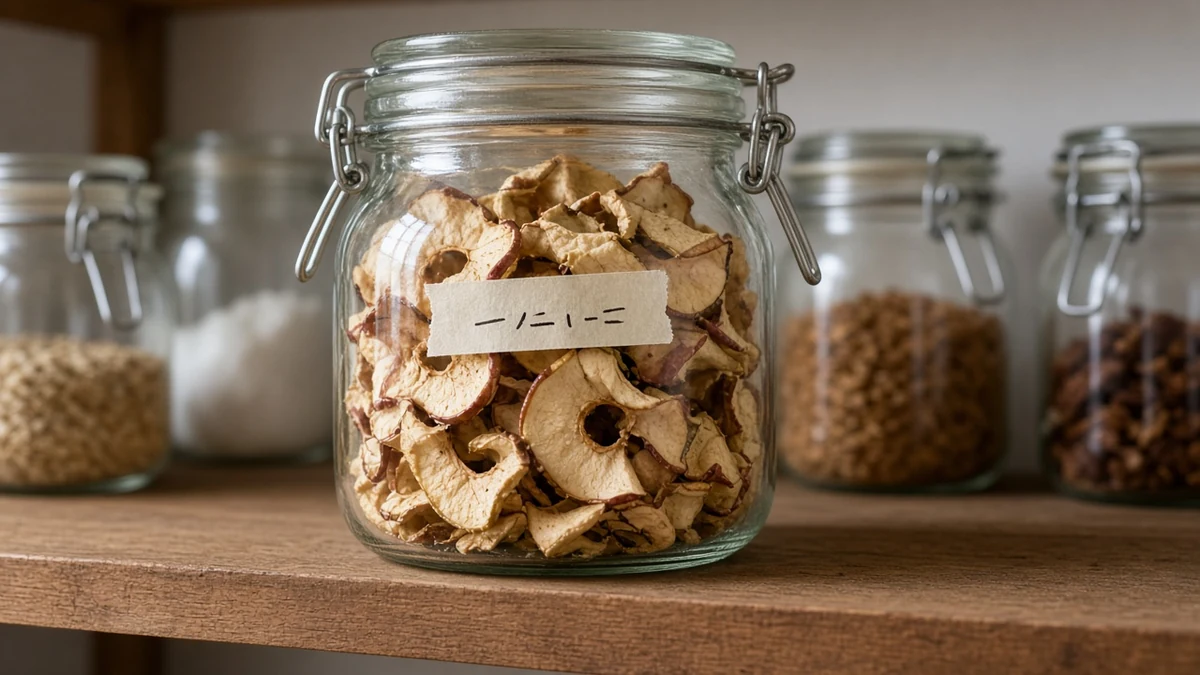
Home-dried fruit should hold about 20 percent moisture, and some pieces will be wetter than others. The NCHFP's conditioning method: pack cooled fruit loosely in sealed plastic or glass jars for 7 to 10 days and shake them daily. If condensation forms, the fruit goes back into the dehydrator. The timer on the COSORI CP267-FD sets in 30-minute steps and shuts off automatically, which suits a short re-drying run. Vegetables are dried until brittle, around 10 percent moisture, and do not need conditioning. For the drying steps before you pack, see how to dehydrate fruit.
Step 3: choose the right container
Glass canning jars. The NCHFP recommends glass because you can see any moisture collect inside. Clemson Extension suggests new lids so they seal fully against insects.
Freezer containers or freezer bags. Acceptable per the NCHFP. Clemson Extension cautions that insects and rodents can chew through plastic bags, so use bags mainly for food kept in the fridge or freezer.
Vacuum packaging. The NCHFP lists it as a good option for dried foods and jerky.
Mylar bags with oxygen absorbers. Common for long-term storage of freeze-dried food. The Blue Alpine Medium Select freeze dryer, for example, ships with 50 Mylar bags and 50 oxygen absorbers. Our freeze-dried food storage guide covers them in detail; the moisture rules above still apply to dehydrated food first.
Pack in portions you will use at once. Every opening lets in air and humidity. Sulfured fruit should not touch metal, so bag it first if you store it in a metal tin.
Step 4: store cool, dry and dark
Heat is the main enemy of quality. Clemson Extension recommends the coolest area of the home, below 70°F. A dark cupboard away from the stove is better than a sunny pantry shelf, and the refrigerator or freezer extends storage life further.
Step 5: check within a week, then regularly
Look at jars within the first week and then periodically. The NCHFP says food that has picked up moisture but is not spoiled should be used right away or re-dried and repacked. Mouldy food should be thrown out, not re-dried.
Signs your dried food has gone off
Visible mould or a musty smell: discard.
Condensation inside the jar: re-dry immediately if no mould.
Insects in the jar: Clemson Extension links this to poorly sealing lids or sun-dried food that was not pasteurised.
Rancid smell in jerky: fat oxidises quickly, which is why the NCHFP says to trim all fat before drying meat.
Dehydrated vs freeze-dried storage
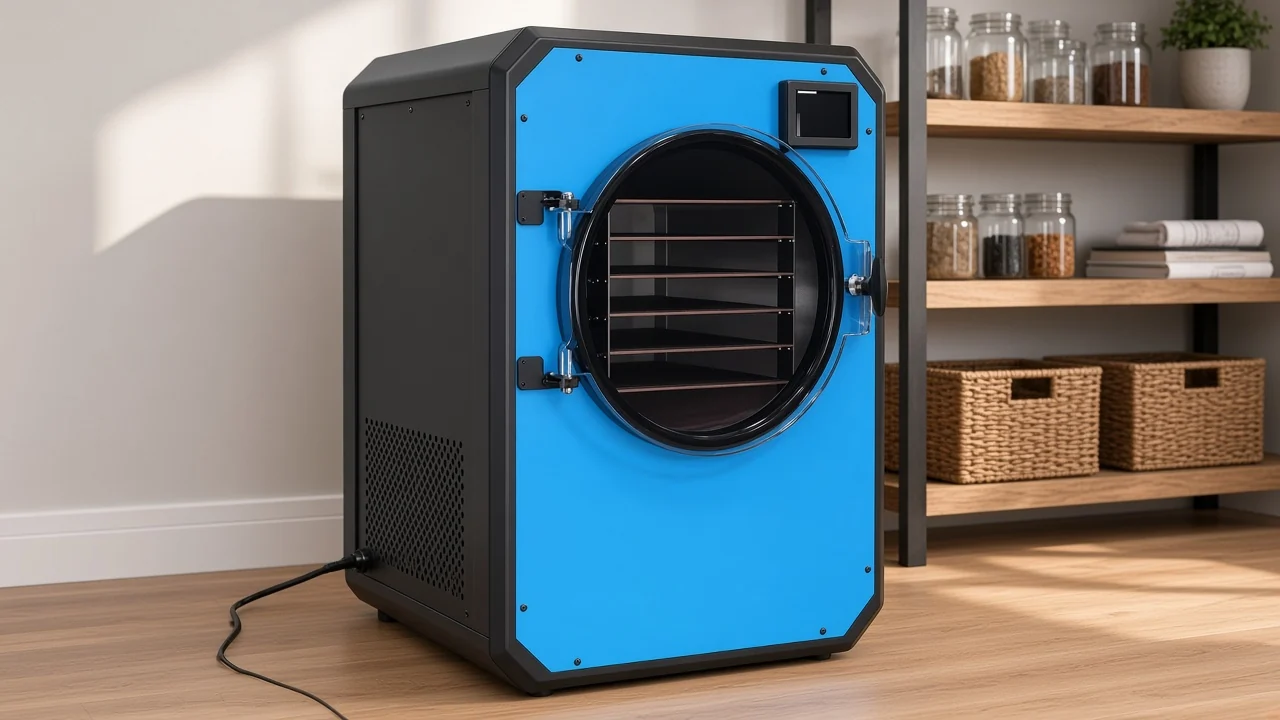
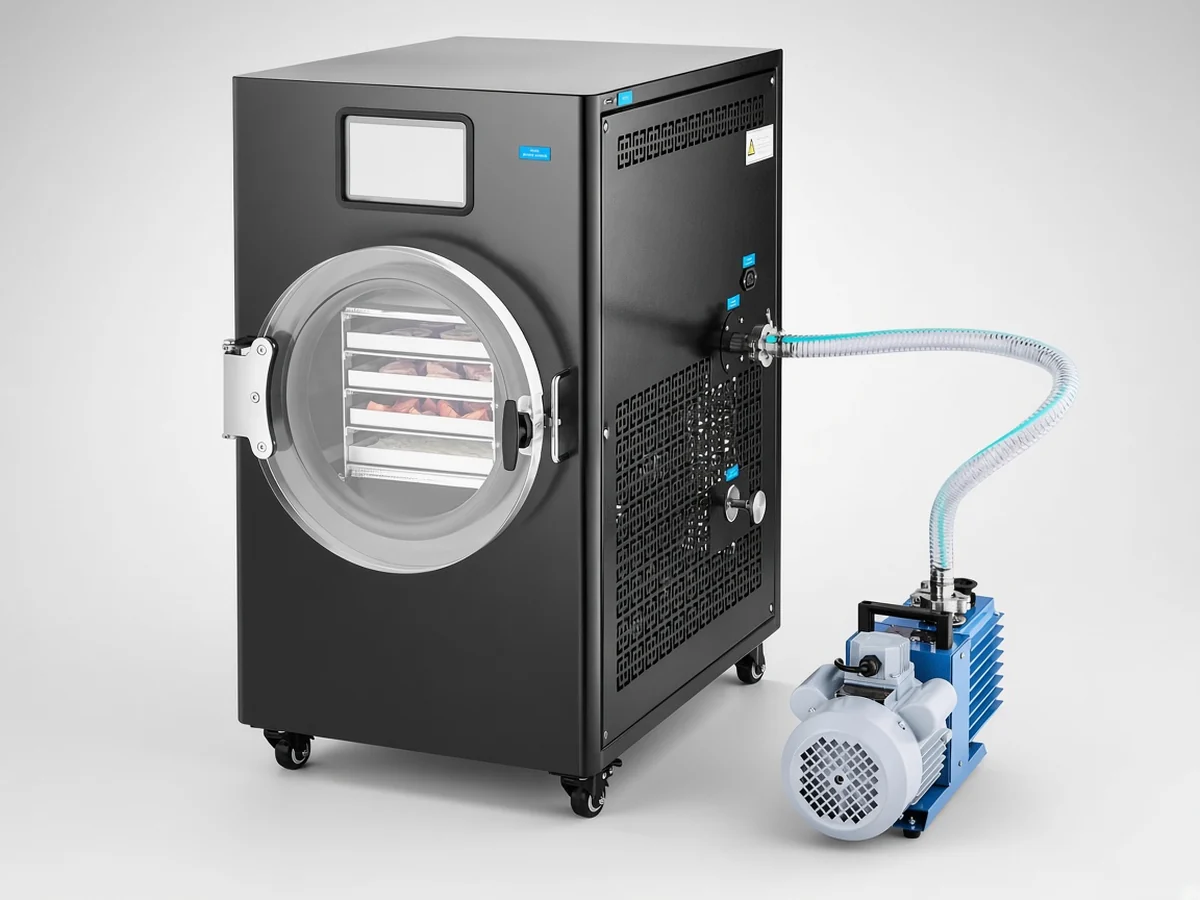
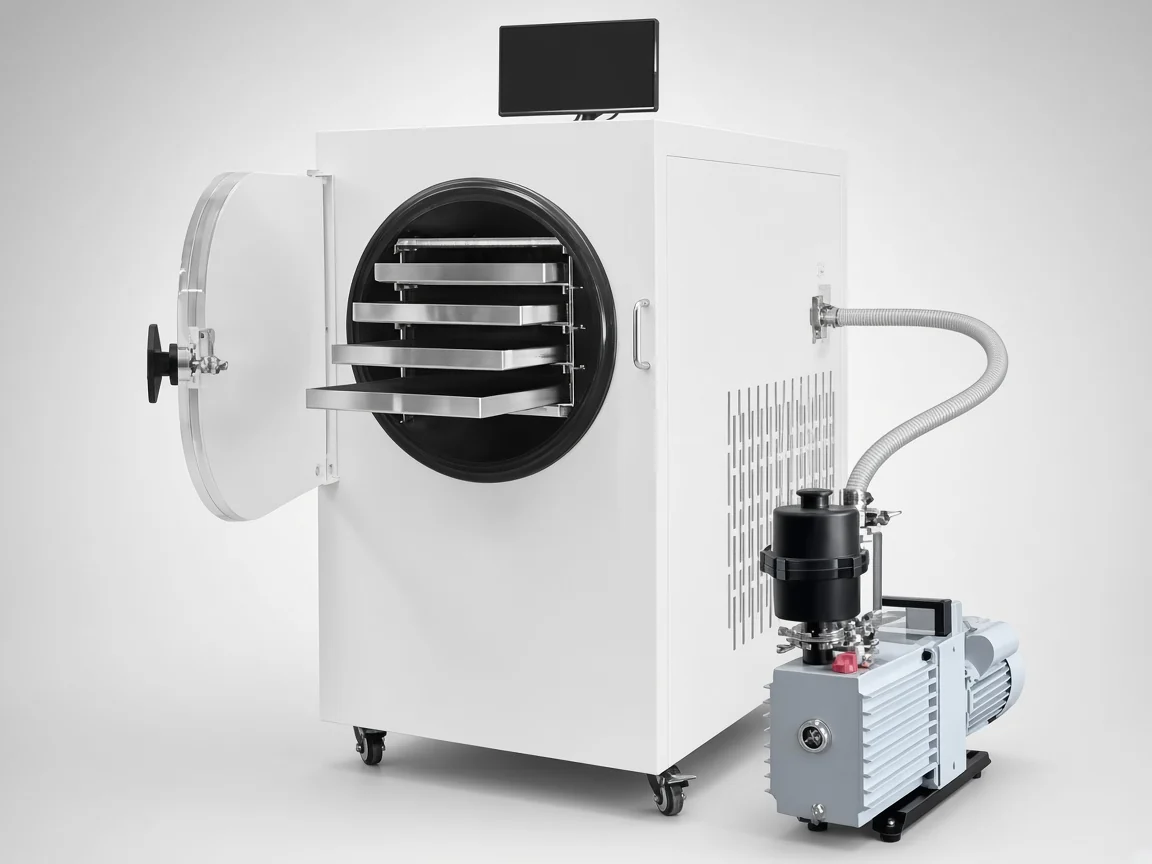
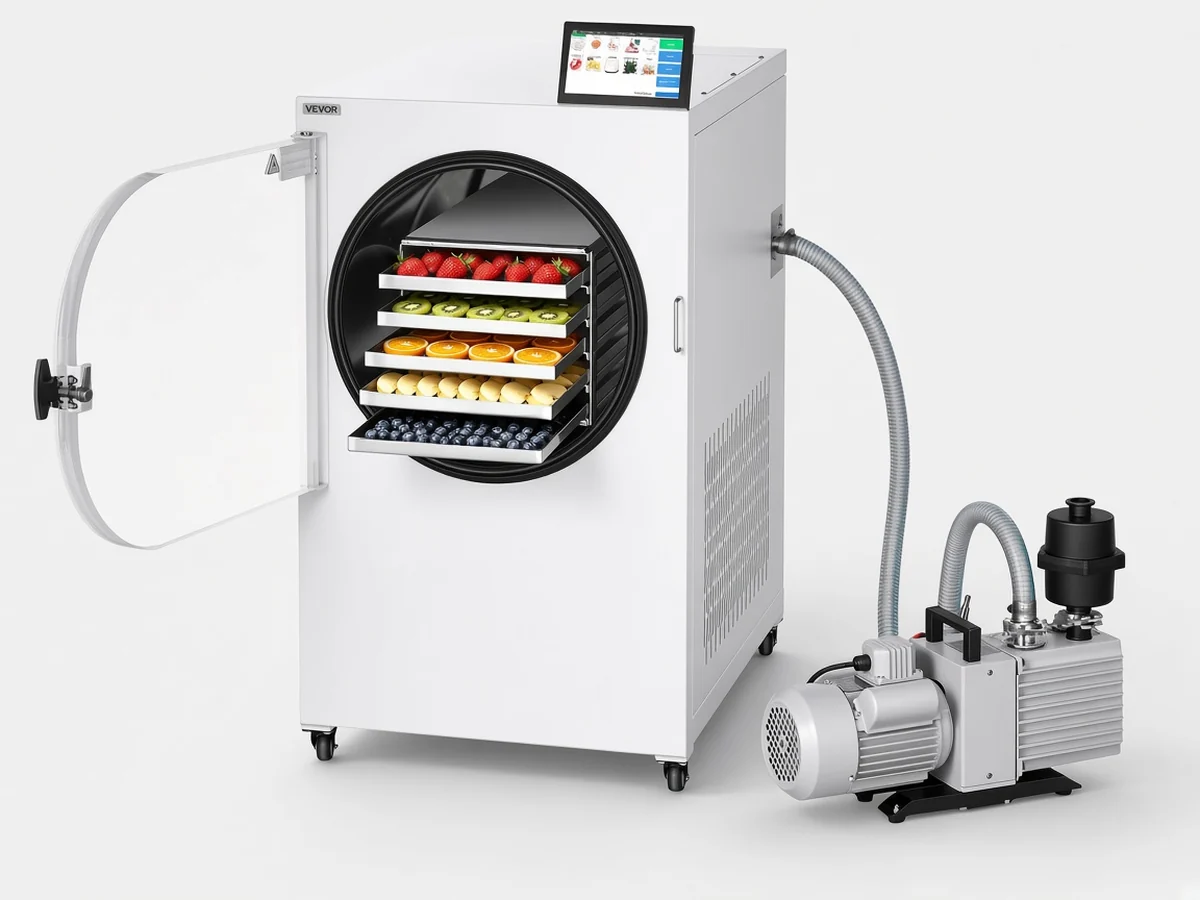
Freeze-dried food removes more water and, packed in sealed Mylar with oxygen absorbers, is often stored far longer than dehydrated food. If long-term storage is your main goal, compare the two in our freeze dryer vs dehydrator guide, and read about freeze drying food safety before you assume either method makes food shelf-stable indefinitely. Freeze drying happens under vacuum, not with warm air, in machines such as the VEVOR HFD-4, Blue Alpine Medium Select, HNZXIB FD-05H and VEVOR SJ-08H.
Amazon listings for the products in this guide
Direct links to the Amazon listings for the products named or shown in this guide:
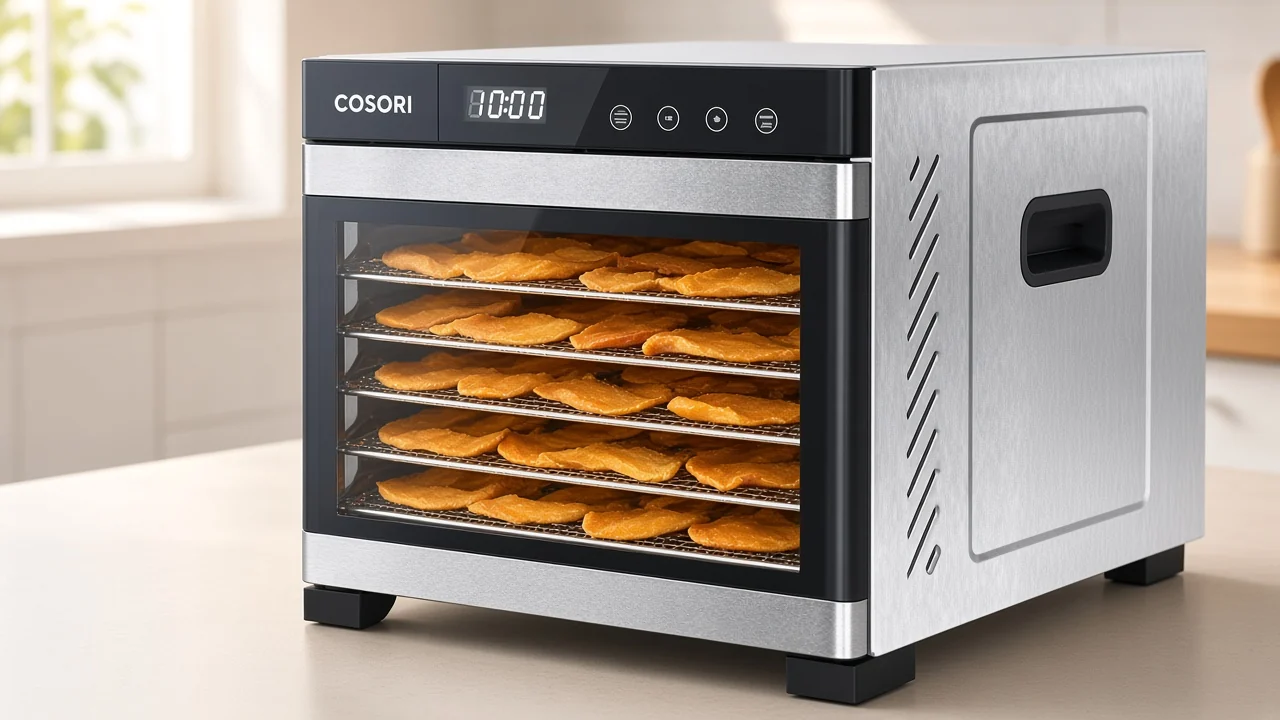
- COSORI CP267-FD Food Dehydrator, 6 Stainless Trays – View on Amazon
- Magic Mill Pro MFD-7700 Food Dehydrator, 7 Stainless Trays – See the Amazon listing
- Presto 06300 Dehydro Electric Food Dehydrator
Frequently asked questions
How long does dehydrated food last?
The NCHFP gives 4 months to 1 year for home-dried foods. Dried fruit keeps about a year at 60 °F but only 6 months at 80 °F, vegetables about half as long, and home jerky about 2 weeks at room temperature. The drying method is in how to dehydrate vegetables.
Should I use oxygen absorbers with dehydrated food?
Only with foods dried until brittle, such as well-dried vegetables at around 10 percent moisture. Home-dried fruit is meant to hold about 20 percent moisture and jerky contains some fat, so keep those in airtight jars or vacuum packaging somewhere cool, or in the fridge or freezer. Sealing food that is not fully dry in an airless bag does not make it safe; moisture left inside can still spoil it.
Related guides
Get the drying right first with how to use a food dehydrator, or fix patchy batches with our troubleshooting checklist. A model with an adjustable thermostat, such as the Magic Mill MFD-7700, lets you match the temperature to the food; the Presto 06300 Dehydro has a fixed setting of about 165°F. Browse more guides or visit Learn.