
How Long Does Freeze Drying Take? Batch Times and Why They Run Long
Published 10/29/2026 · Updated 11/24/2026
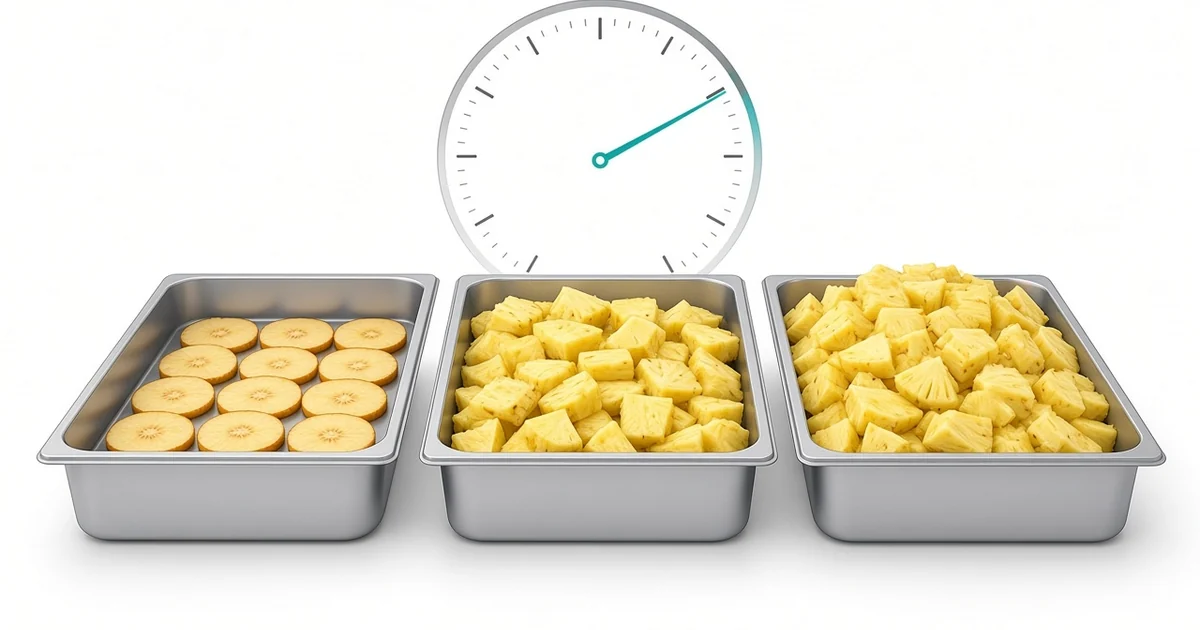
Quick answer
Most home freeze-drying batches run roughly 24 to 48 hours or longer, depending on load, food type and machine settings. Blue Alpine defaults to about 8 hours of freezing plus 24 hours of drying in its manual, but recipe time still changes with moisture and slice thickness—never stop a cycle early for food safety.
Products mentioned in this guide
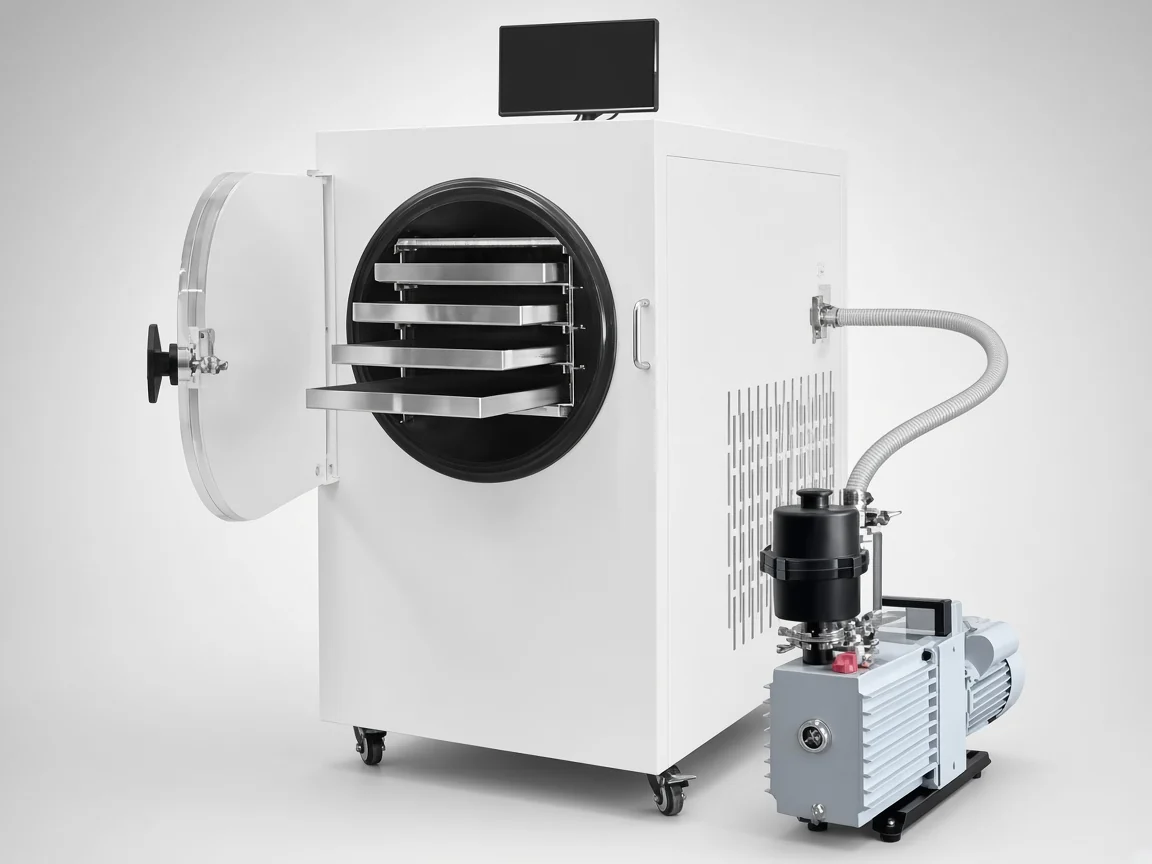
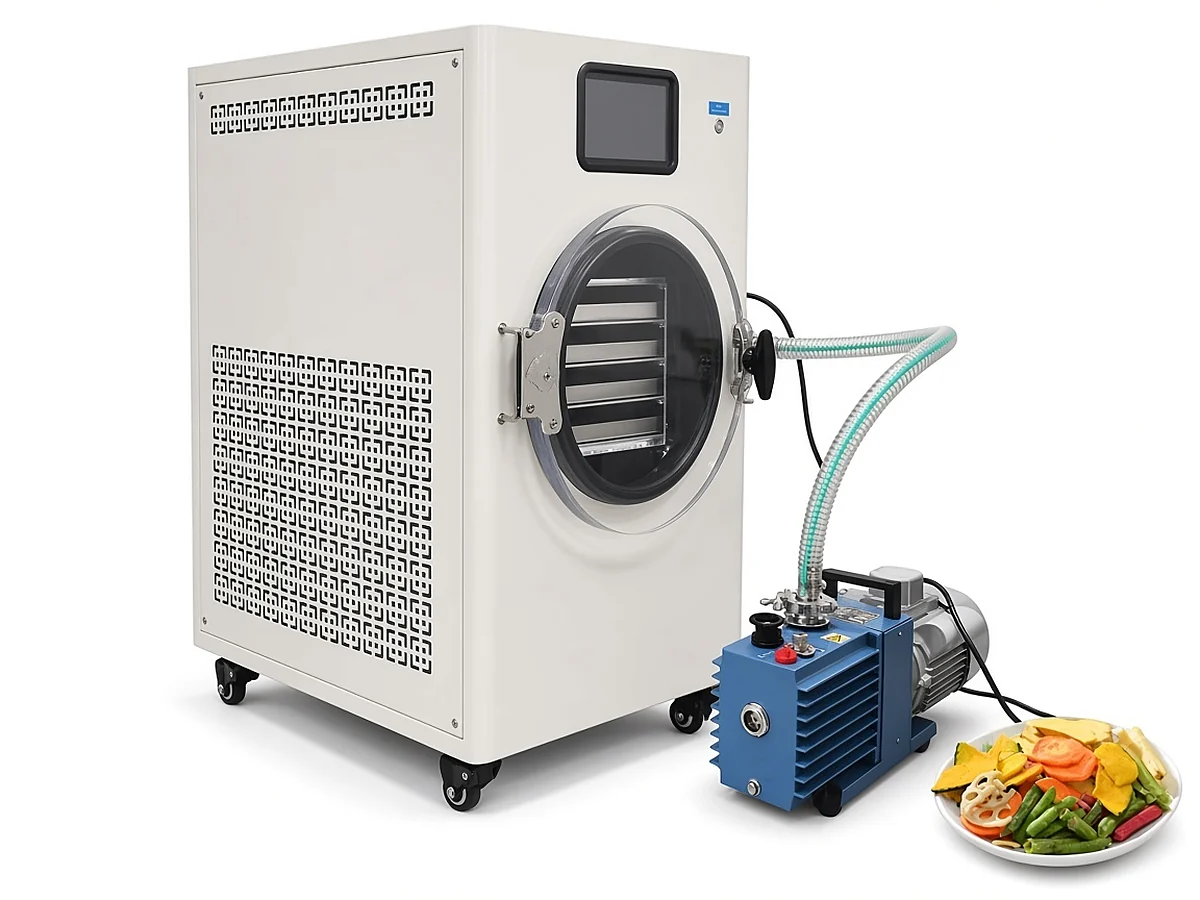
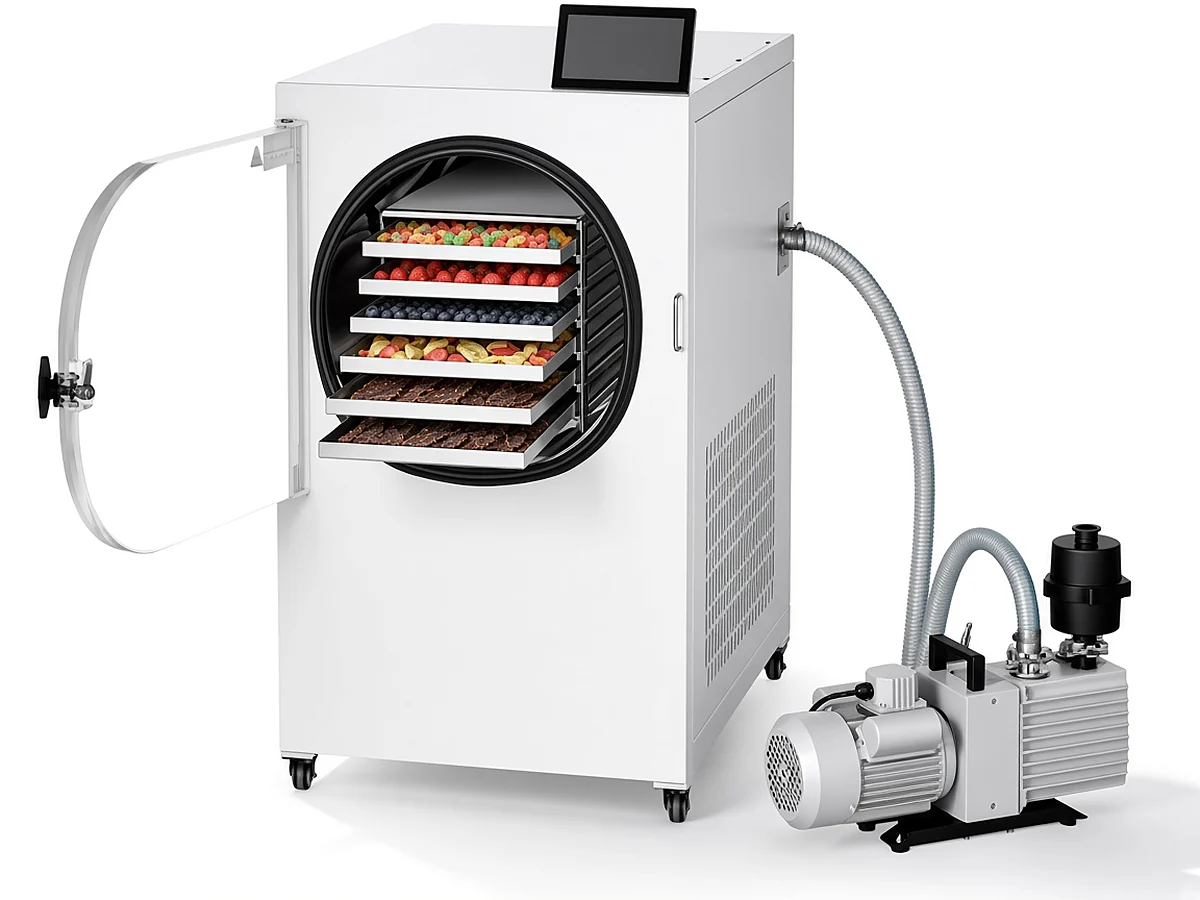
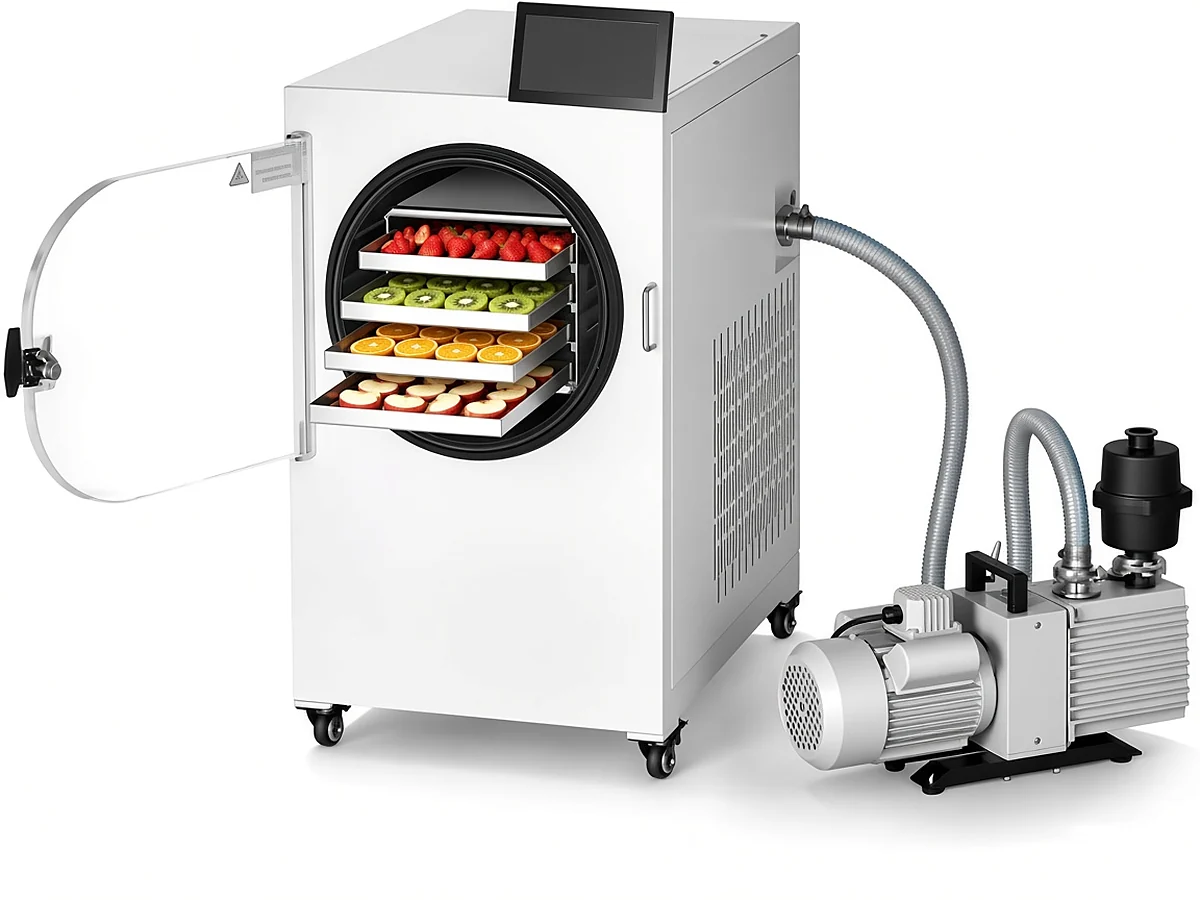
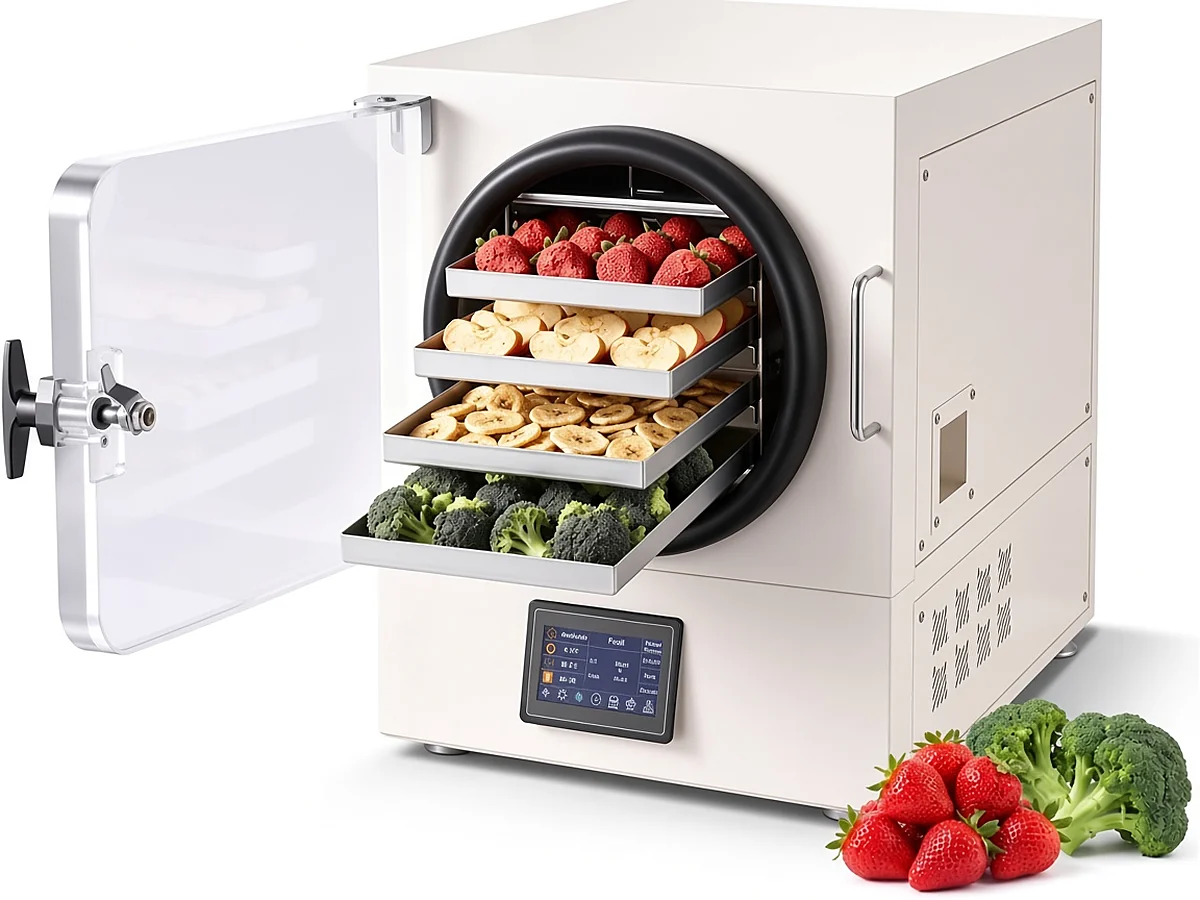
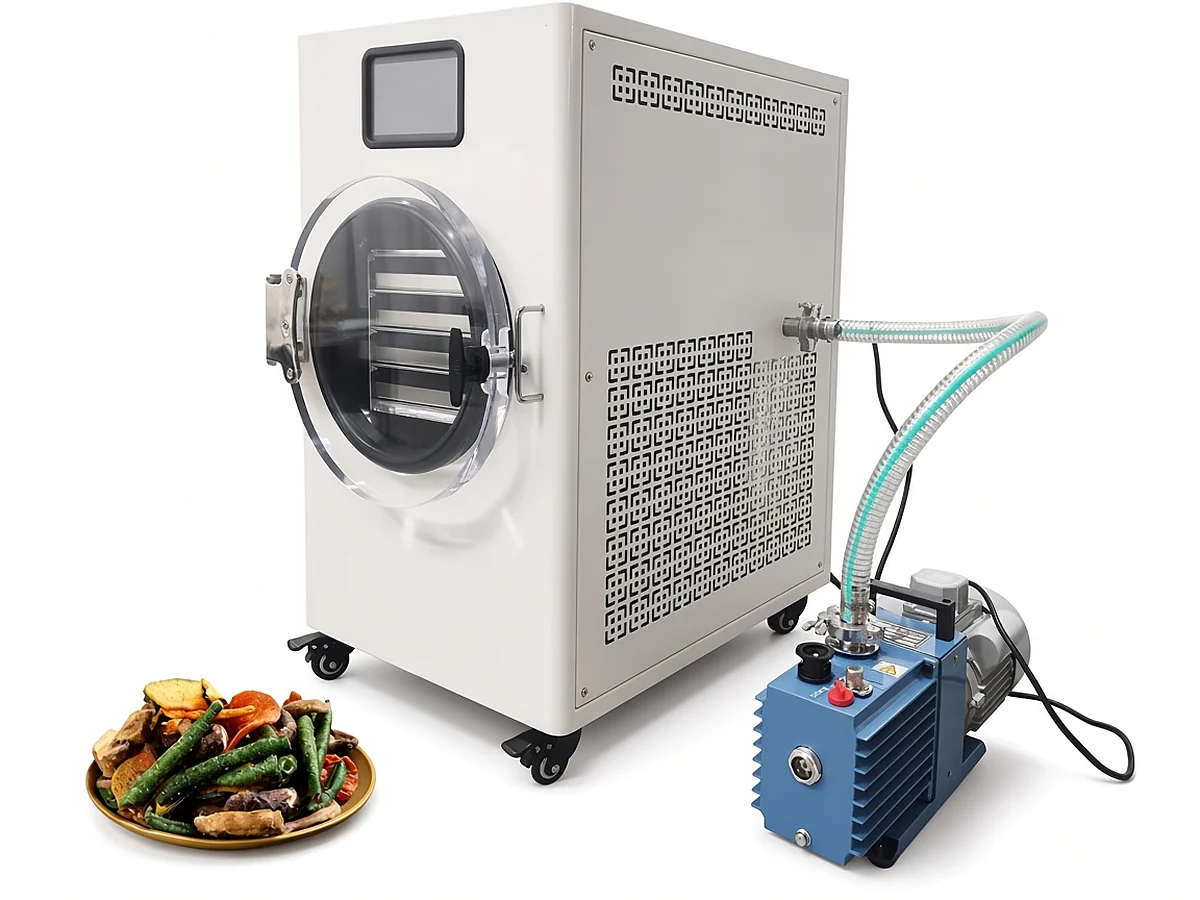
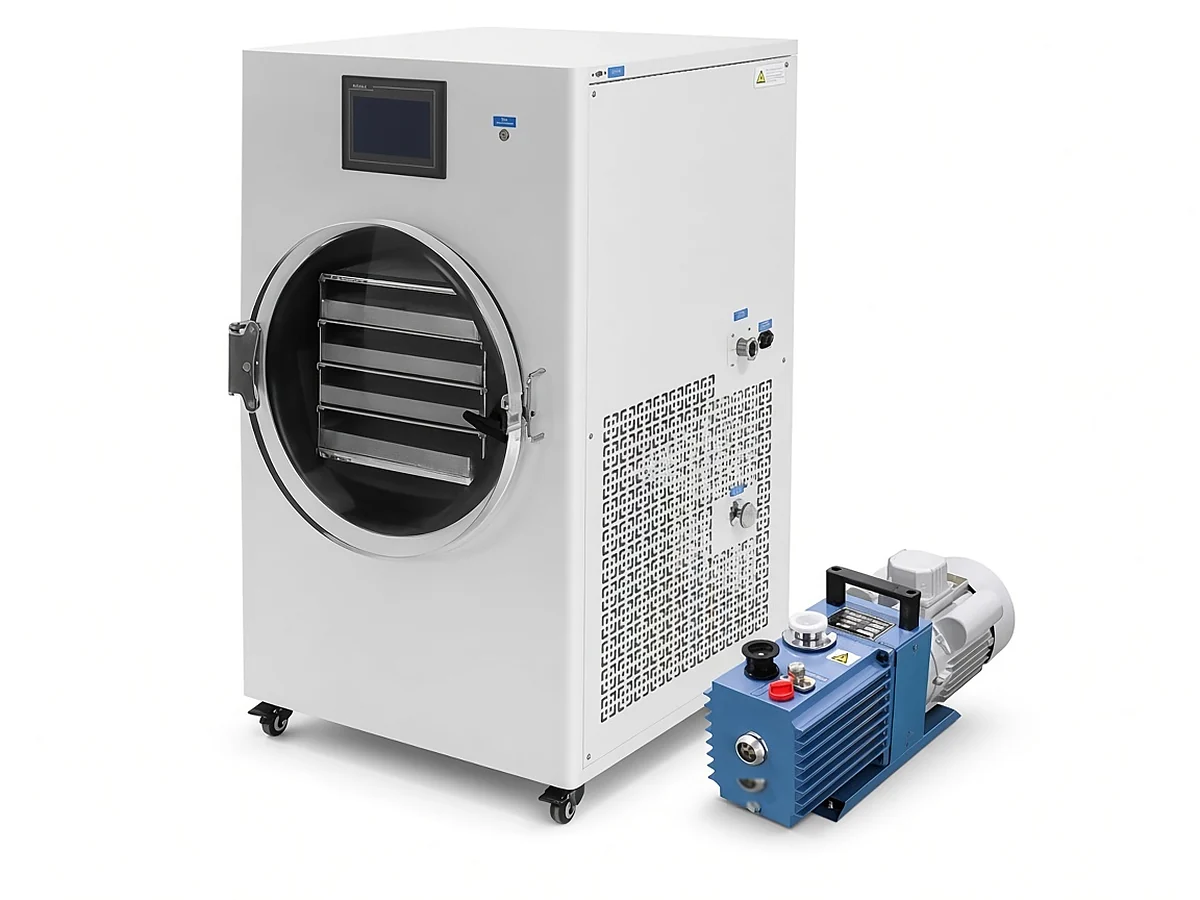
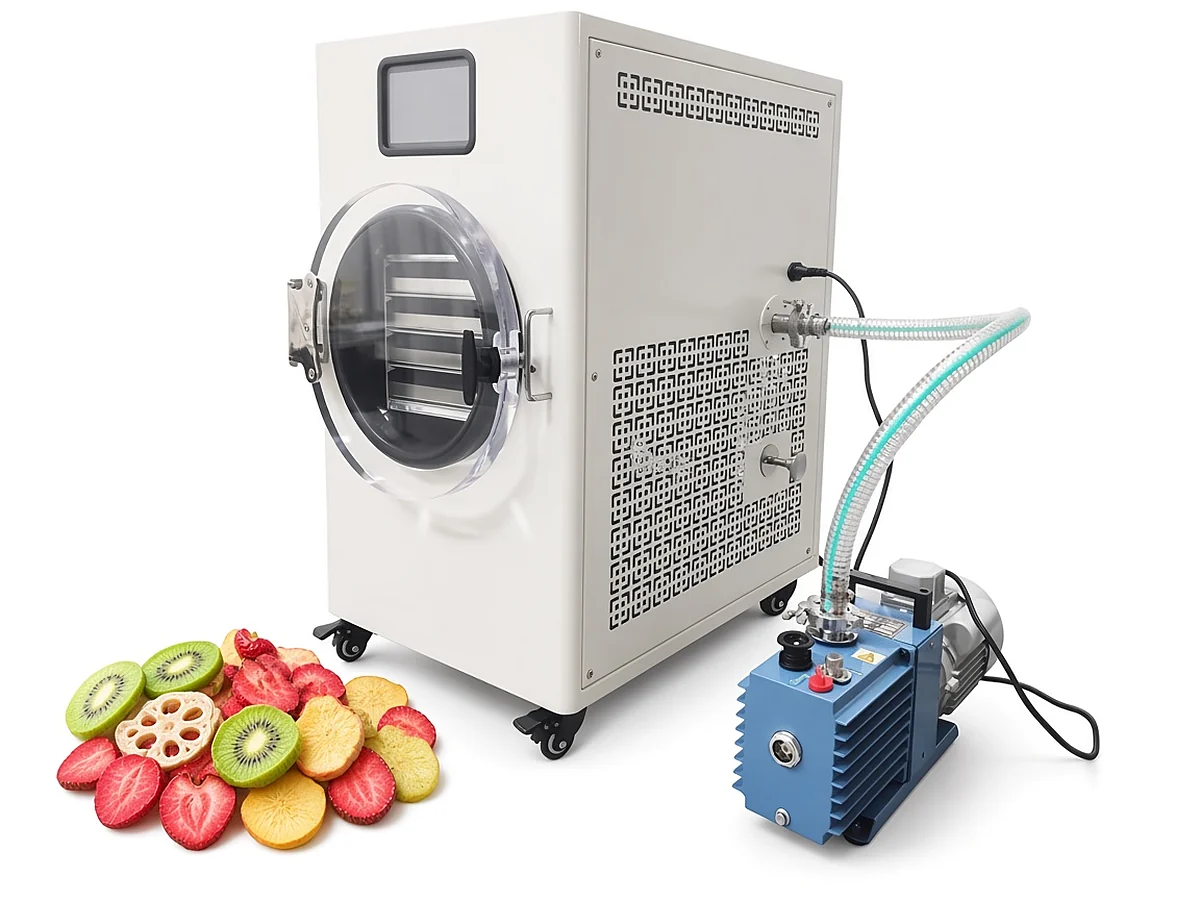
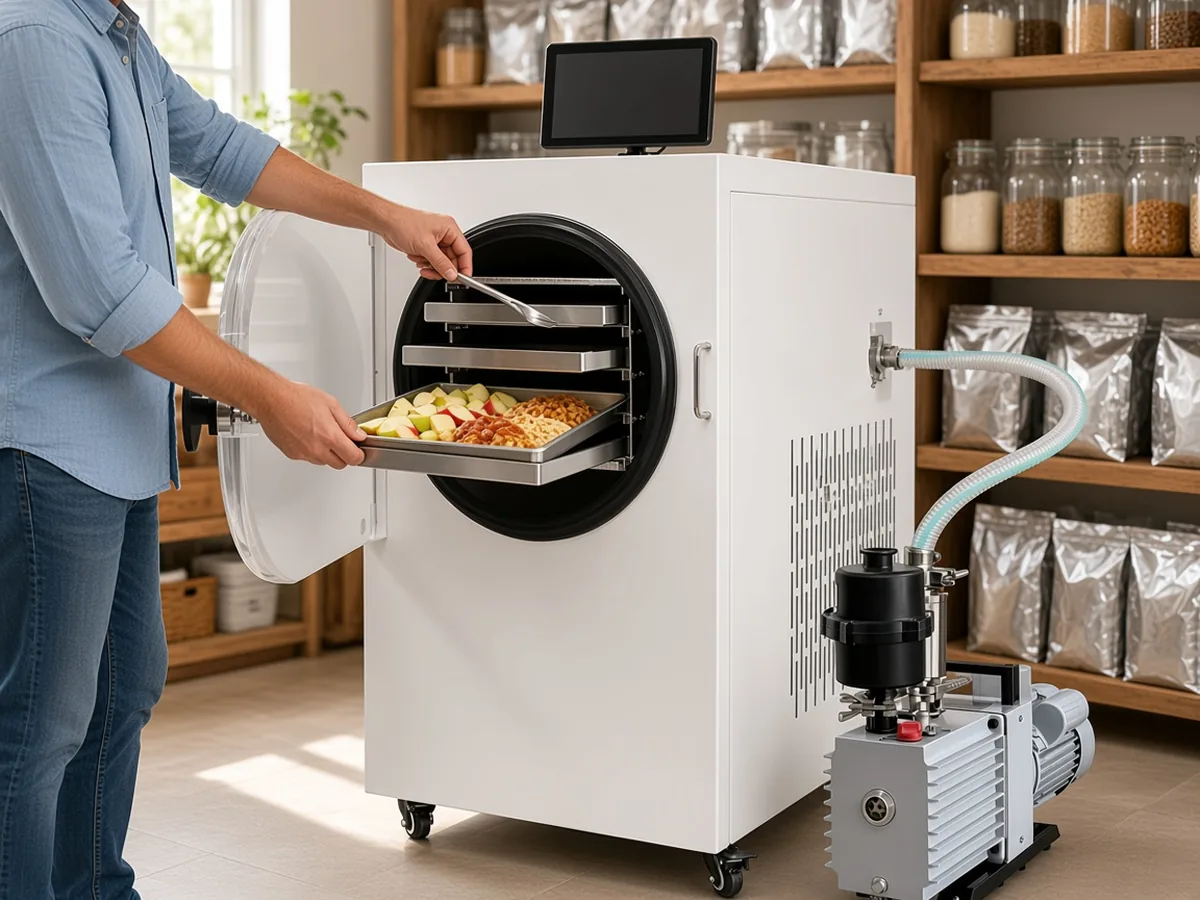
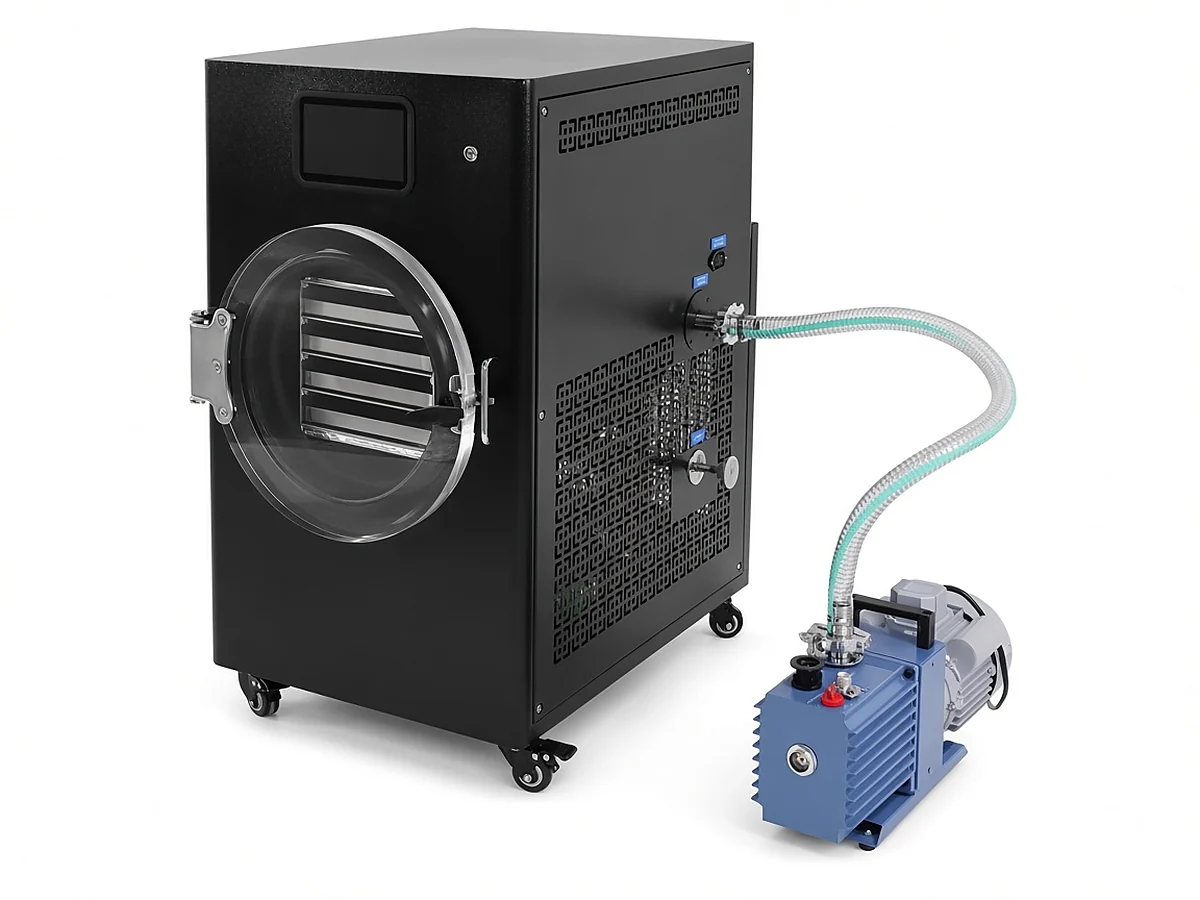
Maintenance & Troubleshooting · Freeze Dryers, Fruit, Candy, Meals
Updated 30 October 2026
The first surprise for most new owners is how long a batch takes. A tray of strawberries can occupy the machine for well over a day, and a dense casserole for longer still. That is normal. Freeze drying is slow by design, and the time depends far more on what you load and how you prepare it than on the brand of machine.
This guide sets out what extension services and manufacturers say a normal batch looks like, the factors that stretch it, how to speed things up without cutting corners, and why stopping early is a bad idea. It applies to any home freeze dryer.
Tools that help batches finish on time
Even, thin loads are the simplest way to shorten a long batch. Any kitchen scale that reads in grams lets you load trays evenly and check dryness by weight later, and tray liners (the silicone mats some machines include, or parchment cut to size) stop sticky food bonding to the trays.
How long does freeze drying take?
There is no single answer. The independent extension figures are the best general guide:
Source | Typical time quoted |
|---|---|
University of Arizona Extension (Basics of Home Freeze Drying) | Usually 20–40 hours, compared with 4–16 hours in a dehydrator |
Penn State Extension | About 24–48 hours; consult your machine's manual |
Utah State University Extension | Thick foods such as meat or casseroles can take more than 2 days |
Manufacturer figures are less consistent, and they do not always say whether they cover the whole cycle, only the drying stage, or one particular food. Here is what the manuals for the machines we cover actually say:
Machine and source | What it says | What the figure covers |
|---|---|---|
Blue Alpine (owner's manual) | 18 to 36 hours; default settings of 8 hours freezing and 24 hours drying | The whole process, with the two default stages shown separately |
Blue Alpine (recipe library) | Dry stages from about 14 hours (carrots, raspberries) to 48 hours (watermelon) | The drying stage only, for specific foods; freezing is extra |
VEVOR HFD-4 (user manual) | No cycle time; owners set each stage's temperature and time and should test each food | Not applicable |
Harvest Right (owner's manual) | A batch that takes about 24 hours at 75 °F can take over 40 hours in hot rooms | An example of how room temperature changes the whole batch, not a standard time |
These numbers are not in conflict once you see what each one measures. A dry-stage figure for one food will always look different from a whole-cycle range, and an example used to make a point about room temperature is not a promise. VEVOR's listing graphics show example whole cycles of 31 to 39 hours for particular foods, but its manual gives no standard time, so we do not treat those as typical. If your manual gives no figure, plan around the extension ranges above and keep a note of how long your own batches take.
Some manuals also flag when a batch is unusually long. Harvest Right's owner's manual, for instance, has a troubleshooting entry for a batch that has run for more than 46 hours.
Why some batches take longer
Sugar and water content
Some foods are simply slow. Harvest Right's owner's manual lists oranges, strawberries, blueberries and meals with a lot of sugary liquid among them, because of their cell structure, sugar and moisture. Utah State Extension explains the reason: sugar holds on to water and resists losing it, which prolongs drying.
Thickness
The thicker the piece, the further the vapour has to travel. Every source we read recommends thin, even pieces:
Utah State and University of Arizona Extension: most foods between ¼ and ½ inch thick; Arizona and Utah State both cap meat at about ¾ inch.
Mixed thicknesses on one tray cause a separate problem: the thin pieces finish first and the thick ones hold the whole batch back.
Load size
More food means more water to remove, and the time grows with it. A smaller batch that finishes cleanly is easier on the machine and pump than an overloaded one. Keep food in a single layer and below the rim of the tray, and treat a listing's maximum batch weight as a ceiling rather than a target. Even the listings give ranges rather than a single figure: VEVOR's Amazon listing for the HFD-4, for example, says 8.8 to 13.2 lb per batch.
Skins and casings
Whole blueberries, grapes and similar foods trap water inside their skins. Cut them in half or pierce them so the vapour can escape. Utah State notes that foods with dense outer layers, such as sausages, can dry unevenly or trap moisture inside.
Room temperature
Heat slows everything down. Harvest Right's manual gives the example of a batch that takes about 24 hours at 75 °F taking more than 40 hours in hot conditions. If your machine sits in a garage, expect longer batches in summer. Our guide to a freeze dryer that is not getting cold enough compares the recommended room temperatures.
Pump condition and vacuum leaks
Most home freeze dryers use an oil-sealed vacuum pump, and its condition affects every batch. Harvest Right's manual says that as pump oil ages, cycle times may increase. For any brand, see our vacuum error checklist and pump oil guide.
Too much ice in the chamber
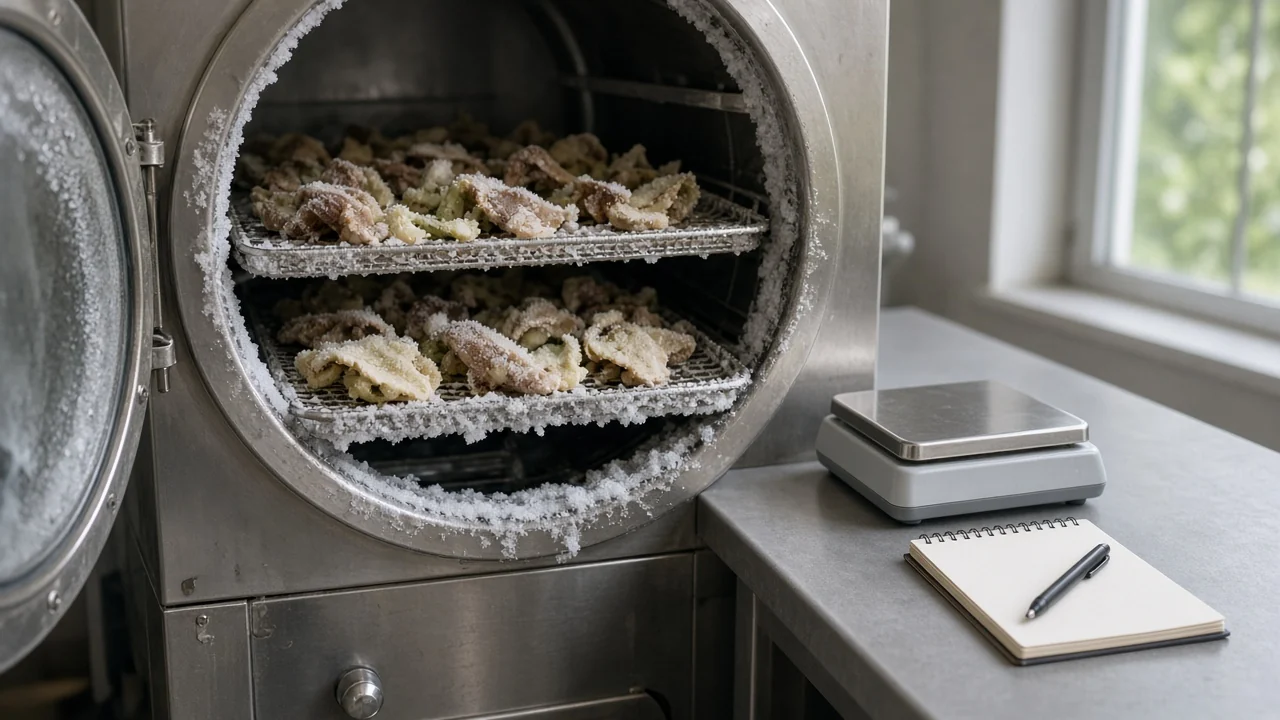
Harvest Right's manual describes a rare case where a very wet load builds so much ice on the chamber walls that it reaches the trays. The machine then keeps sublimating that ice and cannot recognise the food is done. Its fix is to move the trays to a freezer, defrost the machine, then put the trays back to finish.
How to shorten a batch without cutting corners
Pre-freeze. Arizona Extension suggests freezing food for at least 24 hours first, and Harvest Right's manual suggests 48. Do not skip the machine's own freezing stage, even with pre-frozen food.
Slice thinly and evenly. Keep each tray to one food and one thickness, as Stay Fresh's user manual recommends.
Group foods sensibly. The same manual suggests running high-moisture foods together. Process strongly flavoured foods such as onions and garlic on their own, as Arizona advises.
Load less. A smaller batch that finishes is better than a large one that runs into errors.
Keep the room cool and the pump maintained. These two habits affect every batch.
Defrost fully between batches. Start each batch with a chamber free of ice and water, unless your manual describes a mode designed for back-to-back runs.
Candy behaves differently from fruit or meals because it holds very little water. Harvest Right's manual documents a dedicated Candy Mode with its own settings; the Blue Alpine and VEVOR HFD-4 manuals do not describe one, so on those machines candy is run with ordinary settings you adjust yourself. Our guide to freeze drying candy covers the details, and our home freeze dryers on Amazon roundup notes what each machine documents.
Is it safe to stop a batch early?
No, not for food you plan to store. The LSU AgCenter FAQ says cutting the cycle short is not recommended. Ending early, especially with dense foods like okra, sweet potatoes or meat, can leave pockets of moisture, and LSU warns that those moist areas, under low-oxygen (anaerobic) conditions, can create an ideal environment for Clostridium botulinum growth. Harvest Right's manual likewise says not to skip or manually advance stages.
The machine's end-of-batch signal is not the last word either. Before you package, check the food:
Break the thickest pieces in half. Food that is cold or damp in the middle still holds moisture.
Take a sample from every tray. University of Minnesota Extension notes that units can dry unevenly, and that a dark spot in the centre of a cut piece indicates moisture.
The texture should be crisp and brittle, not rubbery, according to LSU.
For a more precise check, LSU suggests weighing the tray after each extra drying cycle. Once the weight stops falling, the food is dry.
If anything is not dry, add drying time rather than packaging it. Most machines let you extend the final drying stage; check your manual for how. Harvest Right's manual warns that a few damp pieces can spoil a whole bag once sealed.
What a long batch costs
Batch time drives electricity use directly, because the machine draws power for every hour it runs. At the ends of Blue Alpine's 18 to 36 hour range, the longer batch uses roughly twice the energy of the shorter one. Our freeze dryer running cost guide shows the cost per hour for the machines listed on Amazon US, and you can plug in your own hours with the running cost calculator.
Related on Amazon: VEVOR SJ-08H Vacuum Freeze Dryer.
Related on Amazon: HNZXIB FD-05H Home Freeze Dryer.
Amazon listings for the products in this guide
Direct links to the Amazon listings for the products named or shown in this guide:
- VEVOR HFD-4 Vacuum Freeze Dryer (4 trays) – View on Amazon
- VEVOR Vacuum Freeze Dryer, 5 Trays, 10 Presets – See the Amazon listing
- HNZXIB FD-05H Home Freeze Dryer, 4 Trays – Check availability on Amazon
- Blue Alpine Medium Select Freeze Dryer
Frequently asked questions
Why is my freeze dryer taking so long?
Thick pieces, high sugar or water content, overloaded trays, a warm room or a weak vacuum all extend batch time.
Can I add more drying time after a cycle ends?
Yes. Most machines let you add dry time if a test piece is cold or soft in the centre.
Related guides
If you are new to the process, how a freeze dryer works explains what the machine is doing during all those hours. If batches seem slow because the chamber is not getting cold, read our not freezing troubleshooting guide; if the pressure is the issue, start with the vacuum error checklist, and keep the pump oil guide handy.