
Freeze Dryer Not Freezing or Getting Cold Enough? What to Check
Published 10/29/2026 · Updated 11/24/2026
Quick answer
If a freeze dryer is not freezing or cooling, check room temperature, cabinet airflow and how much warm food is loaded before assuming the compressor failed. Match the outlet and circuit to the nameplate, leave clearance around the vents, and call warranty support only after those checks.
Products mentioned in this guide
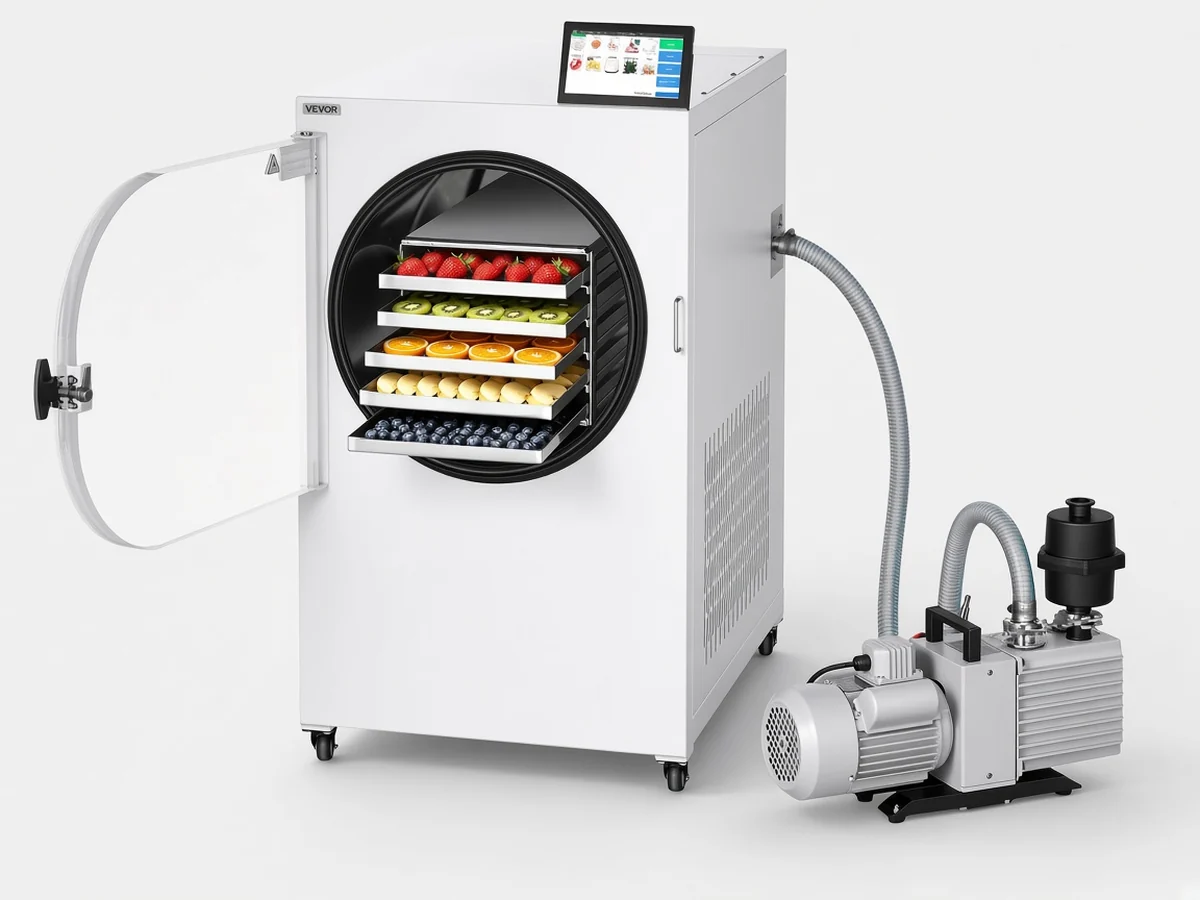
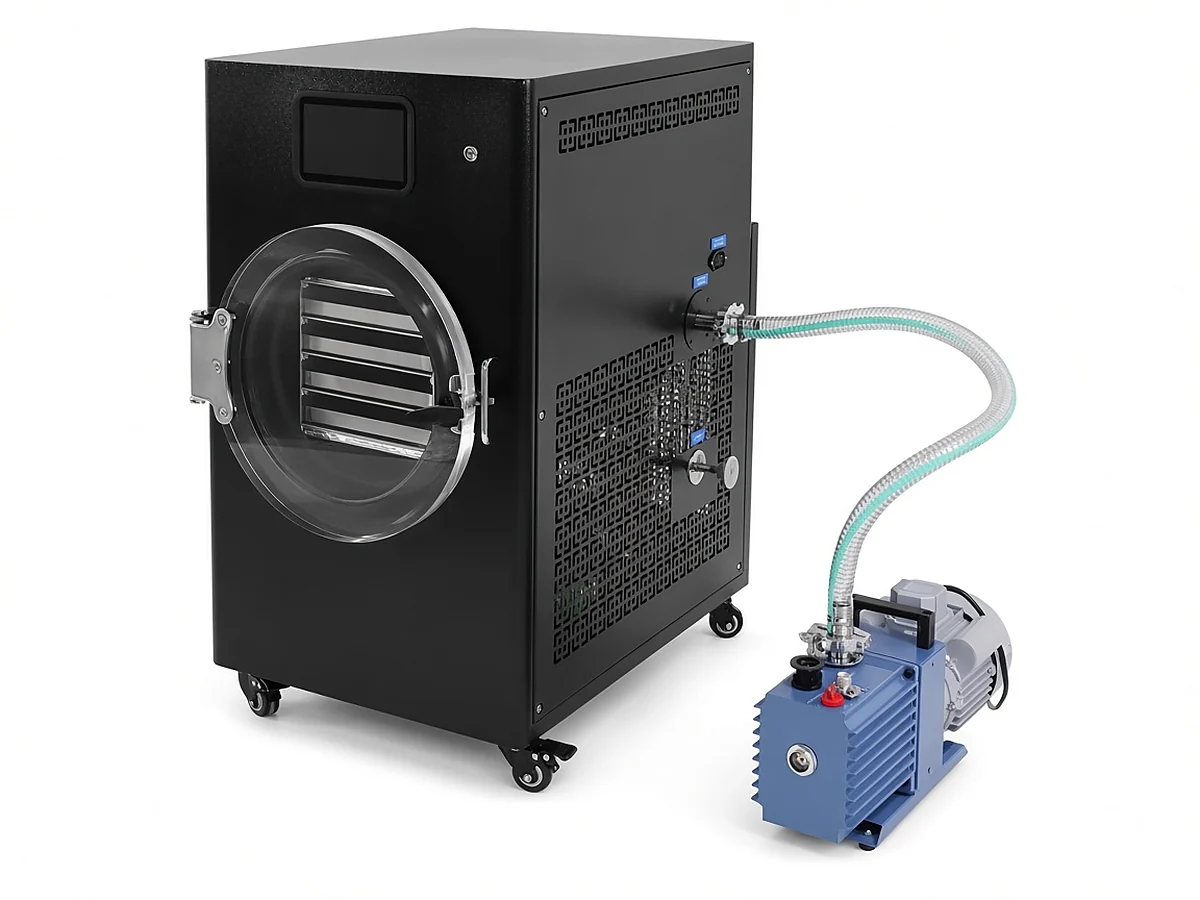
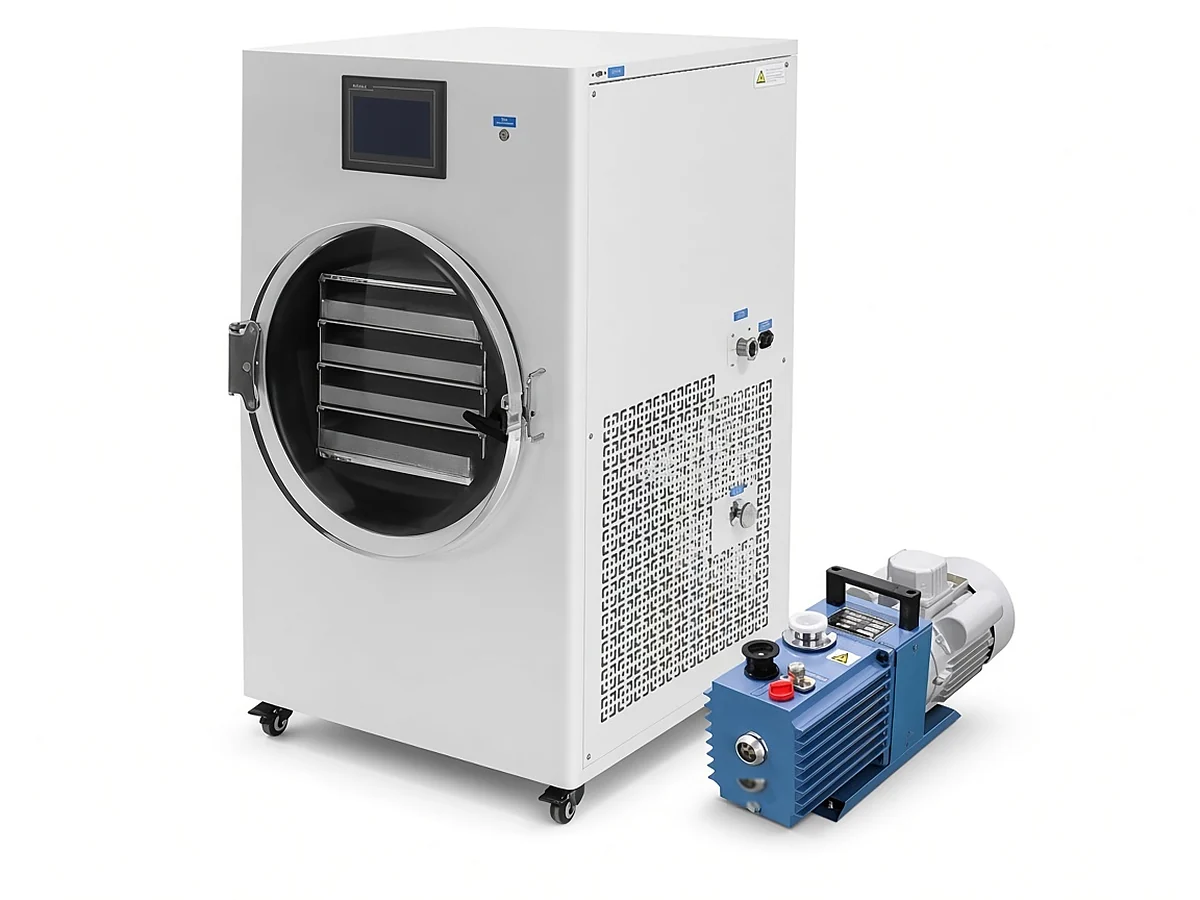
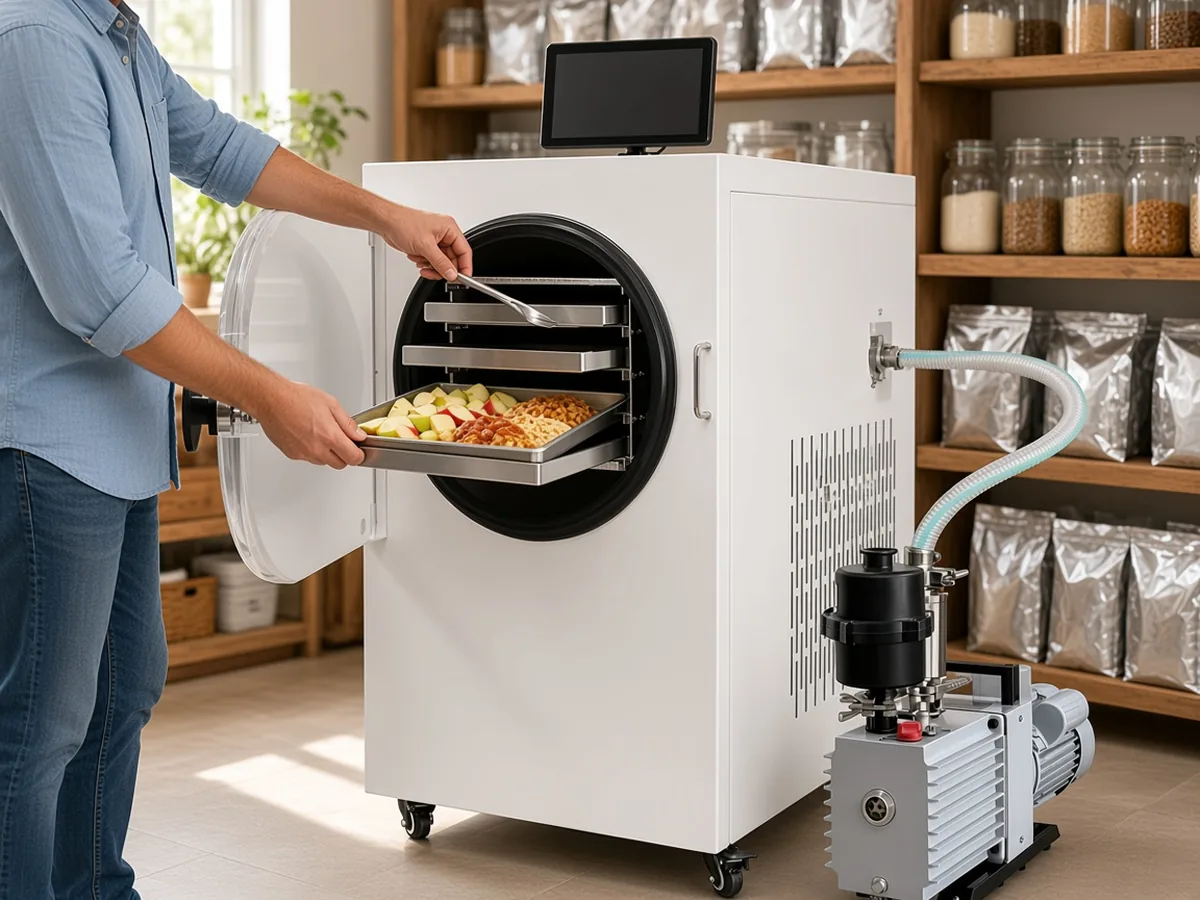
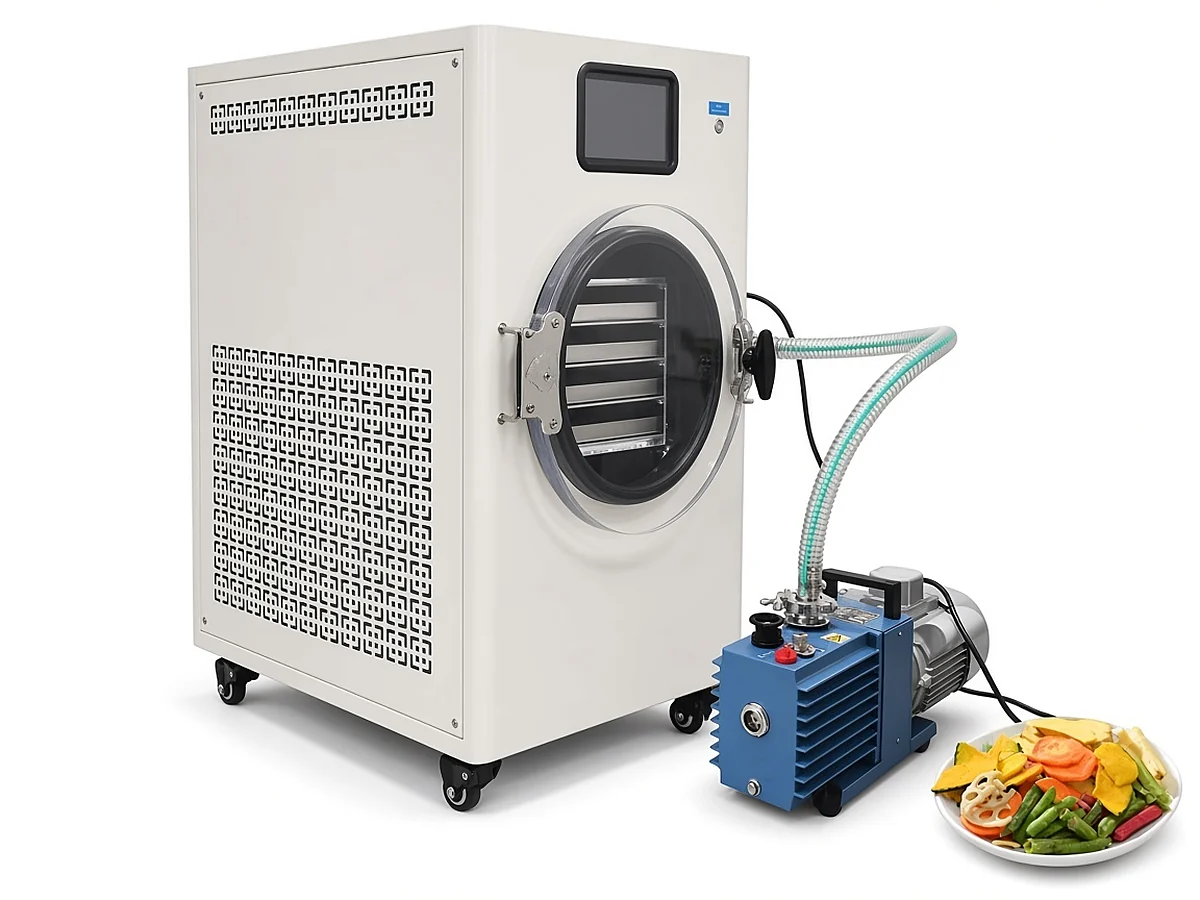
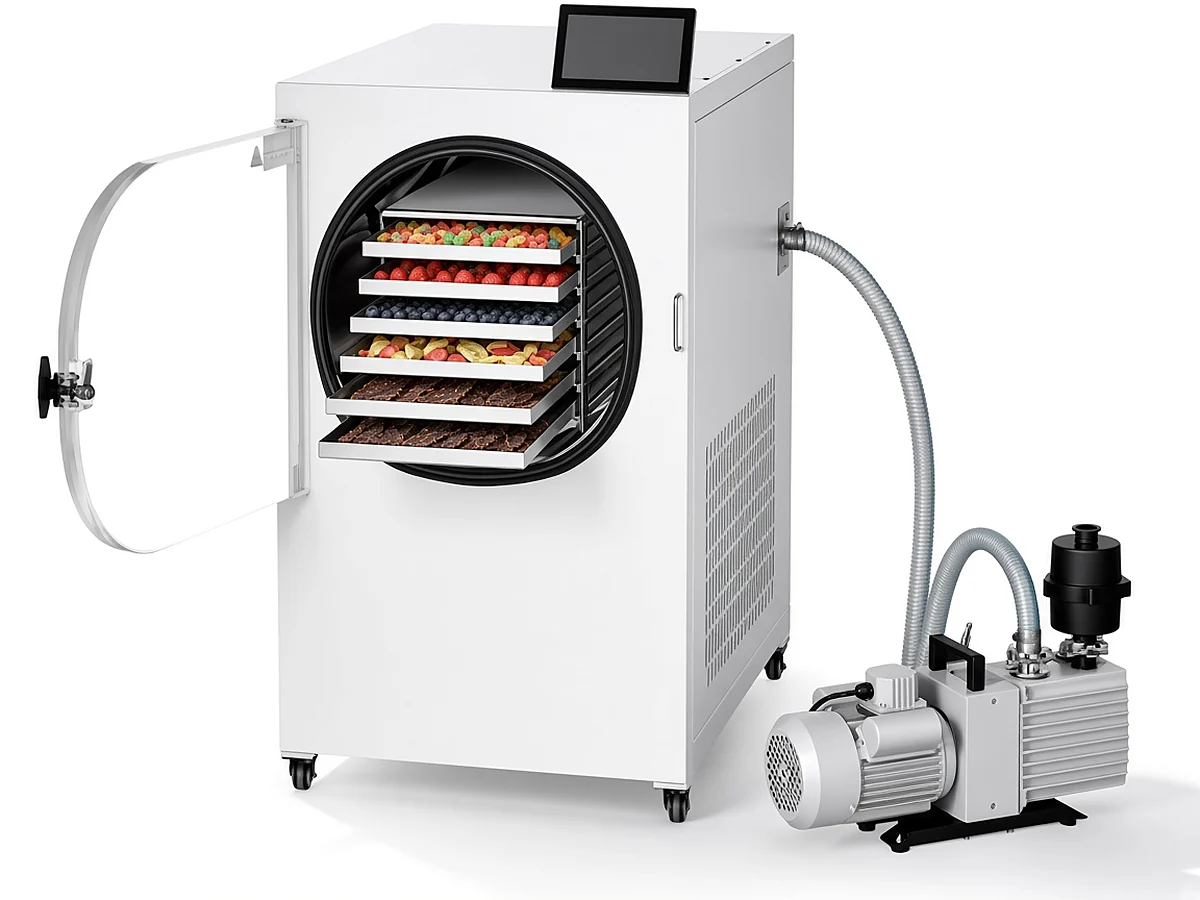
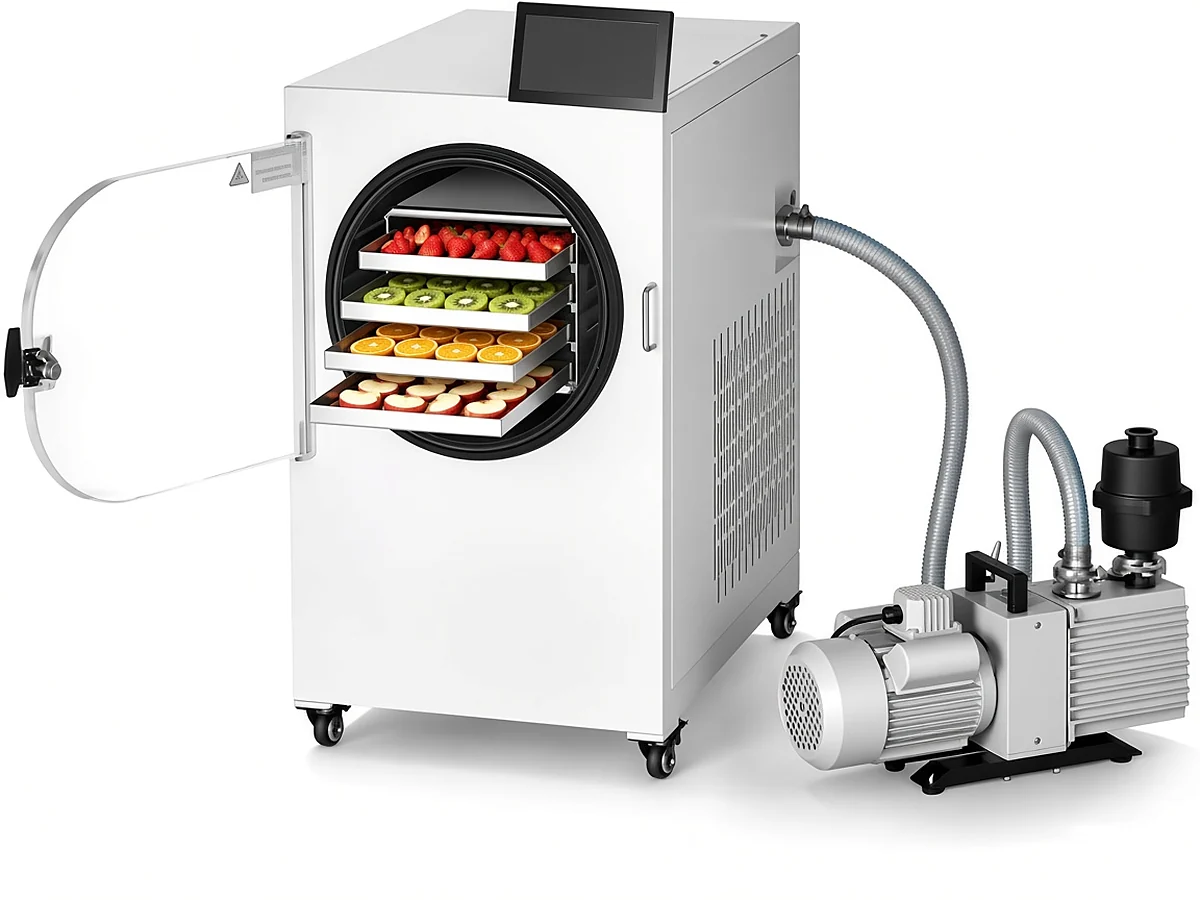
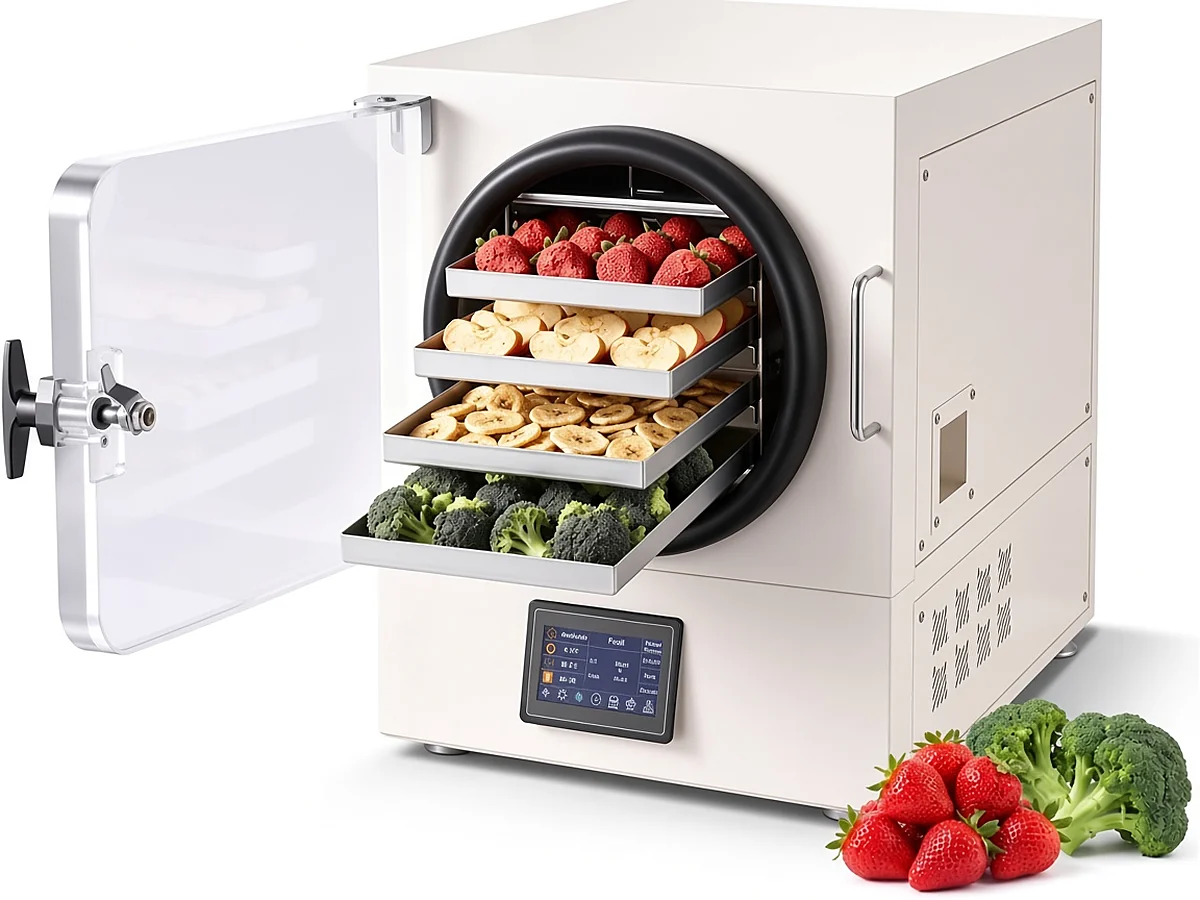
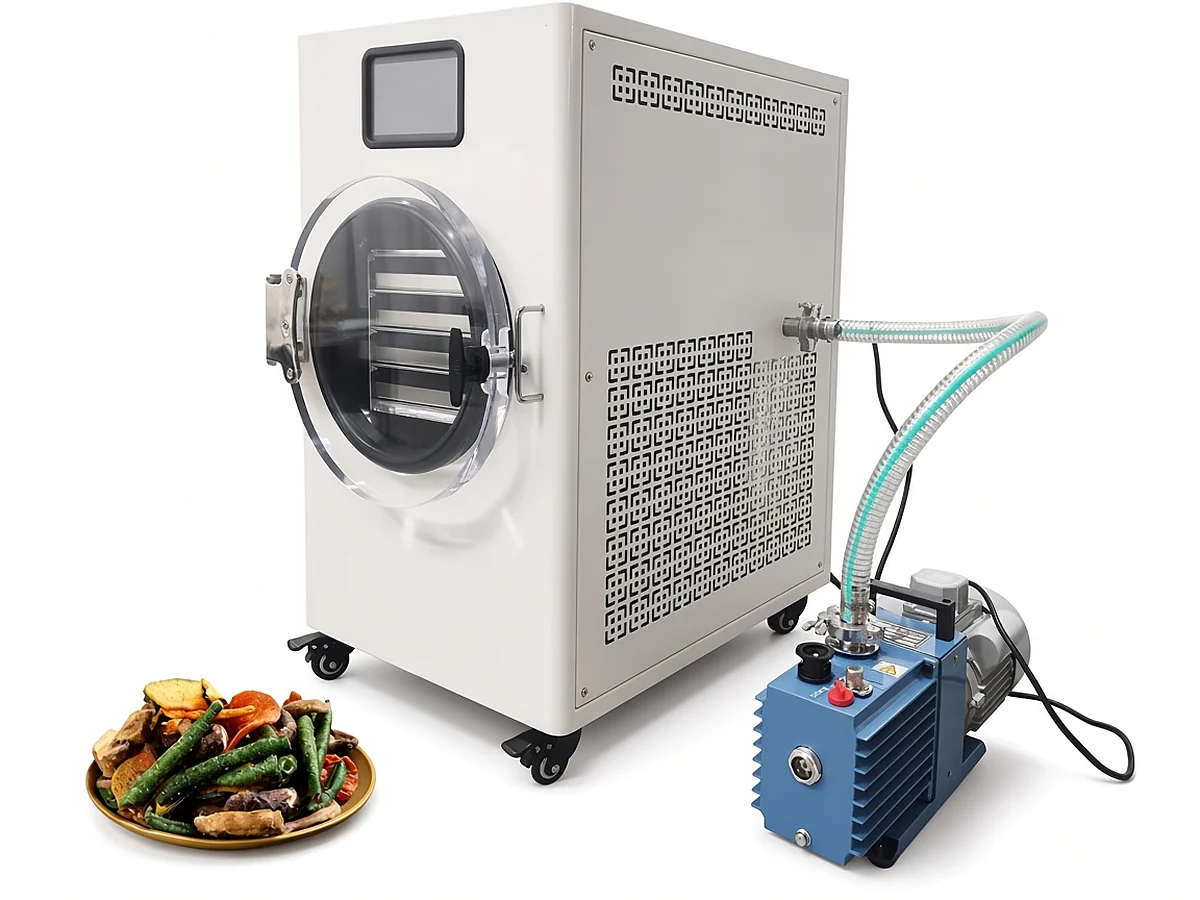
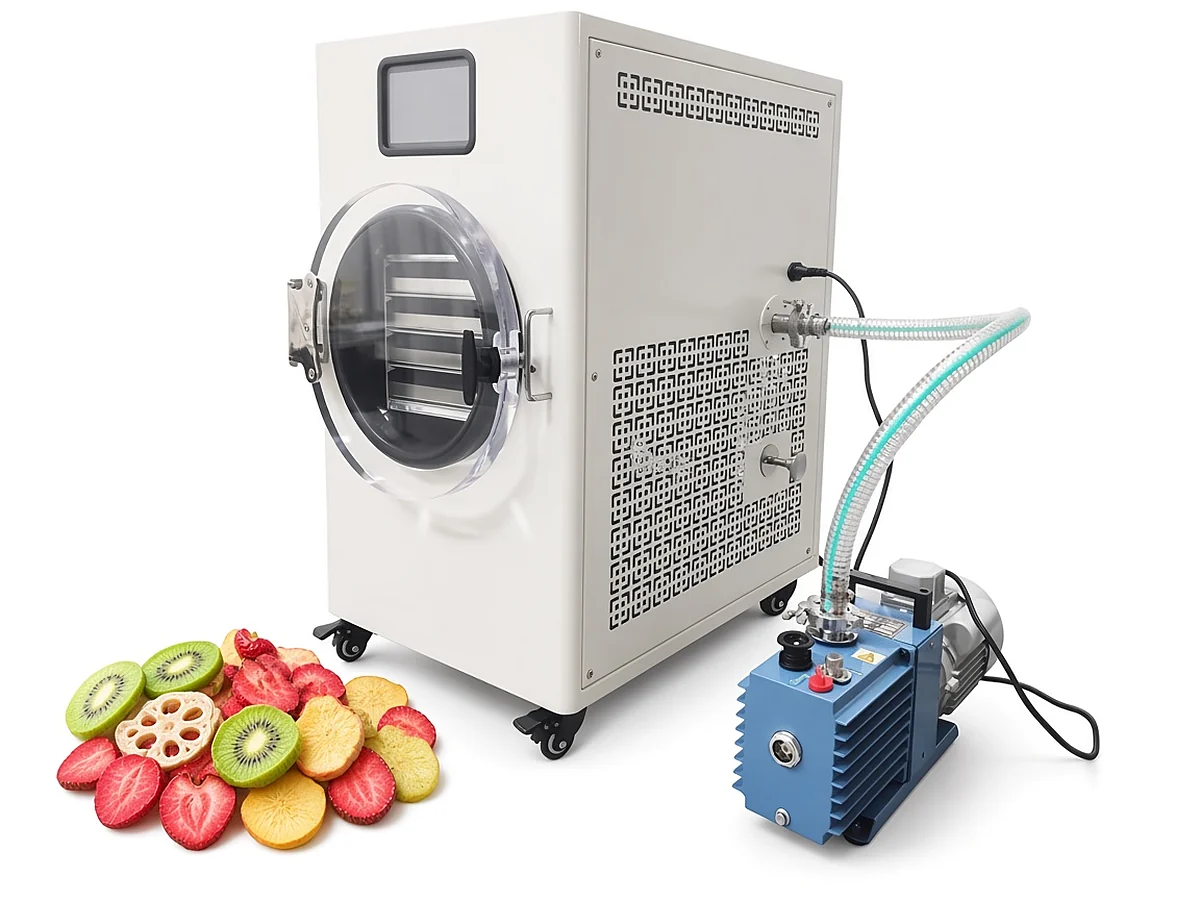
Maintenance & Troubleshooting · Freeze Dryers, Blue Alpine, VEVOR, Vacuum Pump
Updated 30 October 2026
If your freeze dryer is struggling to get cold, the instinct is to suspect the compressor. In practice, the published troubleshooting material points first at the room, the airflow and the load. A machine in a hot garage, pushed into a corner or packed with warm food can look faulty when the refrigeration system is fine.
This guide works from the environment inward: what "cold enough" means, the checks you can make yourself, and the point at which it becomes a warranty call. The steps apply to any home freeze dryer with a compressor and a refrigerated chamber or cold trap, whichever brand you own. We quote specific manuals as examples where they publish useful figures, because manuals differ: Harvest Right's, Blue Alpine's and VEVOR's HFD-4 manual all set different room limits. Where your own manual is silent, contact the seller or maker.
What you'll need to diagnose cooling problems
Check the room temperature and airflow before suspecting the refrigeration system.
Room thermometer (Highly Recommended): Most home freeze dryers struggle when the room runs warm, and the room reading is the first thing support will ask for. Any household thermometer will do.
Notes from the screen (Recommended): The chamber or trap temperature your machine displays over the first couple of hours tells you far more than a hand-held reading. Write it down at intervals.
How cold should a freeze dryer get?
There is no single target, so start with your own machine's specification. Two numbers matter: how cold the food gets during freezing, and how cold the cold trap (the surface that catches the water vapour) gets.
Extension guidance: University of Minnesota Extension and Penn State Extension describe home units freezing food to roughly −30 °F to −50 °F before drying starts.
Published cold-trap ratings vary. VEVOR's HFD-4 manual rates the condenser at −35 °C (−31 °F) or colder with no load, and its setup steps say the machine is ready for use once a test run reaches that temperature and a vacuum below 15 Pa. Other makers publish different figures or none, so compare your machine with its own rating rather than another brand's.
Manuals frame it differently. Some set a freeze stage by time rather than by a temperature target, and let you lengthen it for bigger batches, so check how yours works before deciding it is not cold enough.
Some manuals include a simple refrigeration check. Stay Fresh's user manual is one example: run the compressor on its own with an empty chamber for 90 minutes, and the cold trap should read below −30 °F and the shelf below 0 °F, unless the room is warmer than 85 °F. That test and those numbers belong to that brand. Do not apply them to a different machine; ask your own maker whether it has an equivalent.
Check 1: The room temperature
A freeze dryer's refrigeration has to dump heat into the room. The hotter the room, the harder that gets. Harvest Right's owner's manual makes the point with an example: a batch that takes about 24 hours at 75 °F can take over 40 hours in hot conditions.
Recommended room ranges differ between sources:
Source | Recommended range | Warning |
|---|---|---|
Utah State Extension | 45–80 °F | Garages and basements outside the range strain the machine |
Penn State Extension | 45–75 °F optimal | Not stated |
Harvest Right manual | 35–90 °F; 45–75 °F most efficient | Do not run above 105 °F |
Blue Alpine manual | 32–90 °F (0–32 °C) | 90 °F is its stated maximum |
VEVOR HFD-4 manual | 10–30 °C (50–86 °F), humidity 70% or less | Another section allows up to 32 °C (90 °F) |
Stay Fresh manual | 55–80 °F | Never above 85 °F |
If your machine's documentation gives no range, the overlap of these sources, roughly 55 to 75 °F, is the cautious choice. Cold rooms have limits too, so check the lower limit in your manual before running a machine in an unheated space.
On hot days a fan helps. Harvest Right's manual suggests pointing one at the vacuum pump when the room is above 90 °F. A fan does not make a 95 °F garage a good place for a freeze dryer.
Check 2: Airflow around the machine
Blocked vents and dusty condenser coils are the most common hardware-side cause of slow freezing in the manuals we read.
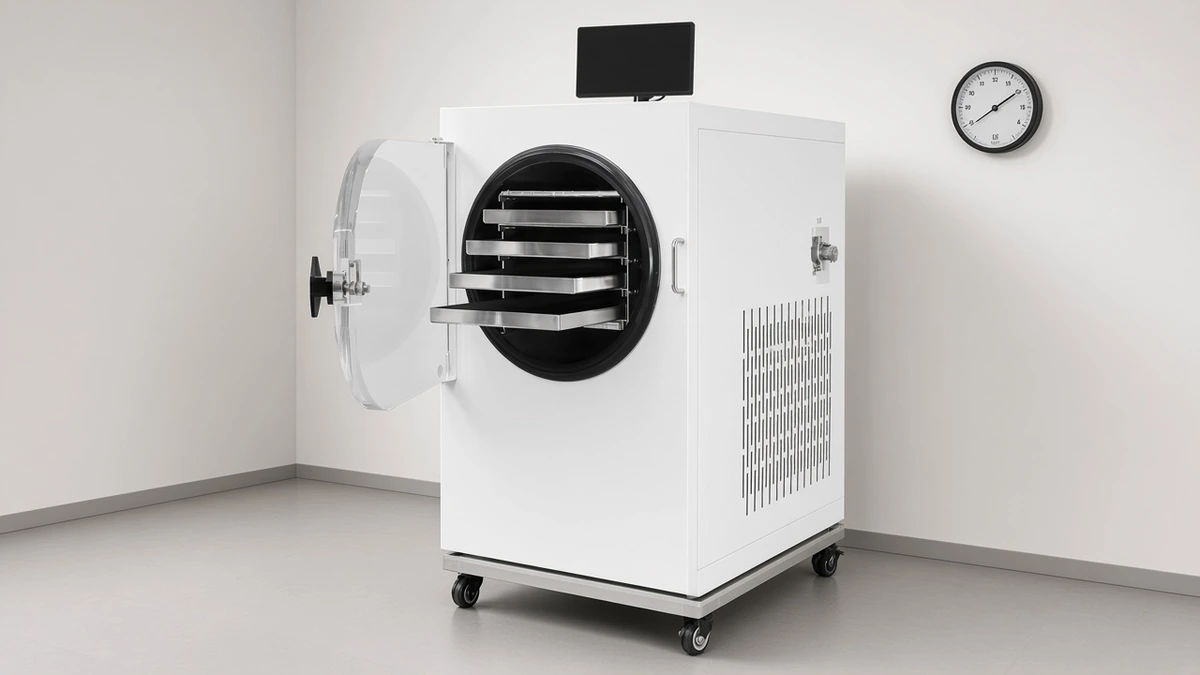
Clearance: keep the vents clear and do not box the machine into a cabinet. Manuals differ: Blue Alpine asks for at least 1 ft (30.5 cm) all round, VEVOR's HFD-4 manual more than 40 cm (about 16 in) from the wall, and Stay Fresh at least 12 inches on each side and 3 inches behind.
Direction of airflow: find which side your machine draws air in and which side it exhausts. A heater, oven or another appliance's exhaust on the intake side reduces cooling.
Dust: unplug the machine and clean the condenser fins as your manual describes. Harvest Right's manual, for instance, says to use a nylon brush and wipe lightly in the direction of the fins.
Check 3: The load you put in
Too much food, or food that is warm, makes the freezing stage work much harder.
Overloaded trays. More food means more water to freeze and remove. Stay within your machine's stated batch capacity, keep food in a single layer and keep it below the tray rim. Treat listed capacities as maximums, not targets.
A warm chamber. Loading frozen food into a warm chamber can let it start to melt, which can lead to a vacuum error and send water toward the pump. Check whether your machine has a pre-cool step and use it. Blue Alpine's manual suggests running the freeze stage for about 30 minutes before loading.
Too much ice. Harvest Right's manual describes a rare case where so much water comes off the food that ice on the chamber walls grows into the trays. Its fix is to move the trays to a freezer, defrost the machine, then return the trays to finish.
Mixed loads. Stay Fresh's manual says not to mix frozen and fresh food in the same batch, which is sensible advice for any machine.
Pre-freezing helps. Harvest Right's manual recommends food that has been frozen for 48 hours, but it also says not to skip the machine's own freezing stage.
Check 4: Power supply and recent moves
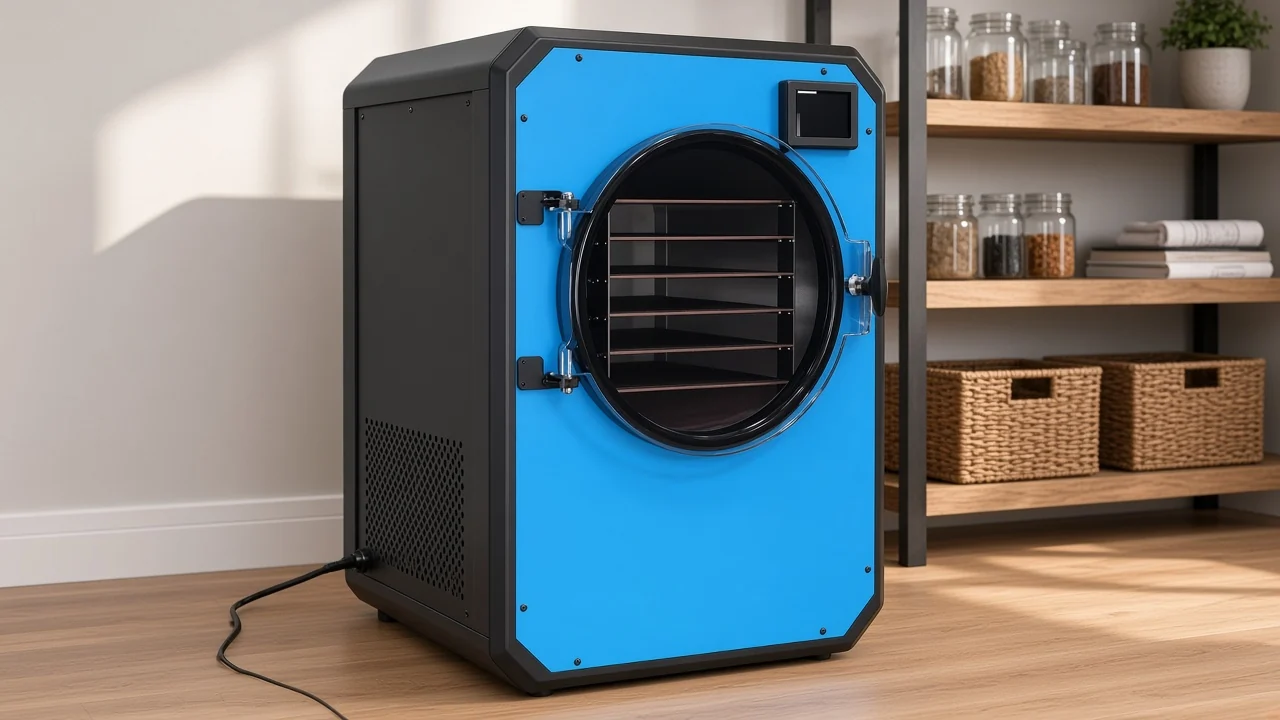
An underpowered compressor will not cool properly. Use the outlet and circuit your model specifies, and do not use extension cords or power strips; other devices on the same circuit can trip the breaker or leave the machine short of power. Blue Alpine's manual asks for a grounded 110 V outlet on a 15 A breaker for the medium machine. VEVOR's HFD-4 manual says the machine is built for either 120 V or 220–230 V, specifies a 16 A fuse and a grounded outlet, and says the supply must match the nameplate, so check the label on yours.
If the machine has just been delivered or moved, wait before running it. Harvest Right's and Stay Fresh's manuals both say to wait 24 hours after installation so the refrigerant can settle. If your manual says nothing, waiting is still the cautious option. VEVOR's HFD-4 manual also says to wait at least three minutes before restarting the refrigeration after it has been switched off.
Check 5: The condenser fan
If your machine has a manual or diagnostic mode, use it to run the refrigeration on its own and check the condenser fan is spinning. Blue Alpine's manual describes exactly this: turn on refrigeration from its manual hardware control screen and look through the side vents for the fan. If the fan does not turn, it says a new fan motor is likely needed. A fan that does not spin is a parts question for support, not a home repair.
Diagnostics are named differently by each brand, and VEVOR's HFD-4 manual does not describe one. If your manual has nothing on it, note the temperature readings on screen over the first two hours of a batch and send them to support.
Is it cooling but still slow?
A machine that freezes properly but takes a very long time to finish usually has a different problem. Vacuum leaks, tired pump oil and sugary or thick food all stretch batch times without any refrigeration fault. Work through our vacuum error checklist and our guide to why batches take so long before assuming the cooling has failed.
When it is a warranty call
Contact the maker, or the seller if you bought through Amazon, if the room is within range, the vents are clear, the load is reasonable, the machine is on its own circuit and it still will not reach normal temperatures. Do not open the cabinet or the refrigeration system yourself. It is a sealed, pressurised system that needs a qualified technician, and VEVOR's manual says to unplug the machine before any maintenance or opening the cover. Blue Alpine's manual also asks owners to contact support if they see damage to the refrigeration lines.
Refrigeration coverage is often longer than the rest of the warranty, but terms differ. Harvest Right's manual, for example, describes limited coverage of the sealed refrigeration system in years two and three. VEVOR's HFD-4 manual gives one year from the date of sale. Whatever the brand, check what the listing and the paperwork in the box say, and keep your order confirmation.
Before you call, note the room temperature, how long the machine has been in place, what was in the load, and any readings or messages on the screen.
What about the food?
If a batch never froze properly, the food may have sat thawed in a warm chamber for hours. Do not try to rescue it by drying it anyway. The LSU AgCenter FAQ advises against cutting cycles short because moist pockets left in food are a food-safety concern, and says not to redry food that has been sitting out in humid air for days. When you are unsure how long perishable food has been warm, it is safer to throw it away. Our freeze drying food safety guide covers the rules in more detail.
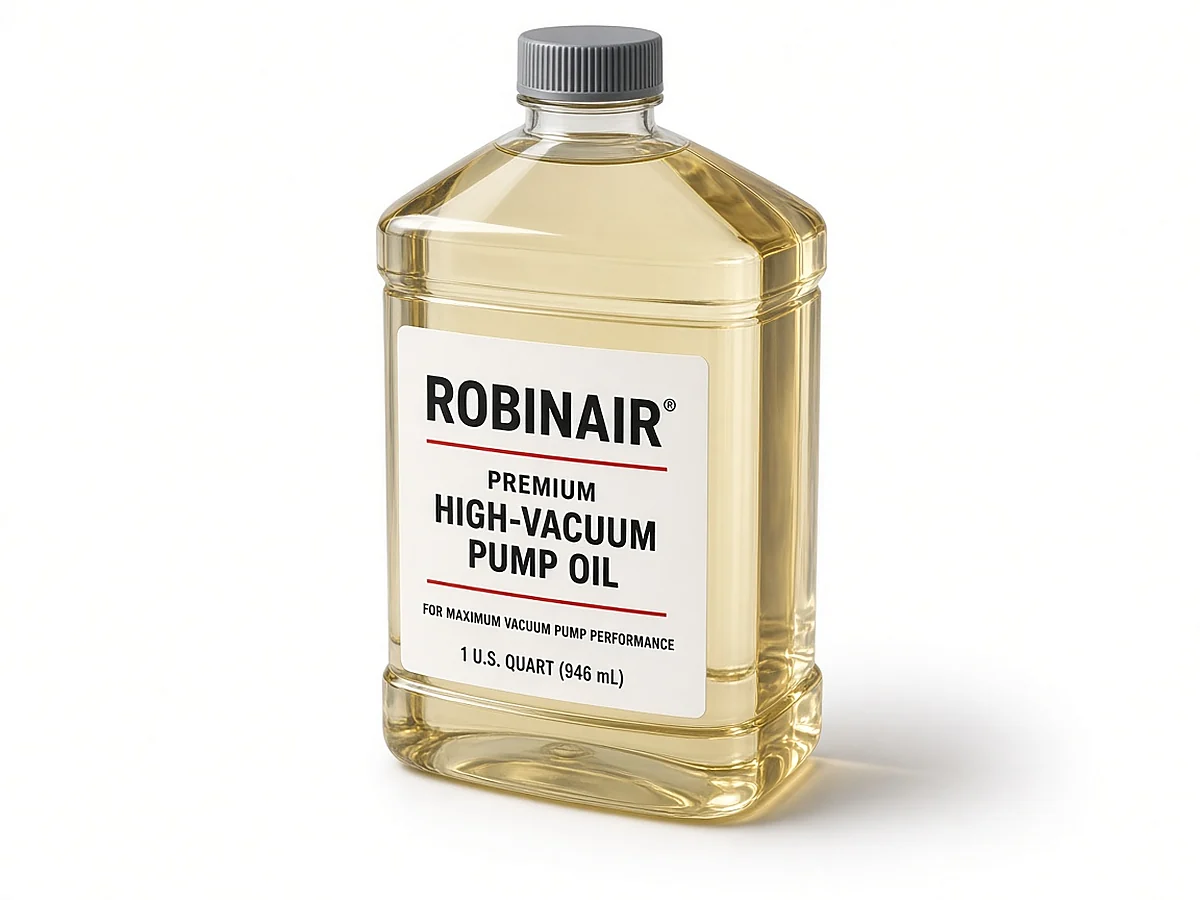
Related on Amazon: Robinair 13203 Premium High Vacuum Pump Oil (1 quart).
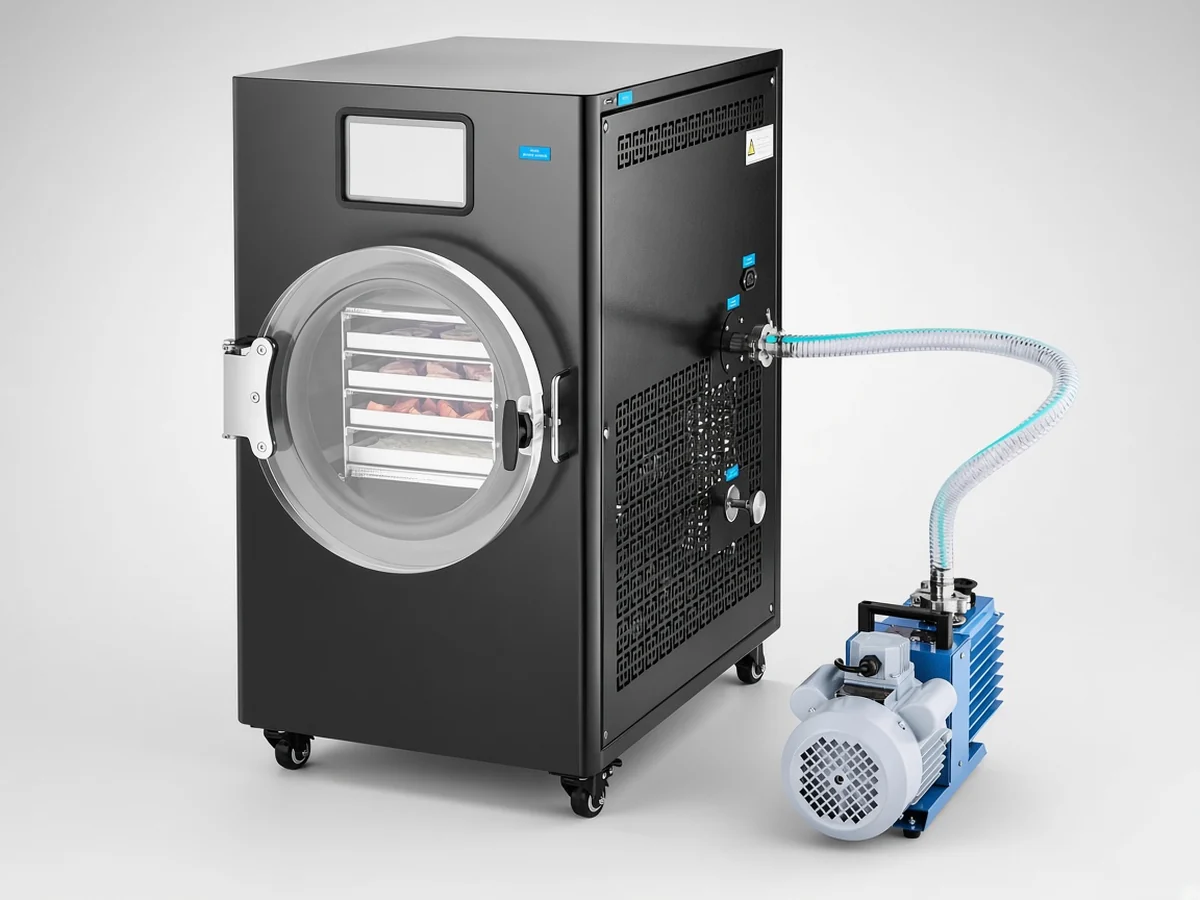
Related on Amazon: VEVOR SJ-08H Vacuum Freeze Dryer.
Frequently asked questions
What temperature should a freeze dryer room be?
It depends on the machine. Harvest Right calls 45–75 °F most efficient, Blue Alpine sets a 90 °F maximum and VEVOR's HFD-4 manual gives 50–86 °F. Somewhere between about 55 and 75 °F suits all of them.
Why is my freeze dryer not getting cold?
Common causes are a hot room, blocked airflow, an overloaded first batch, power problems or a failed condenser fan.
Related guides
Cooling problems and vacuum problems often get confused, so keep our vacuum troubleshooting checklist to hand. A worn or dirty pump can also make a healthy machine look slow; our pump oil guide covers what oil pumps need. For what the refrigeration is doing at each stage, read how a freeze dryer works, and if you are still choosing a machine, our home freeze dryers on Amazon roundup sets the published cooling and power specs side by side.