
What It Really Costs to Run a Home Freeze Dryer: Electricity Math by Wattage
Published 10/29/2026 · Updated 11/24/2026
Quick answer
Freeze dryer running cost depends more on how many hours the compressor and heaters run than on the rated wattage printed on the listing. At a typical U.S. residential rate, even a 1,500–2,200 W cabinet often works out to a few dollars per full batch—not a continuous max-power load for the whole cycle.
Products mentioned in this guide
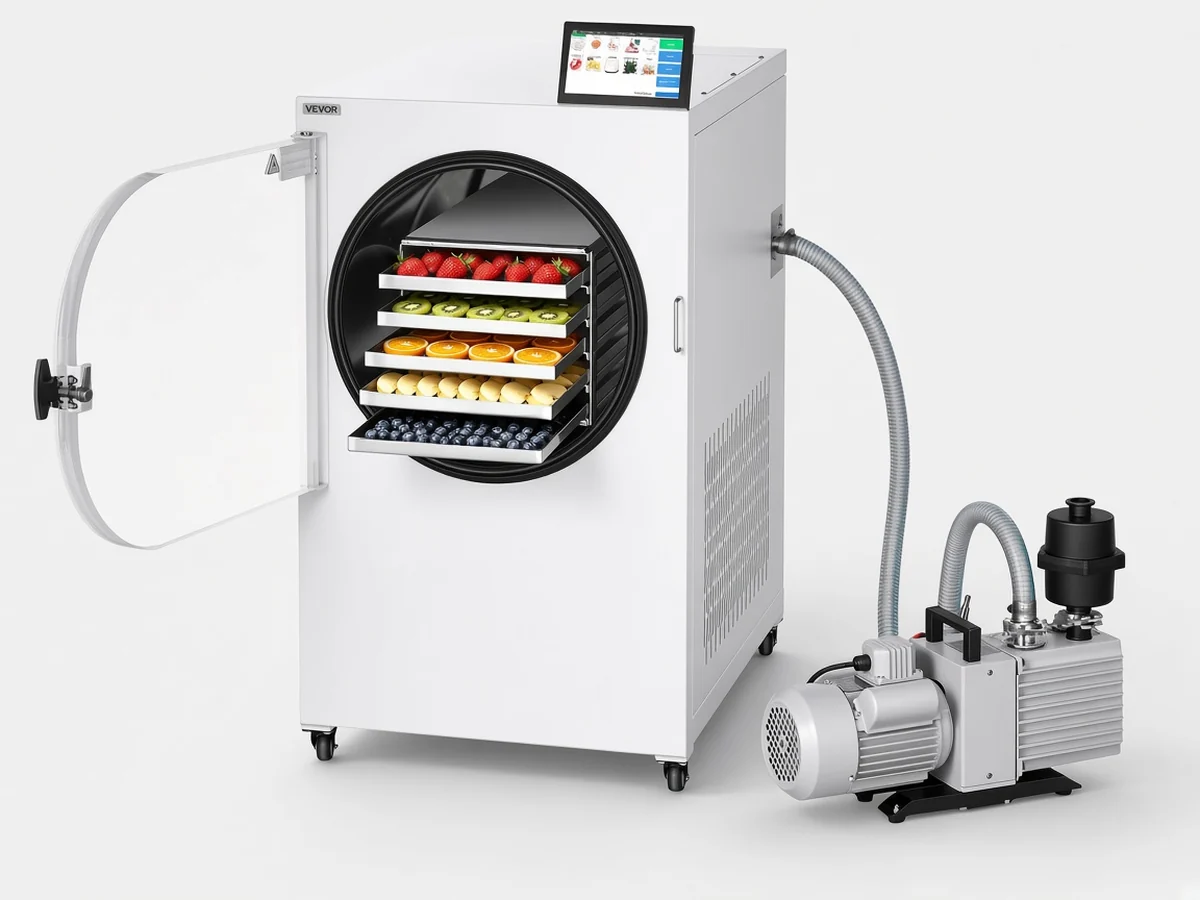
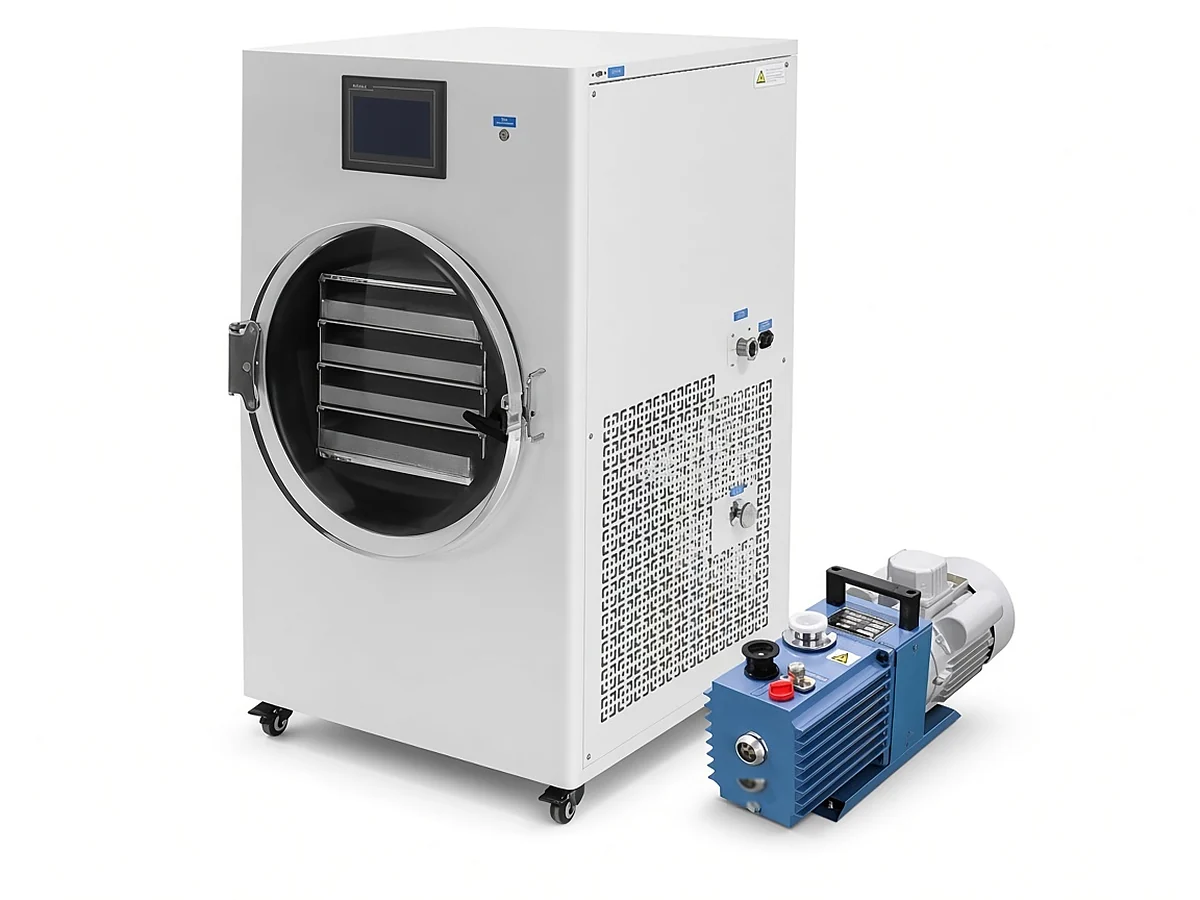
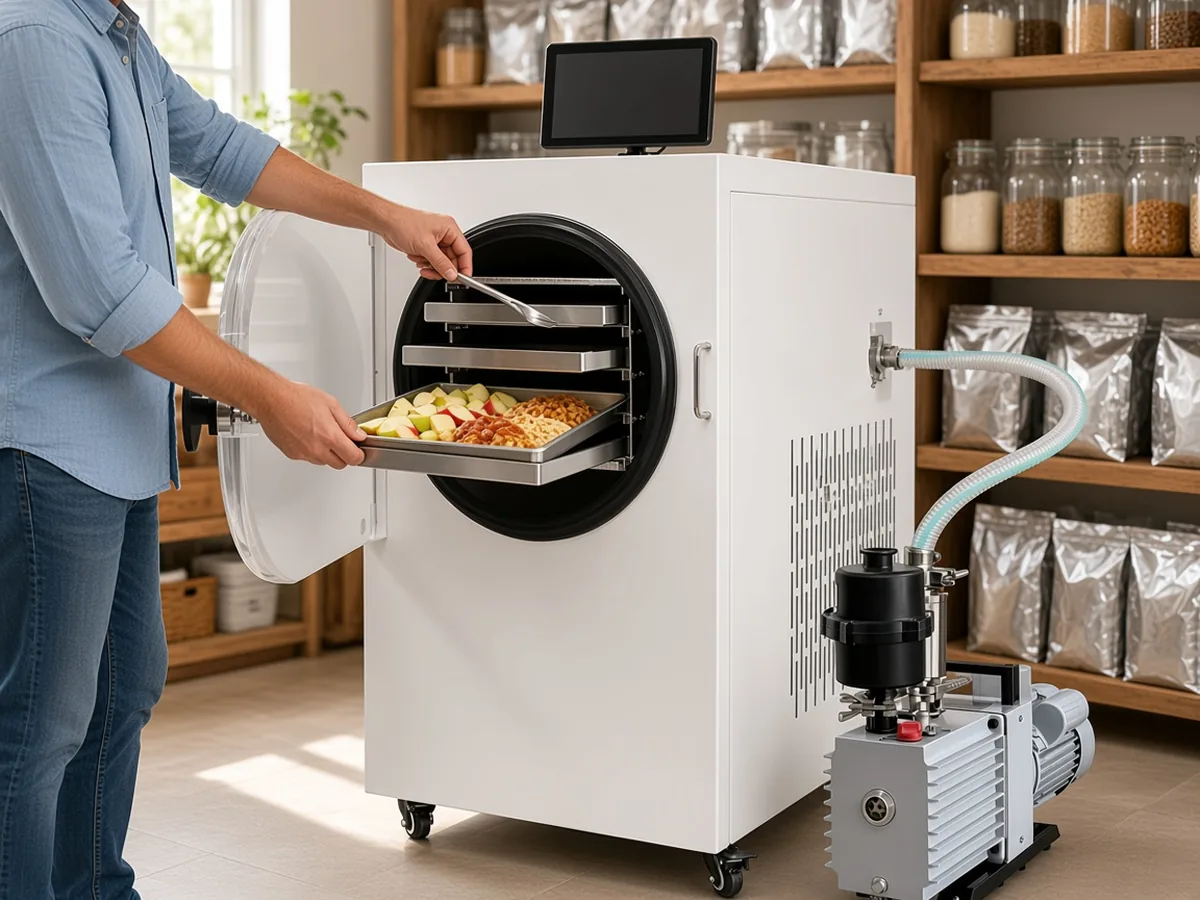
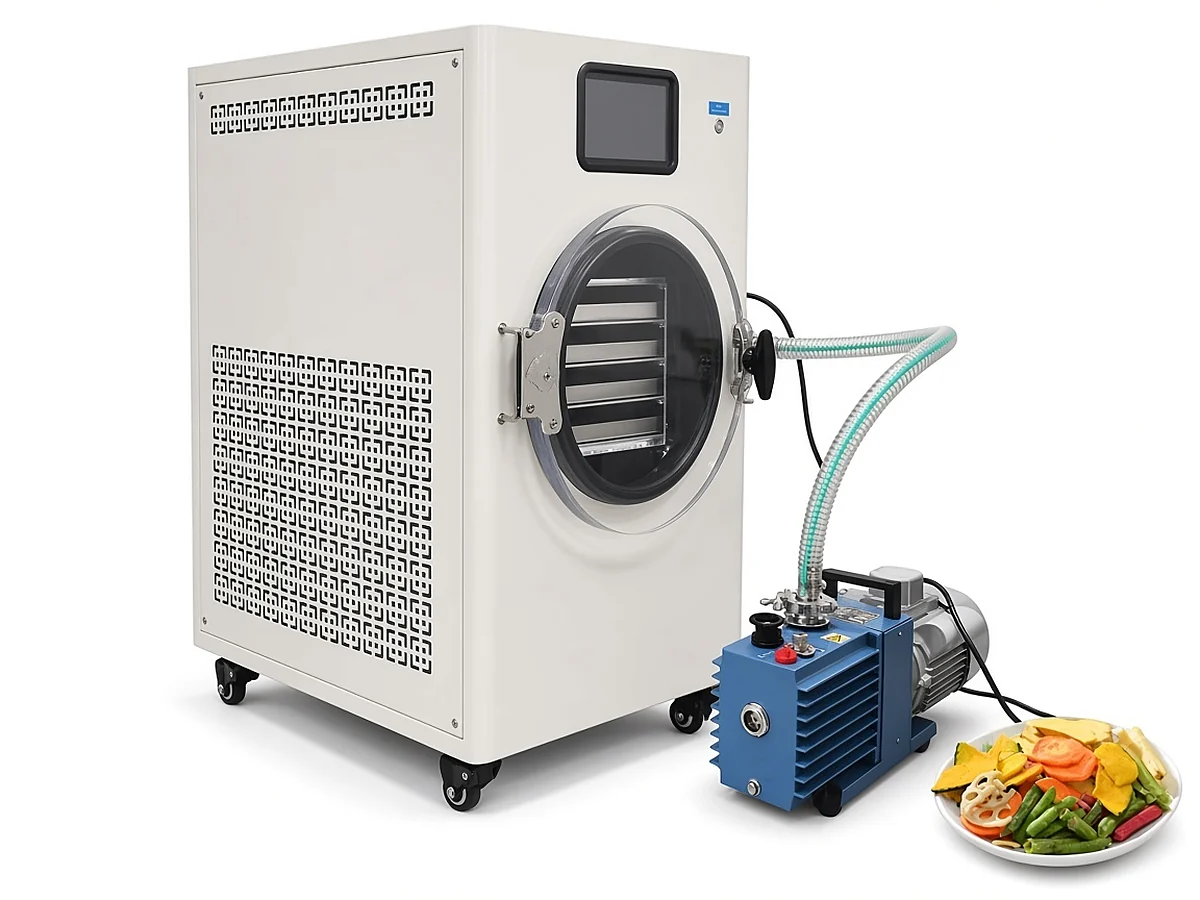
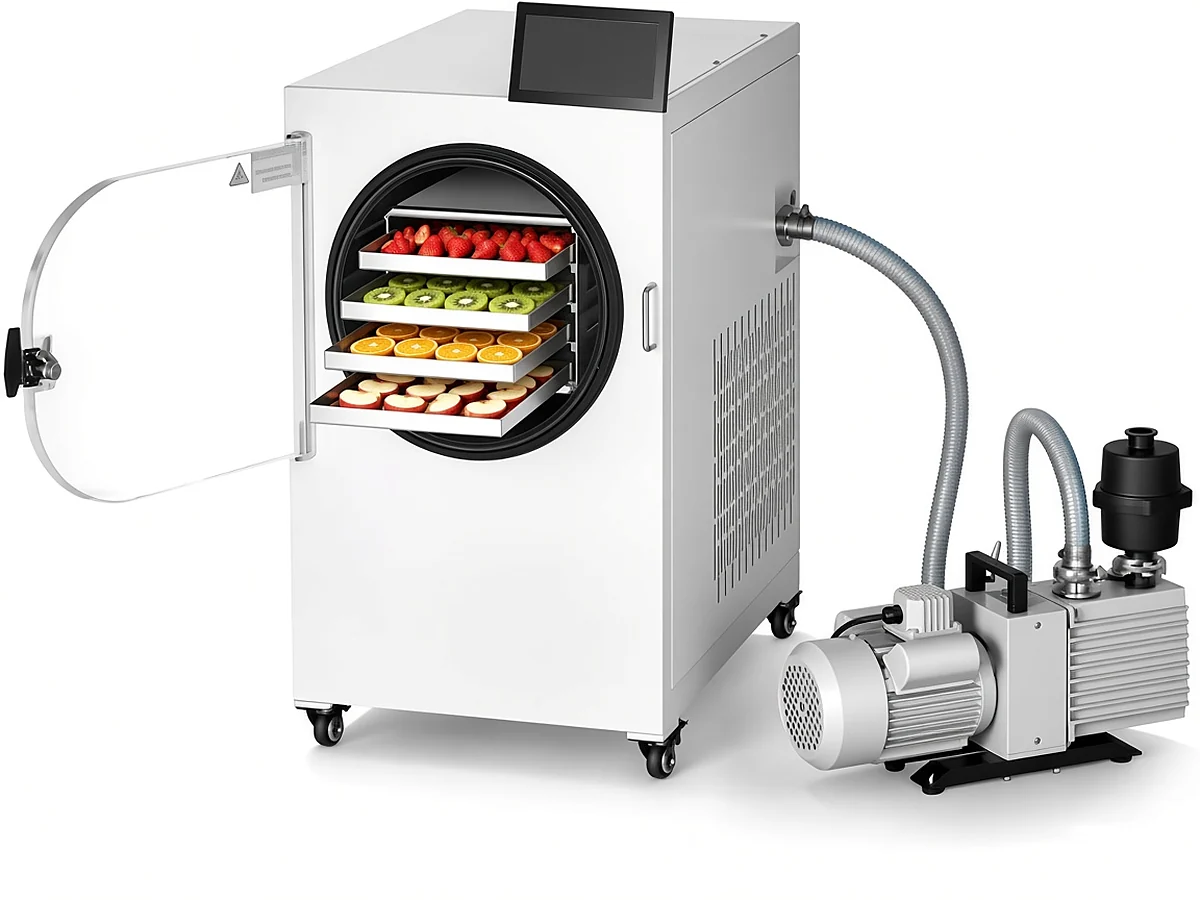
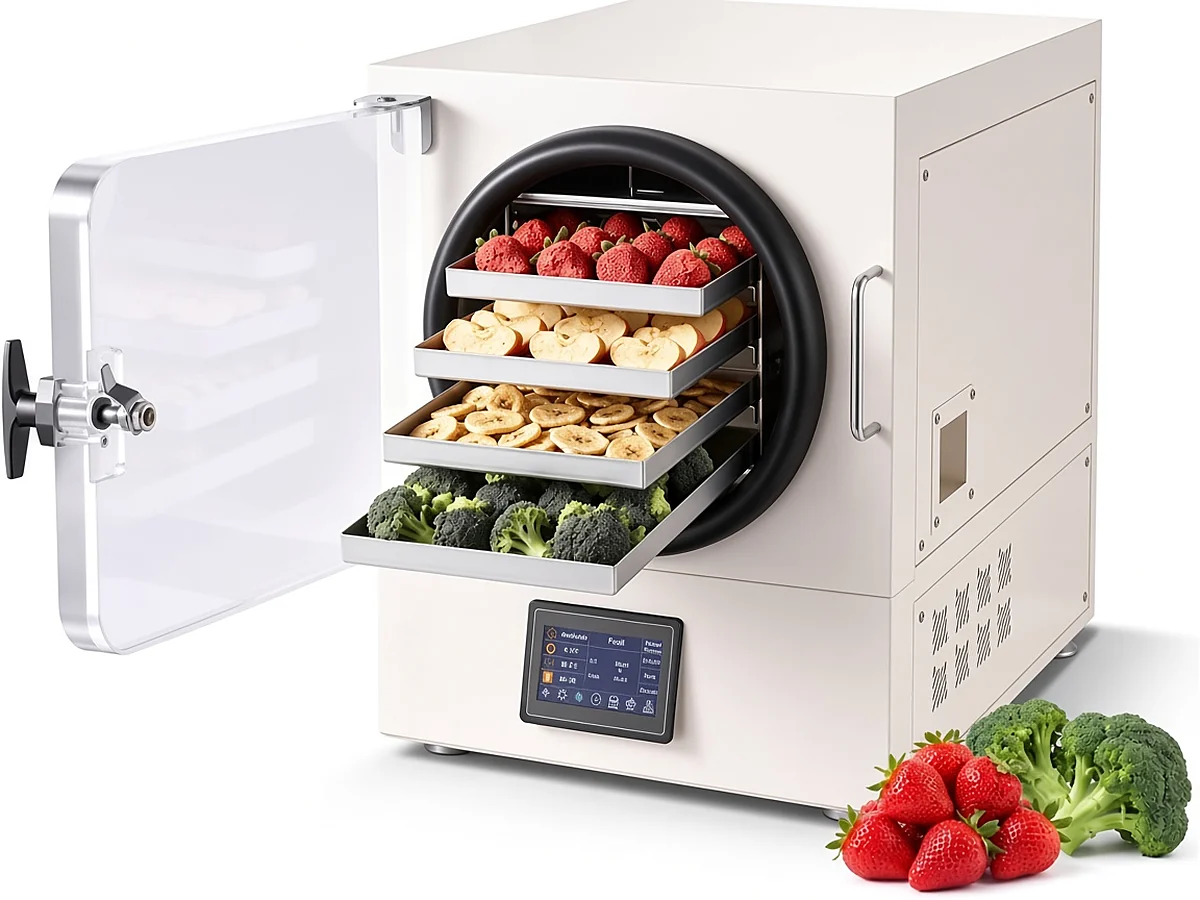
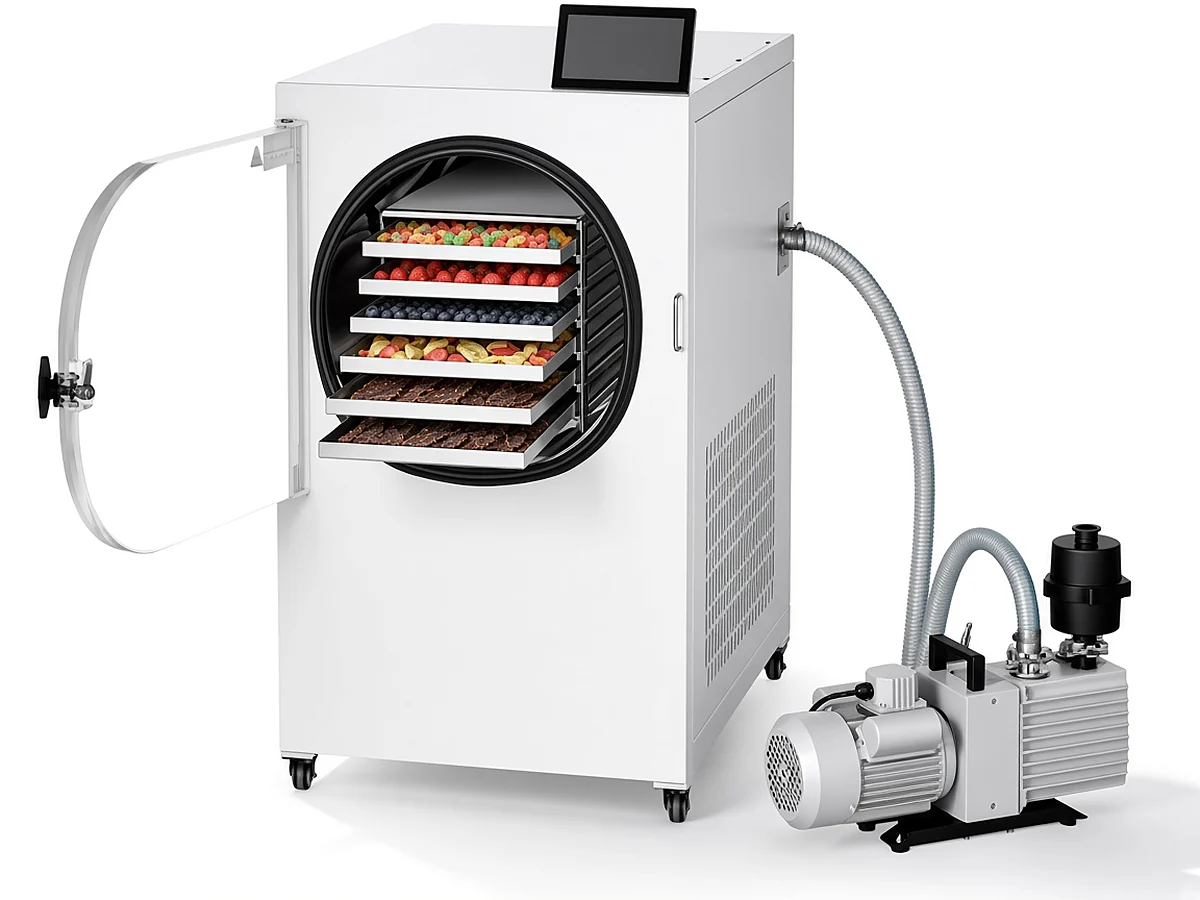
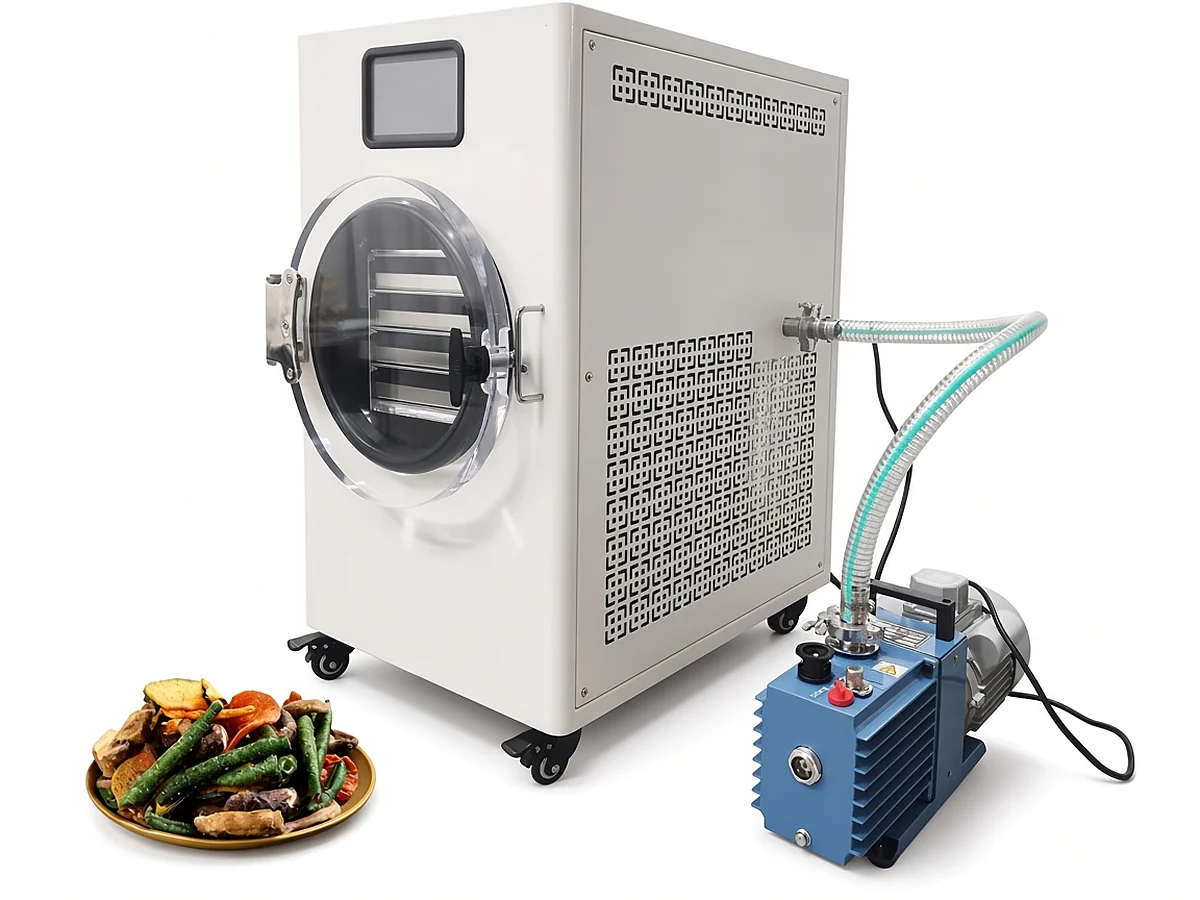
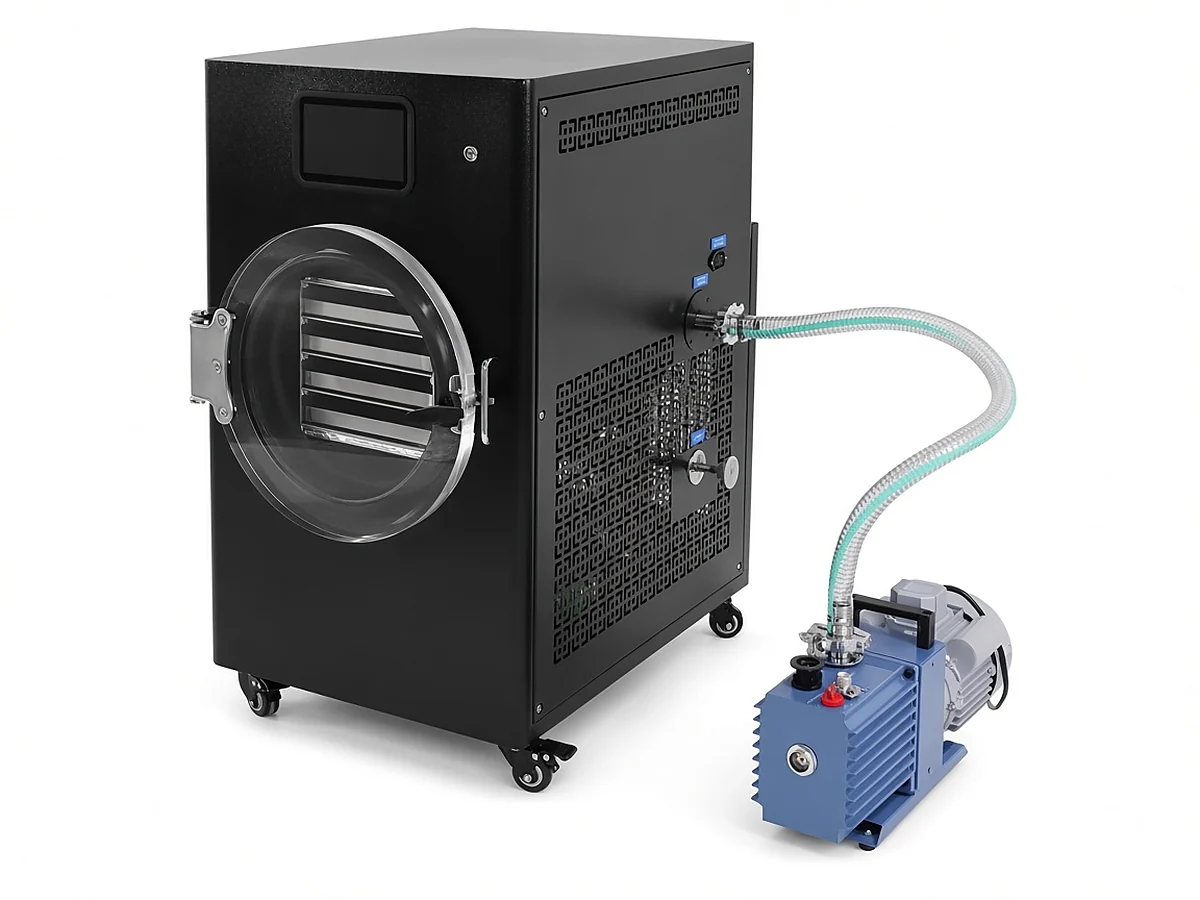
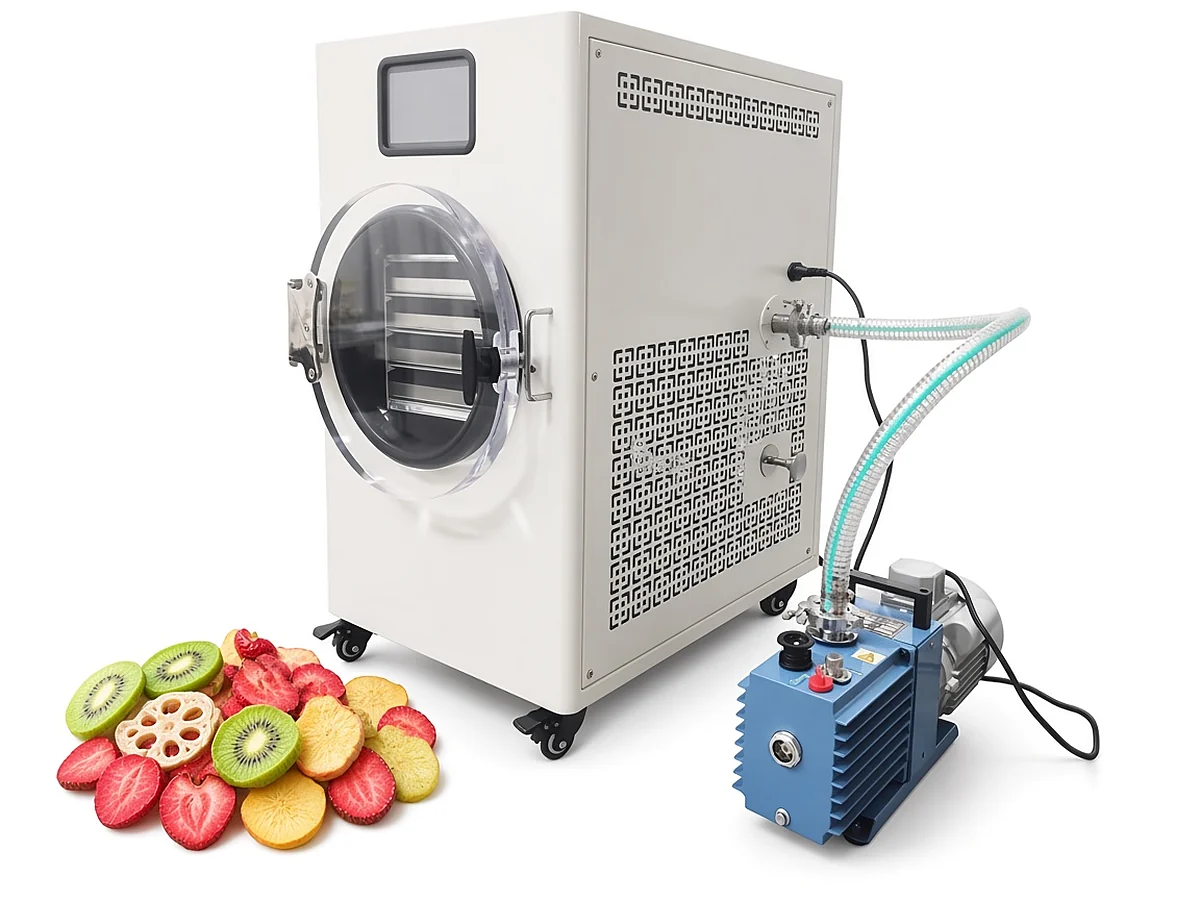
Freeze Drying Basics · Freeze Dryers, Blue Alpine, VEVOR, Running Cost
Updated 30 October 2026
Freeze dryer running costs are often quoted as a single reassuring figure, without the working. This guide shows the working. It converts a freeze dryer's published power into kilowatt-hours and prices it at the US average electricity rate, so you can see where the numbers come from and redo them for your own machine and bill.
Every cost on this page is DryFreezeWise's own arithmetic from published specifications. We have not metered any machine, so treat the figures as estimates. To run the numbers for your own rate and hours, use our freeze dryer running cost calculator. For the purchase price of the cabinets themselves, see how much does a freeze dryer cost.
What you'll need to measure your own running cost
To get a true cost per batch, meter one full cycle and multiply the kWh by your own electricity rate.
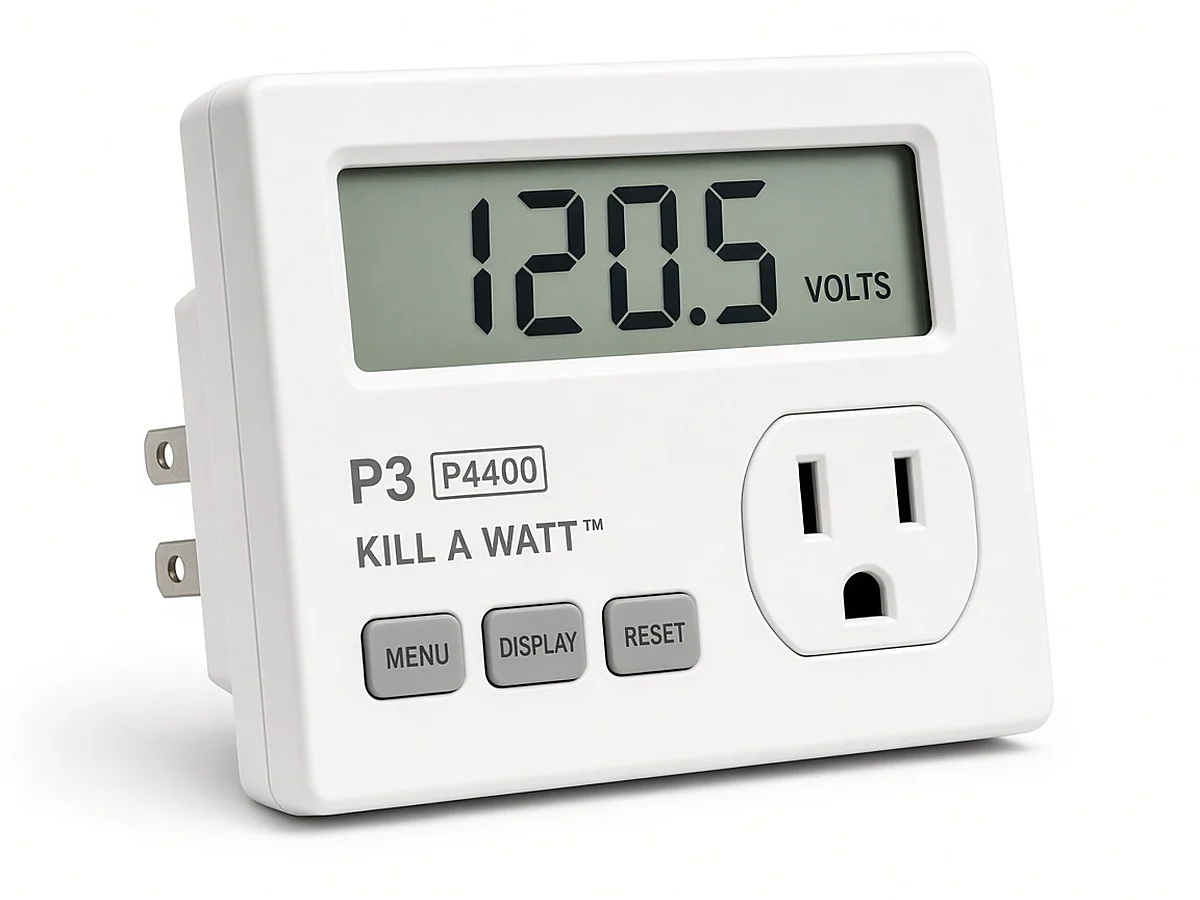
Plug-in power meter (Highly Recommended): Published wattage is only a guide; metering a full batch gives your real kilowatt-hours. Check the meter's rated current before you buy one. Common plug-in meters such as the P3 Kill A Watt P4400 are rated at 15 A (1,875 VA), which covers a machine with a 13 A maximum but not one rated at 2,200 W on a 120 V supply.
Your electricity bill (Required): You need your own price per kWh. Check the latest bill or your utility account.
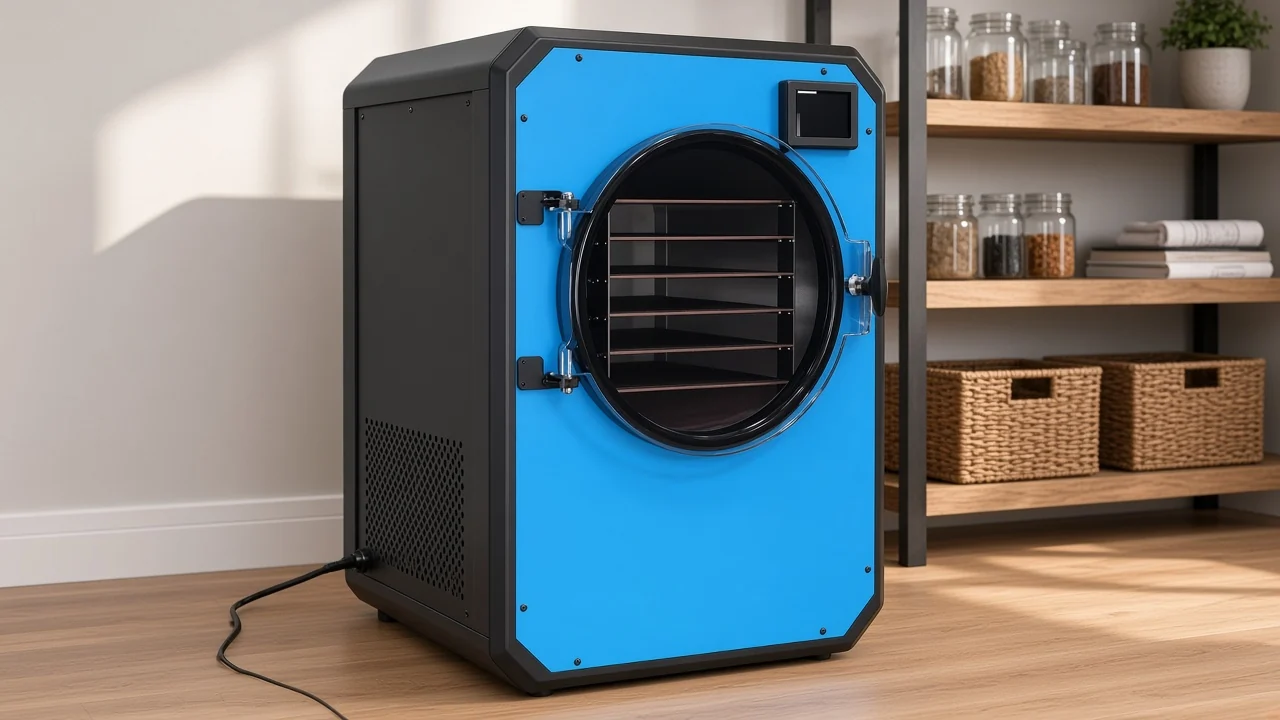
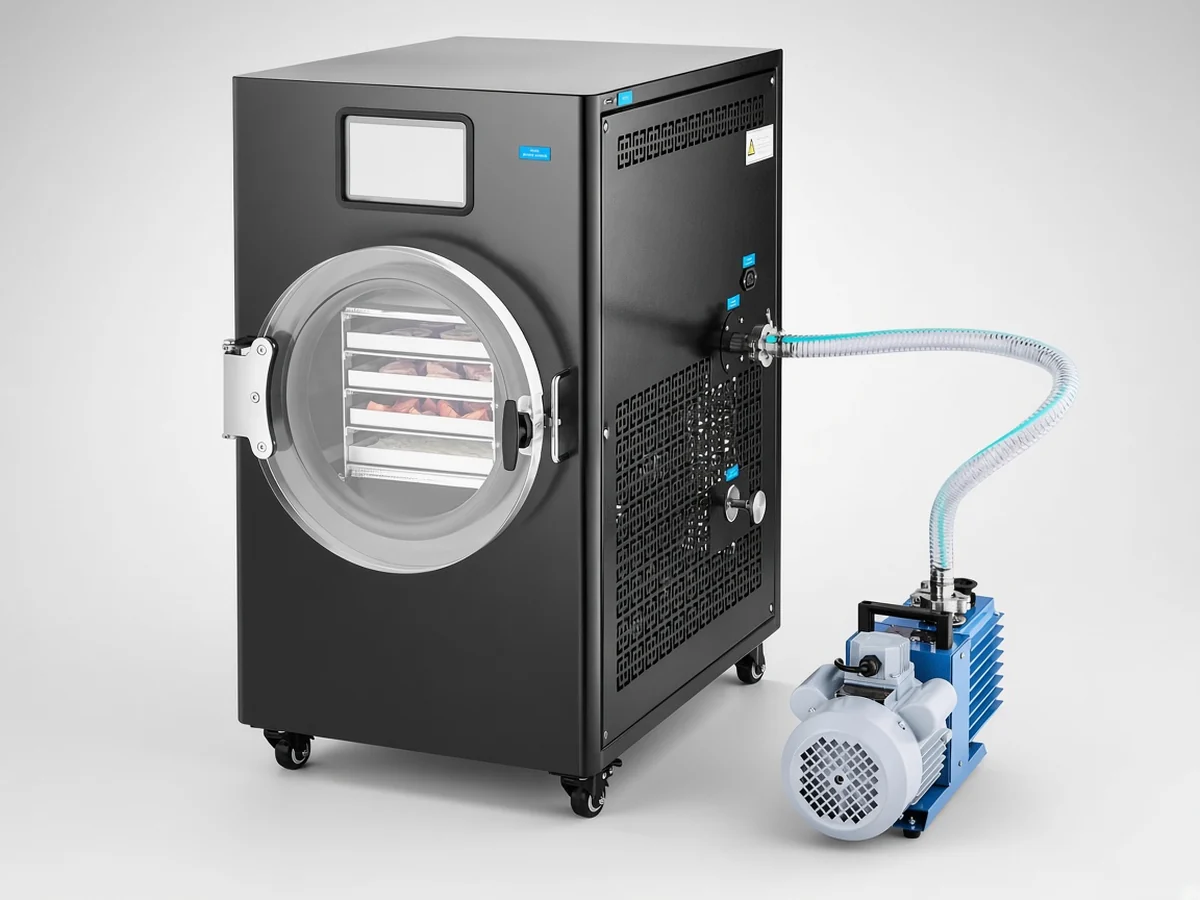
For reference, the Blue Alpine owner's manual publishes an average draw of 9 A (1,080 W) and a maximum of 13 A (1,560 W) for the medium machine, while the VEVOR HFD-4 manual gives only a 1,550 W power figure. Our freeze dryer roundup lists the power figure for each machine.
How to work out the running cost
The method is simple: watts × hours ÷ 1,000 = kilowatt-hours (kWh). Multiply the kWh by your electricity price to get the cost. We used the US average residential price of 18.16 cents per kWh for August 2026, from the US Energy Information Administration (released October 2026).
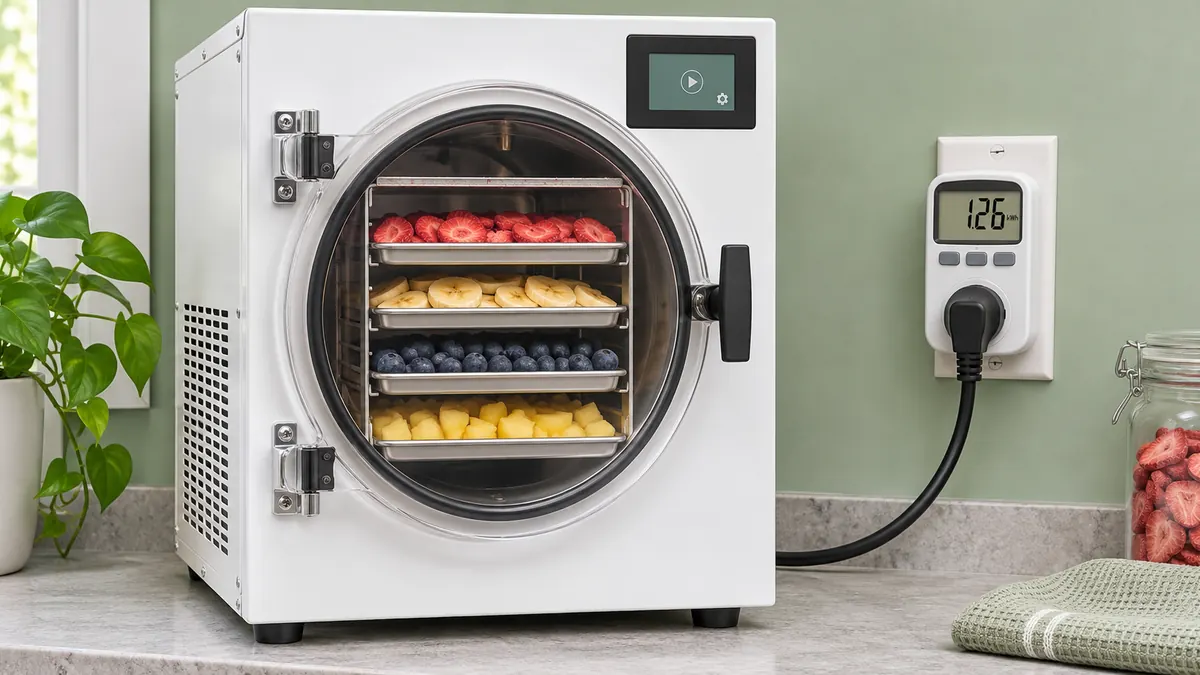
The weak point in any estimate is the wattage. A freeze dryer does not draw the same power all the time: the compressor, heaters and vacuum pump cycle on and off through freezing, drying and final drying. An average draw, where a maker publishes one, is the best basis for a cost estimate. A rated or maximum figure describes the most the machine is designed to draw, so a cost built on it is an upper bound, not a typical bill.
Cost per hour and per day, by wattage
Find your machine's wattage on its label, manual or listing, then read across. The named rows use the published figures for three freeze dryers sold on Amazon US that we cover: the Blue Alpine Medium Select, the VEVOR HFD-4 and the VEVOR SJ-08H.
Power draw | Per hour at 18.16¢ | Per 24 hours at 18.16¢ |
|---|---|---|
1,000 W | 1.00 kWh = about 18¢ | 24.0 kWh = about $4.36 |
Blue Alpine Medium Select, 1,080 W average | 1.08 kWh = about 20¢ | 25.9 kWh = about $4.71 |
1,250 W | 1.25 kWh = about 23¢ | 30.0 kWh = about $5.45 |
1,500 W | 1.50 kWh = about 27¢ | 36.0 kWh = about $6.54 |
VEVOR HFD-4, 1,550 W rated | 1.55 kWh = about 28¢ | 37.2 kWh = about $6.76 |
Blue Alpine Medium Select, 1,560 W maximum | 1.56 kWh = about 28¢ | 37.4 kWh = about $6.80 |
2,000 W | 2.00 kWh = about 36¢ | 48.0 kWh = about $8.72 |
VEVOR SJ-08H, 2,200 W rated | 2.20 kWh = about 40¢ | 52.8 kWh = about $9.59 |
The formula for any machine: watts × hours ÷ 1,000 × your price per kWh. For example, 1,200 W for 30 hours at 18.16¢ is 36 kWh, about $6.54.
How to read this table:
Use an average draw if your maker publishes one. That is the realistic basis for a bill. A maximum or rated figure gives a ceiling.
Blue Alpine is the only one of the three that publishes an average draw, so its 1,080 W row is the closest to a typical bill.
VEVOR HFD-4 publishes only a power figure of 1,550 W, in its manual and on the Amazon listing. Because the compressor, heaters and pump cycle on and off, the real average is likely to be lower, but VEVOR does not say by how much. The SJ-08H 2,200 W figure is a rating in the same way.
If a listing gives a single wattage without saying whether it is average or maximum, treat it as a ceiling until the seller confirms.
So the two VEVOR rows show the most each could cost per hour if it drew its rated power continuously, not a typical bill.
Why we do not give a cost per batch
Cost per batch is just cost per hour multiplied by batch length, and batch length varies a lot. VEVOR's HFD-4 manual gives no cycle time and tells owners to test each food, so there is no official HFD-4 batch length to price. Blue Alpine's manual says the whole process can take 18 to 36 hours, with default settings of 8 hours freezing and 24 hours drying. Extension sources give broader ranges, such as University of Arizona's 20 to 40 hours. Our guide to how long freeze drying takes explains why these figures differ and what drives the time.
Two worked examples, both our own arithmetic:
Blue Alpine at its 1,080 W average, across its manual's 18 to 36 hour range: 1,080 × 18 ÷ 1,000 = 19.4 kWh, about $3.53; 1,080 × 36 ÷ 1,000 = 38.9 kWh, about $7.06.
VEVOR HFD-4 at its 1,550 W rating, for a 20 or 40 hour batch: 31.0 kWh, about $5.63, or 62.0 kWh, about $11.26. Because this uses a rated figure, treat it as an upper bound.
These are estimates at the US average rate, not promises. Your own batches may run shorter or longer.
How much your electricity rate changes it
Rates vary enormously across the US. Here is the VEVOR HFD-4's rated power for 24 hours at three prices from the same EIA table:
Electricity price (Aug 2026) | 24 hours at 1,550 W (37.2 kWh) |
|---|---|
12.72¢ (Nevada average) | about $4.73 |
18.16¢ (US average) | about $6.76 |
47.18¢ (Hawaii average) | about $17.55 |
These are DryFreezeWise calculations. Check the per-kWh price on your own bill, including delivery charges, and use that.
Do I need a dedicated circuit?
Often, yes, and the requirement varies by machine:
Your manual first: requirements differ by machine, so use the outlet and circuit your manual specifies.
Blue Alpine Medium Select: its manual asks for a grounded 110 V wall outlet on a 15 A breaker (20 A for the large model) and no extension cord.
VEVOR HFD-4: its manual says the machine is built for single-phase 120 V or 220–230 V, the supply must match the nameplate, and it specifies a 16 A fuse and a grounded outlet. Check the nameplate on the unit you receive.
VEVOR SJ-08H: 2,200 W on 120 V works out to roughly 18 A, more than a standard 15 A circuit is designed to carry continuously, so plan for a dedicated circuit and confirm the requirement with the seller. Our VEVOR SJ-08H review covers its power and placement needs.
Larger machines generally: the LSU AgCenter FAQ says large and extra-large units need a dedicated 20 A breaker at minimum, and University of Arizona Extension points out that dedicated 20 A circuits are not common in most homes.
If you need a new circuit, an electrician's bill becomes part of the start-up cost. Do not use extension cords or power strips.
The other running costs
Electricity is the biggest recurring cost, but not the only one:
Pump oil. Oil-sealed pumps need regular oil changes. Blue Alpine's manual says every 4 to 5 batches, VEVOR's HFD-4 manual every 100 running hours, and Harvest Right's Premier pump every 20 to 30 batches if the oil stays clear. Our pump oil guide explains how to tell when oil is spent.
Packaging. Mylar bags, oxygen absorbers and sealing are needed for long-term storage. Blue Alpine's manual lists an impulse sealer, 50 Mylar bags and 50 oxygen absorbers in the box; the VEVOR HFD-4 listing does not mention packaging supplies. See how to store freeze-dried food.
The room. A freeze dryer gives off heat while it runs, which can add to cooling costs in summer.
Is it cheaper than buying freeze-dried food?
There is no honest single number. It depends on the purchase price, what you would otherwise buy, how much food you currently waste and how often you run the machine. University of Arizona Extension estimates a typical cycle's electricity at about $1.50 for a small load to $3.50 for a large one in its Basics of Home Freeze Drying fact sheet, lower than our hourly maths implies for long batches, which shows how much the assumptions matter. Run your own numbers: the machine, plus electricity and packaging per batch, against the cost of the food you would replace.
Frequently asked questions
How much does it cost to run a freeze dryer for 24 hours?
Multiply the average watts by 24, divide by 1,000 and multiply by your price per kWh. At Blue Alpine's published 1,080 W average and the August 2026 US average of 18.16 cents per kWh, that is about $4.71 for a full day.
Does a freeze dryer use a lot of electricity?
It runs for a day or more per batch, so the total adds up, but the draw at any moment is similar to a large kitchen appliance.
Related guides
Plug your own wattage, hours and rate into the running cost calculator. If you are choosing between machines, our home freeze dryers on Amazon roundup sets the published power and capacity specs side by side, and our VEVOR HFD-4 review covers what VEVOR does and does not publish.