
Dehydrator Not Drying Evenly or Taking Too Long? A Fix Checklist
Published 10/29/2026 · Updated 11/24/2026
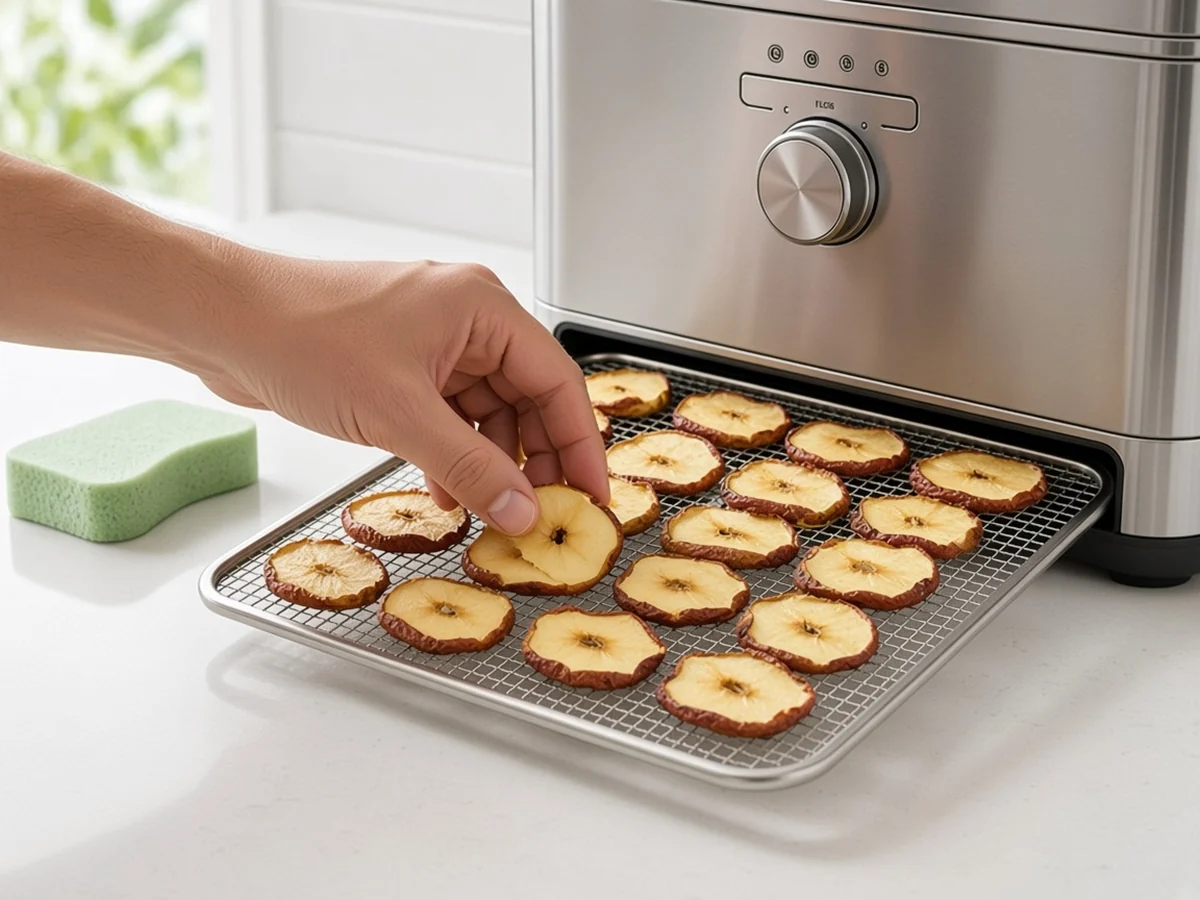
Quick answer
Uneven dehydrator drying usually starts with inconsistent slice thickness or overloaded trays, not a faulty heater. Match pieces, rotate or swap tray positions if your model needs it, and raise temperature only after you have ruled out humidity, thick cuts and blocked airflow.
Products mentioned in this guide
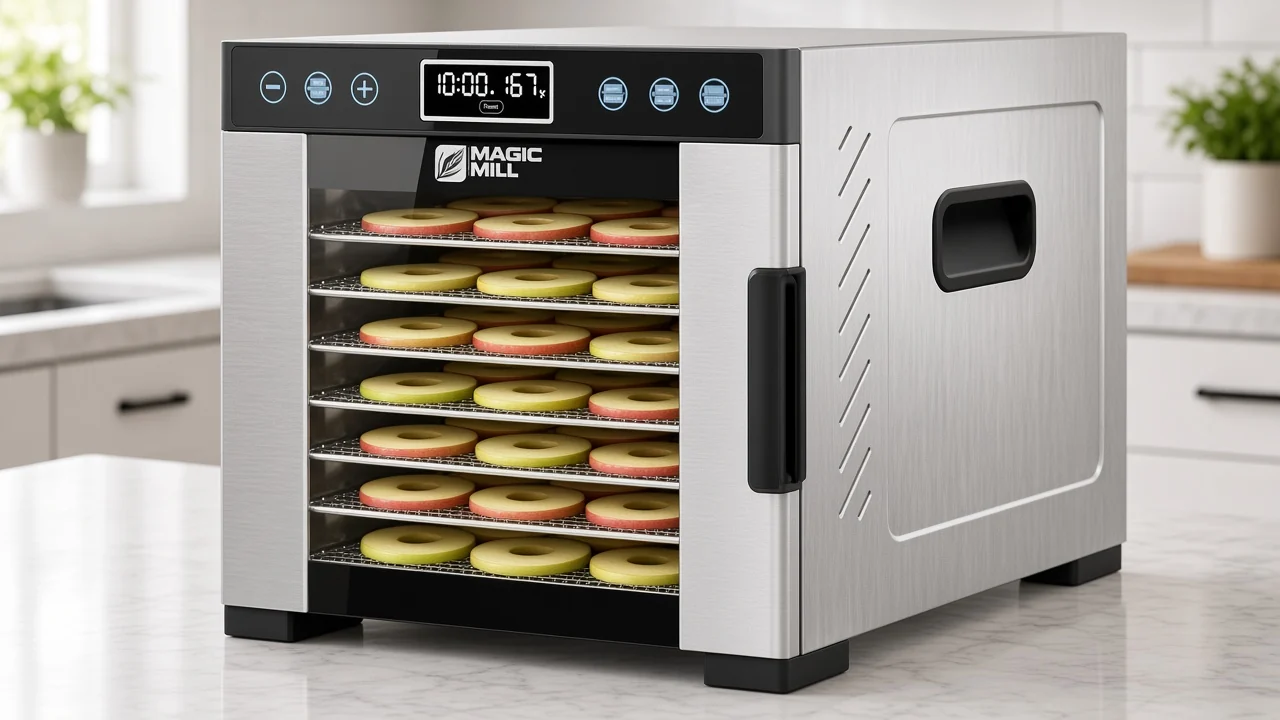 Magic Mill Pro MFD-7700 Food Dehydrator, 7 Stainless TraysMagic Mill · Dehydrator
 Elite Gourmet EFD308 Food Dehydrator, 4 Stainless TraysElite Gourmet · Dehydrator
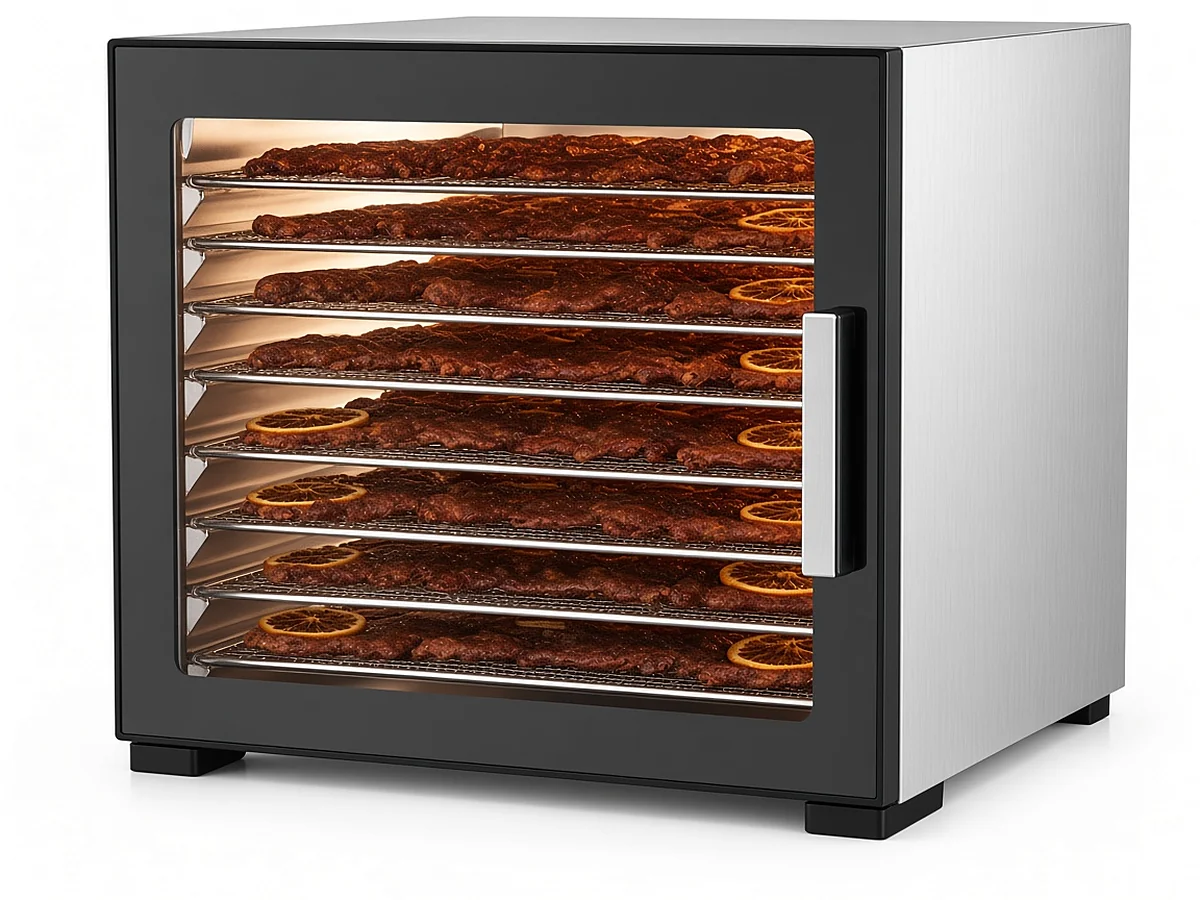
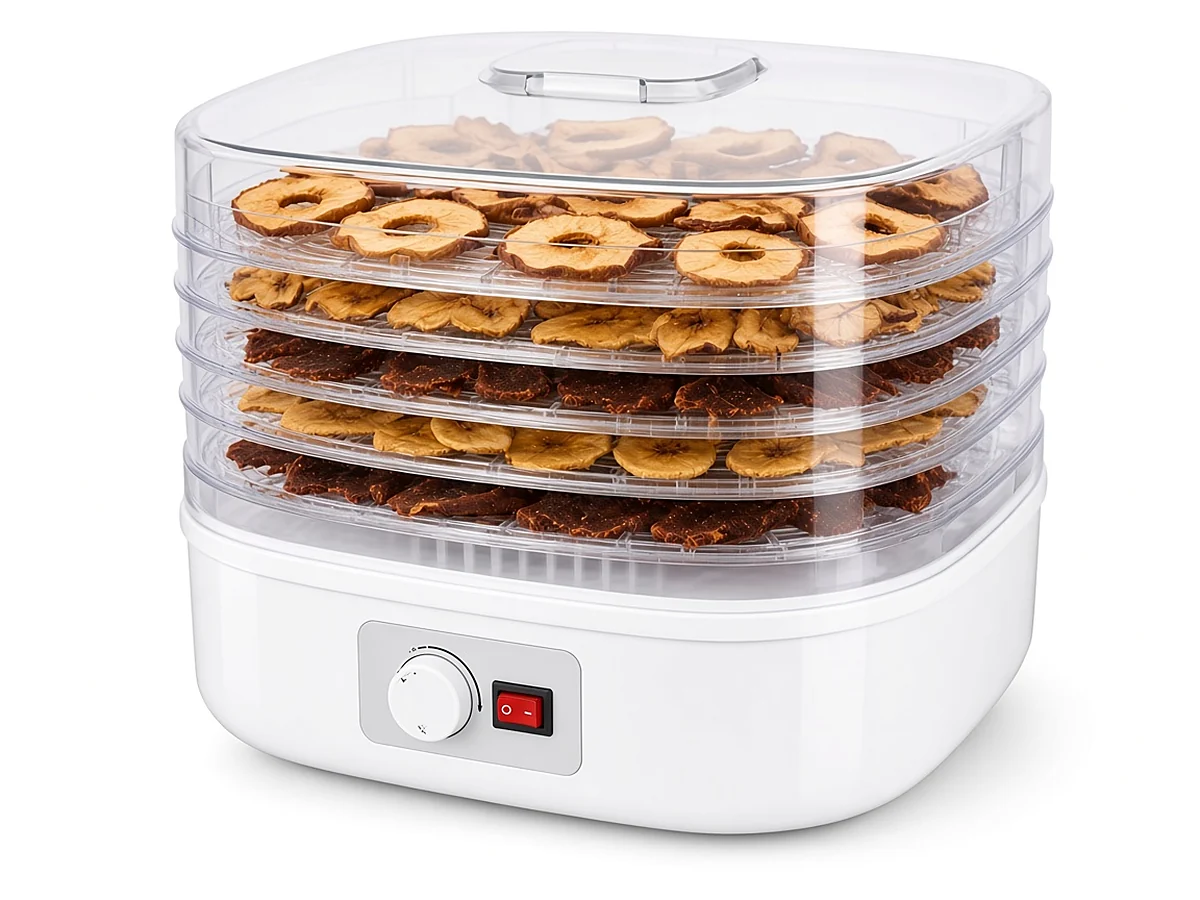
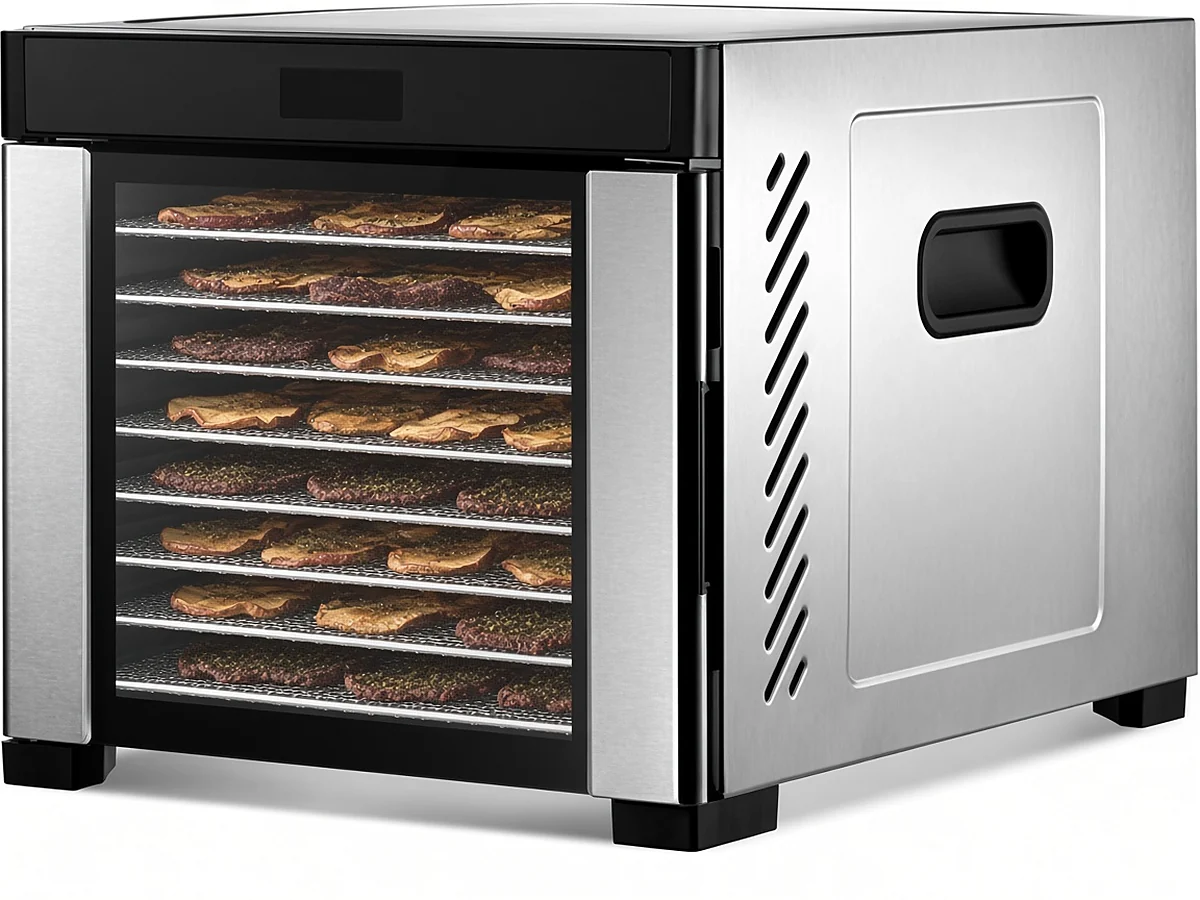 Magic Mill Pro MFD-7070 Food Dehydrator, 7 XL Stainless TraysMagic Mill · Dehydrator
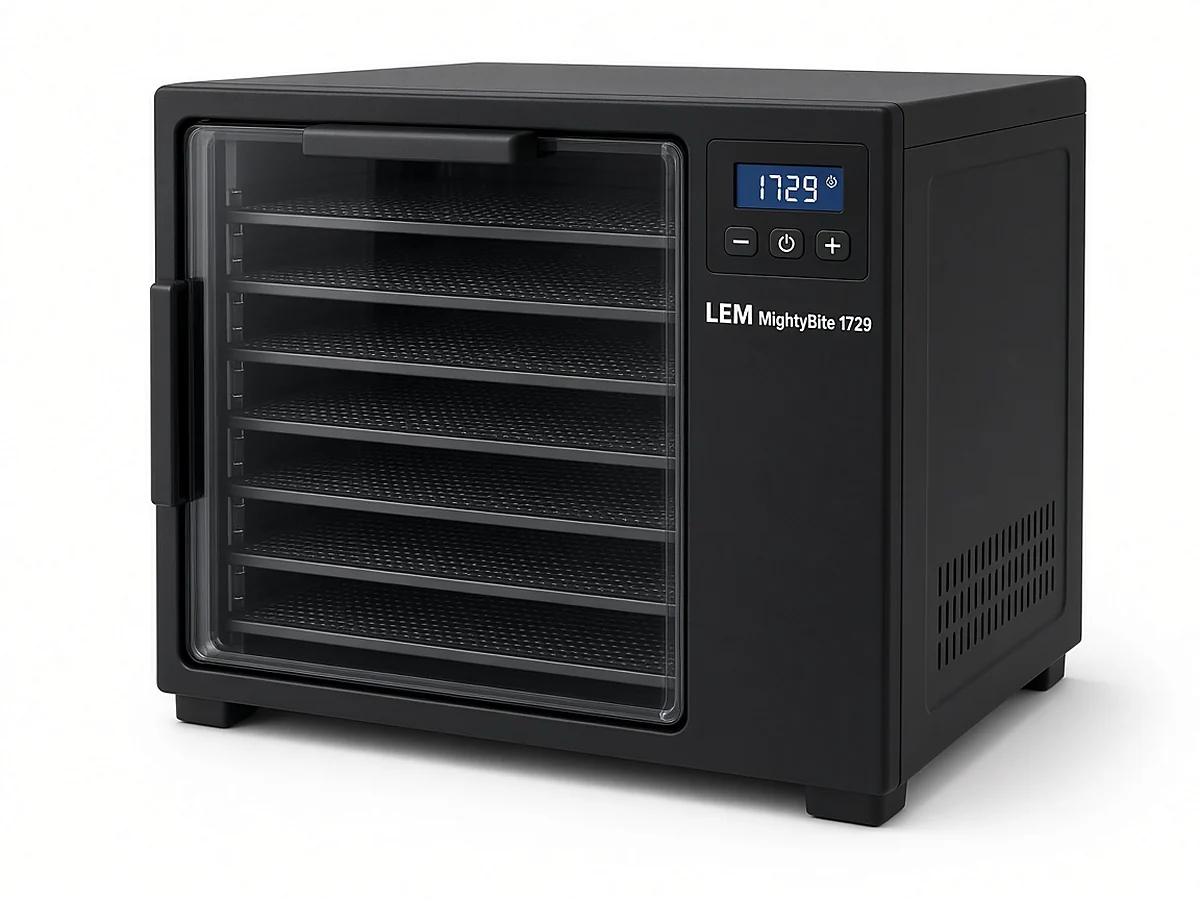
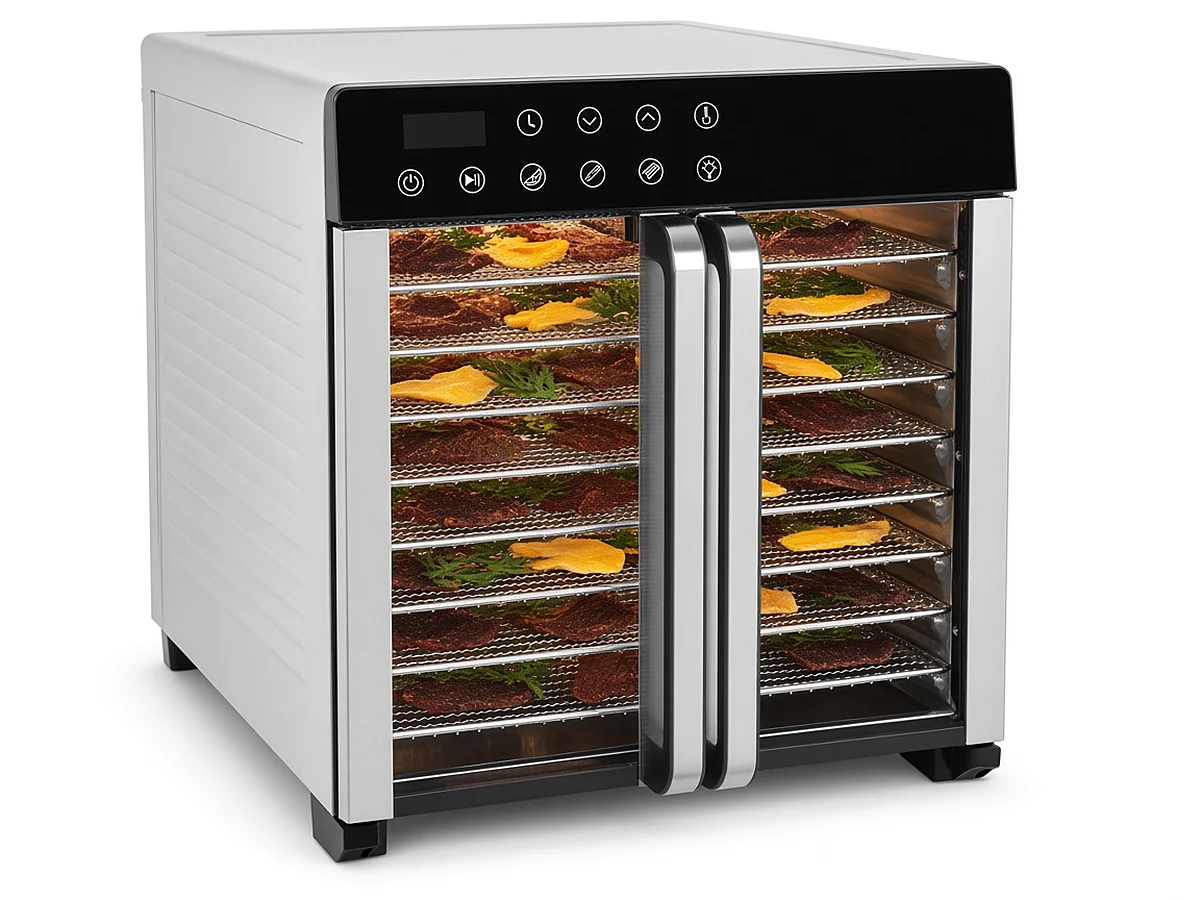 Excalibur Select DH08SCSS13 Food Dehydrator, 8 TraysExcalibur · Dehydrator
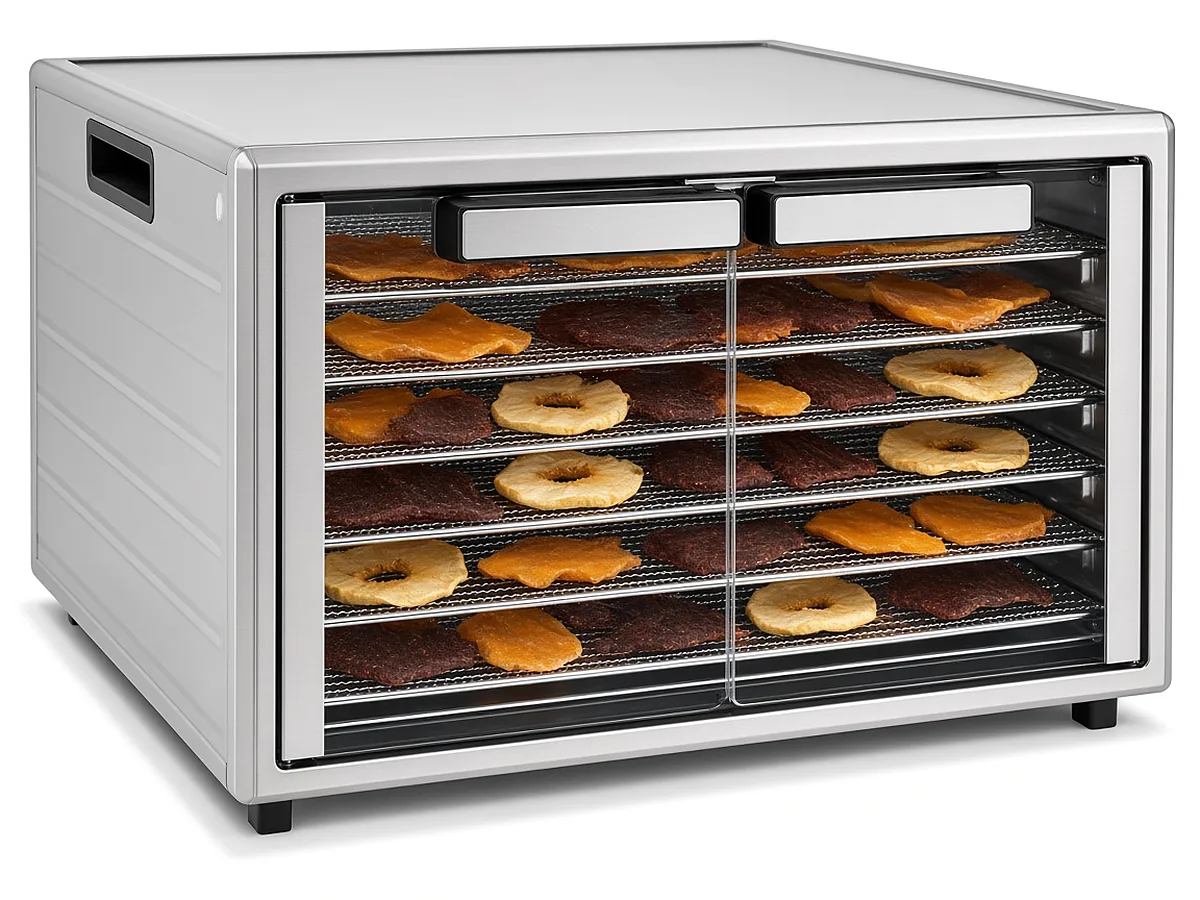 Excalibur Select Series DH06SCSS13 Food Dehydrator, 6 TraysExcalibur · Dehydrator
Maintenance & Troubleshooting · Food Dehydrators, Presto, Fruit, Jerky
Updated 30 October 2026
Uneven drying is the most common dehydrator complaint: crisp pieces on one tray, leathery or damp ones on another, or a batch that runs hours past the recipe time. Most causes are fixable without replacing the machine. Work through the checklist below in order, because the early checks are the quickest.
The fixes draw on guidance from the National Center for Home Food Preservation (NCHFP), Clemson Cooperative Extension, Colorado State University Extension and manufacturer manuals.
Tools that help diagnose uneven drying
Most uneven drying comes from uneven slices or crowded trays, not a faulty machine. A mandoline or slicing guide helps with even thickness, and an oven thermometer on a middle tray shows whether the machine reaches its set temperature. If a stacked machine still dries unevenly after the fixes below, our vertical vs horizontal dehydrators guide explains how a rear-fan design changes airflow.
Quick checklist
Are the slices the same thickness?
Are trays overloaded or pieces overlapping?
Is the vent open and the unit away from walls and steam?
Is the room humid or cold?
Does your design need tray rotation?
Is the temperature set correctly for the food, and does the machine actually reach it?
Are you judging dryness while the food is still warm?
1. Uneven slices
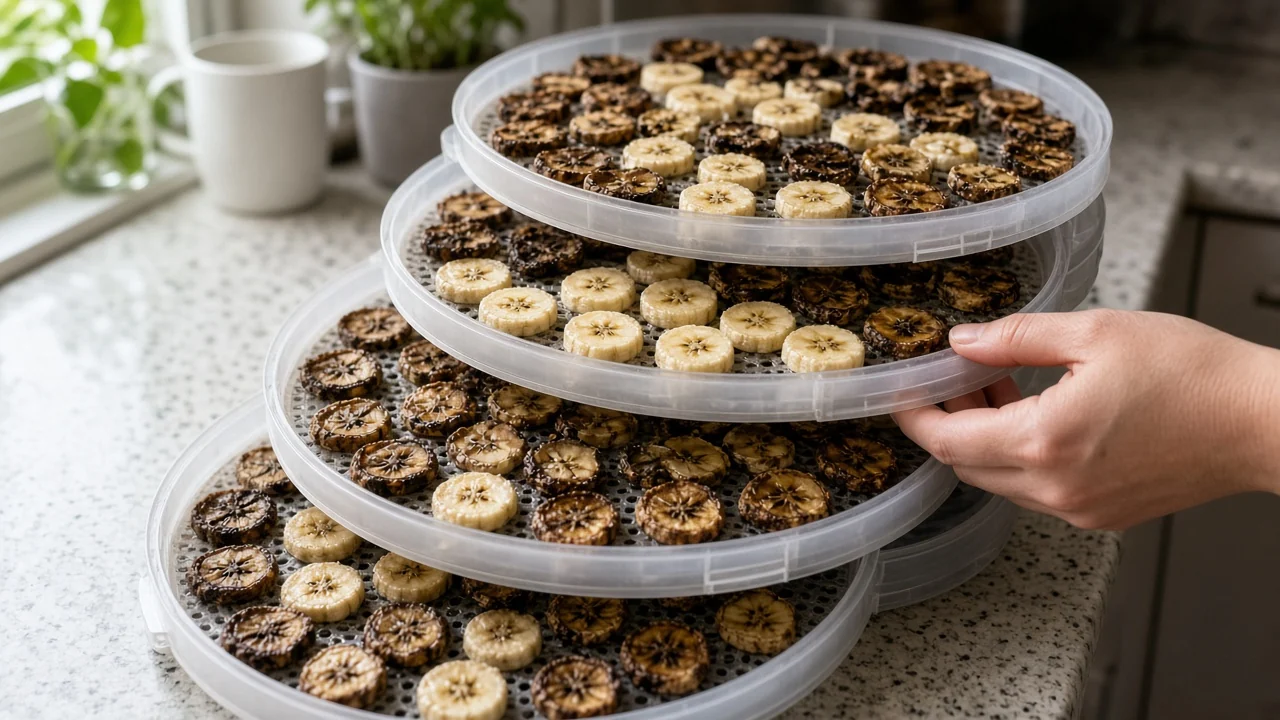
Thickness drives drying time more than anything else. Colorado State University Extension notes that thinner slices and smaller pieces dry faster than thick pieces or whole fruit. A mandoline or slicing guide gives more consistent results than a knife. For jerky, the NCHFP's jerky guidance recommends slices no thicker than ¼ inch, and partially freezing the meat makes this easier.
2. Overloaded trays
Food should sit in a single layer with space between pieces. Presto's manual says not to let foods touch or overlap. Crowding blocks the airflow that carries moisture away, so the centre of a packed tray stays damp.
3. Airflow blocked around the machine
Keep vents open and leave space around the unit. Running a dehydrator next to a steaming pot or in a damp laundry room slows it down, because, as Clemson Extension explains, humid surrounding air cannot absorb as much moisture from the food.
4. Humid or cold room
Humidity and cool rooms both lengthen drying. Penn State Extension notes that air-conditioned homes can be too cool for room drying, and the same principle applies to how hard a small dehydrator heater has to work. On humid days, expect longer runs rather than raising the temperature.
5. Your design may need tray rotation
Design matters. The NCHFP describes two airflow layouts:
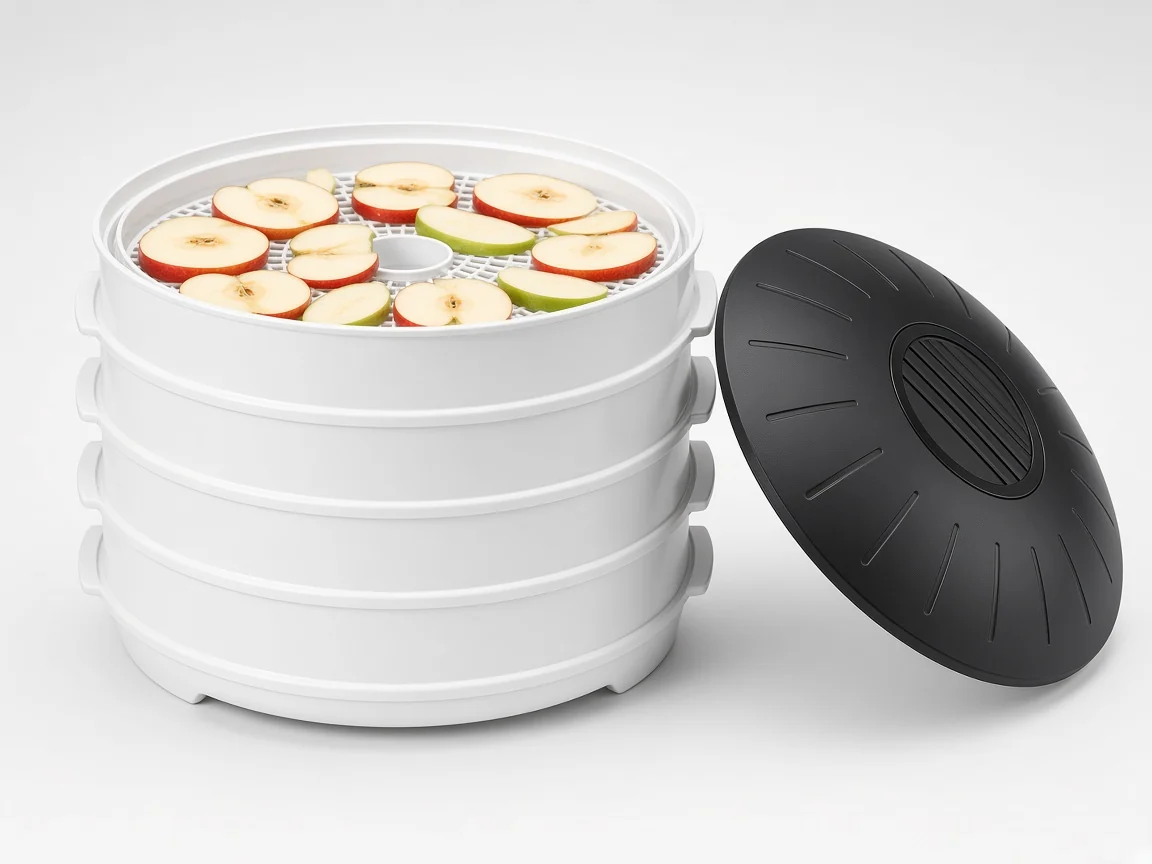
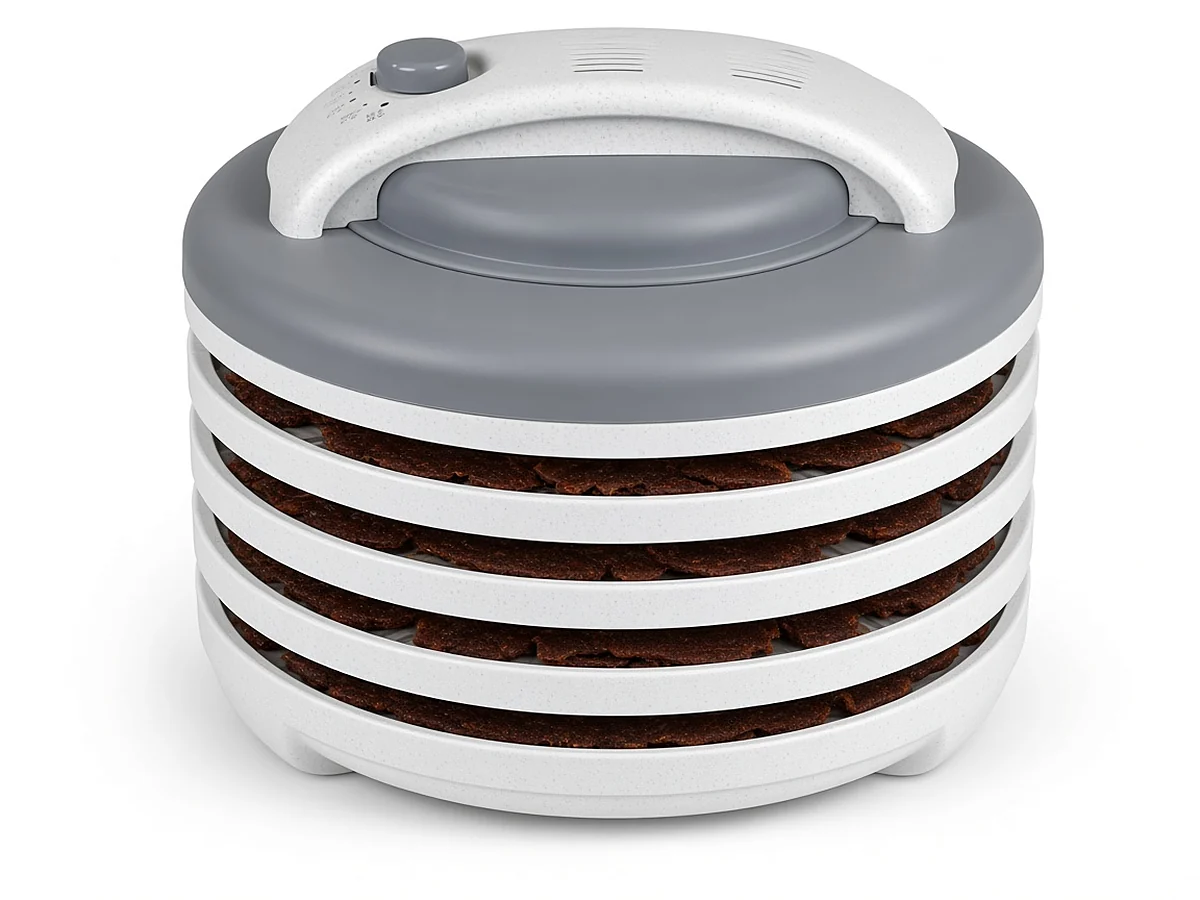
Vertical airflow, with the fan and heater in the base or top of a round stack. Trays nearest the heat dry first. Some top-fan designs, such as Presto's, are marketed as needing no tray rotation, but if you see a gradient, rotating trays top to bottom halfway through is the usual fix.
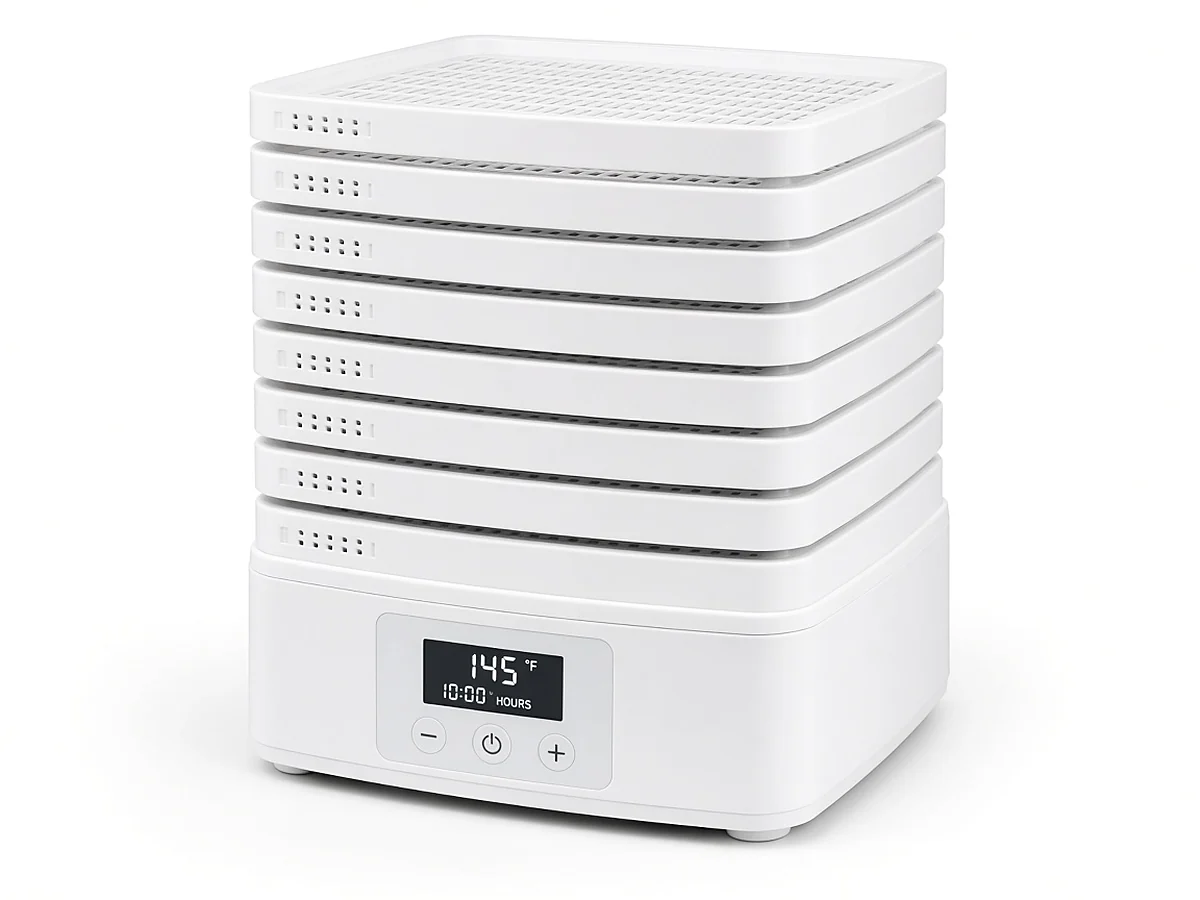
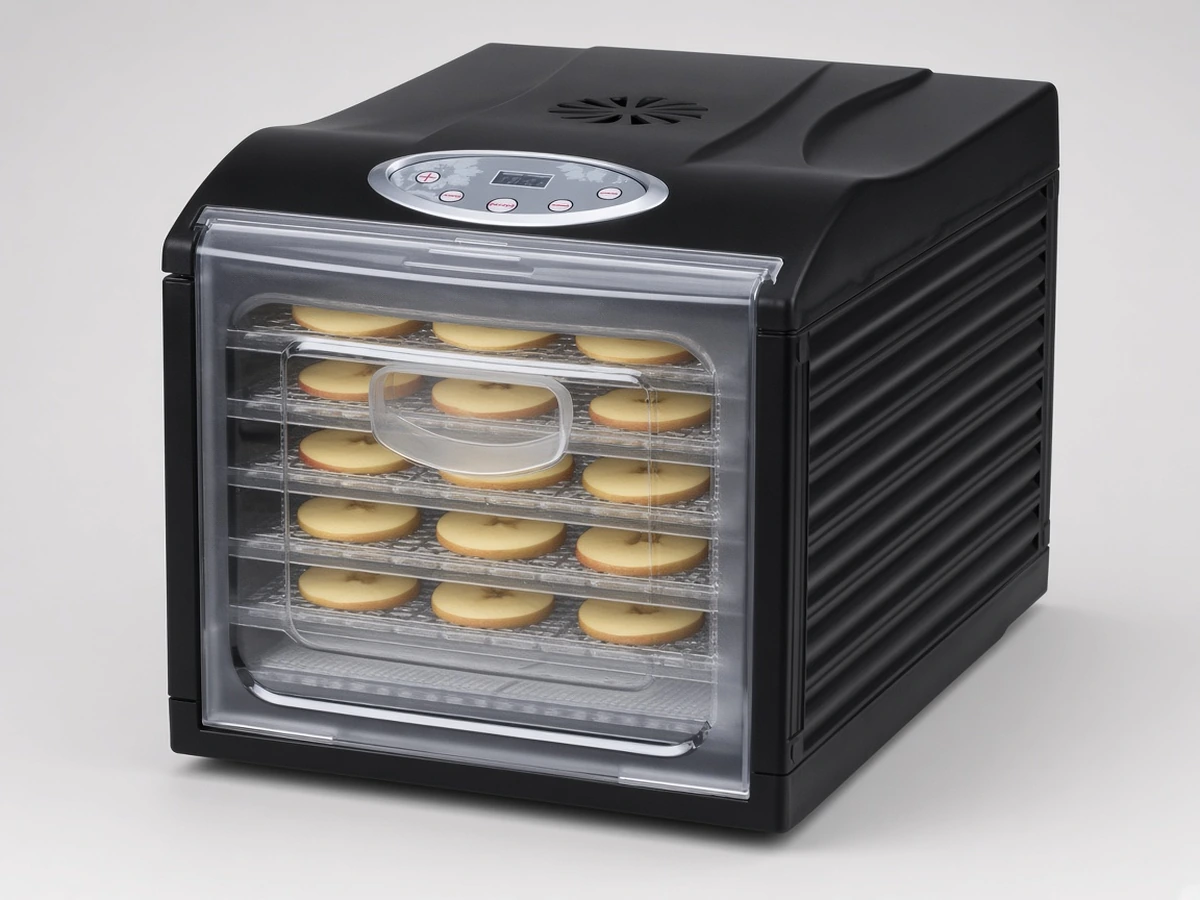
Horizontal airflow, with a rear fan blowing across shelves. The NCHFP says all trays get equal heat penetration, and makers such as Magic Mill state that tray rotation is not needed. Uneven results here usually point to loading or slice size.
Presto's manual adds a useful tip: if one tray finishes early, remove the dried food and put the empty tray back rather than rearranging the stack. Our guide to vertical vs horizontal dehydrators explains the trade-offs.
6. Temperature too low or too high
Too low and food dries slowly and risks spoiling before it is done. Too high and you get case hardening: Clemson Extension explains that the outside cooks and seals, trapping moisture inside, and the food can later mould. The general target for fruit and vegetables is 140°F. If you suspect your thermostat, place an oven thermometer on a middle tray and compare.
A unit that will not heat at all, trips a breaker or smells of burning plastic should be unplugged and taken up with the manufacturer under warranty rather than repaired at home.
7. Judging dryness while food is warm
Warm fruit feels softer and moister than it is. Colorado State Extension recommends cooling a few pieces to room temperature, then squeezing a handful: if no moisture is left on your hand and the pieces spring apart, they are dry. Vegetables should be brittle. Jerky should crack but not break when bent, according to the NCHFP.
Why food is "done" but goes mouldy later
Problem | Likely cause | Fix |
|---|---|---|
Moisture in the jar | Incomplete or uneven drying | Condition fruit 7 to 10 days; re-dry if condensation appears |
Mould in storage | Case hardening or containers not airtight | Dry at 140°F, use airtight jars, check within a week |
Brown spots on vegetables | Temperature too high or over-drying | Dry at 140°F and check periodically |
The table follows Clemson Extension's drying problem chart. For packaging and shelf life, see how to store dehydrated food.
Can you run a dehydrator overnight?
Many people do, and the NCHFP lists a timer as a useful feature because drying often finishes overnight and an automatic shut-off prevents scorching. Follow your manual's safety instructions on placement and supervision, and keep the unit on a heat-safe, stable surface.
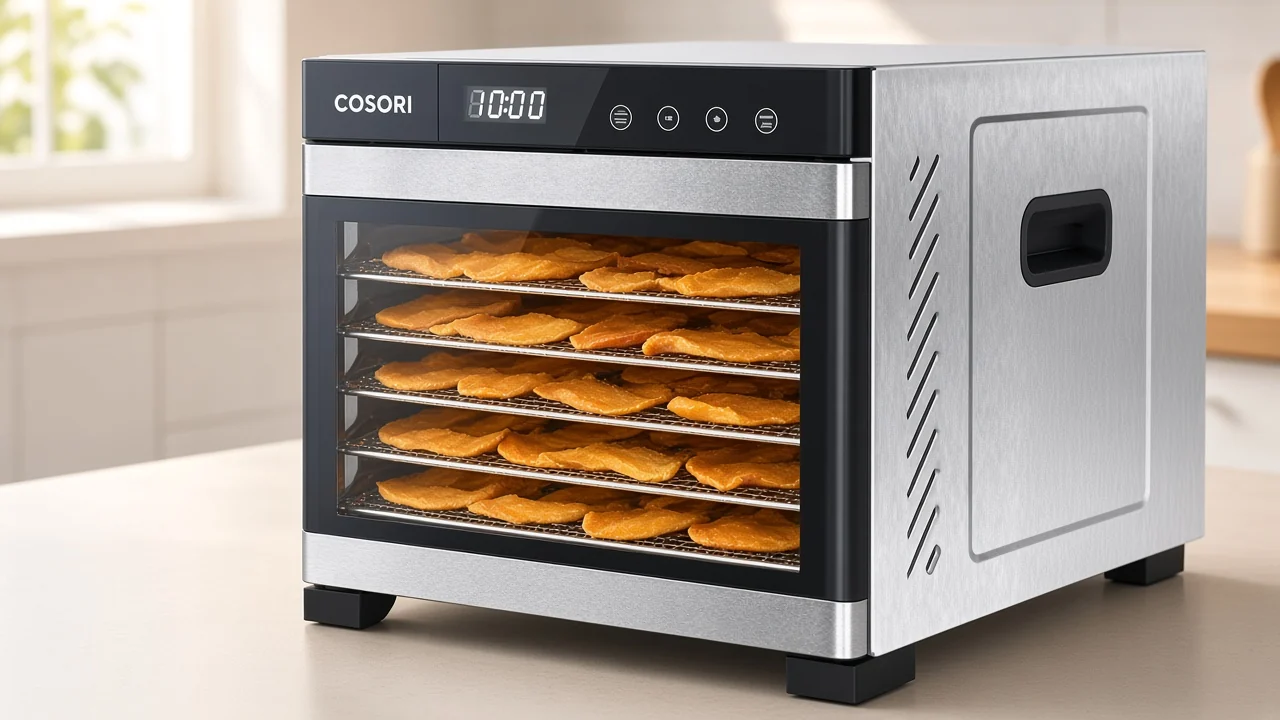
Related on Amazon: COSORI CP267-FD Food Dehydrator.
Related on Amazon: Nesco FD-60 Snackmaster Express Food Dehydrator.
Amazon listings for the products in this guide
Direct links to the Amazon listings for the products named or shown in this guide:
- COSORI CP267-FD Food Dehydrator, 6 Stainless Trays – View on Amazon
- Nesco FD-60 Snackmaster Express Food Dehydrator, 4 Trays – See the Amazon listing
- Presto 06300 Dehydro Electric Food Dehydrator – Check availability on Amazon
- Magic Mill Pro MFD-7700 Food Dehydrator, 7 Stainless Trays – View on Amazon
- Weston 6-Tray Digital Food Dehydrator Plus (75-0450-W) – See the Amazon listing
Frequently asked questions
Why do the top trays dry slower?
In bottom-fan stacks the trays nearest the heat dry first, so the top trays lag; rotate trays halfway through or remove finished food and return the empty tray.
Can I run a dehydrator overnight?
Yes, if it has a timer or auto-off and sits on a heat-safe surface with clear airflow.
Related guides
New to dehydrating? Start with how to use a food dehydrator. If your machine is the problem, our dehydrator roundup compares current models on published specs. More in guides and Learn.