
Mylar Bags
Published guides with this tag.
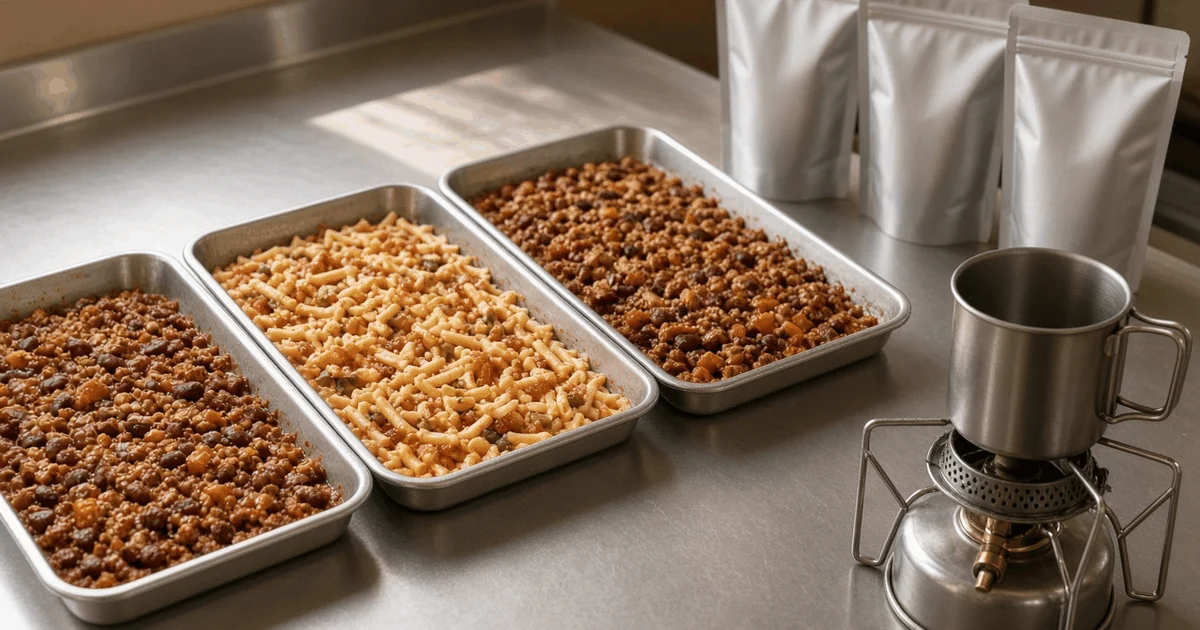
How to Freeze Dry Meals at Home for Camping and Storage
Turn home-cooked meals into long-keeping pouches: safe cooking and chilling, thin layers, a full cycle, careful sealing and reheating to 165 °F.
Read guide →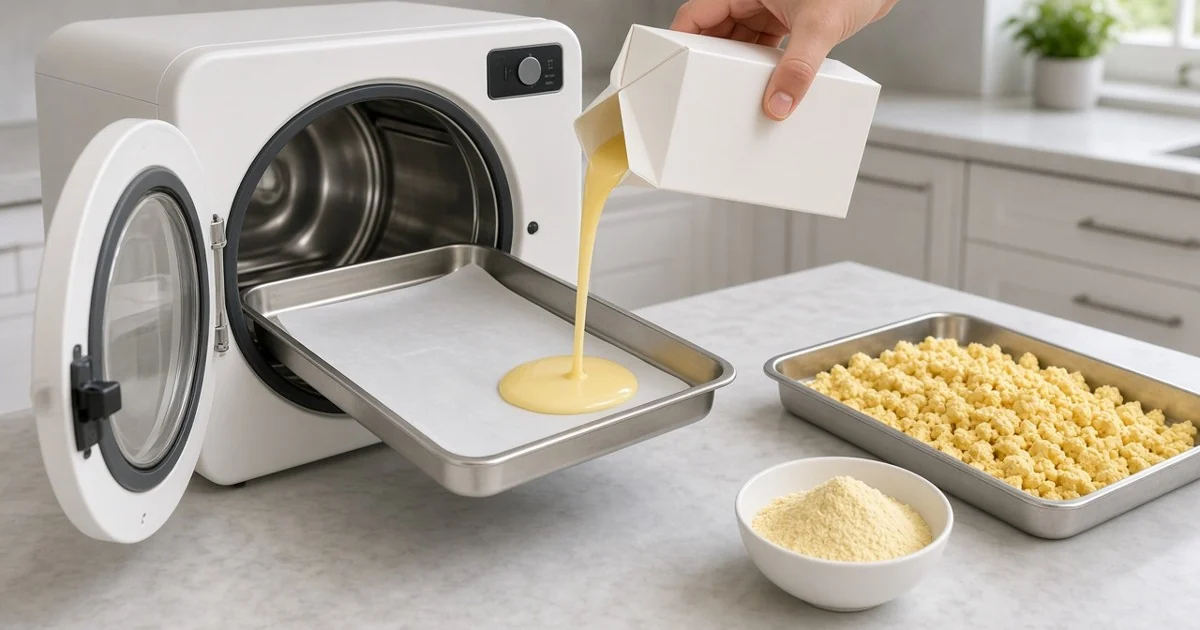
How to Freeze Dry Eggs at Home: Raw or Cooked, Step by Step
Freeze dry eggs the safer way: start with pasteurized or cooked eggs, pour thin layers, dry fully, seal in Mylar and cook rehydrated egg to 160 °F.
Read guide →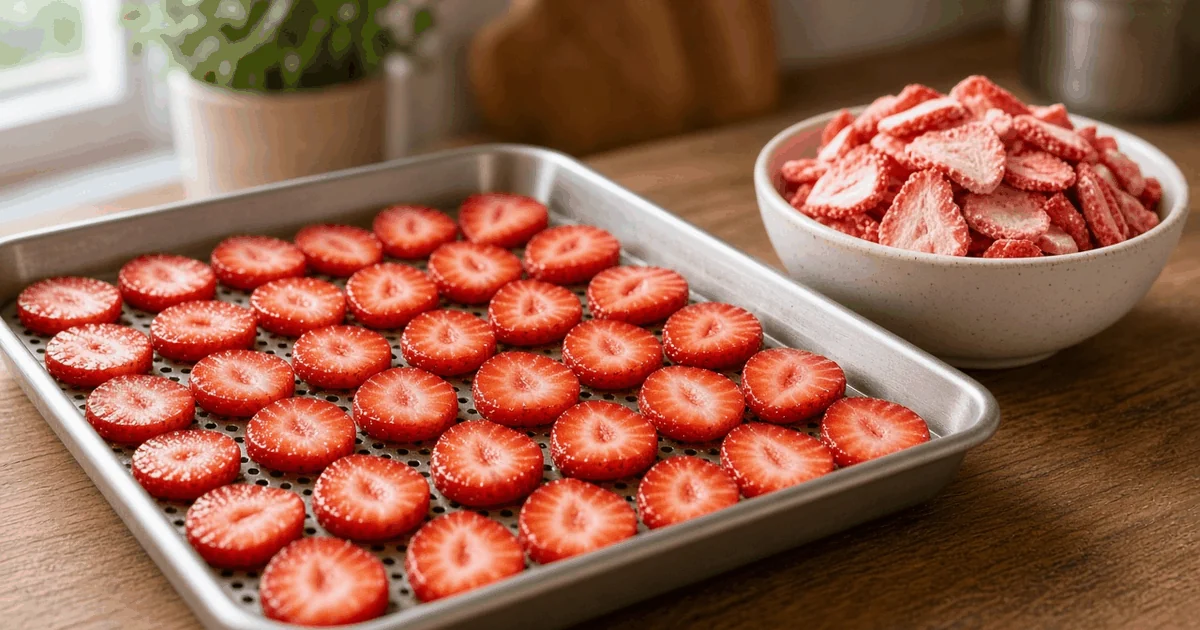
How to Freeze Dry Strawberries at Home
Freeze dry strawberries by washing without soaking, slicing about 1/4 inch thick, spreading a single layer on lined trays, and pre-freezing if your manual calls for it. Run the cycle, break the thickest slice to confirm it is dry all the way through, then seal in Mylar with an oxygen absorber.
Read guide →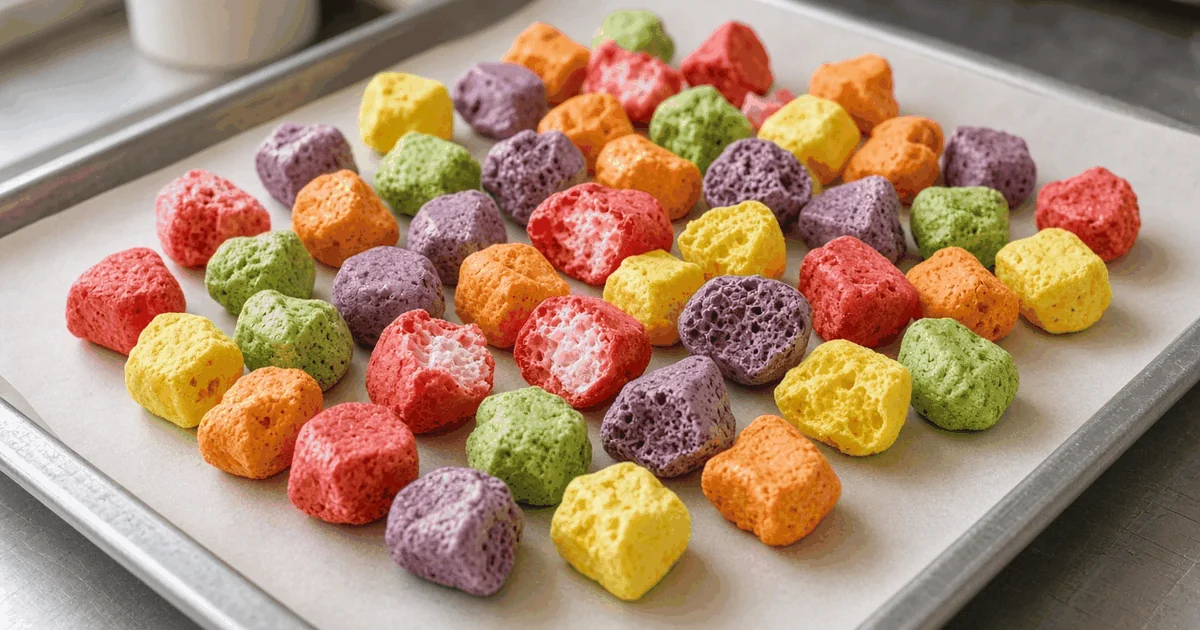
How to Freeze Dry Candy at Home: Step-by-Step Guide
Freeze dry candy by choosing chewy, sugary pieces that puff under vacuum, lining every tray, and spacing each piece so it can triple in size without fusing. Use your machine's standard freeze-and-dry cycle when no candy preset exists, then seal immediately so humidity does not soften the crunch.
Read guide →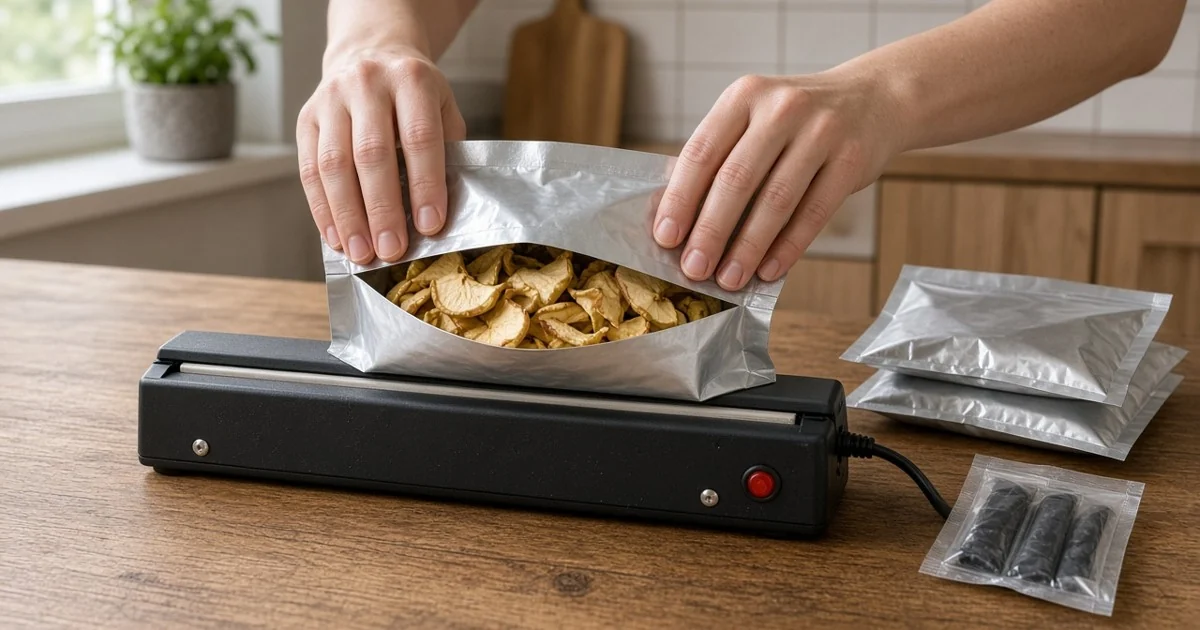
How to Seal Mylar Bags with Oxygen Absorbers for Freeze-Dried Food
Seal freeze-dried food in Mylar the right way: dry food, headspace, absorbers last, a flat impulse seal and a quick seal check.
Read guide →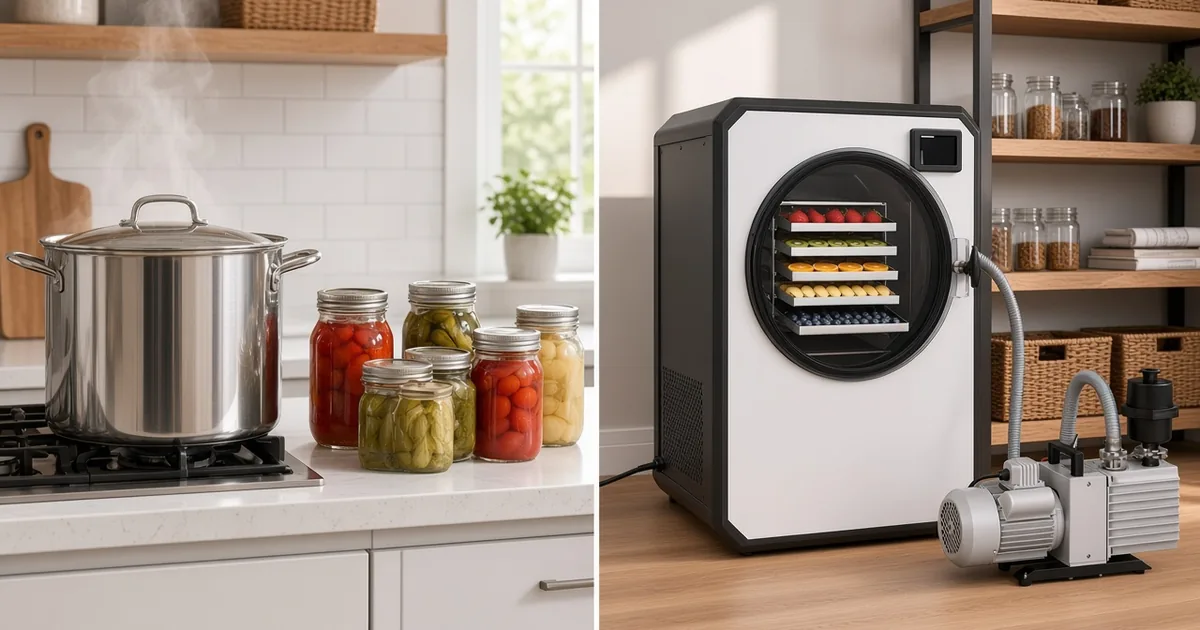
Freeze Drying vs Canning: Which Is Better for Long-Term Food Storage?
Canning kills microbes with heat; freeze drying removes water and kills nothing. Here is how that changes safety, shelf life, texture, cost and which foods suit each.
Read guide →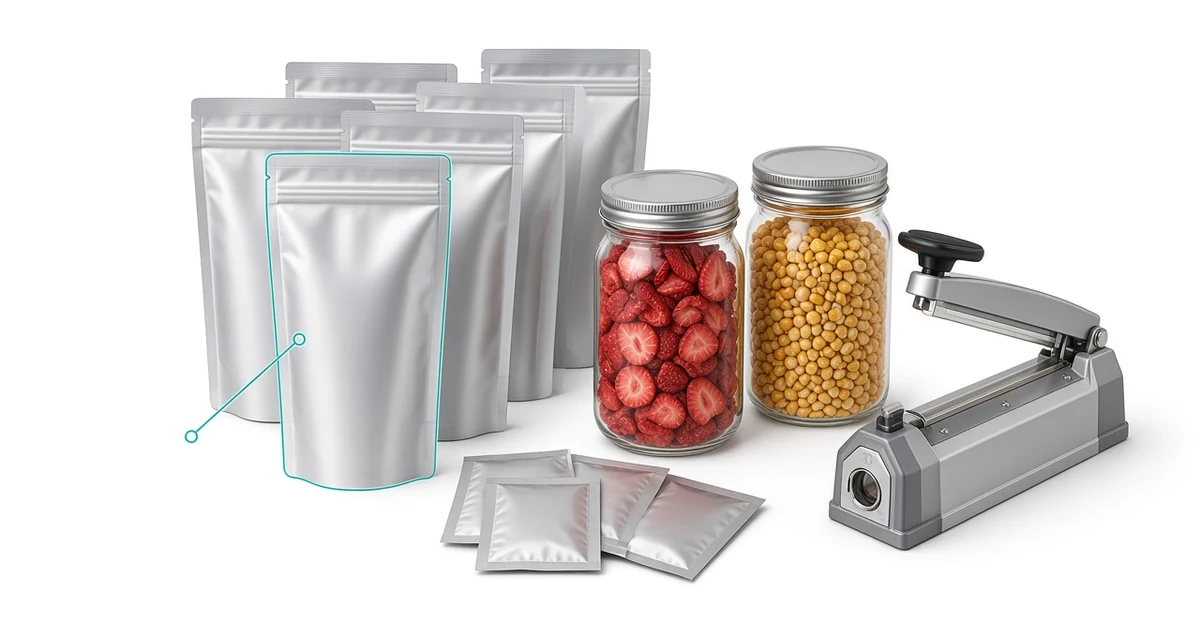
How to Store Freeze-Dried Food: Containers, Oxygen Absorbers and Shelf Life
Pack freeze-dried food only after a dryness check on the thickest piece, then seal it immediately in Mylar with the correct-size oxygen absorber. Exposure to room air softens texture within minutes, so have bags, absorbers and a heat sealer ready before you open the chamber.
Read guide →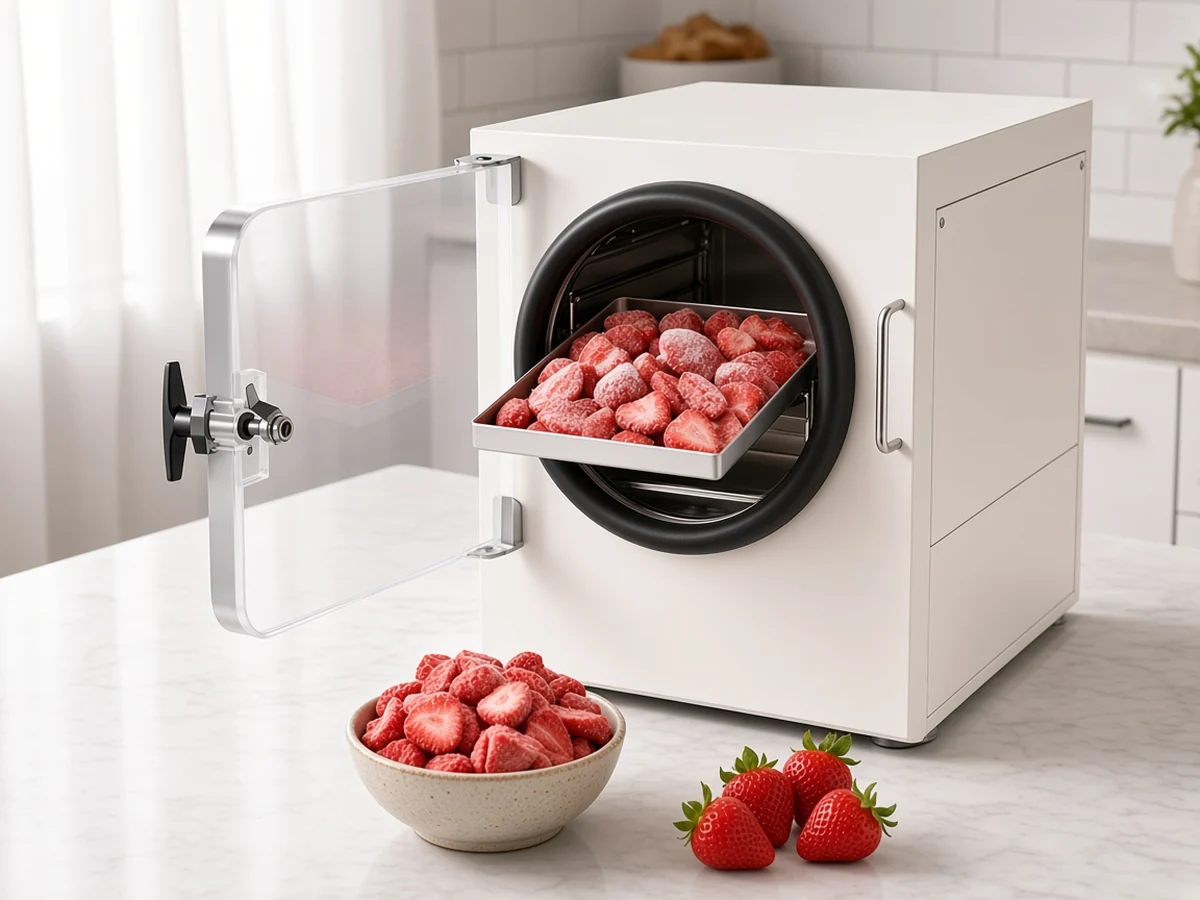
How Does a Freeze Dryer Work? The Three Stages, Explained Simply
A home freeze dryer works in three phases: freeze the food, pull vacuum so ice sublimates off as vapor, then finish with a warmer desorption stage that drives off bound water. That is why cycles take a day or more and why high-fat or sugary foods often need extra drying checks.
Read guide →