
How to Freeze Dry Eggs at Home: Raw or Cooked, Step by Step
Published 10/29/2026 · Updated 11/19/2026
Quick answer
Freeze dry eggs the safer way: start with pasteurized or cooked eggs, pour thin layers, dry fully, seal in Mylar and cook rehydrated egg to 160 °F.
Products mentioned in this guide
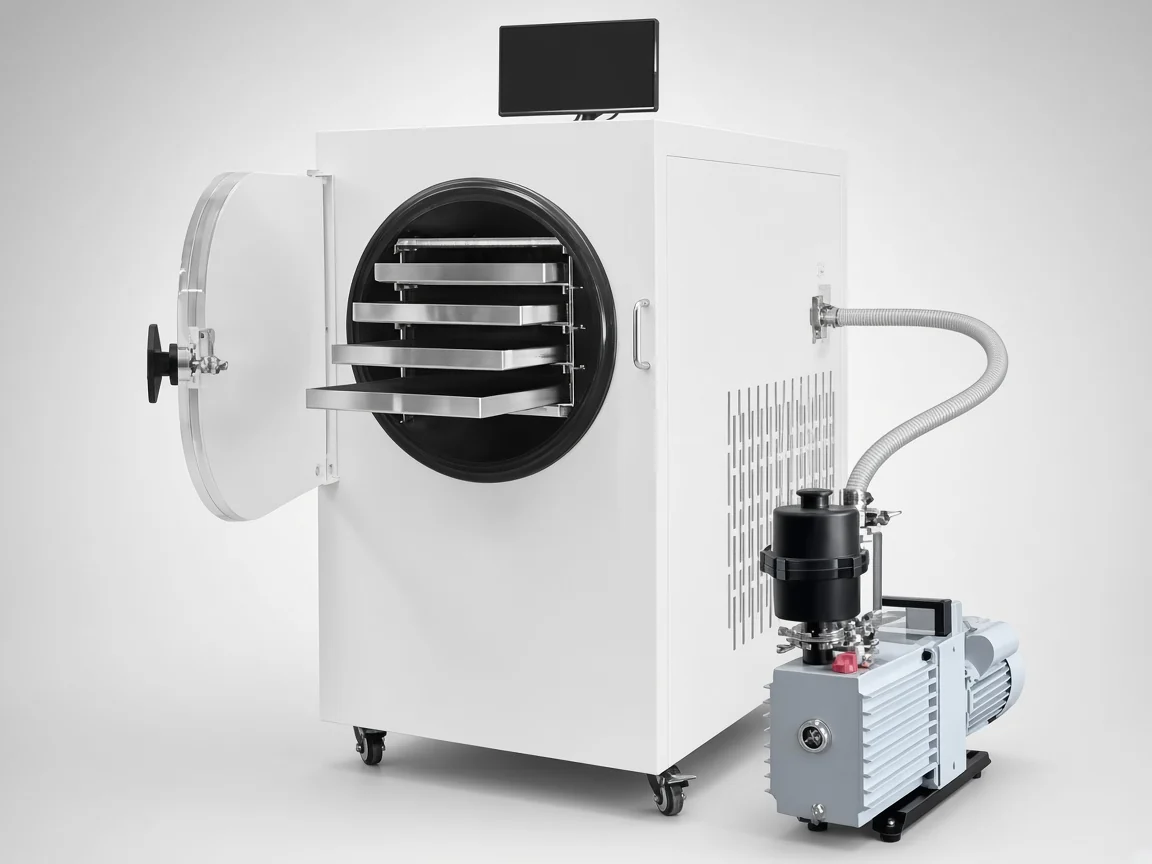
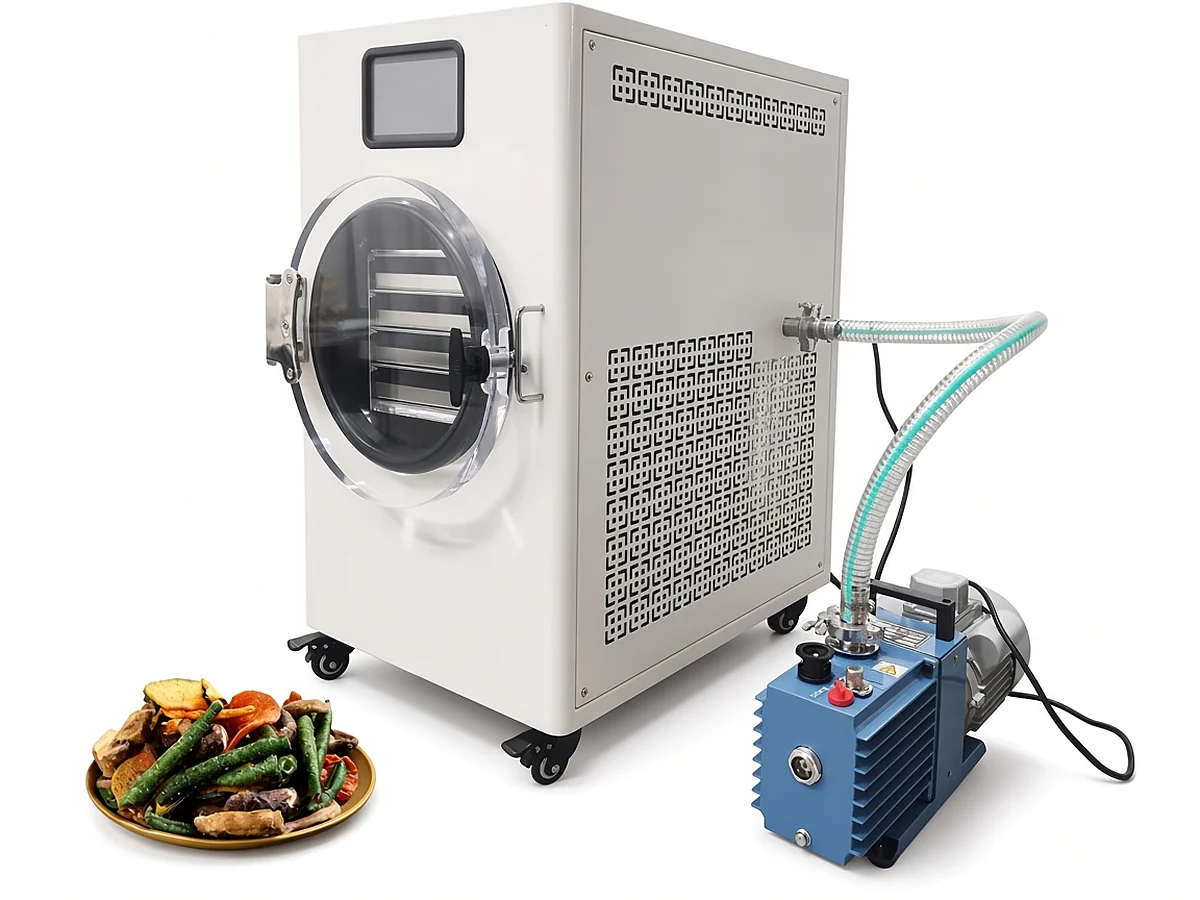
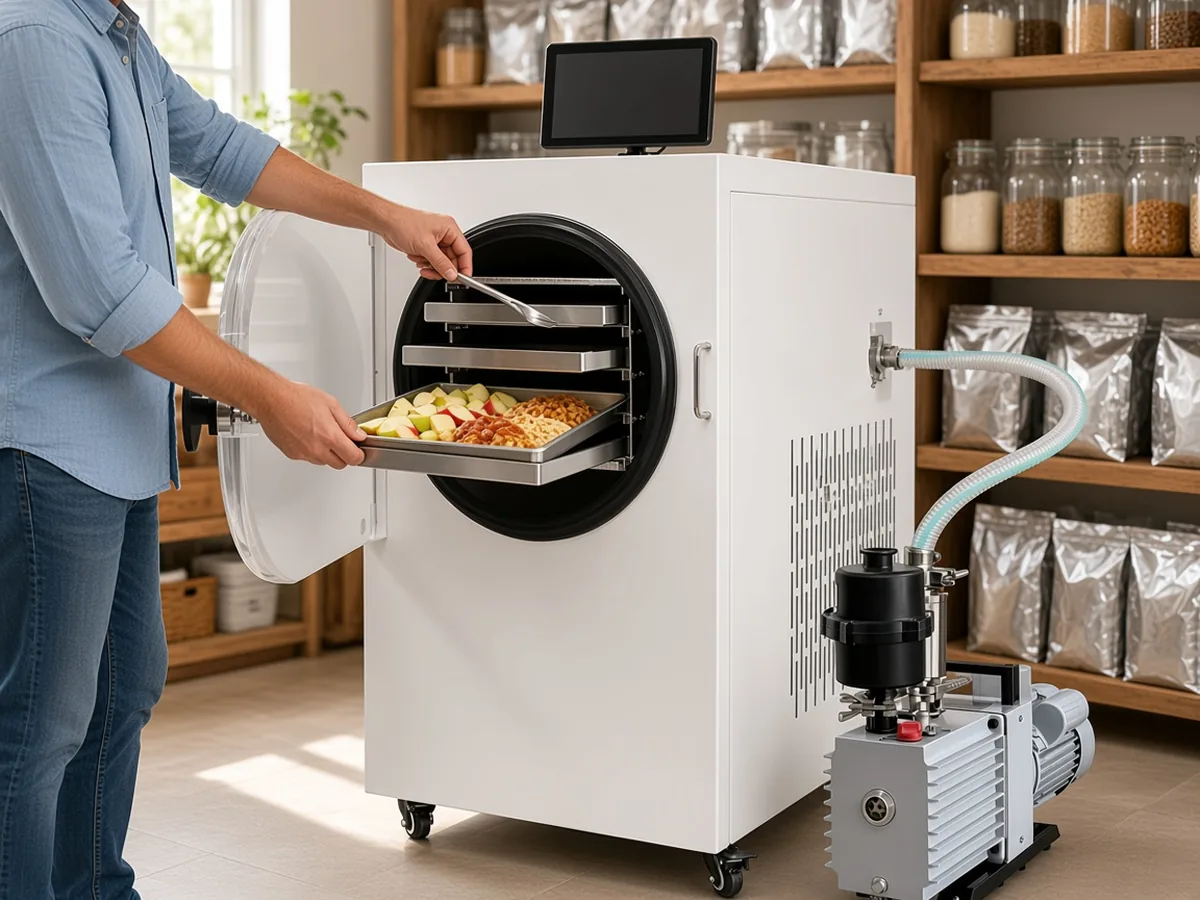
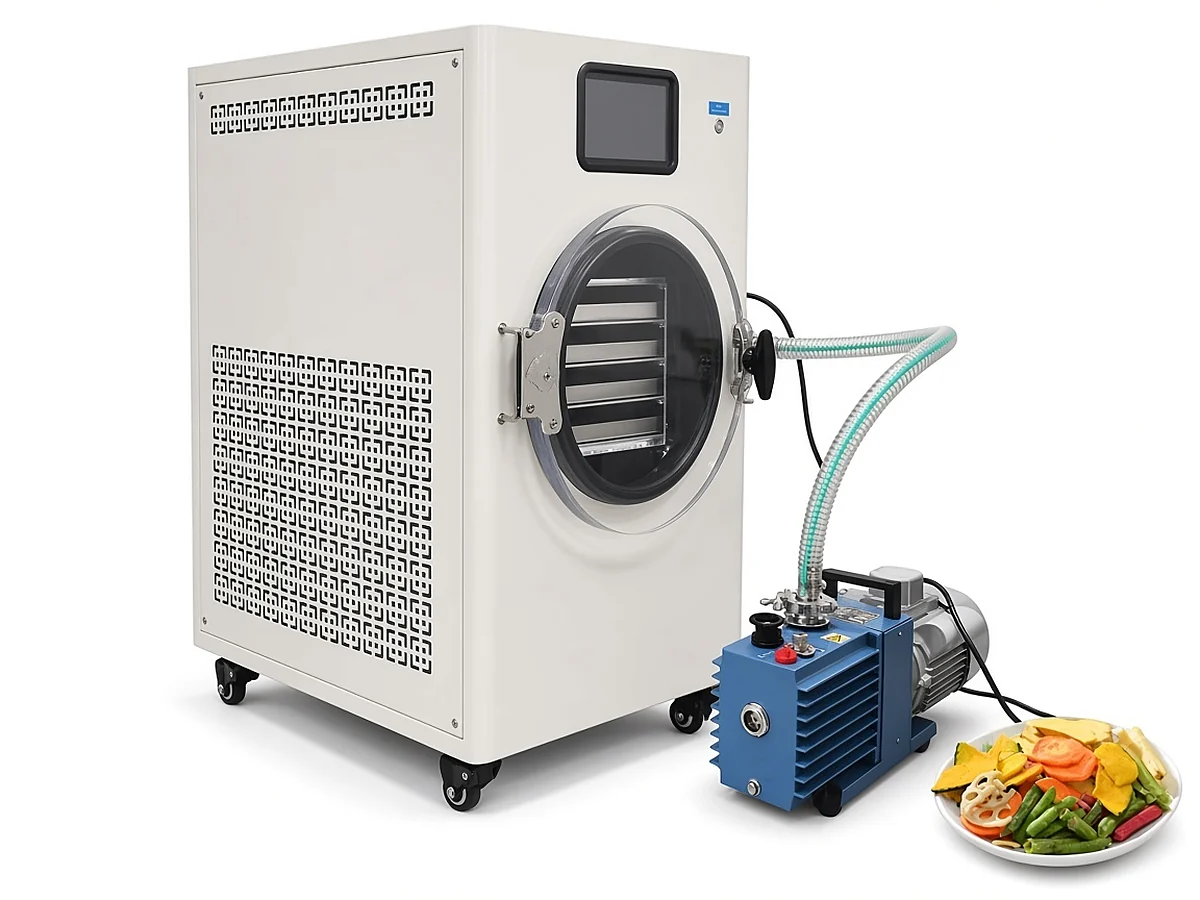
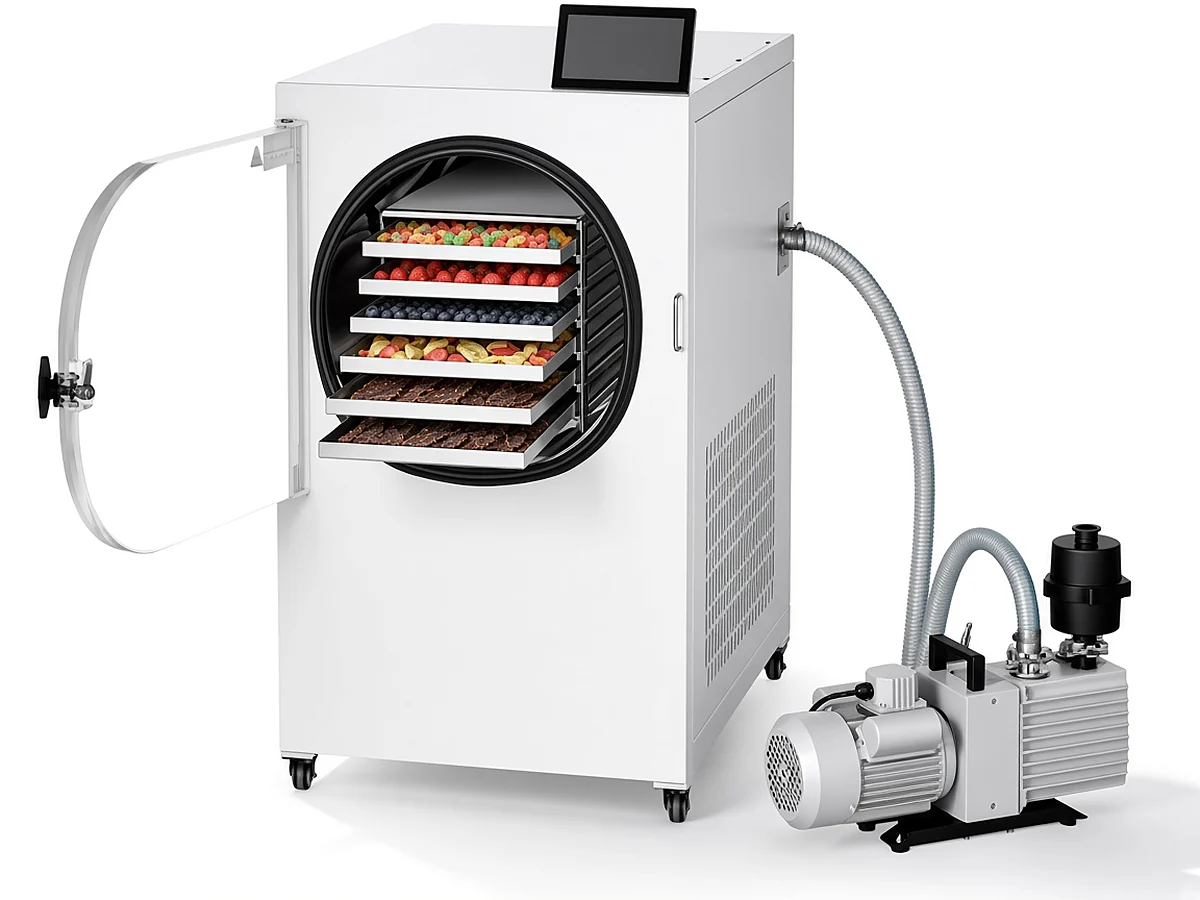
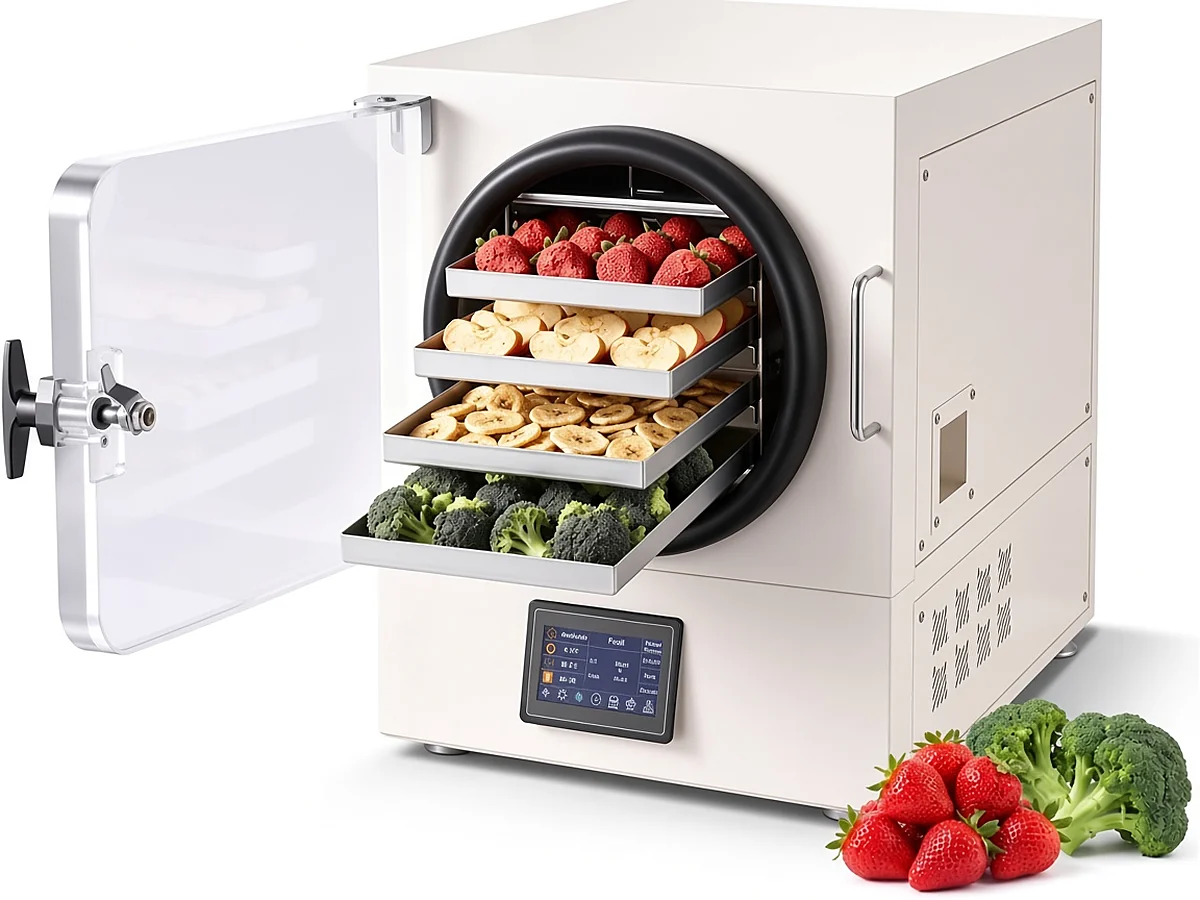
How-To · Freeze Dryers, Eggs, Mylar Bags
Updated 30 October 2026
To freeze dry eggs, start with pasteurized liquid eggs or fully cooked scrambled eggs, keep them cold until they go into the machine, pour or spread a thin, even layer, dry until every piece is crisp right through, then seal the dried egg in Mylar with an oxygen absorber. Freeze drying does not kill Salmonella, so any egg that went in raw must be cooked to 160 °F after rehydrating.
Eggs are one of the most popular foods to freeze dry, especially when hens are laying more than a family can use. Dried egg turns into a light powder or crumble that stores compactly and can be rehydrated for scrambles and baking.
Two things matter more than anything else: the layer must be thin and even, and raw egg has to be treated as raw at every stage. Utah State University Extension lists raw eggs as high risk for home freeze drying because Salmonella can survive the process.
Raw, pasteurized or cooked: which eggs to use
The extension advice and the manufacturer advice point in different directions, so it helps to see both.
Option | What the sources say | What it means for you |
|---|---|---|
Pasteurized liquid eggs | Recommended by Utah State as a safer choice than raw shell eggs | The lowest-risk way to make a raw-style powder for baking and scrambles |
Fully cooked scrambled eggs | Recommended by Utah State; University of Arizona says to scramble them as you would for eating | Ready to heat after rehydrating, with a softer texture than fresh scramble |
Raw shell eggs | Utah State rates them high risk; the Blue Alpine manual says eggs work best freeze-dried raw | Possible, but the powder must be handled and cooked as raw egg every time |
Penn State Extension notes that both raw and cooked eggs can be freeze-dried, and stresses the same point: the process does not kill harmful bacteria, so eggs must be cooked to a safe temperature before eating.
What you'll need to freeze dry eggs
Liners are essential, because liquid egg sticks firmly to bare trays.
A home freeze dryer (Required): Liquid egg needs a genuine vacuum freeze dryer. Our guide to home freeze dryers on Amazon compares the genuine machines sold there.
Tray liners (Required): Egg glues itself to stainless steel. Use the silicone mats that came with your machine, if any, or parchment cut to fit.
Kitchen scale (Highly Recommended): Weighing the egg per tray keeps layers even and tells you how much water to add back later.
Mylar bags, oxygen absorbers and an impulse sealer (Required for long storage): Egg powder must be kept away from air, light and moisture. Our Mylar sealing guide covers bag thickness and absorber sizes.
Step 1: Prepare the eggs and keep them cold
Cold, fully blended egg dries into a consistent sheet.
If using pasteurized liquid egg, keep the carton refrigerated until you pour.
If cooking first, scramble the eggs as you would for eating, without added butter or oil if you can, then cool them quickly in the fridge.
If using raw shell eggs, crack them into a jug, check for shell fragments and whisk until there are no streaks of white. The FDA says eggs should be kept refrigerated at 40 °F or below, so work in small batches and return the jug to the fridge until the machine is ready.
Do not leave egg out. The FDA's limit is 2 hours at room temperature, or 1 hour above 90 °F.
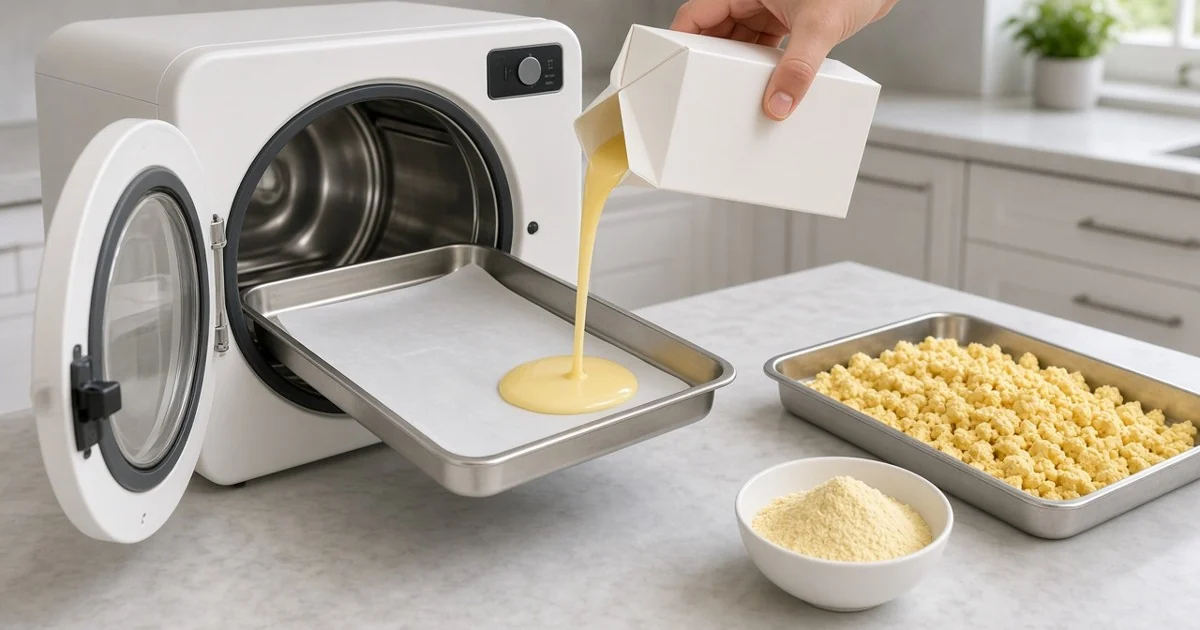
Step 2: Pour thin layers with the trays in the machine
A thin, even layer dries fully; deep pools leave damp centres.
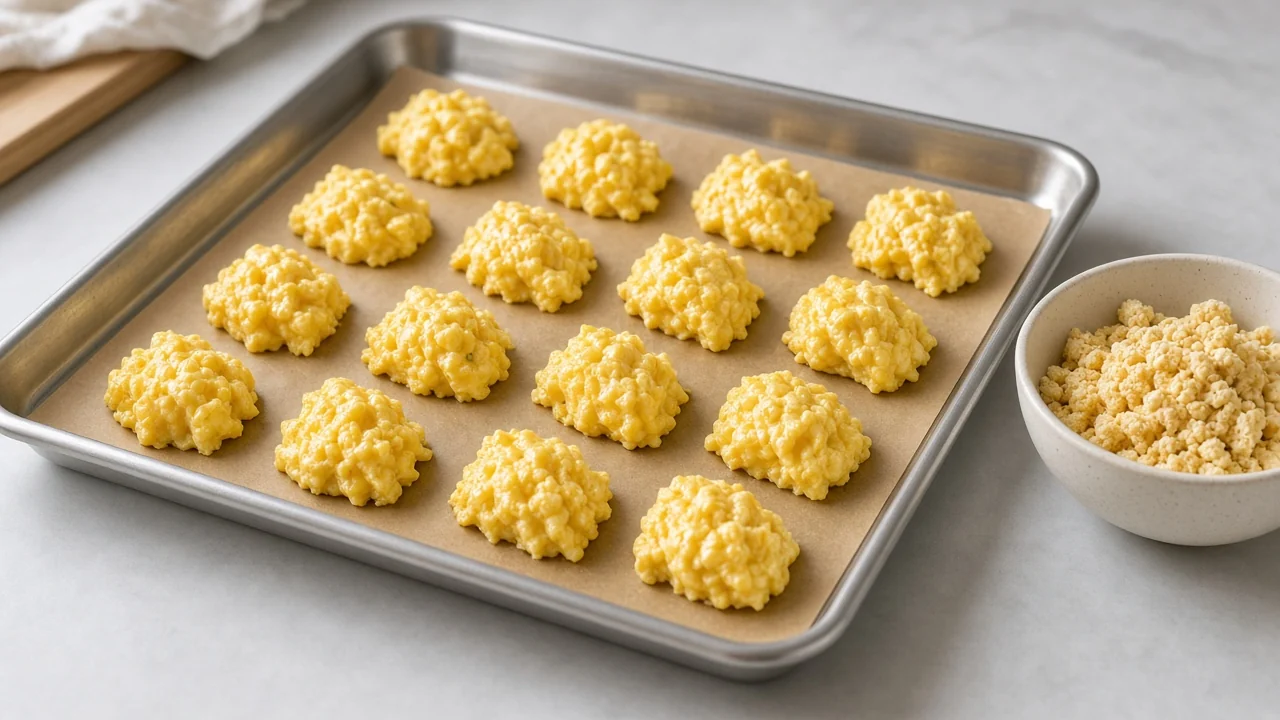
Line every tray first. Make sure liners lie flat.
Pour with the trays in place. Harvest Right's owner's manual suggests putting empty trays in the machine, pulling each one partly out, pouring the liquid, then sliding it gently back. Blue Alpine's manual gives the same advice for liquid egg, or suggests pouring into trays in the freezer if you pre-freeze.
Pour the same weight onto each tray. Use the scale so trays finish together, and keep the layer well below the tray rim.
Spread cooked scramble in one layer. Break up large curds so pieces are a similar size.
Clean any spills immediately. Raw egg on the chamber or door seal needs wiping right away.
Step 3: Run the cycle and check the centre
Egg needs a full cycle and a careful dryness check.
Let the cycle finish completely. Do not stop it early. See how long freeze drying takes for what affects timing.
Break pieces in the middle. University of Arizona Extension's test is to crack one of the larger pieces in half: it should snap crisply and feel dry in the middle. If any piece feels cold or damp, put the whole batch back for a few more hours.
Look for dark or cool spots. LSU AgCenter says dark spots in the middle of a piece indicate moisture.
Weigh if unsure. Blue Alpine's manual suggests weighing trays every couple of hours; when the weight stops dropping, the food is dry.
Step 4: Grind and package
Powder stores compactly and rehydrates evenly.
Break sheets into a clean blender or food processor. Pulse to a fine powder.
Package straight away. Dried egg pulls moisture from the air. LSU AgCenter advises rerunning a short drying cycle if food sat in a warm or humid room for more than 24 hours.
Seal in Mylar with an absorber. Follow our guide to sealing Mylar bags with oxygen absorbers.
Label each bag. Write the date, whether the egg went in raw or cooked, and how much water the batch lost. University of Minnesota Extension recommends labelling raw or cooked for exactly this reason.
Wash equipment well afterwards. Penn State advises washing utensils and sanitizing trays after any raw egg batch.
Step 5: Rehydrate and cook
Treat rehydrated raw egg exactly like fresh raw egg.
Add water gradually and whisk. A good starting point is the weight of water the batch lost in drying, divided by the number of eggs. Let it rest a few minutes.
Cook to 160 °F. The USDA safe temperature chart lists 160 °F for egg dishes. Scramble or bake until set. University of Arizona Extension also says raw eggs must be cooked properly after rehydrating.
Refrigerate anything you are not cooking straight away. Use it the same day.
Our rehydration guide covers other foods.
What are the most common egg mistakes?
Thick pours, warm eggs and poor handling cause most egg problems.
Pouring too deep. Thick layers leave damp centres.
Leaving egg on the counter. Keep it cold until it goes into the machine.
Skipping liners. Egg bonds to bare trays.
Treating raw powder as ready to eat. It must be rehydrated and cooked.
Adding fat. Butter, cheese and ham add fat that slows drying and can go rancid. University of Arizona advises against greasy foods.
Clean trays, the chamber floor and the door seal thoroughly after an egg batch; our guide on how to clean a freeze dryer covers the routine.
How much egg fits on a tray?
It depends on tray size and how thin you pour, so weigh rather than count.
Keep the layer thin. University of Arizona Extension keeps most foods within ½ inch thick; for liquid egg, a thinner layer dries more reliably.
Record the weight per tray. Repeat that weight next time for predictable results.
Start light. A light first egg batch shows how long your machine needs.
Final verdict: is freeze-drying eggs worth it?
Who should do this: households with a freeze dryer and a regular egg surplus who want compact egg for baking and cooking, and who are happy to cook it every time.
Who should skip it: anyone who wants a ready-to-eat powder from raw eggs, or who would not cook it before eating. Read the food safety guide first.
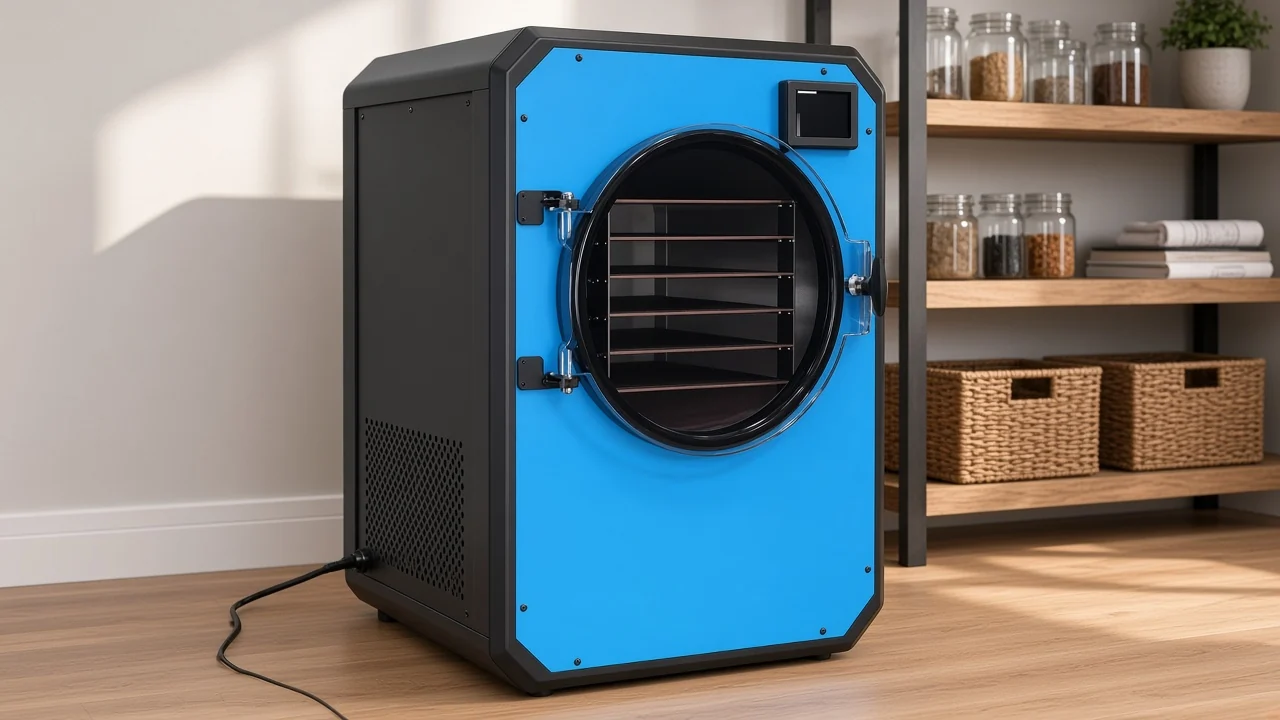
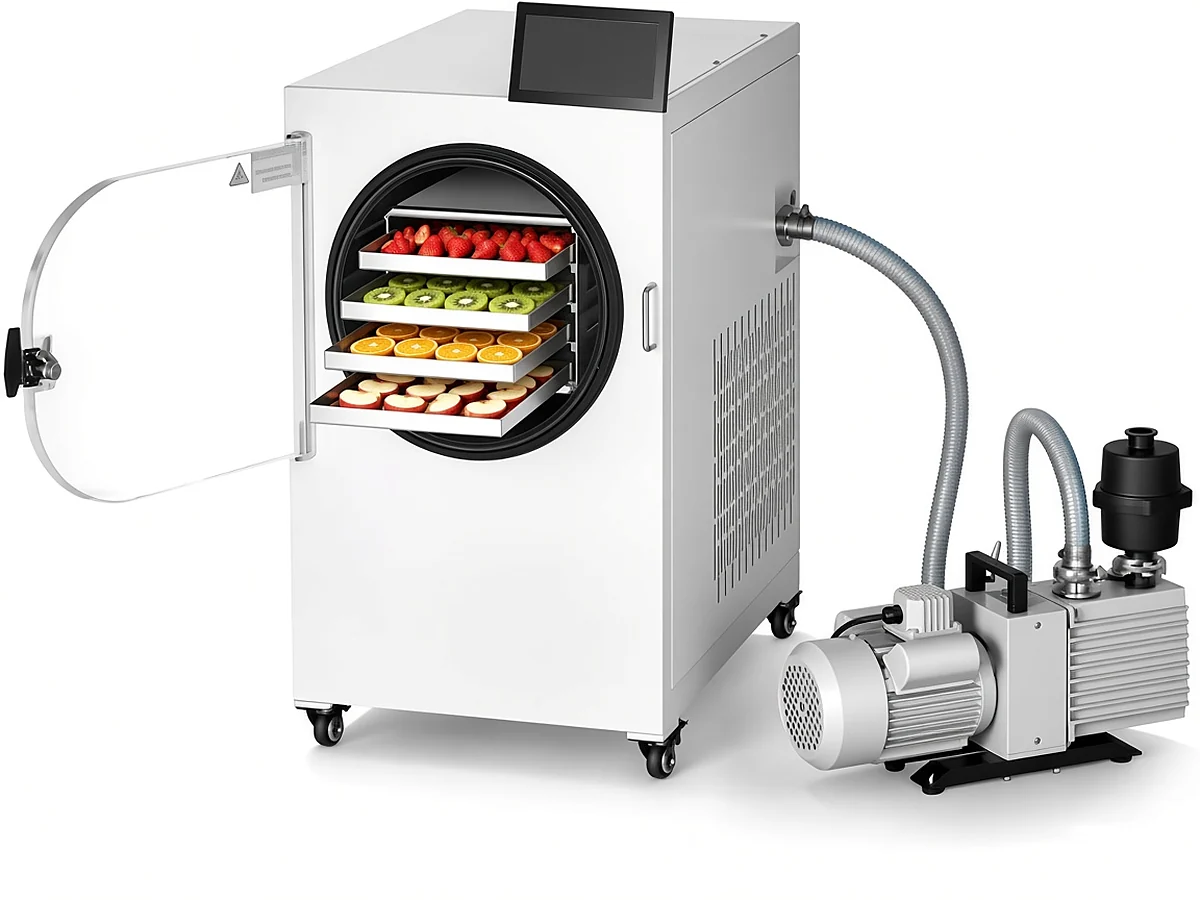
Related on Amazon: VEVOR SJ-08H Vacuum Freeze Dryer.
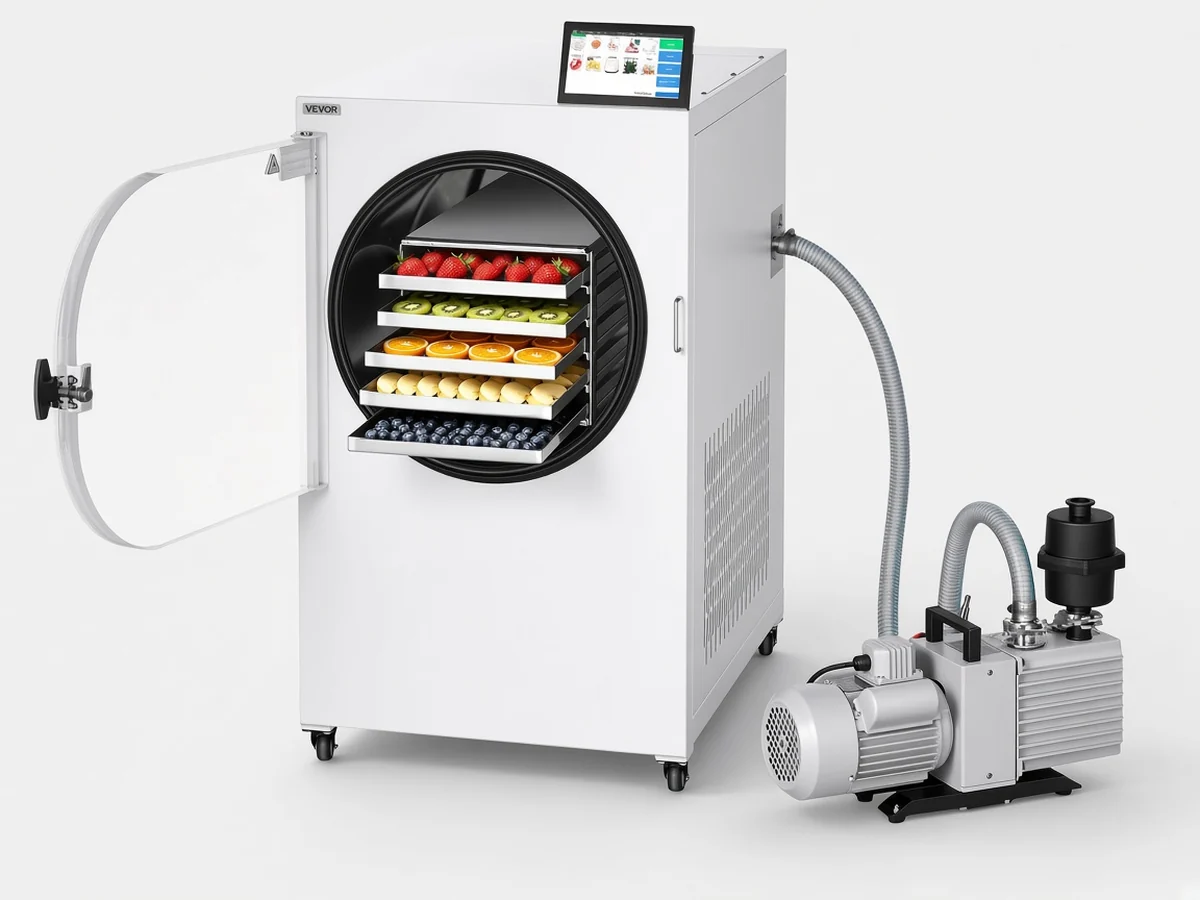
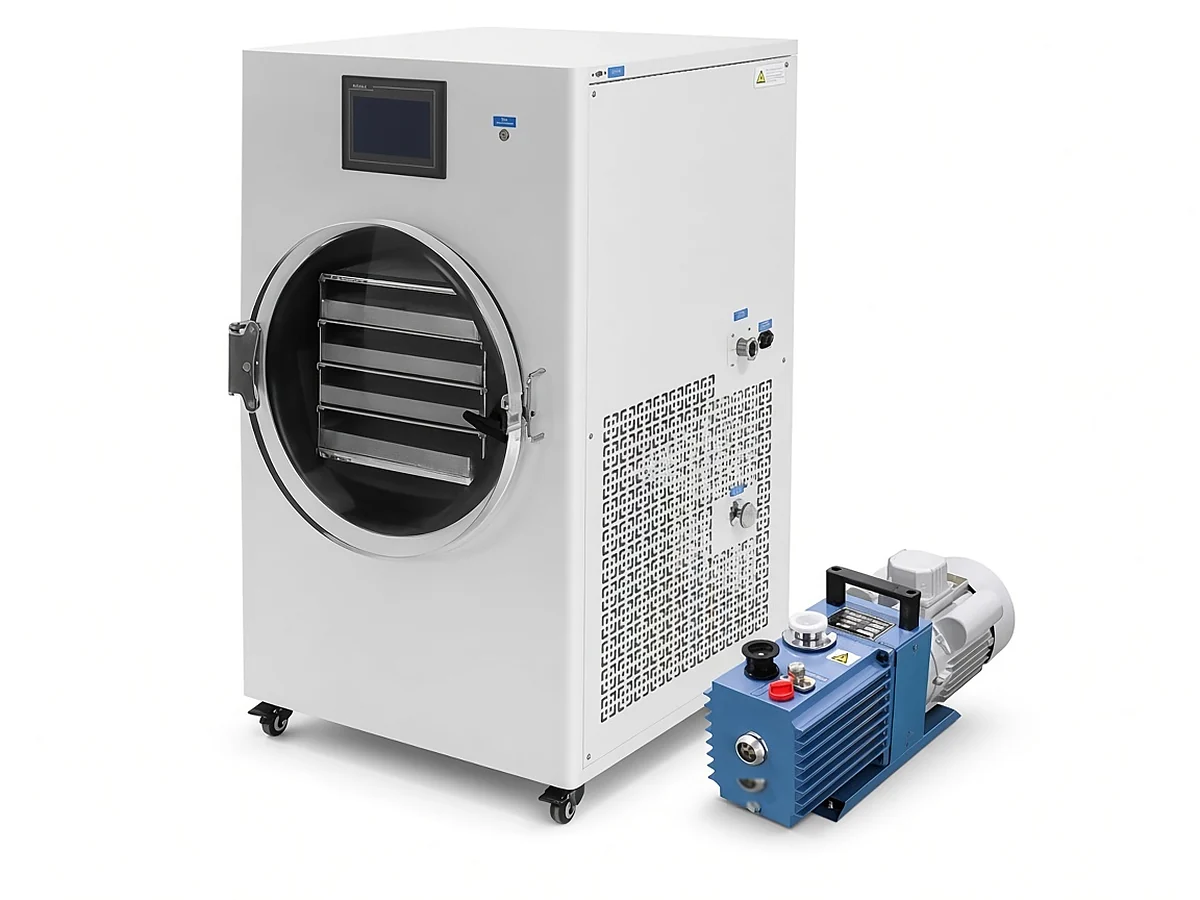
Related on Amazon: VEVOR HFD-4 Vacuum Freeze Dryer.
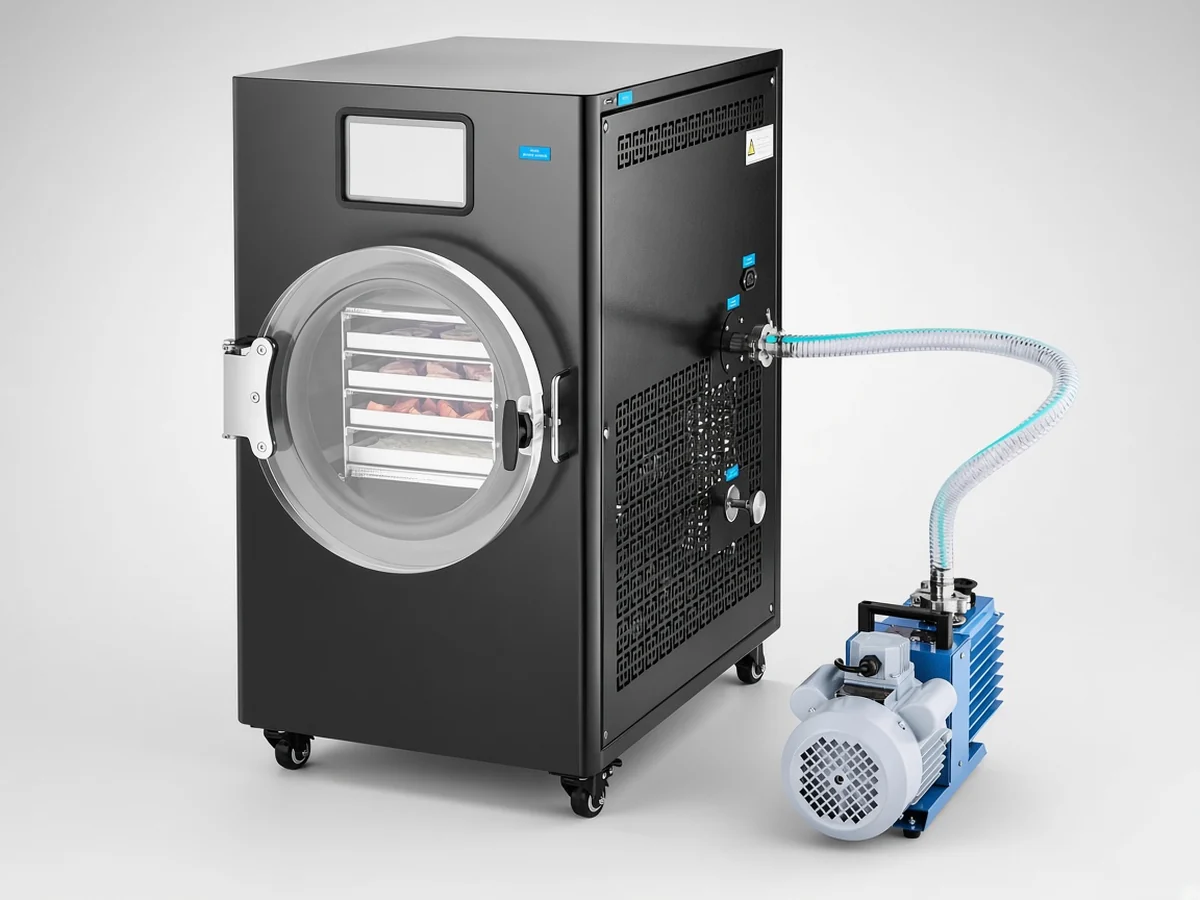
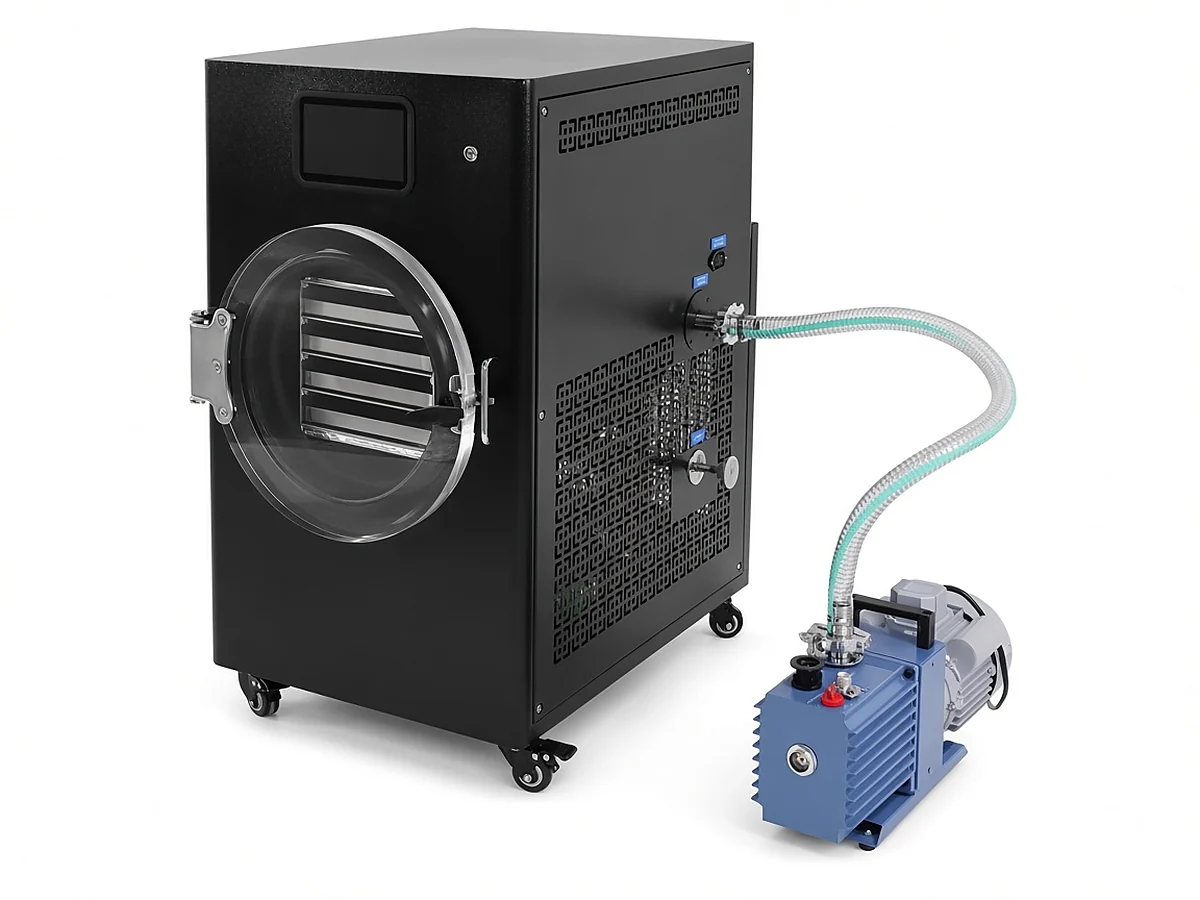
Related on Amazon: HNZXIB FD-05H Home Freeze Dryer.
Amazon listings for the products in this guide
Direct links to the Amazon listings for the products named or shown in this guide:
- VEVOR Vacuum Freeze Dryer, 5 Trays, 10 Presets – View on Amazon
- VEVOR HFD-4 Vacuum Freeze Dryer (4 trays) – See the Amazon listing
- HNZXIB FD-05H Home Freeze Dryer, 4 Trays – Check availability on Amazon
- Blue Alpine Medium Select Freeze Dryer – View on Amazon
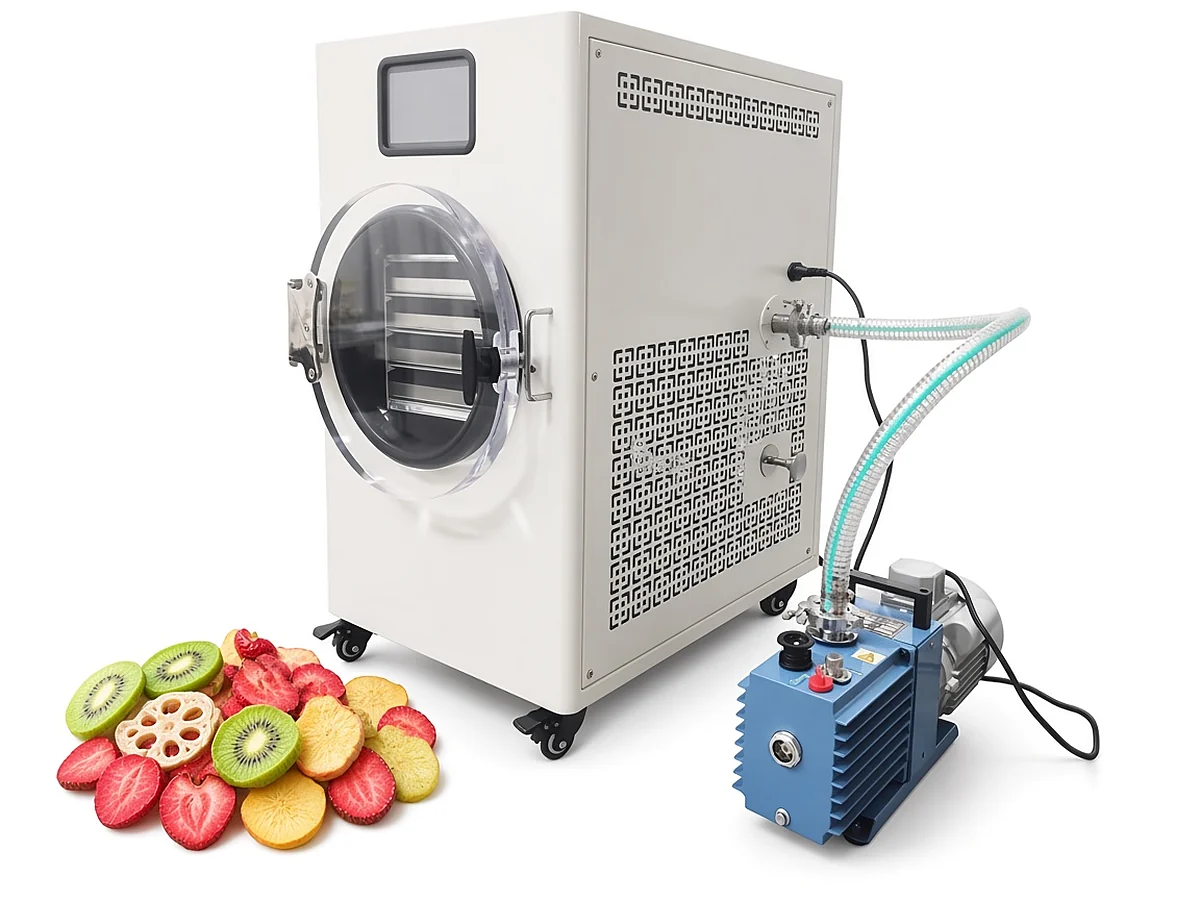
- LGXEnzhuo Vacuum Freeze Dryer, 4 Trays, 1550 W
Frequently asked questions
Are freeze-dried raw eggs safe?
Freeze drying does not kill bacteria, so freeze-dried raw egg is still raw egg. Utah State University Extension rates raw eggs as high risk and suggests pasteurized liquid eggs or fully cooked scrambled eggs instead. Whatever you use, rehydrate and cook it to 160 °F before eating.
Should I freeze dry eggs raw or cooked?
Pasteurized liquid egg gives a raw-style powder with less risk. Cooked scrambled egg rehydrates into ready-to-heat scramble. Raw shell egg is possible, and some manufacturers prefer it, but extension services rate it as higher risk.
How do I rehydrate freeze-dried egg powder?
Add water a little at a time and whisk until smooth. Adding back the weight of water the eggs lost in drying is a reliable starting point. Then cook it.
How long do freeze-dried eggs last?
Sealed in Mylar with an oxygen absorber and stored cool and dark, they keep far longer than fresh eggs, but there is little research on home-dried egg. Utah State advises against relying on home freeze-dried food beyond 5 to 10 years, and Harvest Right's manual warns that food with animal fat may go rancid. Rotate stock and check each bag when you open it.
Sources
Utah State University Extension: Can I Freeze-Dry That?
FDA: What You Need to Know About Egg Safety
USDA FSIS: Safe Minimum Internal Temperature Chart
University of Arizona Extension: Home Freeze Drying, Part 2
LSU AgCenter: Freeze Drying at Home FAQ
Penn State Extension: Let's Preserve: Freeze Drying
Harvest Right owner's manual
Blue Alpine owner's manual