
Shelf Life
Published guides with this tag.
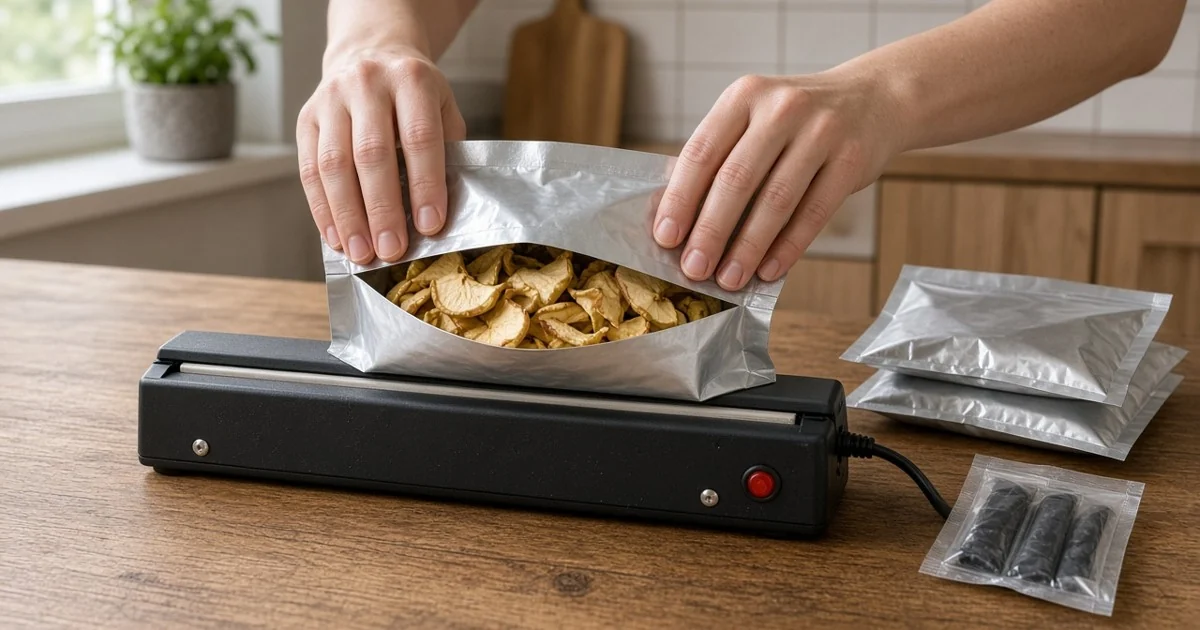
How to Seal Mylar Bags with Oxygen Absorbers for Freeze-Dried Food
Seal freeze-dried food in Mylar the right way: dry food, headspace, absorbers last, a flat impulse seal and a quick seal check.
Read guide →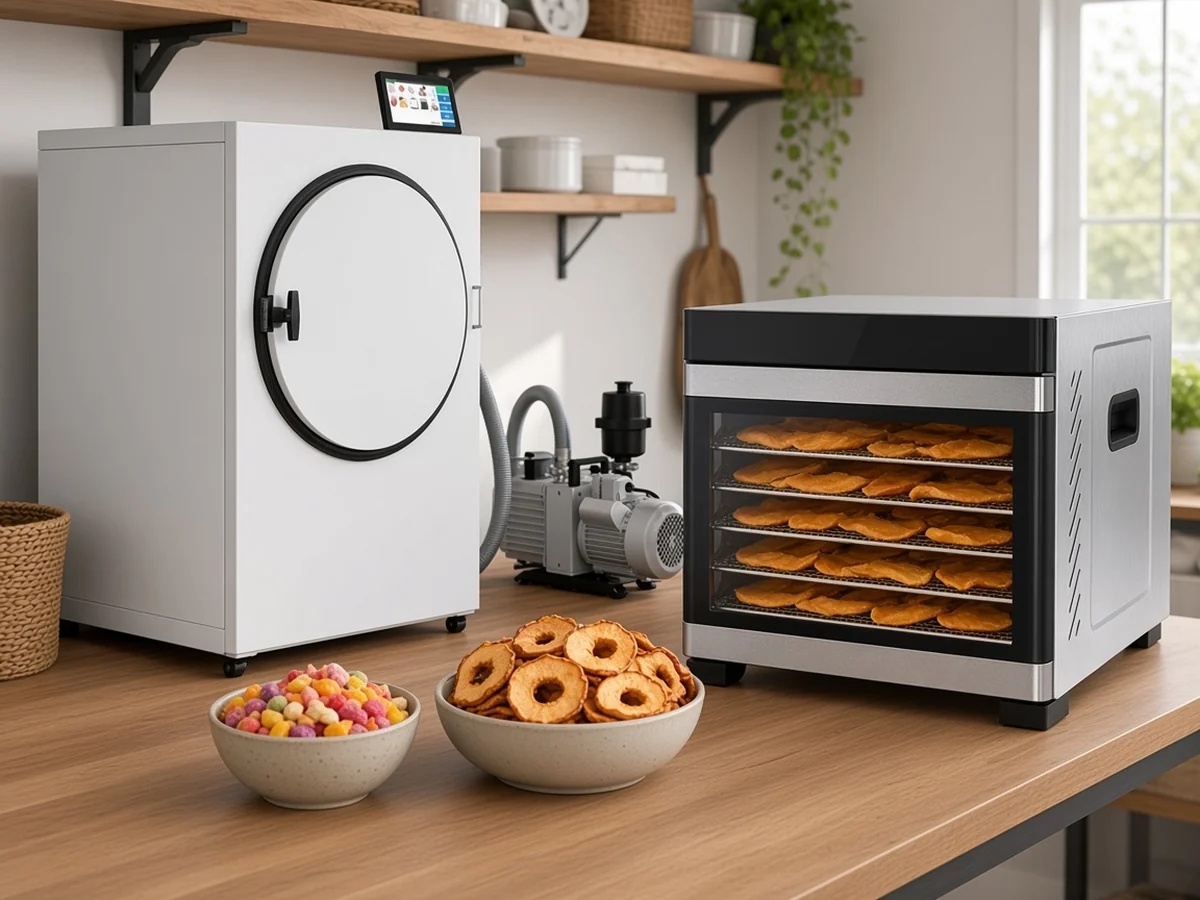
Freeze Dryer vs Dehydrator: Which One Fits the Way You Preserve Food?
A dehydrator blows warm air to dry food for months-scale storage; a home freeze dryer freezes food and removes ice under vacuum for lighter texture and much longer shelf life. Choose a dehydrator for jerky, herbs and snacks you will eat soon; choose a freeze dryer when multi-year pantry storage is the goal.
Read guide →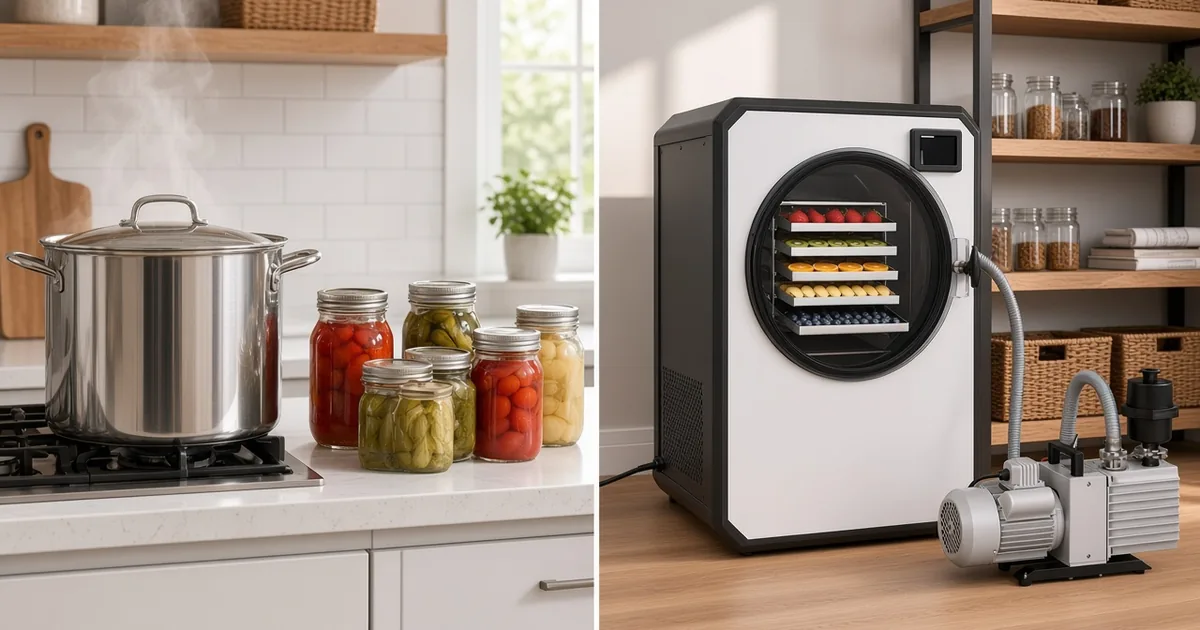
Freeze Drying vs Canning: Which Is Better for Long-Term Food Storage?
Canning kills microbes with heat; freeze drying removes water and kills nothing. Here is how that changes safety, shelf life, texture, cost and which foods suit each.
Read guide →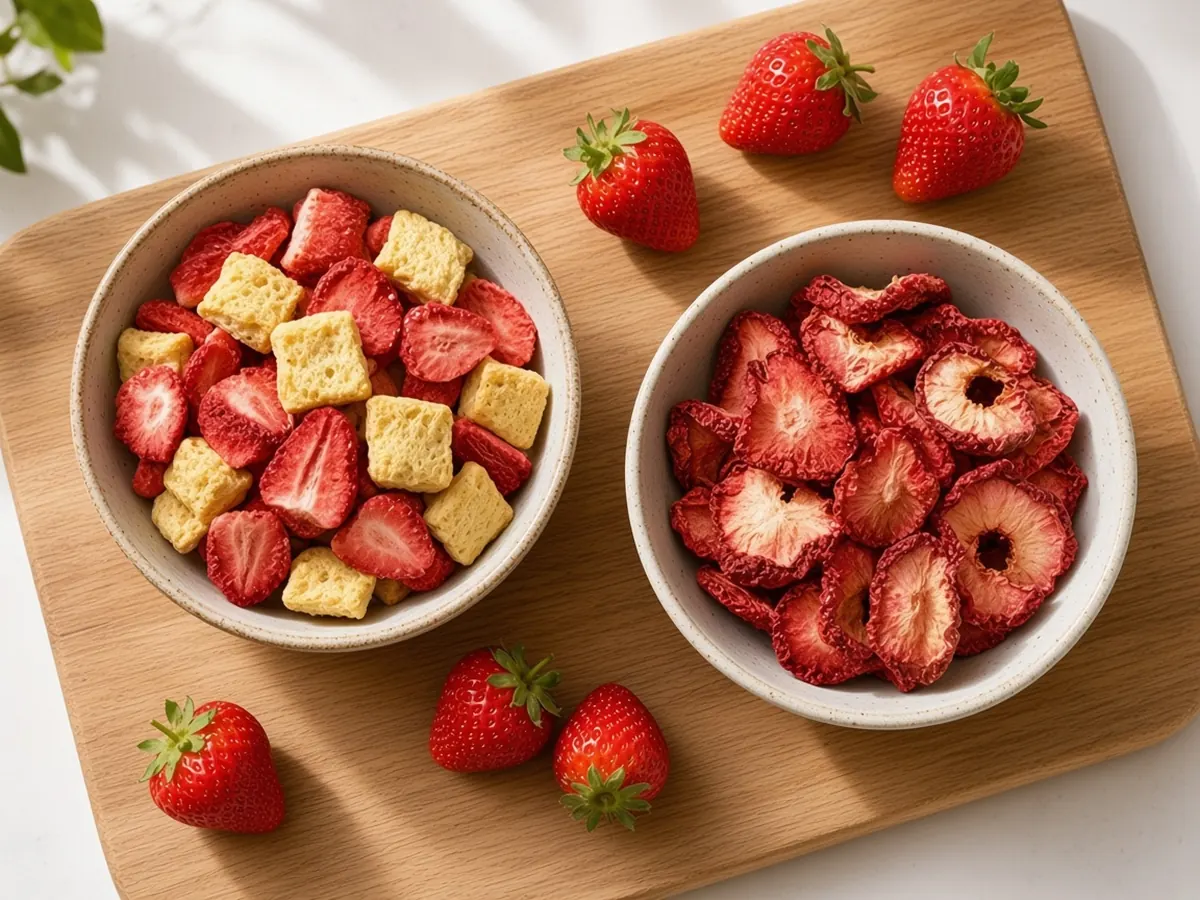
Freeze-Dried vs Dehydrated Food: Shelf Life, Nutrition and Texture
Freeze-dried food keeps far less moisture than dehydrated food, so it is lighter, crisper and usually stores longer in sealed packaging. Dehydrated fruit, vegetables and jerky are softer and chewier and are meant for months-scale storage, not the multi-year pantry role freeze-dried food can fill.
Read guide →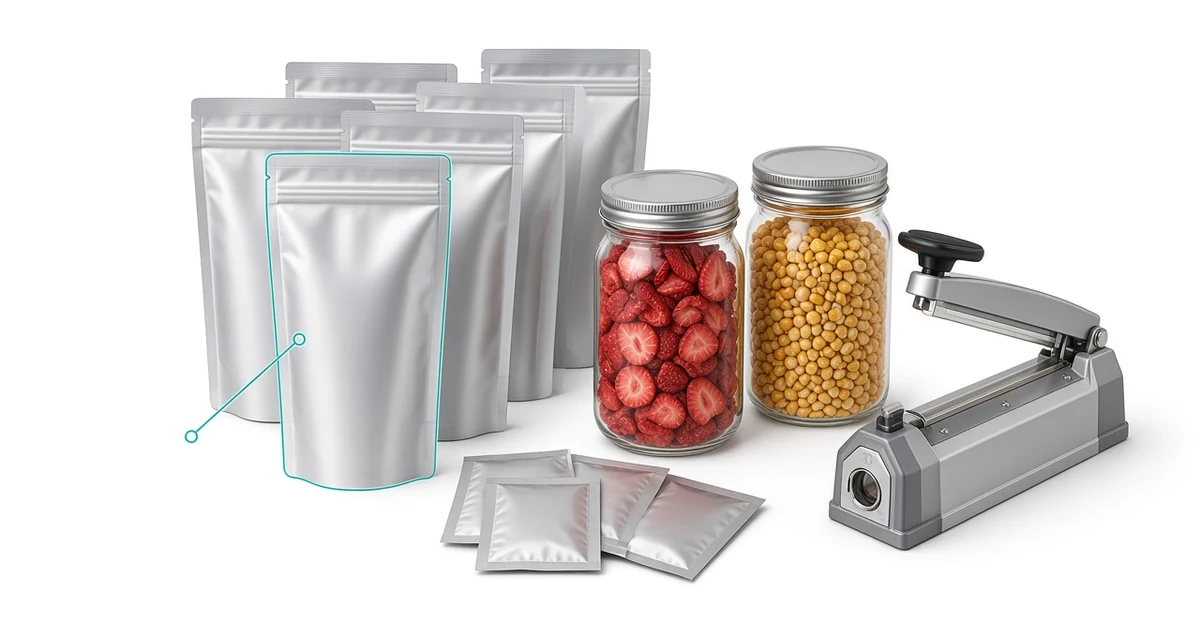
How to Store Freeze-Dried Food: Containers, Oxygen Absorbers and Shelf Life
Pack freeze-dried food only after a dryness check on the thickest piece, then seal it immediately in Mylar with the correct-size oxygen absorber. Exposure to room air softens texture within minutes, so have bags, absorbers and a heat sealer ready before you open the chamber.
Read guide →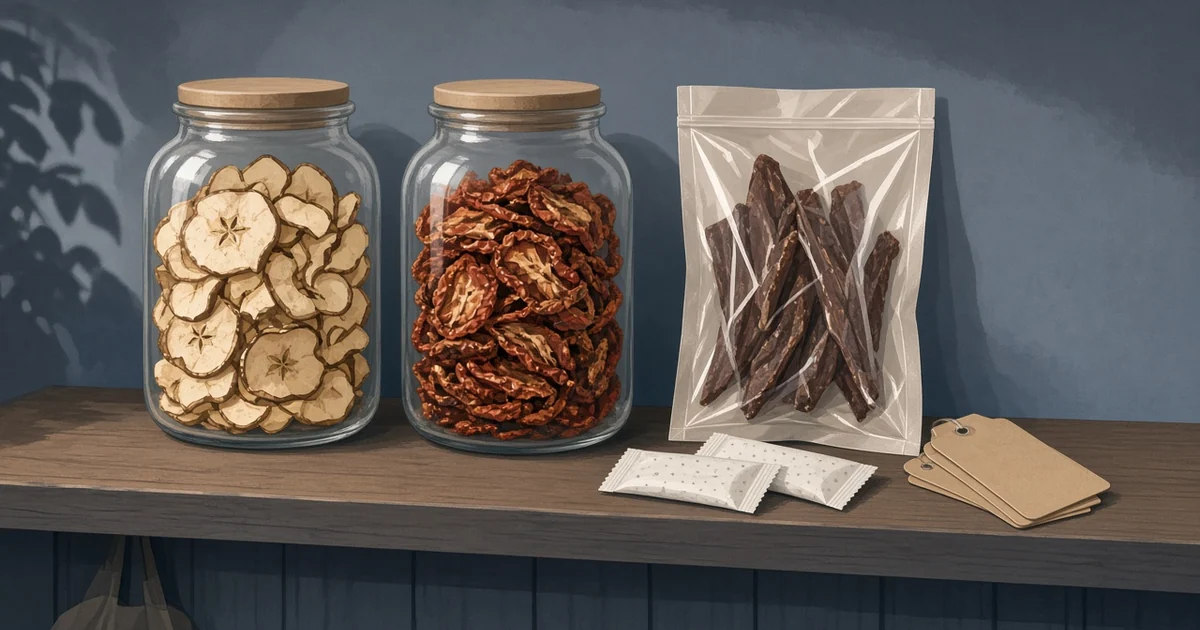
How to Store Dehydrated Food and How Long It Lasts
Store dehydrated food only after it has cooled completely, then pack it airtight with as little headspace as practical. Condition fruit for several days in a jar before long storage, and treat jerky as a short room-temperature food unless you refrigerate or freeze it.
Read guide →