
Freeze Dryer & Food Dehydrator Guides
Practical research and evidence-backed explanations, published after editorial review.
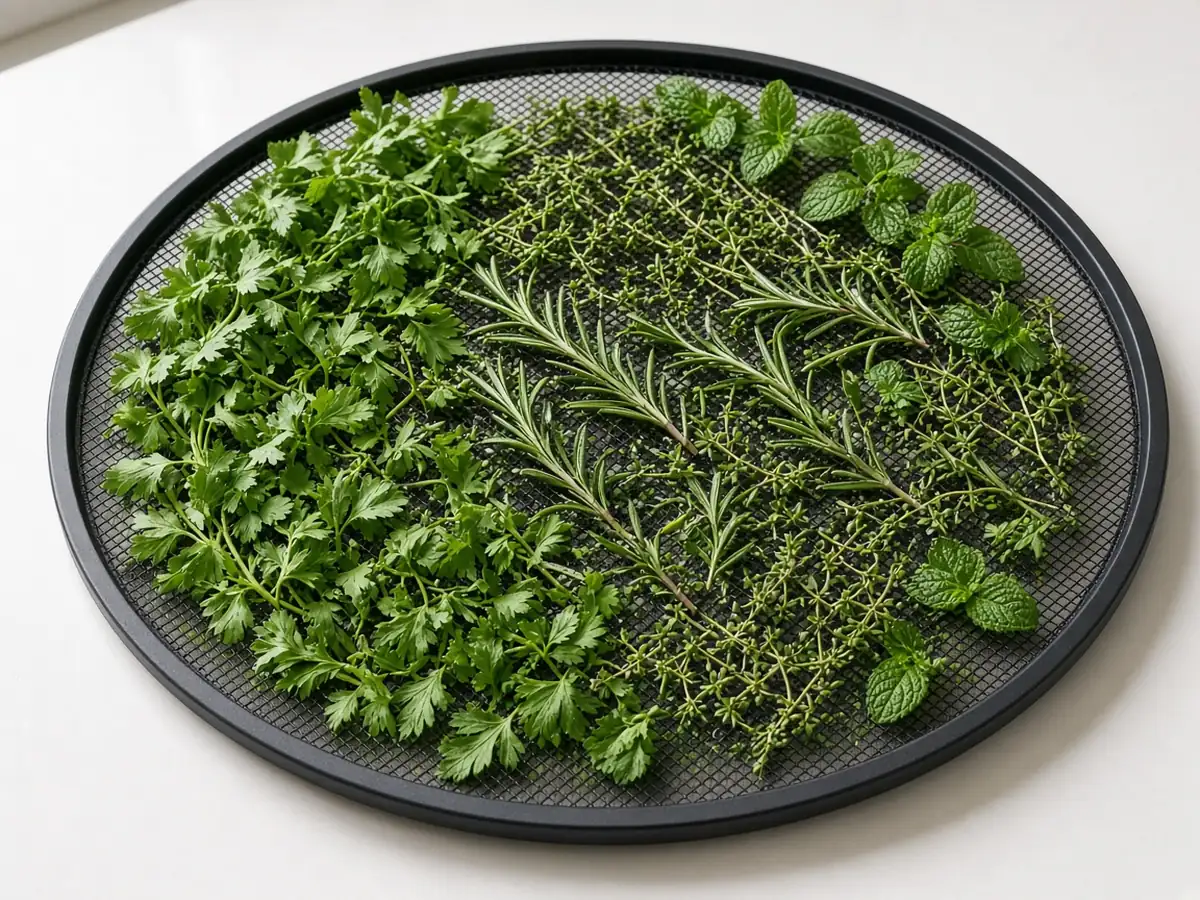
How to Dehydrate Herbs at Home
To dehydrate herbs at home, use a low temperature: 95-115 °F, or up to 125 °F in humid areas, until the leaves crumble and the stems break when bent. The National Center for Home Food Preservation (NCHFP) gives that range and a typical 1-4 hour window. You need a dehydrator with an adjustable thermostat that can actually go that low.
Read guide →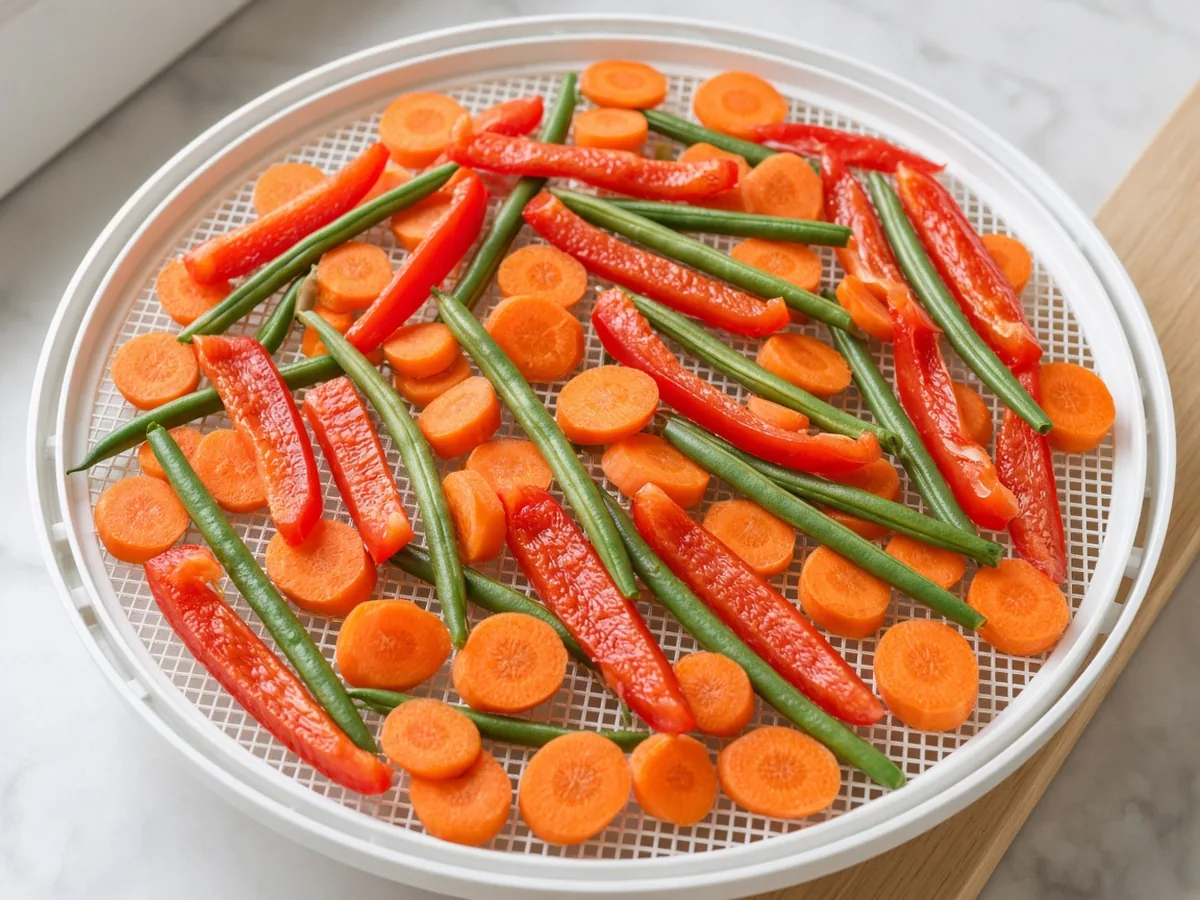
How to Dehydrate Vegetables at Home
To dehydrate vegetables at home, blanch them where extension sources require it, then dry at 140 °F until a cooled piece is brittle or crisp. That is the National Center for Home Food Preservation (NCHFP) temperature and doneness test. Properly dried vegetables hold about 10 percent moisture and do not need the 7-to-10-day jar conditioning used for fruit.
Read guide →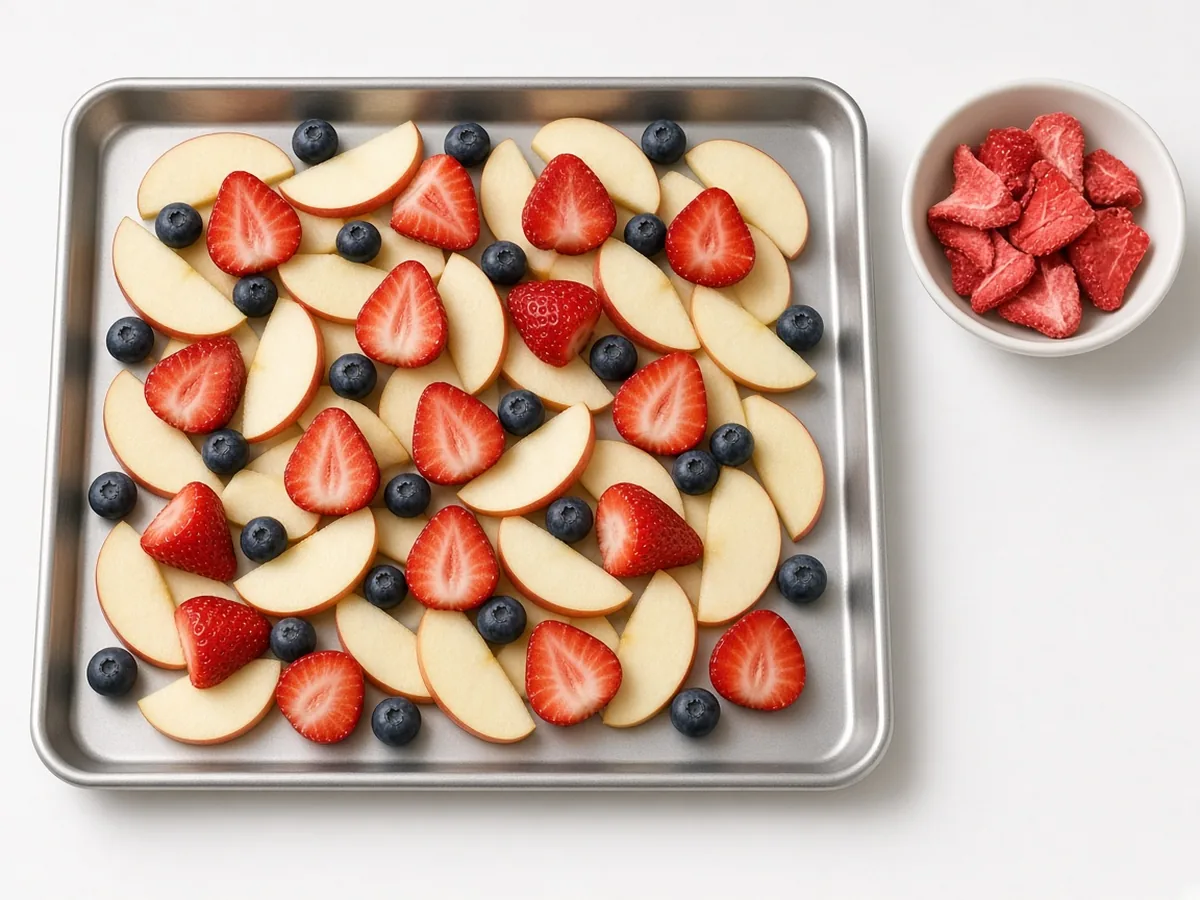
How to Freeze Dry Fruit at Home
To freeze dry fruit at home, you need a vacuum freeze dryer, not a pantry dehydrator. Utah State University Extension's 2026 fact sheet, "Can I Freeze-Dry That?", lists fruits as a yes, with a wash and peel, and an ascorbic-acid or lemon pretreatment for fruit that browns. Cut pieces about 1/4 to 1/2 inch, pre-freeze the trays, and run a full freeze, vacuum and dry cycle.
Read guide →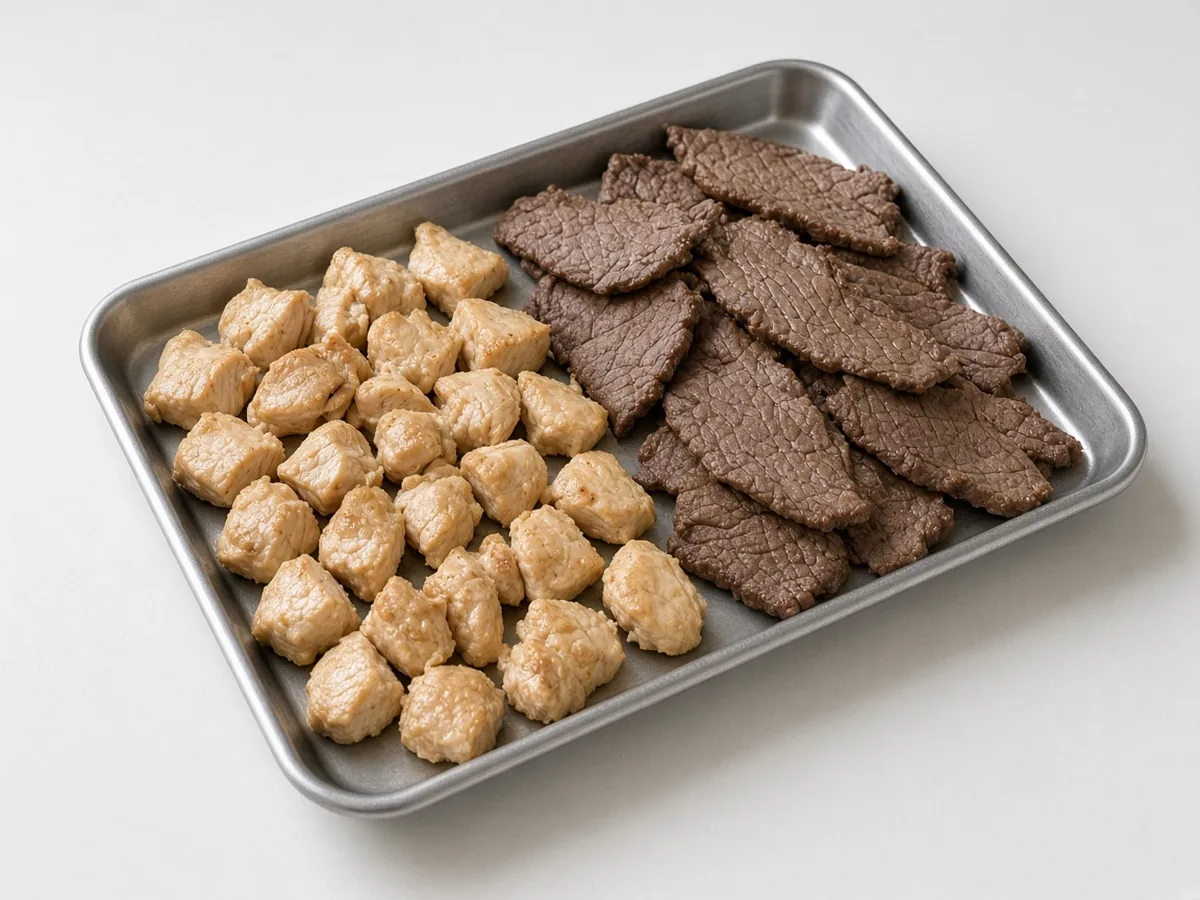
How to Freeze Dry Meat at Home
To freeze dry meat at home, cook it first, then load thin pieces in a vacuum freeze dryer. Utah State University Extension's 2026 fact sheet lists raw animal foods as a no: meat should be cooked to 160 °F, poultry to 165 °F, and seafood to 145 °F before freeze-drying, because freeze-drying preserves bacteria rather than killing them. Other university sources have allowed raw meat with conditions.
Read guide →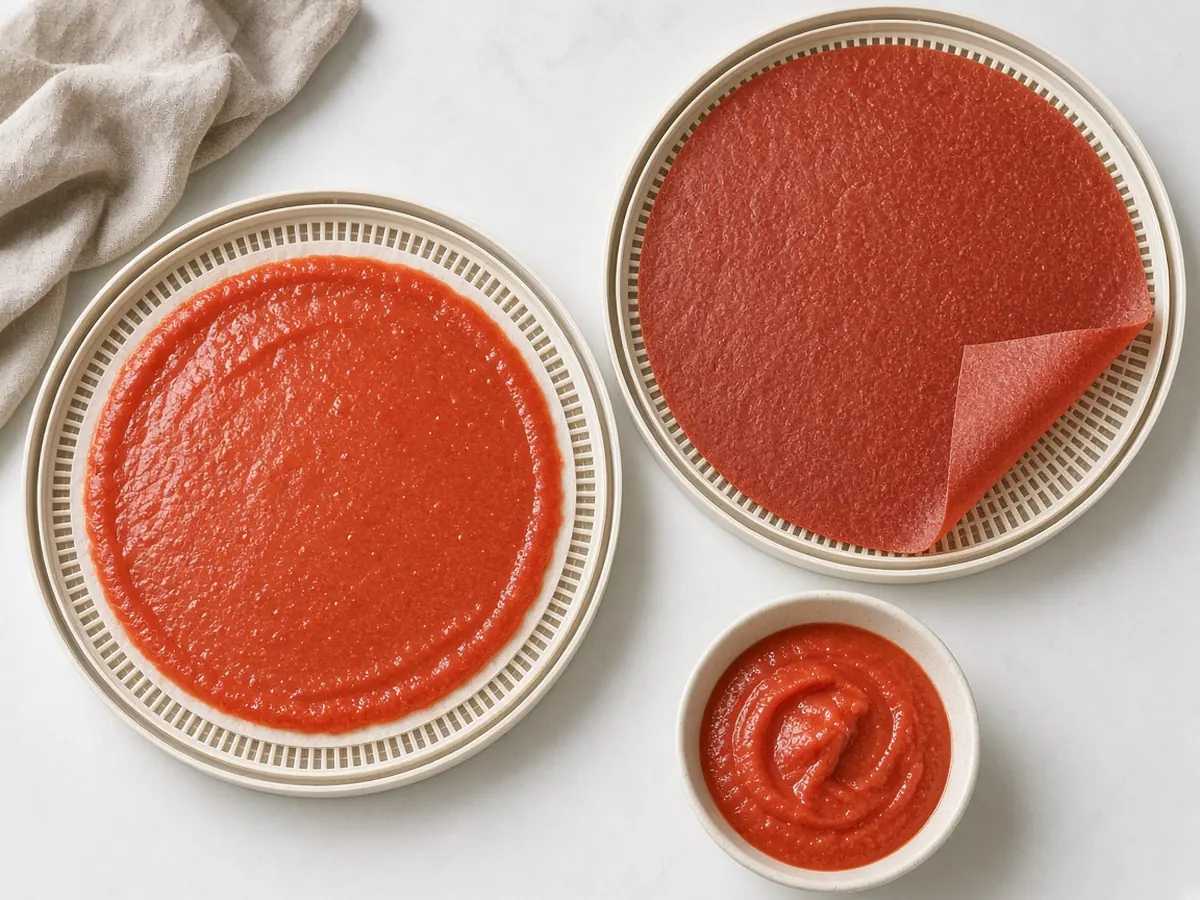
How to Make Fruit Leather in a Dehydrator
To make fruit leather in a dehydrator, puree fruit, spread it in a thin, even layer on a solid fruit-roll sheet, and dry at 140 °F until a cooled piece has no sticky spots and peels cleanly. That temperature and doneness test come from the National Center for Home Food Preservation and Illinois Extension. You need a solid liner, not an open mesh tray.
Read guide →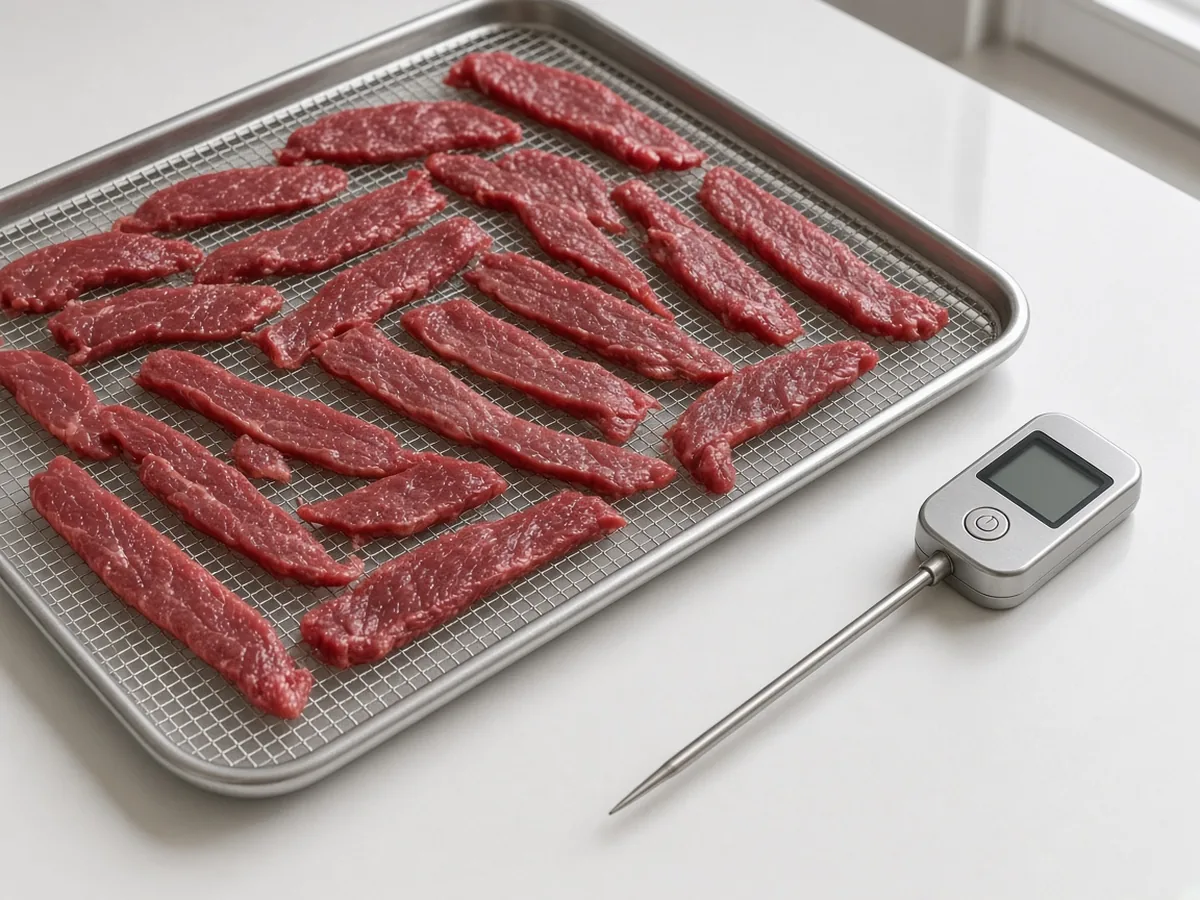
How to Make Jerky in a Dehydrator
To make jerky in a dehydrator safely, heat the meat itself to 160 °F (poultry to 165 °F) before or after drying, then dry the strips at a steady 130-140 °F until a cooled piece cracks but does not break when bent. That is the method from USDA FSIS and the National Center for Home Food Preservation (NCHFP). A dial that reads 160 °F is not the same as the meat reaching 160 °F.
Read guide →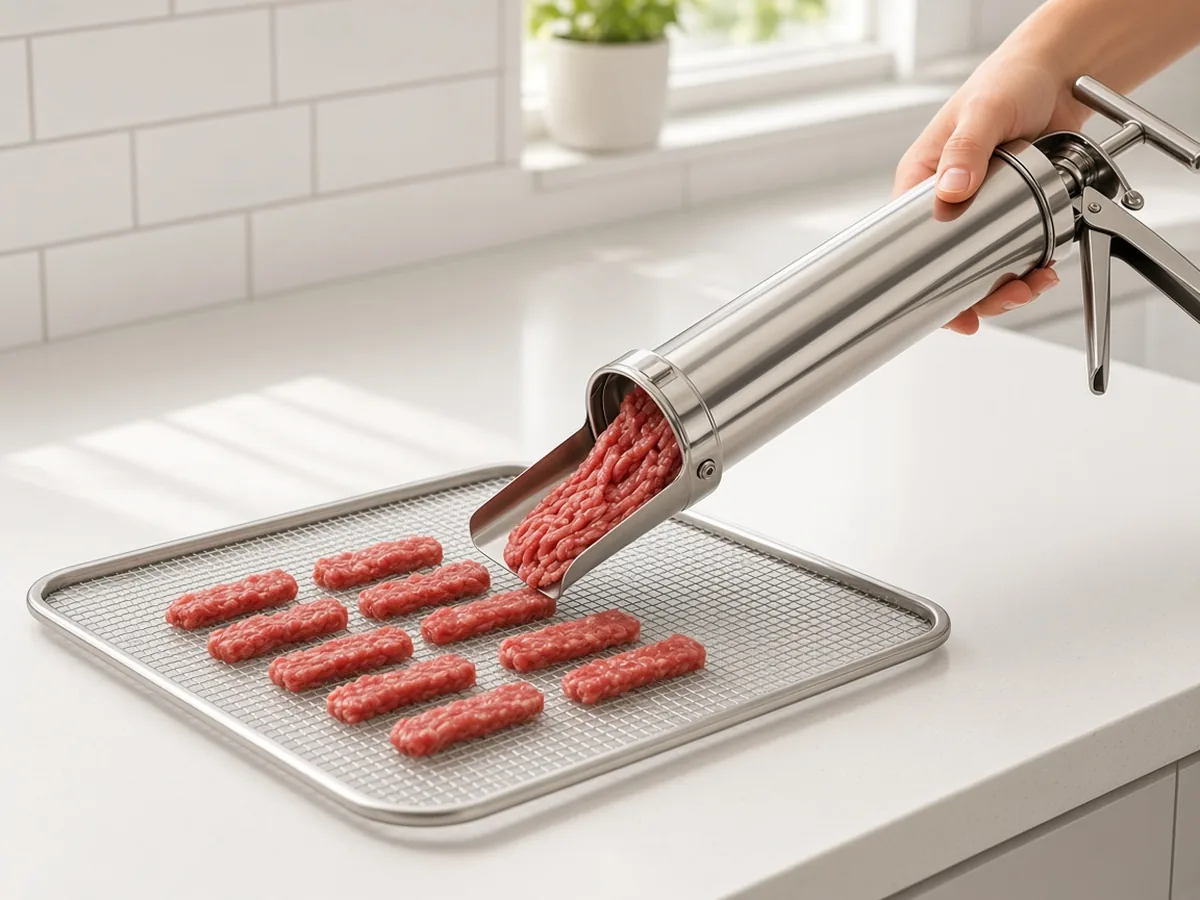
How to Use a Jerky Gun for Even Dehydrator Strips
A jerky gun is a tool for pushing seasoned minced meat into even strips on a dehydrator tray. It does not replace the USDA FSIS and NCHFP method: heat the meat itself to 160 °F (poultry to 165 °F) before or after drying, then dry at a steady 130-140 °F until a cooled piece cracks but does not break when bent. The full cited method is in how to make jerky in a dehydrator .
Read guide →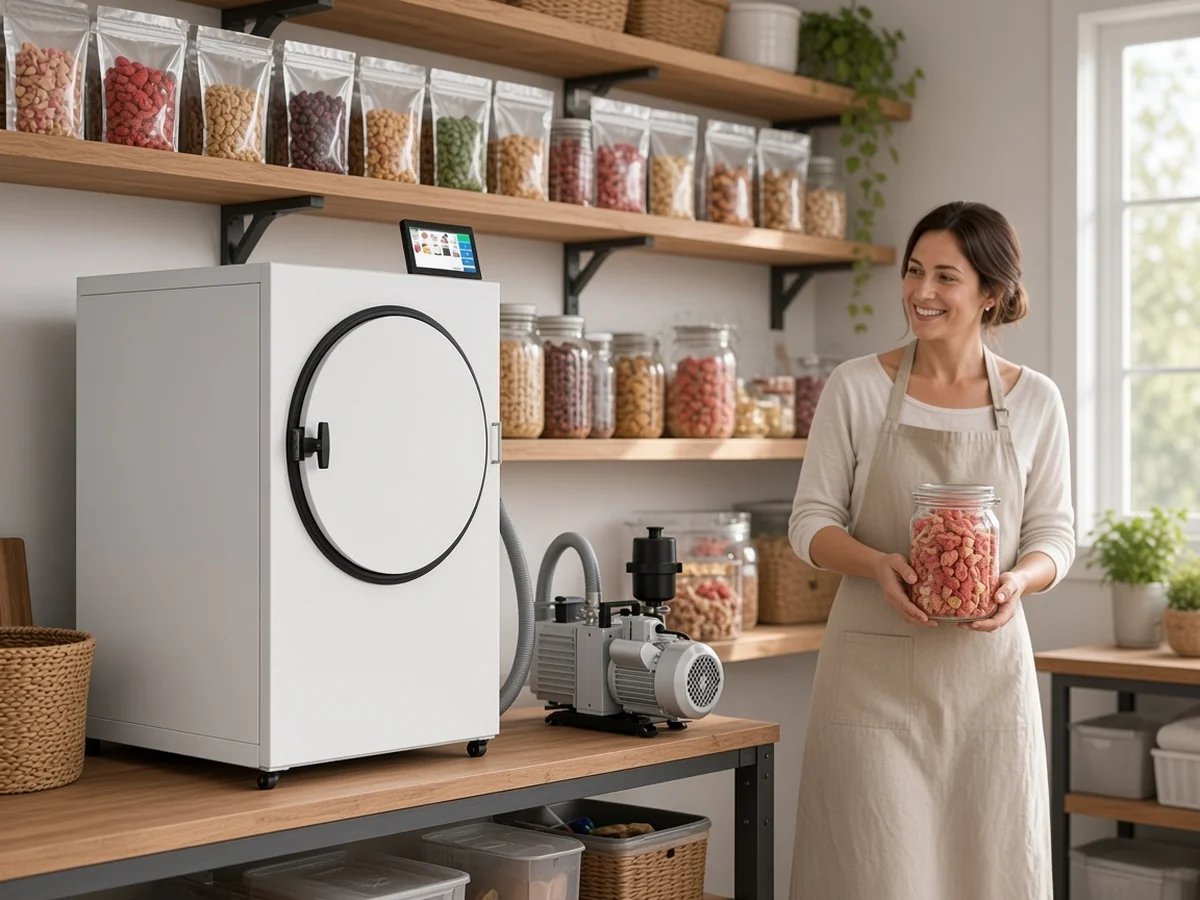
Is a Freeze Dryer Worth It
A home freeze dryer is worth it if you will regularly dry food that should stay crisp, rehydrate quickly, or keep for a long time in Mylar, and you can give it space, a suitable circuit, and batch times measured in tens of hours. It is usually not worth it if you only want leathery fruit, herbs or jerky; a dehydrator already does that work at a much lower purchase price. On Amazon US, the everyday starter we recommend is the Blue Alpine Medium Select .
Read guide →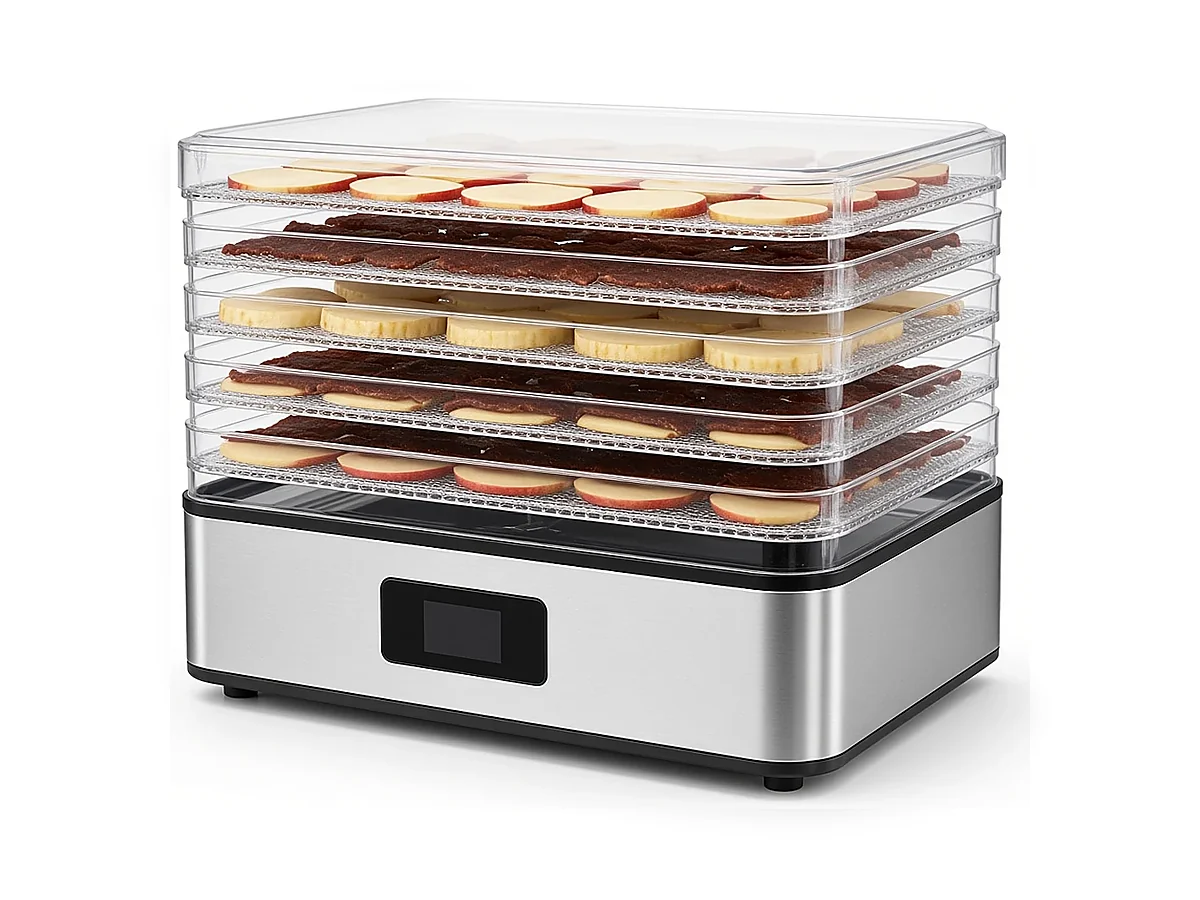
Magic Mill MFD-5000 Food Dehydrator Review
the Magic Mill MFD-5000 is a compact five-tray stackable with stainless trays, a 240 W bottom fan and a digital timer, at about $49.99 at our 13 November 2026 check. It suits small households that want metal trays without much counter space. Before buying, note that the listing disagrees with itself on the temperature ceiling (167 vs 158 °F) and the timer (48 h vs 0.5-99 h).
Read guide →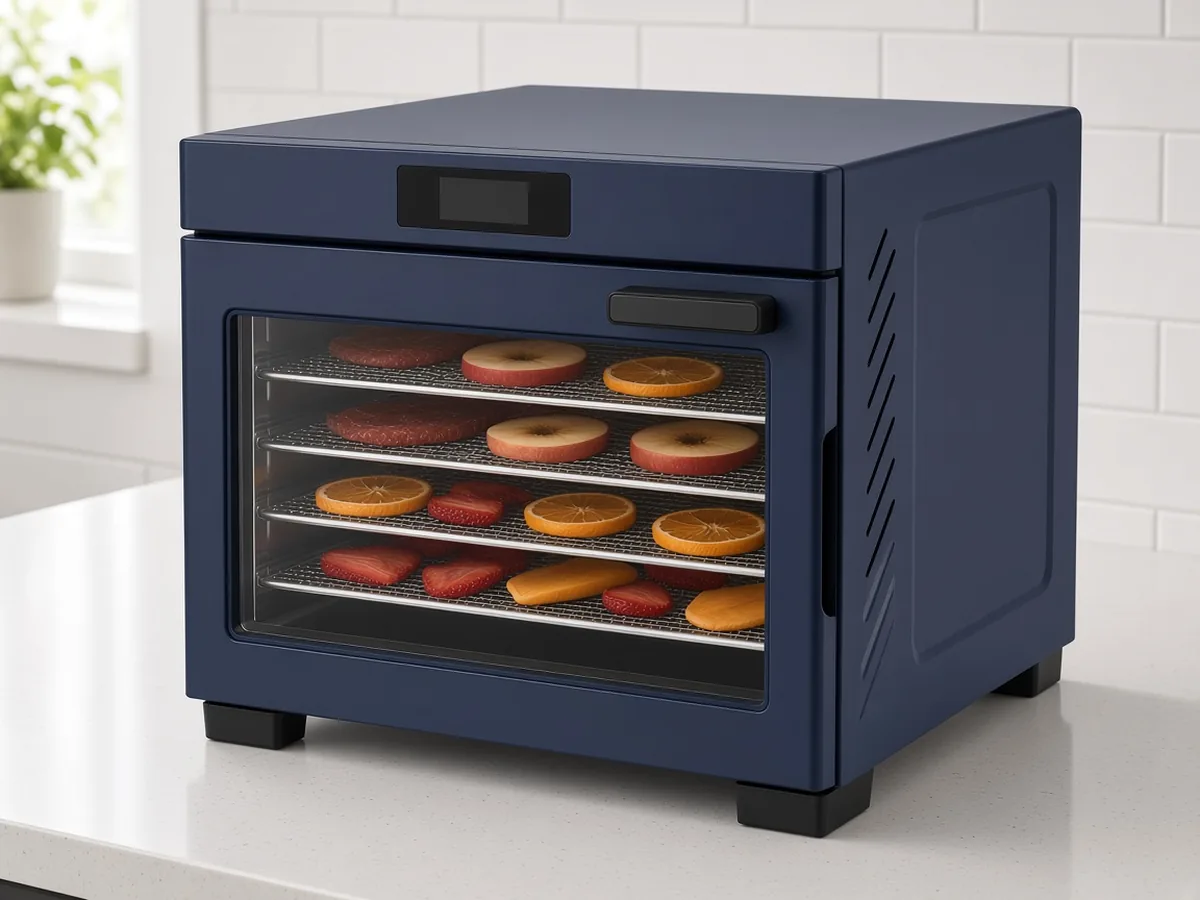
Nesco FD-41B Snackmaster Jr Review
the Nesco FD-41B Snackmaster Jr is a compact enclosed Nesco with four mesh trays, a metallic drip tray, a metal interior, a viewing window and a 400 W, 120 V powerhead. The cabinet is 13.55 D x 13.25 W x 10.2 H in, with a 1-year limited warranty. The important caveat is a control conflict on the Amazon listing: the description and key-features block describe a digital 95-175 °F control and a 1-24 hour timer, while the about-this-item bullets also say simple on/off with a preset range.
Read guide →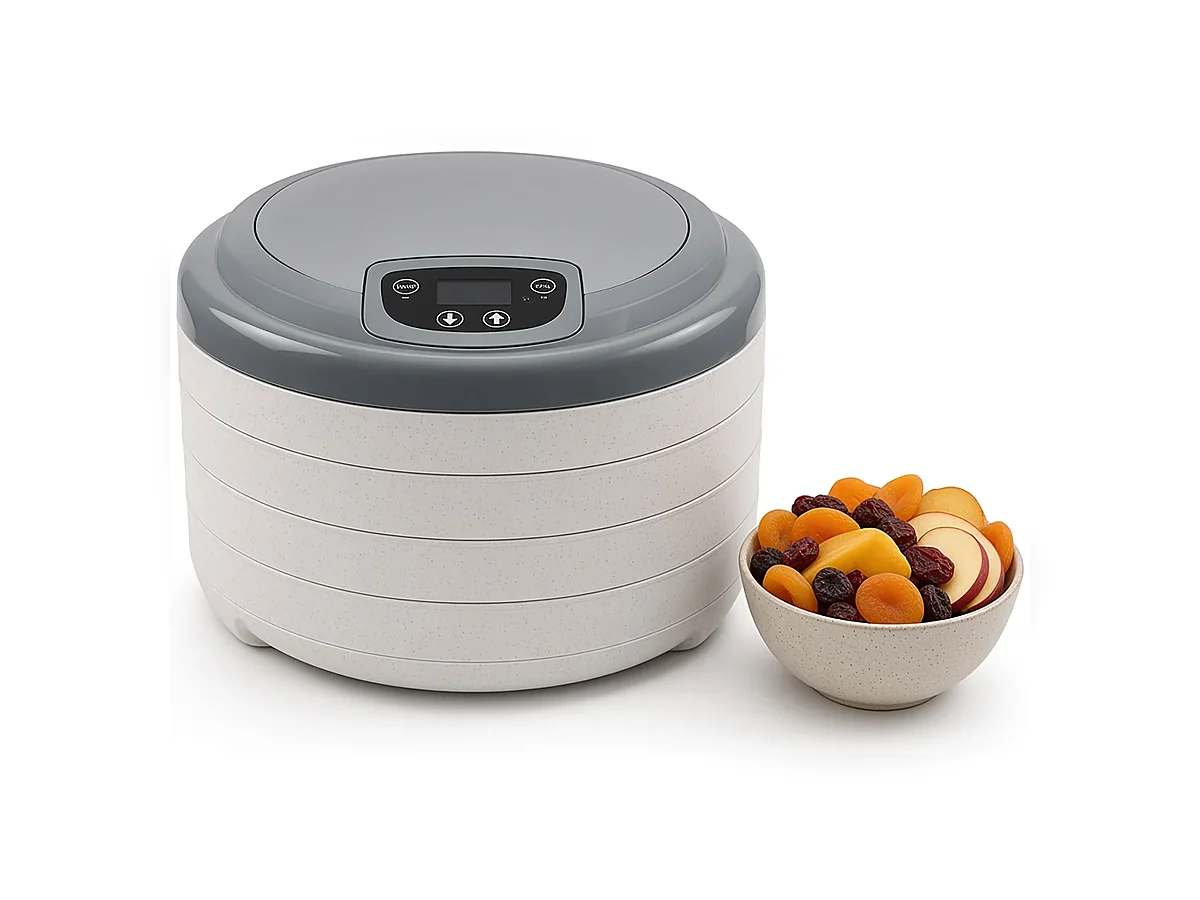
Nesco FD-79 Snackmaster Pro Dehydrator Review
the Nesco FD-79 Snackmaster Pro Digital is the digital round in Nesco's Snackmaster line: four 13.5 in trays expandable to 12, 600 W on 120 V, and a listed 160 °F ceiling, at about $100.27 at our 13 November 2026 check. It suits regular snack and jerky drying if you want a top-fan expandable stack rather than a shelf box. The bullets say 90-160 °F; the spec table says 95-160 °F.
Read guide →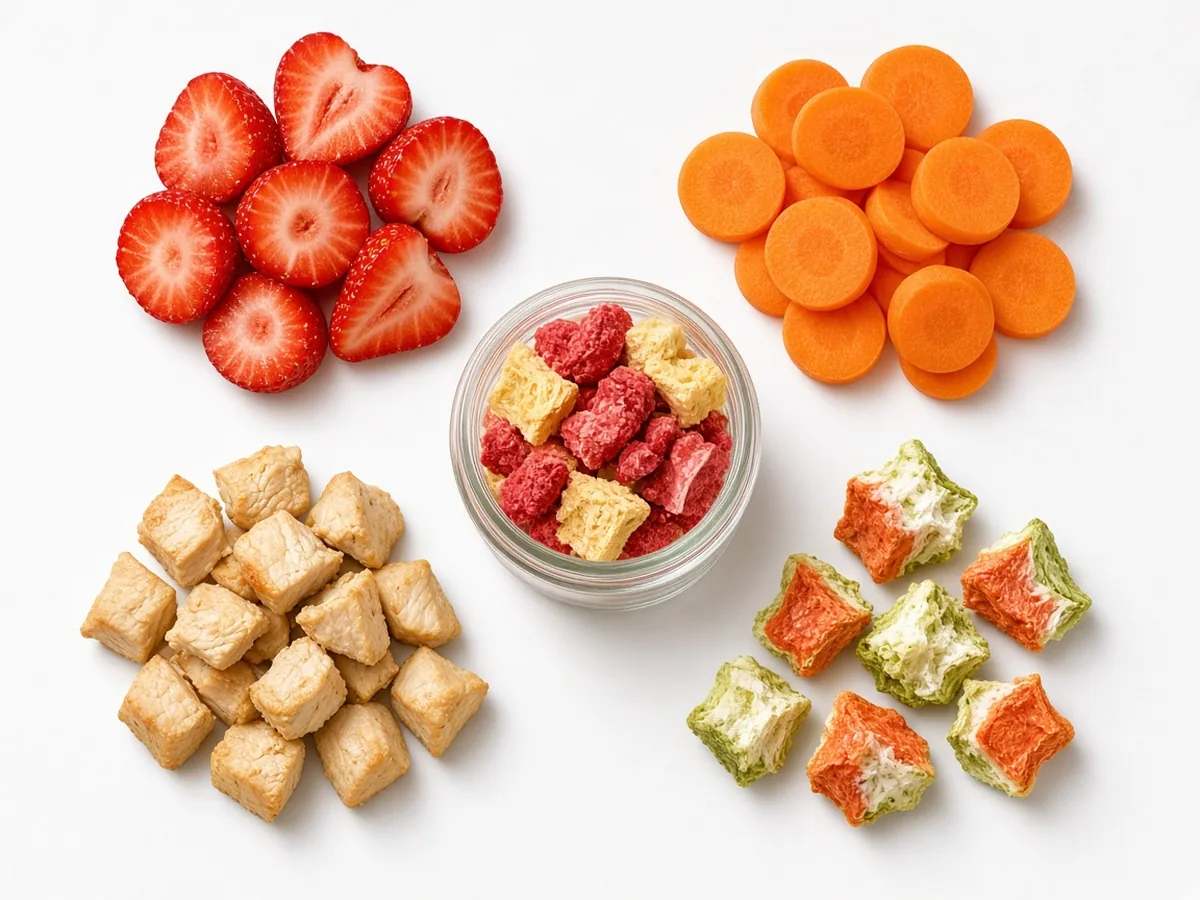
What Can You Freeze Dry at Home
You can freeze dry fruits, blanched vegetables, and fully cooked meat, poultry, and seafood at home in a vacuum freeze dryer, per Utah State Extension’s 2026 list—skip oils, mayonnaise, salad dressings, raw eggs, unpasteurized dairy, and raw animal foods.
Read guide →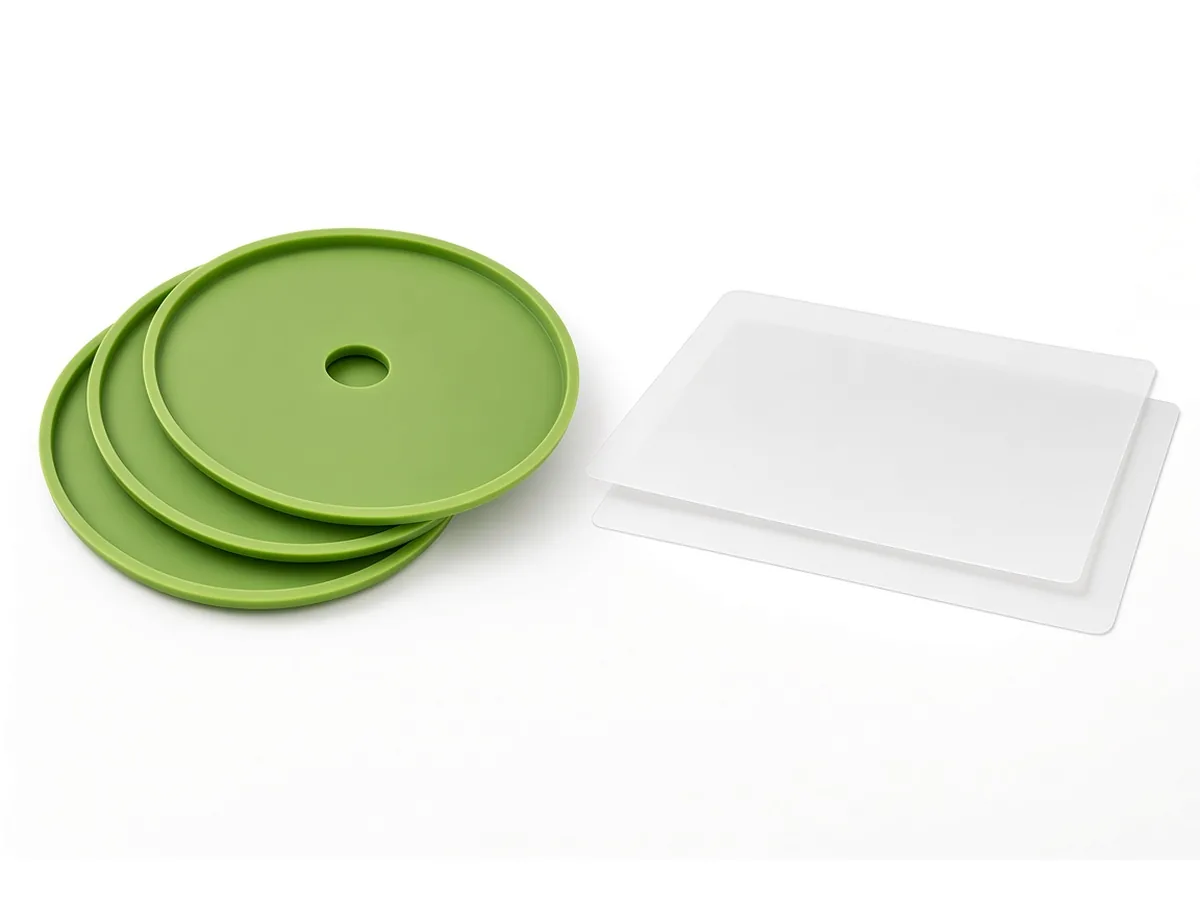
Best Fruit Leather Sheets for Dehydrators
Buy fruit leather sheets by tray shape, not by brand loyalty. For Nesco round or square trays, the Bright Kitchen 4-pack silicone sheets (model 4Nedge) are 12.5 in across with a 3 in center hole and a 1/4 in lip. For the COSORI CP267-FD and other square trays at least 11.3 x 12.8 in, use the official COSORI C267-2FR 2-pack .
Read guide →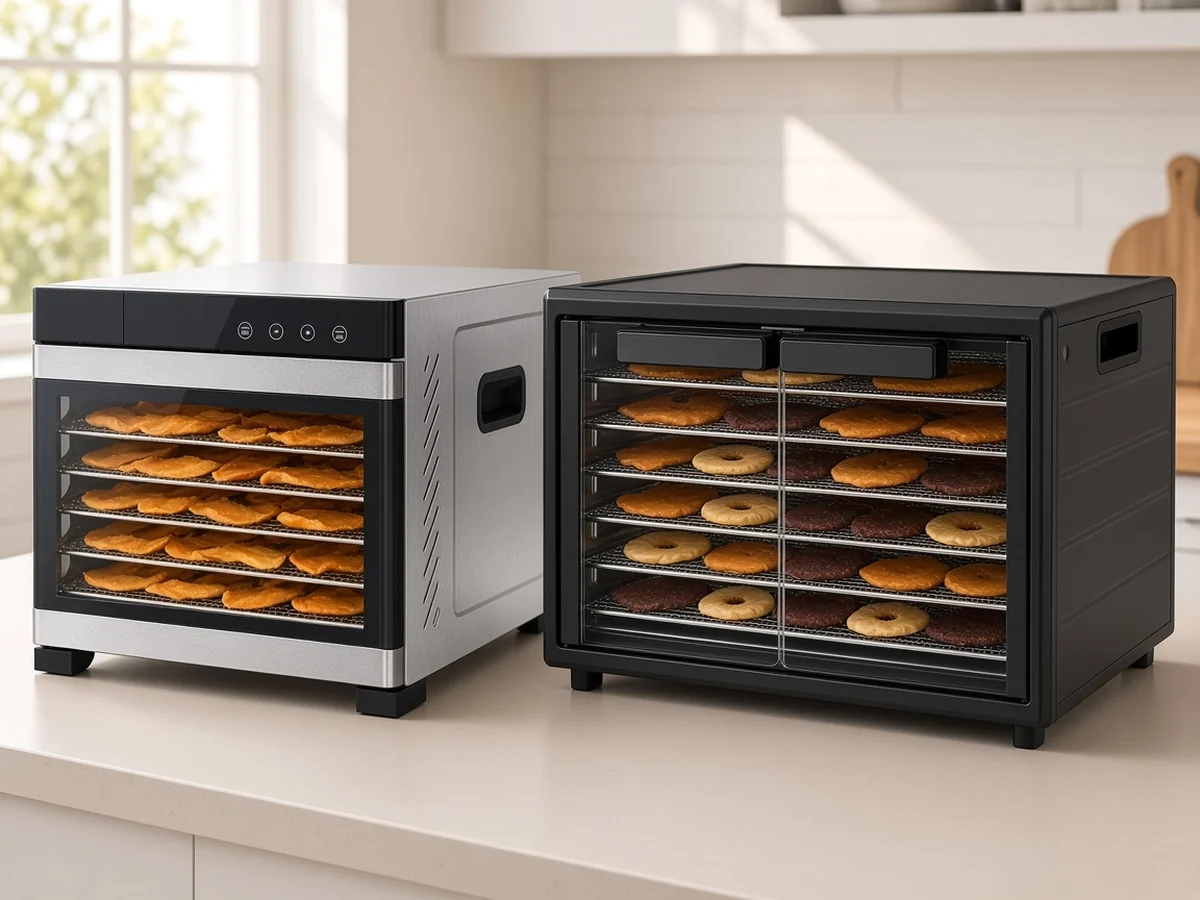
COSORI vs Excalibur Dehydrator
Choose a COSORI if you want stainless trays and a mid-price rear-fan box. The everyday Cosori is the CP267-FD (six trays, 6.5 sq ft, 95-165 °F, 600 W, 48-hour timer). Choose an Excalibur Select if you want a wider 85-165 °F band, glass French doors and a longer timer, and you can accept chrome-plated trays.
Read guide →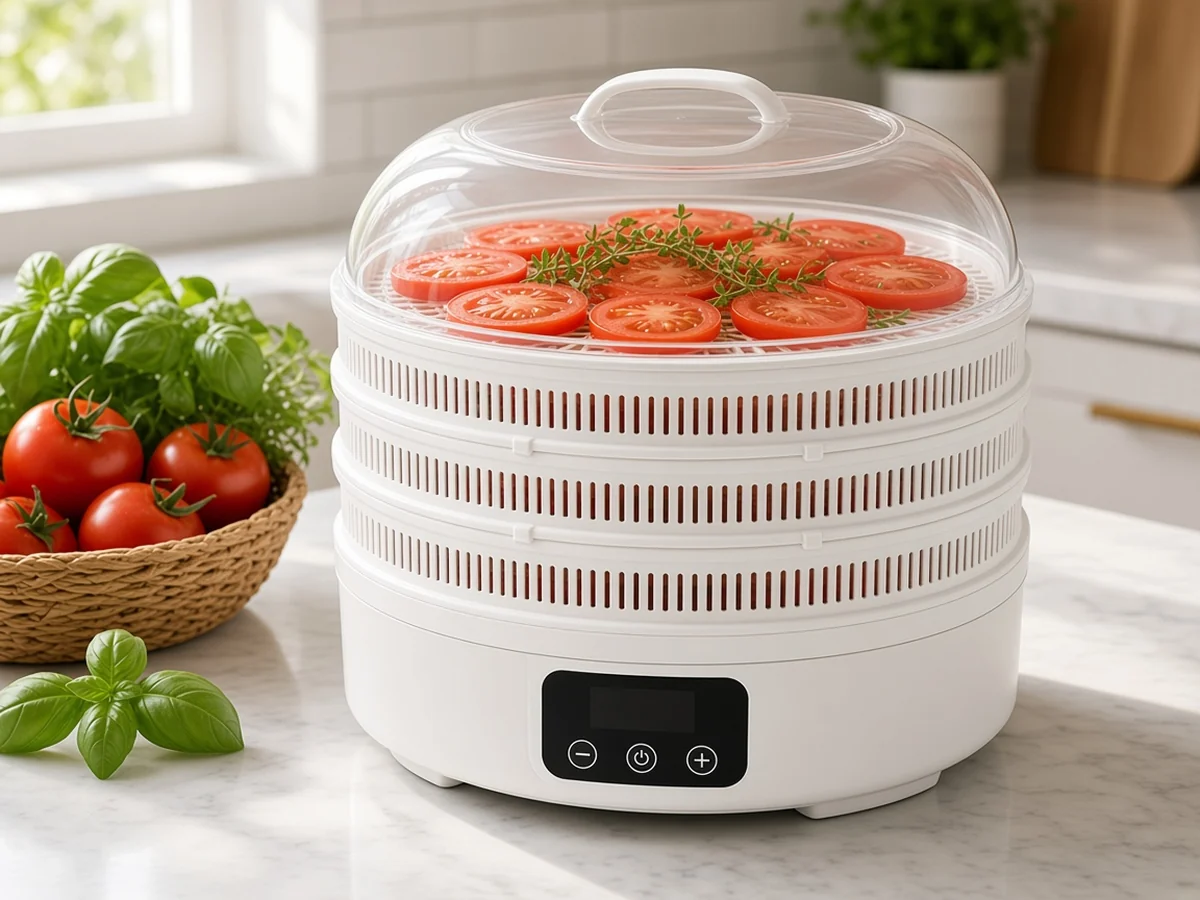
Nesco FD-1040 Gardenmaster Review
the Nesco FD-1040 Gardenmaster Digital Pro is the digital Gardenmaster: a 1,000 W, 120 V top-fan round dehydrator that ships with four 15.5-inch trays and expands to 20, with a listed 90-160 °F range and a 48-hour timer. It was about $139.99 (list $159.99) at our 13 November 2026 Amazon US check, In Stock, with 4.4 stars from 2,031 ratings. It suits garden harvests and jerky makers who want an expandable Nesco with digital controls.
Read guide →