
How to Freeze Dry Meat at Home
Published 11/14/2026 · Updated 11/24/2026
Quick answer
To freeze dry meat at home, cook it first, then load thin pieces in a vacuum freeze dryer. Utah State University Extension's 2026 fact sheet lists raw animal foods as a no: meat should be cooked to 160 °F, poultry to 165 °F, and seafood to 145 °F before freeze-drying, because freeze-drying preserves bacteria rather than killing them. Other university sources have allowed raw meat with conditions.
Products mentioned in this guide
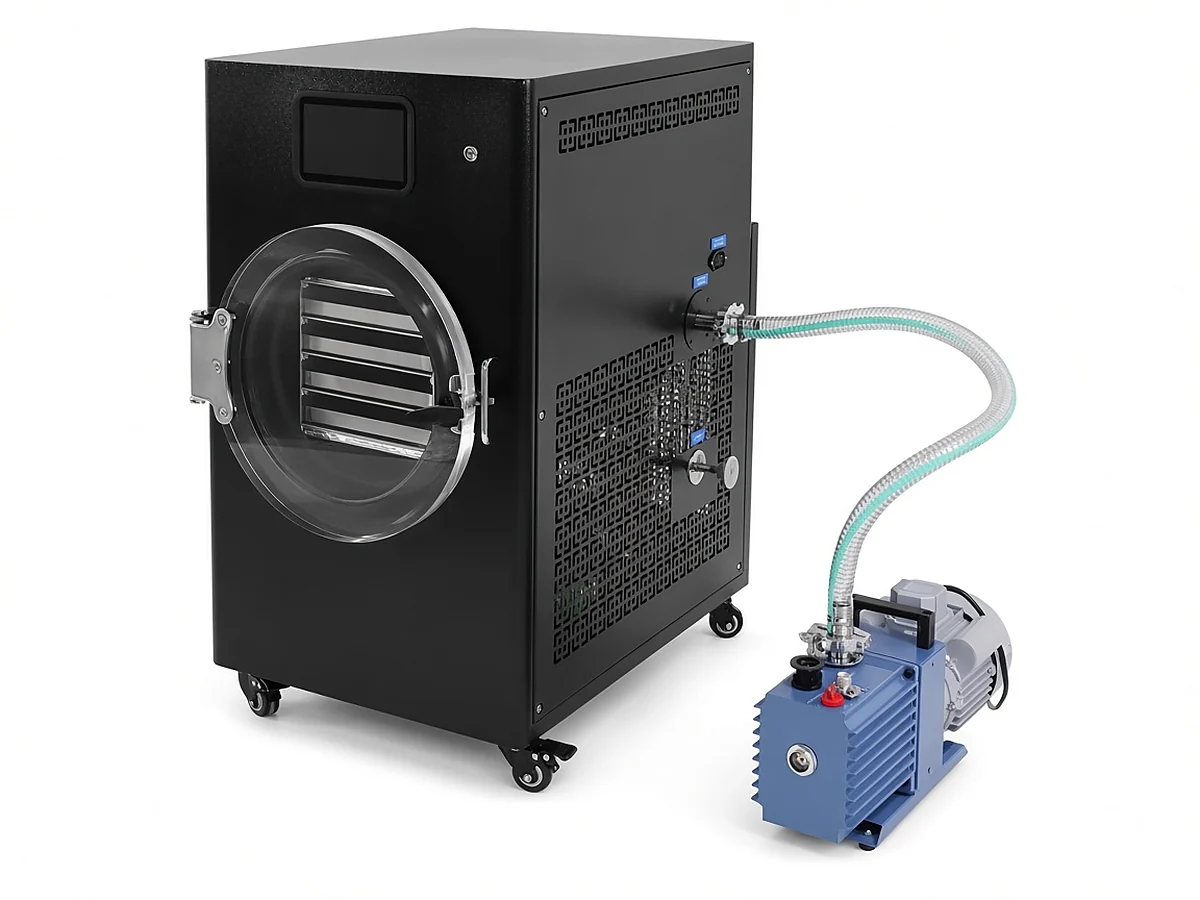
How-To · Freeze Dryers, Jerky
Last updated: November 2026
Quick verdict: To freeze dry meat at home, cook it first, then load thin pieces in a vacuum freeze dryer. Utah State University Extension's 2026 fact sheet lists raw animal foods as a no: meat should be cooked to 160 °F, poultry to 165 °F, and seafood to 145 °F before freeze-drying, because freeze-drying preserves bacteria rather than killing them. Other university sources have allowed raw meat with conditions. The route that satisfies every source we cite is to cook first. Cut cooked meat no thicker than about 3/4 inch (Utah State, citing Arizona), pre-freeze, and pack only fully dry pieces.
This page is the meat method. The broader safety comparison already lives in freeze-drying food safety. For meals, oils and other limits, see how to freeze dry meals and what can you freeze dry.
Why you should cook meat before you freeze dry it
Freeze-drying is not a kill step. Utah State's 2026 table is explicit: raw animal foods are listed as "No," and meat, poultry and seafood must be fully cooked to USDA temperatures first (160 °F for meat, 165 °F for poultry, 145 °F for seafood). That is because the process preserves microorganisms along with the food.
Minnesota, LSU and Arizona Extension have discussed raw meat in a freeze dryer with conditions. Those pages are why our food-safety guide does not pretend the literature is unanimous. It also explains why, if you want the route that satisfies every source, you cook first. This how-to follows that route. Do not skip the thermometer, and do not treat "it looks dry" as a substitute for the cook step.
What you need to freeze dry meat
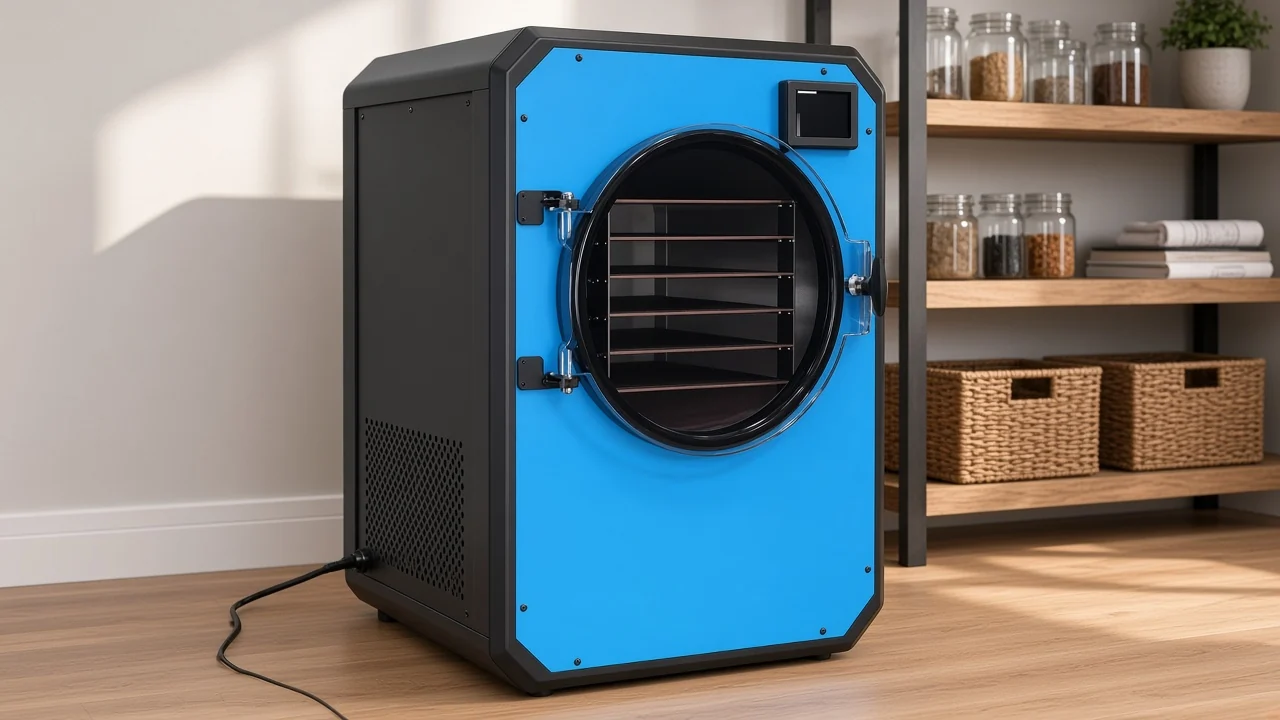
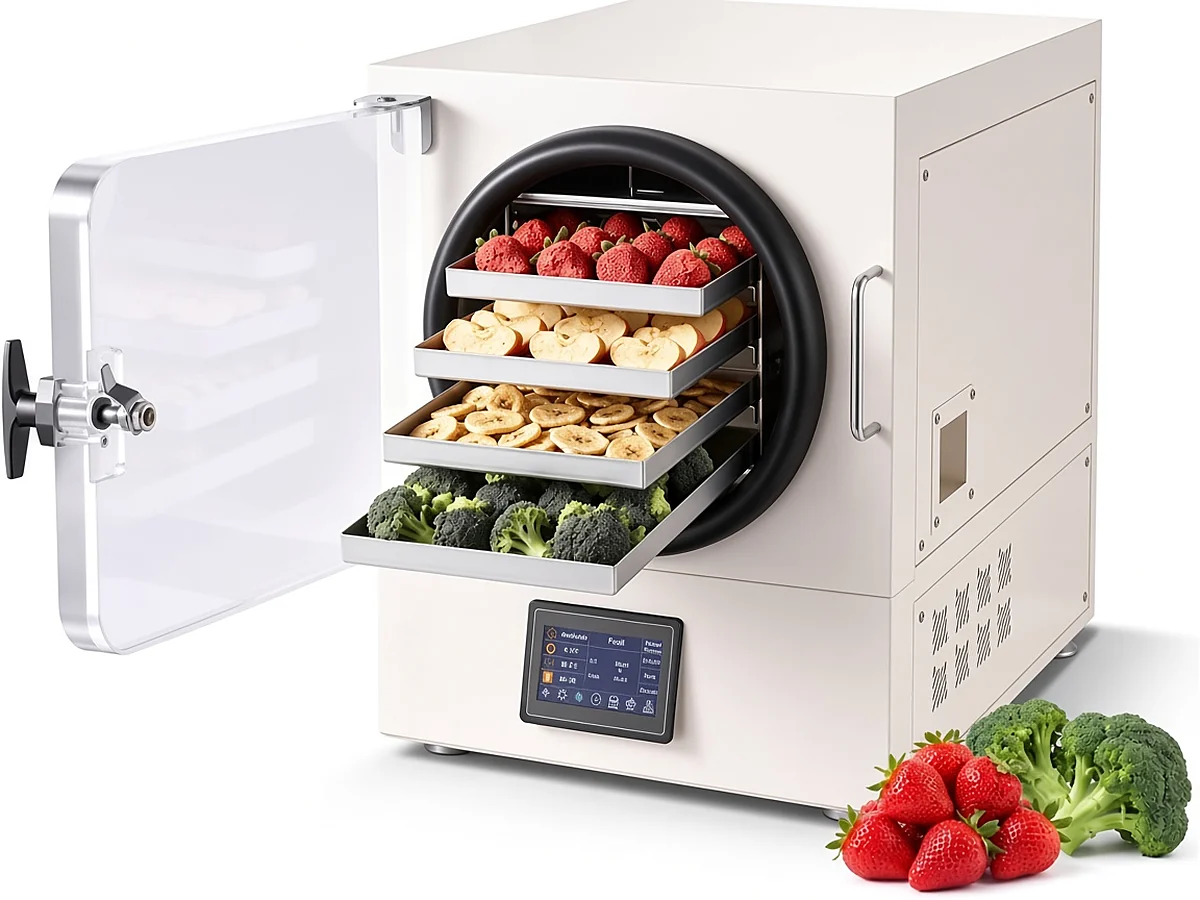
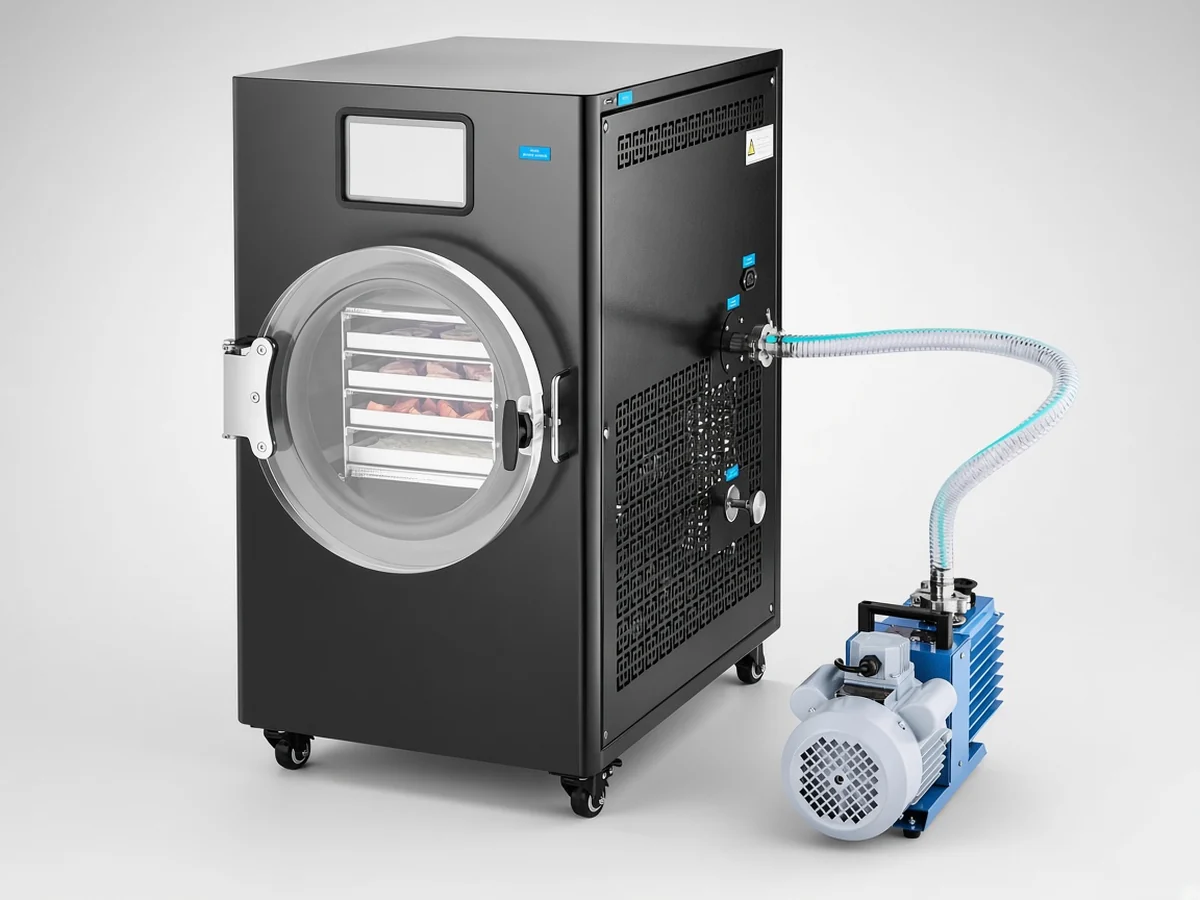
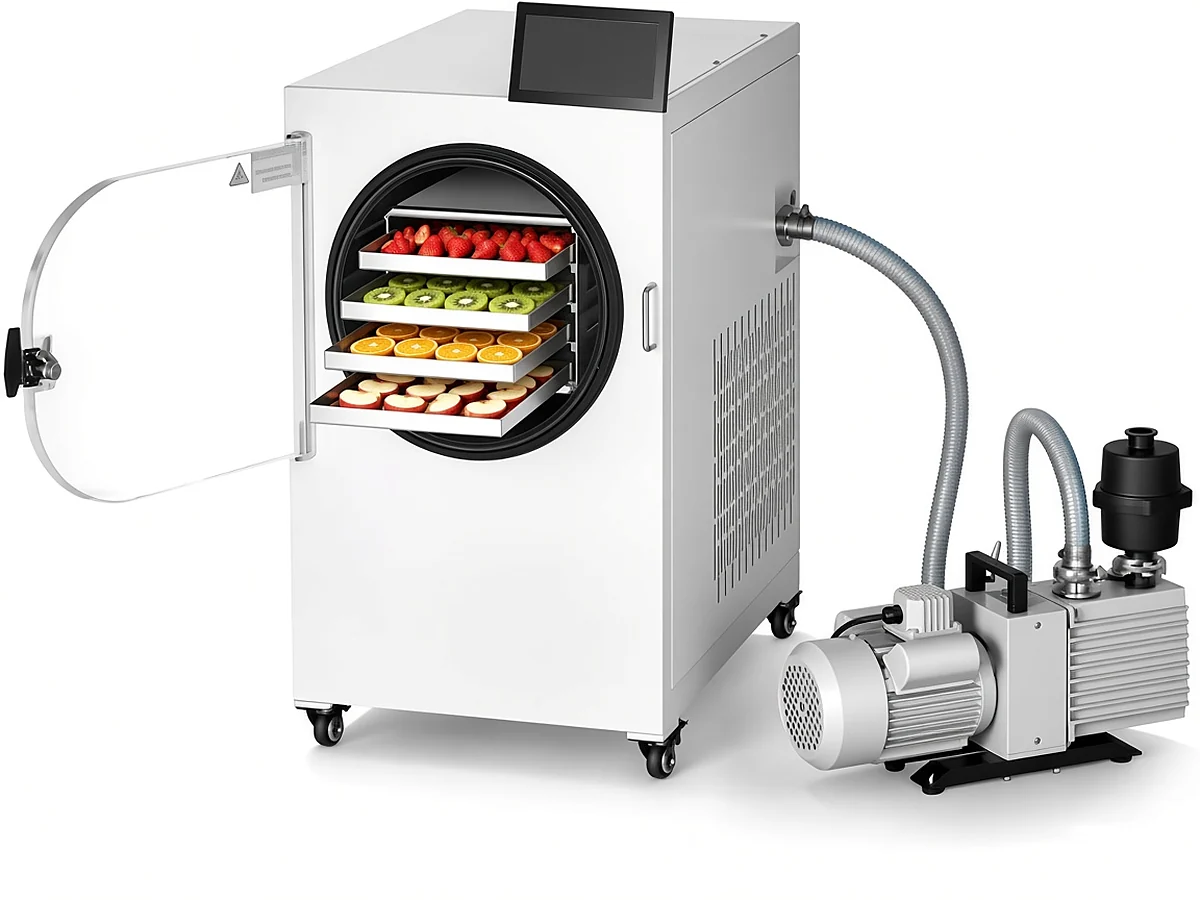
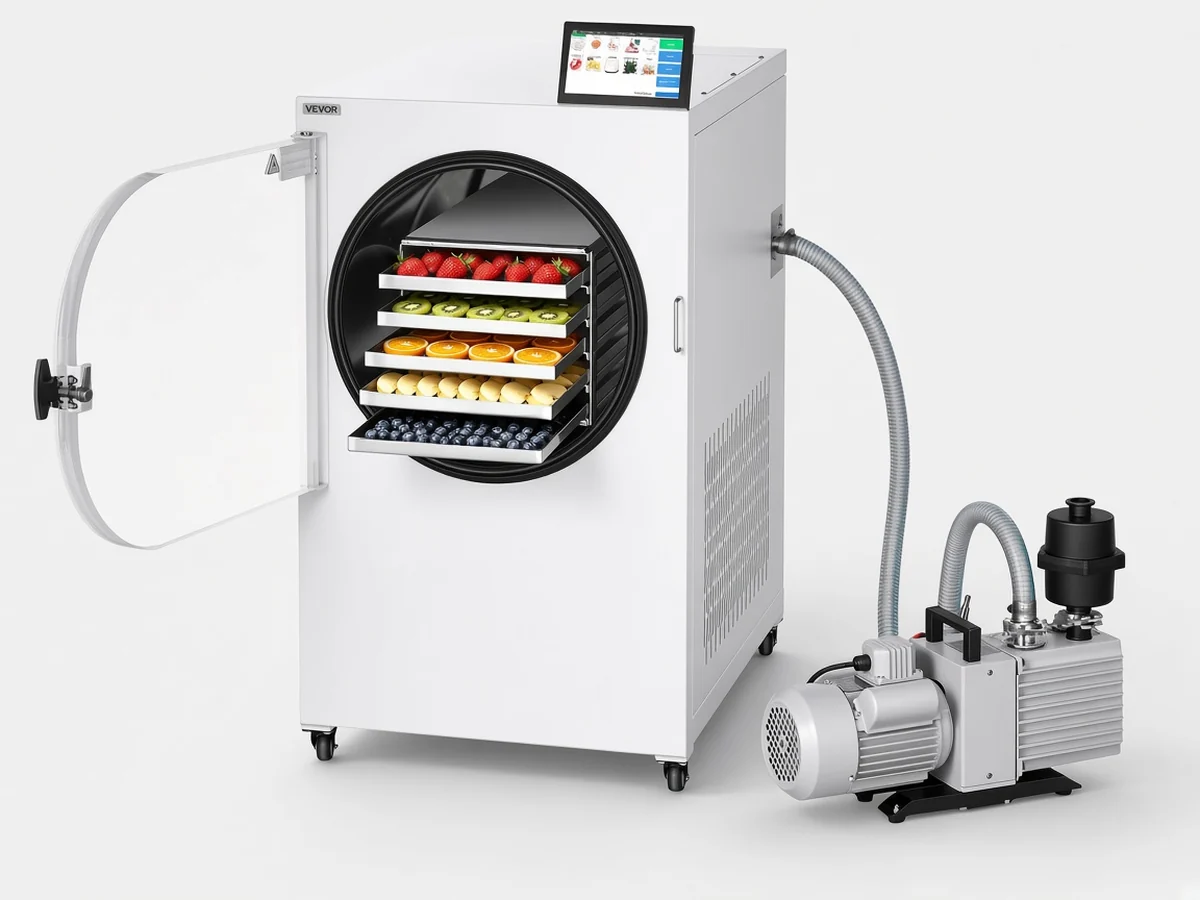
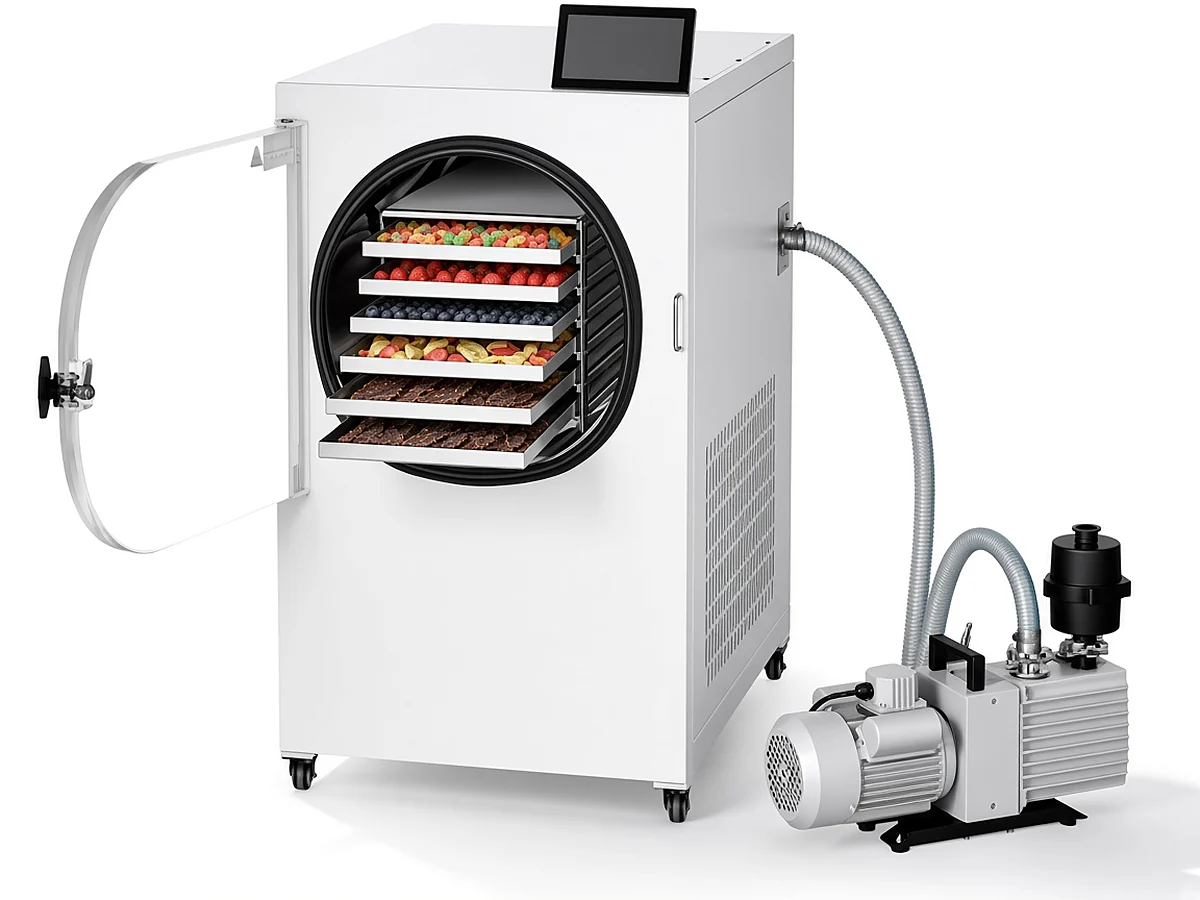
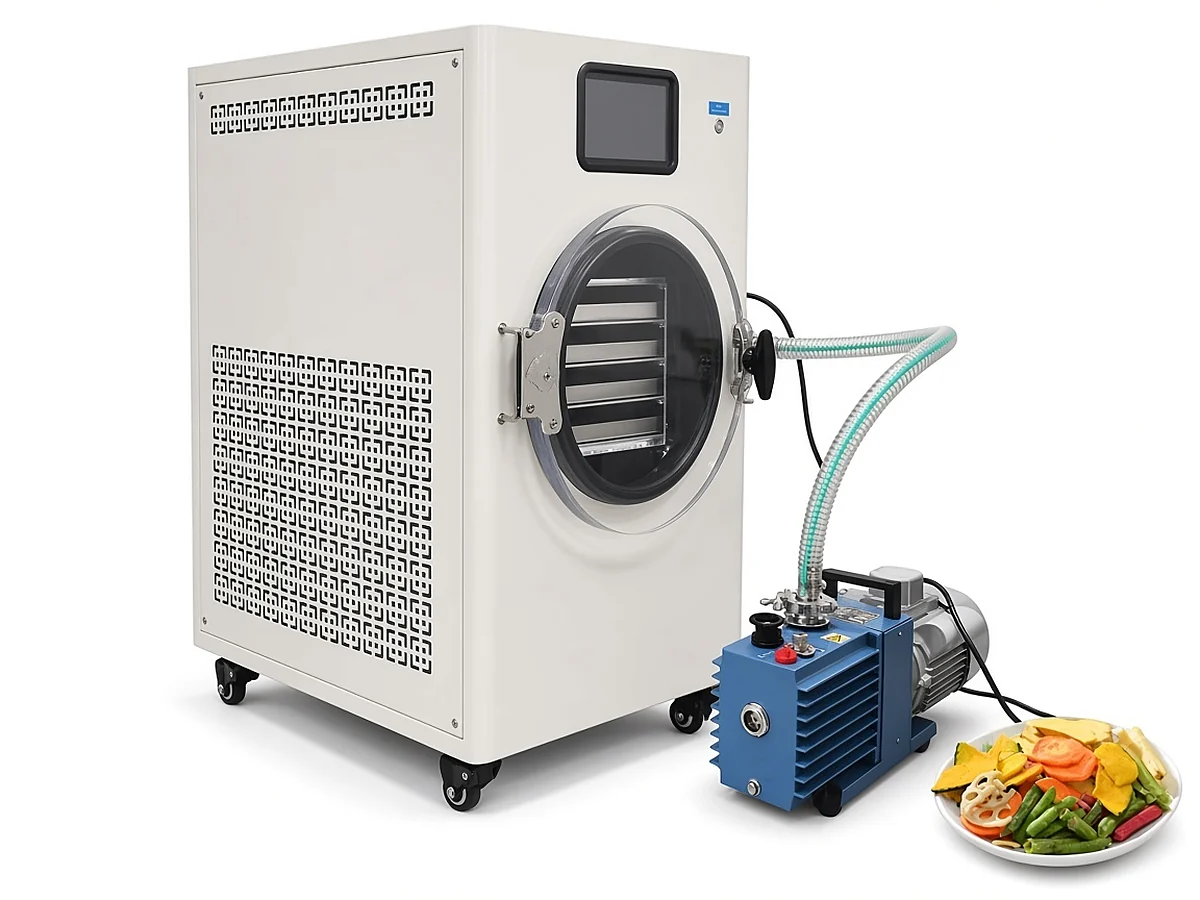
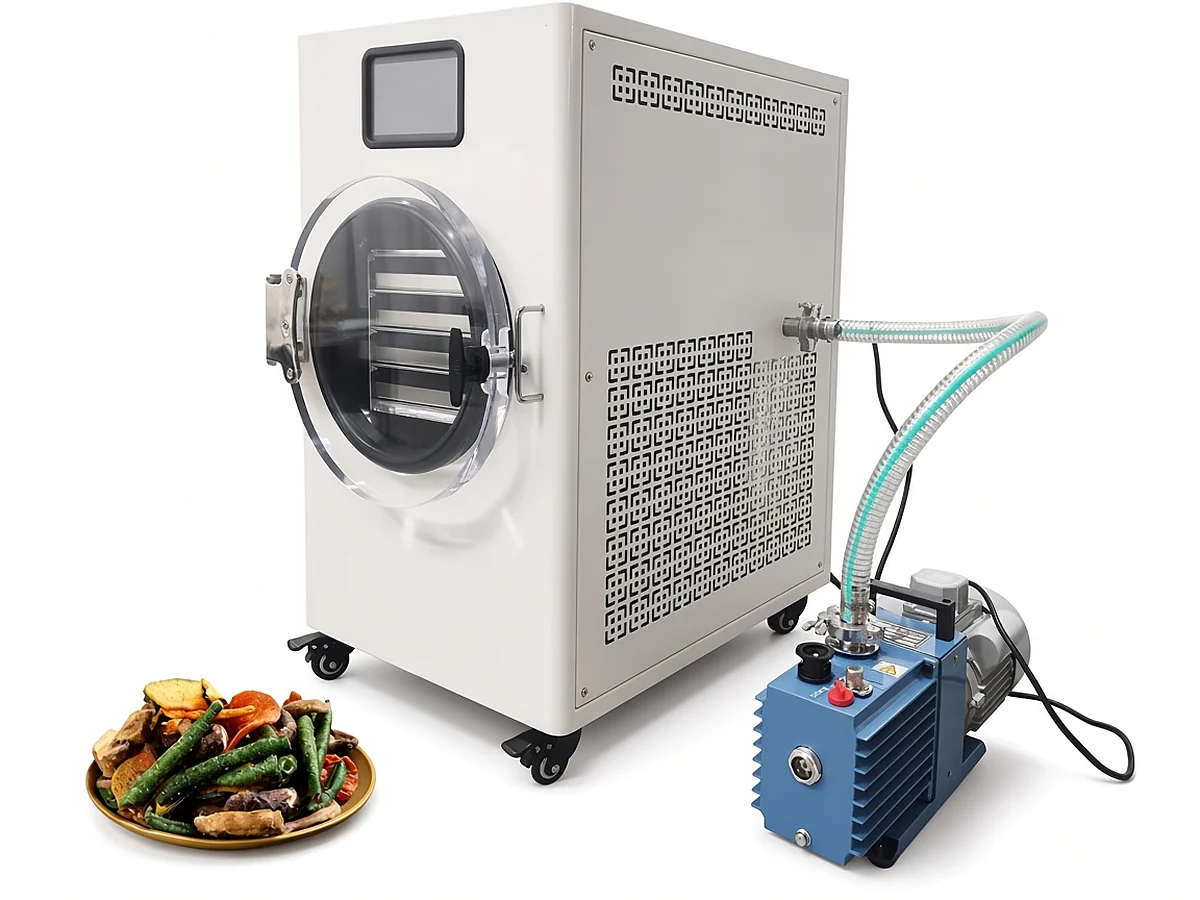
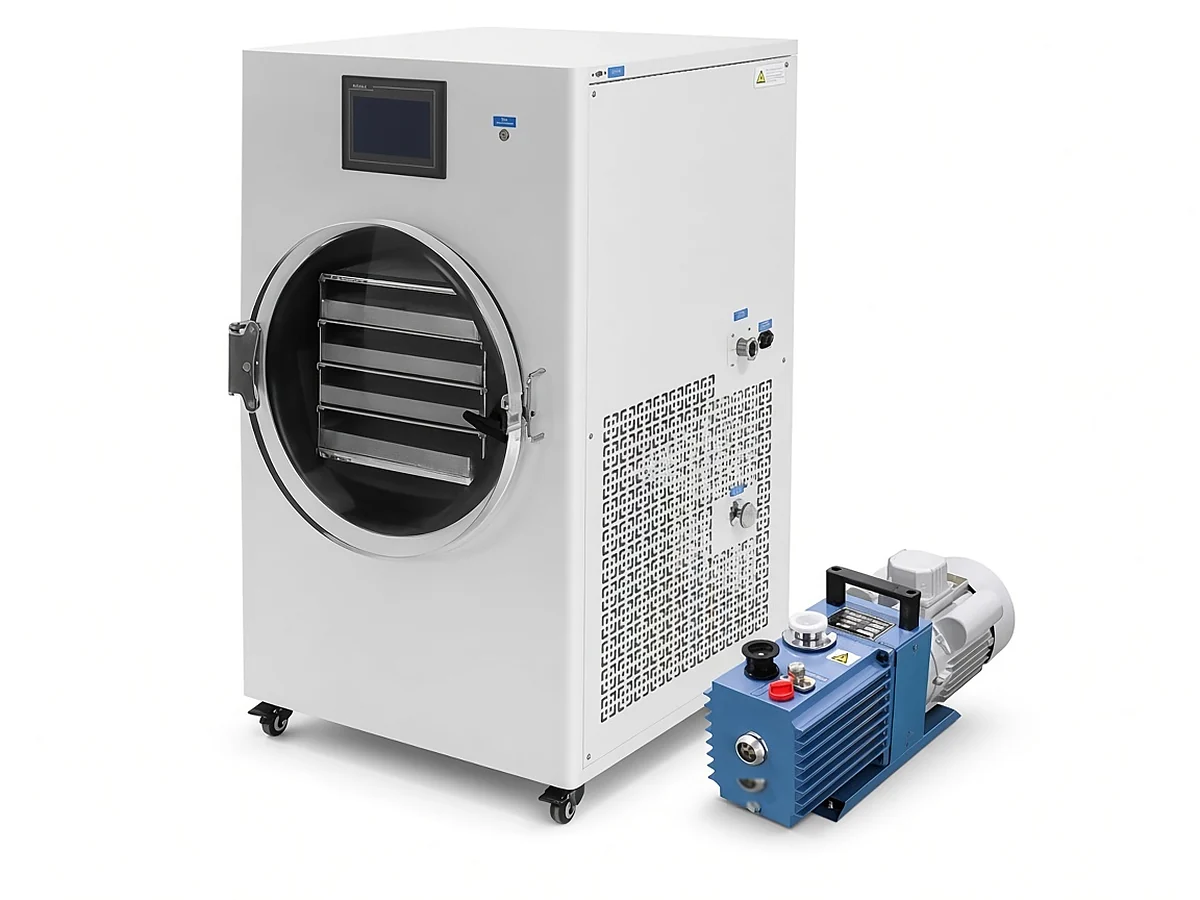
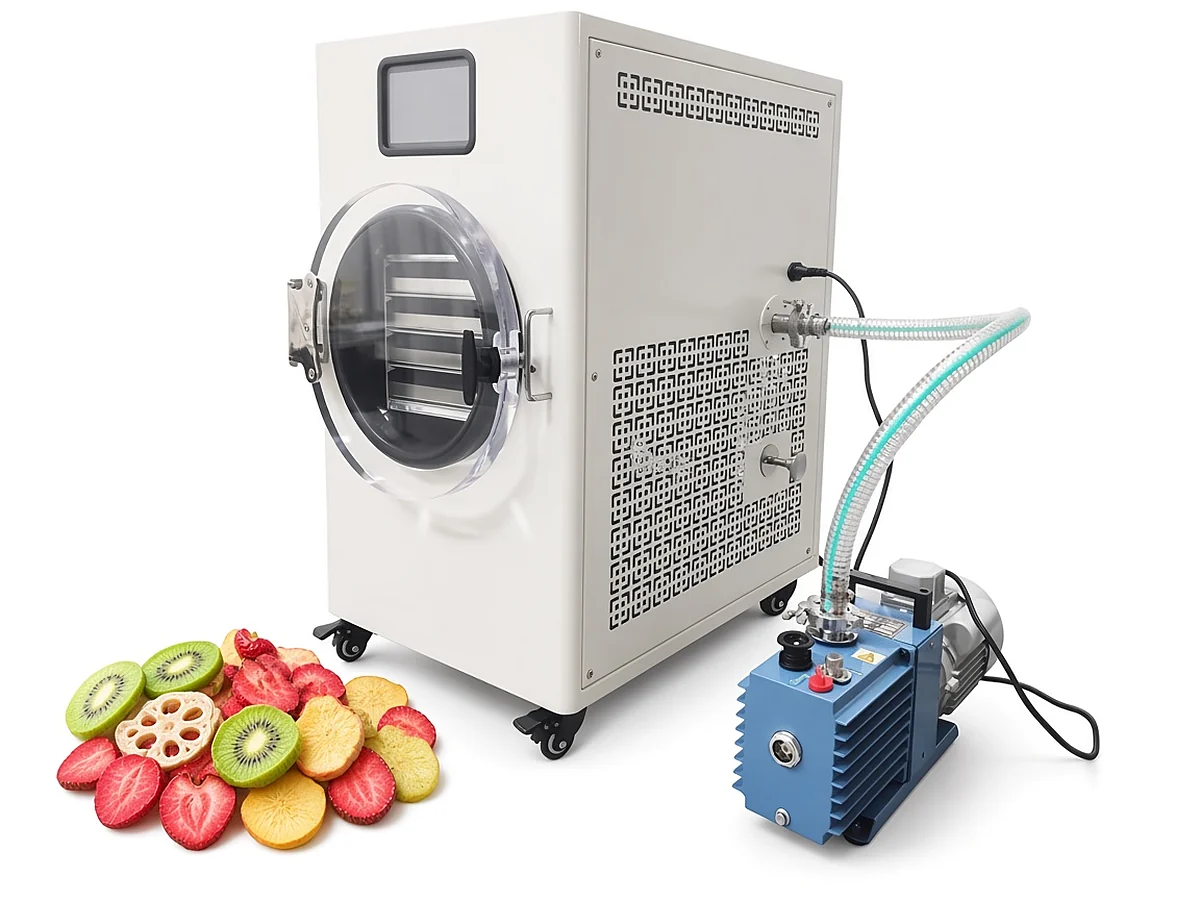
A vacuum freeze dryer. Live Amazon US examples include the Blue Alpine Medium Select, the VEVOR HFD-2, the VEVOR HFD-4, and the SJ series (SJ-05H, SJ-08H, SJ-10H). Compare them in best home freeze dryers.
Already-cooked meat, poultry or seafood that reached 160 °F, 165 °F or 145 °F, confirmed with a food thermometer.
Thin pieces. Utah State, citing Arizona Robertson 2025, says to cut food 1/4-1/2 inch, and meat no thicker than about 3/4 inch.
A way to pre-freeze the trays, plus packaging for the finished meat. The first-run checklist is in how to use a home freeze dryer.
High-fat cuts are a poorer match. Fat does not freeze-dry cleanly, and Utah State flags high-fat foods as harder. Trim visible fat, and prefer lean cooked meat. Casings and sausages can dry unevenly or case-harden; the 2026 fact sheet cautions against expecting even results from them. See the Blue Alpine Medium Select product page, or check the Amazon listing.
Step 1: Cook to a safe temperature
Cook the meat to 160 °F, poultry to 165 °F, or seafood to 145 °F, and check with a food thermometer. Those are the USDA figures Utah State repeats in the 2026 fact sheet. Cool the cooked food quickly and keep it refrigerated until you load the trays. Do not load raw meat if you are following the cook-first route this guide uses.
Step 2: Slice thin and trim fat
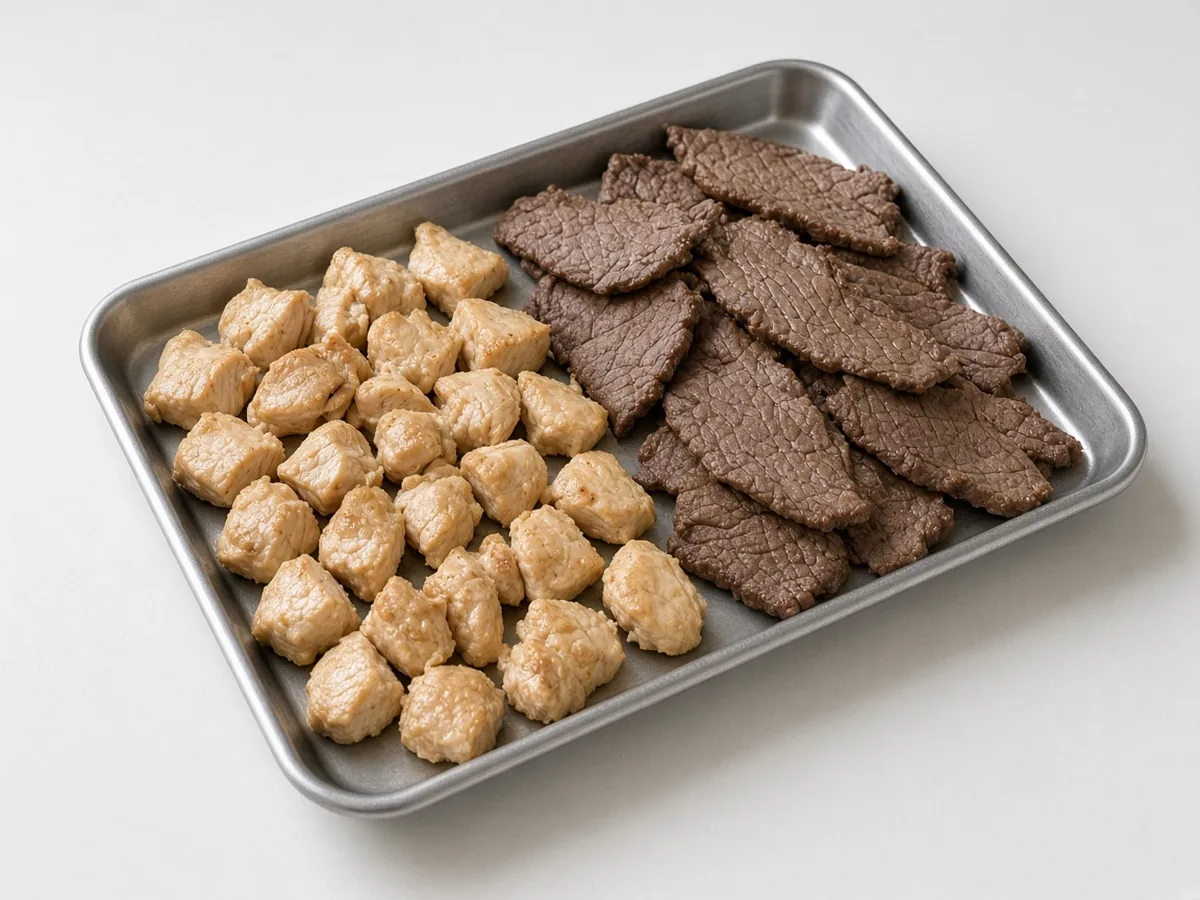
Cut cooked pieces about 1/4 to 1/2 inch, and do not go thicker than about 3/4 inch for meat. Dice or slice so the pieces are even. Trim visible fat. Ground meat can be freeze-dried after it is fully cooked, as long as it is not packed in a thick block; spread it so the vacuum can reach the center.
Step 3: Load the trays and pre-freeze
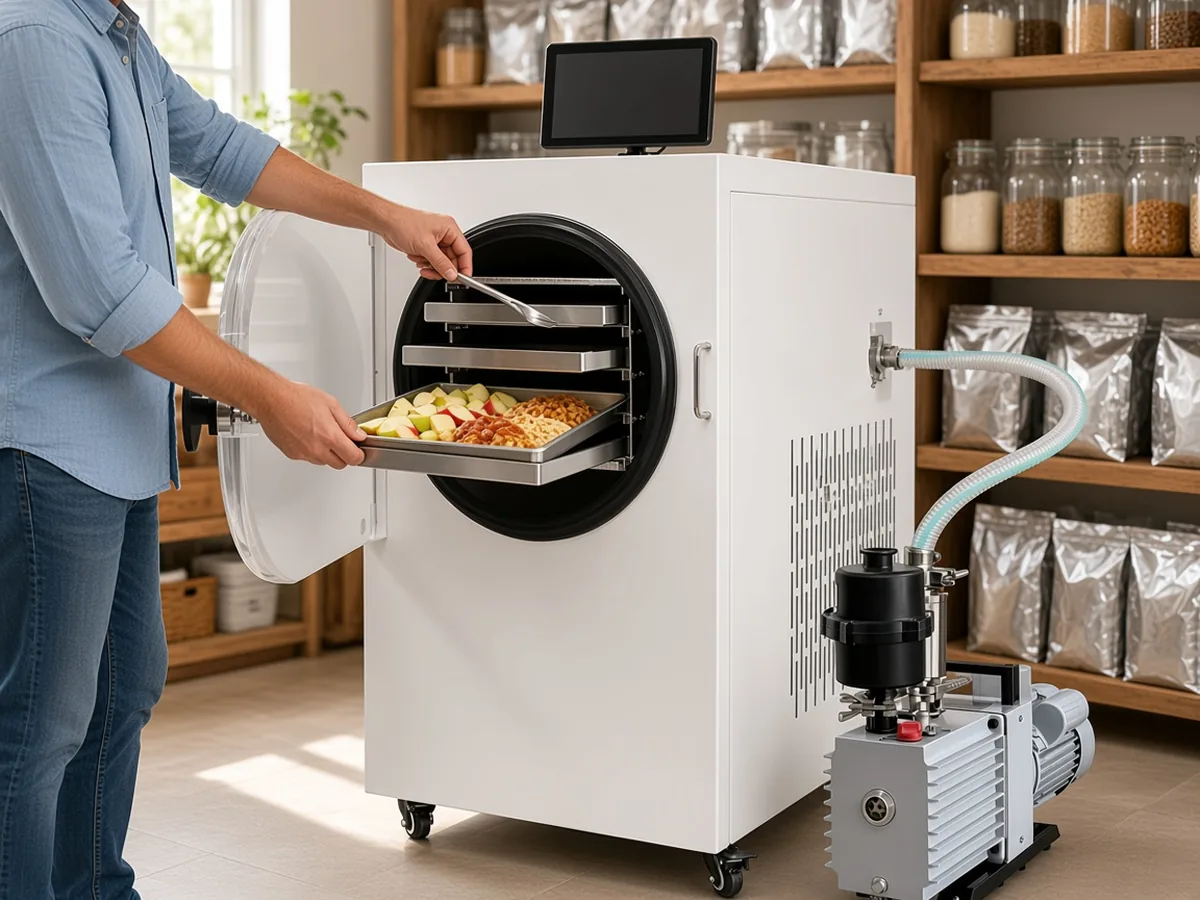
Spread the pieces in a single layer. Do not pile them. Utah State advises pre-freezing, and our first-run guide says the same. A lightly loaded, already-frozen tray is easier on the machine than a warm, crowded one. Keep drips of fat off the chamber as best you can.
Step 4: Run a full freeze, vacuum and dry cycle
Let the machine complete freeze, vacuum and dry stages. Our explainer of how freeze drying works covers those stages, and freeze-drying batch times explains what changes the clock. We do not invent a number of hours for a tray of chicken or beef. Meat can run longer than fruit. Use the machine's dryness test, not the clock, as the stop rule.
Step 5: Check dryness, then pack
A finished piece should be dry all the way through, with no cold, flexible or greasy-wet center. If it is not dry, return it for more time. Pack only fully dry meat. Utah State notes long shelf-life claims for freeze-dried food in Mylar with oxygen absorbers, but advises not eating home freeze-dried food beyond 5-10 years for quality. Rehydrate with hot water or use the pieces in a cooked dish. Storage and the botulism notes for meals sit in freeze-drying food safety and how to freeze dry meals.
If you are choosing a first machine, the VEVOR HFD-2 is the lowest-priced live four-tray unit we list. See the VEVOR HFD-2 product page, or check the Amazon listing.
Meat in a dehydrator is a different project
Jerky is dried at 130-140 °F after a 160 °F heat step, and it is still a dried meat snack, not a freeze-dried product. If that is what you want, use how to make jerky in a dehydrator, not this page. A dehydrator cannot freeze-dry meat.
Related on Amazon: VEVOR SJ-08H Vacuum Freeze Dryer.
Related on Amazon: VEVOR HFD-4 Vacuum Freeze Dryer.
Amazon listings for the products in this guide
Direct links to the Amazon listings for the products named or shown in this guide:
- Blue Alpine Medium Select Freeze Dryer – View on Amazon
- VEVOR HFD-2 Vacuum Freeze Dryer, 4 Trays, 5 Presets – See the Amazon listing
- VEVOR HFD-4 Vacuum Freeze Dryer (4 trays) – Check availability on Amazon
- VEVOR SJ-05H Vacuum Freeze Dryer, 4 Trays, 10 Presets – View on Amazon
- VEVOR Vacuum Freeze Dryer, 5 Trays, 10 Presets – See the Amazon listing
- VEVOR SJ-10H Vacuum Freeze Dryer, 6 Trays, 10 Presets – Check availability on Amazon
Frequently asked questions
Can you freeze dry raw meat?
Utah State University Extension's 2026 table lists raw animal foods as a no, and says to cook meat, poultry and seafood first. Other university sources have allowed raw meat with conditions. The route that satisfies every source we cite is to cook first. That is the method this guide uses, and it is the one already recommended in freeze-drying food safety.
What temperature should meat reach before freeze-drying?
Utah State repeats the USDA figures: 160 °F for meat, 165 °F for poultry, and 145 °F for seafood. Confirm with a food thermometer.
How thick can the meat be?
Utah State, citing Arizona, says to cut food 1/4-1/2 inch, and meat no thicker than about 3/4 inch. Thicker pieces dry unevenly.
Can you freeze dry bacon or sausage?
High-fat foods are harder, and Utah State cautions that casings and sausages can dry unevenly or case-harden. We do not treat bacon or raw sausage as a recommended first project.
Sources
Utah State University Extension, "Can I Freeze-Dry That? A Practical Guide to Safe and Effective Freeze-Drying" (January 2026), Carlile, Wayment and Brandao
USDA safe-minimum cooking temperatures, as cited by Utah State
Minnesota, LSU and Arizona Extension, as already compared on our freeze-drying food safety page