
Fruit
Published guides with this tag.
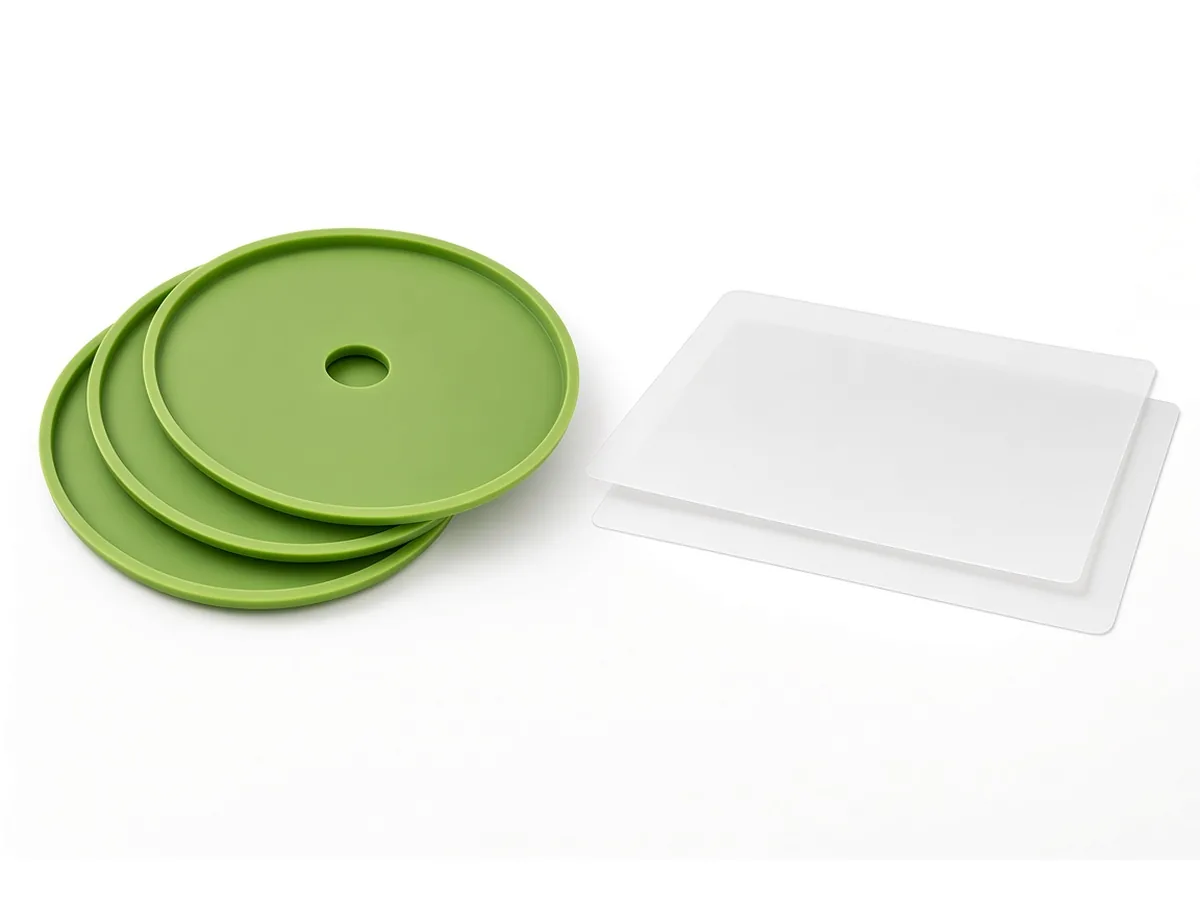
Best Fruit Leather Sheets for Dehydrators
Buy fruit leather sheets by tray shape, not by brand loyalty. For Nesco round or square trays, the Bright Kitchen 4-pack silicone sheets (model 4Nedge) are 12.5 in across with a 3 in center hole and a 1/4 in lip. For the COSORI CP267-FD and other square trays at least 11.3 x 12.8 in, use the official COSORI C267-2FR 2-pack .
Read guide →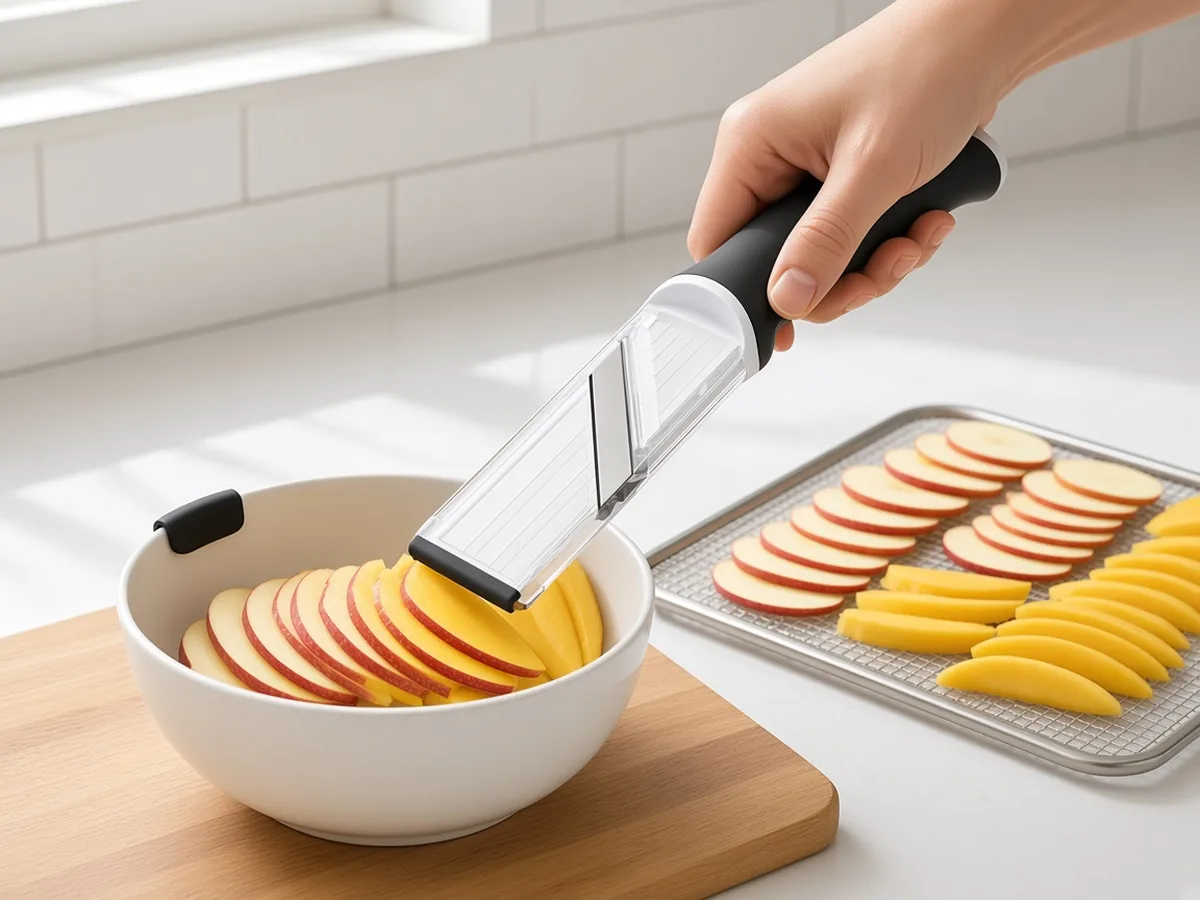
How to Slice Fruit and Vegetables Evenly for a Dehydrator
Keep dehydrator slices even: use the food holder on every pass, hold one mandoline thickness for a whole tray, dry at official NCHFP temperatures, and test doneness on a cooled piece—not the timer alone.
Read guide →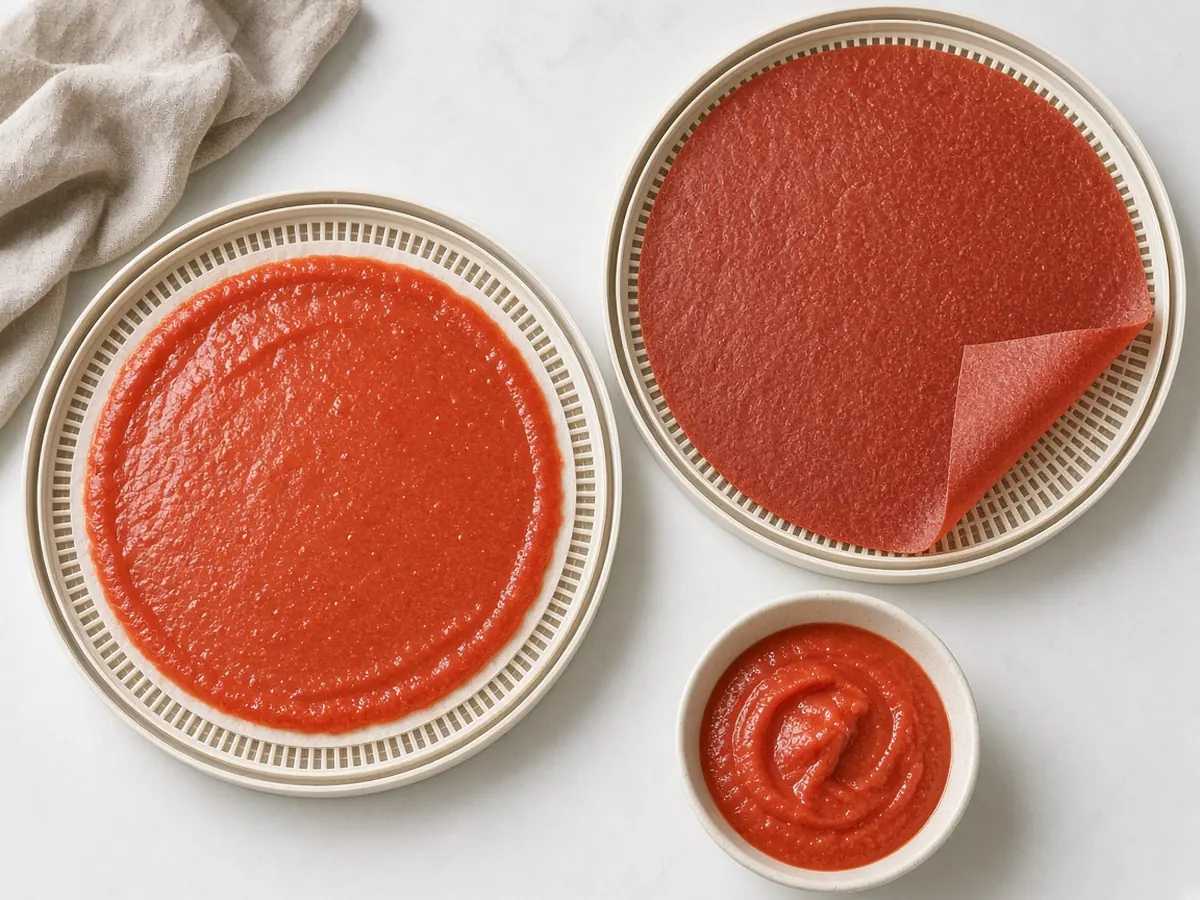
How to Make Fruit Leather in a Dehydrator
To make fruit leather in a dehydrator, puree fruit, spread it in a thin, even layer on a solid fruit-roll sheet, and dry at 140 °F until a cooled piece has no sticky spots and peels cleanly. That temperature and doneness test come from the National Center for Home Food Preservation and Illinois Extension. You need a solid liner, not an open mesh tray.
Read guide →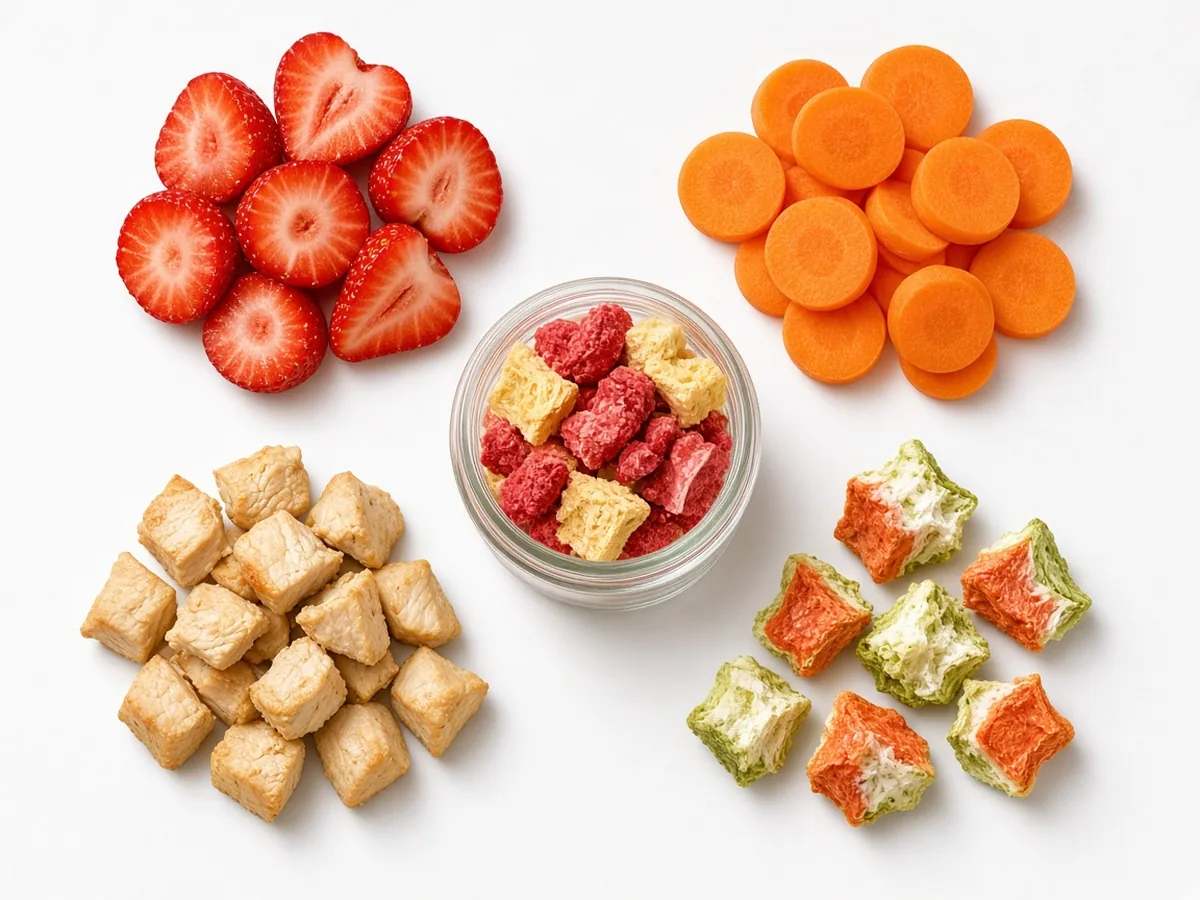
What Can You Freeze Dry at Home
You can freeze dry fruits, blanched vegetables, and fully cooked meat, poultry, and seafood at home in a vacuum freeze dryer, per Utah State Extension’s 2026 list—skip oils, mayonnaise, salad dressings, raw eggs, unpasteurized dairy, and raw animal foods.
Read guide →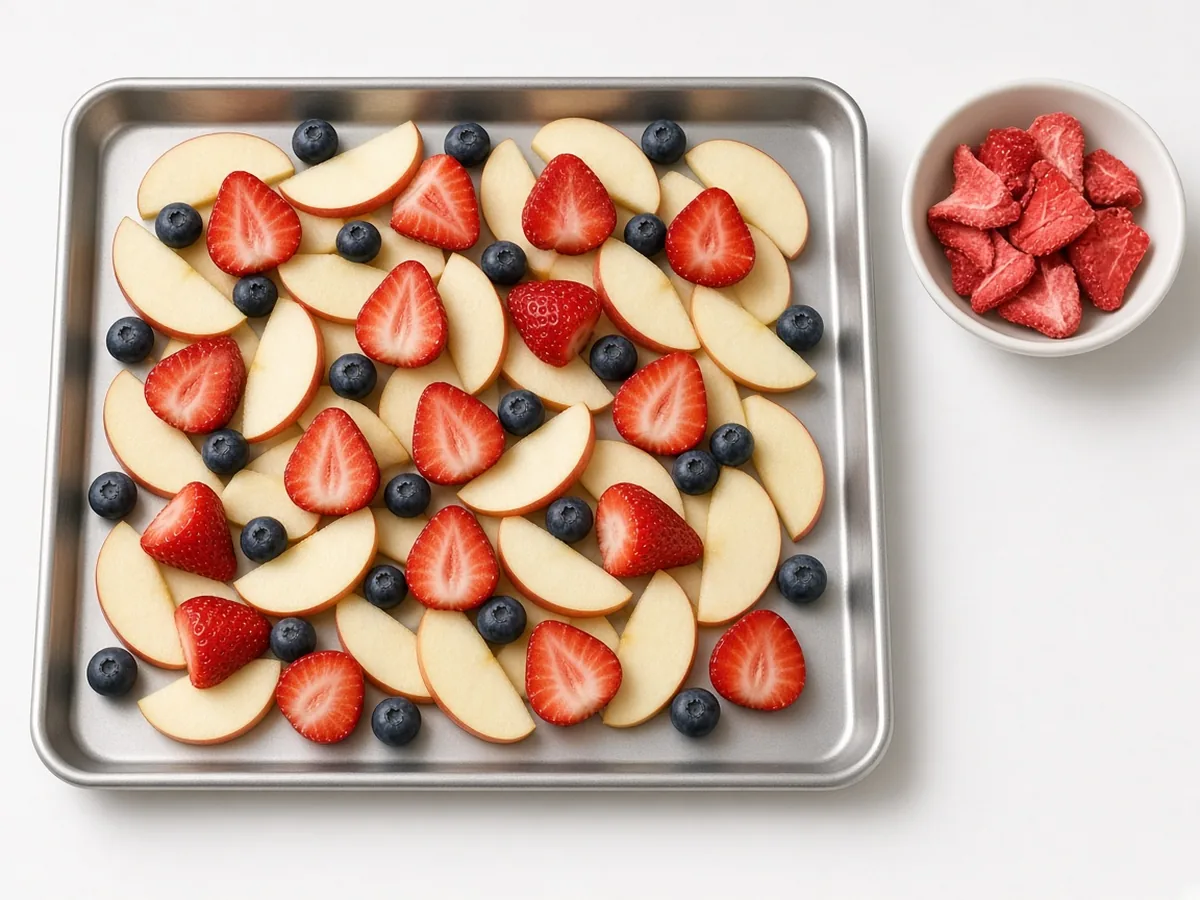
How to Freeze Dry Fruit at Home
To freeze dry fruit at home, you need a vacuum freeze dryer, not a pantry dehydrator. Utah State University Extension's 2026 fact sheet, "Can I Freeze-Dry That?", lists fruits as a yes, with a wash and peel, and an ascorbic-acid or lemon pretreatment for fruit that browns. Cut pieces about 1/4 to 1/2 inch, pre-freeze the trays, and run a full freeze, vacuum and dry cycle.
Read guide →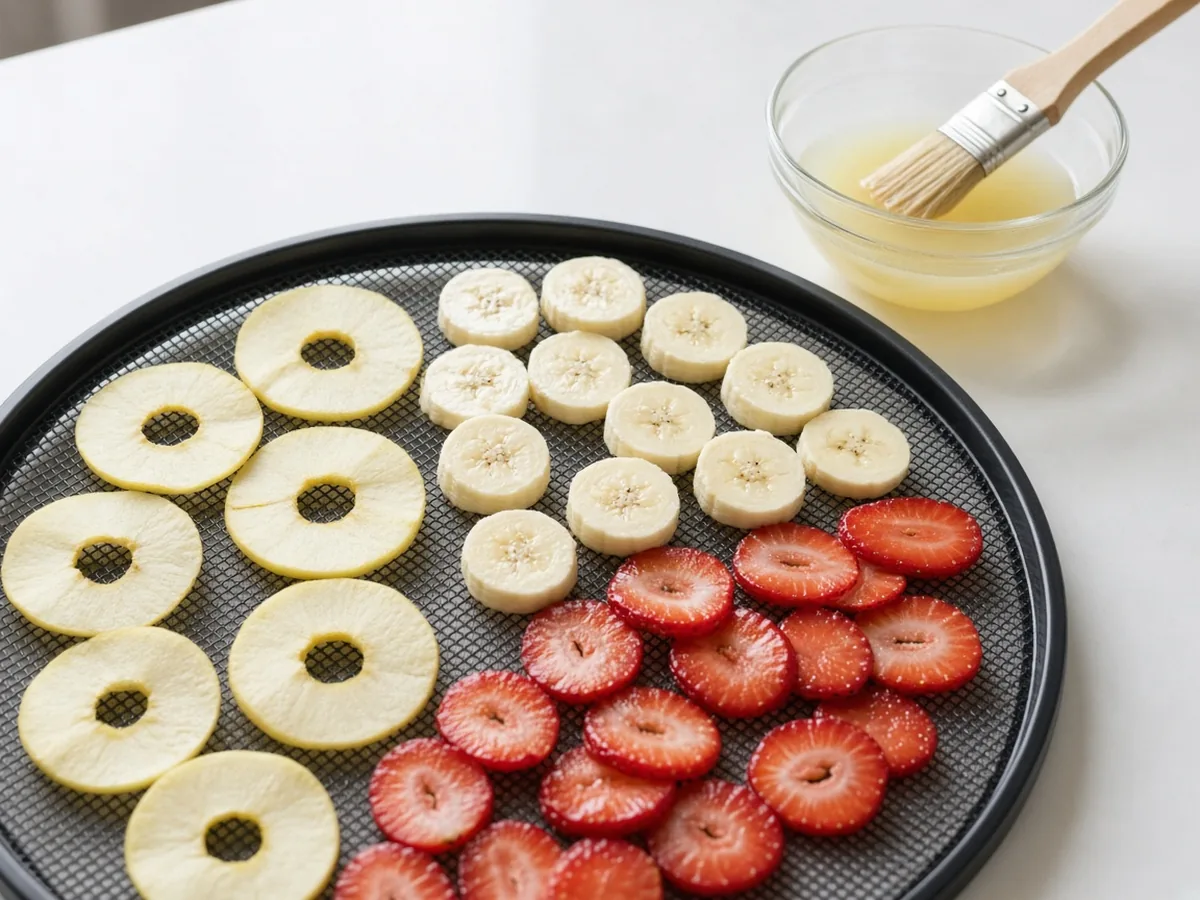
How to Dehydrate Fruit at Home
To dehydrate fruit at home, slice it evenly, pretreat varieties that brown, and dry at 140 °F until a cooled piece is leathery and pliable with no moist spots. That is the National Center for Home Food Preservation (NCHFP) temperature and doneness test. Times run from about 6 hours for thin apple slices to as long as 36 hours for peach halves, according to Colorado State University Extension.
Read guide →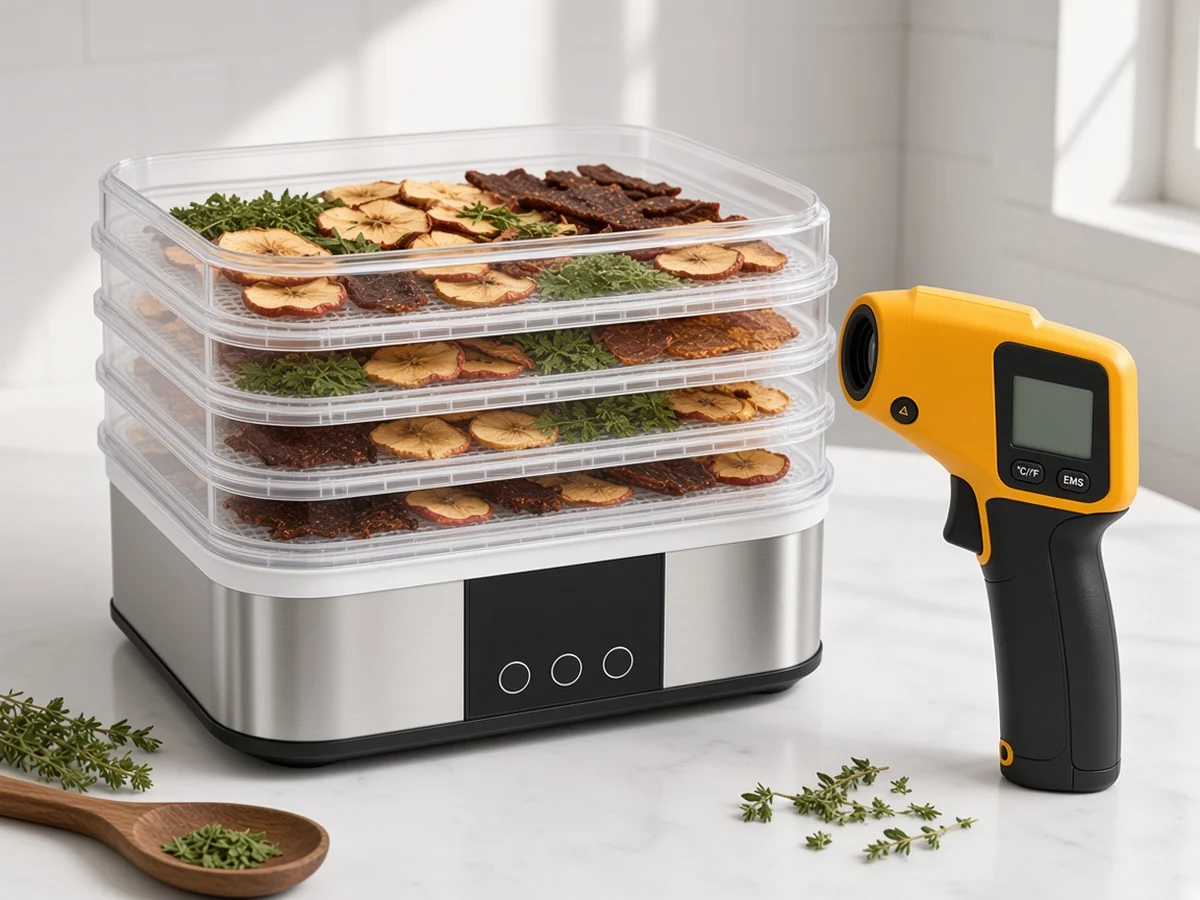
Dehydrator Temperature Chart
Official home-drying temperatures from the NCHFP and USDA FSIS: 140 °F for fruit and vegetables, 95-115 °F for herbs, and 130-140 °F for jerky after a 160 °F heat step.
Read guide →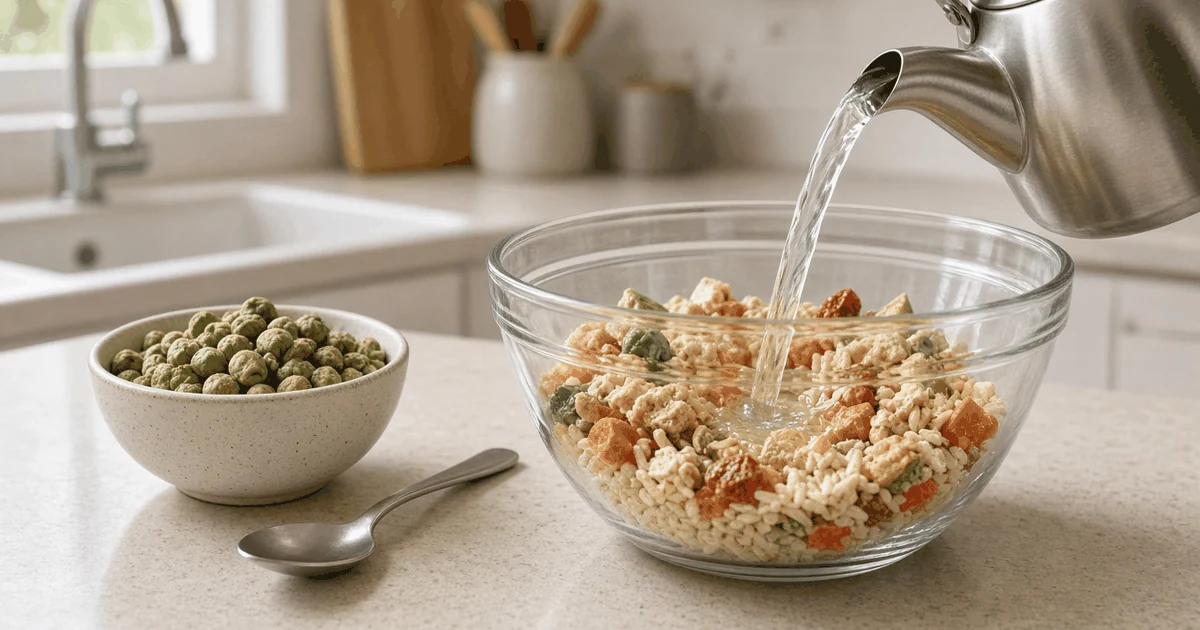
How to Rehydrate Freeze-Dried Food: Water, Timing and Safety
Bring freeze-dried food back to life: hot or cold water, how much to add, how long to wait, and the safety step raw foods need.
Read guide →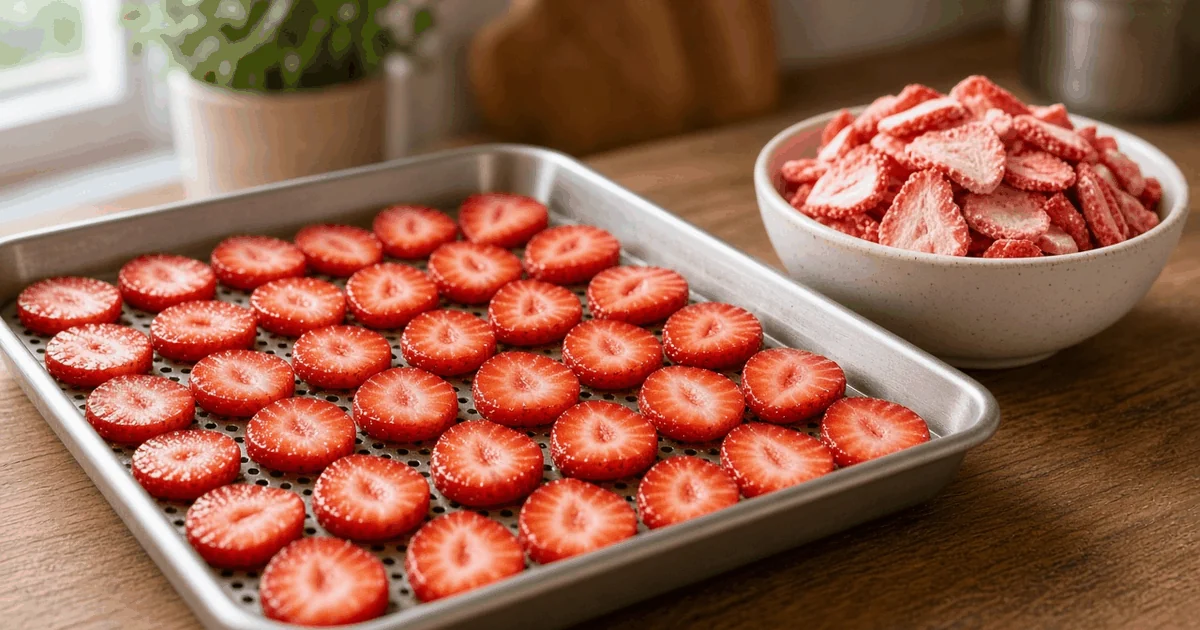
How to Freeze Dry Strawberries at Home
Freeze dry strawberries by washing without soaking, slicing about 1/4 inch thick, spreading a single layer on lined trays, and pre-freezing if your manual calls for it. Run the cycle, break the thickest slice to confirm it is dry all the way through, then seal in Mylar with an oxygen absorber.
Read guide →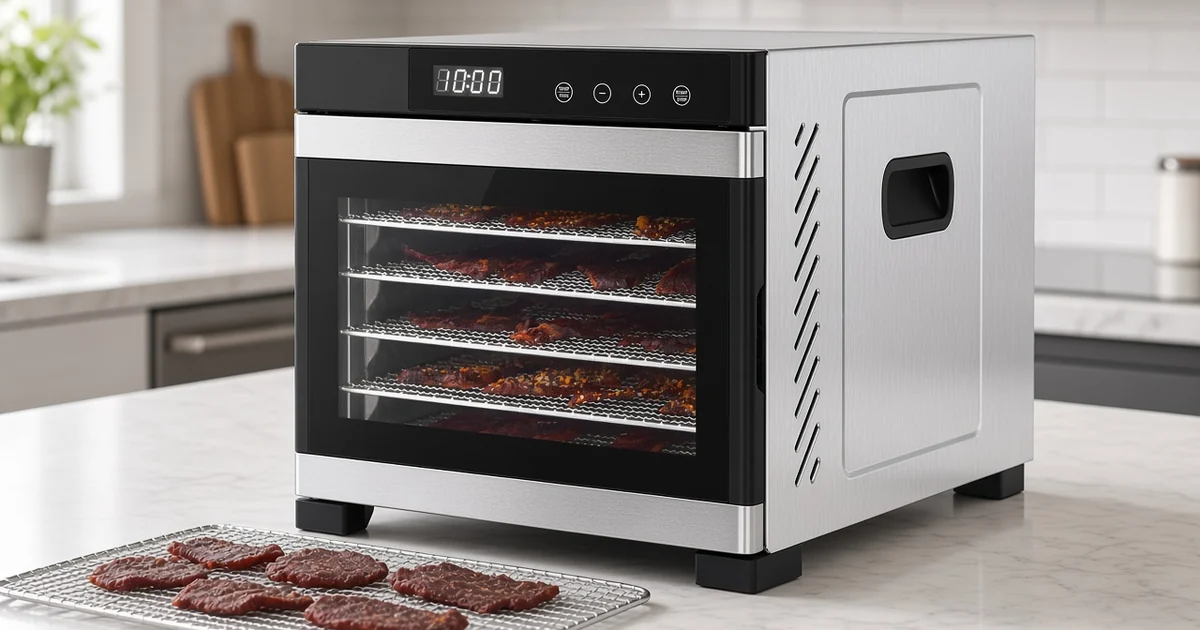
COSORI CP267-FD Food Dehydrator Review: What the Specs Tell You
The COSORI CP267-FD suits households that dry food regularly and want even shelf airflow: six stainless trays, about 6.5 sq ft of space, a 95–165 °F thermostat and a 48-hour timer. Skip it if you need more than six trays or settings above 165 °F.
Read guide →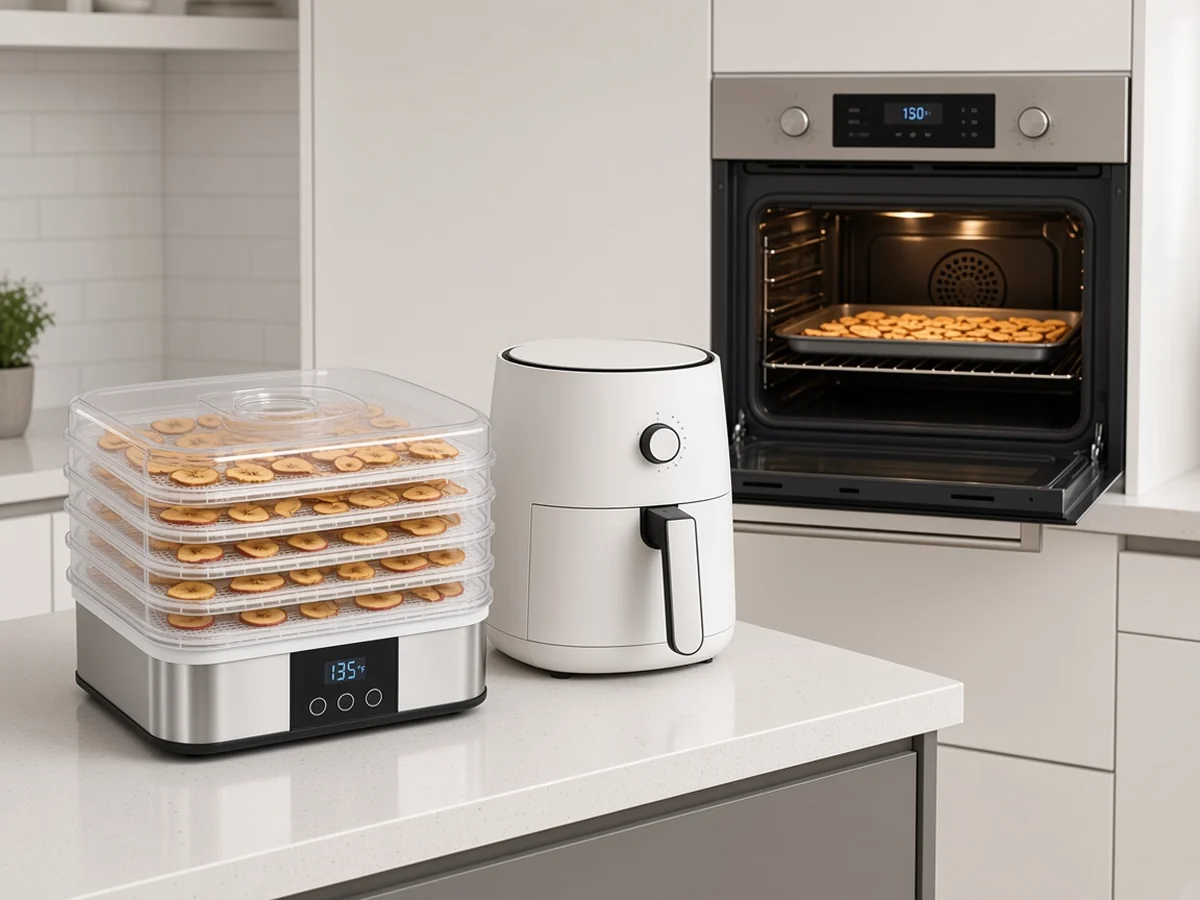
Dehydrator vs Oven vs Air Fryer: Which Is Best for Drying Food?
Oven: fine for occasional small batches, if it holds 140°F. Slower and uses more energy, according to Clemson Extension. Air fryer: handy for a single small batch of chips or herbs; limited by basket size and its lowest temperature setting.
Read guide →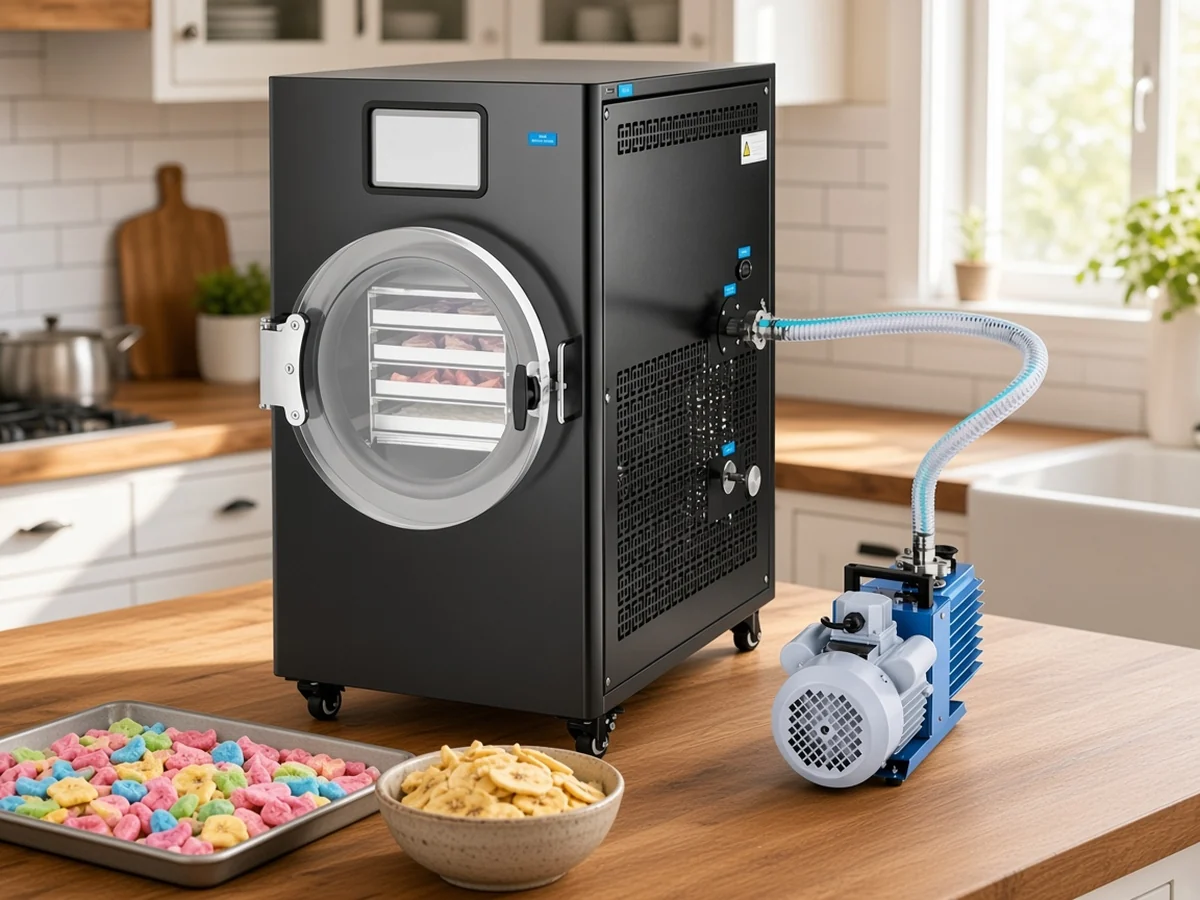
VEVOR HFD-4 Freeze Dryer Review: Who It Suits and Who Should Skip It
A real four-tray vacuum freeze dryer that expects you to write your own drying program. Here is who that suits, what the manual and owners say, and when the Blue Alpine is the better buy.
Read guide →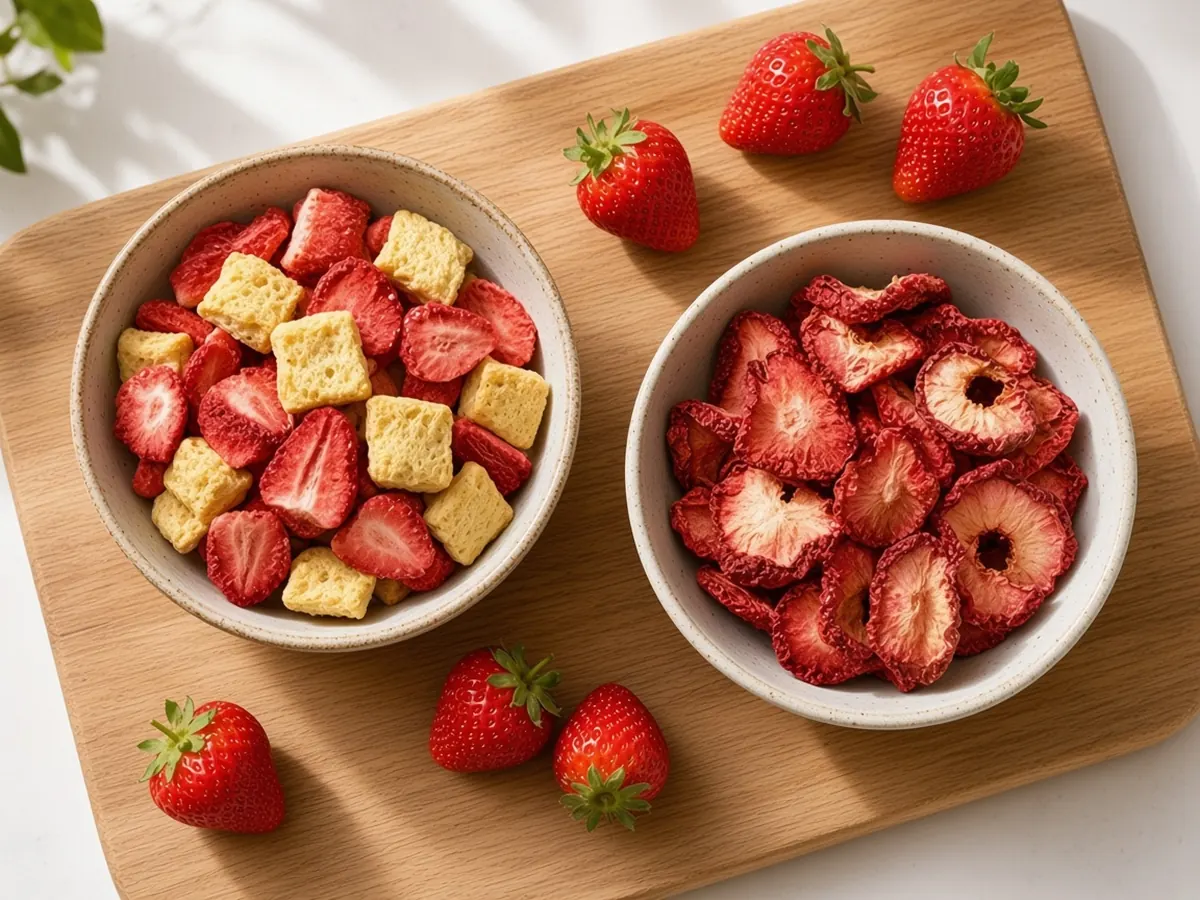
Freeze-Dried vs Dehydrated Food: Shelf Life, Nutrition and Texture
Freeze-dried food keeps far less moisture than dehydrated food, so it is lighter, crisper and usually stores longer in sealed packaging. Dehydrated fruit, vegetables and jerky are softer and chewier and are meant for months-scale storage, not the multi-year pantry role freeze-dried food can fill.
Read guide →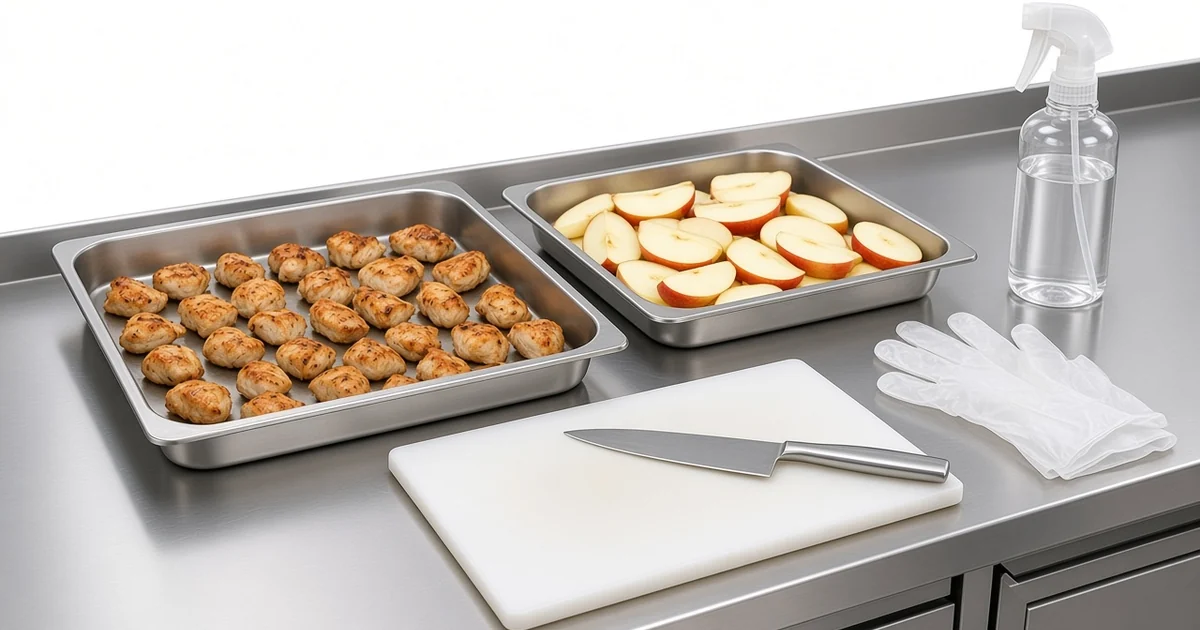
Does Freeze Drying Kill Bacteria? Home Freeze-Drying Food Safety
A freeze dryer does not make unsafe food safe—handle, dry, package, and cook following tested food-safety guidance. Keep raw and ready-to-eat foods separate, dry until crisp/dry throughout, and store sealed with oxygen absorbers where the method calls for it.
Read guide →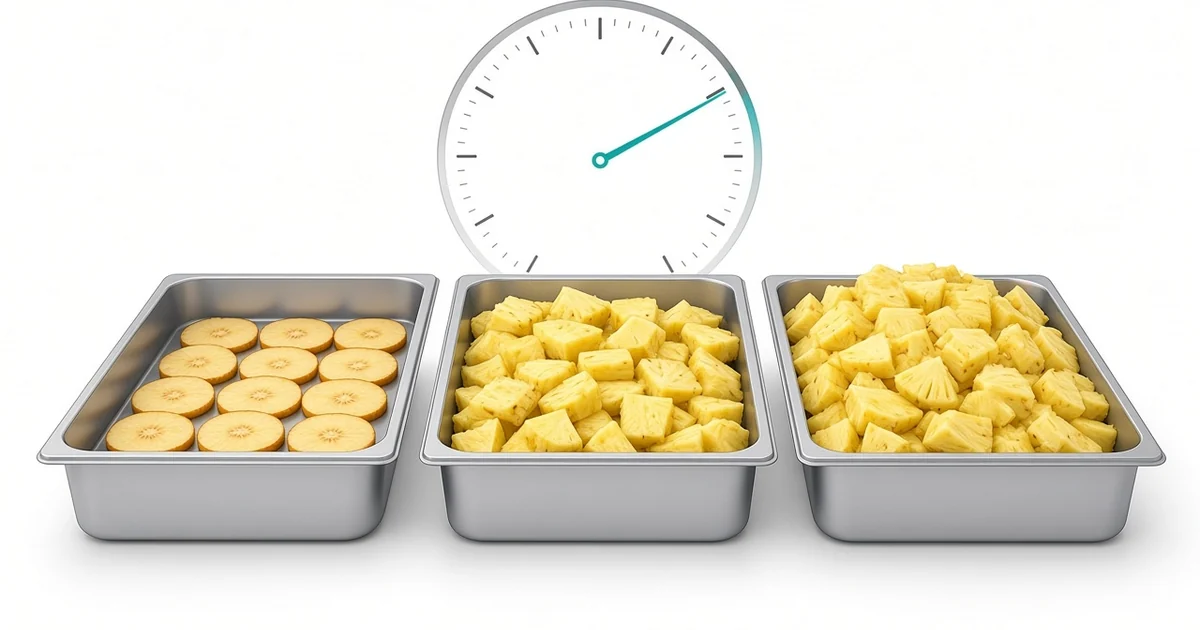
How Long Does Freeze Drying Take? Batch Times and Why They Run Long
Most home freeze-drying batches run roughly 24 to 48 hours or longer, depending on load, food type and machine settings. Blue Alpine defaults to about 8 hours of freezing plus 24 hours of drying in its manual, but recipe time still changes with moisture and slice thickness—never stop a cycle early for food safety.
Read guide →